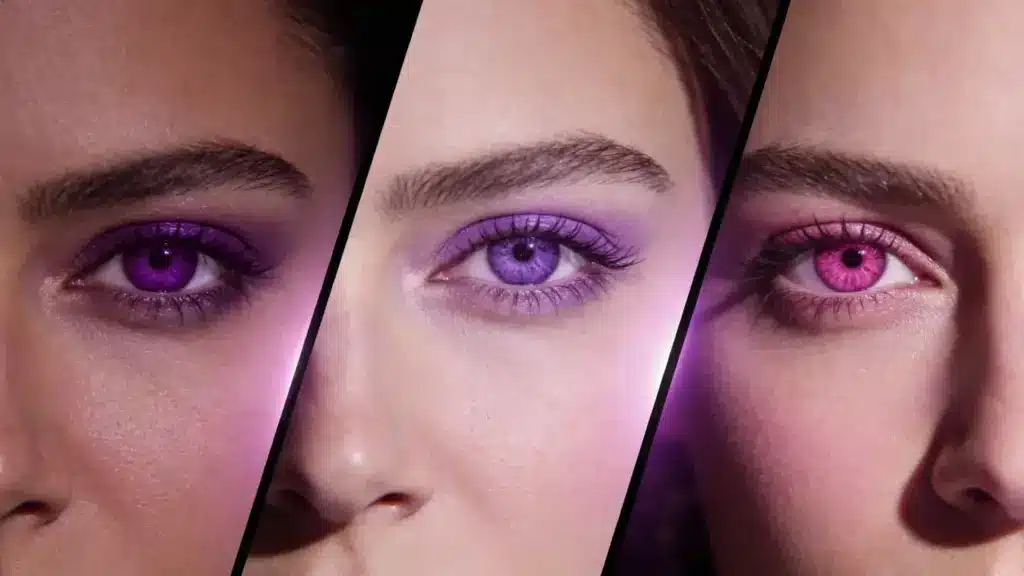
Most people go their entire lives without seeing a truly purple, lavender, or pink pair of eyes in person, and there is a reason for that.
These shades sit at the extreme edge of human genetics, yet on screen they appear far more often, blurring the line between biology and cinematic craft.
Hollywood has a knack for making us believe the impossible. And that’s probably why fans constantly debate details like Lena Headey’s eye color, but the fascination hits a whole new level when we see hues that seem downright magical.
In this post, I will explain the truth behind purple, lavender, and pink eyes in actors, break down the science behind these traits, and discuss the methods the film industry uses to fake them on set.
What Makes Purple, Lavender, and Pink Eyes in Actors So Rare?
Purple, lavender, and pink eyes in actors draw so much attention precisely because they push the limits of human eye genetics.
Eye color is all about melanin levels in the iris. Higher amounts create brown and lower ones enable light scattering for blues.
As explained by the American Academy of Ophthalmology, there is no actual blue pigment involved; it is purely structural, and the hue can shift dramatically with lighting conditions.
Purple, lavender, and violet shades go even further, appearing mostly in certain albinism cases where minimal melanin lets blood vessels show through, blending red and blue effects into lavender or pink tones.
The National Organization for Albinism and Hypopigmentation confirms that, while the idea of red eyes is largely a myth, violet or pinkish appearances can occur under specific lighting conditions, and these traits affect only a tiny fraction of people worldwide.
Elizabeth Taylor: The Queen of Violet Eyes in Hollywood

Few names in film history are as tied to the idea of violet eyes as Elizabeth Taylor.
Her eyes were a rare deep blue that flickered into lavender and violet shades thanks to a specific melanin level, allowing light to do things that no colored contacts could match during her era.
According to ophthalmic surgeon Dr. Norman Saffra, chairman of ophthalmology at Maimonides Medical Center, Taylor’s eyes contained a very specific and rare amount of melanin.
“There are various shades of blues and grays, with many in-between. Violet may have been her typical pigmentation,” he told Live Science, adding that makeup and wardrobe choices could enhance that quality even further.
Her double row of eyelashes was caused by a genetic mutation called distichiasis linked to the FOXC2 gene.
This trait, spotted when she was just a newborn, framed her famous gaze perfectly and helped turn her into an icon, especially in Technicolor epics like Cleopatra, where her eyes stole every scene.
It is worth noting that Taylor’s official passport listed her eye color as “dark blue.” The violet effect was real, but it was also partly due the Technicolor film technology.
Can Hollywood Fake Purple, Lavender, and Pink Eyes in Actors?
Yes, and it happens more often than most viewers realize. Hollywood blends practical techniques with digital tools to create eye colors that feel real on screen, even when they do not exist naturally.
In earlier cinema, studios leaned on controlled lighting, tinted gels, and carefully selected wardrobe and makeup to shift how an actor’s eyes appeared. Under Technicolor lighting, certain shades could push blue eyes toward violet or lavender tones.
Today, custom hand-painted colored contact lenses bring fantasy hues to life on set, though they can sometimes limit an actor’s emotional range because performers truly act with their eyes.
For more extreme or consistent effects, visual effects teams turn to digital color grading and CGI in post-production to enhance or completely alter iris shades without discomforting the talent.
This is exactly why the showrunners ultimately skipped purple contacts for Daenerys’ eye color in Game of Thrones, choosing to preserve Emilia Clarke’s natural expressiveness instead of forcing the book-accurate violet.
Pink tones, often associated with portrayals of albinism, are created through a combination of pale makeup, red-tinted lenses, and careful lighting that lets underlying blood vessels show through.
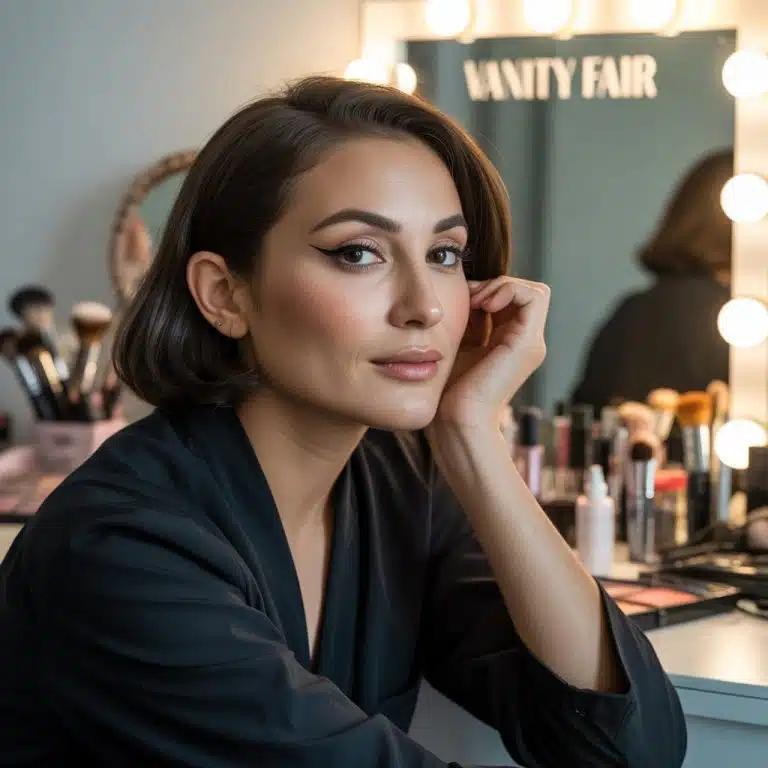
Working in theater dressing rooms for years, one thing became clear very quickly: the eye colors that read as otherworldly under stage lights almost never look that way under a bathroom bulb.
That gap between camera truth and lived reality is what makes purple, lavender, and pink eyes in actors such a lasting fascination.
Purple, Lavender, and Pink Eyes: Myth vs Facts
Years in dressing rooms taught one rule. What looks magical on camera usually has a method behind it.
| Myth | Fact |
|---|---|
| Actors naturally have purple eyes | True purple eyes are extremely rare. Most appearances are due to lighting and enhancement. |
| Lavender eyes are commonly found in celebrities | Lavender tones are usually reflections of blue or gray eyes influenced by the environment and styling. |
| Pink eyes are a natural variation | Pink tones are linked to albinism and are rarely visible without specific lighting. |
| Cameras show true eye color | Cameras often shift color through lighting, filters, and post-production adjustments. |
| Contact lenses always create the effect | Many productions now rely on digital methods rather than lenses for better results and greater comfort. |
Famous Actors Associated with Purple or Lavender Eyes
Certain actors are often associated with lavender or violet eyes due to lighting, albinism, or unique features that create striking, memorable on-screen appearances.
- Victor Varnado: This stand-up comedian and actor, known for roles in films like End of Days, has albinism that sometimes gives his eyes a striking pinkish or light lavender appearance under certain lighting due to low melanin and visible blood vessels.
- Shaun Ross: The pioneering male model and actor with albinism often displays pale eyes with subtle lavender or pinkish tones. His distinctive look has made him a trailblazer in fashion and film, challenging traditional beauty standards.
- Liza Minnelli: Frequently noted for her large, expressive eyes that can appear lavender or violet in photographs and on stage, especially under theatrical lighting, adding to her iconic dramatic presence.
- David Bowie: While his eyes were naturally blue, the permanent anisocoria in his left pupil created a dramatic contrast that many perceived as one eye appearing much darker or almost violet-black in certain lights and iconic photos.
- Thando Hopa: South African actress and model with albinism, whose pale eyes can show delicate lavender-pink hues. She has used her platform to promote positive representation of albinism in entertainment.
Conclusion
The fascination with purple, lavender, and pink eyes comes from how rare they are in reality and how often they appear on screen. True cases exist, but they occupy a very small space within human genetics.
Most of what viewers notice is shaped by lighting, camera technology, and post-production techniques that enhance or transform natural features.
The actors who genuinely carry these traits bring the authenticity that no lens or digital tool can fully replicate. And that’s what makes their presence on screen feel so arresting.
Meanwhile, the industry’s ability to replicate these hues using editing keeps getting sharper, making it harder than ever to tell nature from technique.
Got a favorite on-screen eye color moment that stopped you mid-scene? Drop it in the comments. I’d love to hear which one fooled you!
Frequently Asked Questions
Can Eye Color Change Naturally over a Lifetime?
Yes, melanin shifts during infancy and aging can subtly alter iris color, though dramatic changes are uncommon in adults.
Are There Other Rare Eye Colors Besides Purple?
Yes, true amber, gray, and green eyes are also quite rare globally, though they are more common than the shades associated with albinism.
Can Laser Surgery Permanently Change Someone’s Eye Color?
Experimental procedures exist that remove melanin to lighten eyes, but they carry significant risks and remain controversial.
Why Do Babies Sometimes Appear to Have Violet Eyes?
Newborns often have very low melanin at birth, allowing light scattering that can mimic violet before pigment fully develops.