You just walked out of the tattoo studio, fresh ink wrapped and gleaming, not knowing that this process is only the beginning.
Most people assume a tattoo heals once the scabbing stops, but that’s only half the story.
How long it takes a tattoo to heal depends on two very different timelines. What’s happening on the surface and what’s going on deeper in your skin is actually not the same.
That gap between looking healed and being healed is exactly where most aftercare mistakes happen… and where lasting damage occurs.
Understanding both stages helps you protect your investment, avoid infections, and get the sharpest, most vibrant result possible.
This blog explains every healing phase, aftercare essentials, and warning signs to look out for after getting a tattoo.
How Long Does It Take a Tattoo to Heal?
Surface healing after a tattoo, the outer layer of skin) typically takes 2 to 3 weeks, while deep healing, in the deeper dermis layer, where the ink resides, takes 4 to 6 months.
During surface healing, the skin surface closes. Oozing stops, scabs or flakes fall off, redness fades, and the tattoo appears settled and polished.
However, beneath the surface, your body continues to repair tissue, stabilize ink particles, and rebuild collagen. This deeper process explains why colors may look dull at first and gradually brighten, and why the area remains sensitive for months.
Cleveland Clinic dermatologists describe tattoos as “controlled forms of trauma to the skin,” noting that proper support is essential for optimal healing.
Larger or more complex tattoos often require longer, up to 4 to 6 weeks, for surface healing and beyond, due to greater trauma and ink saturation. While small tattoos often finish surface healing in just 10–14 days.
Following professional aftercare instructions significantly speeds recovery and reduces risks like infection or fading.
Tattoo Healing Timeline: Quick Reference
| Timeframe | What’s Happening | Key Care Priority |
|---|---|---|
| Days 1 to 3 | Redness, swelling, plasma oozing, open wound phase | Keep clean, apply thin ointment, and avoid touching |
| Days 4 to 10 | Itching, scabbing, and flaking begin | Moisturize, do not pick or scratch |
| Week 2 | Peeling increases, “ugly duckling” dull/cloudy phase | Keep hydrated, no soaking, no sun exposure |
| Weeks 3 to 4 | Surface appears healed, may still feel slightly raised | Continue moisturizing, begin SPF once the surface is sealed |
| Months 2 to 6 | Deep dermal recovery, colors deepen and settle | Daily SPF, regular moisturizing, gentle care |
Stage-by-Stage Tattoo Healing Process

Your new tattoo progresses through distinct phases from initial inflammation to complete dermal recovery, typically spanning weeks to months with proper care.
1. Days 1 to 3: Inflammation and Oozing Phase
During the first few days, a tattoo behaves like a controlled skin injury. Redness, swelling, tenderness, and slight fluid oozing are common as the body begins the repair process.
Many first-time clients worry about the leakage, but it is completely normal because your immune system is working to seal the tiny punctures and flush out irritants.
Keeping the area clean and lightly protected is essential. According to guidance from Mayo Clinic, proper early care reduces irritation and infection risk.
Keep the area clean by gently washing with lukewarm water and fragrance-free soap, patting dry, and applying a thin layer of ointment. Avoid touching it unnecessarily to prevent introducing bacteria.
After longer or more intensive sessions, some people experience what is commonly called “tattoo flu,” a brief period of mild fatigue, soreness, or feeling run-down in the 24 to 48 hours after getting tattooed.
This is a normal immune response to the skin trauma and not a cause for concern. Staying hydrated, eating well, and resting help the body move through this phase quickly. If the fever is high or symptoms worsen rather than improve, contact a medical professional.
A helpful benchmark to remember: most normal healing symptoms, including swelling, tenderness, and light oozing, should peak within the first 48 hours and then begin improving. If anything is getting noticeably worse after the two-day mark rather than better, that is a signal worth discussing with your artist or a clinician.
2. Days 4 to 10: Itching, Peeling, and Scabbing Phase
As healing progresses, the skin starts to dry and form light scabs. Itching increases during this phase, which is a normal sign of regeneration.
The tattoo may begin to flake, similar to mild sunburn peeling. Resist the strong urge to scratch or pick, as this can lift pigment, cause uneven fading, or lead to scarring.
Instead, keep the area consistently moisturized with a gentle, unscented lotion to soothe the area and support shedding without trauma. Wash gently twice daily and avoid soaking in baths, pools, or hot tubs.
The U.S. Food and Drug Administration notes that improper care during healing can lead to irritation or infection.
3. Week 2: Peeling and Surface Closure
By the second week, peeling becomes more noticeable as the outer layer of damaged skin sheds and new skin begins forming underneath.
The tattoo may appear dull, cloudy, or slightly faded, which often causes concern, but this is a normal part of healing as a thin layer of fresh skin temporarily covers the ink.
This phase is sometimes called the “ugly duckling phase” or the “onion skin” stage by artists and healing communities, and it is one of the most common sources of unnecessary worry for new tattoo owners. The milky, muted appearance is simply the new skin forming over the ink and will clear as the outer layer continues to shed.
Small tattoos often reach surface closure during this stage, while larger designs continue peeling longer.
Maintaining hydration and avoiding soaking the tattoo remains important. Consistent care supports proper barrier repair and reduces complications.
4. Weeks 3 to 4: Outer Skin Appears Healed
By now, most peeling and itching have subsided, the outer epidermis has largely closed, and your tattoo looks more settled, and colors begin brightening as the cloudy film clears.
It can give the impression that healing is complete, while the skin remains fragile beneath the surface.
The area feels smoother, though it may still seem slightly raised or sensitive. This marks visible surface healing for many people, especially with smaller designs.
Treat it delicately with continued care to avoid setbacks, including moisturizing and sun protection, which helps preserve color and prevent irritation.
5. Months 2 to 6: Deep Dermal Recovery Phase
This phase can last several months, especially for larger or more detailed tattoos. Colors often appear more vibrant as the skin fully settles.
Colors deepen and sharpen, any initial dullness fades completely, and the tattoo achieves its true vibrancy. Sensitivity decreases, though the area might feel subtly different for months.
Although the tattoo looks fully healed, the dermis, the middle layer of skin, continues reorganizing collagen and stabilizing the ink.
It is important to still maintain long-term habits. Apply broad-spectrum sunscreen daily (SPF 30+), moisturize regularly, and avoid harsh scrubbing on the area.
Tattoo Aftercare Tips for Faster Healing
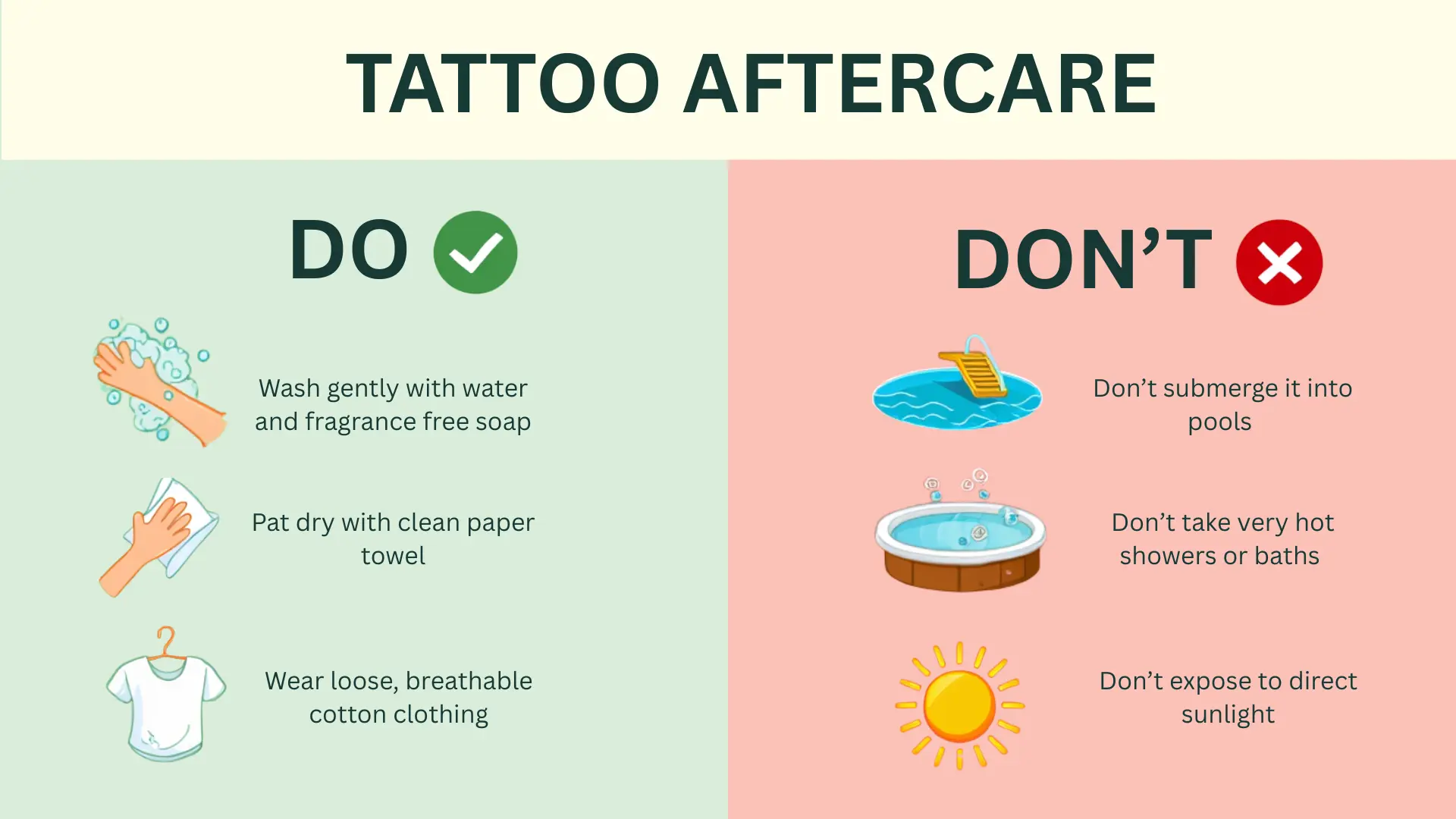
Proper tattoo aftercare that helps skin recover cleanly, lowers irritation, and supports better color retention during every healing stage.
Do’s:
- Wash the tattoo gently with lukewarm water and fragrance-free soap twice daily to remove bacteria and support safe healing.
- Apply a thin layer of fragrance-free moisturizer to keep the skin hydrated and reduce dryness without blocking airflow
- Pat dry gently with a clean paper towel. Do not ever rub with a cloth towel
- Follow your artist’s specific instructions for the first bandage or second-skin wrap and understand how long to keep the second skin on the tattoo.
- Wear loose, breathable cotton clothing over the tattoo to protect it from friction and UV without smothering the skin.
Don’ts:
- Don’t pick, scratch, or peel scabs or flaking skin. It lifts ink and can cause permanent scarring.
- Don’t submerge the tattoo in pools, hot tubs, lakes, or baths for at least two weeks.
- Don’t apply sunscreen to a healing tattoo. Wait until the surface is fully healed, then make SPF a lifelong habit.
- Don’t use scented lotions, soaps, or heavy products like straight Vaseline. Fragrance can react with ink, and thick petrolatum blocks airflow.
- Don’t expose the tattoo to direct sunlight. UV radiation fades fresh ink and can damage healing skin.
Other Factors that Affect How Long It Takes for a Tattoo to Heal
Even two people who get tattoos on the same day, from the same artist, may have completely different healing experiences. That’s because several factors play a role in tattoo healing.
- Skin Type: Oily skin may retain more moisture, leading to heavier scabbing; dry or sensitive skin often flakes more aggressively, affecting how well ink settles.
- Age and Immune Health: Younger skin with a robust immune system tends to heal faster. Immunocompromised individuals, smokers, and those under high stress typically see slower timelines.
- Hydration and Nutrition: Your body is healing a wound, so it needs water, protein, and vitamins A, C, and zinc to rebuild skin effectively.
- Artist Technique: Overworking the skin (going over the same area too many times) during a session can cause additional trauma that prolongs healing.
- Aftercare Discipline: This is the single biggest controllable factor. Consistent cleansing, moisturizing, and sun protection can dramatically shorten the perceived healing window.
When a Tattoo Is Fully Healed
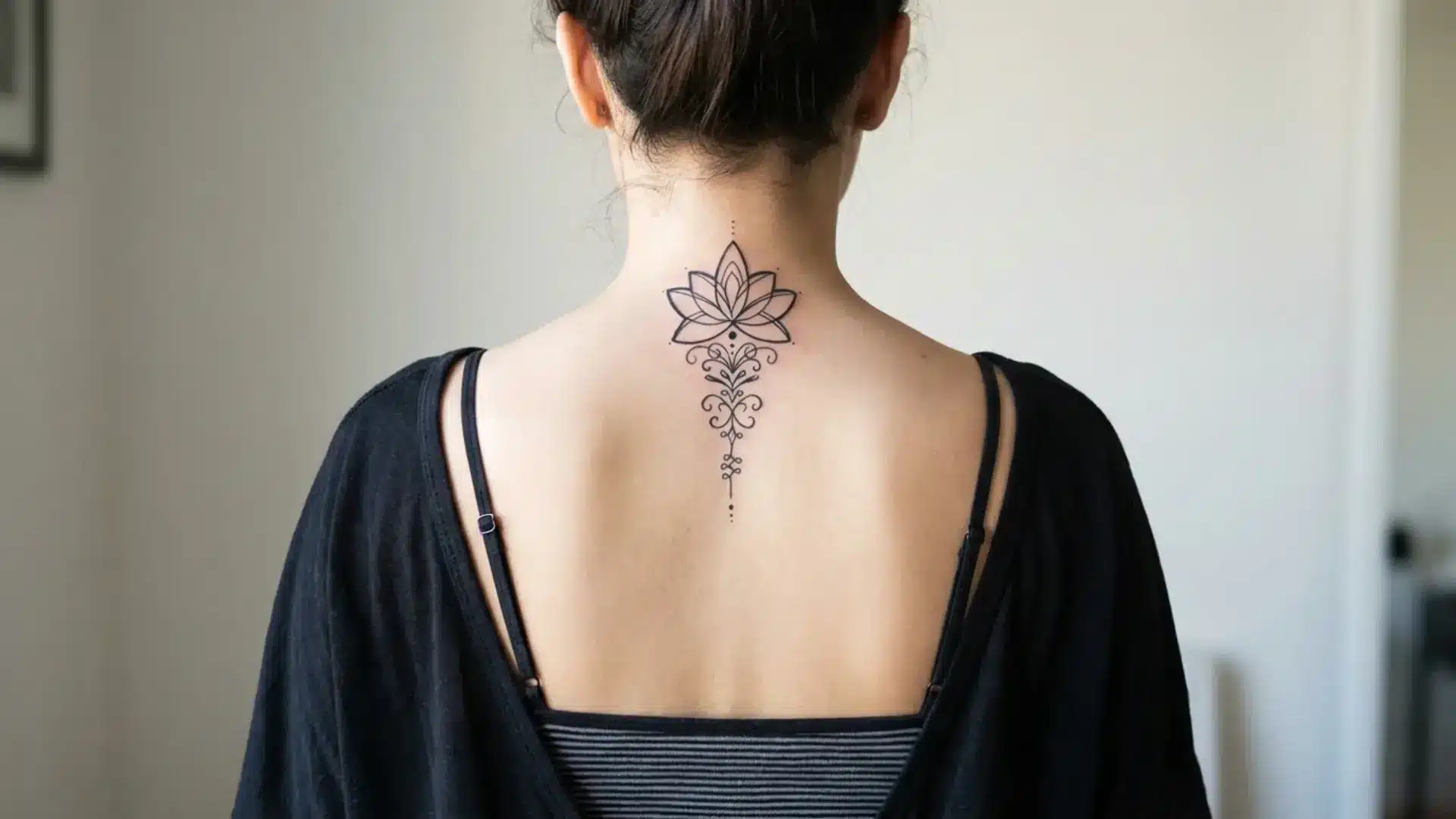
A tattoo is considered fully healed when both the surface and deeper layers of skin have completed recovery, leaving the area smooth, even, and comfortable.
Use this checklist to confirm full healing:
- The skin feels normal to the touch with no itching, flaking, or sensitivity.
- Colors appear settled and consistent, without dull patches or cloudiness.
- No redness, swelling, or raised areas remain, and the tattoo blends naturally with the surrounding skin.
- The design no longer feels tight or dry.
- At this point, regular skincare and sun protection become essential to maintain clarity and prevent fading over time.
Warning Signs of Tattoo Infection or Problems
While mild discomfort is expected during tattoo healing, certain persistent or worsening symptoms can signal infection, allergic reactions, or other complications that require prompt medical attention.
The American Academy of Dermatology Association lists out the unexpected skin reactions after tattoo and provide actionable steps to cure them. These symptoms differ from normal healing in intensity, duration, and spread
- Persistent or worsening pus (yellow, green, or thick) and foul-smelling discharge beyond the initial 2–3 days of clear plasma oozing.
- Fever, chills, or feeling unwell systemically, suggesting the infection has spread.
- Redness that expands outward, doesn’t fade after 3–4 days, or develops red streaks (possible lymphangitis).
- Severe swelling or puffiness extending beyond the tattooed area.
- Intense itching, hives, or a bumpy rash, often pointing to an ink allergy (commonly red pigments).
When in doubt, consult your tattoo artist for reassurance or seek immediate medical care from a doctor or dermatologist. Early antibiotics or treatment can prevent scarring, fading, or serious spread.
Conclusion
The most common mistake people make after getting a new tattoo is stopping aftercare the moment peeling ends. Surface recovery is just the visible chapter of a much longer process.
Stopping aftercare once the peeling ends is often what leads to premature fading, dullness, or uneven color.
Think of the first six months as an investment. Every time you moisturize, skip the pool, or apply sunscreen, you’re directly protecting the sharpness and vibrancy of your tattoo for years to come.
The artists who do great work will tell you the same thing: proper aftercare is half the tattoo.
If your healing doesn’t look or feel right at any stage, don’t wait it out. Reach out to your artist or a dermatologist early.
Got a healing question your artist didn’t cover? Drop it in the comments below!
Frequently Asked Questions
Is It Safe to Shave over a Healing Tattoo?
No. Wait until the surface is fully healed, usually two to three weeks minimum, to avoid cutting scabs or irritating fragile new skin.
Is It Normal for My Tattoo to Feel Raised Months Later?
Yes, occasional raised texture can occur due to weather, humidity, or skin sensitivity, and it usually settles on its own without concern.
Can I Work out with a Fresh Tattoo?
Avoid intense exercise for 48–72 hours. Sweat, friction, and bacteria from gym equipment can irritate the healing area and increase infection risk.
When Can I Go Swimming After Getting a Tattoo?
Wait until the surface is fully healed before swimming in any body of water, including pools, lakes, oceans, and hot tubs. This typically means a minimum of two to four weeks.
Submerging a healing tattoo introduces bacteria and chemicals that can cause infection and pull ink from the skin before it has stabilized.
How Long Should I Keep the Second-Skin Bandage On?
Follow your artist’s specific instructions, as they may vary. In general, a second-skin bandage such as Saniderm or Tegaderm is worn for 3 to 5 days.
Remove it gently under warm running water to loosen the adhesive without pulling the skin. After removal, transition to standard aftercare with gentle washing and moisturizing.
Can I Sleep on My New Tattoo?
Try to avoid sleeping directly on a fresh tattoo for at least the first three to four days. Pressure restricts airflow, causes friction, and can cause the tattoo to stick to bedding.
Sleep on a clean, dark pillowcase or cover the area loosely if you cannot avoid contact. Larger tattoos or those on the torso or back may require more careful positioning for the first two to three weeks