Airport security has a way of turning everyday items into unexpected problems. Deodorant is one of them, not because it is dangerous, but because travelers assume all deodorant is treated the same.
It is not, and that assumption has cost people their full-size spray at the checkpoint more times than TSA would like to count.
The short answer: it depends entirely on the form. Stick deodorant? Pack it anywhere, any size, no restrictions. Spray, gel, roll-on, or cream?
Those are liquids under TSA rules and must follow the 3-1-1 rule in carry-on luggage. This guide breaks down every type clearly, so nothing gets flagged or confiscated at security.
What TSA Means by Liquids
TSA defines a liquid as anything that can be poured, pumped, squeezed, sprayed, or spread. That definition is much broader than most travelers expect.
It captures gels, creams, aerosols, pastes, and any substance that does not hold a completely solid shape at room temperature.
The 3-1-1 rule applies to all of these: each container must be 3.4 oz (100 ml) or smaller, everything must fit inside one clear quart-sized zip-top bag, and each passenger gets one bag.
That is the rule that has been in effect since 2006 and has not changed since then.
If you have ever wondered how lip gloss, mascara, or setting spray are handled under the same rules, our complete breakdown of TSA rules for lip gloss and other beauty
Does Deodorant Count as a Liquid
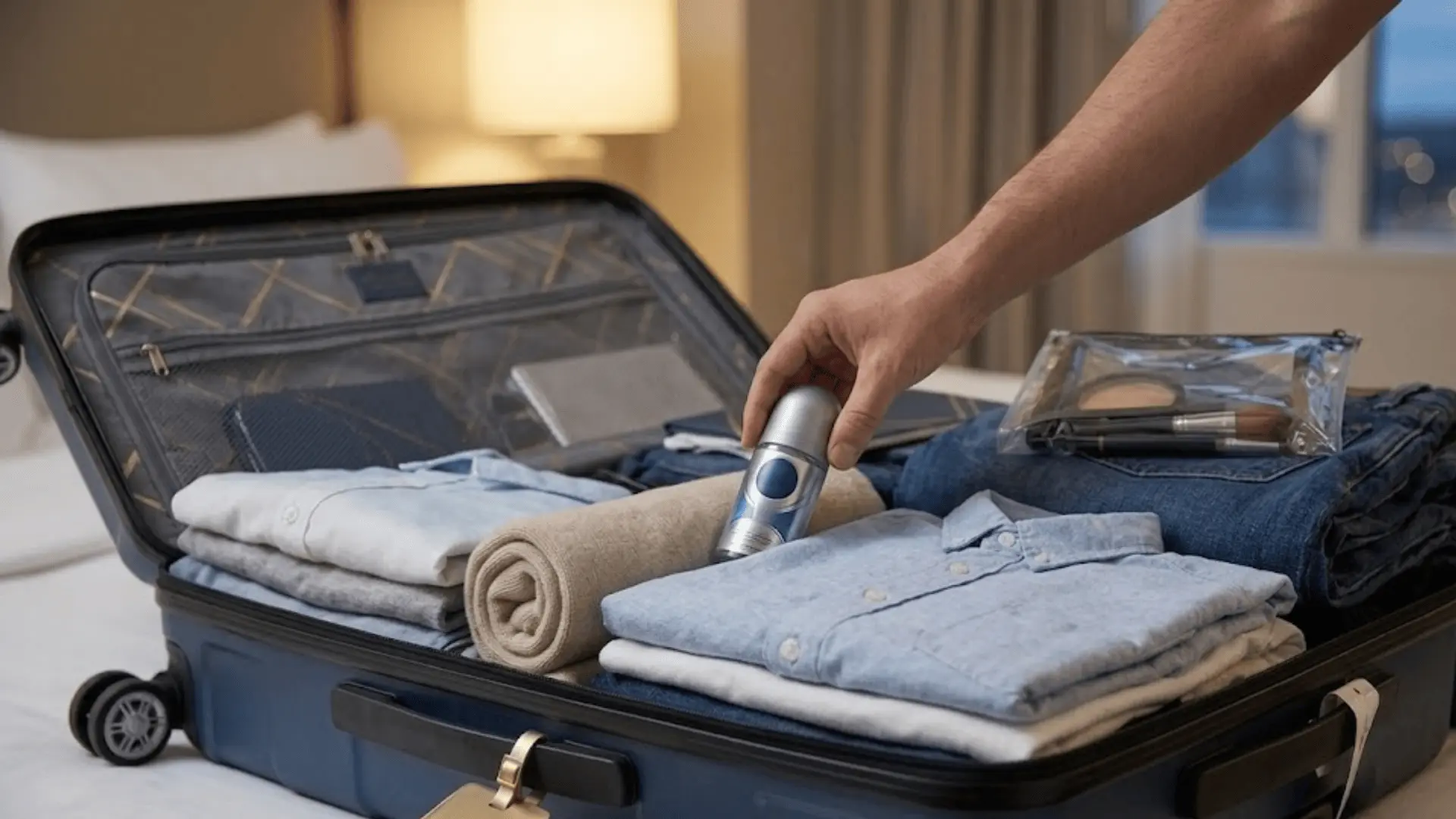
Yes and no, and the distinction matters. TSA does not classify all deodorants as a single category.
Each type is evaluated based on its consistency and the method of dispensing. Stick deodorant is a solid and has no restrictions.
Every other form, spray, roll-on, gel, or cream is treated as a liquid and must follow the 3-1-1 rule in carry-on luggage.
Getting this wrong is one of the most common reasons everyday toiletries get pulled or confiscated at security. Knowing your deodorant type before you pack is all the preparation you need.
Types of Deodorant and TSA Classification
Here is how each deodorant type is classified and what that means for packing:
| Type | TSA Classification | Carry-On Rule | Checked Bag |
|---|---|---|---|
| Stick (solid) | Solid — not a liquid | Any size, no bag needed | Any size, no restrictions |
| Roll-On | Liquid | 3.4 oz or less, in liquids bag | Allowed, larger sizes fine |
| Spray / Aerosol | Aerosol liquid | 3.4 oz or less, in liquids bag | Up to 17 oz per can; total aerosols capped at 70 oz per person |
| Gel / Cream | Liquid/gel | 3.4 oz or less, in liquids bag | Allowed, larger sizes fine |
| Powder deodorant | Not a liquid | No size limit; may trigger extra screening if over 12 oz | No restrictions |
| Mineral/crystal (alum) | Solid — not a liquid | Any size, no bag needed | Any size, no restrictions |
The same logic TSA uses for deodorant applies to other personal care items if you have ever wondered how mascara is handled under the same rules, our breakdown of does mascara count as a liquid for TSA walks through exactly that.
Common Mistakes Travelers Make With Deodorant
The most common mistake is assuming that all deodorants are treated the same.
- Packing a full-size liquid deodorant in a carry-on. Anything over 3.4 oz will be confiscated, regardless of how much product is left. TSA measures labeled container size, not remaining volume. A nearly empty 4 oz roll-on is still a 4 oz container.
- Forgetting to put roll-on or gel deodorant in the liquids bag. Even if the size is within limits, it must be inside the quart-sized clear bag for screening. Loose liquid toiletries get flagged.
- Packing a full-size aerosol spray in a carry-on. Most spray deodorants come in cans that hold well over 3.4 oz. These belong in checked luggage.
- Not securing aerosol caps in checked luggage. TSA and FAA both require caps on aerosol cans. Loose nozzles can trigger safety checks and delay bag processing.
- Overstuffing the liquids bag. If spray or gel deodorant is already in the bag alongside shampoo, face wash, and skincare, there may simply not be room. A solid stick deodorant frees up that space entirely.
Tips to Pack Deodorant Without Issues
A few small adjustments in packing habits can make the entire airport experience smoother.
- Switch to a stick for carry-on-only travel: It is the only deodorant format with zero restrictions, any size, no liquids bag needed.
- Use travel-size versions of liquid formats: Most roll-on and gel deodorants come in travel sizes well under 3.4 oz. These work perfectly for short trips without giving up your preferred formula.
- Pack sprays and full-size gels in checked luggage: Save carry-on liquids-bag space for items that genuinely need to be accessible mid-flight.
- Secure all caps before packing: For roll-ons, especially, place a small piece of plastic wrap under the cap before screwing it back on to prevent leaks from pressure changes.
- Consider powder or mineral crystal formats: Both are solid alternatives that completely sidestep the 3-1-1 rule, ideal for frequent travelers or minimalist packers
Conclusion
Deodorant may seem like a simple item, but TSA rules depend entirely on its form. Stick deodorants are easy to carry without restrictions, while sprays, gels, and roll-ons must follow liquid guidelines.
Understanding these differences helps prevent delays, avoids last-minute repacking, and keeps travel stress low. Packing with awareness ensures a smoother experience from check-in to boarding.
Before heading to the airport, take a moment to review your toiletries and ensure they comply with TSA rules. A quick check now can save time and frustration later.