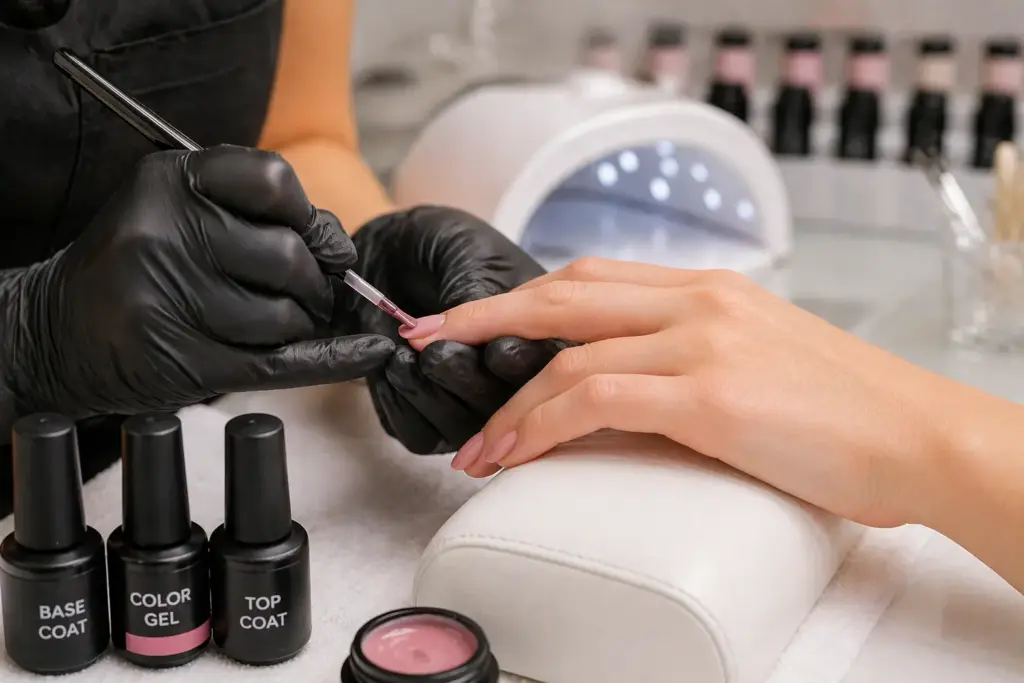
Gel nail polish lasts two to four weeks, cures under UV or LED light, and stays chip-free in a way regular polish simply cannot match.
If you’ve been dealing with manicures that chip by day three, switching to gel usually fixes that immediately.
I got into gel polish out of necessity, working in fast-paced theater dressing rooms where quick changes weren’t an option.
What stood out wasn’t the product itself, but how much the results depended on proper prep and careful removal. That’s still the biggest thing I tell anyone curious about gel nails.
From how gel polish works to its benefits, risks, and proper removal, each step affects how your nails hold up long term.
This blog covers it all, including how gel compares to other options and what to do between sets to keep your nails healthy.
What is Gel Nail Polish?
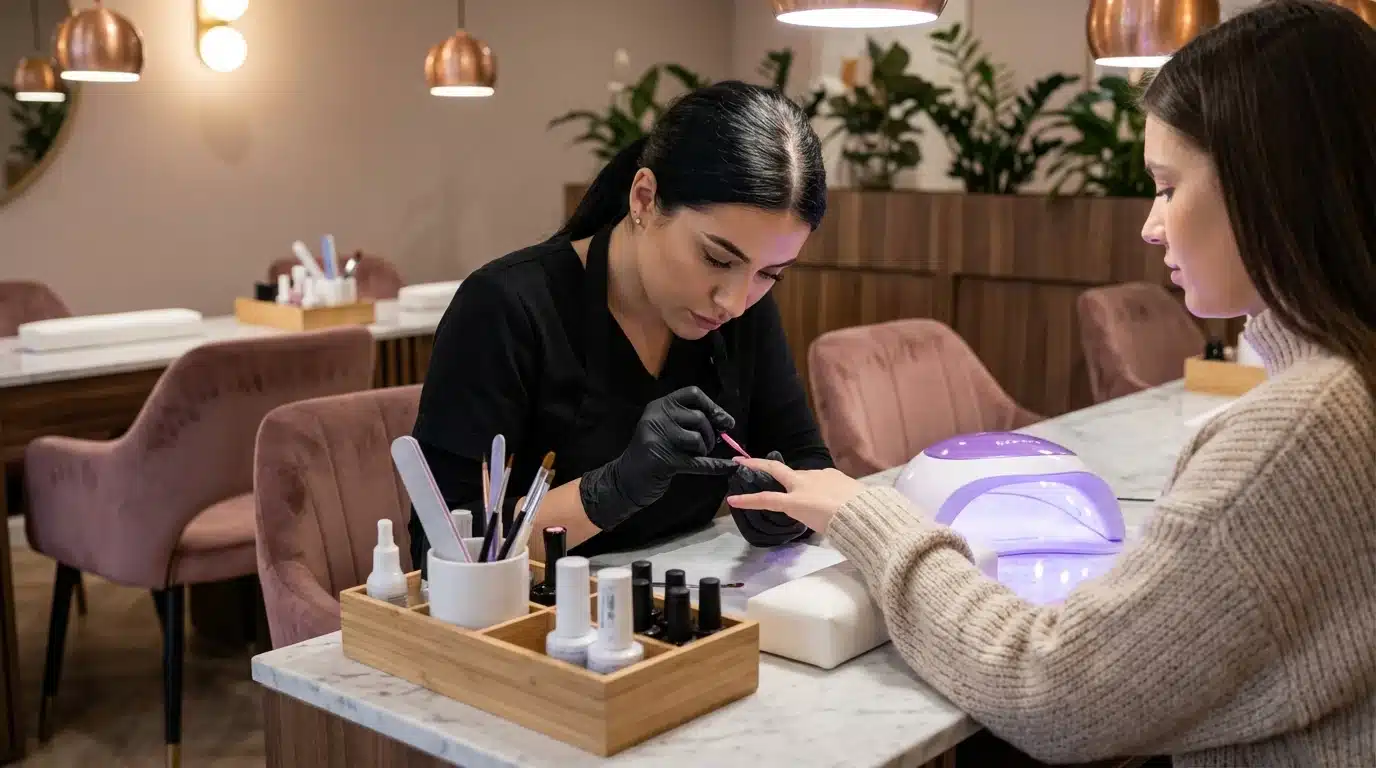
Gel nail polish is a long-lasting nail coating that cures under UV or LED light rather than air-drying. Once cured, it bonds chemically to the nail surface, which is why it resists chipping for weeks rather than days.
Regular nail polish sits on top of your nail and can peel or chip within days.
Gel polish, on the other hand, bonds to the nail surface chemically once it’s cured.
That bond is what gives it chip-resistant wear, lasting two to four weeks, far longer than anything that air-dries.
Curing is the process of hardening the gel using light. UV lamps take about two minutes per layer, while LED lamps work faster, sometimes in as little as 30 seconds.
Both work by activating the photoinitiators in the gel formula, which harden the polish and set it firmly onto the nail.
In practical terms, the light triggers a chemical reaction that turns liquid gel into a solid, protective layer. That’s why it lasts so much longer than air-dried polish.
Gel vs Regular Nail Polish
Gel polish cures under UV or LED light and lasts two to four weeks without chipping. Regular polish air-dries naturally but chips within days and removes easily with standard nail polish remover.
Feature | Gel Nail Polish | Regular Nail Polish |
Drying Time | Cures in seconds to 2 minutes per layer under UV/LED lamp | Takes 20–40 minutes to fully air-dry; smudge risk is high |
Durability | Lasts 2–4 weeks with minimal chipping | Lasts 3–7 days before chipping or peeling |
Finish | Stays glossy and fresh throughout the entire wear period | Tends to dull and lose shine after a few days |
Removal | Requires acetone soak for 10–15 minutes; improper removal can damage nails | Removed easily with any nail polish remover in minutes |
Cost | Higher upfront cost; usually requires a salon visit or UV/LED lamp at home | Affordable and easy to apply at home with no extra tools |
Best For | Busy lifestyles, weak nails needing structure, long-wear color | Casual use, frequent color changes, and nail health recovery periods |
Gel vs Acrylic vs Dip Powder: What’s the Difference?
Gel polish is often confused with acrylics and dip powder, but they are different products.
Gel polish is applied directly to your natural nail and cured under a lamp, no extensions, no sculpting, nothing added to the nail structure itself.
Acrylic nails involve liquid and powder polymers that are shaped and extended over the natural nail, which is why they tend to cause more damage with frequent use.
Dip powder nails involve dipping the nail into colored powder sealed with a resin; no lamp is needed, but removal still requires acetone soaking.
Gel is generally the most natural-looking of the three and the least damaging when removed correctly. I’ve had clients come in after years of acrylics with nails that were paper-thin.
Switching them to gel gave their nails a real chance to recover while still keeping a polished look they felt good about.
Types of Gel Nails
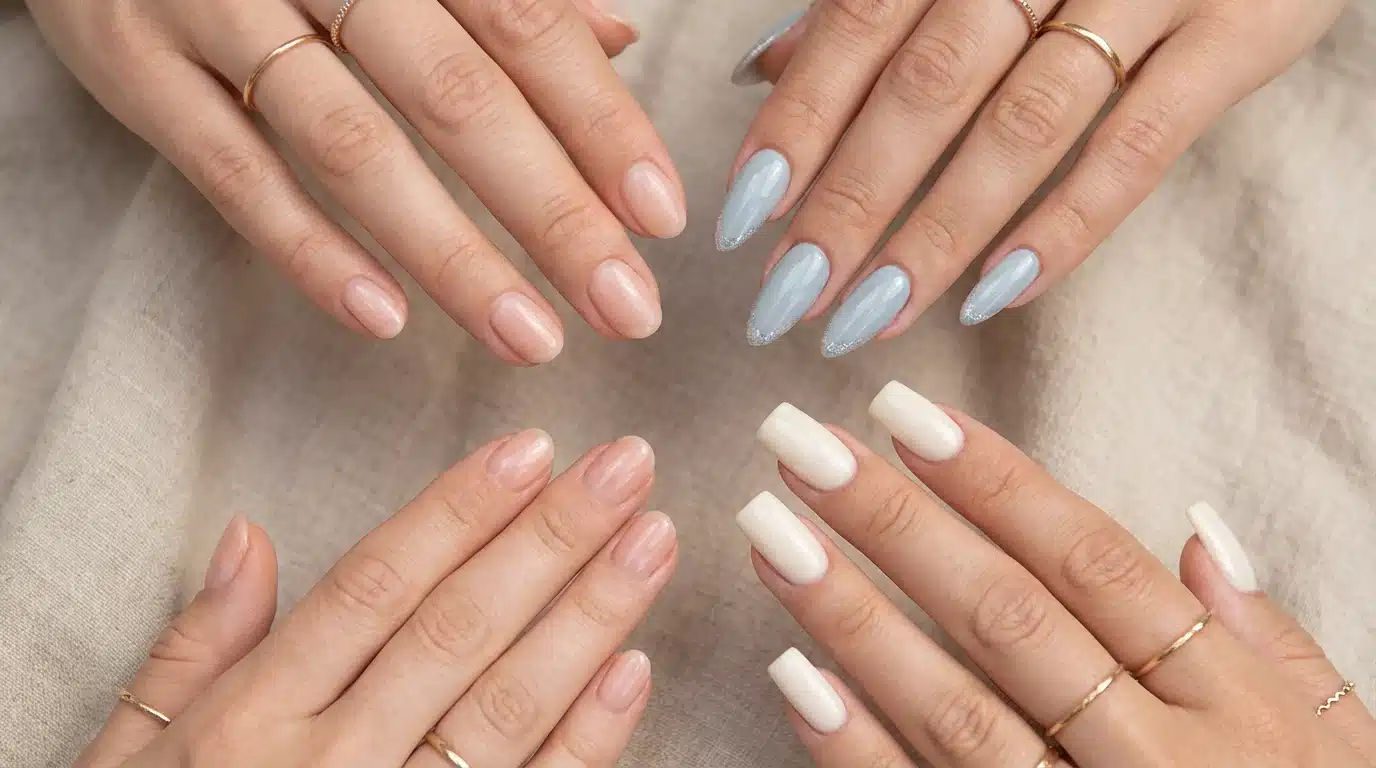
Not all gel products work the same way. Knowing the difference helps you pick the right one before you start.
1. Soft Gel
Soft gel is the most common type used for gel polish manicures. It is flexible, sits close to the nail, and bonds smoothly to the natural nail surface without adding bulk or extra thickness.
One of its biggest advantages is how easy it is to remove; a simple acetone soak is all it takes to lift it off cleanly. It’s the right choice for most people doing gel on natural nails at home.
If you want to try it yourself, a step-by-step guide on how to do gel nails at home walks you through the full process from prep to cure.
2. Hard Gel
Hard gel is significantly stronger than soft gel and is typically used for nail extensions or overlays rather than simple color manicures.
It creates a rigid, durable layer that holds its shape well, making it the go-to choice for building length and structure.
Unlike soft gel, hard gel cannot be soaked off with acetone; it has to be carefully filed down, which requires more time and skill. It’s not the best starting point for an at-home application.
3. Builder Gel
Builder gel falls between soft and hard gel in terms of flexibility and strength. It’s thicker in consistency and is used to strengthen, shape, or add length to natural nails without committing to full extensions.
At the salon, I reach for builder gel with clients who have brittle nails that keep breaking it gives them a protective layer without the commitment of a full extension set.
It strikes a good balance between protection and a natural look.
4. Polygel
Polygel is a hybrid nail product that combines the strength of acrylic with the flexibility of gel. It comes in a thick, putty-like form that is easy to shape and control, making it ideal for extensions or added structure.
Unlike acrylics, it has no strong odor and doesn’t harden until cured under a UV or LED lamp.
It’s lighter on the nails, feels more natural, and is a popular choice for those who want durability without the heaviness of traditional enhancements.
Benefits of Gel Nail Polish
For those who use their hands constantly, whether that’s at work, in the studio, or just living a full life, the practical advantages of gel over regular polish are hard to argue with.
- Long Wear: Lasts two to four weeks without needing a redo.
- Chip-Free: Bonds into a hard layer that resists chips and cracks.
- Glossy Finish: Stays shiny and fresh-looking right up until removal day.
- No Dulling: Unlike regular polish, gel doesn’t lose its shine over time.
- Nail Protection: Provides a protective coating that strengthens nails.
- Daily Durability: Withstands everyday activities, making it perfect for those who work with their hands.
- No Touch-Ups: Once applied, no maintenance or reapplication is required during wear.
Are Gel Manicures Ruining Your Nails?
Gel nail polish is generally safe when applied and removed correctly, FDA-classified as a cosmetic, and does not restrict its use, though it recommends following the manufacturer’s instructions for safe application and removal.
The ingredients are cosmetically approved, and millions use gel manicures regularly without issues
The most common cause of nail damage is improper removal. Peeling or picking off gel polish pulls layers of the nail with it, leaving nails thin, weak, and sometimes painful. Overuse without giving nails a break can also lead to long-term thinning and sensitivity.
The good news is that all of this is preventable. Follow the correct removal process and give your nails regular breaks between sets, and gel poses very little risk to your nail health.
How You Can Protect Your Nails After Gel Manicures
Protecting your nails after a gel manicure comes down to removal and recovery habits between sets.
The removal process is where most of the damage occurs. Soak cotton pads in acetone, place them on each nail, wrap in foil, and wait 10 to 15 minutes.
Use a cuticle stick to gently push the lifted gel back, and never peel or scrape it off, as this strips layers from your natural nail and causes thinning.
Between appointments, give your nails at least one week off to breathe and recover. Apply cuticle oil daily, use a nail strengthener, and keep nails trimmed short enough that they don’t catch and snap.
Those habits compound nails that get regular care between gel sets stay noticeably stronger over time.
Risks of Gel Nail Polish
The main risks with gel nail polish come from improper removal, overuse, and UV exposure, not the formula itself. Here’s what to watch for:
- Nail Thinning: Too many back-to-back gel sets without a break weaken and thin your natural nails.
- Lifting from moisture: Don’t soak your nails in water before application. Water causes nails to expand slightly; when they contract, the gel loses adhesion and lifts within days.
- UV Exposure: Frequent curing sessions add up to cumulative UV exposure. The American Academy of Dermatology recommends applying broad-spectrum SPF 30 to your hands before using a lamp as a simple preventive measure.
- Allergic Reactions: Acrylates in gel formulas can trigger redness, itching, or swelling in some people, especially with repeated exposure.
- Skin Sensitivity: Gel cured onto the surrounding skin can cause irritation or contact dermatitis over time. Keep the gel off your cuticles and the skin around your nails.
Who Should Be Cautious with Gel
Gel polish isn’t the best fit for everyone, especially if nail health is already compromised.
Conditions like nail psoriasis, fungal infections, or severely thin and damaged nails can worsen with gel application. In these cases, consulting a dermatologist before booking an appointment is the safest move.
Habit also plays a role. People who tend to pick or peel their nails face a higher risk of damage, as improperly removing gel can strip layers from the natural nail.
If nails feel weak or sensitive, allowing time for recovery before applying gel makes a noticeable difference in the long term.
From experience, even clients with reactive or sensitive skin can still wear gel successfully.
The difference comes down to preparation. A simple patch test of the base coat 48 hours before application can help avoid irritation or allergic reactions.
Many salons don’t offer this unless requested, but asking for it adds an extra layer of safety and confidence before committing to a full set.
Tips to Make Your Gel Manicure Last Longer
Seal the nail tips, avoid water right after application, and wear gloves during chores. Don’t use nails as tools, and apply cuticle oil regularly.
- Cap the free edge: Always cap the free edge of every coat base, color, and top. This seals the tip and is one of the single biggest reasons gel peels start at the ends when people skip it.
- Avoid hot water: Avoid hot water for the first few hours after application, as heat can cause lifting.
- Wear gloves: Wear gloves when doing dishes or cleaning with harsh chemicals.
- Don’t use your nails as tools: Opening cans or scratching labels is how chips start.
- Apply a clear top coat: Apply a fresh layer of regular clear top coat (not gel) every few days to extend shine between sets. It won’t cure like gel, but it does add a protective layer on top.
Formula quality also plays a role in how long your manicure holds up. The best of the best Korean gel nail polish brands is a good place to start if you want to upgrade your at-home kit.
Conclusion
Gel nail polish is worth it, but the results depend on how you prep, how you remove, and whether you take proper breaks.
Get those three things right, and gel is one of the lowest-maintenance routines you can add to your week.
After years of working with clients at every experience level, the pattern I see is clear: the people who have good experiences with gel are the ones who treat removal as seriously as application. That’s the whole game.
If you’re new to gel or switching from regular polish, start with a soft gel kit at home and follow the removal steps carefully.
Your nails will thank you after the first set.
Have a question about gel that didn’t get answered here? Drop it in the comments.
Frequently Asked Questions
How Do I Know When It’s Time to Remove My Gel Set?
When you notice lifting at the edges or significant new nail growth, it’s time to remove. Most sets last two to four weeks. Leaving gel on past this window increases the chance of moisture getting under the polish, which can lead to bacterial growth or nail damage.
Does Gel Nail Polish Damage Your Nails Long Term?
Gel itself doesn’t damage nails when applied and removed correctly. Long-term damage comes from repeated improper removal, skipping breaks between sets, or leaving gel on too long. Regular breaks of five to seven days between sets and consistent cuticle care keep nails healthy over time.
Can I Do Gel Nails at Home without a UV lamp?
Standard gel polish requires a UV or LED lamp to cure; without one, the polish won’t harden properly. Some brands market “no-lamp gel polish,” but these are typically hybrid formulas with shorter wear times.