There is a specific kind of panic that sets in when you rinse out a box dye, and the mirror shows something unexpected. Too dark, too brassy, too far from what you imagined.
I have been there, standing in a bathroom with a towel on my head, trying to decide whether to cry or just order a hat. If any of that sounds familiar, this guide is for you.
Stripping hair color at home is possible, but the results depend on your dye type, your hair’s current condition, and the method you choose.
The good news is that most people have at least a few of these options already in their cabinets, and knowing which to reach for first makes the whole process less stressful.
What Does Stripping Hair Color Mean?
Stripping hair color means removing unwanted artificial dye from the hair, either partially or completely, to return it to a lighter shade or to prepare it for a new color.
This process targets dye molecules within the hair shaft and helps fade or lift them using different techniques.
Semi-permanent dyes usually fade more easily, while permanent hair color often requires stronger treatments.
Hair texture, porosity, and previous chemical processing all affect the final result. Proper aftercare, especially deep conditioning and moisture restoration, matters just as much as the method itself.
Best Methods for Stripping Hair Color at Home
Each method below targets a different dye type and damage level, so choose the one that matches your hair’s current condition, ranked from gentlest to strongest.
1. Clarifying Shampoo
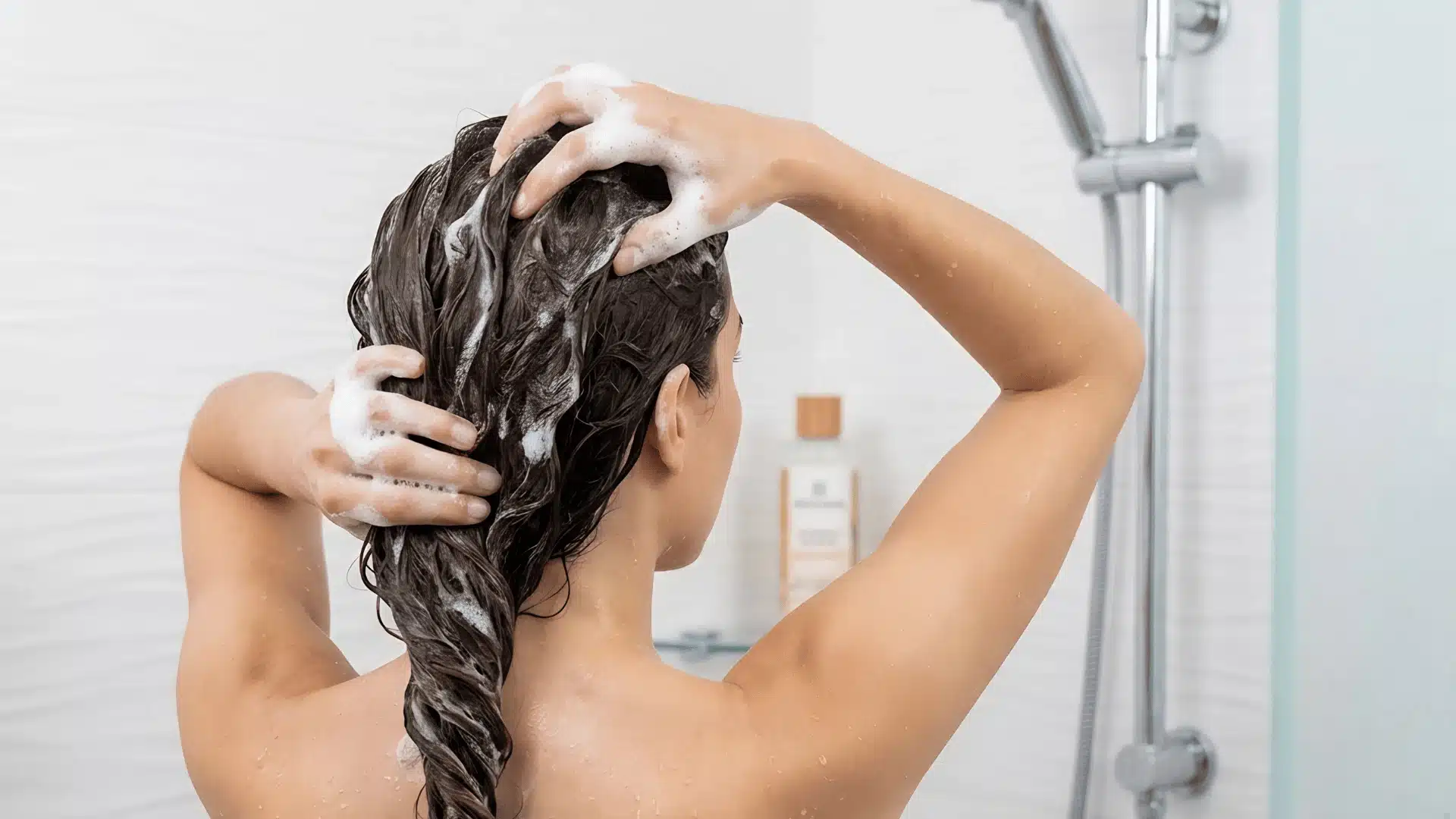
A clarifying shampoo is the safest entry point for stripping hair color. Its elevated pH and high surfactant levels open the cuticle and flush out dye molecules, making it best for semi-permanent and vivid fashion colors.
Skip anything labeled “color-safe.” Apply to warm, wet hair, leave for five to ten minutes, rinse, and follow with conditioner. Repeat every three to four days. Expect gradual fading, not instant results.
2. Vitamin C Treatment
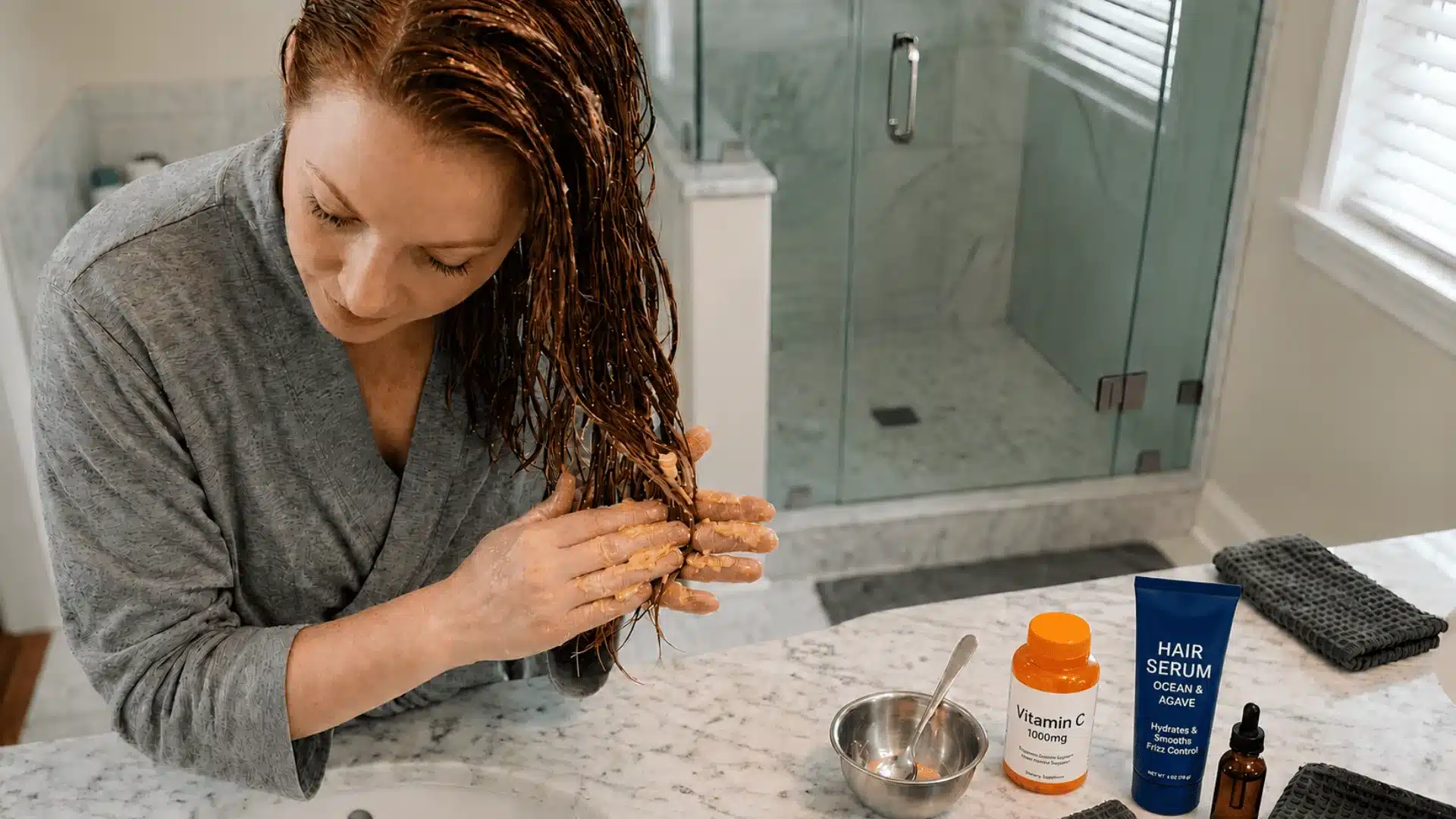
The ascorbic acid in vitamin C oxidizes dye molecules and loosens their bond to the hair shaft.
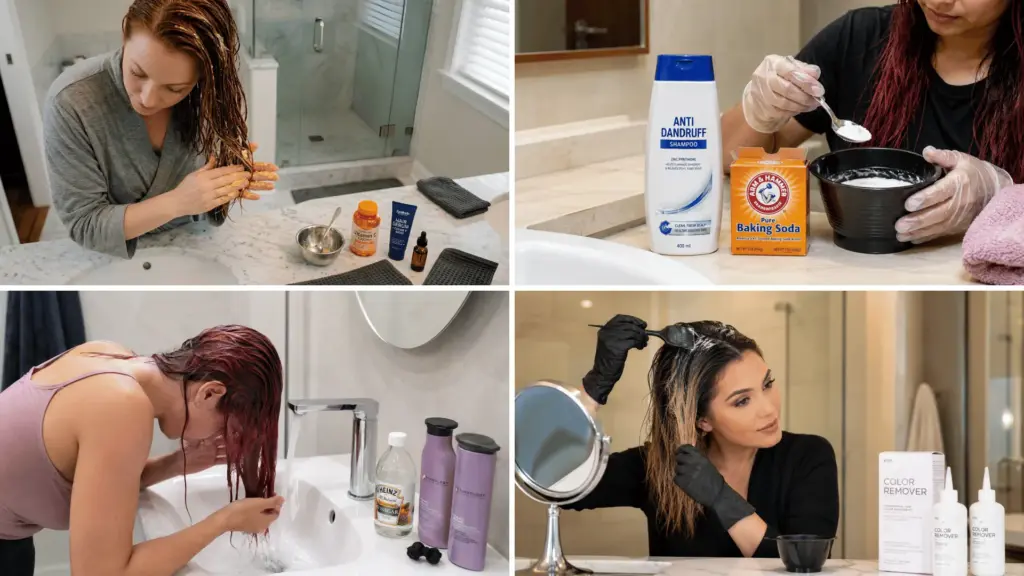
Crush ten to twelve tablets into a powder, mix with anti-dandruff shampoo to form a paste, apply to damp hair, cover with a shower cap, and leave for 30 to 60 minutes.
Rinse well and deep condition after. It works best on semi-permanent and demi-permanent colors, and on permanent dyes applied recently before fully setting.
3. Anti-Dandruff Shampoo
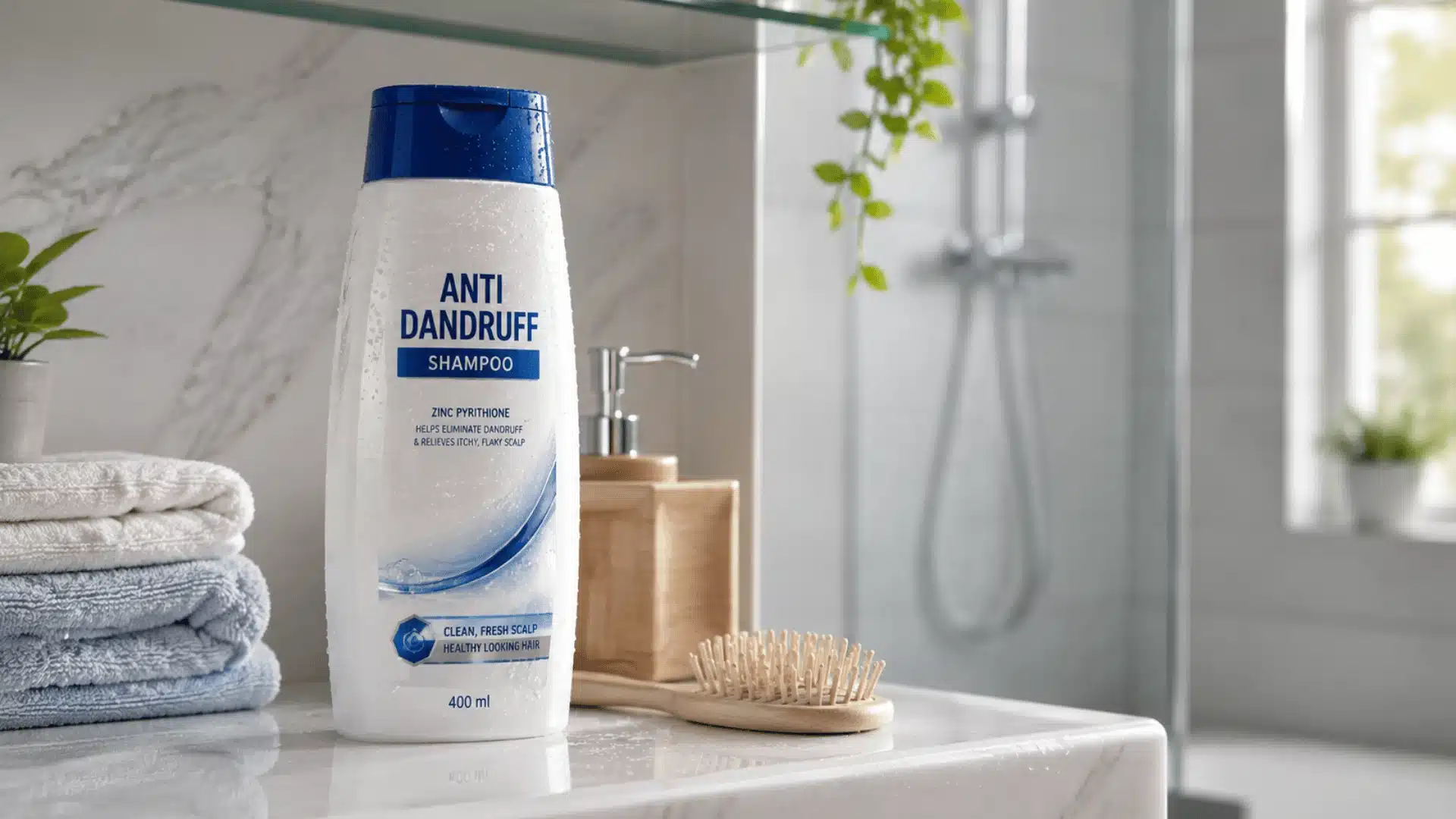
Many anti-dandruff shampoos contain strong cleansing ingredients such as selenium sulfide that may help fade hair dye faster than regular shampoo.
Work it through damp hair, cover with a shower cap for fifteen minutes, then rinse and condition well. Use every other wash rather than daily.
It is drying enough that skipping conditioner after each session will set your strands back noticeably.
4. Baking Soda Paste
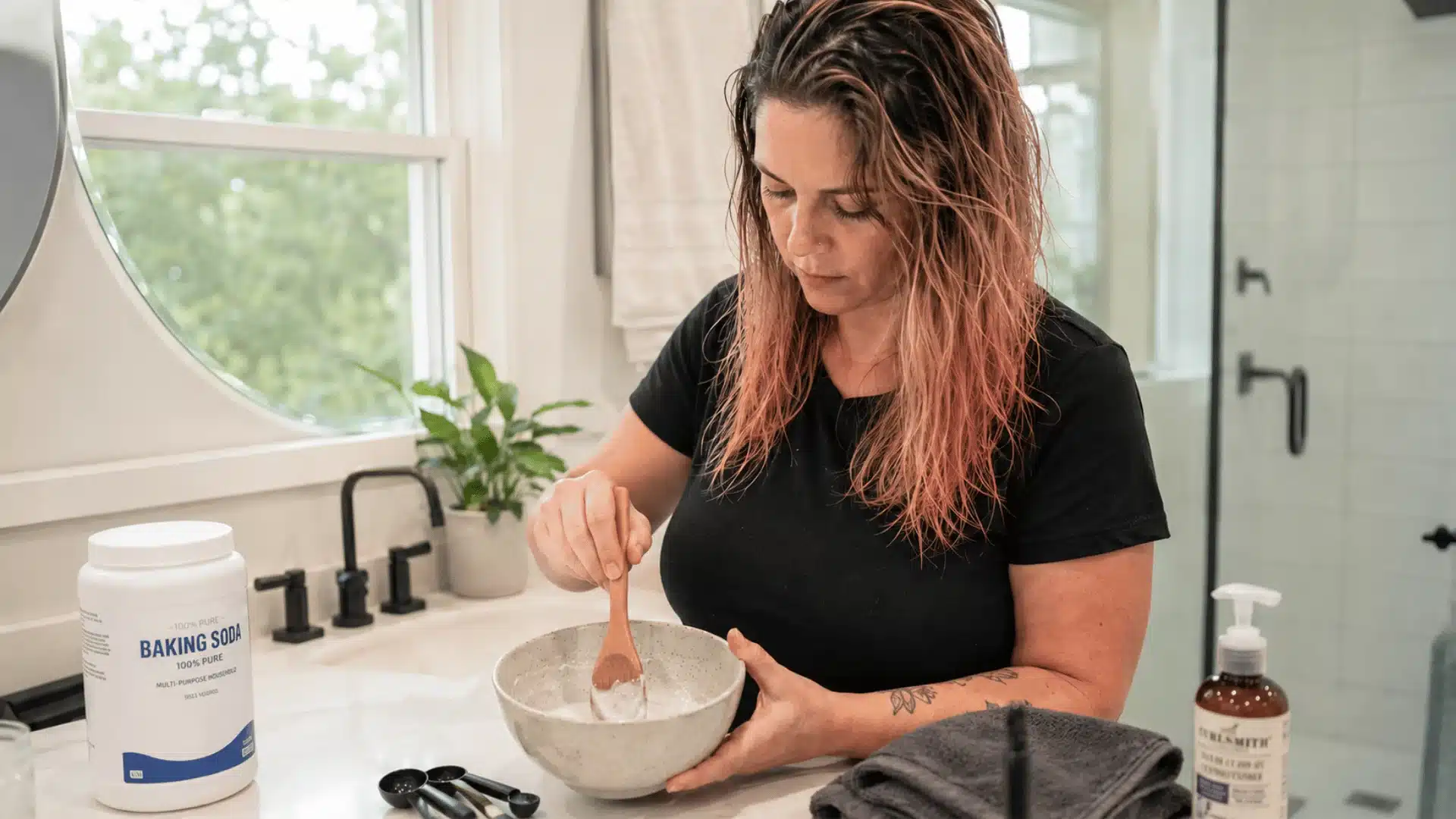
Baking soda’s high pH allows it to penetrate the cortex and help pull out pigment.
Mix equal parts baking soda and warm water into a paste, apply to damp hair for fifteen to twenty minutes, rinse, and condition thoroughly.
Results are gradual; use it as an occasional treatment rather than a daily wash to avoid cumulative dryness and breakage.
5. Hot Oil Treatment
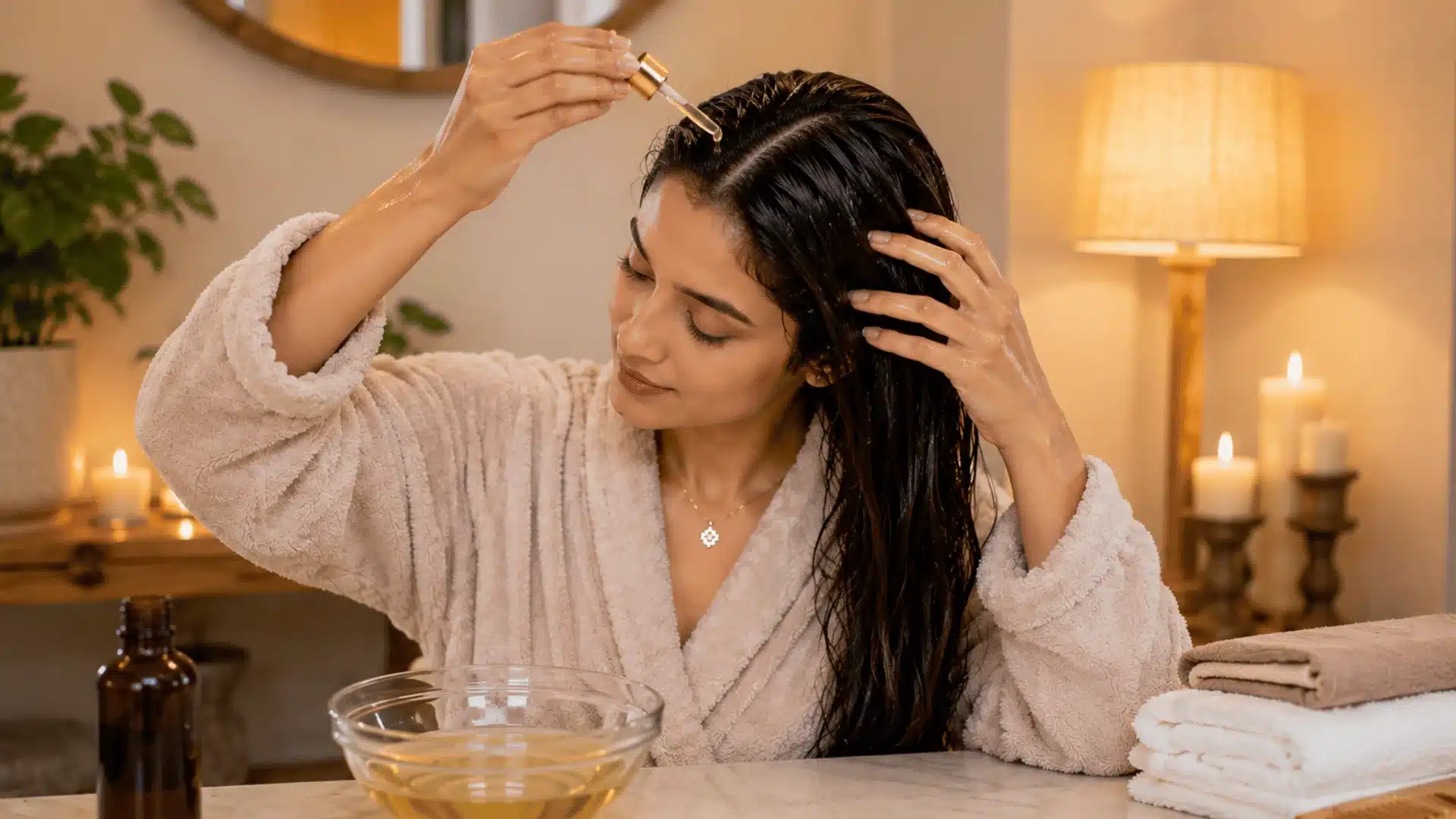
Hot oil removes dye gradually while conditioning at the same time, making it ideal for already-stressed strands. The oil surrounds and loosens the dye molecules, which are then washed out with the oil.
Warm half a cup of olive, coconut, or argan oil, apply from roots to ends, cover with a shower cap, and leave for one hour.
Shampoo twice to fully remove the oil. Repeat every ten days. The sooner after coloring, the better the result.
6. Baking Soda and Anti-Dandruff Shampoo Combo
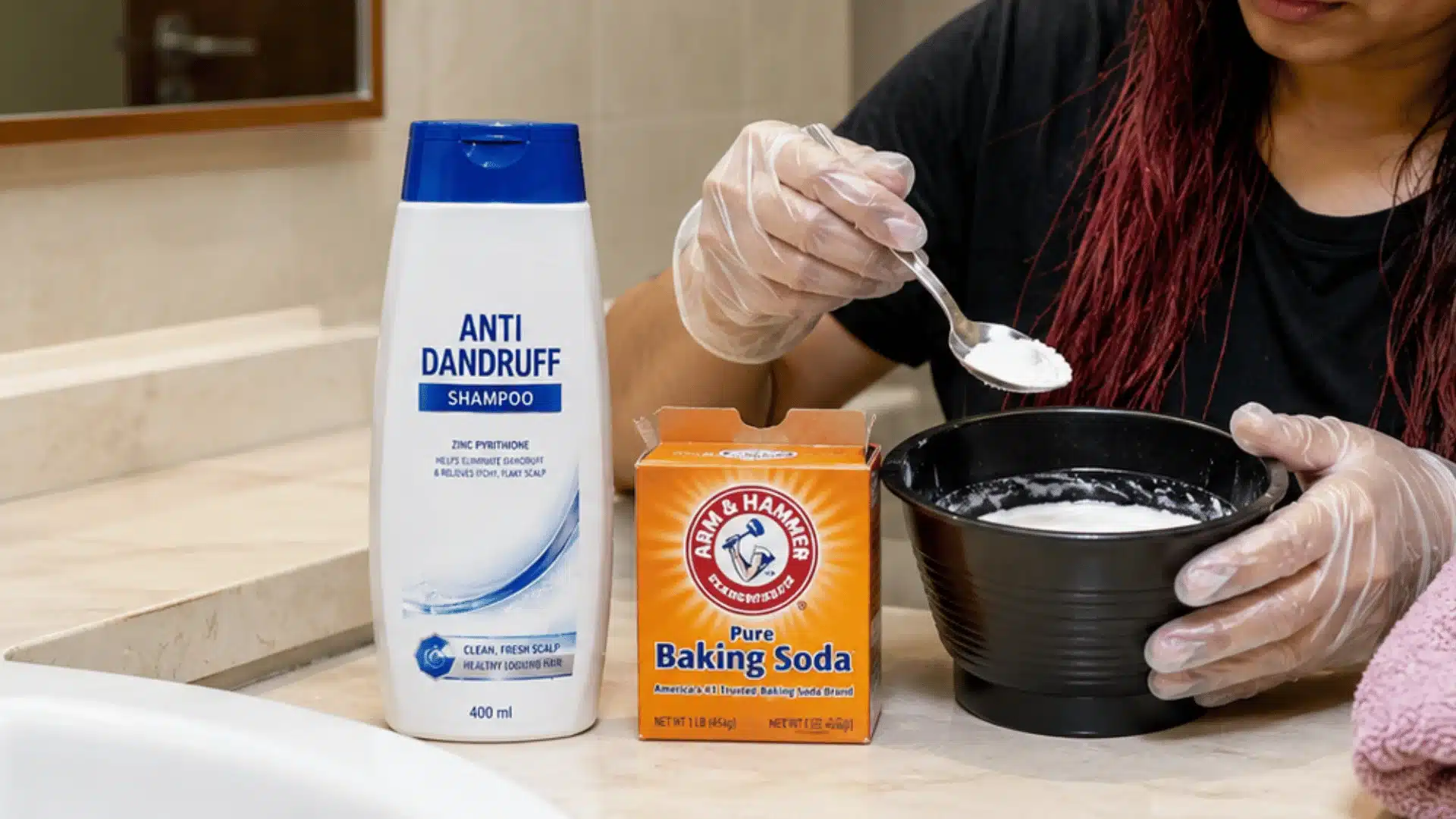
Combining both ingredients amplifies the fading effect. The baking soda opens the cuticle while the shampoo’s detergents actively lift color.
Mix one tablespoon of baking soda into a generous amount of anti-dandruff shampoo, work through damp hair, leave on for 15 to 20 minutes, then rinse and condition. Use every other wash.
One blogger reported visible fading after just two sessions with this combination, faster than either ingredient alone.
7. White Vinegar Rinse
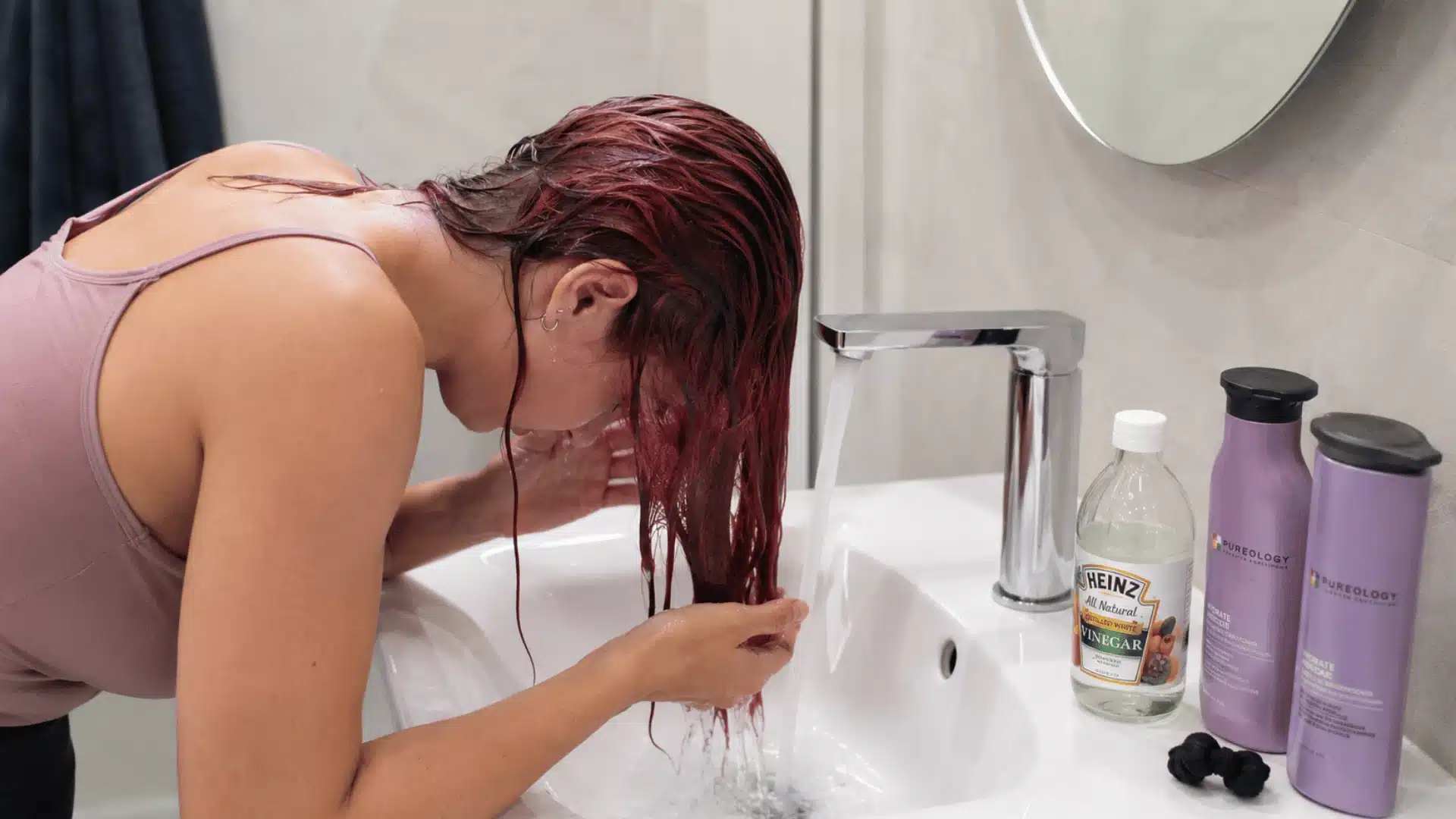
The acidity in white vinegar may help fade semi-permanent color slightly over repeated washes. It is one of the gentler options and works best on semi-permanent colors and toners that have gone too dark or ashy.
Mix three parts dye-free shampoo with one part white vinegar, apply evenly, cover for ten to fifteen minutes, then rinse with lukewarm water and condition; repeat every few days.
Avoid applying vinegar at full strength directly onto hair as the acidity compounds dryness.
8. Commercial Color Remover
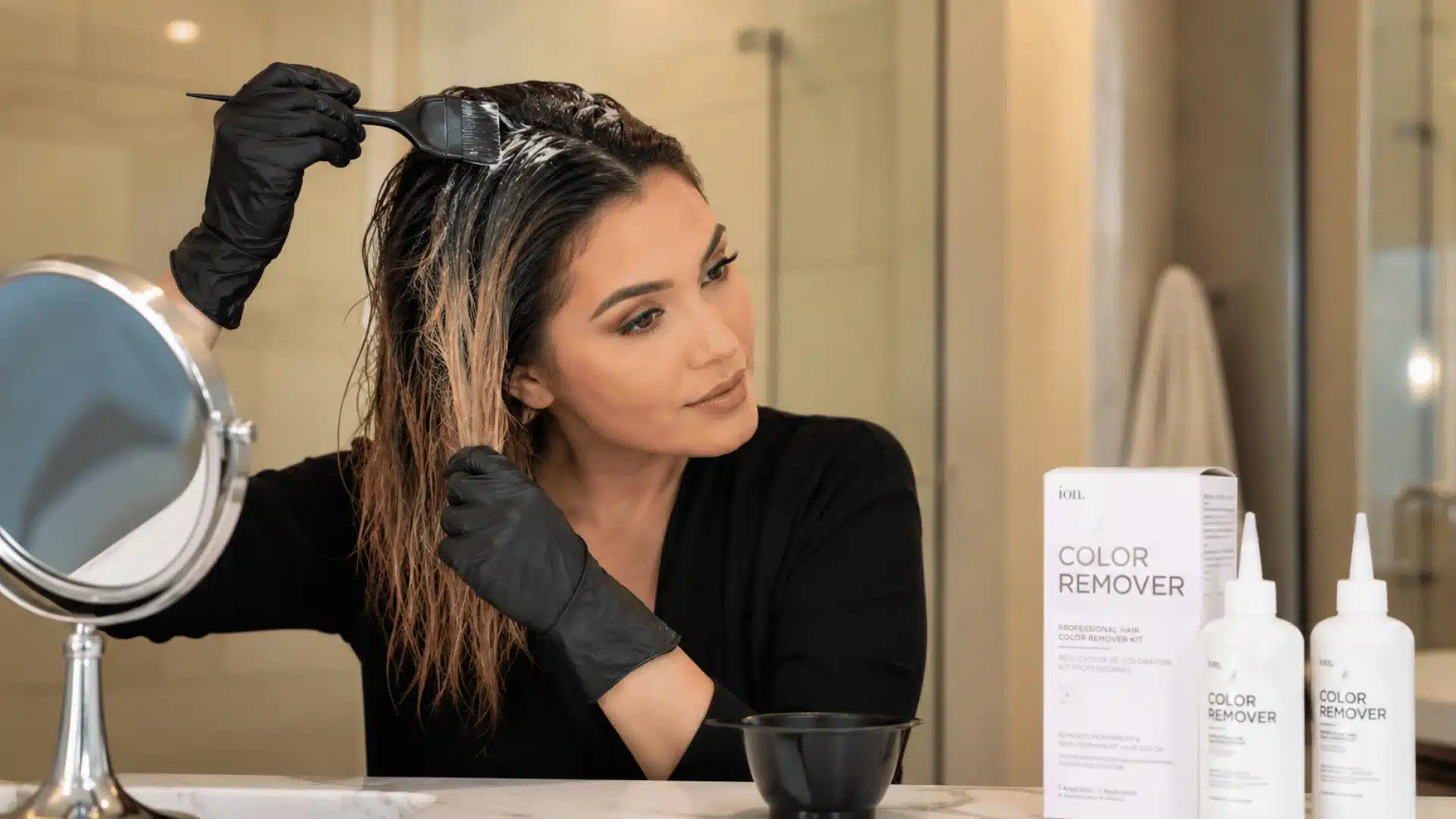
Commercial removers shrink dye molecules inside the shaft so they rinse out cleanly, without lifting natural pigment the way bleach does. Apply to damp hair and process for the time indicated on the packaging, usually 20 to 30 minutes.
Rinse for a full five minutes to prevent re-oxidation, shampoo twice, and deep condition.
Wait forty-eight hours before re-dyeing, since giving the skin and hair time to recover can protect the final result.
9. Bleach Bath
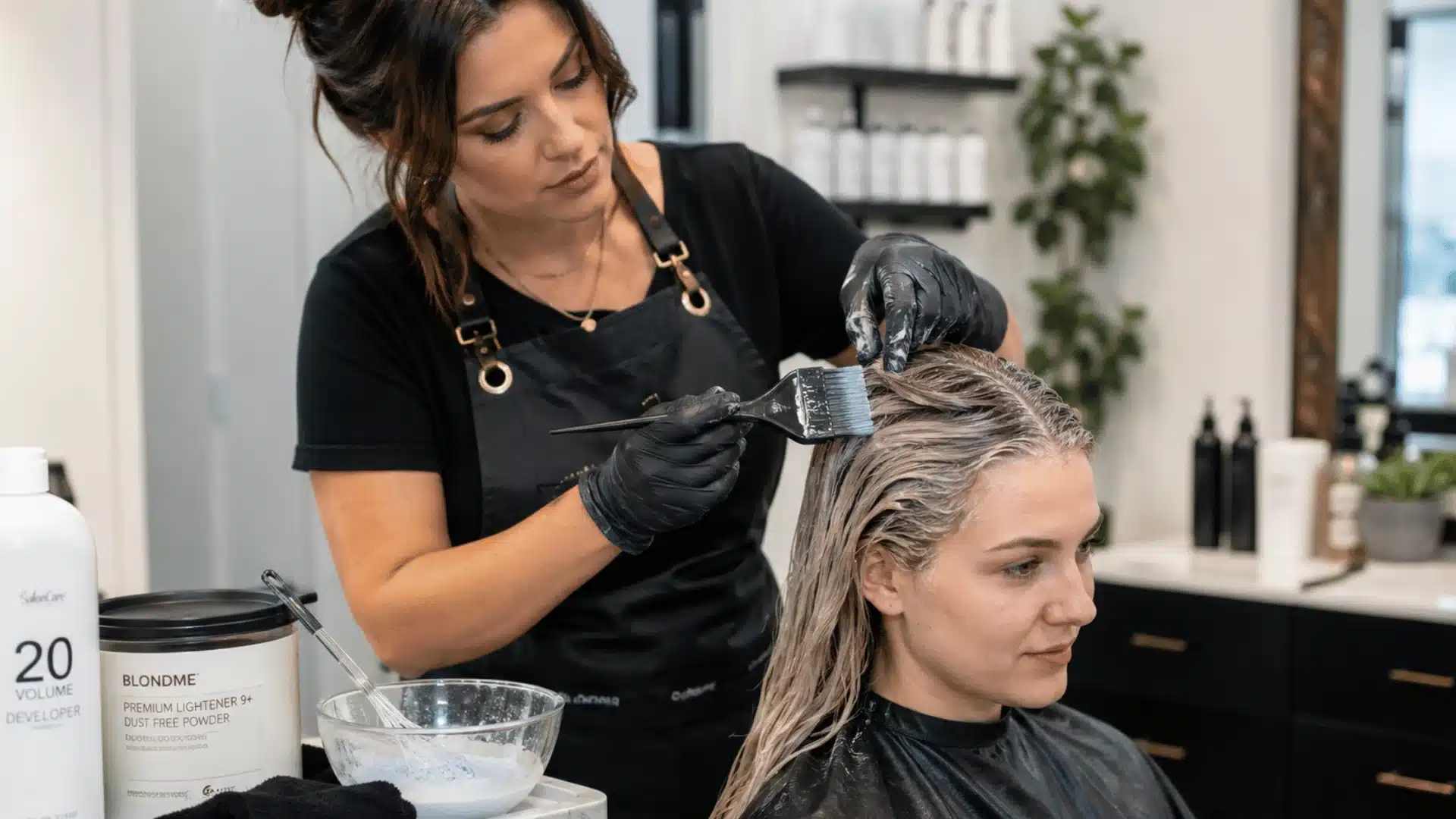
A bleach bath mixes bleach powder, low-volume developer, and shampoo in equal parts for a gentler lift than direct bleaching. Apply to damp hair, check every five minutes, and rinse the moment you reach your target level.
Do not exceed fifteen minutes total. Skip this entirely if your hair is already damaged or breaking.
Follow with a protein treatment and deep conditioner, and avoid heat styling for at least one full week after processing.
This method involves bleach. It is for informational purposes only. If your hair is already damaged or you are unsure of your hair’s condition, consult a professional colorist before attempting this at home.
Hair Care Tips After Stripping Hair Color
Color removal of any kind stresses the hair structure, so the days after stripping matter just as much as the method itself. These steps keep breakage in check and give your strands a healthy foundation for whatever you plan next.
It is also worth knowing that chemical stress can trigger temporary hair shedding after damage, which is usually short-lived if you handle aftercare correctly.
- Deep condition at least twice a week for the first month, focusing on mid-lengths and ends where strands are most porous and vulnerable.
- Switch to a sulfate-free shampoo for daily washing to avoid compounding the dryness that stripping creates.
- Apply a leave-in conditioner before any heat styling to protect weakened strands from further breakage.
- Hold off on any further chemical processing for at least four weeks, whether re-dyeing, relaxing, or perming.
- If your hair feels gummy or elastic when wet, that signals protein loss. Run one protein treatment before returning to your hydrating mask routine.
- Use a wide-tooth comb only on wet hair, working from the ends upward to reduce mechanical damage while strands are still in recovery.
If your hair feels gummy or elastic when wet, that signals protein loss. Do not continue with any removal method until you have run at least one protein treatment, then returned to a hydrating mask routine for several days. Gummy hair is fragile hair, and another round of processing can cause real breakage.
Conclusion
Match the method to your dye type and your hair’s condition. Clarifying shampoo and vitamin C are the right starting point for semi-permanent color.
A commercial remover is more reliable at removing permanent dye. A bleach bath is a last resort, not a first step.
If your hair is already damaged or you are trying to lift several levels of permanent color at once, a consultation with a colorist will give you a cleaner result than any DIY method can.
Have you tried any of these methods before? Drop your experience in the comments below and let the community know what worked for you.
Frequently Asked Questions
Can I Strip Hair Color the Same Day I Dyed It?
Yes, and acting fast improves results. Dye molecules are easier to remove before they fully bond to the cortex, so starting same-day treatment with clarifying shampoo, vitamin C, or hot oil is worth it.
Will Stripping Hair Color Damage My Natural Shade?
Natural methods like clarifying shampoo and vitamin C should not touch your natural pigment. Commercial removers target only artificial dyes, but bleach baths will lift both artificial and natural color, so they require extra care.
How Many Times Can I Safely Strip My Hair in One Month?
Gentle methods like clarifying shampoo or vitamin C can be repeated every few days with conditioning between sessions. Commercial removers and bleach baths should be used once per session, with at least two to four weeks between attempts.
Does Hot Water Help Remove Hair Color Faster?
Warm water opens the cuticle slightly and helps remove color during rinsing. Very hot water used daily strips natural oils and increases dryness over time, so warm rather than hot is the better call throughout.