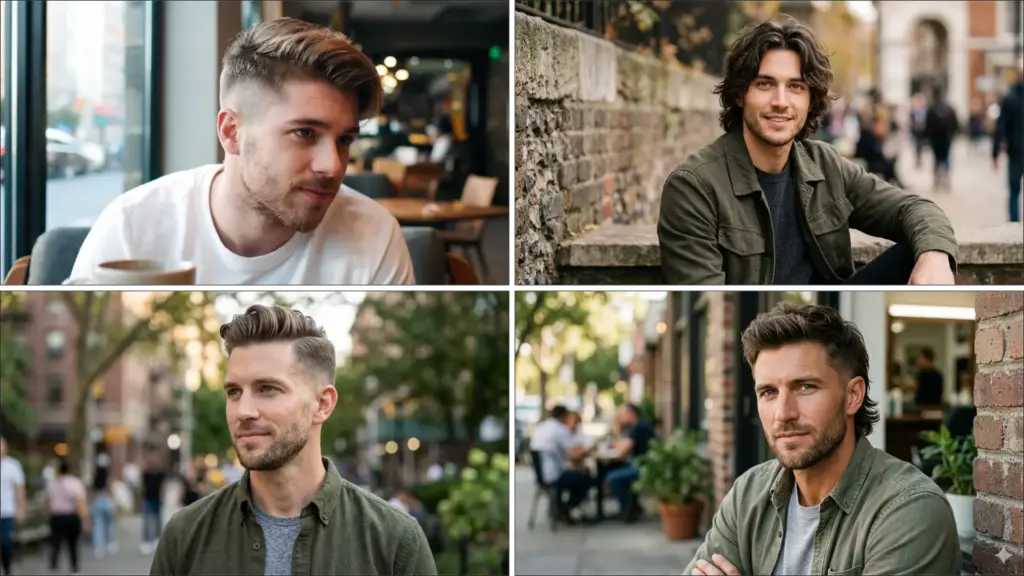
Most guys walk into the barbershop with a rough idea, then leave with a cut that does not look like what they had in mind. The issue usually is not the barber. It is the wording.
Men’s haircuts are easier to understand when you group them by shape: close crops, textured medium cuts, bold contrast styles, and fades.
When I look at a haircut, I do not just look at the trend. I look at the face shape, hair texture, guard length, and how the cut will grow out after the first week.
This guide breaks down those choices simply so you can understand the main types of men’s haircuts and know what to ask for before the clippers start.
How Your Face Shape Changes Everything
Your face shape can change how a haircut sits on you. The right cut should balance your natural structure, not just follow a trend.
Oval faces are the easiest to style. Most shortcuts work, so focus on texture, hair type, and how much maintenance you want.
Round faces look better with height on top and slimmer sides. Avoid cuts that add width around the cheeks.
Square faces suit structured styles, mid fades, and low fades. Softer blends often work better than very high-contrast cuts.
Heart and diamond faces usually need fullness around the mid-head to balance a narrower chin.
Rectangle faces look better with some width at the sides and less height on top. Quiffs and pompadours can make the face look longer.
Short and Close Crops
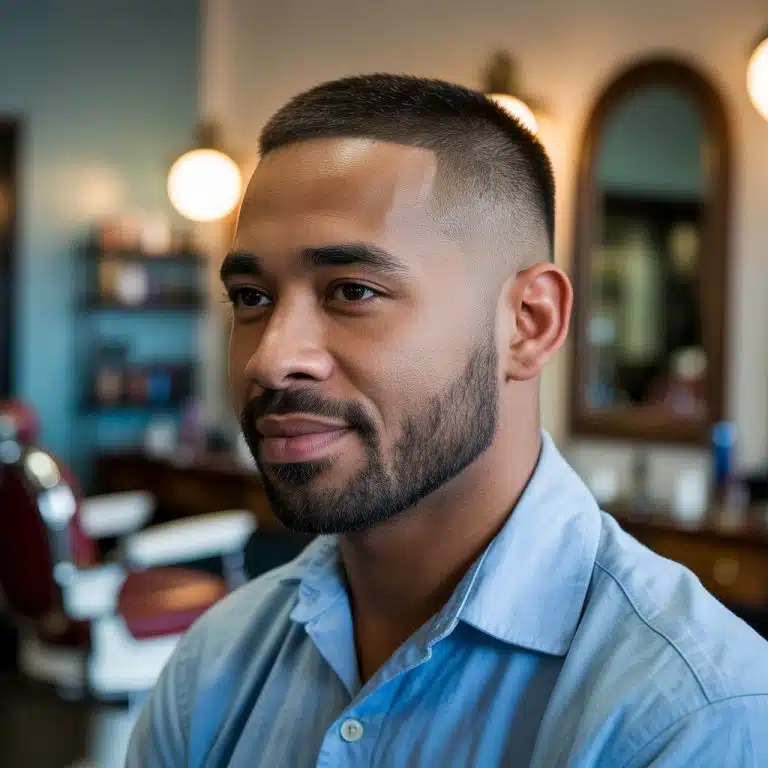
If you want effortless mornings, close crops are your go-to. These cuts sit neatly on their own with minimal length, meaning the shape and structure work without any product or fuss. The result is a clean, polished look that’s ready right out of the chair.
1. Buzz Cut

The buzz cut uses one clipper guard all over the head. It is the easiest cut to maintain. It needs no styling, no product, and almost no morning effort.
- Best for: Most face shapes
- Hair type: Most hair types
- Styling: None
Round faces usually look better with a longer guard, like a 3 or 4, instead of going too short. A longer guard keeps more shape and prevents the face from looking wider.
Ask your barber: “All over with a number [2/3/4], no fade.”
2. Crew Cut
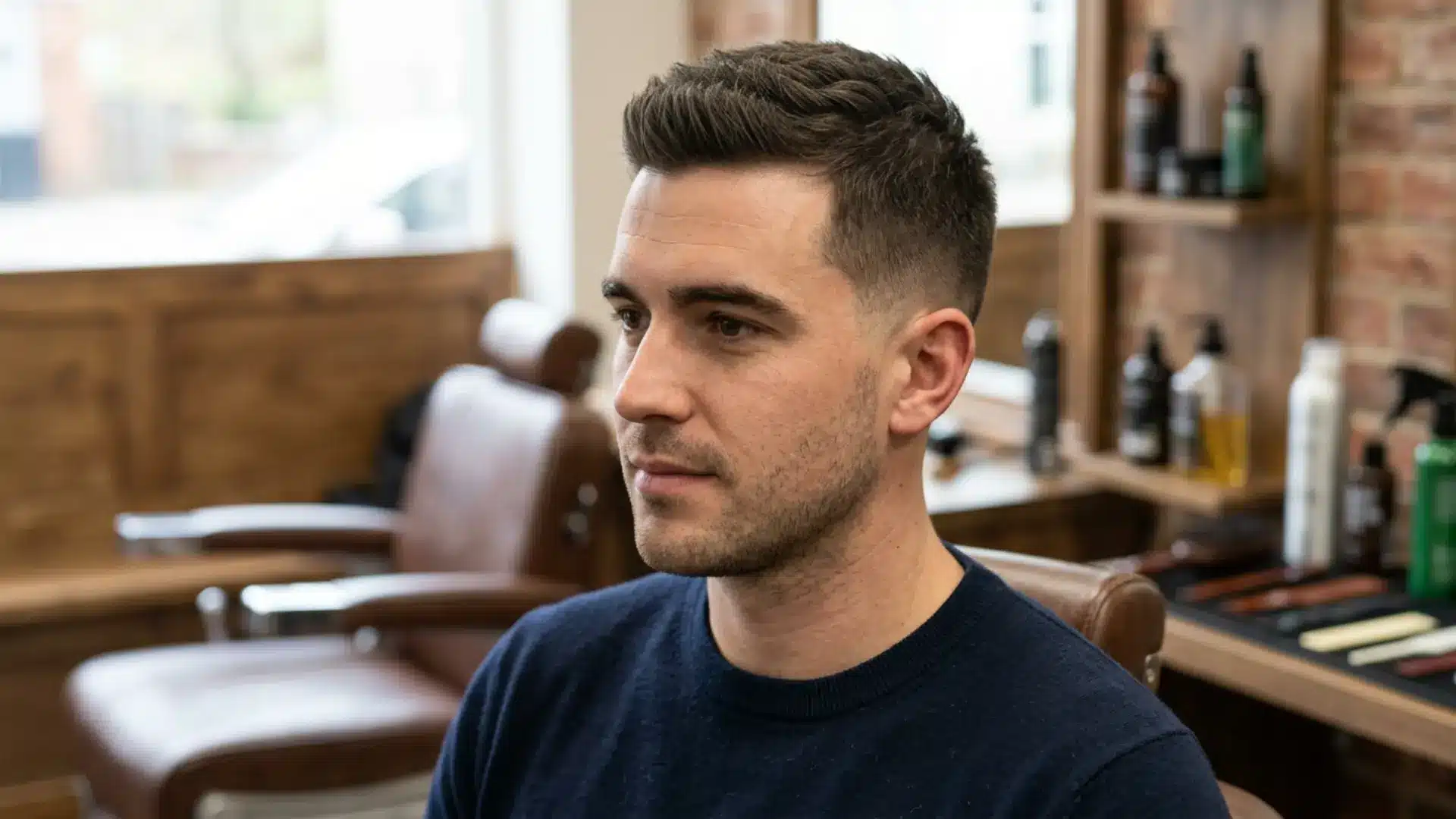
The crew cut has short sides with slightly longer hair on top, usually around half an inch to one inch. It looks clean without feeling too strict, which makes it easy to wear at work or casually.
- Best for: Most face shapes
- Hair type: Straight and wavy hair
- Styling: Little to none
Straight hair gives the sharpest finish. Wavy hair adds a softer look on top.
Ask your barber: “Crew cut with a low or mid fade on the sides, about half an inch on top.”
3. Caesar Cut
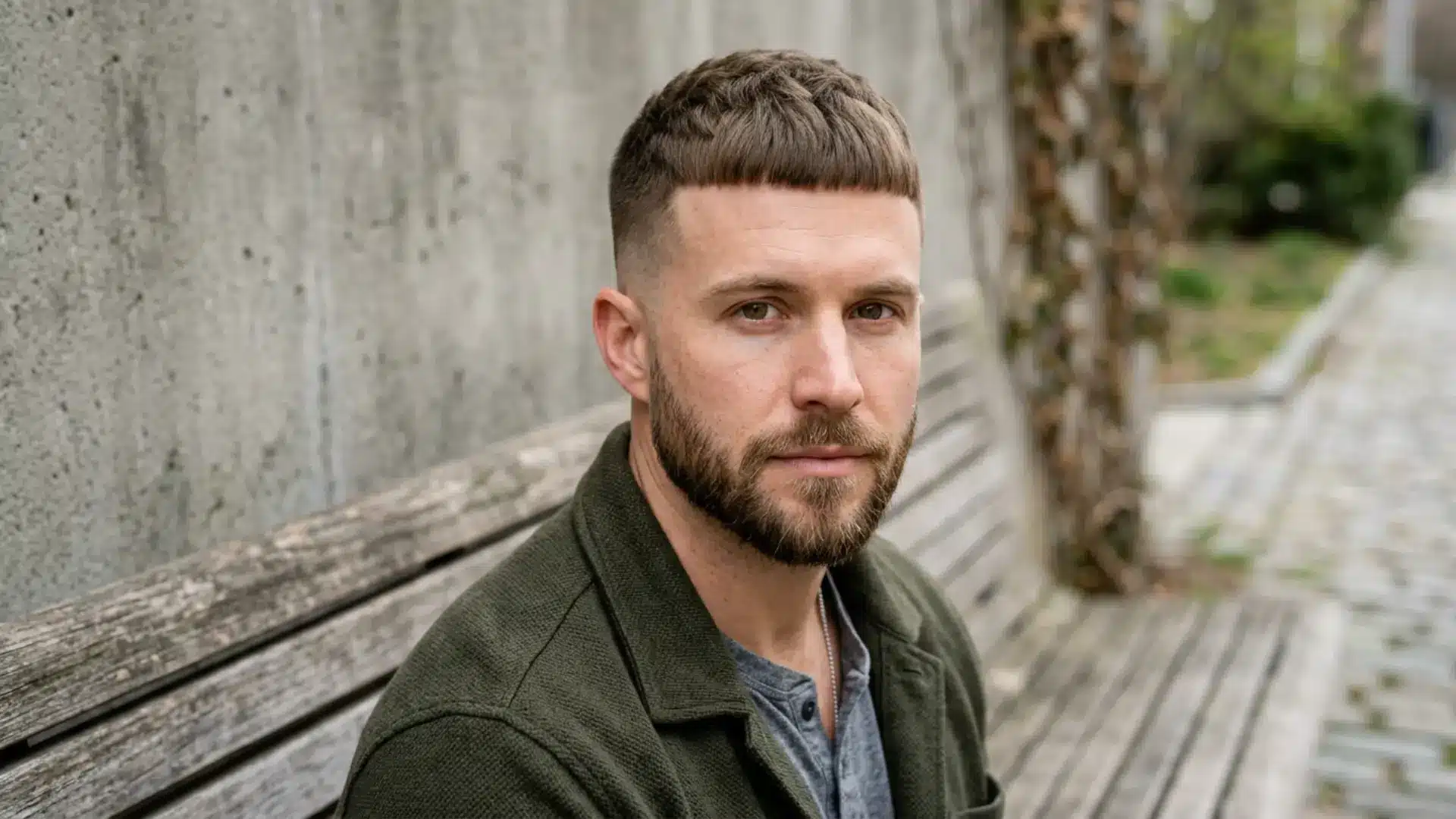
The Caesar cut is short all over with a straight fringe across the forehead. That fringe is the main feature. It can help make an uneven or receding hairline look more intentional.
- Best for: Uneven or receding hairlines
- Hair Type: Straight, wavy, and slightly thick hair
- Styling: Very low effort
Most Caesar cuts work best with a taper or low fade. A high fade can make the style look too harsh.
Ask your barber: “Caesar cut with a low fade or taper, straight fringe across the front.”
Mid-Length and Textured Cuts
Once you move past the close crops, styling becomes part of the daily routine. These cuts have more going on at the top, which means you’ll spend a minute or two in the morning putting things in place. The payoff is a lot more flexibility with how the final look lands.
4. Textured Crop

The textured crop has short sides, choppy layers on top, and a small fringe at the front.
It is a safe choice if you are not sure what to get. it grows out well, suits many face shapes, and takes very little styling.
Best for: Oval, square, and heart-shaped faces
Hair Type: Straight and wavy hair
Styling: Use a small amount of matte clay
Curly hair can work too, but the barber needs to cut for texture, not just length.
Ask your barber: “Textured crop, choppy layers on top, small fringe, mid fade on the sides.”
5. Quiff
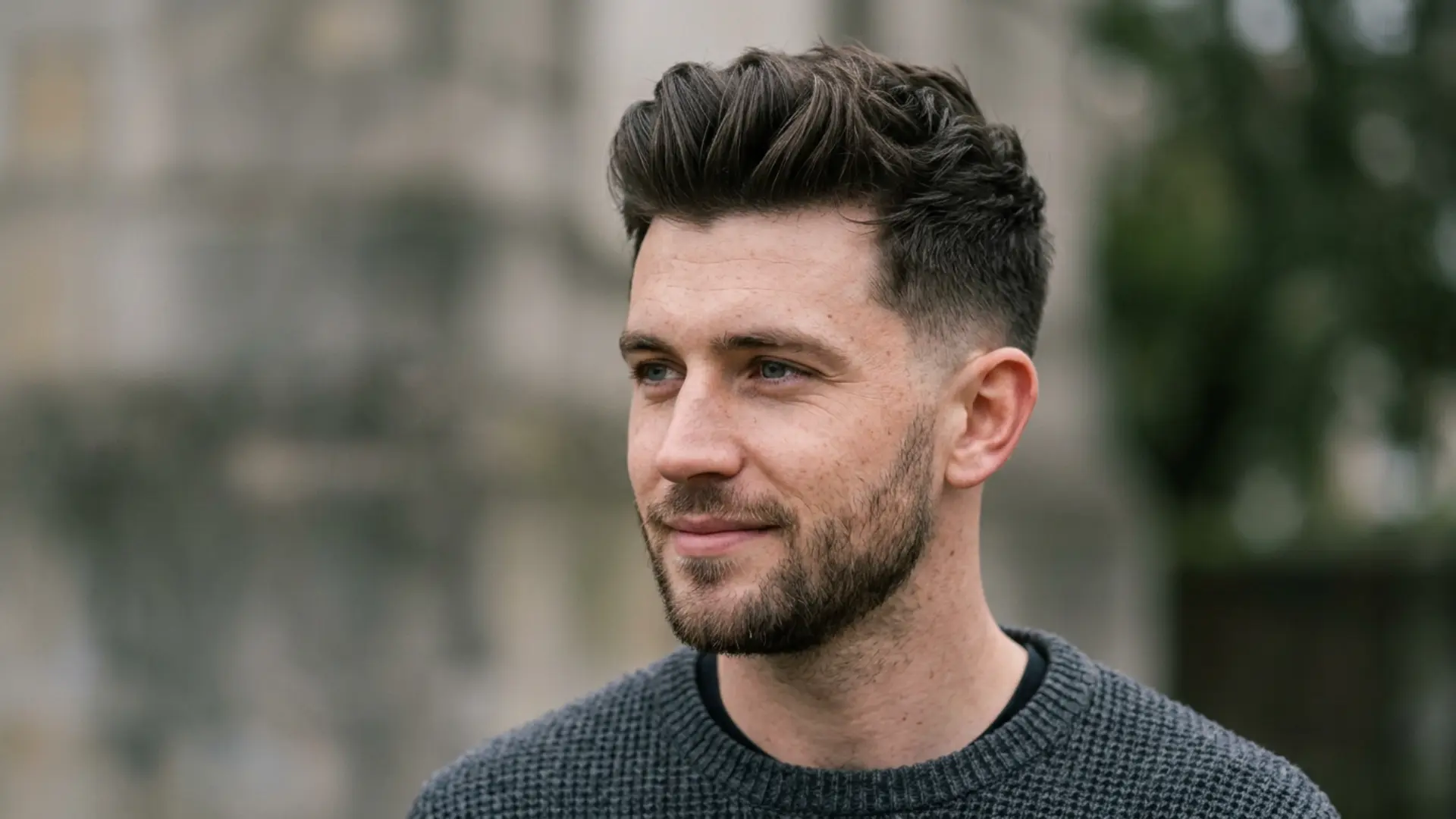
The quiff is a hairstyle in which hair is swept backward from the forehead. It adds height without looking too stiff or shiny.
Best for: Oval, oblong, and round faces
Hair Type: Straight and wavy hair
Styling: Use a medium-hold product
It works well for oval and oblong faces. Round faces can also pull it off because the height makes the face look more balanced.
Ask your barber: “Quiff with a mid fade, enough length on top to push back with product.”
6. Modern Pompadour
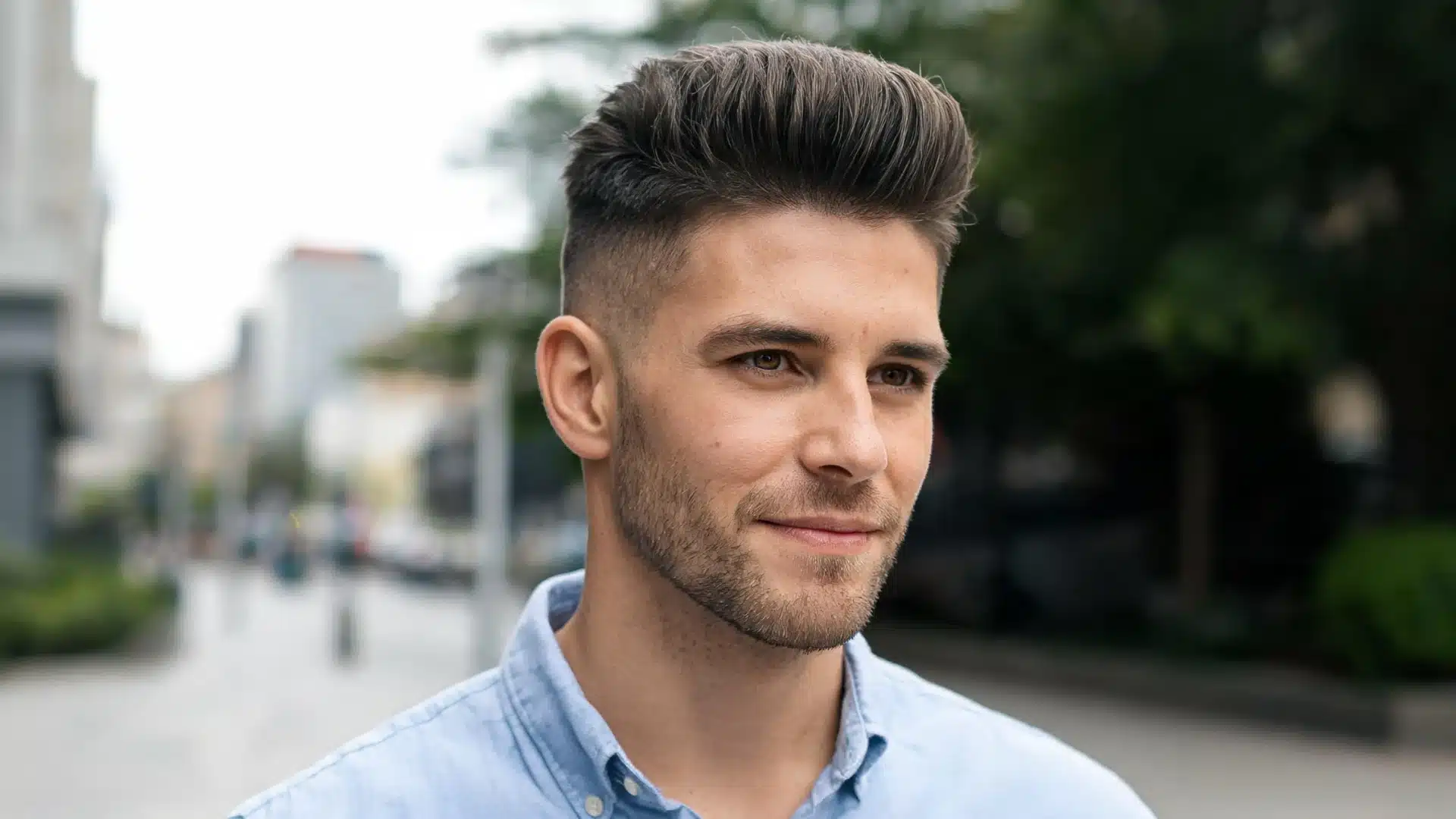
The modern pompadour is fuller than a quiff. The hair is pushed back with more volume at the front.
Today’s version usually has a matte finish rather than a slick, shiny one. Thick hair works best because it can hold the shape better.
Best for: Oval and square faces
Hair Type: Thick hair
Styling: Use a strong but natural-looking product
If you have fine hair, a quiff or textured crop will be easier to manage.
Ask your barber: “Modern pompadour, matte finish, medium fade or undercut on the sides.”
7. Comb Over and Side Part

The comb brushes the hair to one side. The side part is similar but has a clearer parting line.
Some barbers shave the part in, which is called a hard part. Both styles look clean and work well for office, formal, and casual settings.
Best for: Most face shapes
Hair Type: Straight and slightly wavy hair
Styling: Use light to medium product for hold
Curly or coily hair can wear this style too, but it usually needs more product to stay in place.
Ask your barber: “Comb over with a low or mid fade, clean side part, shaved in or natural.”
If you have thick hair, the cuts for thick hair guide has specific recommendations for managing volume in this style category.
Contrast Statement Cuts
These styles are built around a noticeable silhouette. The contrast between the sides and the top is sharper, the shape is more deliberate, and they take more maintenance to stay looking right. That’s the honest reality. If you’re choosing a statement cut, go in knowing the barber chair is a regular stop.
8. Undercut

The undercut has very short sides, a longer top, and no smooth blend between them.
The contrast is the main feature, so the top can be styled in many ways.
Best for: Oval, square, and heart-shaped faces
Hair Type: Straight and wavy hair
Styling: Depends on the top length
Straight hair shows the disconnected line best. Wavy hair can work too, but it needs more trims to keep the shape sharp.
Ask your barber: “Disconnected undercut, shaved or very short sides, leave the top long.”
9. Faux Hawk
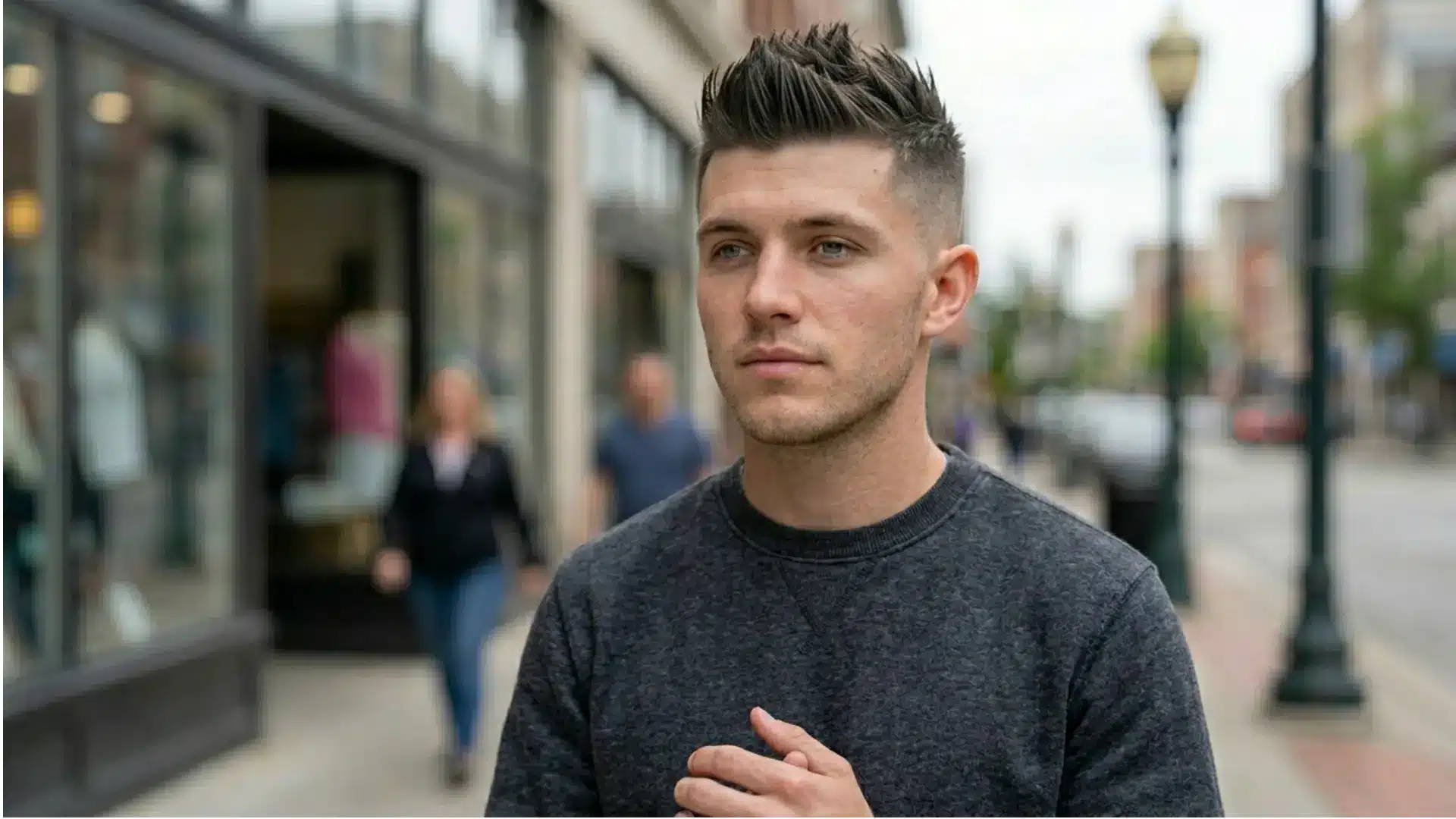
The faux hawk keeps the sides short and leaves more length through the center.
It gives a bold look without going as far as a full mohawk. A mid- or high-fade can make it look sharper.
Best for: Oval and heart-shaped faces
Hair Type: Most hair types
Styling: Medium effort
The upward shape adds edge while still staying wearable.
Ask your barber: “Faux hawk with a high or mid fade, strip of length down the center.”
10. Wolf Cut and Shag

The wolf cut, also called a shag, uses heavy layers, face-framing pieces, and natural texture.
It works best on wavy or curly hair because the texture helps the layers sit properly.
Best for: Oval, heart-shaped, and longer faces
Hair Type: Wavy and curly hair
Styling: Medium to high effort
Straight hair can wear it too, but it usually needs salt spray or texturizing paste. Trims every 6 to 8 weeks to keep it from looking shapeless.
Ask your barber: “Wolf cut with heavy layers, face-framing pieces, soft taper or low fade on the sides.”
11. Modern Mullet
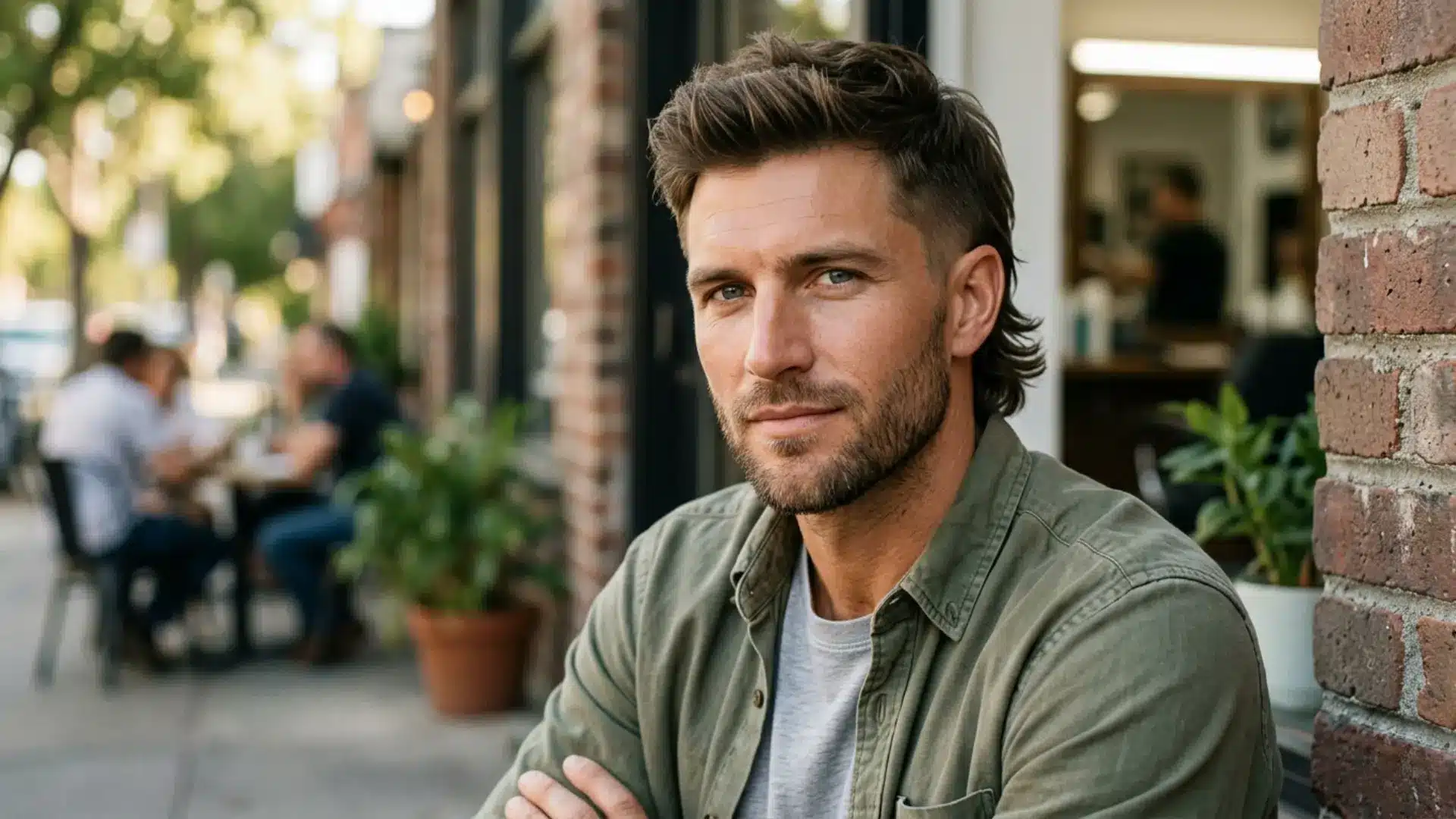
The modern mullet has shorter sides with more length at the back.
Today’s version looks cleaner and usually works better with a fade or taper on the sides.
Best for: Oval, square, and heart-shaped faces
Hair Type: Thick, wavy, and curly hair
Styling: Medium effort
A low taper often looks softer and more intentional than a high skin fade.
Ask your barber: “Modern mullet, shorter on the sides and top, more length at the back, low taper or fade.”
Types of Fade Haircuts: Low, Mid, High, Taper, and More
A fade is a barbering technique where the sides and back gradually blend from shorter at the bottom to longer near the top.
It gets its name because the hair appears to fade into the skin. A fade is not a full haircut on its own. It is added to styles such as a crew cut, a crop, a quiff, or a comb-over to complete the look.
The differences between types of fades lie in where the blend starts, how far it travels, and whether it reaches the skin. Here’s how the main options break down:
| Fade type | Where it starts | Contrast level | Works best for |
|---|---|---|---|
| Low fade | Just above the ear | Subtle | Professional settings, conservative styles |
| Mid fade | Around the temples | Moderate | Most face shapes, balanced, everyday look |
| High fade | Above temples, near the crown | Strong | Bold styles, square and angular faces |
| Skin / bald fade | Anywhere, to bare skin | Very high | Sharp finish, needs touch-ups every 1-2 weeks |
| Taper fade | Low, blends without reaching the skin | Very subtle | Formal environments grow out cleanly |
| Drop fade | Curves down behind the ear | Moderate to high | Curly and textured tops, contoured shape |
| Burst fade | Arcs around the ear in a semicircle | High | Mullets, mohawks, statement styles |
Taper vs. fade: A taper gradually shortens the hair, leaving some hair visible at the neckline. A fade blends down to bare skin at its shortest point.
A taper looks softer and grows out better. A skin fade looks sharper when fresh, but it usually starts losing shape within 1 to 2 weeks.
For face shape, low fades suit oval and triangular faces because they keep more fullness near the sides. High fades suit square and angular faces because they add sharper definition.
For a full breakdown, check the guide to types of fade haircuts.
What to Tell Your Barber?
Bad haircuts often happen because the request is too vague. “Short on the sides” can mean different things to different barbers.
The easiest fix is to bring reference photos. Show one photo of the overall cut and, if needed, one of the fade height.
Cover these points before the cut starts:
- Fade Height: Say low, mid, or high.
- Fade Type: Mention skin fade, regular fade, or taper.
- Top Length: Under 1 inch is short, 1 to 2 inches is medium, 3 inches or more is longer.
- ToP Style: Name the style if you know it, like textured crop, quiff, or comb over.
- Upkeep: Ask how often it needs trimming.
If you only visit the barber every 4 to 5 weeks, avoid a sharp skin fade. A taper or low fade will grow out better.
For more finished style ideas, check the guide to mid-taper-fade-ideas before your appointment.
Conclusion
The best men’s haircuts are usually not the ones trending online. They are the ones that actually fit your face shape, hair texture, and daily routine.
In my experience, the smartest way to choose a haircut is simple: start with the shape on top, figure out how much styling effort you are realistically willing to give it, then pick the fade that matches the level of contrast you want.
A sharp skin fade looks great for a week. A textured crop that still sits right three weeks later? That is usually the better decision.
If you are still deciding, drop your face shape and hair type in the comments below. I’m happy to point you toward two or three cuts worth bringing to your next appointment.
Frequently Asked Questions
Can You Get a Fade on Fine or Thinning Hair?
Yes. A low fade, mid fade, or taper usually works better than a high skin fade because softer contrast makes thinning areas less obvious.
What’s the Difference Between a Connected and Disconnected Undercut?
A connected undercut has some blending between the short sides and the longer top. A disconnected undercut has a clear line with no blend, so it looks sharper but needs more upkeep.
How Do I Stop a Textured Crop from Going Flat by Midday?
Use a small amount of matte clay or fiber on slightly damp hair. If it still falls flat, add light sea salt spray for extra texture and hold.
Which Haircut Types Work Best with a Beard?
Fades, undercuts, comb-overs, and side parts work best because they create contrast around the sides. Low and mid fades usually pair best with short to medium beards.