Most people don’t think much before grabbing joggers or sweatpants until the wrong pair makes the day feel slightly off.
I’ve done it too. I’ve worn sweatpants on a busy day and felt too warm and heavy by noon, then picked joggers for a cold indoor day and wished I had something softer and warmer.
That mix-up makes sense because both sit in the same drawer, work for casual outfits, and often look similar at first glance.
But once the day starts, the small differences become easier to notice. Fit changes how polished the outfit feels, and fabric weight affects comfort.
This guide breaks down joggers and sweatpants by fit, fabric, purpose, comfort, and styling, making it easy to choose the right pair.
Joggers vs Sweatpants: Key Differences
Both have elastic waistbands and a drawstring. Both pairs naturally pair with a hoodie or a simple tee. The differences are real, though, and they show up the moment you put them on.
Fit and Silhouette
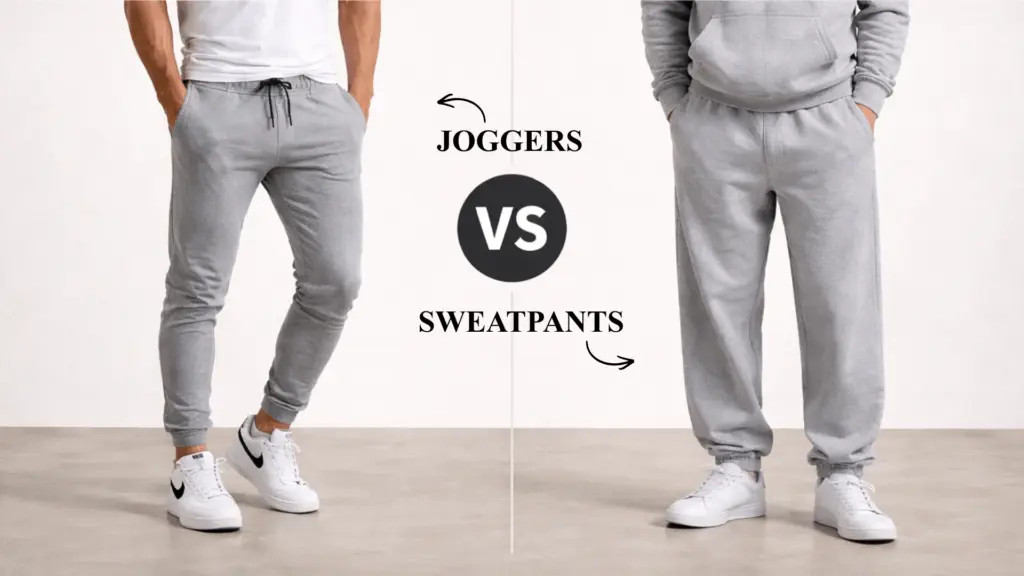
Joggers are tapered, with the leg narrowing toward the ankle and finishing in a ribbed or elasticated cuff that clearly defines the style.
It pulls the fabric close to the lower leg, creating a cleaner line and keeping excess material out of the way during movement. The overall shape is slim without being tight.
Sweatpants are straight or relaxed through the leg. The cut stays wide from hip to hem, sometimes with a loose ankle opening, sometimes with a soft cuff that doesn’t taper. The silhouette is roomier by design, built for comfort over structure.
Fabric and Weight
This is where the practical difference is most obvious. Joggers are typically made from lightweight fabrics, such as cotton blends, polyester, nylon, or spandex, and are designed to breathe and move.
Many include moisture-wicking properties, which is why they translate well from a workout to the rest of the day.
Sweatpants are typically heavier, with cotton fleece being the standard material. The fabric is thicker and denser, built to hold heat against the body rather than release it.
According to the American Fiber Manufacturers Association, cotton fleece retains significantly more warmth than lightweight synthetic blends.
That’s what makes sweatpants the right call in genuinely cold weather, and the wrong call for anything active or warm.
When Joggers Make More Sense?
If you’re moving, joggers win almost every time. The lighter fabric helps control heat, the tapered ankle keeps extra material out of the way, and the fit still looks clean once the workout or walk is over.
Joggers also work well when the day involves more than one setting:
• Lighter for travel.
• Comfortable in transit.
• Better for warm days.
• Easy from the gym to errands.
I usually pair joggers with a fitted top layer to balance the relaxed shape. That small shift in proportion makes the outfit feel intentional rather than accidental.
A plain tee, zip hoodie, or light jacket works well because it keeps the look casual without feeling messy.
When are Sweatpants the Better Call?
Sweatpants make the most sense on cold days, especially when the temperature drops and you need something that holds warmth better than joggers.
Their thicker fabric helps trap heat, which makes them useful outdoors, near a drafty window, or during a slow day at home.
They also work well when comfort matters more than movement. A pair of soft fleece joggers can feel more relaxed than most joggers, especially for long hours indoors.
Style-wise, sweatpants have moved far beyond lazy dressing.
A relaxed pair with a structured jacket, a plain tee, and clean sneakers can look intentional rather than sloppy.
What People Actually Say about Joggers and Sweatpants
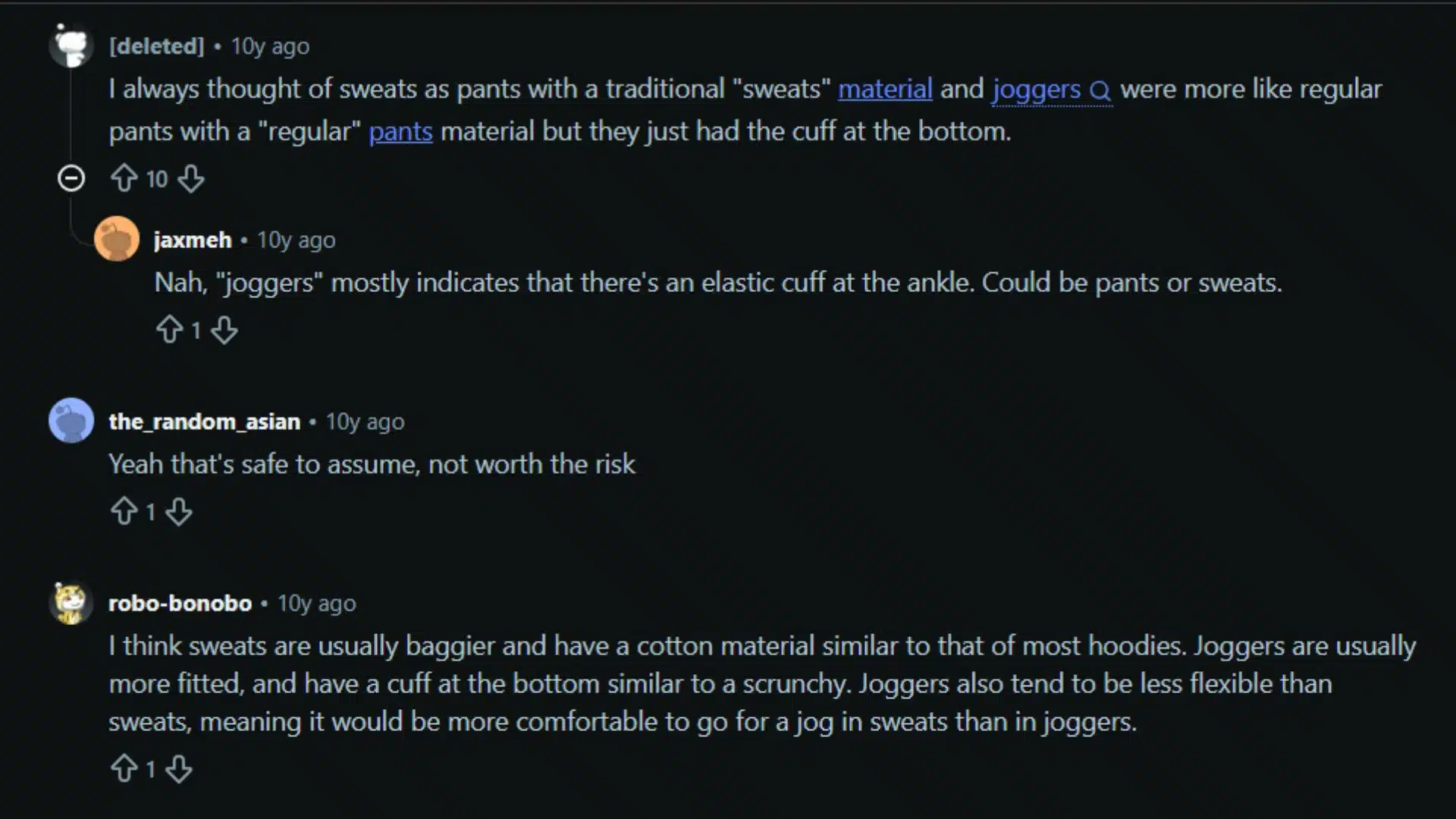
Across different forums, the debate on this topic rarely reaches a clear conclusion.
Most people agree that the ankle cuff is the clearest visual difference between the two. Beyond that, the split tends to fall along lifestyle lines.
People who prioritize softness and indoor comfort almost always end up in sweatpants, and those who want something wearable outside the house, without a second thought, lean toward joggers.
A common observation is that joggers look more put-together in photos and in public, but sweatpants feel better after the first hour of wearing them.
Some people note that a tight ankle cuff on joggers can become uncomfortable over extended wear.
How to Style Each One?
The mistake most people make with both is choosing the wrong top proportion. A baggy top with a baggy bottom creates a shapeless result. A fitted top with a relaxed bottom (or vice versa) creates balance.
Styling Tips for Women
- Joggers: Pair slim joggers with a cropped hoodie or fitted turtleneck. Add white sneakers or chunky trainers. For a smarter look, swap the hoodie for a longline blazer and low heels. Keep the ankle cuff visible; it is what makes the silhouette work.
- Sweatpants: Balance the volume with a fitted top or a tucked-in bodysuit. Ankle boots or heeled mules lift the look without effort. Matching your sweatpants and hoodie in the same tone makes the outfit feel coordinated rather than thrown together, similar to the balance found in soft, feminine outfit ideas.
Styling Tips for Men
- Joggers: A clean, fitted tee, tapered joggers, and low-profile sneakers are the baseline. Add a bomber or track jacket to push it toward streetwear. For smart casual, a quarter-zip or structured overshirt over a plain tee works without looking overdressed.
- Sweatpants: Go monochrome or tonal; matching the sweatpants to the hoodie or crewneck reads as intentional. Keep footwear simple: clean leather sneakers or retro runners. Avoid anything too baggy up top if the sweatpants already have a relaxed fit.
Pocket placement matters too. Joggers often have zippered side pockets, which sit flat and stay clean. Sweatpants tend to have open-hand pockets, which can add bulk at the hip.
Joggers vs Sweatpants in Modern Athleisure Fashion

The line between joggers and sweatpants is not as clear as it used to be.
Many brands now make tapered sweatpants that look like joggers, while some joggers come in heavier cotton that feels closer to classic sweats.
That overlap is useful because it gives more choices. Some pairs are warmer than standard joggers but more structured than traditional sweatpants.
So, instead of trusting the label, look at the fit, fabric weight, and purpose.
Baggy sweatpants are also back in style, while joggers have become a steady part of athleisure. Neither option is disappearing.
Joggers work better for movement and easy styling, while sweatpants win for warmth and relaxed comfort.
Most wardrobes need both, and the day should decide which pair comes out.
Conclusion
Joggers and sweatpants are not competing but complementary: joggers handle movement, structure, and versatility, while the other delivers warmth and softness when the day asks for nothing.
The smarter move is to keep both and know when each earns its place in a real, everyday routine.
Getting dressed well is rarely about spending more or chasing trends that change every season. It comes down to understanding what is already in the wardrobe and using it with purpose.
Choosing the right pair based on comfort, weather, and plans for the day creates a noticeable difference in how an outfit feels and looks.
If this helped you figure out which one belongs in your rotation, share it in the comments.
Frequently Asked Questions
Are Joggers or Sweatpants Better for Travel?
Joggers are the stronger travel choice. They stay lightweight and neat over long hours in transit, resist the rumpled look that fleece develops by mid-flight, and move easily between airport, rideshare, and arrival without looking sloppy.
Do Joggers or Sweatpants Last Longer?
It depends on use. Joggers made from synthetic blends hold their shape well through frequent washing but can pill over time. Heavy cotton sweatpants fade and shrink more, but resist wear in low-activity use. Care instructions matter more than the style itself.
Which is Better for Lounging at Home All Day?
Sweatpants. The heavier cotton fleece feels softer against the skin over extended wear, and the relaxed leg doesn’t restrict circulation. For long, sedentary days, the extra weight and roominess work in your favor.