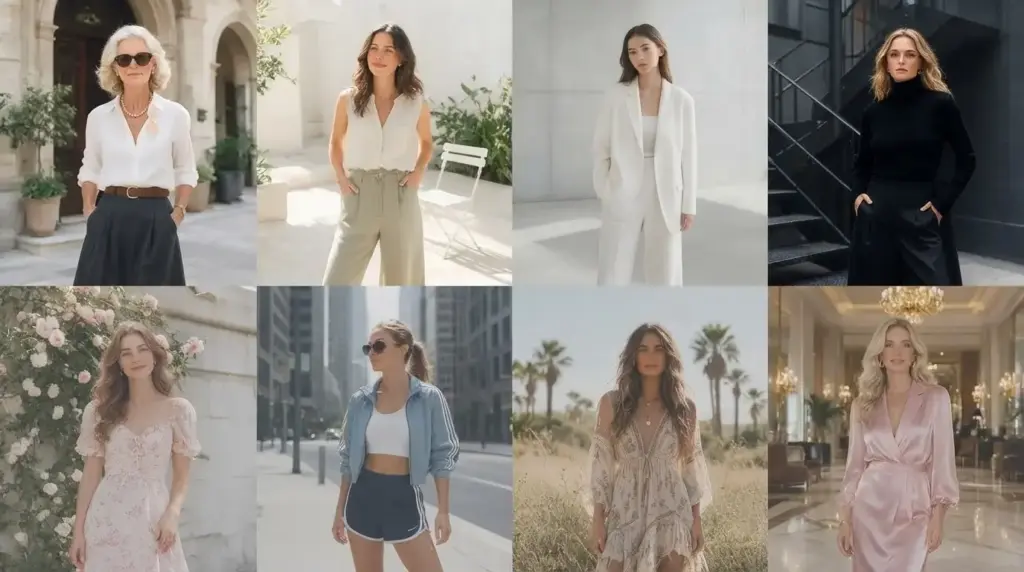
Wide-leg trousers have been on the rails at nearly every shop this season. Flared hems, wrap dresses, and chunky platform sandals have quietly moved from the thrift store to the front window.
Retro fashion trends are no longer a niche interest or a costume choice. They are part of how many people get dressed every morning.
I started noticing it in my own clients first. Someone would walk in with a 70s-cut pair of trousers they had thrifted, unsure how to make them feel current, and by the time we were done, the whole room had shifted.
There is something about retro style that does not just reference the past. It grounds you in it for a moment, then lets you dress like yourself again.
What is Retro Style, and How is It Different from Vintage?
Retro style is a fashion that consciously borrows from the recent past, typically from the 20 to 40-year period.
The word itself comes from the Latin “retro,” meaning backward or in the past, and it entered the fashion vocabulary in the 1970s, when London designers began creating new clothes that looked deliberately old.
Here is a simple breakdown of how the three terms differ:
| Term | What it means | Age range | Example |
|---|---|---|---|
| Retro | Newly made clothing designed to look like a past era | Style from 20-40 years ago | A new flared trouser cut like the 70s |
| Vintage | An authentic garment actually made in a past era | 20 to 100 years old | A real 1975 wrap dress from a thrift shop |
| Antique | Original garment from a very distant era | 100+ years old | An Edwardian blouse from 1910 |
The practical difference matters when you shop. Retro is easier to find, more affordable, and consistent in sizing. Vintage is the real thing and comes with the fragility and fit challenges of older construction. Neither is better. They just suit different wardrobes and budgets.
Why Retro Fashion Trends are Everywhere Right Now
A few things came together to put retro back at the center of fashion.
- Fast fashion fatigue. After years of micro-trends cycling faster than most people could keep up, shoppers started reaching for clothing that felt more considered and long-lasting.
- Social media nostalgia. TikTok accelerated the return of Y2K and 90s aesthetics, with throwback outfit videos reaching audiences who had never lived through those eras the first time.
- Designer nostalgia cycles. Designers tend to draw from the eras that shaped their early taste. That puts the 80s and 90s back in rotation for many of the people running creative departments right now.
The Biggest Retro Fashion Trends Influencing Current Style
Retro fashion keeps cycling back because the best pieces still feel wearable today. From relaxed silhouettes to nostalgic fabrics, these trends are shaping current style in a way that feels familiar, fun, and easy to personalize.
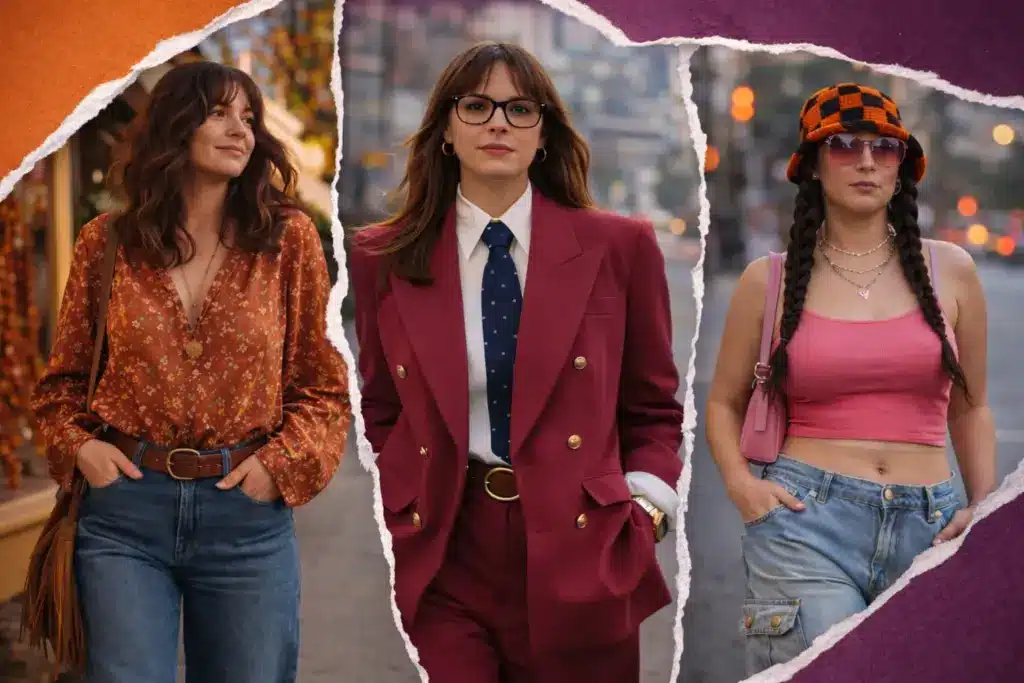
70s Revival: Earth Tones, Flared Hems, and Boho Ease
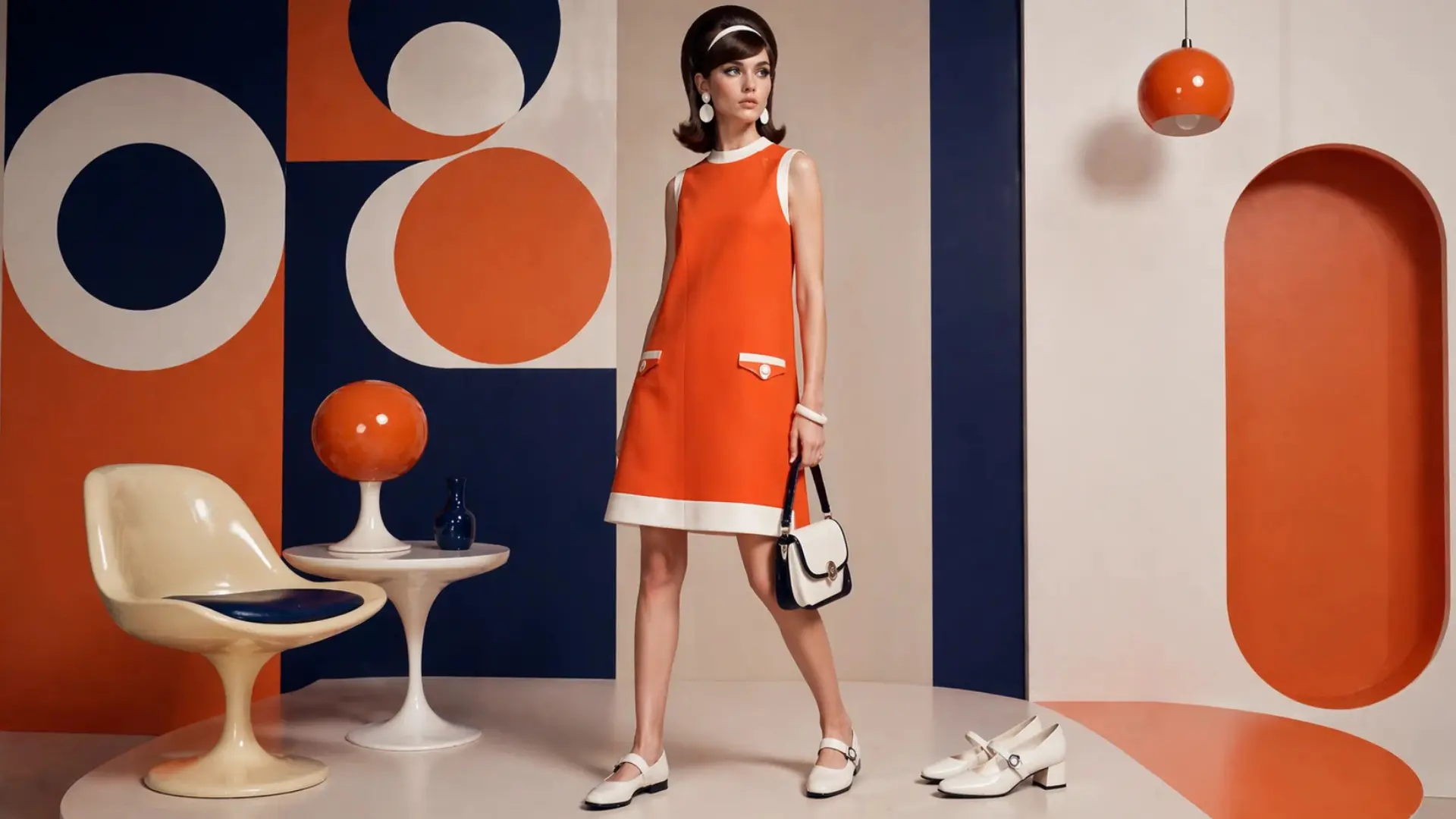
The 70s offer generous, relaxed silhouettes that fit how people actually want to feel in their clothes.
Key pieces to look for:
- Wide-leg and flared trousers in earthy browns, burnt orange, and camel
- Midi wrap dresses in soft floral or abstract prints
- Suede textures and fringed edges in accessories and outerwear
- Boho-style blouses with fluid drape and soft necklines
How to wear it now: Pair wide-leg trousers with a fitted ribbed knit and a low block heel. Keep the palette warm. One 70s piece is enough.
80s Power Dressing: Bold Shoulders and Structured Blazers
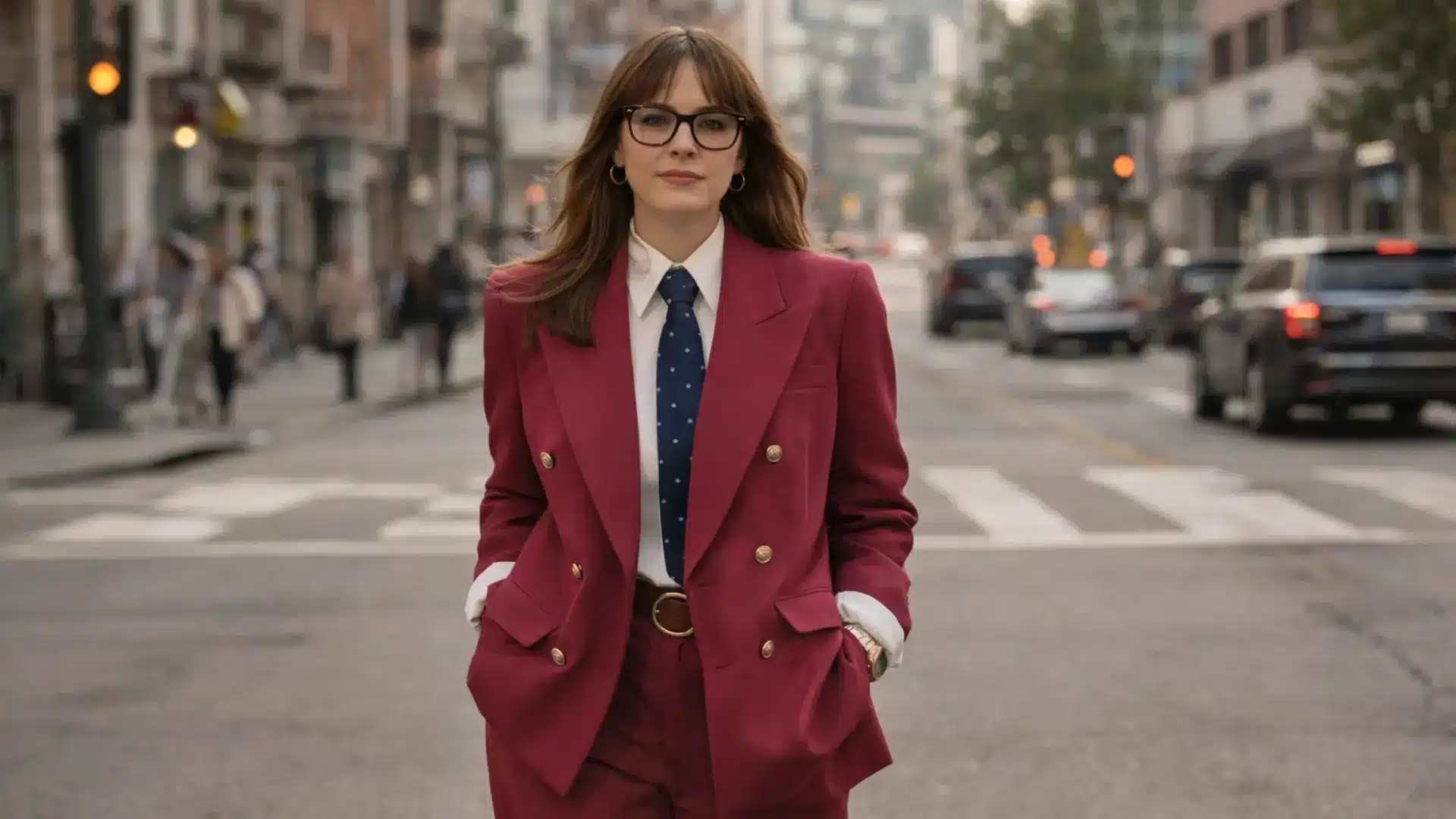
The 80s brought confidence through structure, and structured blazers translate cleanly into today’s wardrobe without much adjustment.
Key pieces to look for:
- Structured blazers with subtle shoulder definition in strong colors
- Color-blocked separates in bold but considered combinations
- Metallic fabrics are used sparingly, in one piece per outfit
- High-waisted trousers with a wide, clean leg
How to wear it now: A strong-colored blazer over a white tee and straight-cut jeans. The restraint is what makes it work. Today’s version tones down the original drama.
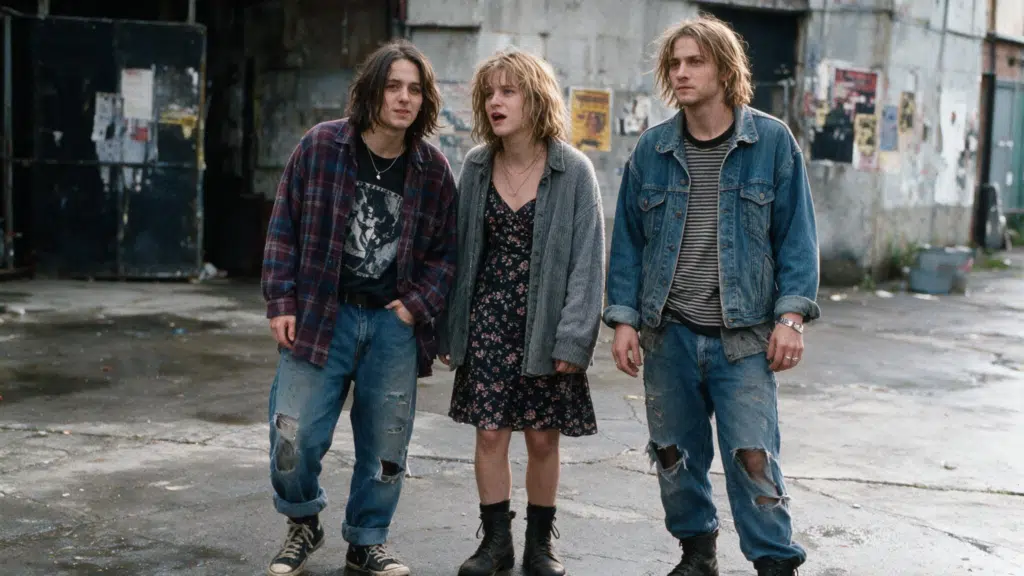
90s Nostalgia: Denim, Grunge, and the Preppy Comeback
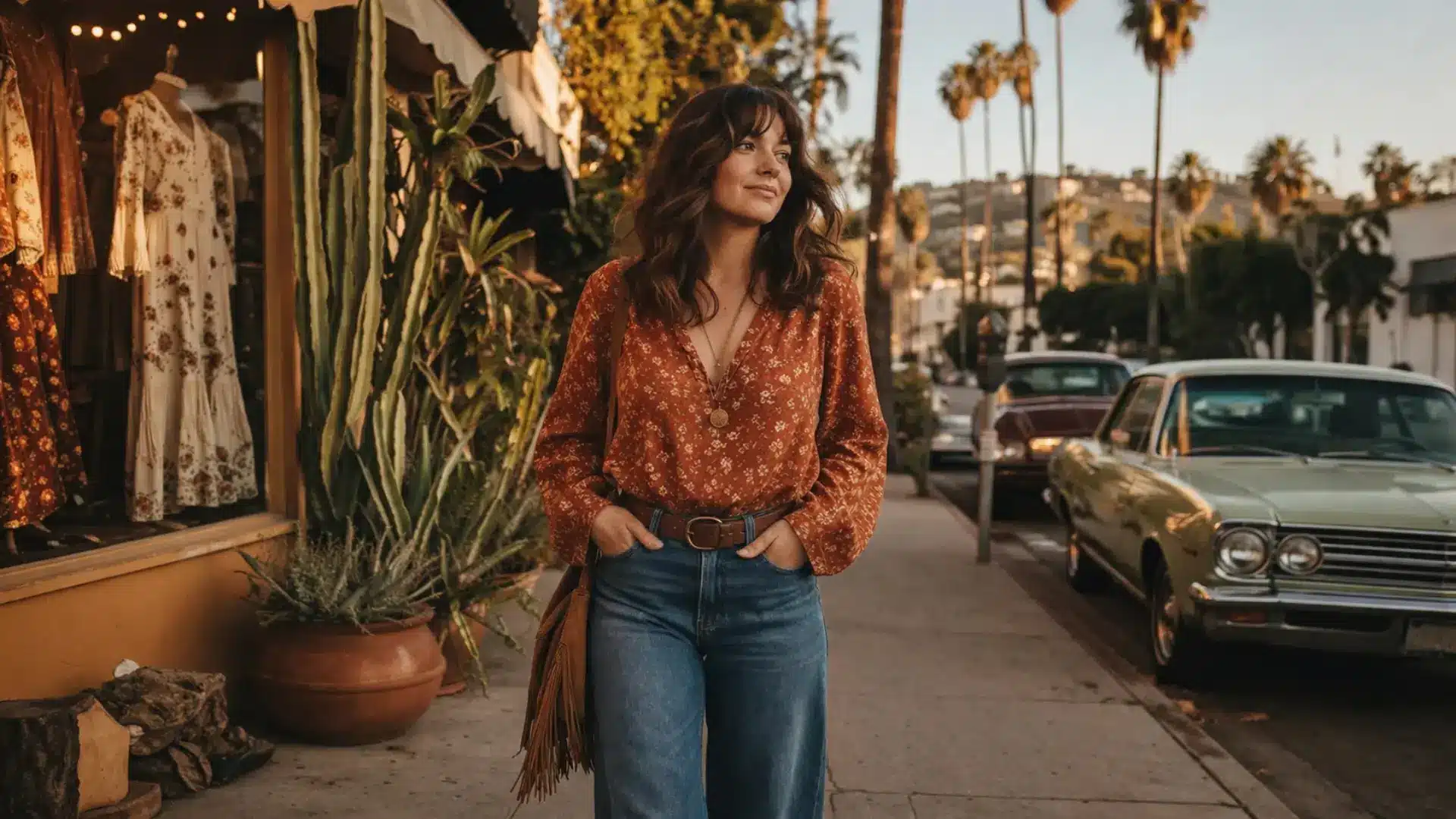
High-waisted denim never really left, and the two signature 90s aesthetics, grunge and preppy, both fit naturally into how people dress today.
Key pieces to look for:
- High-waisted straight-leg or mom jeans
- Flannel shirts, graphic tees, and chunky boots for the grunge side
- Pleated mini skirts, V-neck sweaters, and loafers for the preppy side
- Simple leather belts and minimal accessories to anchor either look
How to wear it now: High-waisted straight-leg denim, a tucked linen shirt, and a leather belt. Clean and easy to pull from what you already own.
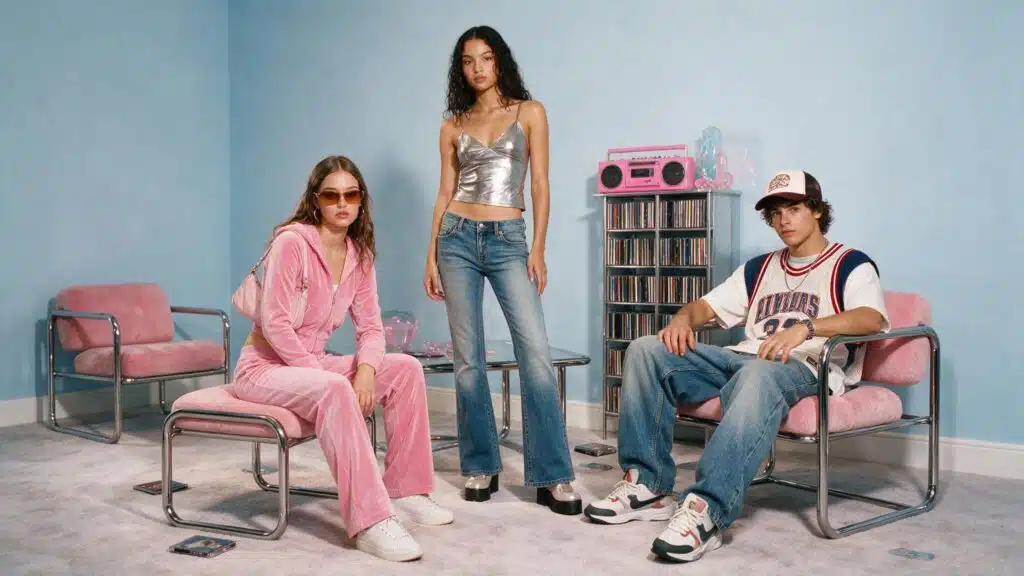
Y2K and Early 2000s: Cargo, Metallics, and the Platform Revival
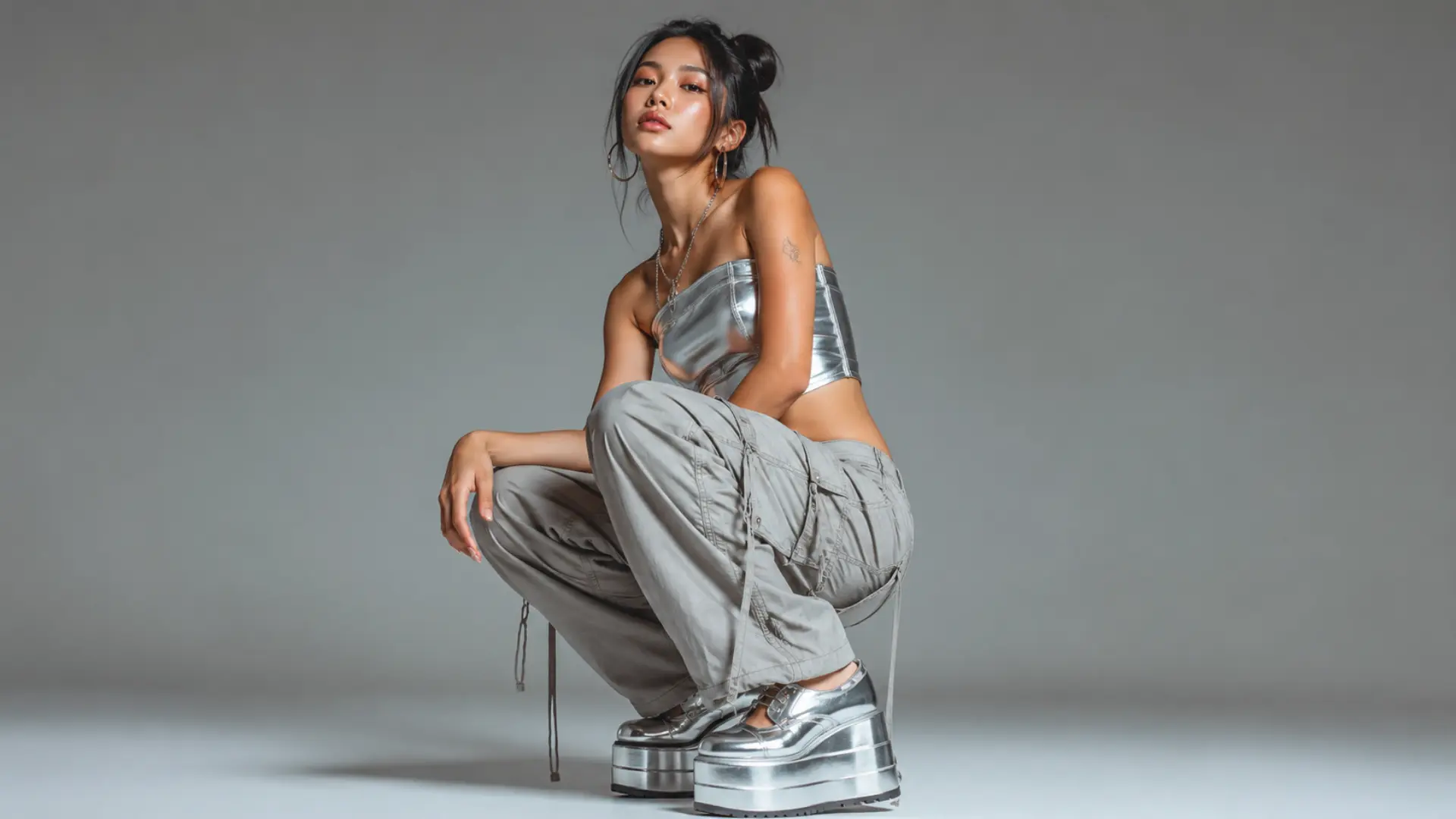
The 20-to-40-year nostalgia window has officially reached the early 2000s.
Key pieces to look for:
- Wide-leg cargo trousers in neutral colors
- Platform sandals that add height without going theatrical
- Butterfly and star-shaped accessories in small doses
- Metallic or holographic fabrics as a single accent piece
How to wear it now: This trend needs the most editing. One Y2K element per outfit. Start there and see how it feels before adding more.
Easy Ways to Wear Retro Fashion Today
This is the question I hear most often. The answer is almost always the same: one retro piece, everything else modern and calm.
When every part of a look reads as decade-specific, the outfit becomes a costume. One retro piece paired with clean contemporary basics reads as intentional. Here is how that plays out in practice:
| Retro piece | Pair it with |
|---|---|
| 70s wide-leg flared trousers | Fitted ribbed knit, block heel sandals |
| 80s structured blazer | White tee, straight-leg jeans, simple sneakers |
| 90s high-waisted mom jeans | Linen shirt tucked in, leather belt, flat loafers |
| Y2K cargo trousers | Clean white tee, minimal trainers, no additional retro pieces |
Tips for getting the balance right:
- Start with one piece. Pick the retro item you keep reaching for and build around it with neutrals.
- Watch your proportions. Wide legs need a fitted top. Bold shoulders need a simple bottom.
- Avoid matching accessories to the era. Platform boots with 70s flares is costume territory. A clean leather sandal is not.
- Check your body shape first. Soft natural Kibbe outfits are a useful reference for choosing retro silhouettes that follow your natural lines rather than fighting them.
Retro Fashion and Sustainability
The pull toward retro style and the move toward intentional dressing choices arrived at the same time for good reason. Here is why retro and sustainable fashion overlap naturally:
- Wearing genuine vintage extends the life of existing garments and avoids new production entirely
- Choosing retro-inspired pieces from quality-focused brands reduces overproduction compared to fast fashion
- Retro silhouettes tend to be classic enough to stay wearable for years, which improves cost-per-wear
- The aesthetic overlaps with other intentional dressing movements, including dark academia fashion ideas, which also favor quality construction and historically grounded style
A well-made flared pair of trousers or a properly tailored blazer can be worn for years. That longevity is more in the spirit of the original decades than a fast-fashion reproduction bought and dropped in a season.
Conclusion
Retro fashion is not asking you to live in another decade. It is asking you to take what worked from those eras, wear it with what you already own, and ignore the rest.
The 70s gave us silhouettes that feel easy on the body. The 80s gave us structure. The 90s gave us denim that actually fits. Start with one piece from the decade you keep gravitating toward and see where it takes you.
The best retro look is the one you forget you are wearing. Which decade do you keep coming back to? Drop a comment below and let me know.
Frequently Asked Questions
What is the Difference Between Retro and Vintage Fashion?
Retro refers to newly made or styled clothing that imitates the look of a past decade. Vintage refers to authentic garments actually made in a previous era, typically more than 20 years ago. Retro is easier to find and more consistent in sizing. Vintage is the original item, with the fit challenges and fragility that come with it.
Which Retro Decade is Easiest to Incorporate into an Everyday Wardrobe?
The 90s. Many of the core silhouettes, high-waisted denim, straight-leg trousers, simple knits, and loafers already fit how people dress today. Very little adjustment is needed to make 90s-inspired pieces feel current rather than costume-like.
What Accessories Make a Retro Outfit Feel Current?
Keep accessories minimal and modern. A clean leather bag, simple gold jewelry, or a contemporary shoe grounds a retro piece in the present. Avoiding accessories that match the same era as the main piece is what stops the look from reading as a costume.