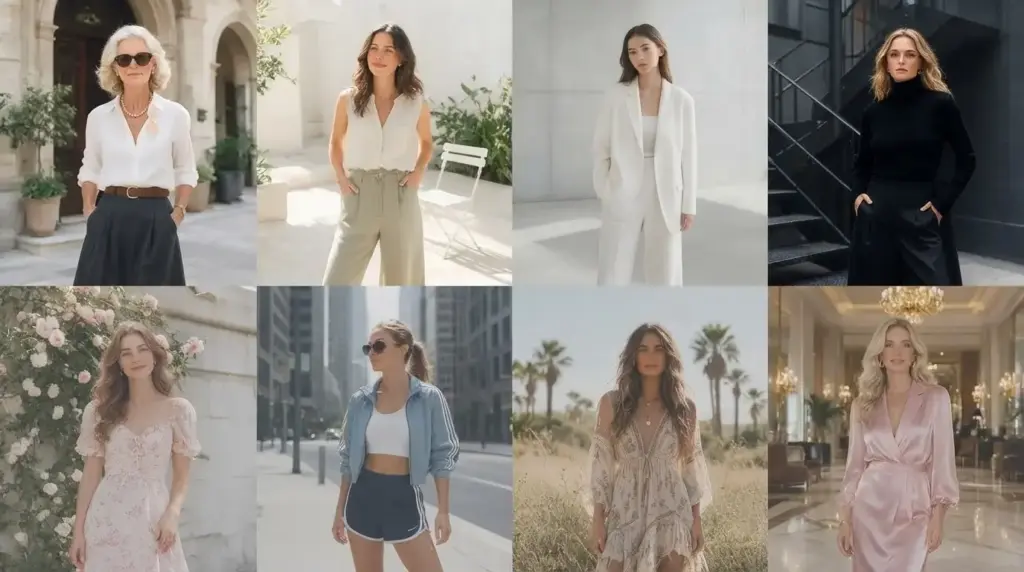
I’ve styled enough 2000s-themed shoots to know the real question people ask isn’t “what was 2000s fashion”; it’s “which 2000s am I even talking about.
The 2000s fashion aesthetic covers a full decade of overlapping styles, shaped as much by music and celebrity culture as by whatever technology and reality TV were doing at the time.
The overview covers the major categories, clothing choices, accessories, and styling elements that define the decade without reducing it to one single look.
You will find the differences between popular aesthetics and the details that help you clearly recognize each style. The goal is to make the decade’s fashion easier to understand and apply in modern outfits.
What is the 2000s Fashion Aesthetic?
The 2000s fashion aesthetic is not one specific look. It’s an umbrella term for several distinct styles worn at different points across the decade, each with its own colors, silhouette, and accessories.
Futuristic Y2K clothing, think metallics, tinted glasses, and platform shoes, is probably the look most people picture first, but it only covers the early years.
Alongside it, and often after it, came McBling glam, boho chic, hip-hop-inspired streetwear, preppy mall fashion, and the darker, band-tee-driven look of emo and scene culture.
So when someone says “2000s fashion,” they usually mean a decade-long mix of styles rather than a single fixed aesthetic.
Is Y2K the Same as 2000s Fashion?
No. Y2K is one part of the wider 2000s fashion landscape. It is mainly associated with the turn of the millennium and its futuristic, technology-influenced visual language, tracing back to the panic around the year 2000 bug.
| Feature | Y2K Fashion | Broader 2000s Fashion |
|---|---|---|
| Main period | Late 1990s to early 2000s | 2000–2009 |
| Main influences | Technology and futurism | Music, celebrities, youth culture, television |
| Colors | Silver, metallics, electric blue | Pink, black, neon, earth tones, denim |
| Clothing | Low-rise jeans, tube tops, futuristic pieces | Tracksuits, boho skirts, skinny jeans, polos, band tees |
| Accessories | Tinted glasses, tiny bags, platforms | Trucker hats, belts, hoops, boho bags, ballet flats |
| Overall look | Futuristic and playful | Glamorous, casual, sporty, preppy, edgy, or bohemian |
Key takeaway: Y2K describes a specific early-millennium style. The full decade also included McBling, boho, streetwear, preppy, emo, scene, and skate, often overlapping in the same closet.
How Fashion Changed Across the Decade
Fashion did not switch styles on a fixed date, much like the previous decade’s outfits didn’t disappear overnight either. Still, dividing the decade into early, middle, and late phases makes its biggest changes much easier to understand.
1. Early 2000s Fashion
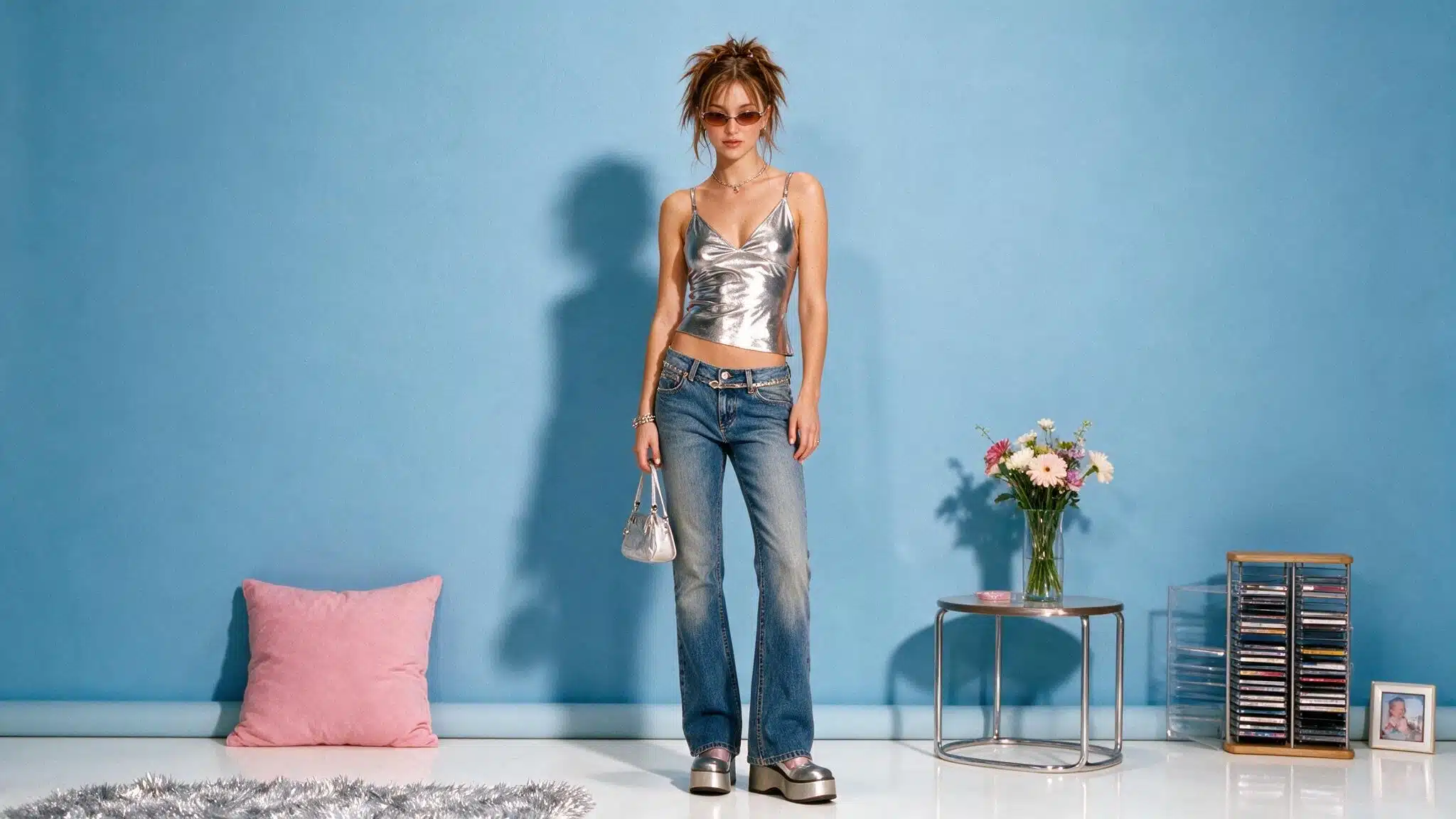
The beginning of the decade leaned hard into futuristic Y2K styling. Metallic colors, low-rise jeans, tube tops, cargo pants, platform shoes, tinted eyewear, and tiny handbags captured the millennium mood.
Technology-inspired details and glossy surfaces appeared alongside pop-star styling, creating outfits that looked sleek, playful, and deliberately attention-grabbing.
2. Mid-2000s Fashion
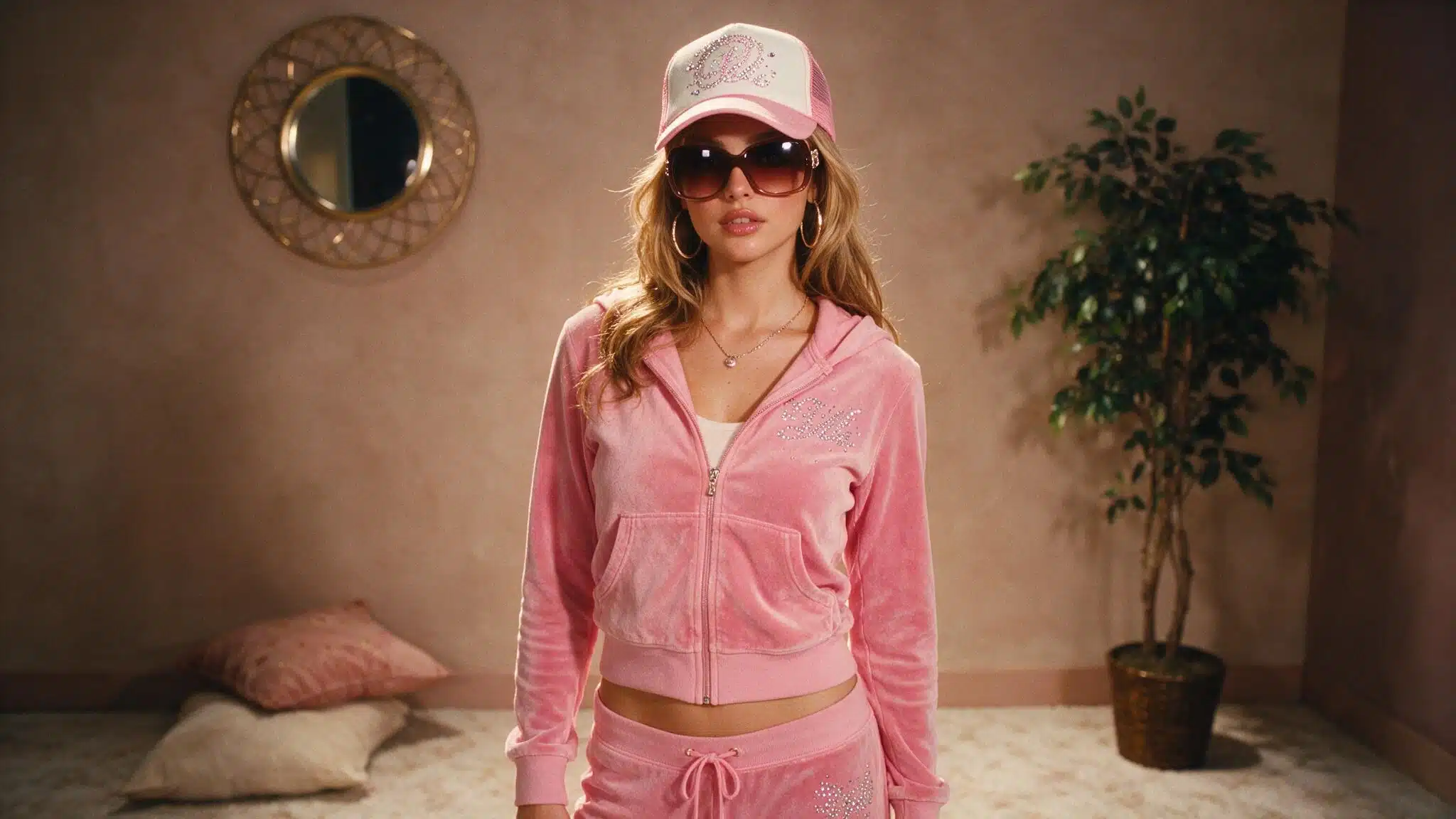
Around the middle of the decade, fashion became closely tied to celebrity glamour and visible status. Velour tracksuits, rhinestones, logo bags, trucker hats, oversized sunglasses, embellished denim, and brightly colored accessories grew noticeable.
At the same time, boho chic introduced flowing skirts, crochet, suede, layered jewelry, and softer earth-toned styling.
3. Late 2000s Fashion

Toward the end of the decade, skinny jeans gained ground alongside leggings, ballet flats, longer layered tops, scarves, fitted jackets, and statement belts.
Emo and scene culture also became more visible, bringing band tees, dramatic hair, darker palettes, studded accessories, skate shoes, and bright graphic details into mainstream youth fashion.
None of these phases had a hard cutoff. In my own closet from that decade, pieces from two or three of these eras sat side by side, and that mixing is honestly part of what makes 2000s style fun to recreate today.
Styles, Clothing Pieces, and Details That Defined 2000s Fashion
Beyond the early-to-late timeline, the decade also split into distinct style categories, each with its own colors, silhouettes, and accessories.
1. Futuristic Y2K
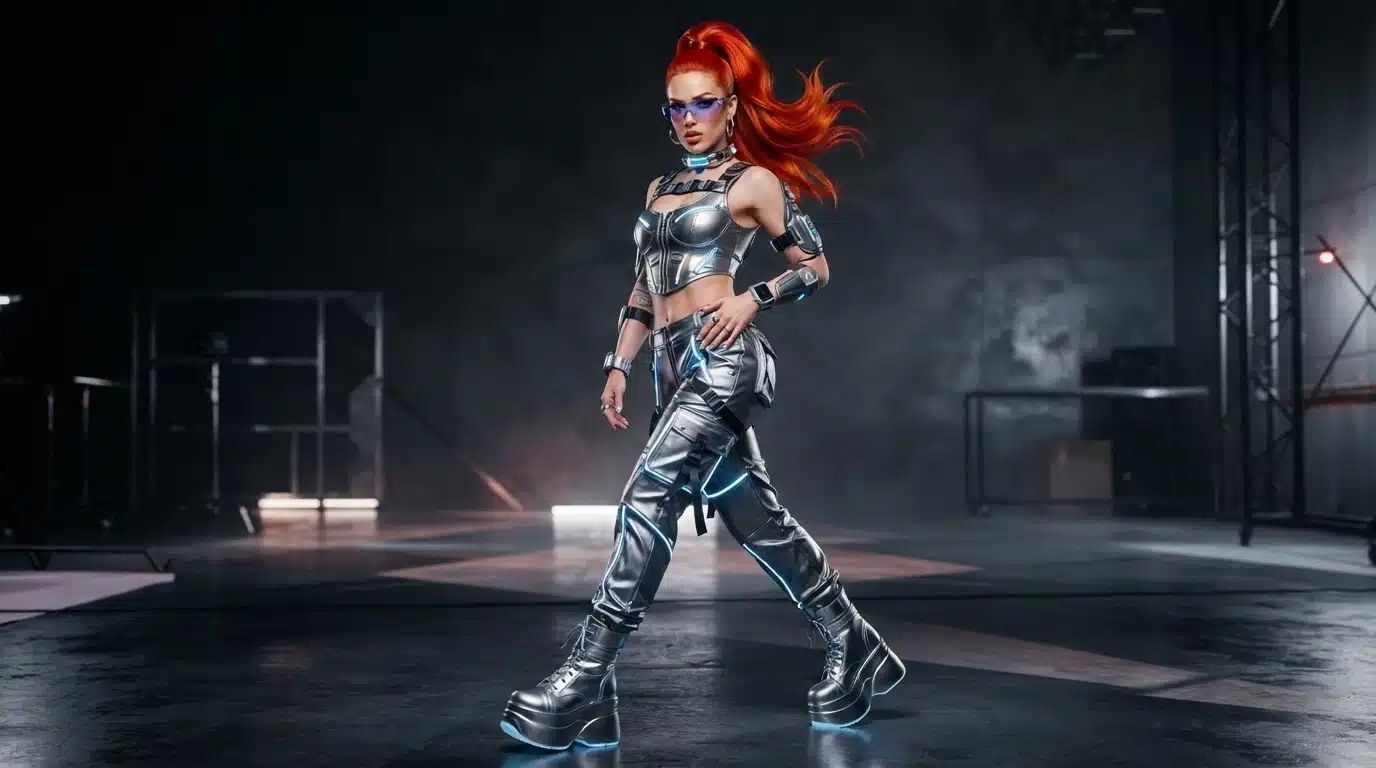
Futuristic Y2K centered on millennium-era ideas about technology and the future. Metallic fabrics, silver finishes, tinted glasses, fitted tops, low-rise bottoms, platform footwear, glossy textures, and compact bags helped create the look.
Baby blue, white, silver, and bright accents were common, giving outfits a noticeably tech-inspired appearance, and these same details are the easiest starting point for styling a Y2K look today.
2. McBling and Girly Glam

McBling favored visible glamour rather than futuristic minimalism. Hot pink, rhinestones, velour tracksuits, animal prints, tiny handbags, trucker hats, large sunglasses, decorative denim, and noticeable logos defined much of the look.
Celebrity and reality-TV culture became closely tied to the aesthetic, making excess and recognizable branding part of its identity.
3. Boho Chic

Boho chic offered a softer alternative to glitter-heavy mid-2000s fashion. Maxi skirts, peasant tops, crochet, suede, fringe, wide belts, slouchy bags, tunics, boots, and layered necklaces shaped the style.
Earth tones, muted florals, and flowing fabrics helped distinguish it from the brighter colors and fitted pieces associated with McBling, though how flattering the flowing shapes feel usually comes down to understanding your natural silhouette first.
4. Hip-Hop and Streetwear

Hip-hop-influenced fashion favored relaxed proportions and strong branding. Baggy jeans, oversized jerseys, tracksuits, sneakers, fitted caps, cargo pants, graphic shirts, and noticeable jewelry appeared frequently.
Silhouettes often prioritized volume and comfort, making this category visually different from the fitted tops and low-rise shapes common in many pop-driven 2000s trends.
5. Emo and Scene
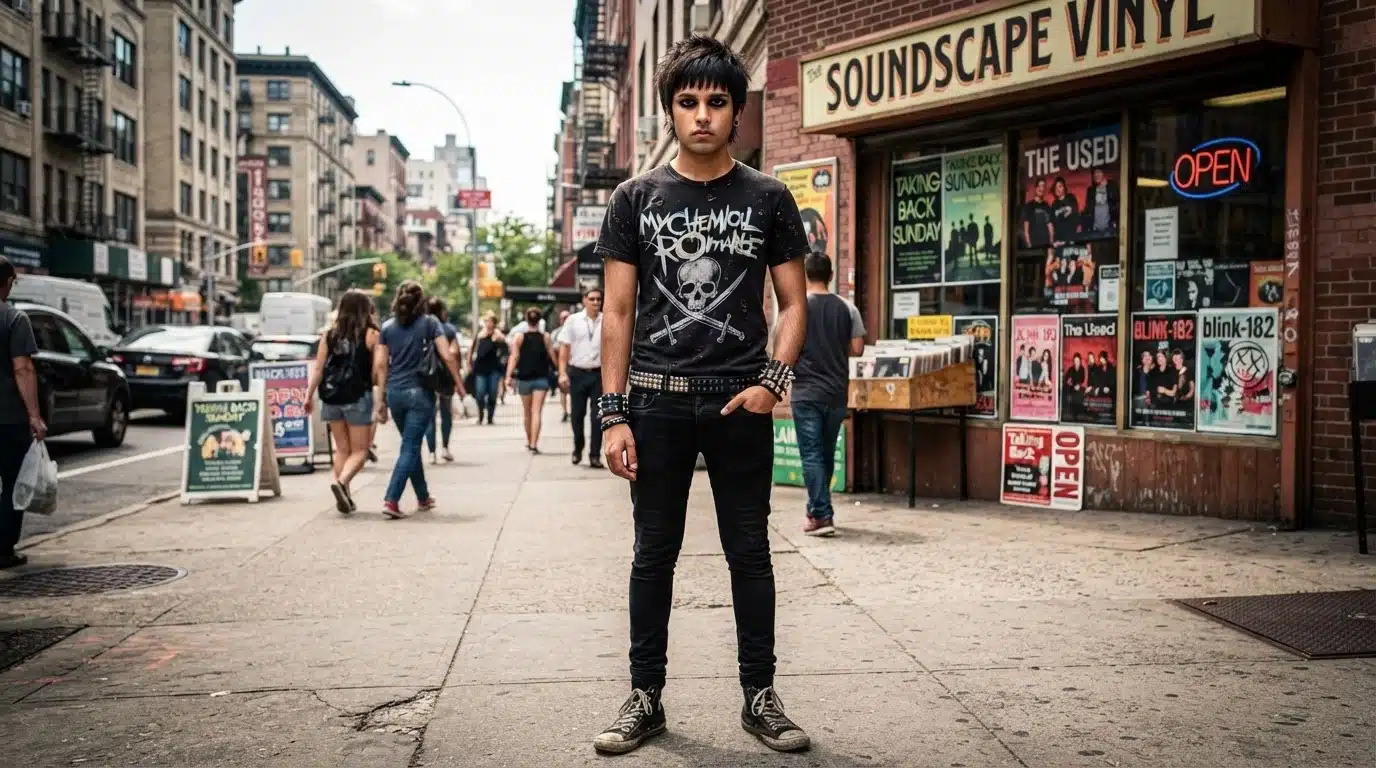
Emo leaned toward darker clothing, skinny jeans, band shirts, hoodies, studded belts, dramatic eyeliner, and music-related styling.
Scene shared several foundations but added brighter colors, bold graphics, layered or teased hair, and playful accessories.
Both were strongly linked to youth culture and music communities in the latter part of the decade.
6. Preppy and Mall Fashion

Preppy 2000s fashion centered on polished but accessible casualwear. Polo shirts, denim skirts, layered camisoles, logo hoodies, fitted cardigans, ballet flats, bootcut jeans, headbands, and branded basics appeared often.
The look was closely connected with teen television, school-inspired outfits, and the highly visible mall-shopping culture of the period.
7. Punk, Skate, and Rock

Punk, skate, and rock styling brought graphic tees, distressed denim, hoodies, plaid, studded belts, skate shoes, wristbands, and band-related clothing into everyday wardrobes.
Fits could range from loose skate silhouettes to narrower late-decade cuts, showing how music and youth subcultures frequently crossed into broader mainstream fashion, with several of these pieces now making a comeback.
8. Popular Shoes

Platform sandals, flip-flops, ballet flats, skate shoes, chunky sneakers, pointed heels, tall boots, and casual slip-ons appeared throughout the decade.
Footwear changed noticeably in terms of aesthetics: platforms fit futuristic Y2K looks, skate shoes suited punk and skate styling, while ballet flats became strongly associated with later preppy and casual outfits.
9. Popular Bags

Tiny shoulder bags, baguette shapes, logo-covered handbags, bowling bags, slouchy boho bags, and brightly colored purses all had a place in 2000s wardrobes, and plenty of these exact styles are getting a second life as clothing reuse and recycling rates continue to climb.
Small structured bags worked well with celebrity-inspired looks, while larger soft bags matched boho styling. Highly visible branding also became an important feature of many popular designs.
10. Popular Accessories

Trucker hats, oversized sunglasses, butterfly clips, hoop earrings, studded belts, layered necklaces, and body jewelry gave outfits their final, unmistakable touch.
Which accessories someone reached for usually said a lot about which aesthetic they were leaning into; boho bags and layered necklaces told a different story than trucker hats and studded belts.
11. Colors, Prints, and Materials

Silver, electric blue, hot pink, black, red, neon shades, earth tones, and muted florals all belonged somewhere within 2000s fashion.
Animal prints, plaid, stripes, visible logos, rhinestones, and sequins added pattern. Denim, velour, mesh, crochet, suede, glossy synthetics, and metallic surfaces supplied recognizable texture.
There was never one official 2000s palette. Color, material, and accessory choices depended heavily on the aesthetic and the point in the decade being referenced.
Why is 2000s Fashion Popular Again?
The return of 2000s fashion comes down to nostalgia, social media, secondhand shopping, and renewed interest in the decade’s distinctive silhouettes. People who remember the era are reconnecting with styles once seen in music videos, magazines, malls, and celebrity culture, while younger audiences are adopting them in new ways.
Social platforms have also helped distinguish Y2K, scene, preppy, indie, and streetwear looks as recognizable aesthetics, making it easier for individual trends to return without reviving the entire decade at once.
Secondhand shopping is a real part of this: ThredUp’s 2026 Resale Report found the U.S. secondhand apparel market grew 13% in 2025, nearly four times faster than the broader retail clothing market, with Y2K pieces among the categories driving that demand.
Modern brands continue to lean on bootcut denim, small shoulder bags, fitted tops, cargo pants, tracksuits, and ballet flats.
The appeal comes from variety, giving different personal styles room to borrow from the decade without following one fixed look.
Tips for Styling the 2000s Look Without Overdoing It
A convincing throwback outfit does not need every trend at once. A few intentional choices usually communicate the decade more clearly while keeping the finished look comfortable and current.
- Choose one aesthetic first. Decide between Y2K glam, streetwear, preppy, emo, scene, or casual denim before selecting individual pieces.
- Let one statement item lead. Metallic tops, embellished jeans, bright bags, or oversized sunglasses already carry strong visual character.
- Balance proportions. Pair wider bottoms with fitted tops, or combine slim jeans with relaxed layers for a recognizably 2000s silhouette.
- Use accessories strategically. Bags, belts, jewelry, and sunglasses can reference the decade without requiring an entirely vintage wardrobe.
- Keep comfort practical. Modern alternatives to extremely low rises or restrictive fits can preserve the visual idea while feeling easier to wear.
Styling note: The strongest modern combinations borrow recognizable details while leaving enough breathing room for personal taste, comfort, and the setting where the outfit will actually be worn.
Common Mistakes When Recreating 2000s Fashion
Creating a 2000s-inspired outfit becomes easier when the right aesthetic, proportions, and styling details are understood. Avoiding these mistakes helps keep the look balanced and wearable.
| Mistake | Problem | Better Approach |
|---|---|---|
| Calling everything Y2K | Ignores other 2000s styles like McBling, boho, and emo. | Choose a specific aesthetic before styling. |
| Mixing too many trends | Too many statement pieces can make outfits look mismatched. | Use a few key details instead of every trend. |
| Ignoring silhouettes | Shapes and proportions defined many 2000s outfits. | Balance fitted, loose, and layered pieces. |
| Copying celebrity looks | Celebrity outfits were often event-specific. | Borrow individual elements that fit your style. |
| Choosing accuracy over comfort | Some original trends may feel impractical today. | Adapt fits while keeping the decade’s influence. |
Final note: A strong 2000s look comes from thoughtful styling rather than wearing every recognizable trend. Focus on the aesthetic, silhouette, and details that represent the era.
Small adjustments can make nostalgic outfits feel current. Choosing the right elements creates a look that reflects the decade while still feeling personal and comfortable.
Final Verdict
The 2000s left behind a wide range of styles that still influence how outfits are created today. I see the value in understanding the decade’s different aesthetics, because you can choose pieces that match your taste rather than copying every trend.
The 2000s fashion aesthetic includes distinct looks shaped by clothing, accessories, colors, music, and culture.
Knowing these differences helps you identify the details that make each style unique and easier to recreate in a modern wardrobe.
I believe the best approach is to use these ideas as inspiration while keeping your own personality visible. Share your favorite 2000s style in the comments and try adding a few era-inspired pieces to your outfits today.
Frequently Asked Questions
What Jewelry Trends Were Popular During the 2000s?
Popular jewelry included charm bracelets, name necklaces, layered chains, chunky bangles, hoop earrings, rhinestone pieces, and personalized accessories that added a playful touch to everyday outfits.
Were Matching Outfits Popular in the 2000s?
Yes, coordinated sets were highly popular, especially tracksuits, matching accessories, and color-coordinated outfits. Celebrity culture helped make polished matching looks a major casual fashion trend during the decade.
How Did Shopping Culture Shape 2000s Fashion?
Shopping malls played a major role by spreading accessible trends through popular stores, catalogs, and youth-focused brands. Many fashion choices were influenced by what was available in mall retailers.
What Hairstyles Were Considered Trendy for Men in the 2000s?
Popular men’s hairstyles included spiky cuts, layered styles, long side-swept bangs, frosted tips, and textured looks. Music artists, actors, and youth culture strongly influenced these trends.
Which Fashion Trends From The 2000s are Still Wearable Today?
Many trends have returned in updated forms, including bootcut jeans, cargo pants, small shoulder bags, fitted tops, ballet flats, layered outfits, and statement accessories styled with modern pieces.