Some trends never really disappear; they just return with a fresh perspective.80s men’s fashion continues to attract attention because it mixed bold style with everyday practicality in ways that still feel recognizable today.
A quick look through vintage photos or modern streetwear is enough to see why the decade keeps inspiring new outfits. If the goal is to recreate an authentic retro look or simply borrow a few classic pieces, knowing what actually defined the era makes all the difference.
Instead of relying on stereotypes, it helps to understand the clothing, colors, fits, and influences that shaped the decade.
Along the way, the right shopping tips and styling ideas can make building an 80s-inspired wardrobe feel far more natural than expected.
What Defined 80s Men’s Fashion?
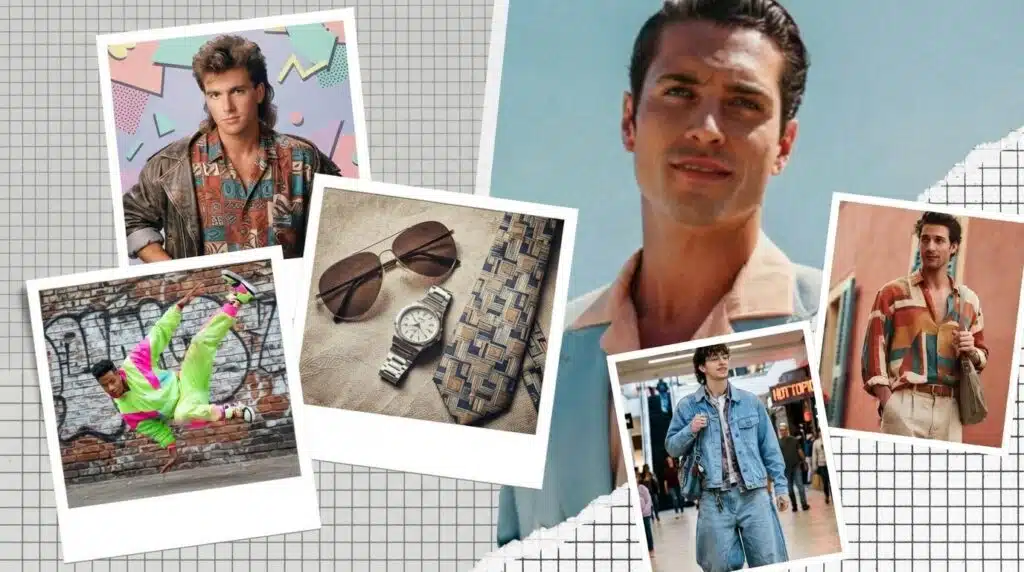
80s men’s fashion was defined by noticeable proportions, strong colors, and clothing that made personality visible. Broad shoulders, relaxed jackets, tapered trousers, and oversized tops changed the shape of everyday outfits.
Athletic clothing also moved beyond gyms as tracksuits, sweatshirts, and white trainers became common casual choices.
Music videos, films, television, and youth subcultures helped spread styles linked to new wave, hip-hop, rock, preppy dressing, and corporate power. Brand logos appeared more openly, especially on sportswear, sneakers, and jackets.
Still, the decade was not entirely neon. Many men relied on denim, leather jackets, polos, knitwear, plain T-shirts, and simple layers. The result was a broad mix of bold statement clothing and practical pieces that could suit work, weekends, fitness, or nightlife.
Shop the 80s Fashion Men Look
Start with the clothing category that suits the outfit you want to create. The table below compares the main pieces and helps you decide what to shop for first.
| Clothing Category | What to Look For | Best For |
|---|---|---|
| Jackets | Leather, bomber, varsity, denim, and windbreaker jackets | Everyday and party outfits |
| Shirts | Graphic tees, band tees, polos, and printed button-downs | Casual retro looks |
| Sweaters | Geometric knits, striped sweaters, and sweater vests | Preppy outfits |
| Pants | Acid-wash jeans, pleated trousers, and track pants | Casual and streetwear outfits |
| Suits | Oversized blazers, double-breasted jackets, and pleated pants | Formal and business looks |
| Sportswear | Tracksuits, sweatshirts, and nylon shorts | Hip-hop and athletic styles |
| Shoes | High-top sneakers, loafers, boots, and white trainers | Completing the outfit |
| Accessories | Sunglasses, chains, watches, caps, and suspenders | Adding a stronger 80s feel |
Vintage clothing may have irregular sizing or visible wear, so check measurements and condition carefully. Retro-inspired pieces offer more predictable sizing, colors, fits, and availability.
Popular 80s Fashion for Men
From boardroom tailoring to gym-inspired streetwear, the decade produced a striking mix of looks, shaped by music, sports culture, and shifting ideas about masculinity. Here are the most recognizable pieces, and how men wore them.
1. Power Suits and Wide Shoulders
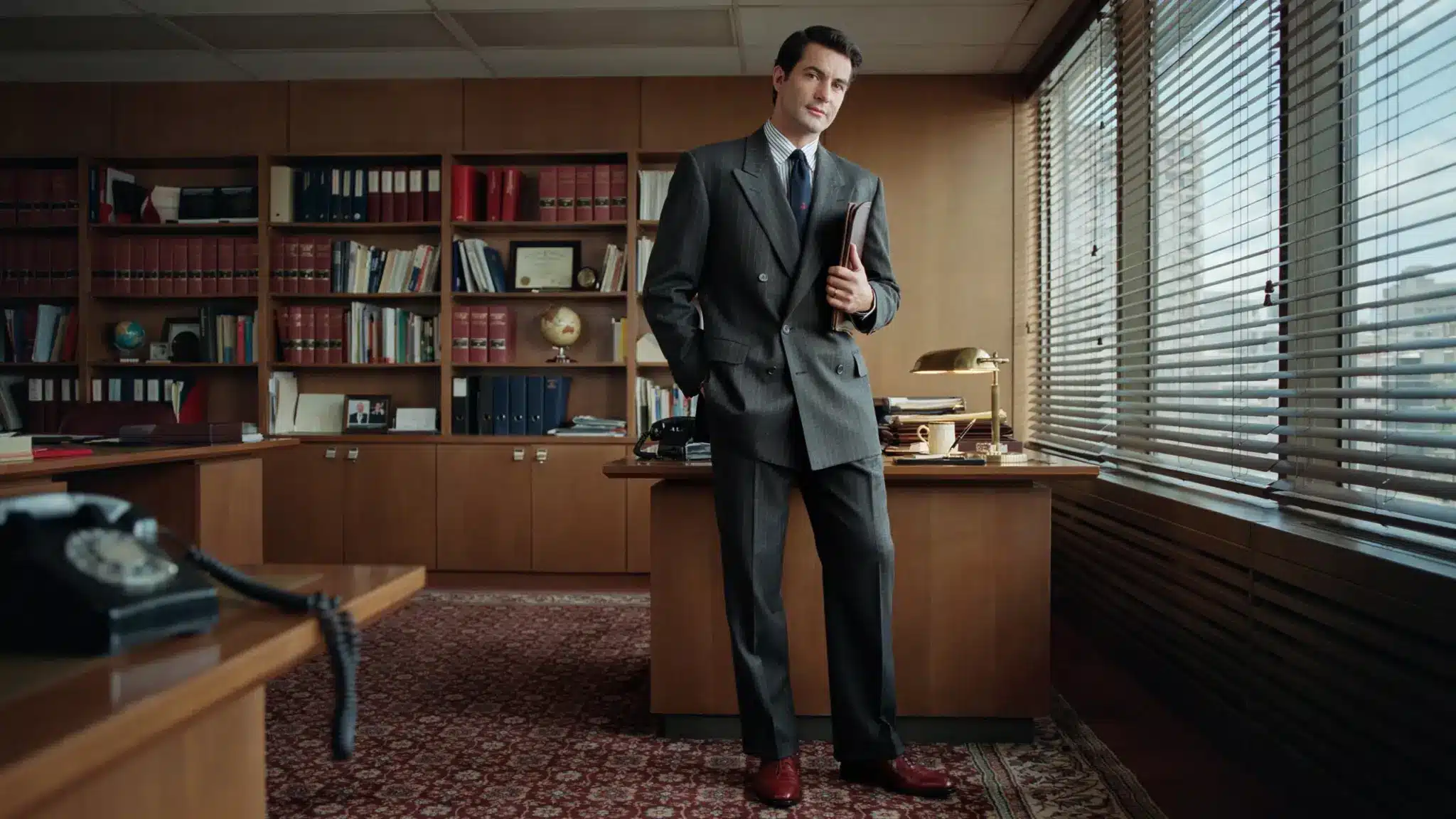
In the office, bigger meant better. Broad-shouldered blazers, double-breasted jackets, and pleated trousers were built to project authority, and men leaned into that on purpose, right down to proper blazer buttoning etiquette.
A slim tie, a crisp shirt, and polished leather shoes rounded out the look, turning the daily commute into a small performance of confidence and status.
2. Bomber and Leather Jackets
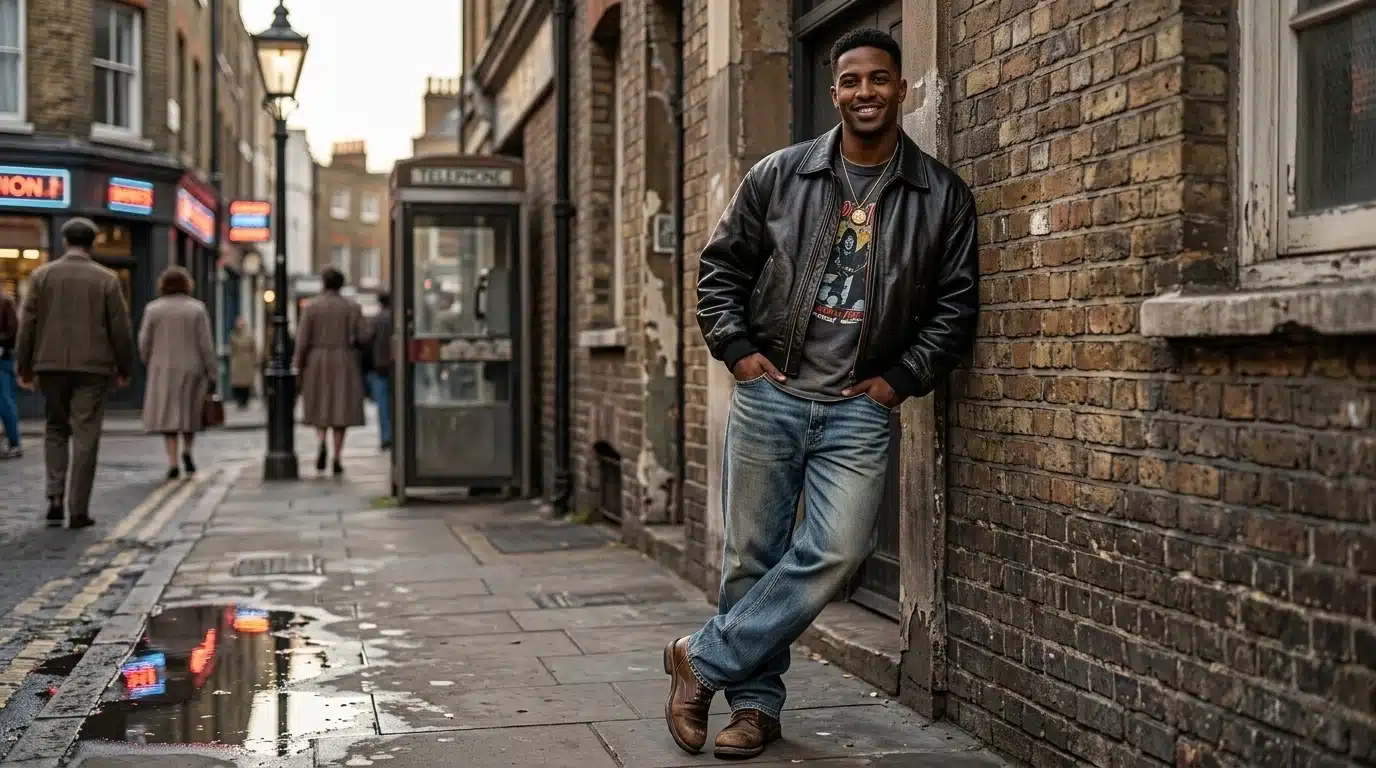
Few pieces from the decade have aged as well as the bomber. Flight-style jackets and biker leathers worked in almost any setting, thrown over a graphic tee, faded jeans, and boots or sneakers.
Their appeal was practical: sturdy fabric, a snug fit, and just enough edge to feel a little rebellious.
3. Double Denim
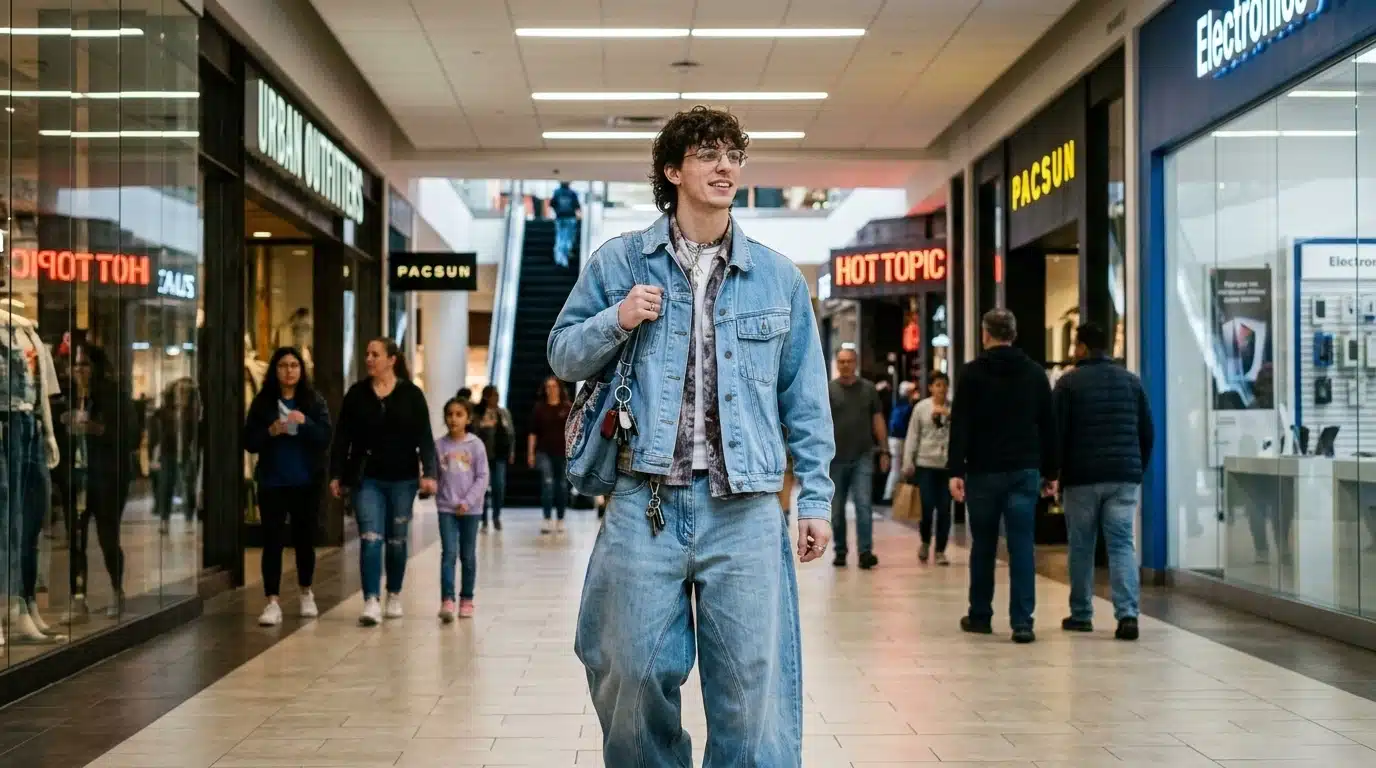
Head-to-toe denim was less a trend and more a default, built on a legacy of riveted workwear. Jackets were paired with straight or tapered jeans, often in a lighter or acid wash for contrast, cuffs rolled at the ankle.
A plain tee underneath kept the whole outfit simple, letting the denim itself do all the visual work.
4. Tracksuits and Athletic Wear
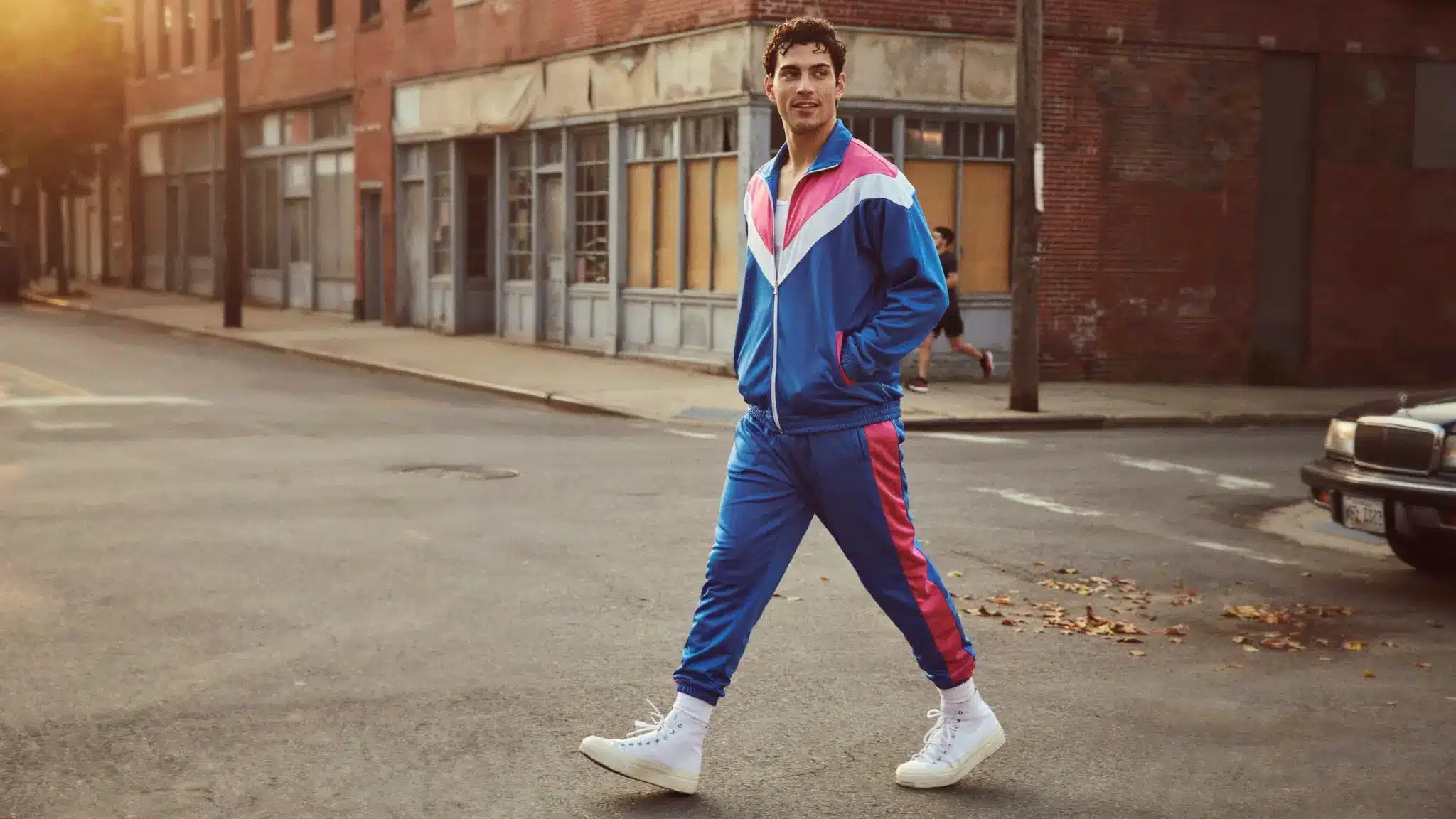
Fitness culture exploded in the 80s, and clothing followed the momentum. Matching zip-up jackets and pants in bold color-blocking moved straight from the gym onto city streets, worn with clean white trainers.
What started as workout gear quickly became a recognizable everyday uniform for younger men in particular.
5. Oversized Printed Shirts
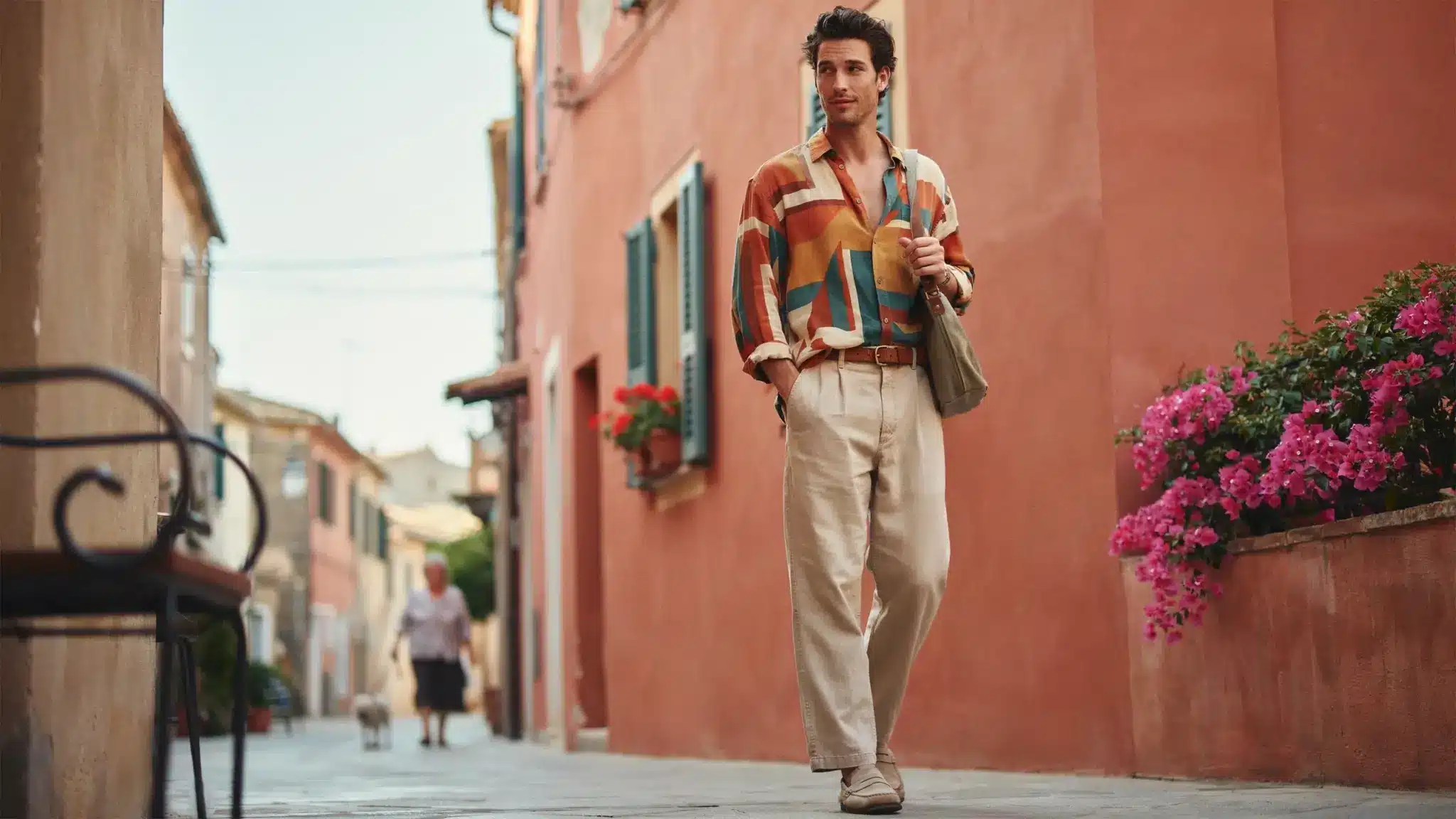
Warm-weather dressing got loud. Abstract geometric patterns and florals inspired by classic aloha shirt prints covered loose, boxy shirts meant to be worn open or untucked, sleeves rolled to the elbow.
Paired with simple shorts or trousers, these shirts let the print carry the outfit while everything else stayed deliberately low-key.
6. Preppy Polos and Sweaters
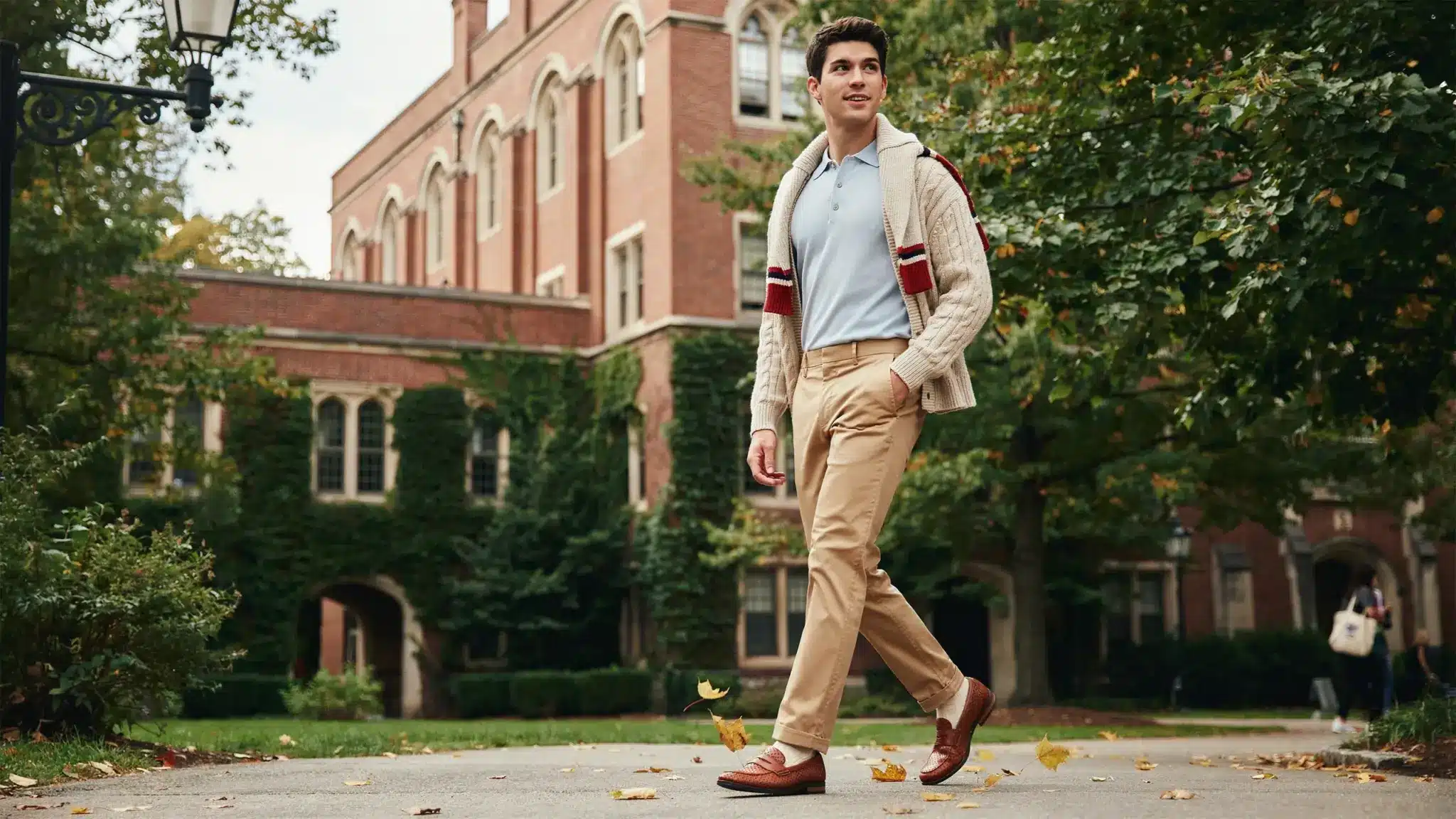
Not every 80s look was loud. Polo shirts, tailored chinos, and sweaters knotted casually over the shoulders gave off an easy, collegiate air borrowed from tennis courts and country clubs.
Loafers and a light cardigan finished the picture, tidy, understated, and a clear contrast to the decade’s flashier trends.
7. Rock and Metal Clothing
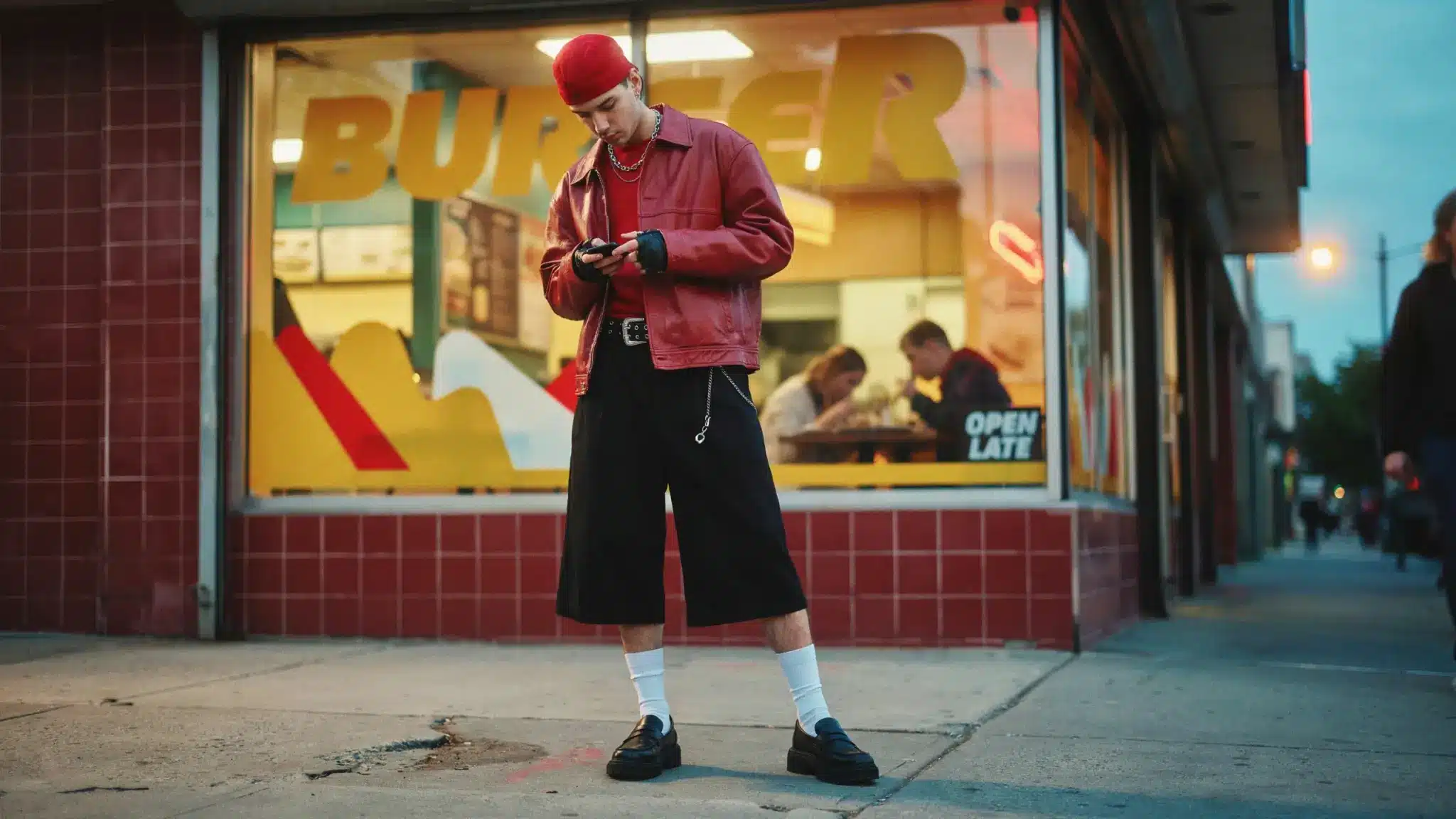
The concert crowd built its own uniform out of rebellion. Band tees, distressed denim, and worn leather jackets formed the core, often layered with metal chains, studded belts, and heavy boots.
Long hair and a deliberately rough finish completed the look, standing in sharp contrast to the polished office style of the same era.
8. Casual Graphic Tees
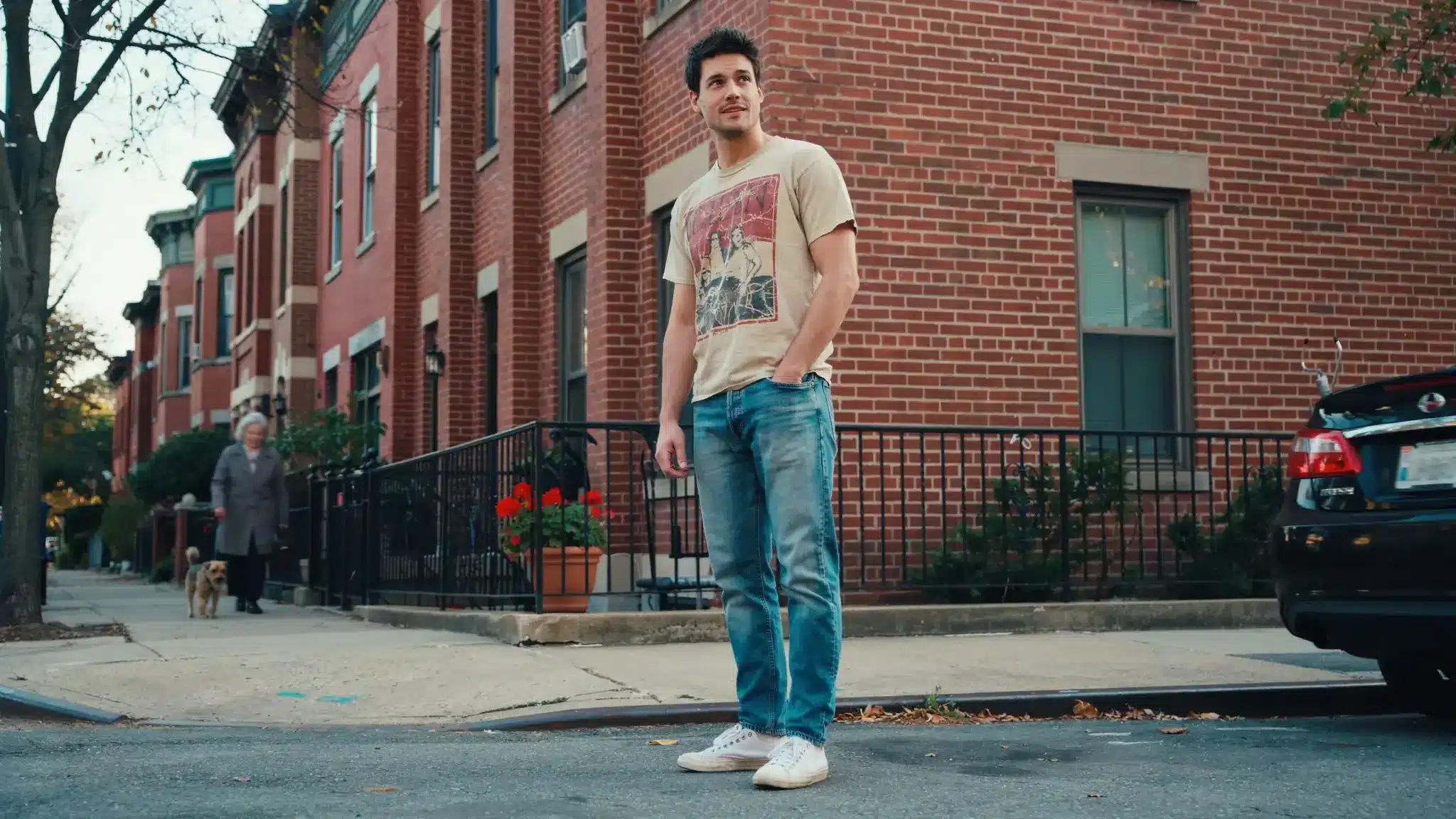
For plenty of men, the simplest outfit was also the most common one.
Logo shirts, band merchandise, and promotional graphic tees paired with plain jeans made up an everyday go-to that required little thought.
It wasn’t flashy, but it was comfortable, affordable, and endlessly repeated across the decade.
9. Short Shorts and Crop Tops
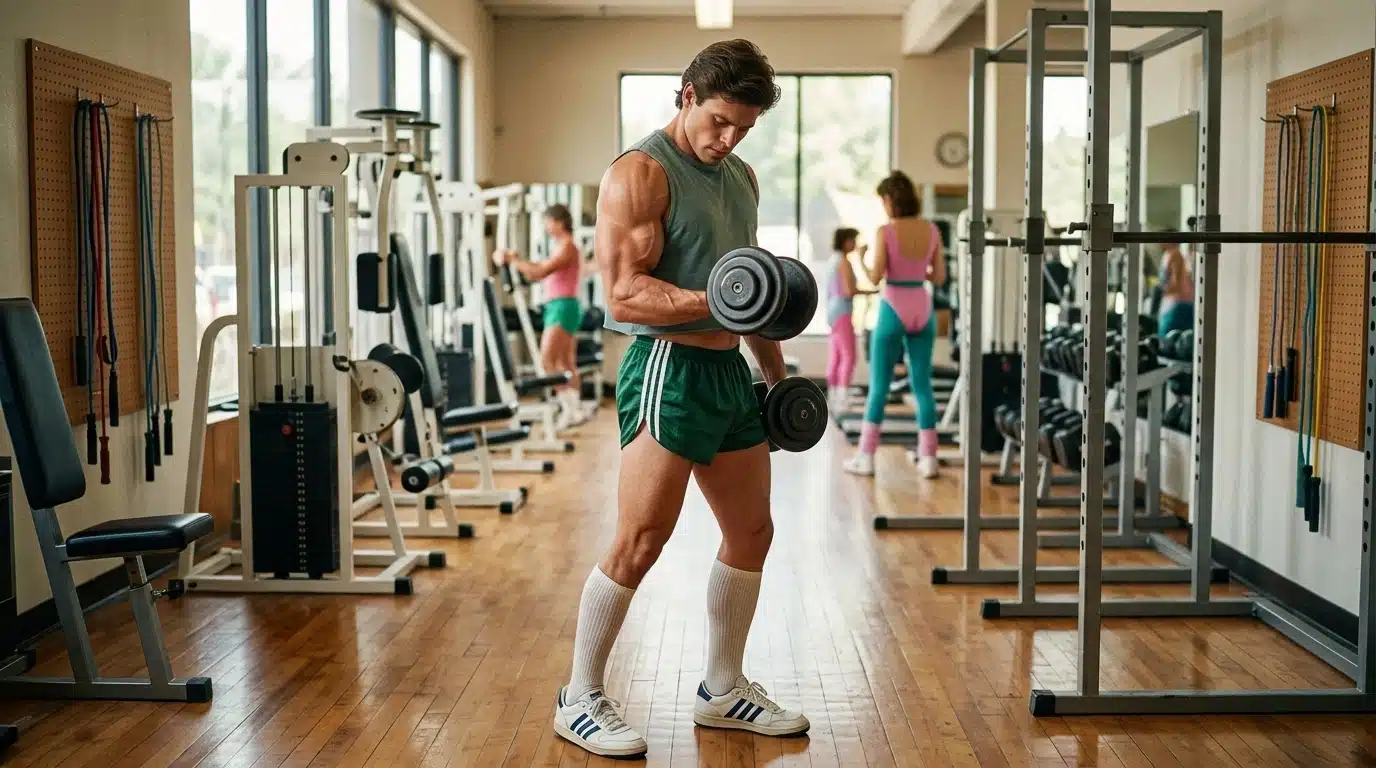
This isn’t a modern reinvention; both were genuinely common in 80s gym and running culture.
Sleeveless cropped tops and high-cut athletic shorts showed up constantly on joggers, weightlifters, and casual athletes alike, usually finished with tall socks and simple trainers built for movement rather than fashion statements.
10. Pastel Miami Style
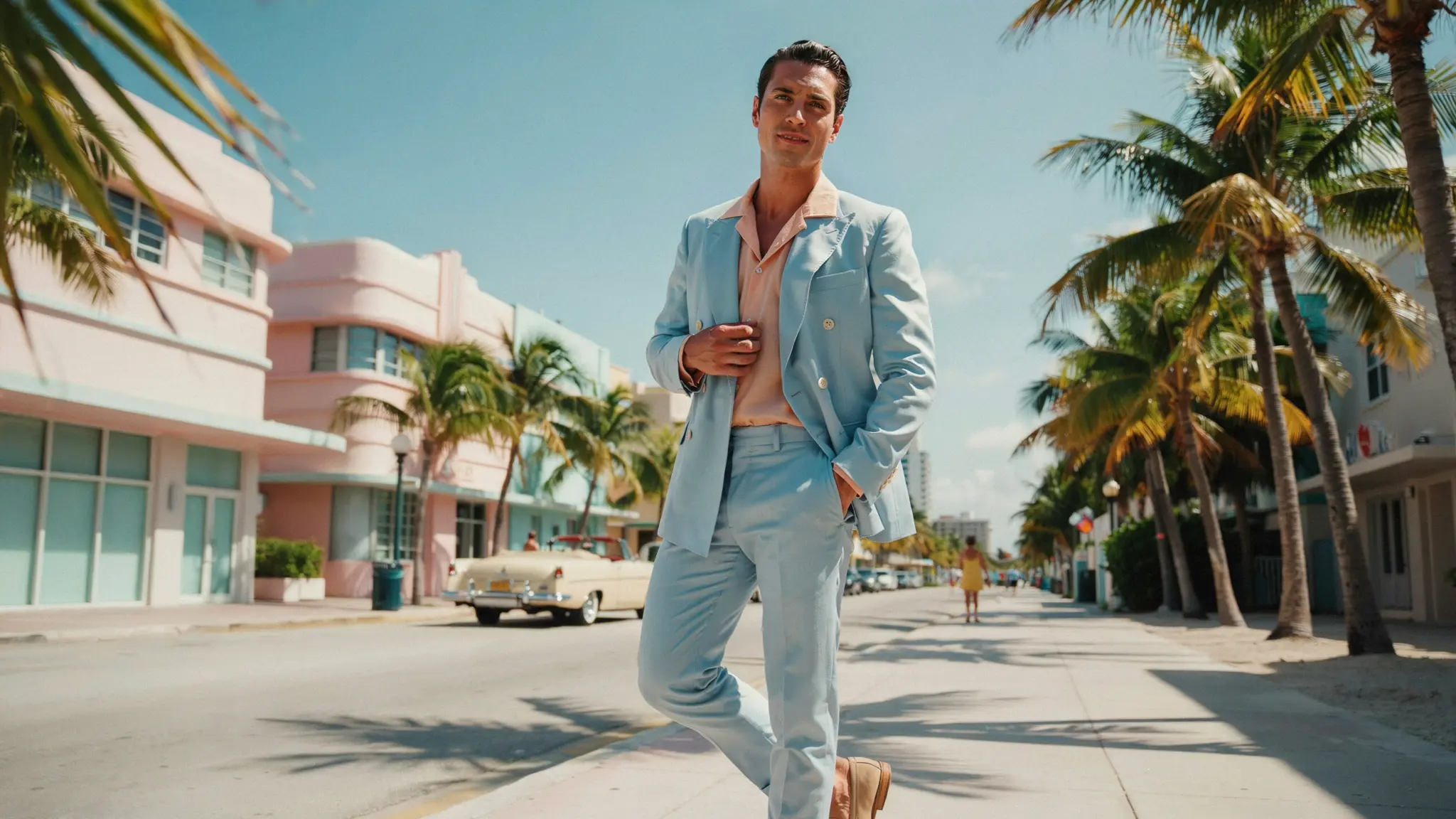
Borrowed heavily from beach resorts and TV glamour, this look softened the decade’s boldness into something breezier.
Relaxed suits in pale pink, mint, or powder blue were worn with open collars, rolled sleeves, and slip-on loafers, no tie required. It read as effortless, sun-drenched, and a little indulgent.
11. Hip-Hop Streetwear
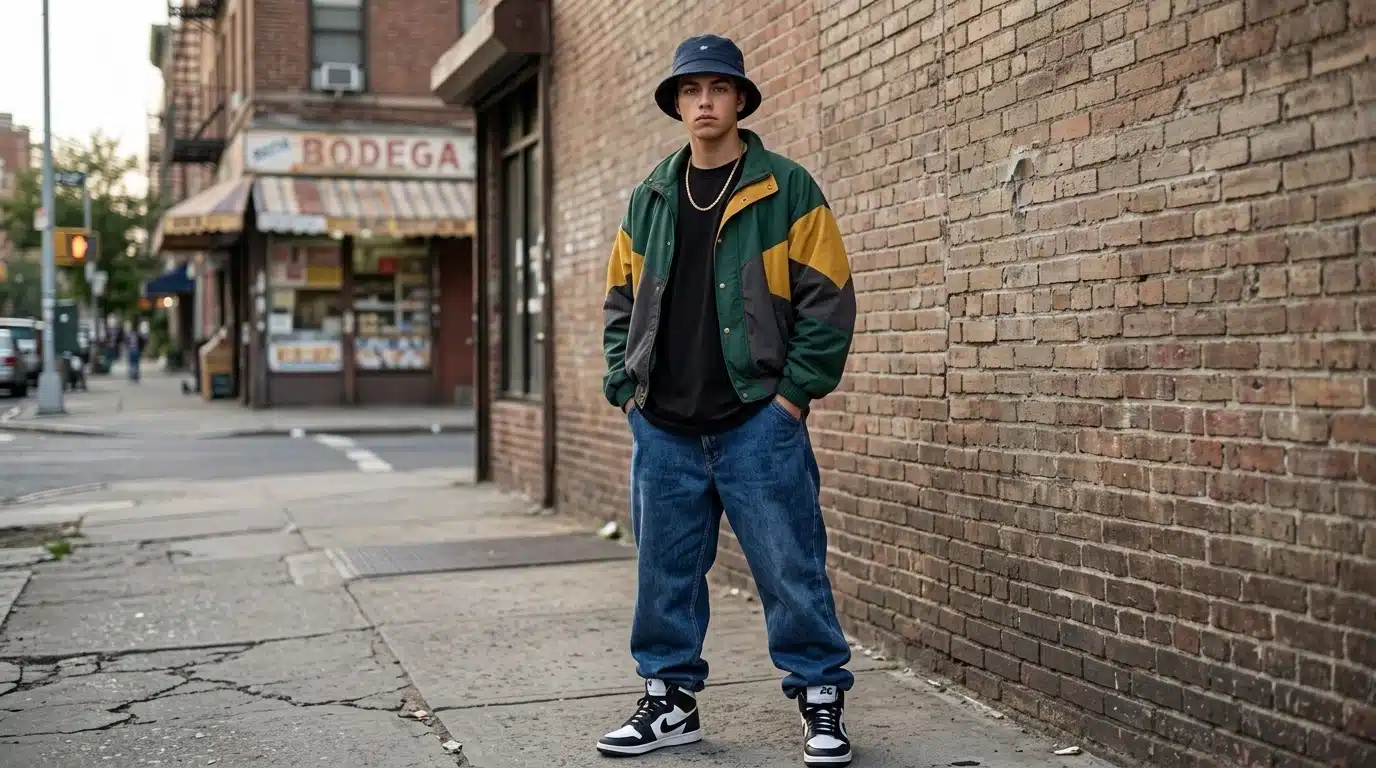
Late-80s hip-hop style brought looser silhouettes and strong accessories into men’s fashion. Baggy jeans, oversized jackets, tracksuit tops, high-top sneakers, bucket hats, and gold chains formed early hip-hop street style.
Bold color blocking and large sportswear pieces gave outfits a confident street presence shaped by rap music, dance culture, and city fashion.
How Men’s Fashion Changed Throughout the 80s
Fashion shifted noticeably as the decade went on, partly as corporate ranks grew rapidly, and knowing which half you’re referencing makes an outfit read as more accurate.
| Period | Common Influences | Typical Pieces |
|---|---|---|
| Early 1980s | Preppy, post-disco, new wave | Polos, slim trousers, leather jackets |
| Mid-1980s | Power dressing, fitness culture | Broad suits, tracksuits, bright sportswear |
| Late 1980s | Hip-hop, glam metal, streetwear | Baggy jackets, denim, high-tops, graphic shirts |
These trends overlapped constantly and varied by city, age group, and music scene, so treat this as a rough guide rather than a strict rulebook.
Styling 80s Fashion with Modern Pieces
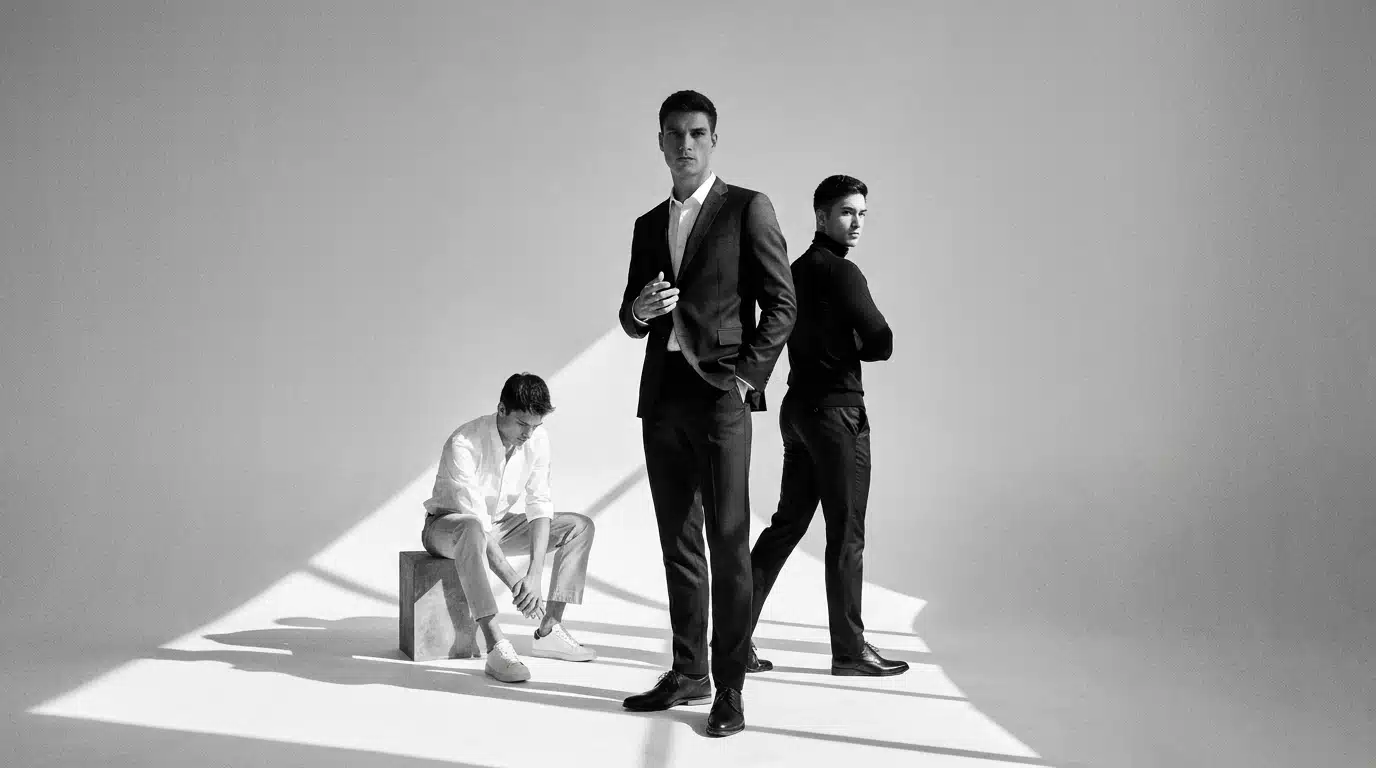
Wearing 80s fashion today is about balancing retro details with simple, modern staples similar to everyday European menswear basics. A few carefully chosen pieces can create a stylish look without making the outfit feel like a costume.
- Choose One Statement Piece: Pick one standout item, such as a leather jacket, printed shirt, oversized blazer, high-top sneakers, or vintage sweater, and build the rest of the outfit around it.
- Balance Proportions: Pair oversized 80s-inspired pieces with modern fits, such as an oversized jacket with straight-leg jeans, a loose shirt with fitted trousers, or a wide blazer with simple sneakers.
- Use Colors Carefully: Bright shades were common in the 80s, but using one colorful item like a windbreaker, sweater, or printed shirt creates a retro feel without making the outfit look overwhelming.
- Add Small Accessories: Complete the look with subtle details like aviator sunglasses, Wayfarer-style frames, digital watches, trucker caps, leather belts, or thin chains.
- Keep Accessories Limited: Choose one or two accessories that support the outfit instead of combining too many retro elements at once.
By combining classic 80s details with modern fits, you can create a retro-inspired outfit that feels stylish, balanced, and easy to wear today
Which 80s Clothing Option Fits You Best?
Deciding between original vintage and modern retro-inspired pieces depends on what matters most to you.
| Option | Main Advantage | Possible Limitation |
|---|---|---|
| Original vintage | Period-correct fabric and construction | Irregular sizing and visible wear |
| Modern reproduction | Easier sizing and returns | May look less historically accurate |
| Secondhand modern clothing | Affordable and wearable | Requires careful searching |
| Costume clothing | Easy for themed parties | Often exaggerated and less durable |
None of these options is universally “better”. It’s really a trade-off between historical accuracy, convenience, and how often you’ll actually wear the piece. Once you’ve picked a lane, the next step is knowing what to check before you buy.
What Reddit Users Say About 80s Men’s Fashion
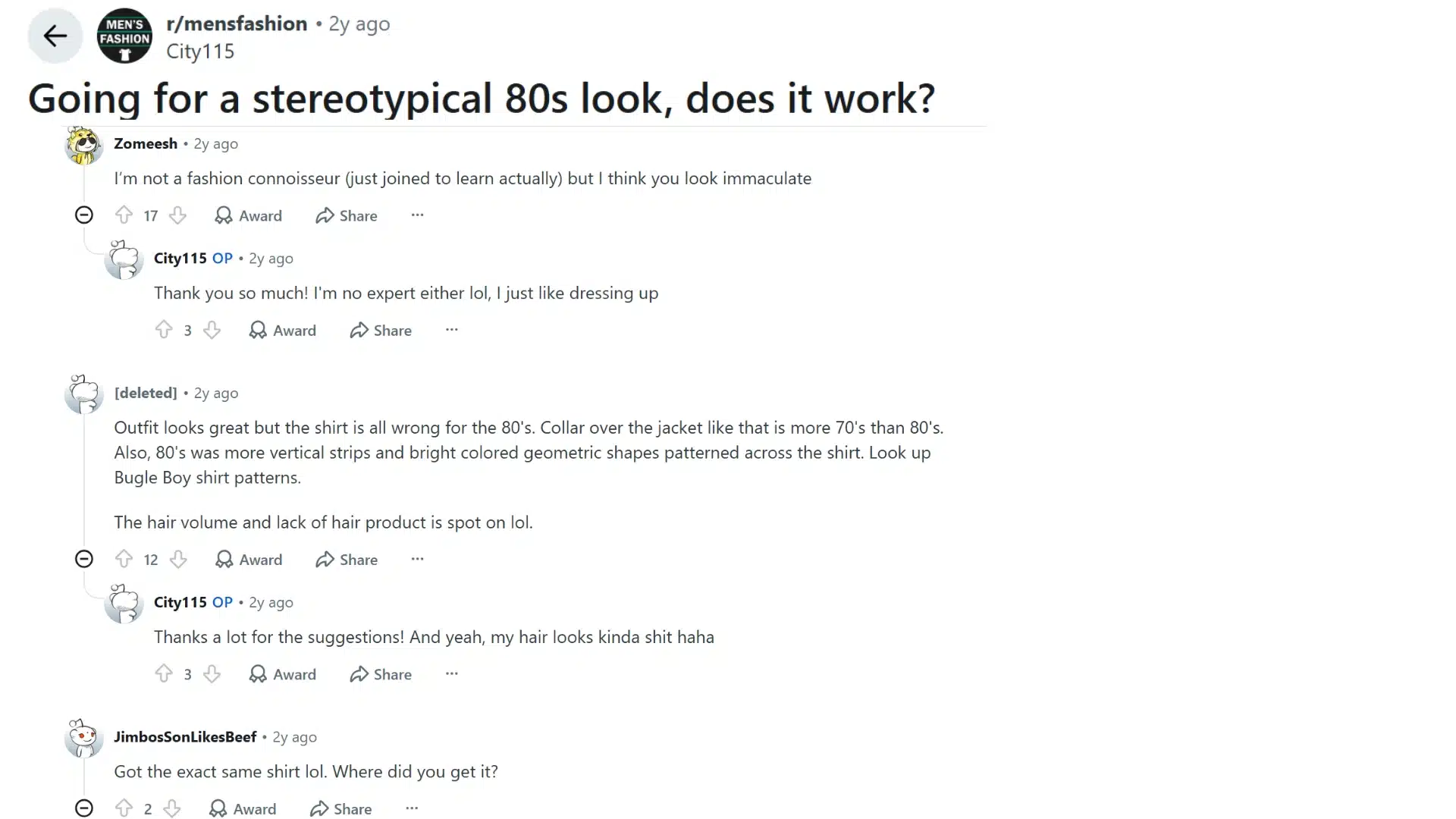
Reddit discussions about 80s men’s fashion often focus on how to create a look that feels accurate without becoming a costume.
In one r/mensfashion discussion, a user shared a stereotypical 80s-inspired outfit and asked for feedback on whether the style worked.
Other users liked the overall look but pointed out details that could make it closer to the decade, such as choosing more period-appropriate shirt patterns and adjusting styling choices.
The discussion also highlighted how small details, including hair volume, patterns, and layering, can change how authentic an 80s outfit feels.
These conversations show that recreating the era is less about adding every trend and more about choosing the right pieces together.
How to Buy Vintage Clothing: Shopping Checklist
Buying vintage 80s clothing requires careful checking before purchasing. Compare chest, shoulder, waist, and inseam measurements instead of relying only on the tagged size.
Check for stains, odors, fading, thinning fabric, damaged zippers, missing buttons, or worn elastic.
Where To Shop For 80s Clothing:
- Local vintage and thrift stores for inspecting quality, sizing, and condition in person.
- Online vintage marketplaces for wider selections, but check seller ratings, photos, measurements, and return policies.
- Auction websites for rare pieces, while comparing prices and item details carefully.
- Specialist retro menswear retailers for vintage-inspired styles with easier sizing.
- Clothing rental services for trying statement pieces without buying.
- Modern retailers with retro collections for updated 80s-inspired clothing.
Compare prices, measurements, seller reviews, and shipping details across different sources before buying, especially for unique vintage pieces.
Conclusion
Pulling off a retro look is easier once the details make sense instead of relying on common stereotypes. I think the strongest outfits come from choosing a few signature pieces and wearing them with confidence rather than trying to copy every trend from the decade.
Ideas covered here can help you recognize the styles, shop smarter, and build outfits that feel authentic and comfortable. 80s fashion for men offered far more variety than many people expect, making it easy to find a look that suits your own taste.
If you try any of these styling ideas or discover a favorite 80s outfit, share your thoughts in the comments and explore more fashion inspiration on the blog.
Frequently Asked Questions
Were Designer Labels Important in 1980s Menswear?
Designer logos became increasingly visible during the decade, especially in sportswear, denim, preppy clothing, and status-focused urban fashion.
Which Fabrics Were Common in 80s Clothing?
Cotton, denim, Leather, Wool Blends, Nylon, Polyester, Velour, and Synthetic Sportswear Fabrics Were Widely Used Across Casual and Formal Clothing.
Did 80s Men Wear Baggy or Tight Clothes?
Both Appeared. Tailoring and Outerwear Were Often Oversized, While Jeans, Athletic Shorts, and Some Rock Clothing Could Have Slimmer Cuts.
Can Vintage 80s Clothing Be Machine Washed?
It Depends on The Fabric and Condition. Always Check the Care Label, Test Colorfastness, and Hand-Wash Fragile Pieces when Uncertain.
How Can You Tell if Clothing is Truly Vintage?
Check the label design, country of manufacture, fabric composition, stitching, care instructions, hardware, and signs of age before buying.