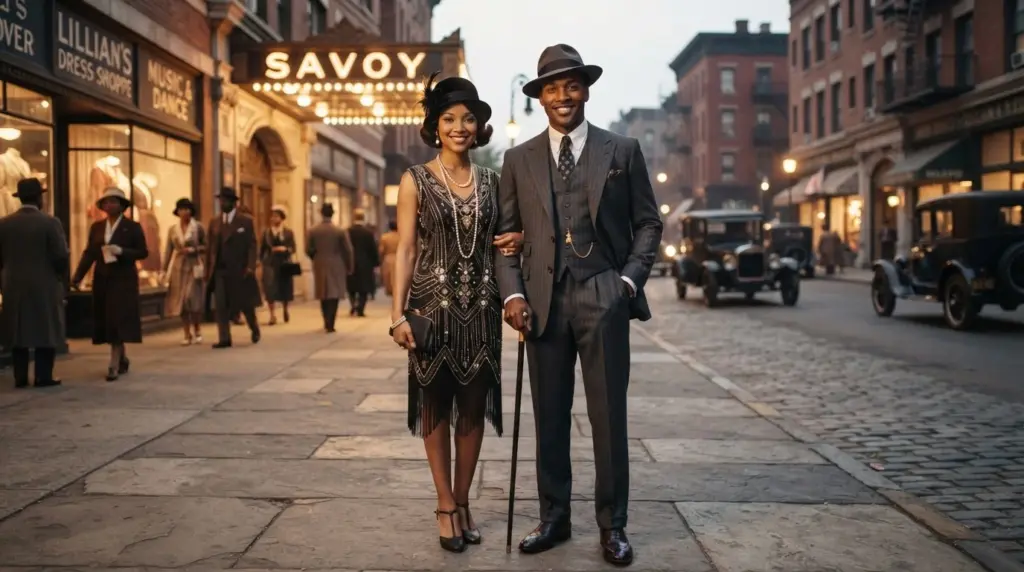
Beaded dresses, sharp-cut suits, cloche hats, long pearls, feathers, fedoras, and polished shoes made 1920s Harlem one of the most visually distinctive fashion scenes of its time.
Harlem Renaissance fashion ranged from refined daytime clothing to striking evening looks worn in jazz clubs, ballrooms, theaters, and formal portraits.
Women paired flowing or embellished dresses with statement accessories, while men often relied on well-fitted suits, hats, and polished footwear.
I’ve pulled reference photos for period shoots for years, and the outfits that actually read as 1920s Harlem are rarely the ones piled high with feathers. They’re the ones where the shape, the shoes, and the occasion all agree with each other.
What Did Harlem Renaissance Fashion Look Like?
Harlem Renaissance fashion describes the clothing worn across Harlem’s Black community from roughly 1918 into the mid-1930s. It includes beaded eveningwear and cloche hats for women, tailored suits and fedoras for men, and looks borrowed from jazz nightlife, church life, and personal ambition.
This period mixed popular Jazz Age trends with Black cultural expression. Women’s clothing ranged from simple daytime dresses to beaded gowns built for dancing. Men usually wore two- or three-piece suits during the day, with sharper contrasts and bolder accessories saved for the evening.
Cloche hats, fedoras, polished shoes, pearls, gloves, and watches finished each look. Fit and grooming mattered just as much as the clothing itself.
The photographs and magazines of the era, publications like The Crisis and Opportunity, ran fashion photography and society pages alongside their political and literary content, showing this clearly.
Those images are still some of the best references available, and I lean on them heavily whenever I’m reviving these vintage trends for a client today.
Harlem Renaissance Outfit Examples
Harlem style moved easily between daytime polish and evening glamour. These looks show how dresses, suits, hats, shoes, jewelry, and grooming created distinct outfits for different occasions.
1. Beaded Harlem Renaissance Evening Dress
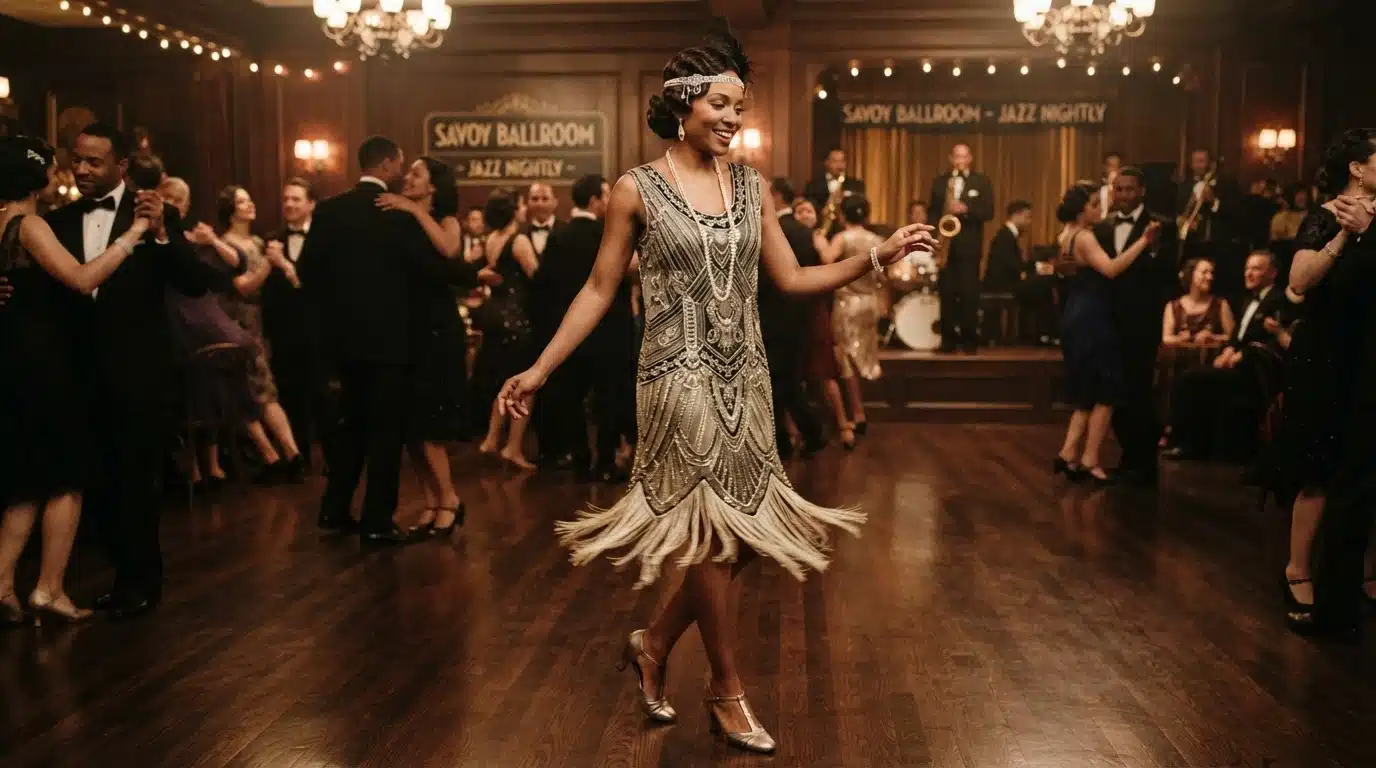
A beaded evening dress captures the glamour of Harlem’s jazz clubs and ballrooms. The silhouette was often loose or drop-waisted, so the fabric could move while dancing. Beading, embroidery, and fringe added texture without weighing the dress down. Long necklaces and dance-friendly shoes finished the look.
I’ve fitted this fringe placement for more than one client, and it holds together best when the beading stops just above the knee. Lower than that, it starts to drag instead of swing.
How to recreate it: Choose a loose beaded dress and keep the accessories restrained; one long necklace is usually enough.
2. Classic Flapper-Inspired Harlem Dress
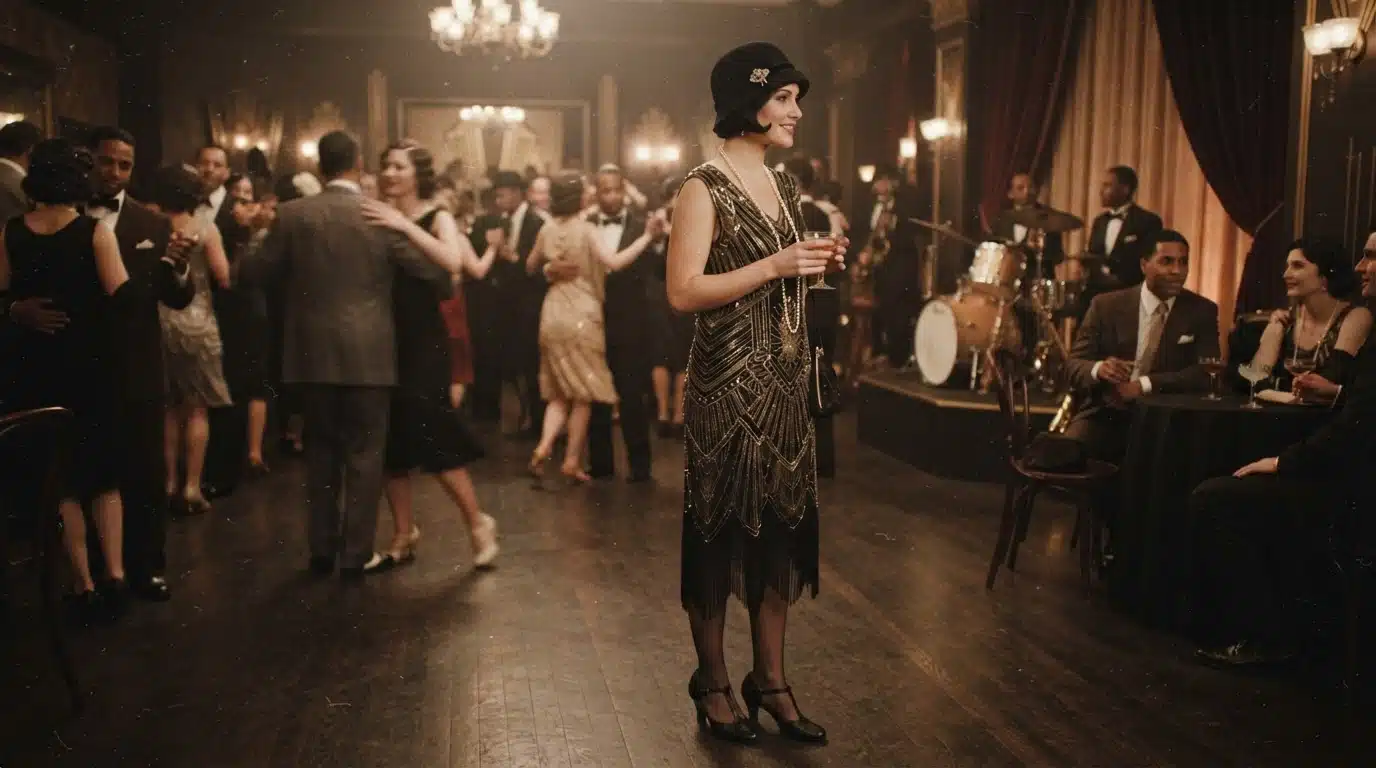
This look featured a loose shape with a hem falling around the knee or mid-calf, often decorated with beading or geometric embroidery. A cloche hat, long pearls, and T-strap or Mary Jane shoes completed the outfit.
Worth remembering: Harlem women wore many different styles, so this recognizable nightlife look shouldn’t stand in for all women’s fashion of the period.
How to recreate it: Build around the silhouette first. Add the cloche and pearls last, not first.
3. Harlem Day Dress
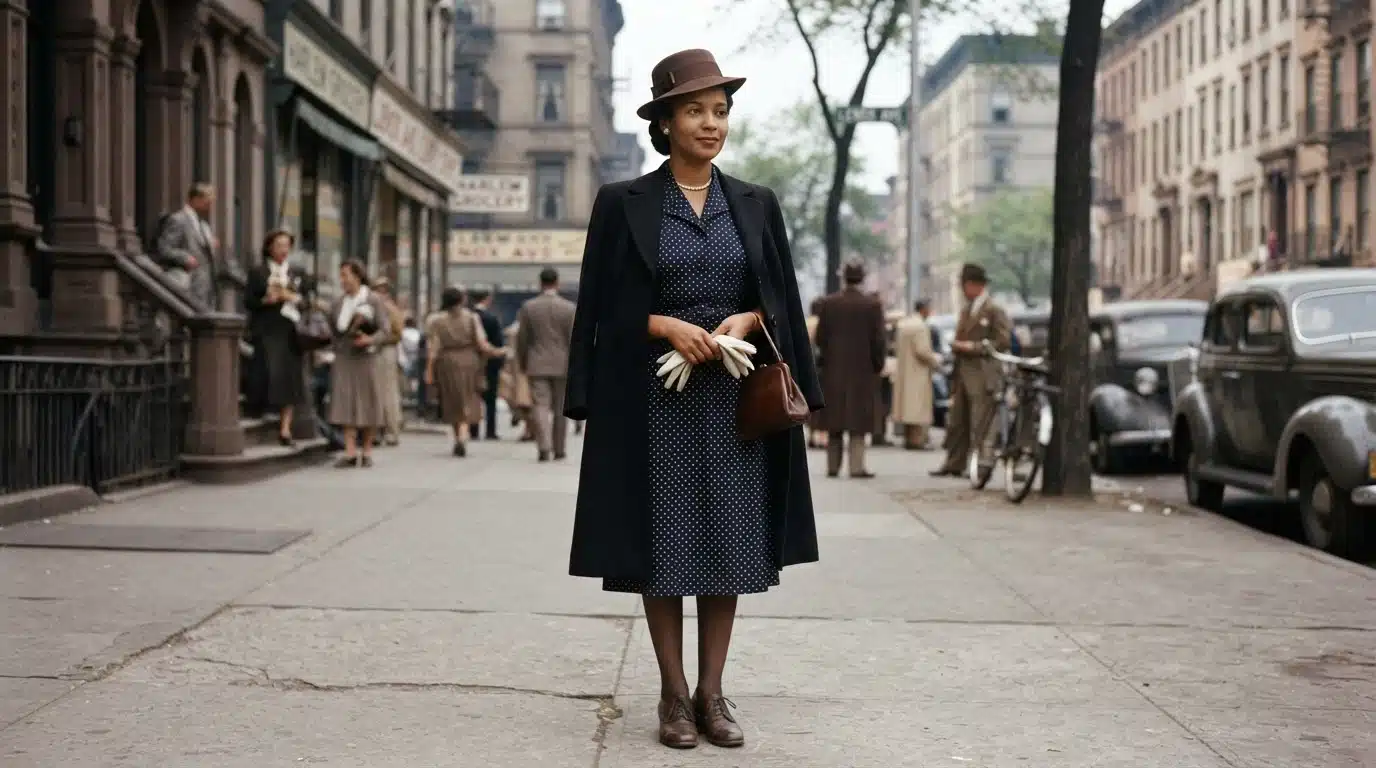
Not every outfit was designed for a ballroom. Everyday clothing was neat and practical: longer dresses with a defined waist or a softly structured shape.
Stockings, low-heeled shoes, and a simple hat finished the look. In cooler weather, a fitted coat added warmth without turning daywear into eveningwear.
How to recreate it: Pick a period-shaped dress in a muted color and keep the accessories understated.
4. Harlem Renaissance Church or Formal Women’s Look
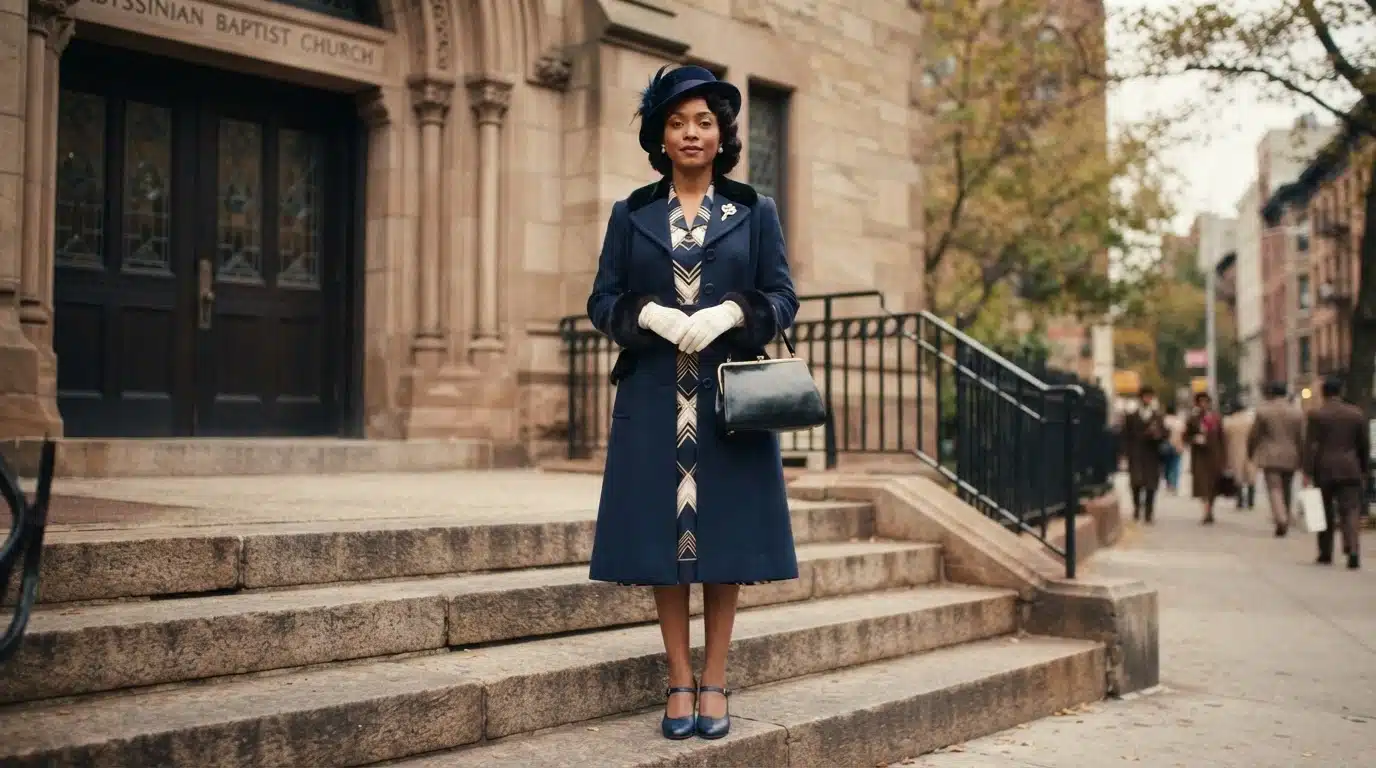
Church services and formal daytime events called for more reserve. A refined dress paired with a structured coat, gloves, handbag, hat, and coordinated shoes.
Instead of sparkle, the impact came from clean lines and careful color matching, one of the more useful references for anyone who wants the era without the theatrics.
How to recreate it: Match your colors carefully and let the coat, not the jewelry, carry the outfit.
5. Harlem Jazz Club Women’s Outfit
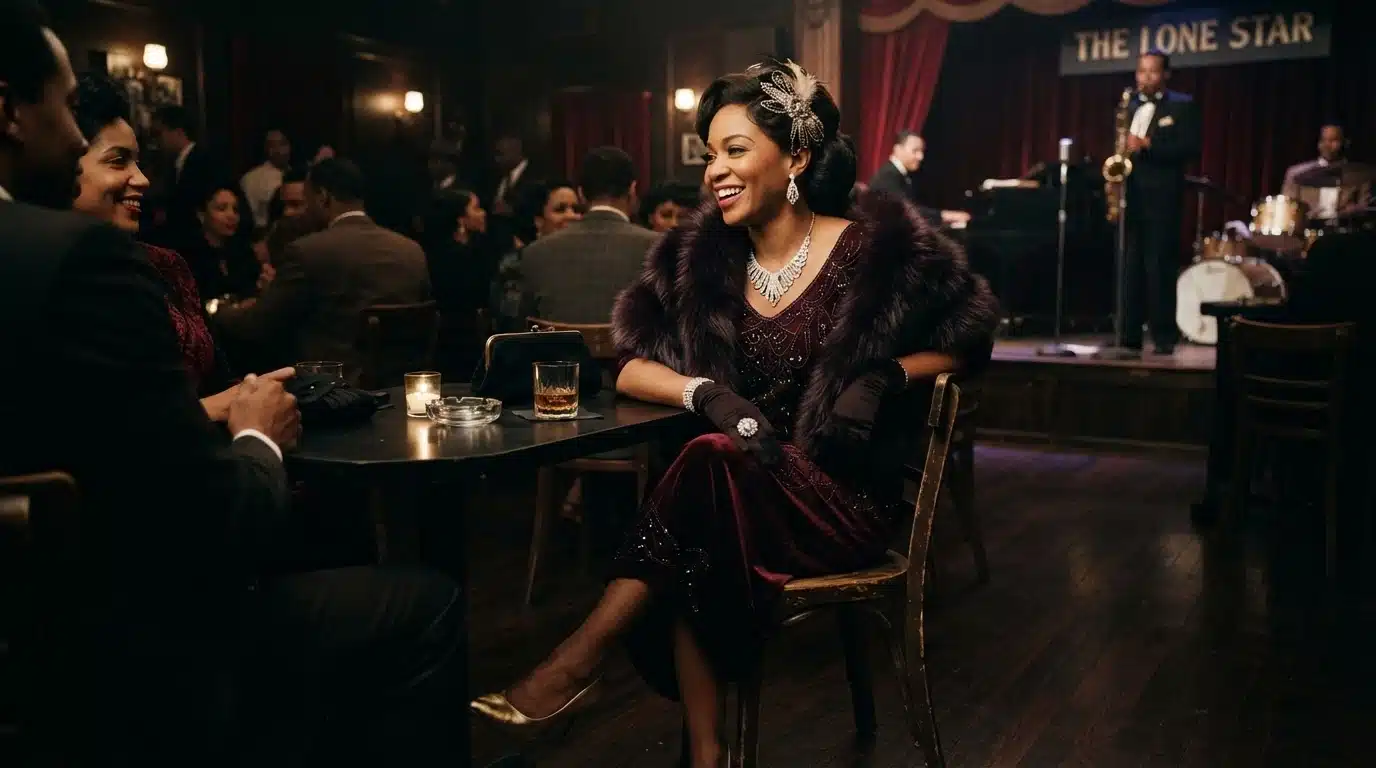
Nightlife allowed for richer fabrics and bolder accessories. Pair an evening dress with a decorative headpiece, statement jewelry, or fur-trimmed outerwear.
Unlike daytime clothing, this outfit needed to hold up under club lighting and move well on a crowded dance floor.
How to recreate it: Start with the eveningwear, then add one or two statement pieces, not five.
6. Women’s Cloche Hat and Coat Look
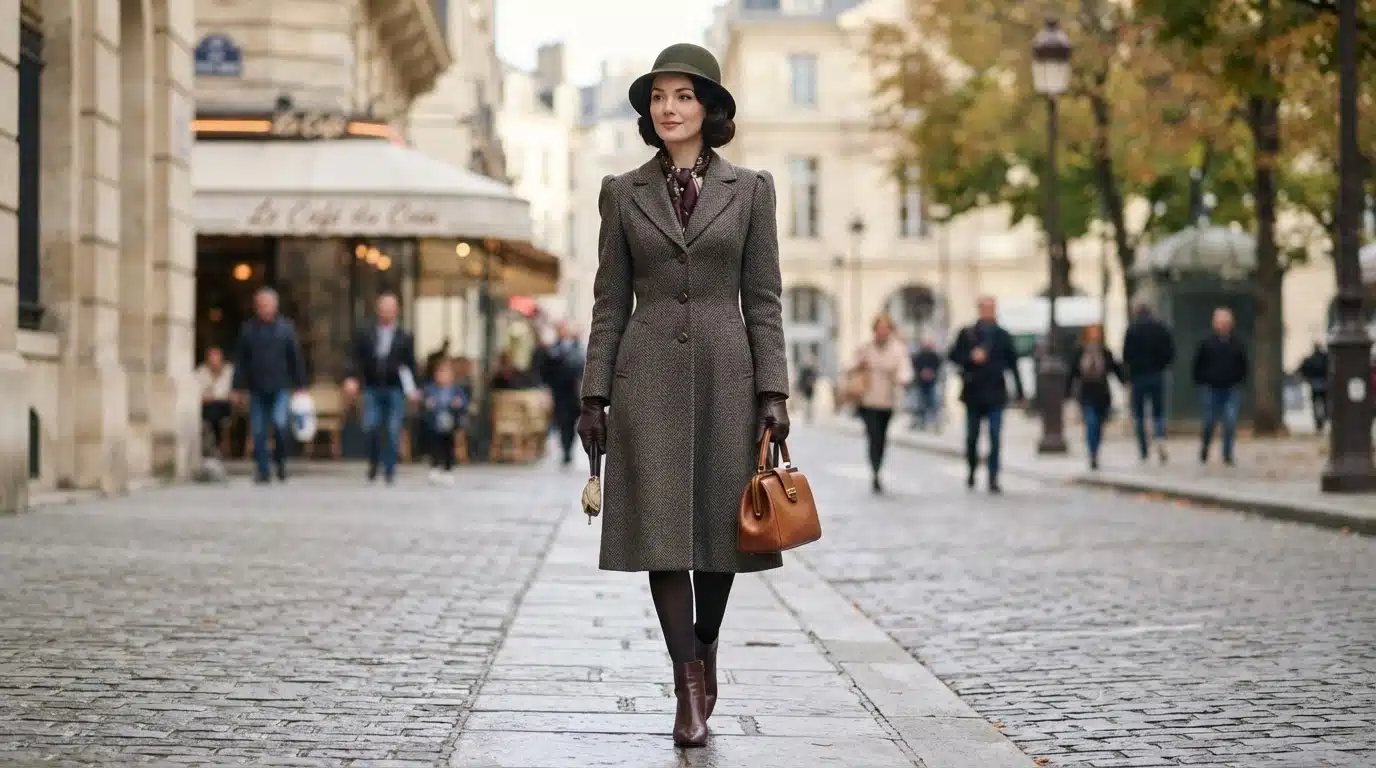
A cloche hat could shape an entire outfit rather than just finishing one. Worn low over bobbed or waved hair, it paired naturally with a structured coat, gloves, a scarf, and coordinated shoes. The result was neat, city-ready, and easy to wear again outside a themed event.
This is the look I point clients toward first when they want the era without going full costume. The coat does most of the work.
How to recreate it: Let the hat and coat lead. Everything else should be quiet.
7. Classic Harlem Renaissance Men’s Suit
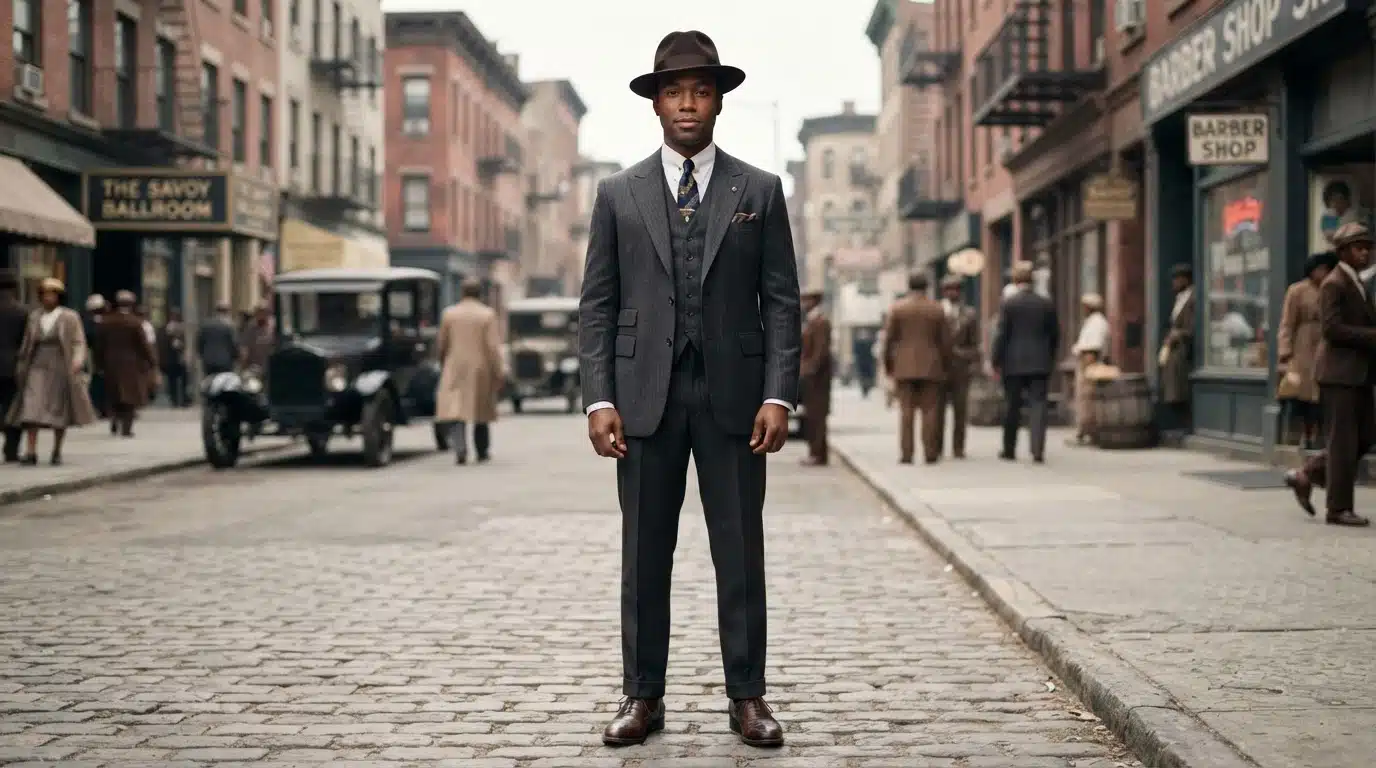
A well-fitted two- or three-piece suit formed the base of most polished men’s looks. Paired with a crisp dress shirt, tie, leather shoes, fedora, and pocket square, it created a strong sense of order.
When I’m fitting this look, I check the shoulder seam before anything else, right alongside proper jacket button etiquette. If that seam sits wrong, no tie or hat can fix it.
How to recreate it: Get the fit right before you touch the accessories.
8. Harlem Jazz Musician-Inspired Suit
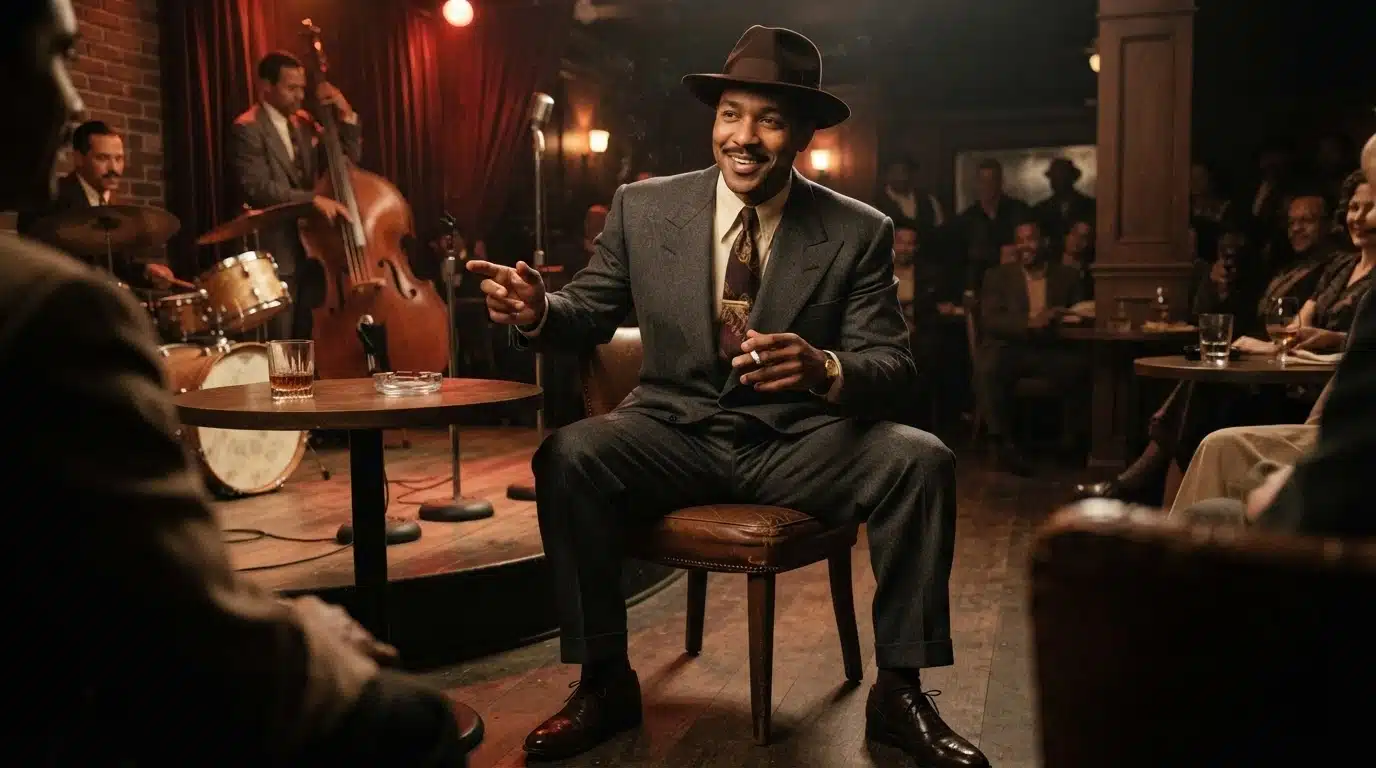
A performer’s evening suit could take more risks than daytime tailoring allowed. Wider lapels, stronger contrasts, and a noticeable tie or fedora gave the outfit stage presence.
Musicians didn’t share one uniform look, so the strongest reference is period suit proportions plus one expressive detail, not an exact copy of any single performer.
How to recreate it: Pick a period-cut suit and commit to one bold detail, like a contrast tie.
9. Harlem Men’s Eveningwear
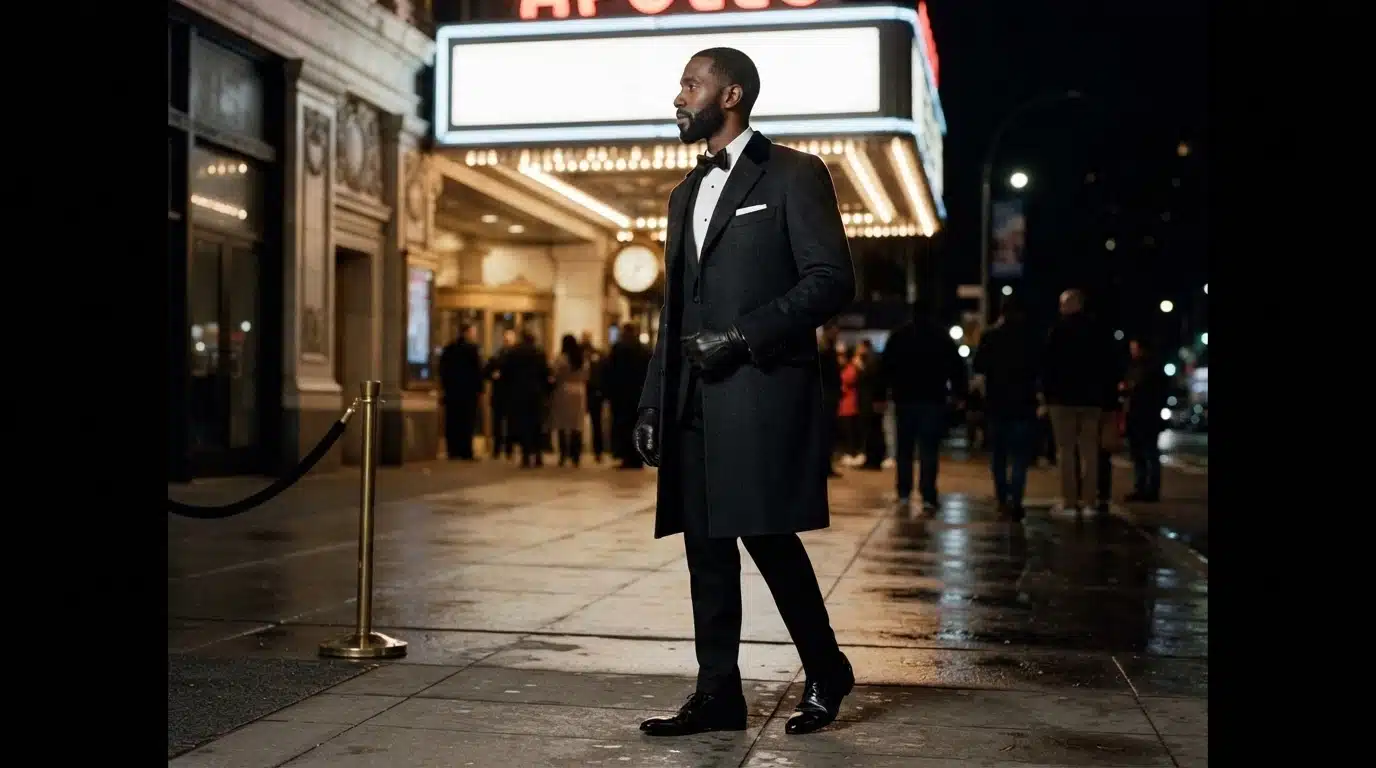
Formal nights called for darker suits or tuxedo-style clothing with crisp shirts, bow ties, and pocket squares. An overcoat finished the look on the walk into a club or theater.
This is where men’s fashion moved furthest from the everyday business suit.
How to recreate it: Stay dark and formal, and keep the accessories sharp rather than showy.
10. Harlem Couple’s Coordinated Evening Look
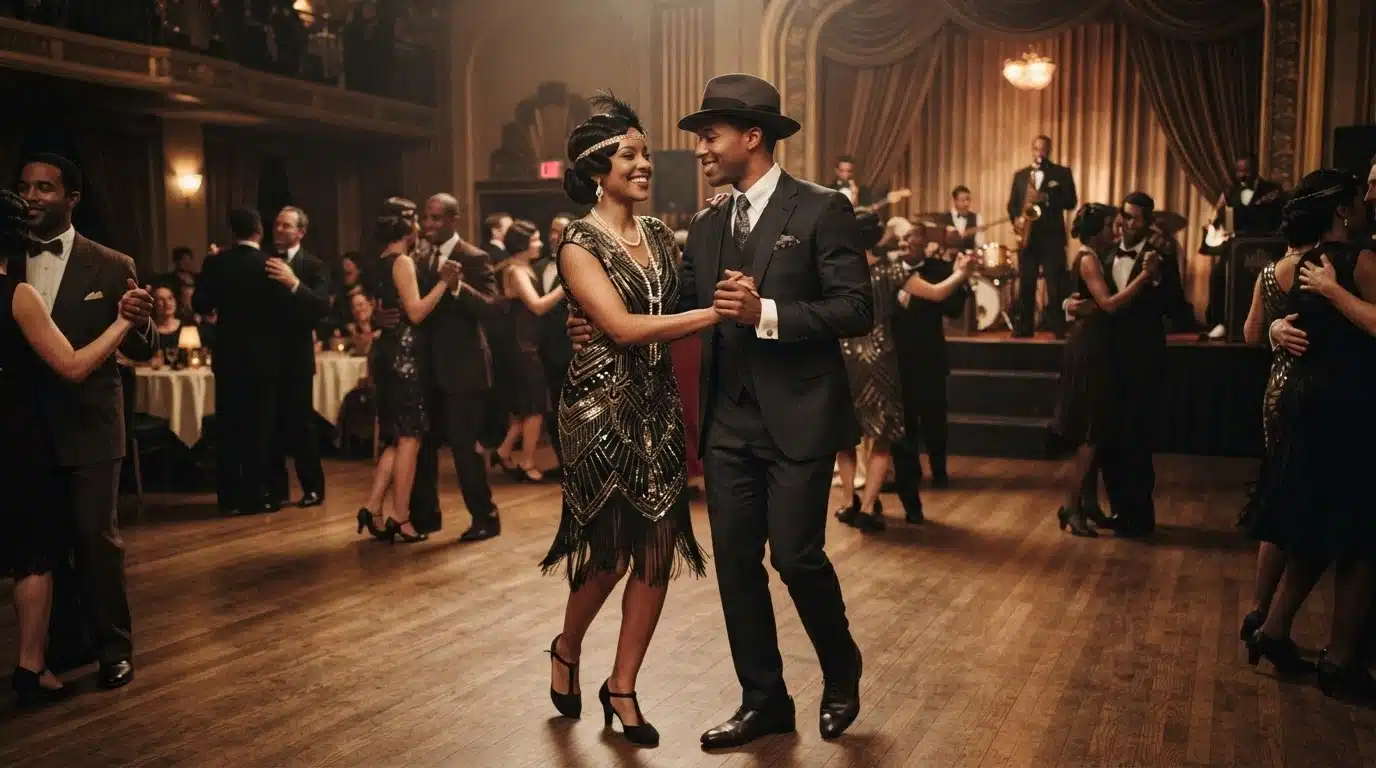
A coordinated couple’s look works best when both outfits share the same formality, not the same color. She might wear an embellished dress with jewelry, while he wears a dark suit with polished accessories.
Together, the pairing creates the balanced look seen in ballroom and formal portrait photography from the period.
How to recreate it: Match the mood, not the exact palette.
11. Harlem Renaissance Portrait-Inspired Outfit
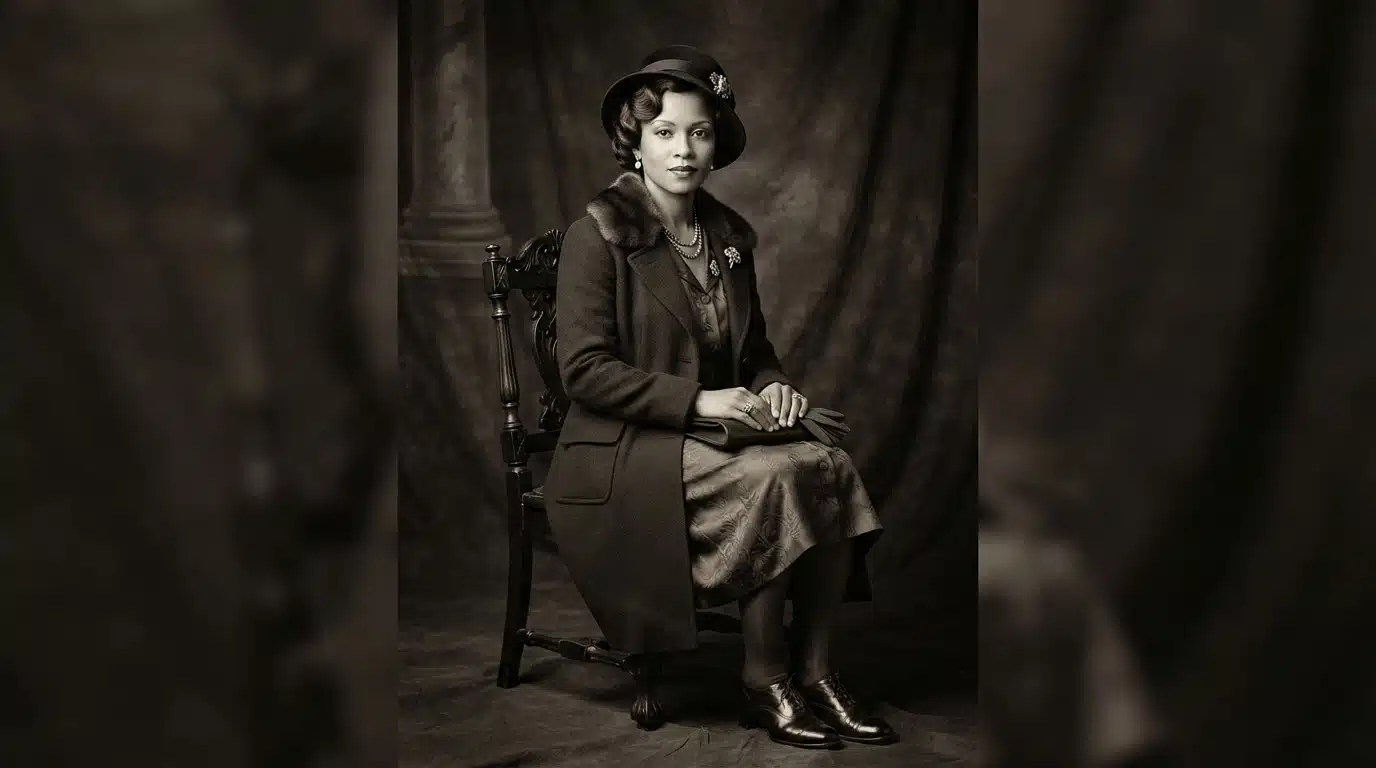
Studio portraits from this era show how much presentation depended on the full picture, clothing, hats, jewelry, shoes, grooming, and posture, working together rather than competing.
Formal studio photography from the period, including work associated with photographer James Van Der Zee, offers stronger references than modern outfits built mainly around a few exaggerated accessories.
How to recreate it: Build a complete look instead of relying on props to do the work.
Together, these examples show that Harlem clothing was never limited to fringe dresses and fedoras. Daywear, formal dress, nightlife clothing, accessories, grooming, and occasion all shaped the finished look.
Grooming, Hair, and Posture: The Details Photos Reveal
Clothing only tells half the story. Photographs from Harlem in this period show how much grooming shaped the finished look.
Women commonly wore bobbed or finger-waved hair, set close to the head so a cloche hat would sit correctly. Makeup, where visible in photographs, tended toward defined brows and a darker lip, applied lightly rather than heavily.
Men kept hair short and often pomaded, close to hairstyles from that decade still worn today, with a close, clean shave standard for formal portraits and evening events alike.
Posture mattered too. Studio photography from this era favored a straight back, a slight tilt of the chin, and a relaxed hand, small choices that made an outfit look intentional rather than borrowed.
If you’re building a period-inspired look for a photo or an event, spend as much time on hair and stance as you do on the dress or suit. It’s the detail that convinces people the outfit is real, not a costume.
How to Keep the Look Period-Appropriate
A strong Harlem Renaissance-inspired outfit feels coordinated from head to toe. The main silhouette should come first, followed by shoes, hat, jewelry, and grooming that fit the same decade and occasion.
| More Period-Grounded Styling | Generic Costume Styling |
|---|---|
| Coordinated full outfit | Random 1920s accessories |
| Period-shaped silhouette | Modern dress with fringe added |
| Hat suits the clothing | Fedora added to any outfit |
| Period-style shoes | Modern sneakers or unrelated heels |
| Clothing fits the occasion | Every outfit looks nightclub-ready |
| Balanced jewelry and details | Too many feathers, pearls, and props |
If you are unsure, choose one historical photograph and use it as the main reference. That keeps proportions and accessories consistent while reducing the chance of mixing unrelated decades.
Fashion Wasn’t the Same Across All of Harlem
One thing that gets flattened in many modern recreations: not every Harlem resident could afford a beaded evening gown or a tailored three-piece suit. Harlem in this period held a wide range of incomes, and clothing reflected that range honestly.
Professionals and the Sugar Hill set- doctors, lawyers, writers, and performers- could afford custom tailoring and imported fabric, and their portraits show it.
Working-class Harlem residents built sharp outfits from more limited means, often through careful tailoring of ready-made pieces, secondhand clothing altered to fit well, or a single well-chosen accessory added to a simpler dress or suit.
Both approaches counted as good style. The idea that only wealthy Harlemites dressed well isn’t accurate, and it leaves out most of the community’s actual fashion history, a range still visible in federal research collections on the period.
Historical Photos to Use as Style References
Harlem’s best-known style figures helped turn clothing into part of public image. Performers, writers, professionals, and photographers show how dress, grooming, and accessories shaped the era’s visual identity across Harlem.
1. Performers and Jazz Musicians
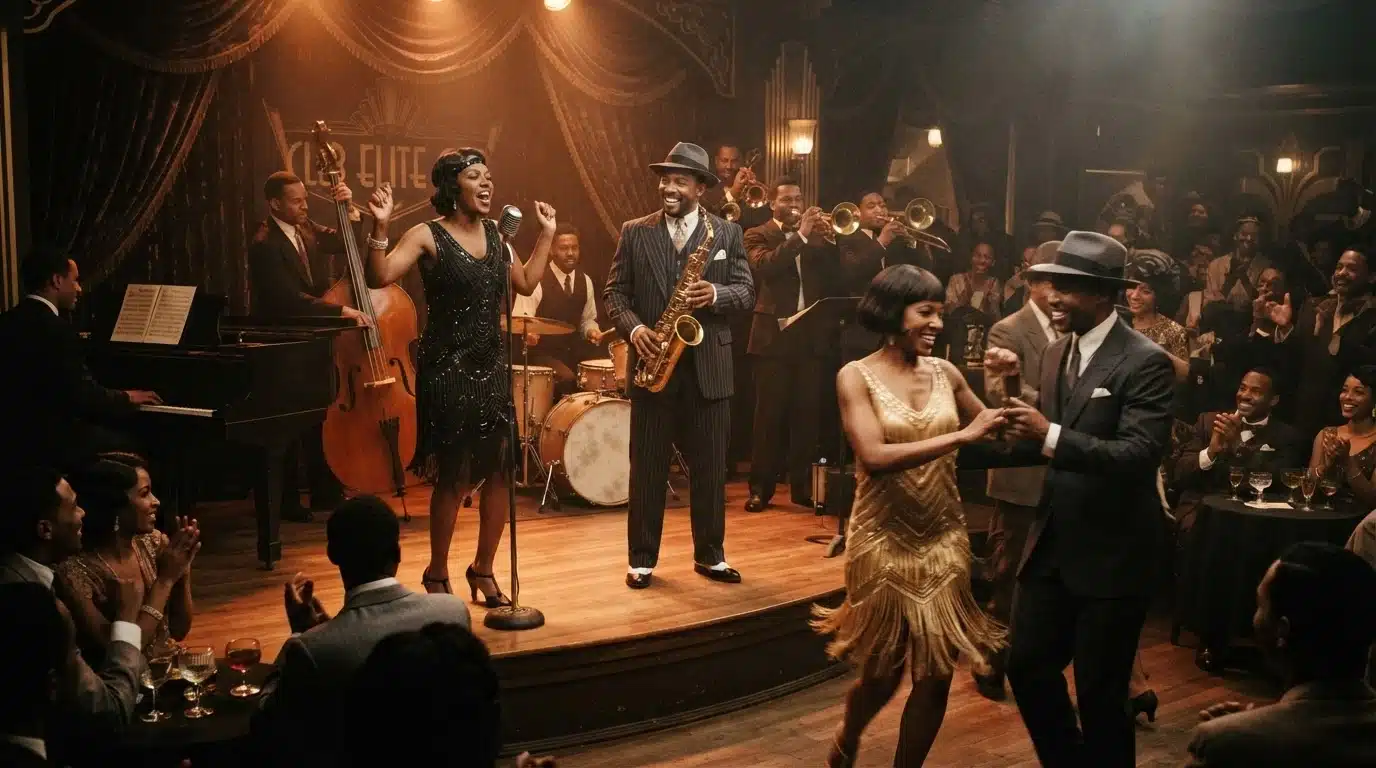
Jazz singers, bandleaders, dancers, and stage performers were some of the most visible style references of the period.
Their clothing reflected the setting, polished suits and formal eveningwear on one end, decorated dresses and bold accessories on the other. Nightclubs, theaters, and publicity photographs put these looks in front of large audiences.
2. Stylish Women of the Harlem Renaissance
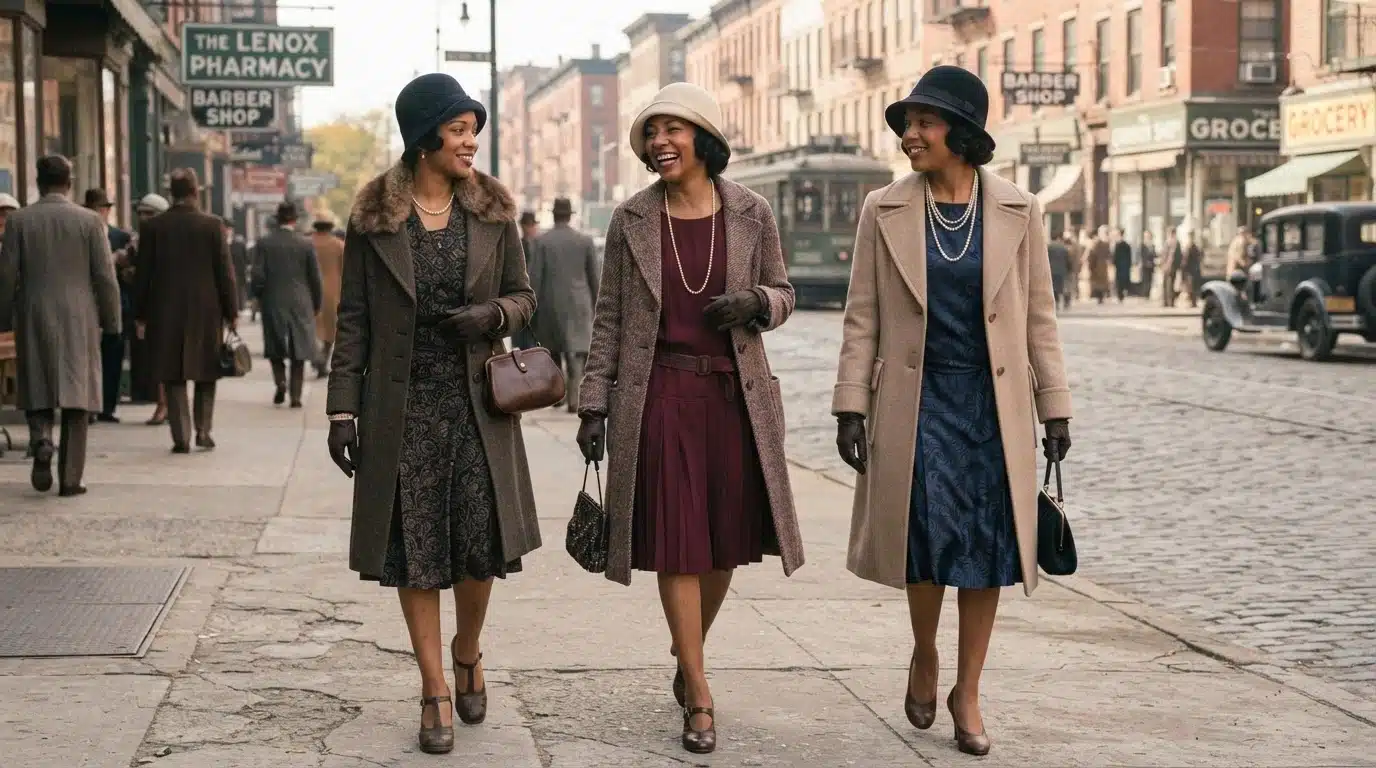
Photographs of Harlem women reveal far more than the familiar fringed flapper dress. Women appeared in day dresses, evening gowns, structured coats, cloche hats, gloves, pearls, handbags, and carefully chosen shoes.
Hair was often bobbed, waved, or neatly styled to suit the outfit. These images show how clothing changed with the occasion while maintaining a coordinated, polished appearance from head to toe.
3. Harlem Men and Polished Suiting
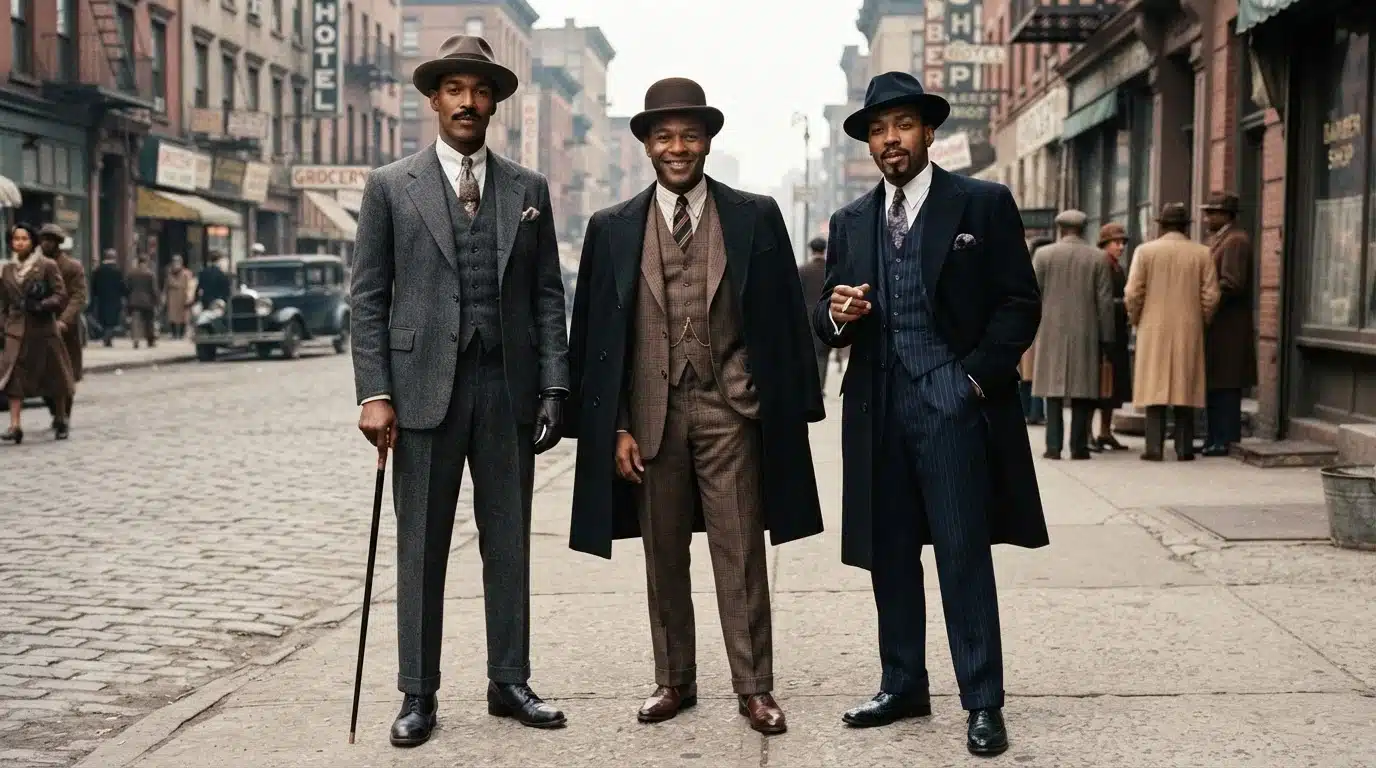
Men’s style can be seen in photographs of entertainers, writers, artists, professionals, and Harlem residents dressed for work, social events, or formal portraits.
Two- and three-piece suits, crisp shirts, ties, fedoras, overcoats, pocket squares, and polished shoes appeared in many looks. Fit, grooming, and coordination gave these outfits their strength, showing that smaller details mattered as much as the suit itself.
4. James Van Der Zee and Harlem Portrait Style
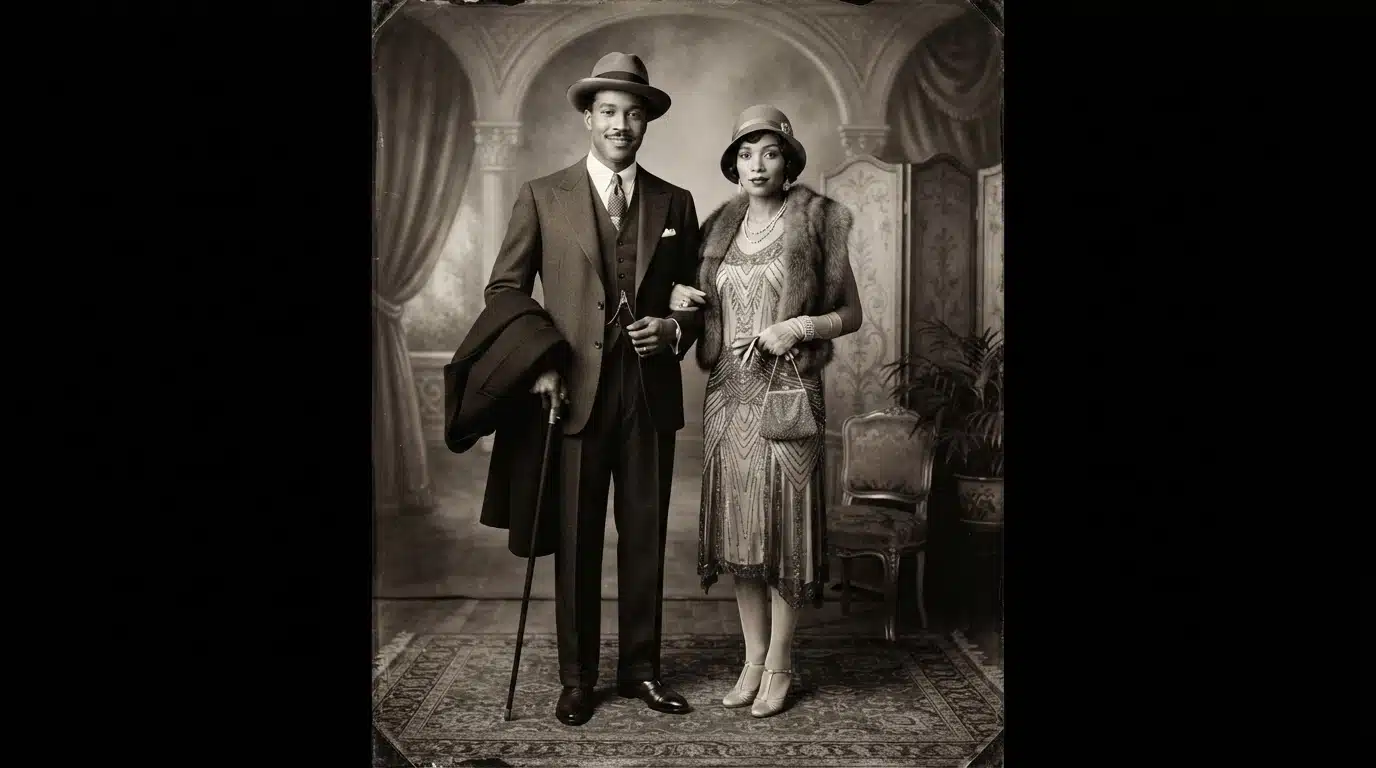
Photographer James Van Der Zee created some of the most detailed visual records of how Harlem residents presented themselves.
His studio portraits show full outfits, not isolated pieces: suits, dresses, coats, hats, jewelry, and styled hair captured together.
I keep a few of his portraits saved on my phone for exactly this reason, alongside similar work held in official archival photograph records. When a client says they want “1920s glamour,” I show them one of these photos before we pick a single piece of clothing.
1920s vs. 1930s Harlem Renaissance Fashion
Fashion didn’t stay still across this period. As the 1920s moved into the 1930s, women’s clothing became longer and more shaped, while men’s suits grew broader through the shoulder, a shift you can trace in a preserved evening ensemble held in a museum collection.
| Feature | 1920s | 1930s |
|---|---|---|
| Women’s silhouette | Straight, loose dresses with dropped waists | More defined waists and longer, flowing shapes |
| Hemlines | Shorter, often around the knee or mid-calf | Longer, commonly falling below the calf |
| Eveningwear | Beading, fringe, embroidery, and movement-friendly dresses | Smoother fabrics, longer gowns, and more fitted shapes |
| Men’s suits | Neat two- or three-piece suits with slimmer proportions | Broader shoulders, wider lapels, and fuller trousers |
| Accessories | Cloche hats, long pearls, gloves, and small handbags | Structured hats, jewelry, gloves, and refined accessories |
| Overall look | Energetic, youthful, and influenced by Jazz Age nightlife | More polished, mature, and streamlined |
These changes help explain why Harlem Renaissance clothing cannot be reduced to one standard 1920s look.
I can usually place a photo within a few years just from where the waistline sits and how wide the lapels are. It’s a small detail, but it’s the fastest way I’ve found to date a look at a glance.
Building a Harlem Renaissance-Inspired Outfit Today
Creating a Harlem Renaissance-inspired outfit starts with the shape of the clothing. Build the main look first, then add shoes, hats, jewelry, and other finishing details.
For women
- Choose the dress. Pick a loose, drop-waist, or softly shaped silhouette.
- Add period-style shoes. T-straps, Mary Janes, or simple pumps all work.
- Choose a hat. A cloche for daytime, a subtle headpiece for evening.
- Add jewelry. Pearls, a long necklace, or simple earrings.
- Finish the look. Add a coat or wrap, then style hair in a bob or soft waves.
For men
- Start with a suit. Choose a well-fitting two- or three-piece style.
- Add a dress shirt. Keep it clean and simple.
- Choose a tie. A necktie for day, a bow tie for evening.
- Wear dress shoes. Polished leather works best.
- Add finishing details. A fedora, pocket square, or watch.
Note: Historical photographs are useful because they show how people combined clothing, accessories, and grooming into a complete outfit, not as separate decisions.
When I put together looks like this for clients, I always start with the coat or suit jacket. Get that one piece right, and every accessory decision after it gets easier.
What to Look for When Shopping for a Similar Outfit
For women, check the dress length, fabric, and where the beading or fringe falls; that placement usually tells you whether a piece leans 1920s or 1930s.
For men, pay attention to the suit cut, trouser width, lapel size, and overall fit. Hats, shoes, and jewelry should match the rest of the outfit rather than being added at random.
Useful search terms: 1920s beaded dress, vintage-style cloche hat, Art Deco evening dress, vintage T-strap shoes, 1920s men’s three-piece suit.
I always ask for close-up photos of the beading or seams before buying anything online. A dress can look right from three feet away and still be made from fabric that has no business moving like 1920s silk.
Harlem Renaissance Fashion Today
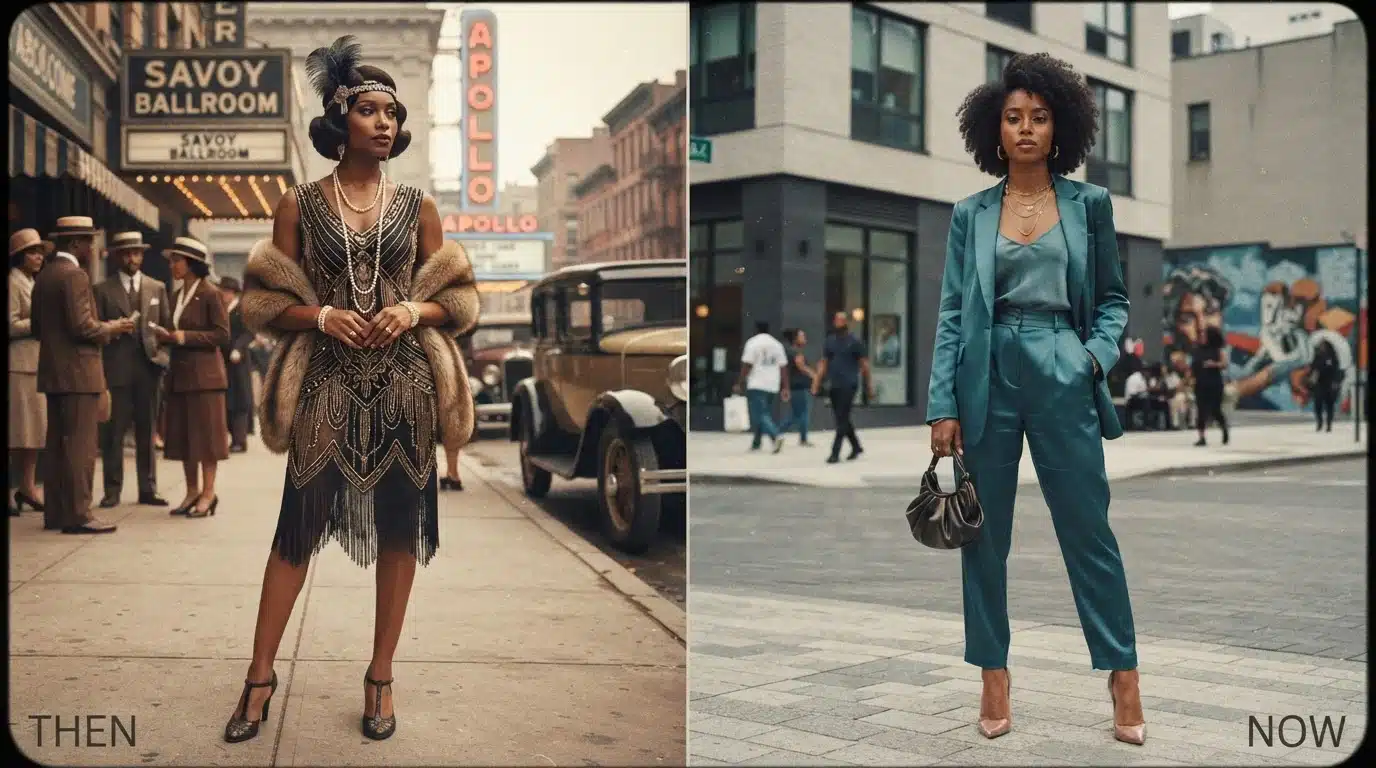
Modern fashion still borrows from this period through strong silhouettes, decorative detailing, and statement accessories. Structured suits with sharp proportions now show up as relaxed suiting with wider cuts.
Beaded evening dresses inspire Art Deco-style formalwear with geometric detailing. Statement hats have become sculptural occasion headwear.
The strongest modern references borrow the shape or mood of the period rather than copying an entire outfit. That’s what keeps a look feeling like a nod to the era instead of a rerun of it.
Final Thoughts
Harlem Renaissance fashion was never just beaded dresses, pearls, and fedoras. From polished daytime clothing to expressive eveningwear, each look reflected its decade, setting, and occasion.
The strongest outfits came together through silhouette, fit, footwear, hats, jewelry, and grooming. Those same details can help you build a period-inspired look today without it feeling like a costume.
Of everything I’ve researched and styled from this era, the cloche hat-and-coat look is the one I come back to most. It’s simple to get right, easy to wear again, and it still carries the whole mood of the period.
Which Harlem Renaissance outfit stands out most to you? Comment your thoughts below. Want me to drop this into the artifact in place of the current conclusion?
Frequently Asked Questions
What Colors Were Popular in Harlem Renaissance Clothing?
Black, cream, navy, burgundy, gold, green, and jewel tones ran through daytime and evening Harlem Renaissance clothing alike. Daytime pieces leaned toward muted, versatile shades, while evening dresses and formal suits used richer colors along with metallic beading and embroidery to catch the light in ballrooms and jazz clubs.
What Fabrics were Commonly Used During the Harlem Renaissance?
Silk, satin, velvet, wool, cotton, and rayon were the most common fabrics in Harlem Renaissance clothing. Evening dresses favored silk, satin, and beaded chiffon for movement and shine, while everyday daytime clothing relied on wool, cotton, and rayon for durability across work and social settings.
Were Zoot Suits Part of Harlem Renaissance Fashion?
No. Zoot suits became prominent in the late 1930s and 1940s, after the core Harlem Renaissance period. They share Harlem’s tradition of expressive, statement-making tailoring, but they were not a defining part of the earlier 1920s Harlem look, which favored slimmer, neater suit proportions.
Can Harlem Renaissance Style work for Modern Formal Events?
Yes. Choose one period-inspired element, such as a beaded dress, cloche-style hat, three-piece suit, or Art Deco jewelry, and pair it with modern basics. This keeps the historical reference clear without turning a formal outfit into a full costume.
How Long Did the Harlem Renaissance Fashion Era Last?
Harlem Renaissance fashion spanned roughly 1918 into the mid-1930s, tracking the wider Harlem Renaissance cultural movement. Silhouettes shifted across that stretch, moving from the loose, dropped-waist dresses and slim suits of the 1920s to the longer, more fitted shapes and broader-shouldered suits of the early-to-mid 1930s.