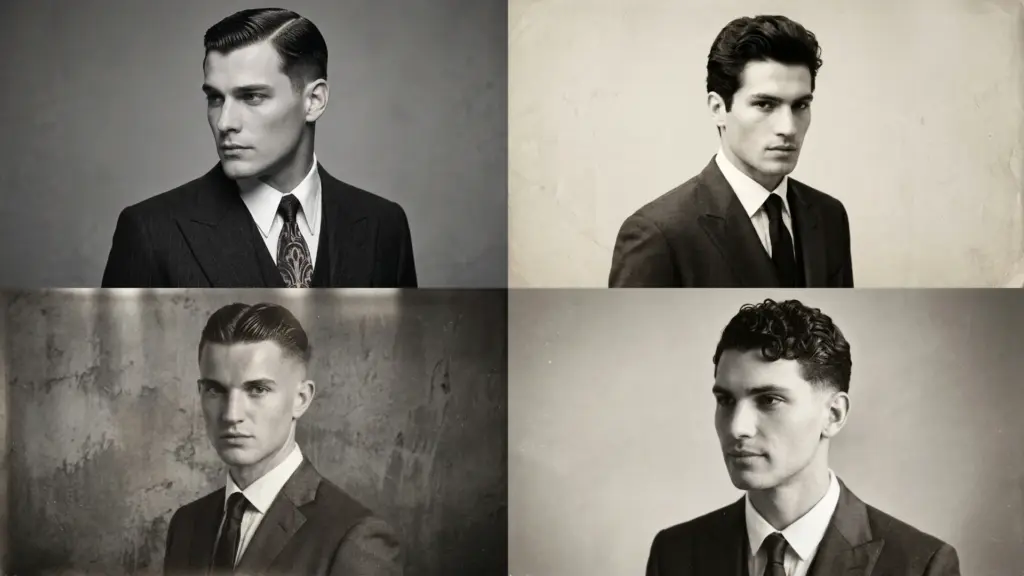
1930s men’s hairstyles are built on neat tapers, longer combable tops, defined side parts, and controlled waves rather than the high-contrast fades seen today, and that discipline is exactly what makes old photographs from the decade look effortless even though the cutting behind them was very deliberate.
I’ve fitted this same taper-and-part combination on plenty of clients chasing “old Hollywood” without wanting to look costumed, and the details below are the ones that actually survive a full day under a hat.
Gangster-inspired versions, barber instructions, styling advice, add the context needed to choose a period look without accidentally turning it into a modern fade or later pompadour for a cleaner reference
What Defines a 1930s Men’s Hairstyle?
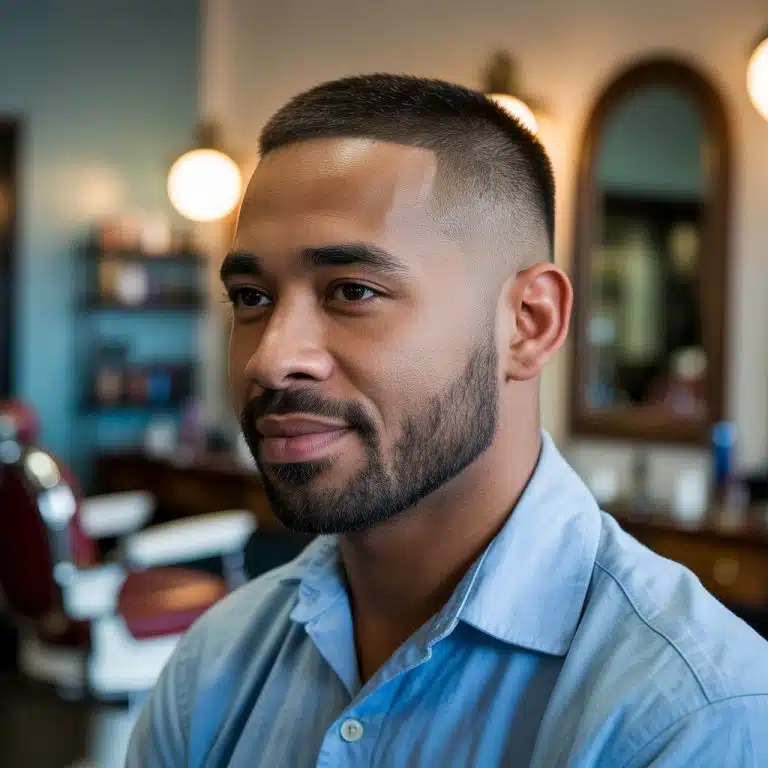
A 1930s men’s hairstyle is defined by clean structure, controlled movement, and careful grooming. Most styles kept the sides and back short with a gradual taper, while the top stayed longer for side parts, slick backs, waves, or brushed-back shapes.
Sharp modern fades and disconnected undercuts weren’t part of the typical look, even though today’s cutting styles can make it easy to default to those shapes. Hair was usually combed into a clear direction, with side parts being especially common throughout the decade.
Natural waves were often shaped rather than flattened, while straighter hair was kept smooth and neat. Pomades, oils, and grooming products helped maintain the style and added anything from a light sheen to noticeable shine.
Overall, the look depended on balanced proportions, tidy edges, and a polished finish rather than excessive height, messy texture, or dramatic contrast.
How Men’s Hair Changed Through the Decade
Hair didn’t stay identical across the decade, so dating a reference photo can help explain why two authentic 1930s cuts look different.
Early 1930s: Shapes stayed lower and more controlled, with clear side parts, close tapering, and less dramatic front movement.
Mid-1930s: Waves became more noticeable, and some styles used less oil so the top could sit softer and slightly fuller instead of looking heavily pressed down.
Late 1930s: Longer, fuller tops and more visible natural movement appeared more often, especially in Hollywood-influenced grooming, while the sides remained neat and connected.
The progression was gradual rather than a clean switch at a specific year. A flatter early-decade side part and a fuller late-decade wave can both be accurate, even though they create different silhouettes.
Classic Haircuts and Vintage Looks
This list moves from the sharpest, most disciplined side parts toward looser, wave-driven styles built on natural texture. Each entry covers the look, the haircut specs, the best hair type, and how to recreate it at home.
1. Classic Deep Side Part
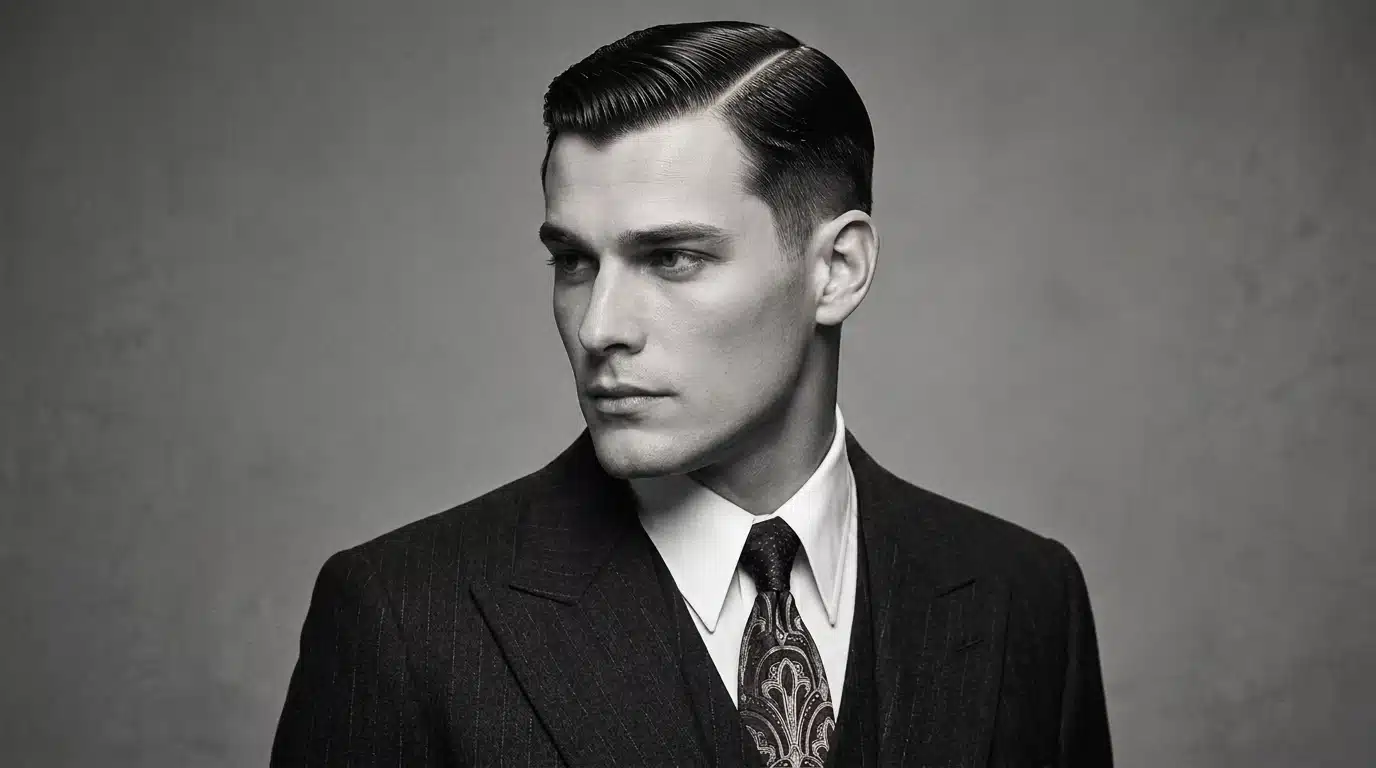
The classic deep side part creates a crisp 1930s profile by dividing the hair firmly to one side and sweeping the longer section across and slightly backward.
The top keeps enough length for smooth movement, while the sides taper gradually into the head. A controlled shine sharpens the finish without making the style look overly wet, rigid, or costume-like today, and pomade formulas have followed cosmetic safety rules since 1938.
- Best hair type: Straight, fine, or slightly wavy hair
- Recreate it: Set the part on damp hair, comb the longer section across, then finish with a small amount of pomade
2. Side Part With Front Wave
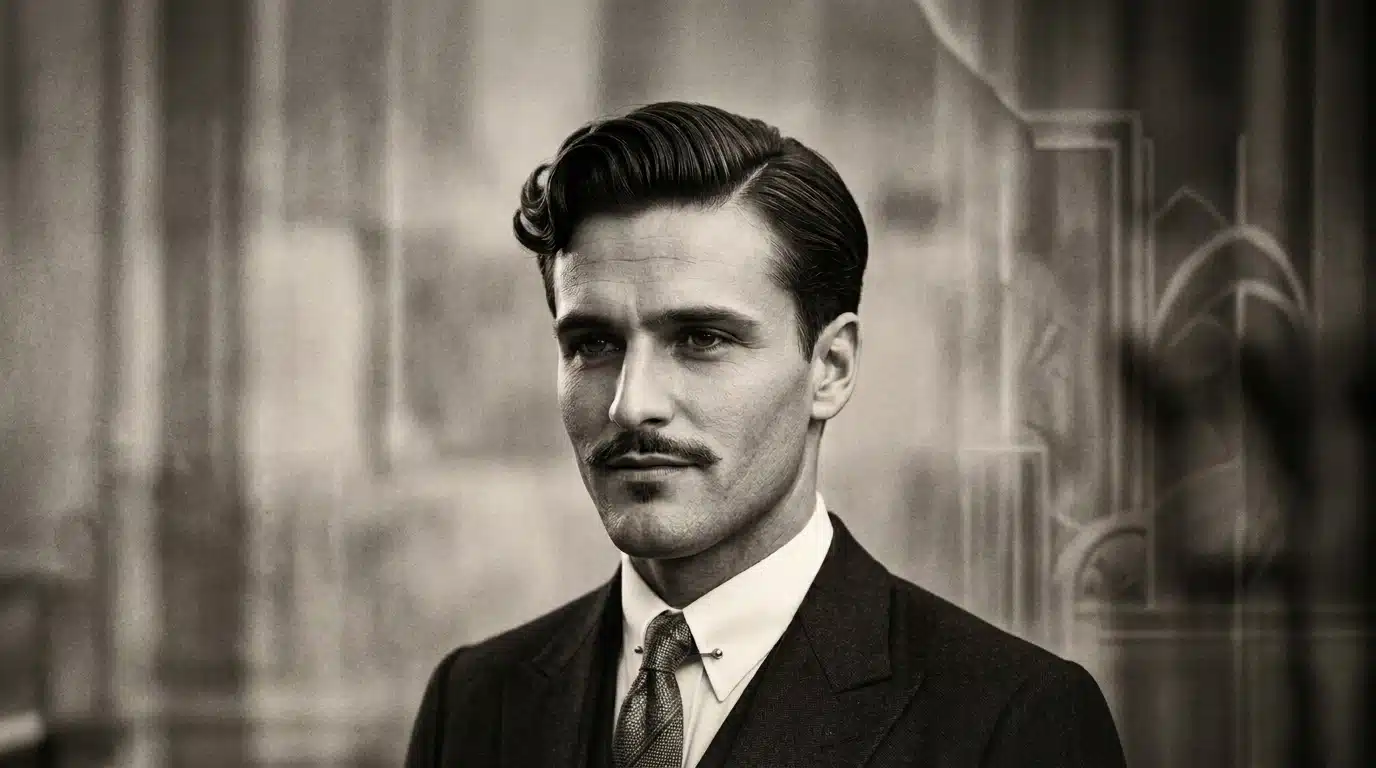
The side part with a front wave keeps the structure of a traditional parted cut but adds gentle lift above the forehead.
The longer front section curves upward before settling to the side, creating movement without excessive height. Softly tapered sides keep the silhouette neat, while moderate shine helps define the wave without flattening its natural shape or texture.
- Best hair type: Wavy, medium-thick, or straight hair with good hold
- Recreate it: Shape the front wave while damp, then comb the remaining hair neatly into the side part
3. Classic Slicked Back Taper
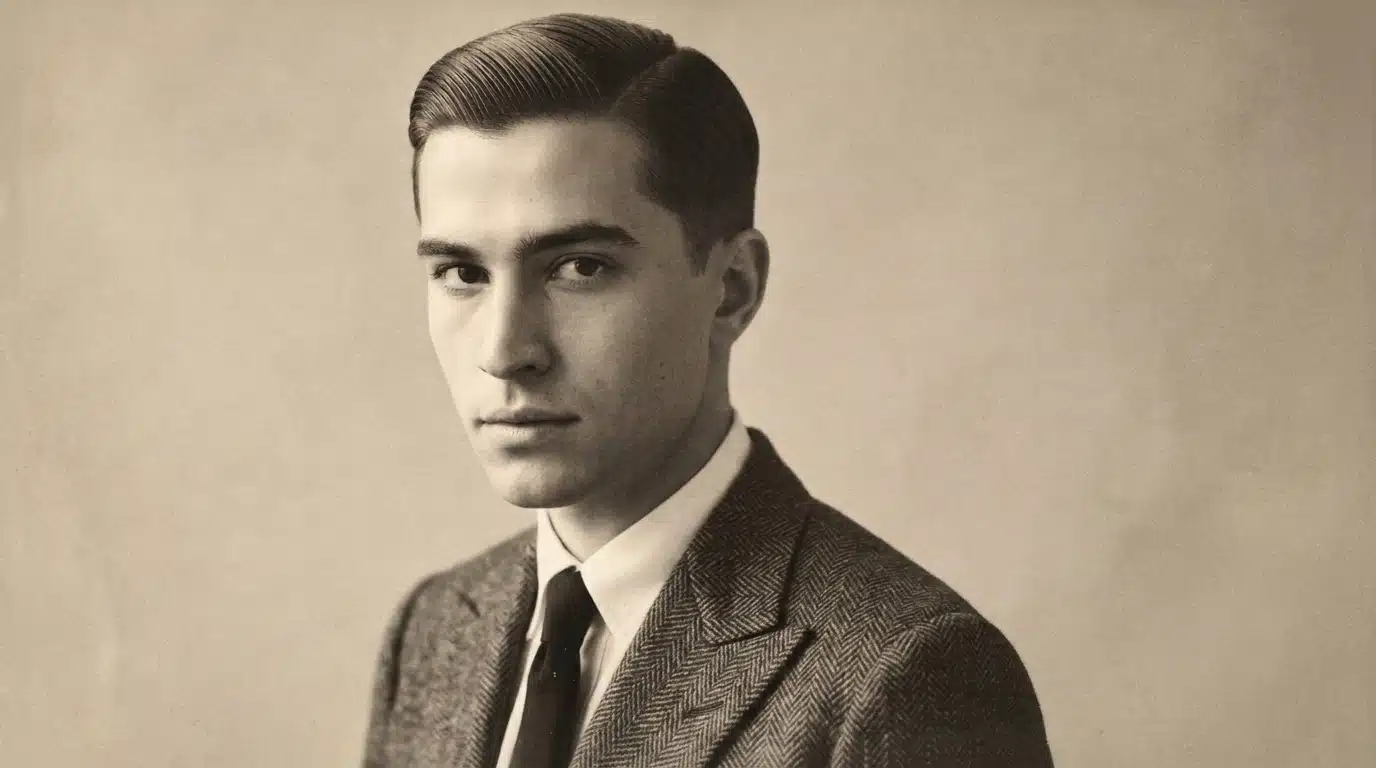
The classic slicked back taper moves the entire top away from the face in one clean direction, creating a streamlined shape with no visible part.
Longer hair on top provides enough weight to stay smooth, while the sides and back shorten gradually toward the neckline.
The result feels polished and controlled, a finish that still works well for thicker hair types, without the sharp contrast of a modern disconnected undercut.
- Best hair type: Straight, wavy, medium, or thick hair
- Recreate it: Apply a light styling product, then comb backward evenly from the hairline toward the crown
4. Angled Slick Back Style
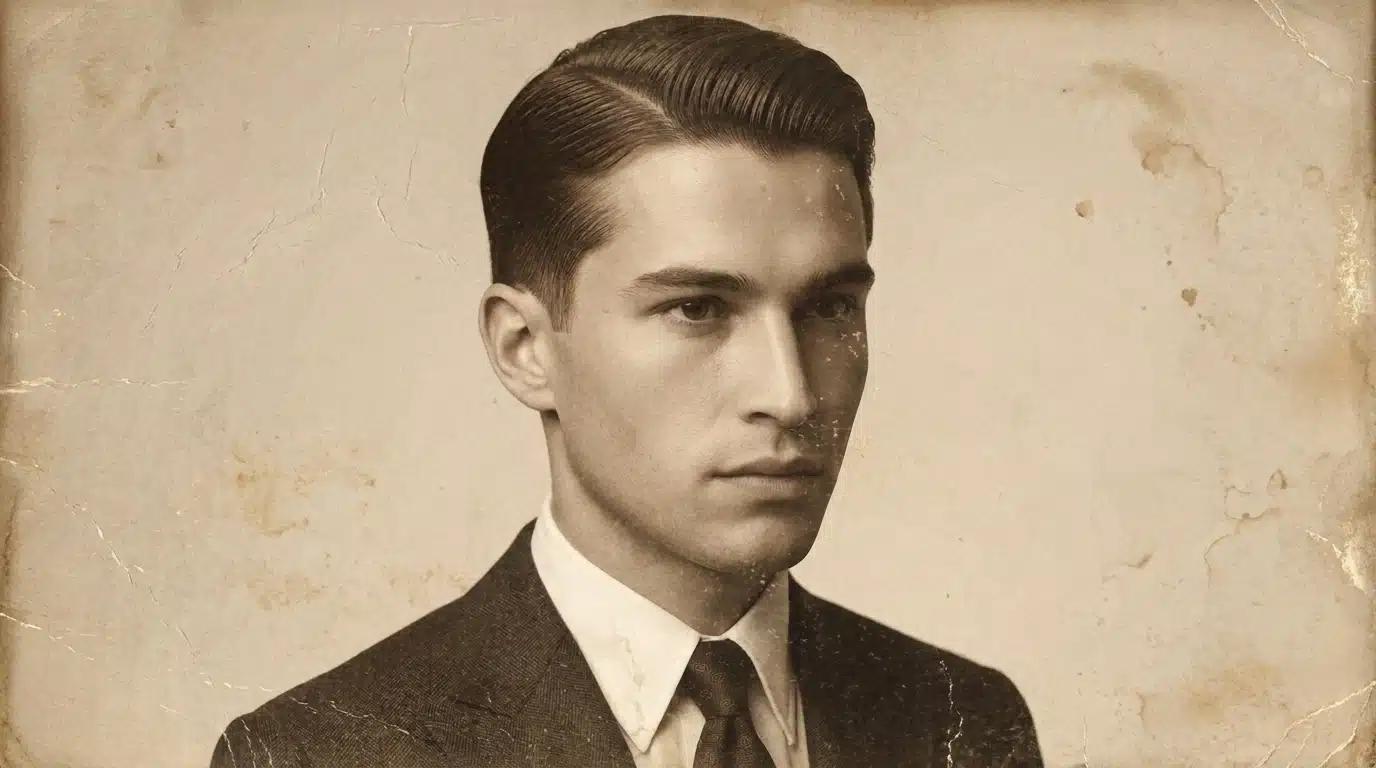
The angled slick back adds more movement than a straight comb back by directing the top diagonally toward one side.
A little lift at the front prevents the style from looking completely flat, while the low taper keeps the sides connected and understated. The diagonal flow gives the haircut a softer, less formal character while keeping its vintage structure intact.
- Best hair type: Straight or slightly wavy medium-density hair
- Recreate it: Establish the diagonal direction while the hair is damp, then add product without flattening the front
5. Brushed Back Wavy Style
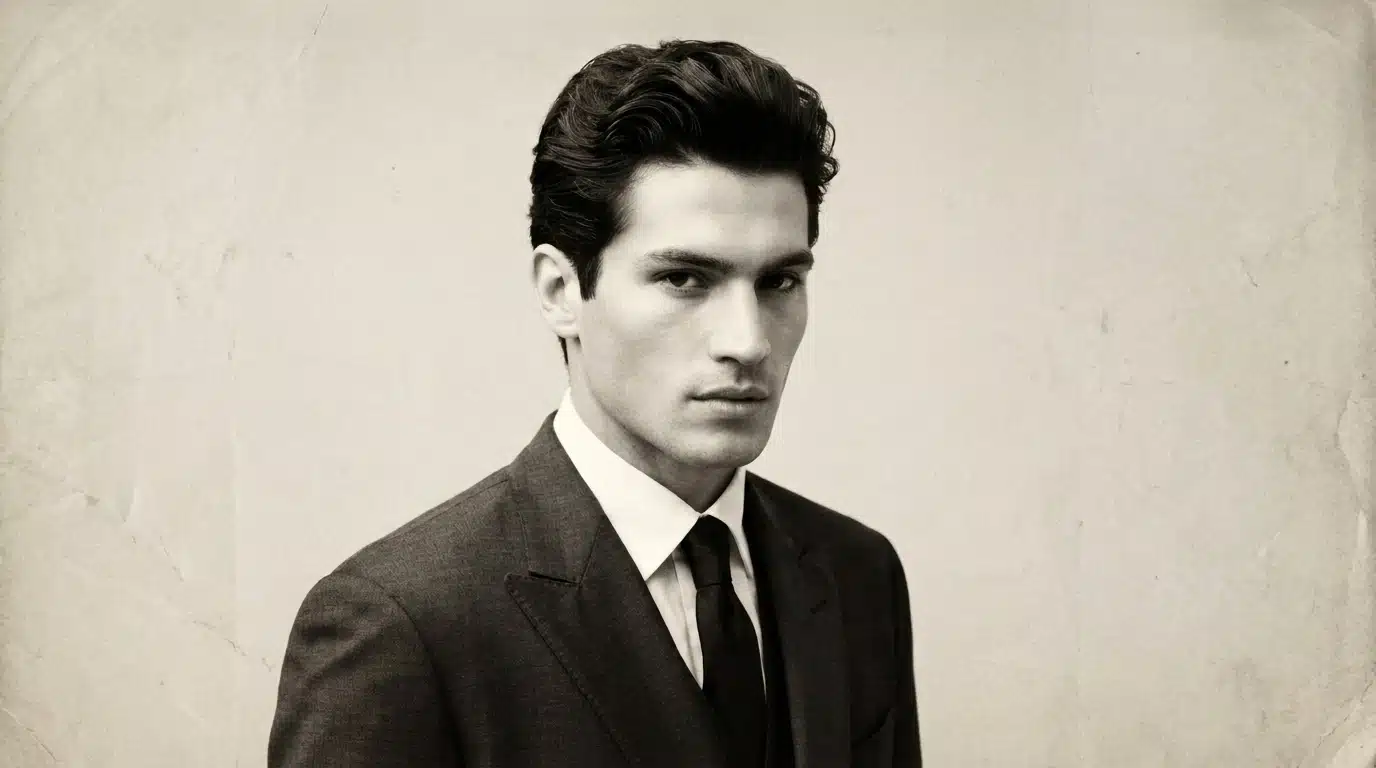
The brushed back wavy style keeps natural bends visible instead of forcing every strand into a flat, uniform surface.
Hair on top is directed backward with enough length for the waves to settle naturally, while the sides keep the outline neat. The finish should look controlled but flexible, keeping the texture noticeable without becoming bulky or overly styled.
- Best hair type: Medium-to-thick naturally wavy hair
- Recreate it: Brush damp hair backward gently, then let the existing wave pattern settle before adding light hold
6. Natural Wavy Side Sweep
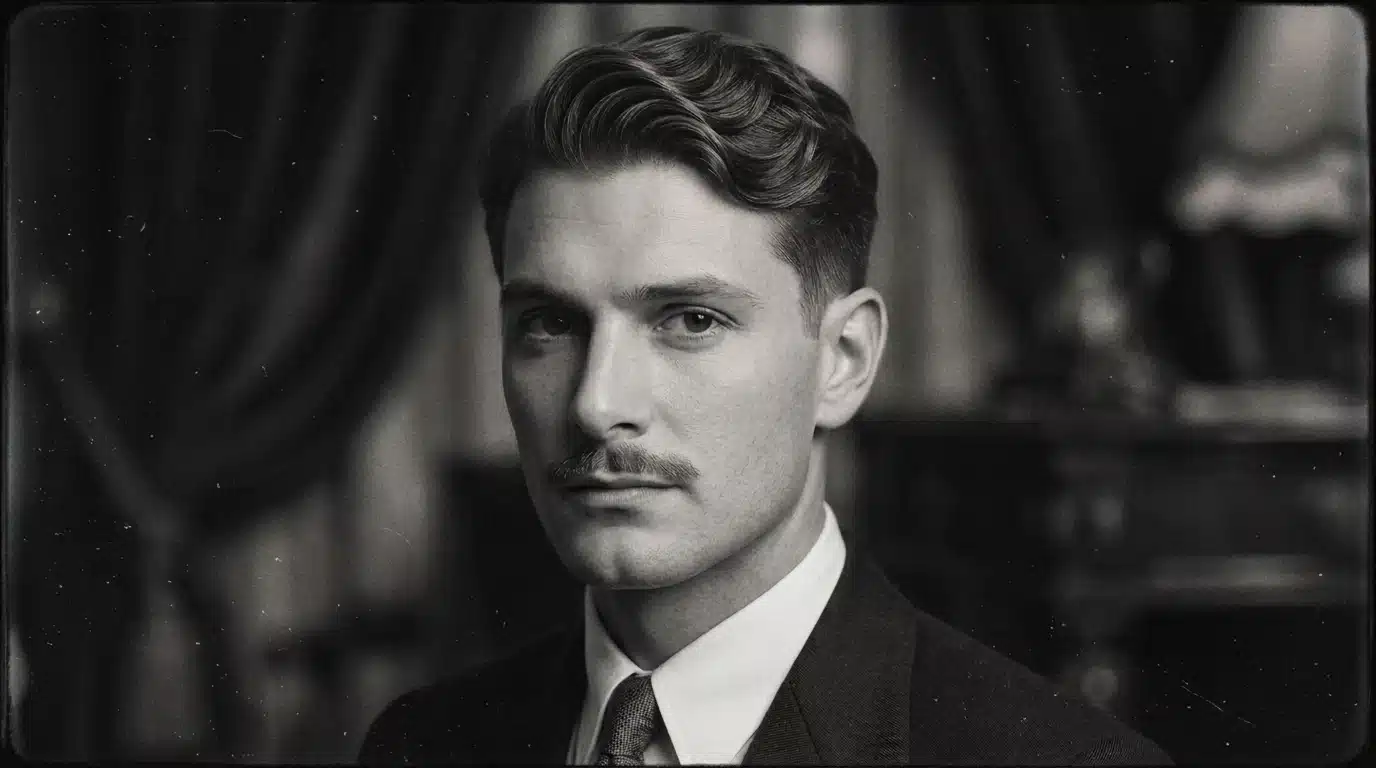
The natural wavy side sweep moves the top sideways rather than backward, creating a softer silhouette with movement across the head.
Unlike a deep side part, the division can remain subtle, letting natural wave patterns create direction on their own. Tidy sides balance the fuller top, while a light finish keeps the texture defined without making the hair look rigid or coated.
- Best hair type: Naturally wavy or lightly curly hair
- Recreate it: Direct damp hair sideways with a comb or fingers, then use a light product to preserve the wave pattern
7. Tousled Wavy Top
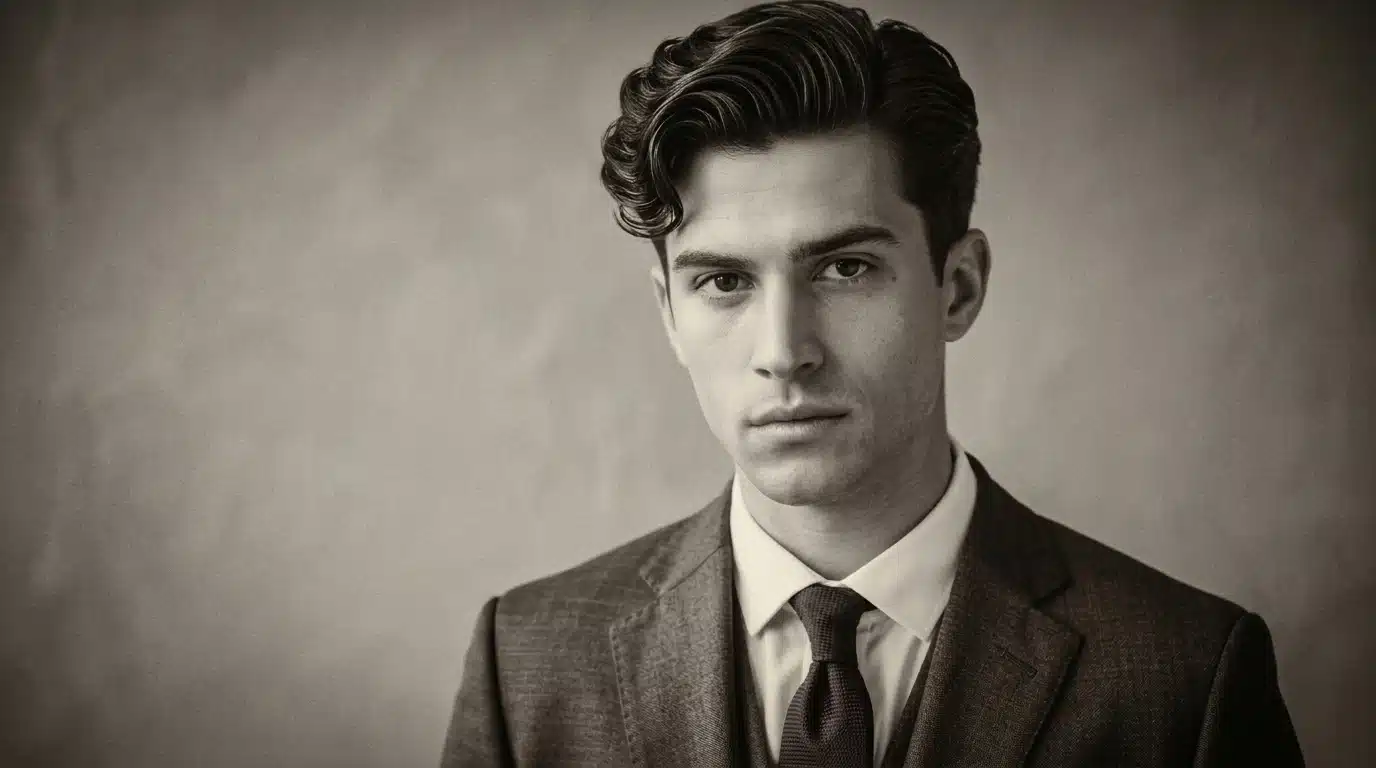
The tousled wavy top is a relaxed look in the lineup, but it still depends on a clean outline to feel period appropriate.
The top stays fuller and allows natural waves to move freely, while the sides remain short and controlled. A much softer finish works best here, keeping the style shaped without turning the texture into modern, separated pieces.
- Best hair type: Thick, naturally wavy, or textured hair
- Recreate it: Use a small amount of light cream and shape the waves loosely without creating dry or piecey separation
8. Defined Shaved Side Part
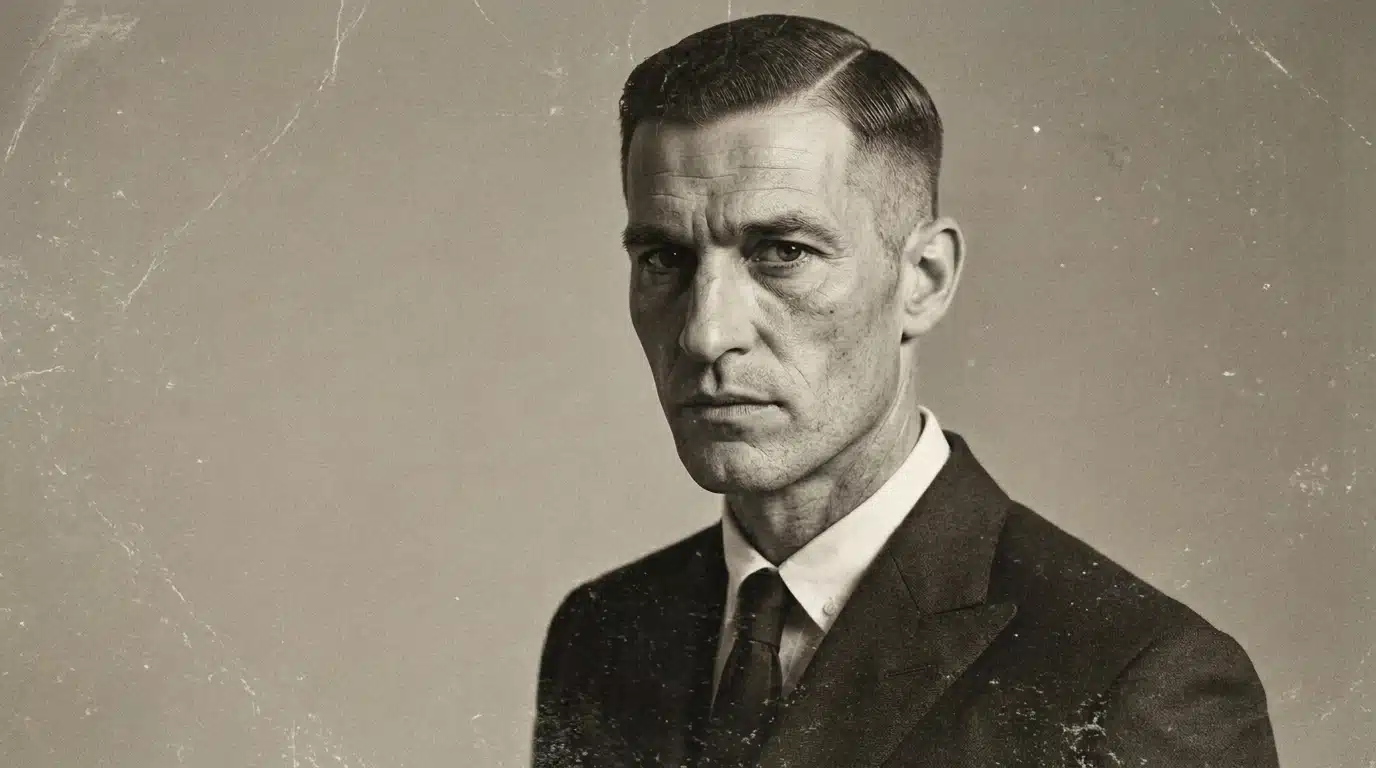
The defined hard side part creates stronger visual separation between the two sections of hair, giving the style a sharper, more deliberate appearance.
The top remains smooth and neatly directed, while the tapered sides keep the overall shape balanced. The part should look precise but restrained, avoiding the wide, deeply shaved lines often seen in modern barbering trends.
- Best hair type: Straight or slightly wavy hair
- Recreate it: Ask for a subtle, clearly defined part and keep the surrounding hair smooth rather than heavily shaved
9. Center or Off-Center Part
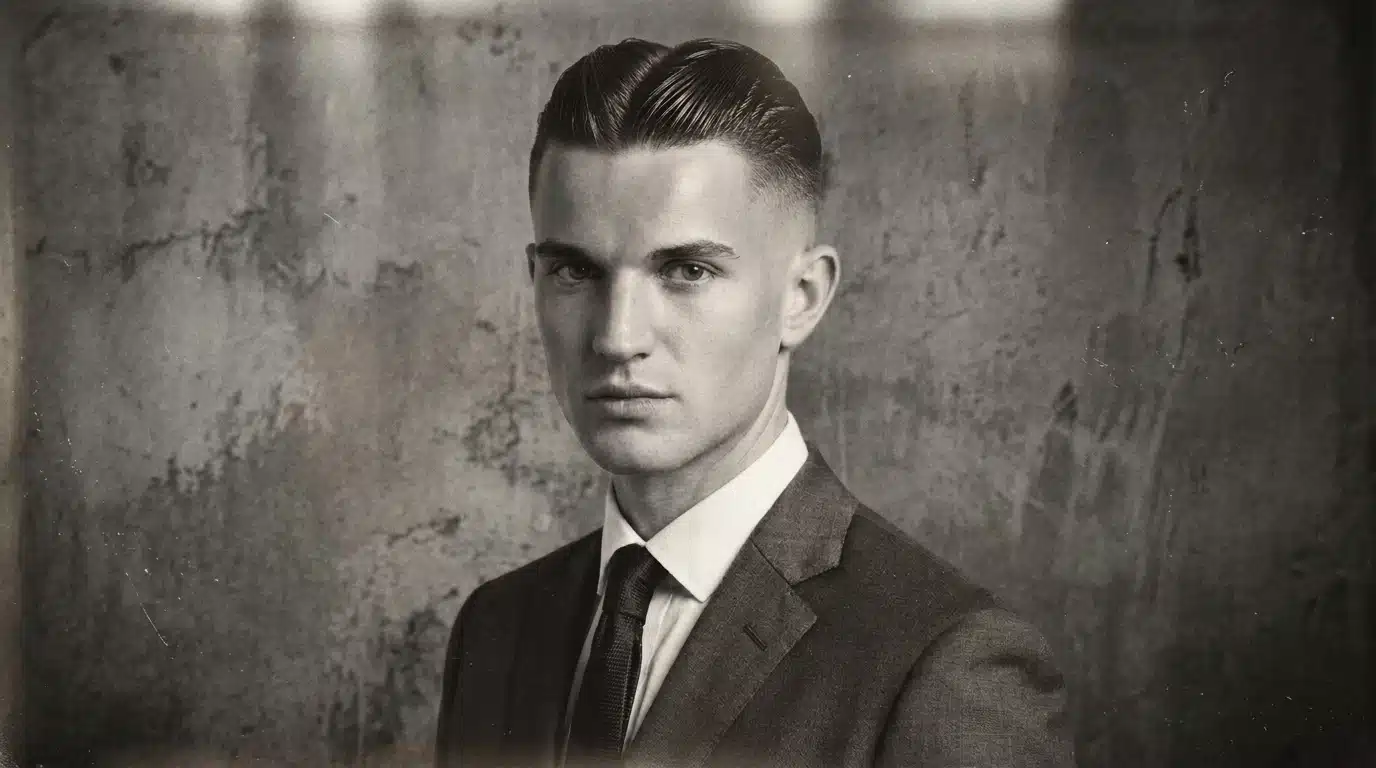
The center or off-center part creates a balanced shape by dividing the top closer to the middle, rather than pushing most of the hair to one side.
Both sections fall outward in a controlled way, creating a softer, more symmetrical profile. Keeping the sides connected and the finish light prevents the style from looking severe or overly formal.
- Best hair type: Straight, fine, or lightly wavy medium-length hair
- Recreate it: Find the natural split near the crown, then comb both sections outward with a small amount of light product
10. Curly Tapered Vintage Style
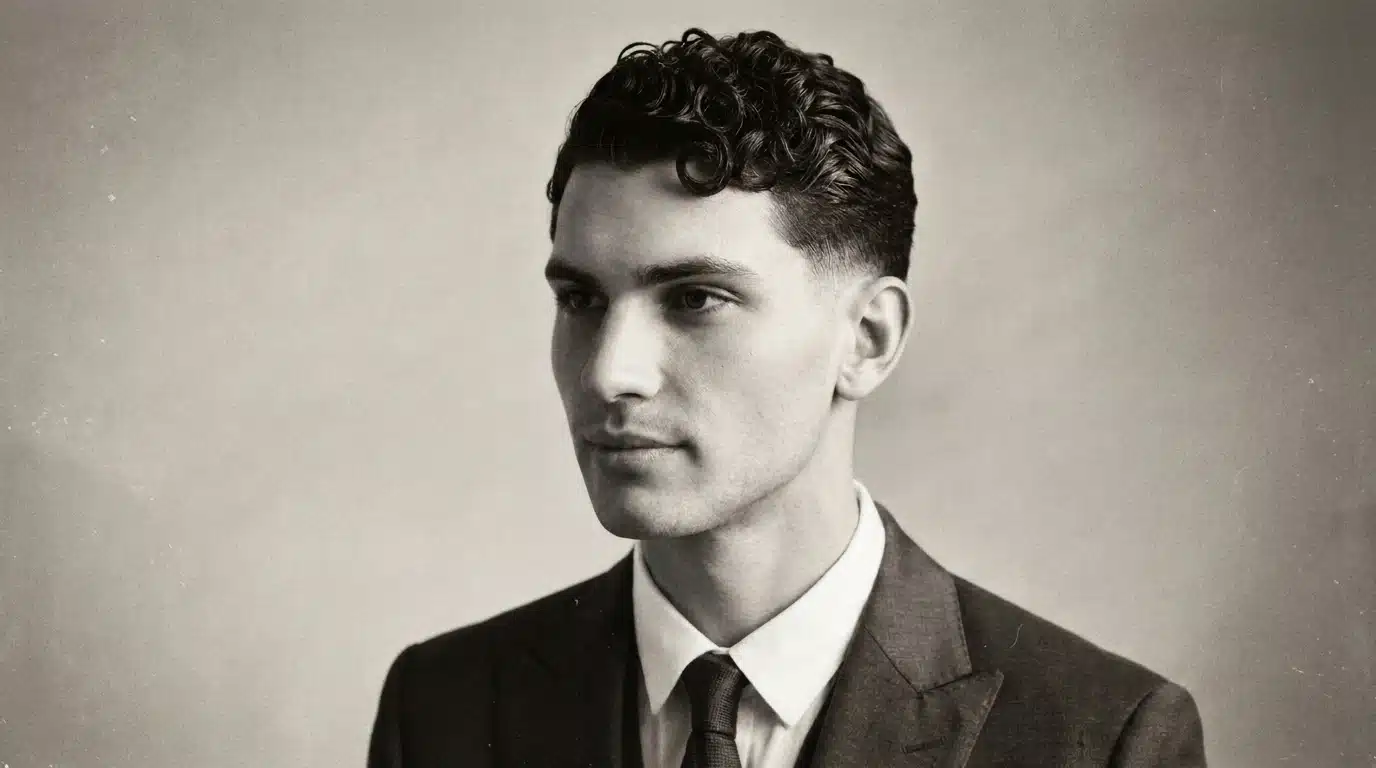
The curly tapered vintage style keeps the curl pattern visible while shaping the haircut into a controlled silhouette. More length remains on top so the curls can form properly, while the sides and back taper gradually for balance.
The finish should define texture without flattening it, keeping the curls intentional, soft, structured, and naturally suited to the overall shape.
- Best hair type: Curly, coily, or tightly wavy hair
- Recreate it: Apply a light curl cream to damp hair, shape gently, and avoid aggressive brushing or excessive drying
11. Traditional Short Back and Sides
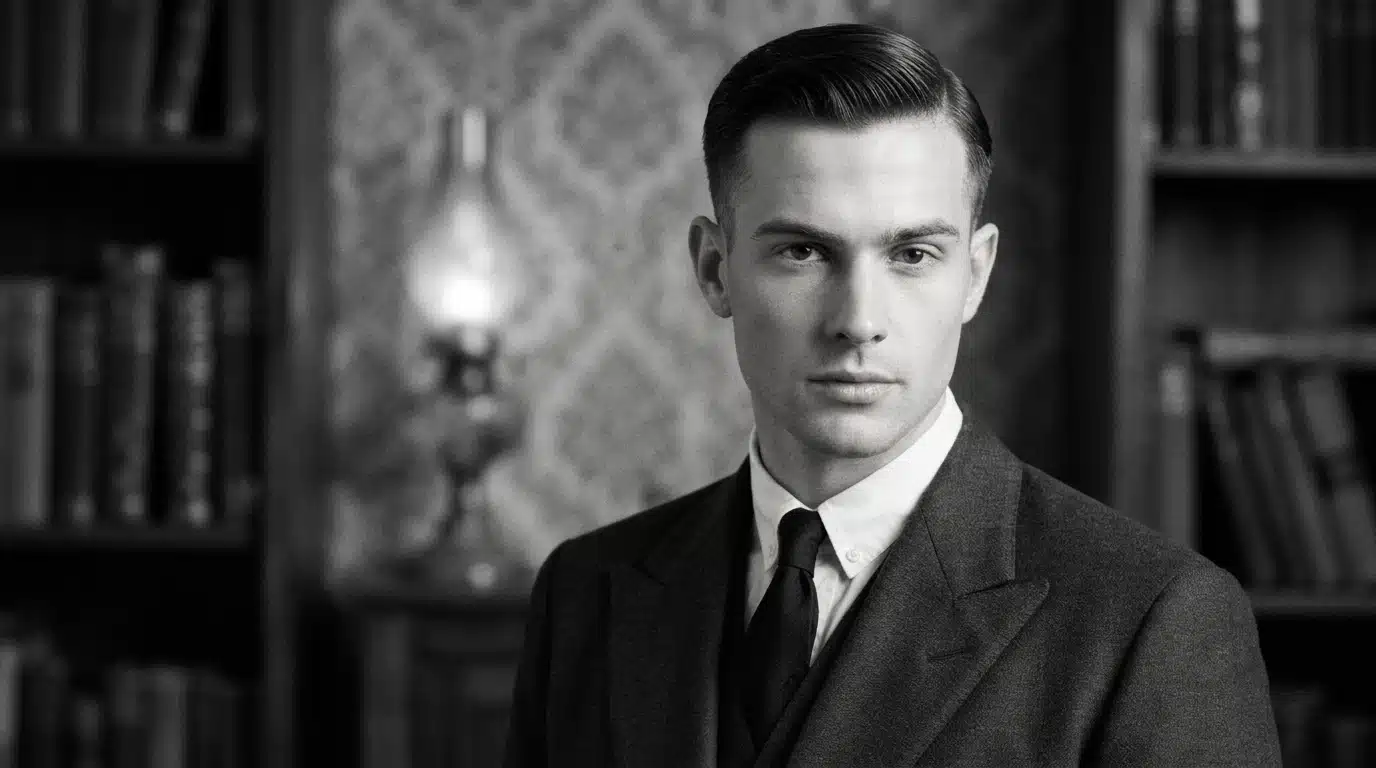
The traditional short back and sides keeps maintenance simple by reducing bulk around the ears and neckline while leaving enough length on top for basic combing.
The shape stays compact and practical, with no dramatic lift or sharp contrast. A gradual taper helps the haircut blend smoothly, creating a vintage look that works well without requiring heavy styling or adjustments.
- Best hair type: Fine, straight, wavy, or thick hair
- Recreate it: Keep the sides gradually tapered, leave enough top length for simple direction, and finish with a light-hold product
For the most convincing result, compare the front, side, and part line together. Those three views reveal the taper and direction better than a single portrait.
Gangster 1930s Men’s Hairstyles
The phrase “gangster 1930s men’s hairstyles” usually describes the polished cuts associated with period crime imagery and later gangster films, rather than a separate haircut category worn only by criminals;
Much of that imagery still traces back to Depression-era photography. The strongest examples overlap heavily with mainstream grooming of the decade.
- Deep side part: Hair sits cleanly across one side with gradual tapering below.
- Glossy slick back: The top moves away from the face with controlled shine and little separation.
- Side part with wave: A small front wave creates shape without becoming a tall quiff.
- Brushed-back taper: Hair moves backward while the sides remain connected and conservative.
For a convincing recreation, avoid extreme fades, oversized pompadours, and decorative shaved lines. A gangster-inspired look should still resemble a well-groomed 1930s haircut first, with the stronger character coming through the finish, clothing, and styling rather than an invented mobster haircut.
1930s vs. 1940s Men’s Hairstyles: What’s the Difference?
The clearest difference between 1930s and 1940s men’s hairstyles is length and rigidity. 1930s cuts kept more length on top with softer, wave-driven movement, while 1940s styles tightened the taper and leaned into the flatter, more compact short back and sides shaped by wartime grooming standards.
| Feature | 1930s | 1940s |
|---|---|---|
| Top length | Longer, room for waves or a slick back | Shorter, closer to the scalp |
| Sides | Gradual taper | Tighter, more uniform taper |
| Product finish | Noticeable shine, more oil | Drier, more matte hold |
| Popular shape | Deep side part, brushed-back waves | Crew-adjacent short back and sides |
| Cultural influence | Hollywood glamour, tailored menswear | Military service, wartime practicality |
Because the shift happened gradually rather than overnight, a photo from 1938 or 1939 can already show some of the tighter, more compact shaping that became standard by the early 1940s. Use a dated reference photo, not just the decade label, if you want an exact match.
How to Ask Your Barber for a 1930s Haircut
A clear barber request makes a vintage haircut easier to recreate. Focus on the top length, taper, part placement, and finish instead of simply naming the decade.
Top length and part: Keep enough length to comb sideways, backward, or into a small wave, then specify a deep, natural, off-center, or defined part.
Taper and connection: Ask for gradually shortened sides that stay blended into the top, avoiding a high skin fade or disconnected undercut.
Neckline and finish: Keep the neckline neat and natural, then explain if the final look should be slick, softly waved, brushed back, or lightly textured.
Reference photos: Bring clear front and side images so the barber can match the proportions, direction, taper, and overall silhouette more accurately.
Combining specific instructions with good reference photos gives the barber a clearer target and reduces the chance of the haircut becoming too modern or overly stylized.
How to Style the Look
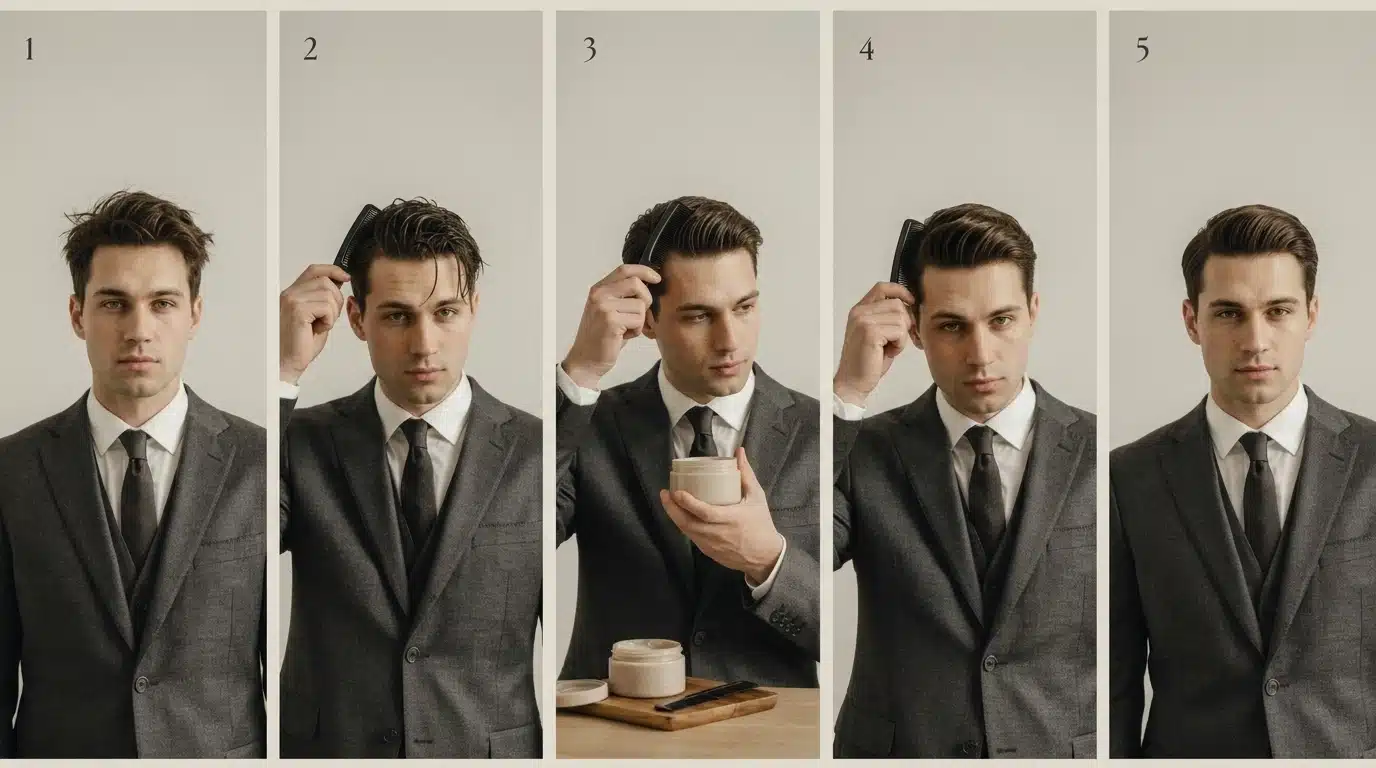
Most of these cuts come together with the same basic routine, only adjusted slightly for whichever style you’ve chosen. Even with today’s wider range of products, this same basic sequence still holds up for anyone recreating the look now:
- Start with slightly damp hair and set your part or overall styling direction first.
- Apply a small, even amount of pomade or styling cream through the top.
- Comb the sides flat into position, then shape the top to match your chosen style.
- Build a controlled wave in if your reference calls for one, keeping the volume you want rather than pressing everything flat.
- Smooth stray hairs, adjust shine to taste, and check the shape from both the front and the side before you leave the mirror.
The first time I tried this on my own hair, I used almost triple the pomade this routine calls for and ended up with a helmet instead of a wave. Start with less than you think you need, then build up
Barber note: This routine covers the basics, but it won’t fit all eleven looks exactly as written. Check with your barber on how to adjust it for your specific cut and hair type.
Common Mistakes when Recreating Vintage Hair
A cut can look close to right and still miss the mark. These are the most common gaps between a period-accurate recreation and a modern cut that only loosely resembles one.
| Mistake | Why it breaks the look |
|---|---|
| Choosing a very high skin fade | Wasn’t part of period grooming at all |
| Removing too much weight up top | Leaves hair too thin to style properly |
| Adding excessive height | Reads as 1950s pompadour, not 1930s |
| Using deliberately messy texture | Contradicts the era’s controlled finish |
| Disconnecting top from sides | Breaks the smooth, gradual taper |
| Flattening natural waves completely | Removes texture the era actually wore |
| Over-applying product | Loses shape instead of holding it |
| Relying only on modern references | Misses period-specific details entirely |
Avoiding these is usually what separates a cut that only looks vintage at a glance from one that actually holds up next to a real period photograph.
Final Thoughts
A great vintage haircut comes down to getting the small details right. If you understand the taper, part placement, top length, and natural texture, recreating 1930s men’s hairstyles becomes much easier.
Start with a reference that matches your hair type, then use the barber notes and styling tips to keep the shape accurate without making it look like a costume.
The comparisons between slick backs, waves, side parts, curls, and later 1940s looks also make it easier to avoid mixing different eras.
You do not need heavy product or dramatic changes to make the style work. Save the look that suits you best, try the styling approach, and share your favorite vintage haircut in the comments.
Frequently Asked Questions
Were Middle Parts Common for Men in the 1930s?
Side parts were the default for most of the decade, but center and off-center parts did appear, especially among men who wanted a slightly softer, more symmetrical look than the standard deep side part offered.
Can Long Hair Recreate a 1930s Look?
Yes, as long as the length is styled with intention rather than left loose. A period cut relies on control and shape more than on any specific length, so longer hair just needs a firmer part, more product, and regular trims to hold the silhouette.
How Did Men Style Hair Under Hats?
Grooming products and firm parting kept shapes intact under the felt and wool hats common at the time. Men typically checked and re-set their hair after removing a hat, since pomade held its shape but still needed a quick comb-through afterward.