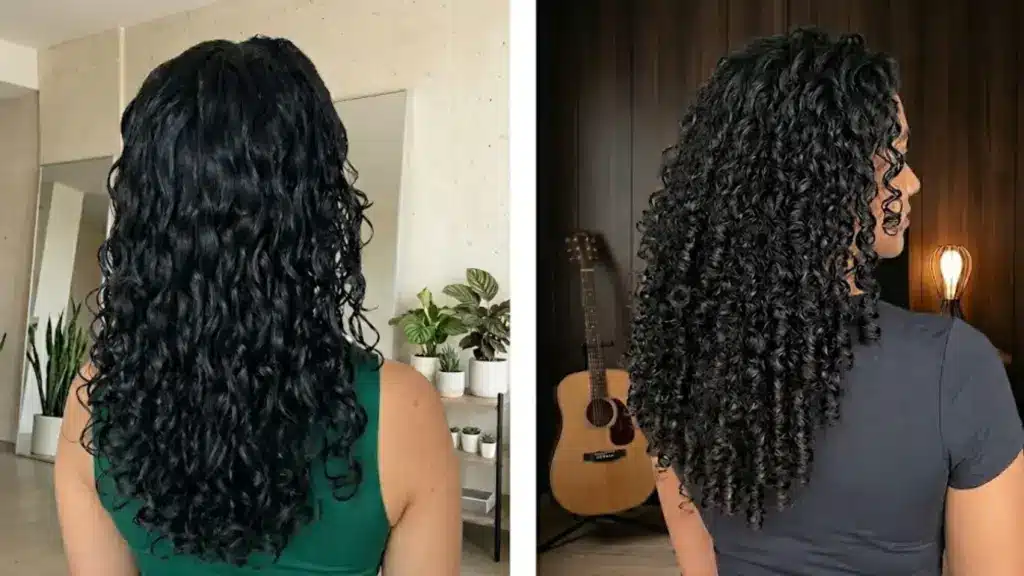
Wavy vs curly hair is often misunderstood, and the difference isn’t always obvious at first glance.
Wavy hair forms loose S-shaped bends that sit closer to the scalp, while curly hair creates tighter spirals with more volume and visible shrinkage.
The easiest way to tell wavy hair apart from curly hair is to wash it, skip products, and let it air dry naturally.
I have seen many cases where hair looked wavy at first but revealed curls once the buildup was removed, and sometimes the reverse happens, too.
Understanding the differences between wavy and curly hair changes how you choose products, manage frizz, and set a routine.
This blog explains the differences, how to identify your type, and what each pattern actually needs.
Understanding Wavy and Curly Hair
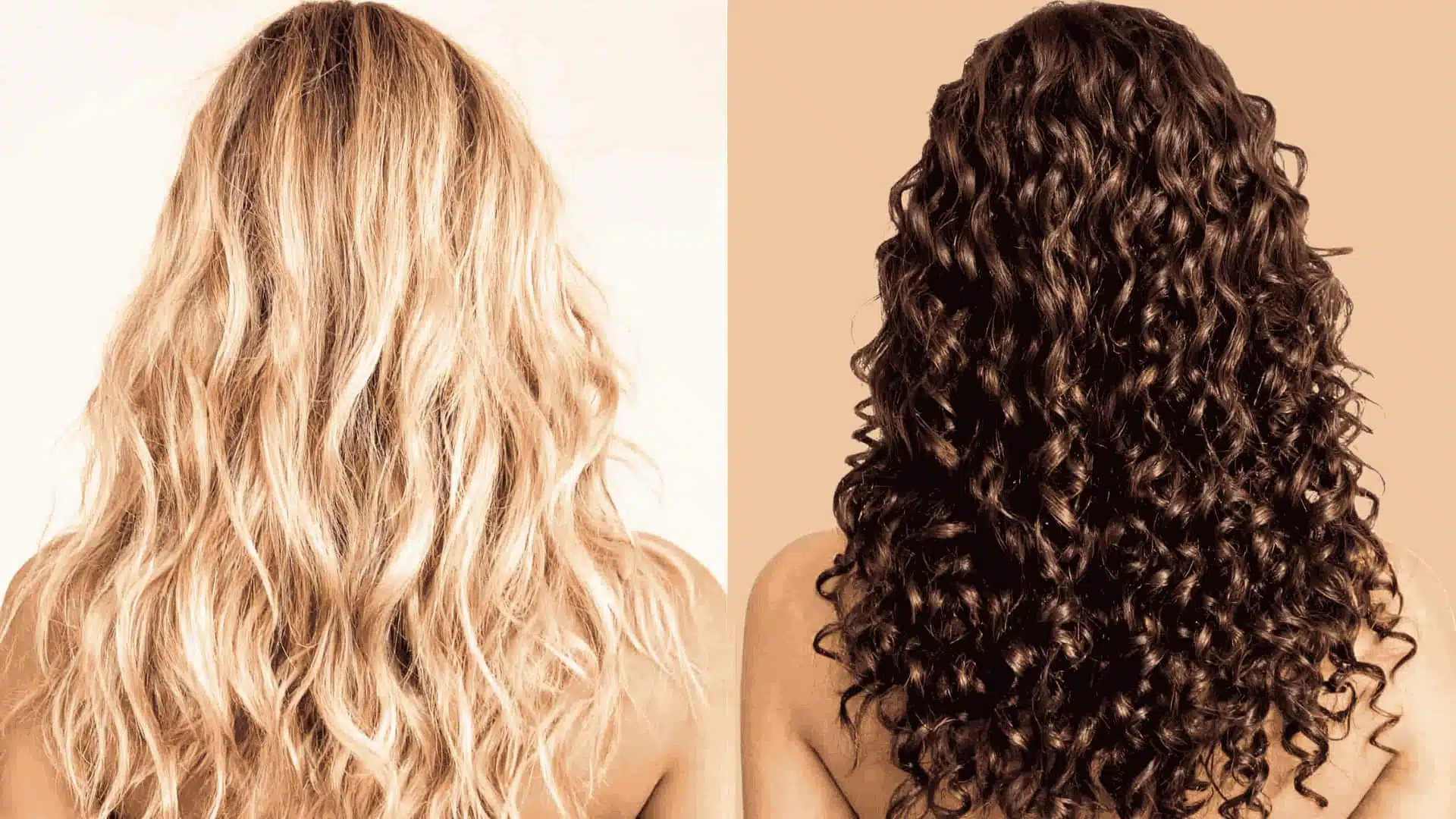
Wavy hair forms loose S-shaped bends along the strand, sitting between straight and curly textures.
The pattern usually starts flat at the roots and develops from mid-length, creating a relaxed, natural flow with lower volume at the top.
Waves appear softer, less structured, and easier to stretch or straighten, making them more flexible for styling but also more prone to losing definition throughout the day.
Curly hair forms tighter loops or spirals that often begin closer to the scalp, giving a more uniform appearance.
The pattern is consistent from root to tip and tends to spring back when stretched, showing strong elasticity. This leads to greater volume, bounce, and visible fullness throughout the hair.
Curly textures also react more to humidity and moisture, which can shift shape and definition, while wavy hair is more adaptable but struggles to hold structure consistently.
Characteristics of Curly and Wavy Hair
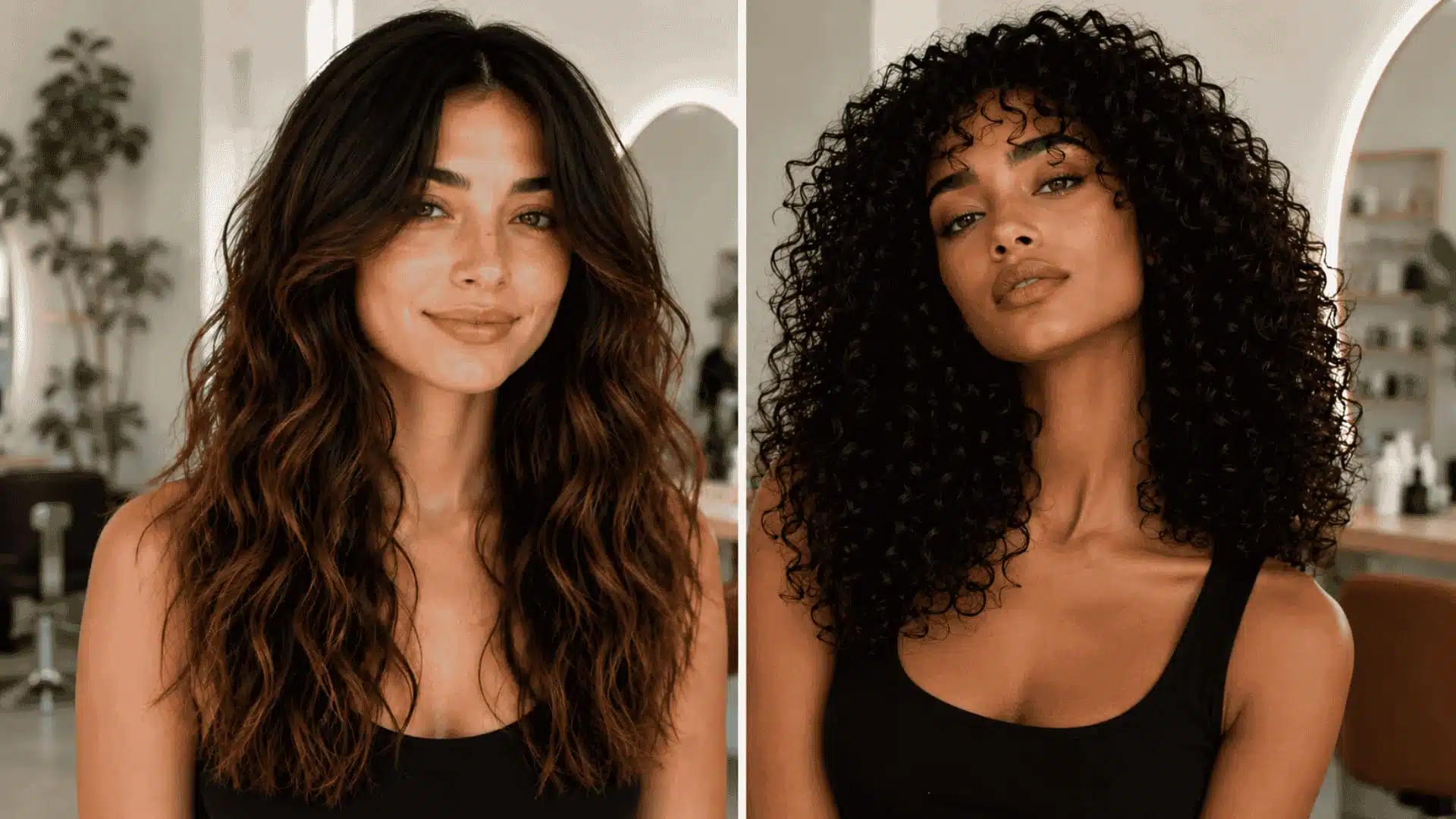
Although curly and wavy hair share some similarities, their textures, styling behaviors, and care needs differ.
Understanding these differences helps in choosing the right products and routines for better definition and healthier hair.
1. Curly Hair
Curly hair forms spirals or ringlets that are naturally prone to frizz and dryness. The bends in the strands make it harder for natural oils to travel evenly, which can leave curls feeling dry or rough.
Curly hair often needs moisturizing creams or leave-in conditioners to maintain softness and shape. Curls also require products with hold to keep definition intact and reduce frizz.
Because curly strands twist and overlap, they are more likely to tangle and should be detangled gently to avoid breakage.
One major advantage of curly hair is its natural volume, especially around the roots.
2. Wavy Hair
Wavy hair creates soft S-shaped patterns that can loosen or fall flat easily. Waves are usually straighter near the roots and more defined toward the ends.
Lightweight mousses, gels, or sprays often work best because heavy products can weigh waves down. Wavy hair is less likely to tangle than curly hair, but maintaining definition can be challenging.
It also tends to sit flatter on the scalp, so root volume may require diffusing or styling techniques for extra lift.
Wavy hair is versatile and can appear straighter or curlier, depending on the styling method.
Difference Between Wavy and Curly Hair Care Routines
Curly hair needs more moisture since natural oils struggle to reach the ends, while wavy hair needs lighter products to avoid weighing it down.
Wavy hair often requires washing every 2 to 3 days, whereas curly hair benefits from less frequent washing and may use co-washing to retain moisture.
1. Styling Approach Differences
Wavy hair gets weighed down easily. Heavy creams, oils, or layering too many products will pull the S-shape flat.
A light mousse, like MoroccanOil Curl Control Mousse, or a thin gel applied to soaking-wet hair, then scrunched and left alone, tends to give the best results.
Curly hair needs hold. Richer creams and stronger-hold gels help the coil maintain its shape through the drying process.
The “praying hands” smoothing method, followed by scrunching, works better for curly hair than it does for wavy hair, where scrunching alone is usually enough.
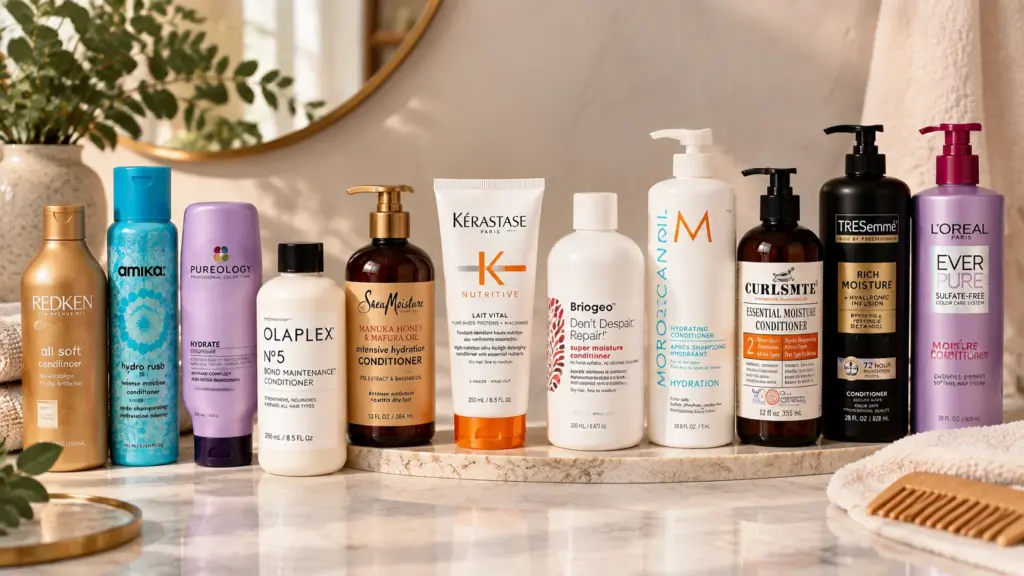
2. Product Types for Each Hair Type
For wavy hair: lightweight mousses, thin curl creams, and light-hold gels. Avoid anything labeled “rich,” “intense,” or “butter.”
For curly hair: leave-in conditioners, curl creams with slip, and medium-to-strong hold gels that form a cast while drying, such as SheaMoisture Curl Smoothie.
The cast can be scrunched out once the hair is fully dry to release soft definition.
For a specific breakdown of a curly hair care routine that goes deeper into product layering order and technique.
3. Porosity, Frizz, and Dryness
Curly hair tends toward higher porosity, meaning the cuticle has more gaps that let moisture in quickly but also let it escape just as fast.
This is why curly hair can feel hydrated right after washing and dry out within hours. Frizz in curly hair is mostly a signal of moisture loss.
Wavy hair generally has lower porosity and a smoother cuticle, which means it holds moisture more efficiently but also resists deep conditioning treatments.
If you are trying to figure out where your hair falls on the porosity spectrum, understanding hair porosity covers the float test, the strand feel method, and what the results mean for product choice.
How Do You Identify Your Hair Type?
The most accurate way to identify your hair type is to observe it in its natural state.
Wash your hair with a gentle or clarifying shampoo , avoid any products, and let it air-dry without touching or brushing.
As it dries, wavy hair forms loose S-shaped bends, while curly hair creates tighter spirals that clump together. Do not judge too early, as roots show patterns last.
It is also normal for different areas, like the crown and nape, to have slightly different textures.
Key signs make identification easier. Wavy hair flattens slightly and holds soft movement, while curly hair springs back and maintains defined coils.
Noticeable shrinkage between wet and dry length strongly indicates curly hair, especially if ringlets form without any product.
Why Hair Pattern Can Change
Hair patterns can change over time due to environmental exposure, styling habits, product buildup, and natural variation across the scalp. Waves may appear curlier, while curls can loosen depending on moisture levels, damage, and hair care routines.
- Humidity: Causes frizz in wavy hair and tighter definition in curly hair.
- Product buildup: Heavy residue can weigh strands down and reduce natural texture.
- Heat styling: Frequent use of heat can weaken and flatten waves or curls.
- Hair damage: Chemicals and dryness reduce elasticity and loosen the pattern.
- Mixed textures: Different areas of the scalp may naturally have different patterns.
Understanding these changes helps in choosing the right products and routines to maintain healthier, more defined hair.
Common Mistakes to Avoid With Wavy vs Curly Hair
Small routine mistakes can affect texture, moisture balance, and overall hair health, making both wavy and curly hair harder to manage and style.
- Using heavy creams or thick oils on wavy hair: The strands get coated, reducing movement and making the pattern fall flat within hours.
- Dry brushing curly hair: This separates natural curl groupings, causing uneven texture and visible frizz throughout the hair.
- Overwashing both hair types: Frequent washing strips essential oils, leaving hair dry, rough, and harder to manage over time.
- Skipping moisture for wavy hair: Oil at the roots creates balance issues, while mid-lengths and ends become dry and lack definition.
- Applying products to completely dry hair: This prevents even distribution and reduces absorption, especially in curly textures.
- Using high heat without protection: Heat weakens the structure, loosens curl patterns, and increases long-term dryness. Goth hairstyles embrace natural texture with curl-friendly and wave-friendly looks instead of relying on heat styling
Conclusion
The difference between wavy vs curly hair comes down to follicle shape, curl tightness, shrinkage, and how each strand handles moisture.
Wavy hair forms loose bends and sits closer to the scalp, while curly hair creates defined spirals with more volume and visible shrinkage.
The most reliable way to confirm your pattern is the wet hair test, since products and heat can easily mask how your hair naturally behaves.
Whether you land firmly in the wavy camp, in the curly range, or somewhere in the 2C/3A overlap, the goal is the same: understand the pattern, give it what it needs, and adjust as you go.
Drop your hair type in the comments and share what has worked for you.
Frequently Asked Questions
Can Wavy Hair and Curly Hair Have the Same Length at The Roots?
Yes. Root pattern is often the last area of the hair to show wave or curl definition. Both wavy and curly hair types can appear almost straight at the root while showing a distinct pattern from mid-length downward, especially when the hair is longer or has weight pulling it down. This does not change the underlying hair type.
Does Humidity Affect Wavy and Curly Hair Differently?
Humidity affects both types differently. Wavy hair often frizzes and loses shape, while curly hair tightens and gains volume. Light anti-frizz products suit wavy hair, while gels help curly hair hold its pattern.
Can You Have Both Wavy and Curly Hair on The Same Head?
Yes, it is more common than expected. Different areas of the scalp can produce different patterns, such as waves at the crown and curls at the nape. This variation comes from changes in follicle shape. Focus on the dominant pattern and adjust products or techniques for sections that behave differently.