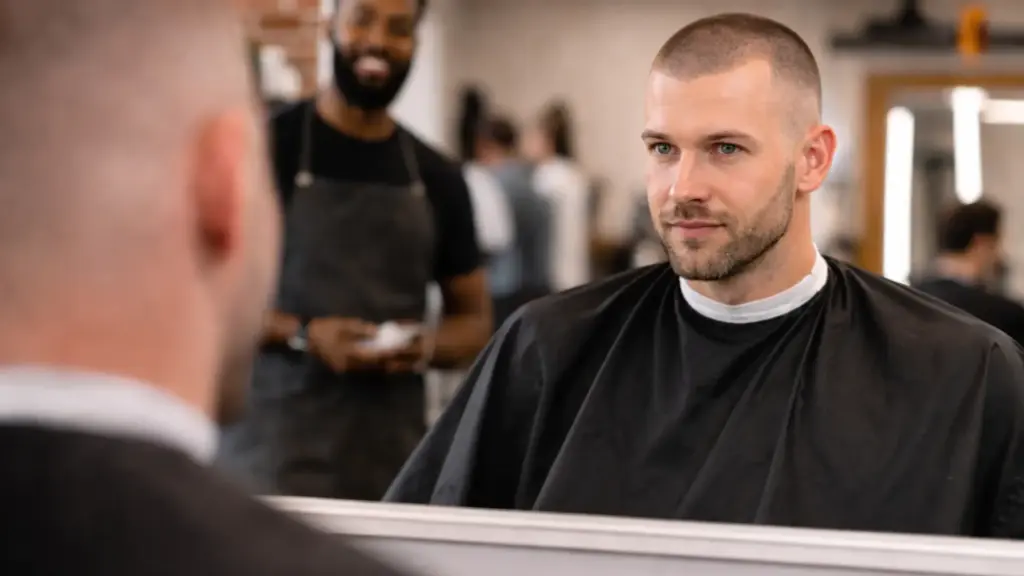
Most men fight thinning hair for years before realizing the fix was never a product or a comb-over trick. It was a shorter clipper guard.
A buzz cut for balding men is one of those rare style moves that solves several problems at once. It kills the visible contrast between thick and thin zones, takes morning prep time down to almost nothing, and somehow makes the whole face look sharper.
But not every buzz works the same way. Guard length, fade placement, face shape, and even beard pairing all change how the final result sits.
This blog breaks down the best buzz cut styles by hair loss stage, how to match one to your face shape, and the maintenance habits that keep the look clean week after week.
Why a Buzz Cut for Balding Men is a Smart Move?
I have seen it happen time and again in the chair. A guy walks in, still fighting to comb over those temples or hide the thinning crown, and after one good buzz, everything just clicks into place.
The look becomes cleaner, sharper, and honestly more confident. For most men in the early to mid stages of hair loss, roughly Norwood 1 through 3, a buzz cut often turns out to be one of the smartest style upgrades you can make.
Hair loss is far more common than it feels in the moment. According to the American Hair Loss Association, around two-thirds of men have some noticeable thinning by age 35, and that figure reaches roughly 85% by 50.
The Norwood scale, which dermatologists use to classify male pattern baldness across seven stages, is the clearest reference point when matching a buzz cut length to your actual hair loss pattern.
Knowing your stage turns what feels like guesswork into a much clearer decision.
The real reason this cut works comes down to something called visual uniformity. When you keep longer hair on top, the difference between thicker zones and sparse ones jumps out at everyone.
A buzz cut brings everything down to roughly the same short length, so the contrast disappears. The scalp shows through evenly, rather than spotlighting those patchy spots.
What used to look like obvious thinning now reads as a deliberate, intentional style choice rather than something you are trying to hide. That shift does wonders for your overall appearance.
Suddenly, the focus moves away from the hairline and back to your best features: the jawline, the cheekbones, the eyes, and the overall shape of your face.
It is like the haircut stops competing with your natural silhouette and starts supporting it.
Beyond the optics, the practical side feels genuinely freeing. You spend less time in the shower, skip the gels and sprays, and never stress about wind or humidity ruining your look.
For an active lifestyle, that kind of simplicity is freeing. A well-chosen buzz cut doesn’t just manage hair loss. It makes the whole look cleaner with minimal effort.
Shaved Head vs. Buzz Cut for Balding Men
This is the conversation every barbershop eventually has, and I always tell guys the same thing. It is not about quitting your hair. It is about picking the look that actually fits your stage of hair loss and your lifestyle.
| Aspect | Shaved Head | Buzz Cut |
|---|---|---|
| Best for Norwood | Stages 4 to 7 | Stages 1 to 3 |
| Look and Feel | Completely smooth and bold | Short hair with some coverage and softness |
| Maintenance | Shave every 2 to 4 days | Clip every 7 to 10 days |
| Ease of Grow Out | Longer and more obvious in between | Quick and forgiving |
| Scalp Irritation Risk | Higher risk from daily razor use | Much lower |
| Hides Mild Thinning | No, fully eliminates any patchiness | Yes, reduces contrast nicely |
| Style Flexibility | Clean only, pairs great with a strong beard | Multiple guard lengths and fades are possible |
| Commitment Level | Higher, more permanent visual statement | Lower, easy to test the short look |
| Daily Convenience | Needs daily SPF and extra scalp care | Fast showers and no styling products |
I have seen plenty of men in the early stages try the buzz first. It lets you ease into shorter hair without going all the way. If your hair loss advances later, you can always move to a clean shave.
Many guys find the buzz feels less drastic and gives them confidence to own the change on their own terms.
Choose the buzz if you want low effort with some flexibility.
Go fully shaved when you are ready for the smoothest, most intentional finish. Either way, it is your head and your vibe. Pick what makes you walk out feeling sharper.
Best Buzz Cut Styles for Balding Men by Hair Loss Stage
The right buzz cut style depends on where your hair loss is concentrated and what your hair texture is like.
Coarser, thicker hair can handle a shorter guard without looking patchy, while finer hair typically benefits from going one guard size longer to maintain an even finish.
1. The Induction Buzz
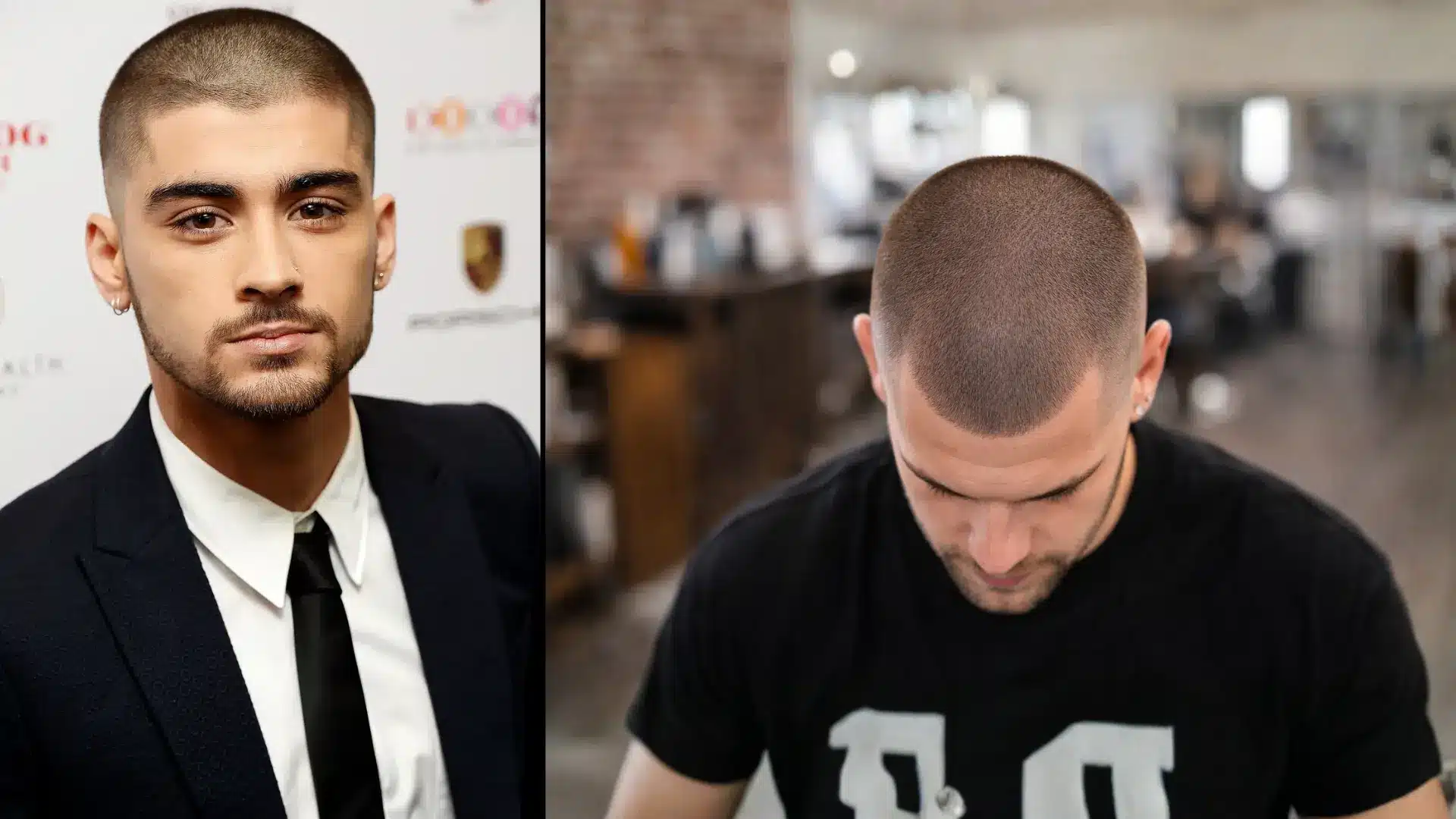
Best for: Men with visible crown thinning, lower overall density, or Norwood Stage IV and above
The induction buzz keeps everything one short, even length, usually with a #1 or #2 guard all over. At roughly 3mm to 6mm in length, this cut works because there is almost nothing left to compare.
That uniform finish helps reduce contrast, which is why it works so well when crown thinning or overall low density starts becoming hard to hide.
It tends to look clean, deliberate, and low-stress rather than like a last-minute fix. It also feels like a natural first step before going fully shaved.
Zayn Malik is a good reference for this look because he proves that an induction buzz can read as confident and styled, not just minimal.
2. The Burr Cut

Best for: Men with advanced thinning, stronger recession, or anyone considering the move from buzzed to fully shaved
The burr cut sits right on the line between a buzz cut and a shaved head, usually using a #0 or #0.5 guard.
It leaves just enough hair shadow to soften the look while making patchiness much less noticeable. That makes it a smart option for men who feel a #1 still shows too much contrast, but are not fully ready to shave everything off.
It also looks especially strong with a neat beard, since the scalp shadow and facial hair together make the whole style feel intentional and well put together.
3. The Crew Length Buzz

Best for: Men with early recession, decent crown density, and Norwood Stage II to III
The crew length buzz keeps a bit more length on top, usually around a #3 or #4, with slightly shorter sides.
It works best when hair loss is still in the earlier stage, and the main issue is temple recession rather than heavy crown loss.
The extra length adds a little softness, so the hairline does not look too stark, while still staying short enough to avoid the messy look longer styles can create.
Idris Elba has worn similar close-cropped styles that feel polished without looking overworked.
4. The High and Tight

Best for: Men with crown thinning, fuller sides, and a head shape that suits a more structured cut
The high and tight uses very short sides, often a #0 or #1, with a slightly longer top around a #3.
That contrast creates structure and draws the eye upward, which can be useful when the crown is thinning, but the sides still grow in strongly.
It feels sharper and more styled than a uniform buzz, so it suits men who want definition instead of a plain all-over cut.
The cut has also evolved well beyond its military origins, and the modern high and tight haircut with variations that work best with today’s fade techniques.
5. The Faded Buzz
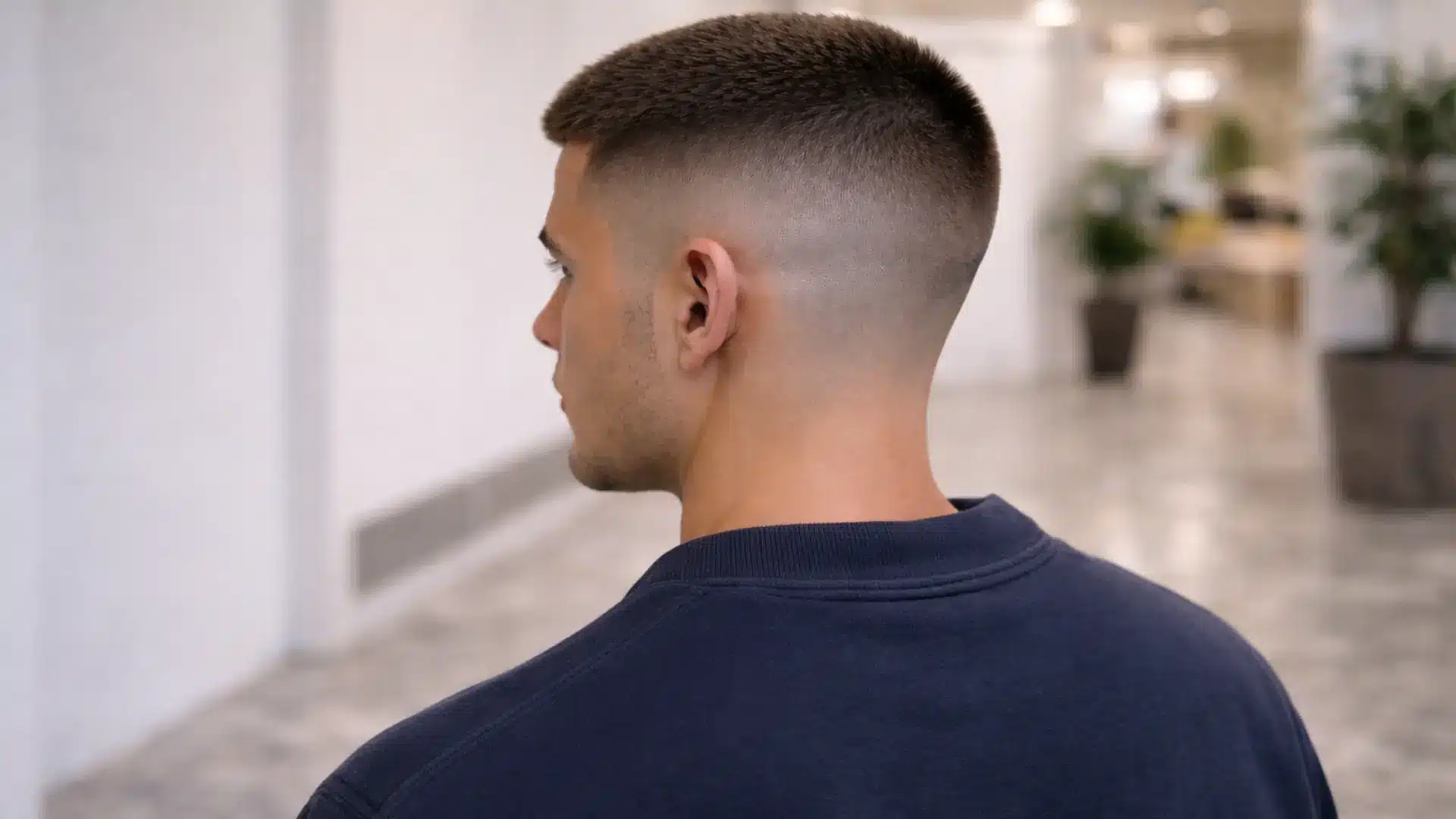
Best for: Men with temple recession, a fairly solid top, and Norwood Stage II to IV
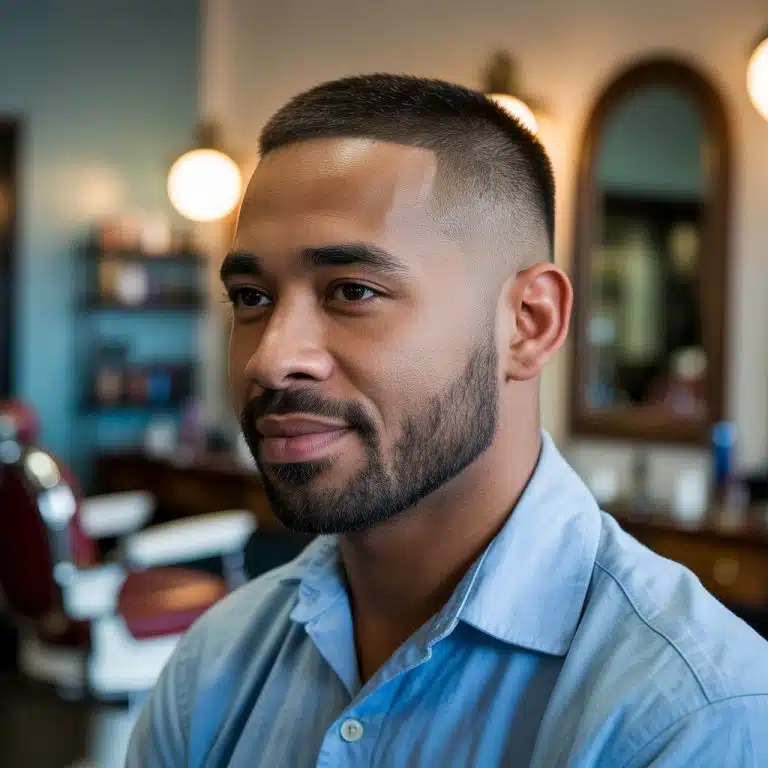
The faded buzz gives the classic buzz cut a more modern edge. The sides are faded very short while the top stays around a #2, which helps shift visual weight upward and away from the temples.
That can work especially well for men whose hair loss starts around the hairline and sides rather than across the whole top.
It also pairs naturally with a beard, which adds even more balance to the face. This is one of the best options for men who want a buzz cut that still looks styled rather than purely functional.
6. The Textured Crop Buzz

Source: Today.com
Best for: Men with early-stage thinning, mild density loss, and enough top coverage to benefit from texture
This is the longest version in the buzz cut range, usually with a #4 or #5 on top and tapered sides. It suits men in the earliest stages of hair loss who still want some styling flexibility.
With a little matte product, the top can be broken up to create texture, helping hair look fuller rather than flat.
That makes it useful when thinning is mild and spread out rather than concentrated in a single obvious area. Ryan Reynolds has worn short, textured styles in this range that feel relaxed yet very deliberate.
For men still in early stages with strong density elsewhere, it’s also worth exploring haircuts for men with thick hair before committing fully to the shorter buzz range.
How to Choose the Right Buzz Cut for Your Face Shape
Face shape plays a key role in how a buzz cut looks, helping you choose a style that balances proportions and enhances your natural features rather than working against them.
- Oval Face Shape: An oval face is the easiest to work with because the proportions already feel balanced. Most buzz cuts suit it, but a close all-over cut or a soft, faded buzz usually looks best. If thinning shows at the crown, this shape still gives plenty of flexibility.
- Round Face Shape: A round face benefits from shape and contrast. Keep the sides tighter and leave a little more length on top so the face looks longer, not wider. Skip one length all over if possible, because that can make the whole silhouette look broader in photos.
- Square Face Shape: A square face already has strong structure, so a buzz cut usually looks sharp without much effort. Go for a close top with a mid-fade rather than leaving the sides too bare. It becomes important to know the difference between low fade vs. high fade styles to better understand where to position the fade line for your jaw width
- Oblong or Rectangular Face Shape: If the face is longer than it is wide, the goal is balance. A more even buzz cut works better than a high contrast fade because extra height can stretch the face further. Keep the sides from going too short so the shape still has some width.
- Diamond Face Shape: A diamond face has standout cheekbones, so the buzz cut should keep everything looking balanced. A medium close length with a soft taper tends to work better than a harsh fade. If beard growth is decent, that can also help the jaw look a little fuller.
The Beard Factor: Why Facial Hair Changes Everything
If there’s one piece of grooming advice that genuinely upgrades a buzz cut for balding, it’s this: grow a beard. Not because it’s a trend but because it works structurally.
A clean fade buzzed down to a low guard, combined with a full or medium beard, creates a visual frame that directs attention from the top of the head toward the center of the face.
The contrast between a closely cropped scalp and a fuller beard reads as intentional and put-together.
Clients who arrive skeptical about a buzz cut tend to leave differently once the beard gets shaped to match. That part I see every week.
Keep the beard lines clean and well-defined. A messy beard with a buzz cut doesn’t carry the same authority.
Use beard oil and a firm-edge tool, or a T-blade, to maintain the cheek line and neckline between barber visits.
Buzz Cut Maintenance Tips Every Balding Man Should Know
I have timed thousands of buzz cuts since my apprentice days in my uncle’s London shop, and the secret to looking sharp is simple consistency.
- Trim on a Set Schedule: Refresh a very close buzz every 7 to 10 days. Once short hair starts growing out, uneven density becomes easier to spot, especially around the crown and back of the head.
- Use Proper Clippers, Not a Basic Trimmer: A solid cordless clipper gives better guard control, smoother cutting, and less tugging on thin areas. That makes home upkeep easier and helps the finish look cleaner and more even.
- Cut only on Clean, Dry Hair: Dry hair shows the true length. Wet hair sits flatter and can trick you into cutting more than planned, which matters a lot when even a small length change affects how thinning looks.
- Stick to The Same Guard Length Each Time: Keep one fixed guard for your usual buzz length and use that consistently. Guessing the number from memory is how many home cuts end up shorter or patchier than intended.
- Clean and Maintain Your Clipper Blades: Brush out hair, wash the blades if needed, and oil them regularly. Dull or clogged blades do not cut evenly, and that rough finish stands out.
- Wash the Scalp without Overdoing It: Clean the scalp 2 or 3 times a week with a gentle shampoo. Too much washing can dry the skin out, while too little lets oil and buildup collect more easily on short hair.
- Keep the Scalp Moisturized and Calm: Use a lightweight moisturizer or a few drops of scalp-friendly oil after washing. A buzz cut exposes the scalp, so dryness, flaking, and irritation become much more visible than they were with longer hair.
- Sun Protection: Apply SPF 30 or higher sunscreen mist when spending time outdoors. The Skin Cancer Foundation recommends broad-spectrum SPF 30 or higher for daily scalp protection, and that recommendation applies just as much to men with close-cropped hair as it does to anyone else. A buzz cut leaves the scalp exposed, and sunburn on thinning areas can make the skin look rough, irritated, and unhealthy.
- Keep the Whole Look Sharp Between Cuts: Check the back of the head with a second mirror, tidy the neckline and sideburns, and keep the beard or jawline neat if you wear facial hair. Those small details make the buzz look deliberate rather than neglected.
Should You Buzz It Yourself or Visit a Barber?
The first buzz cut is where guard choice, fade placement, and shape all get established. My suggestion is always to let a barber handle that one.
Getting it professionally done once means you have a reference point. Maybe a photo you can show next time, or measurements you can replicate at home.
After that, home maintenance is entirely doable. A grade 2 or 3 all-over buzz is one of the simpler cuts to self-maintain.
Fades are trickier than most people expect. Getting a clean blend on the back of your own head takes a second mirror setup and some trial runs.
I’d say the best routine that works out for most men is to visit the barber every 3 to 4 weeks for a proper clean-up and fade refresh, with a home touch-up on the top length in between using a fixed guard.
Conclusion
The best thing about a buzz cut is how honest it is. No tricks, no hiding, no products working overtime to fake fullness that no longer exists. Just a clean, short cut that lets your actual features do the talking.
What I have seen over the years in the chair is that the men who look sharpest are not the ones with the most hair.
They are the ones who stopped fighting what was happening and made a deliberate choice instead. That shift in mindset shows up immediately in how a guy carries himself.
If you are on the fence, start with a slightly longer guard. You can always go shorter next time. The hardest part is the first cut; everything after that just feels like routine.
Got a buzz cut story or still deciding on your guard length? Drop a comment below. I read every single one.
Frequently Asked Questions
Will a Buzz Cut Make My Head Look Bigger?
Not usually. A close buzz reduces visual bulk, and matching it with a beard keeps proportions balanced and natural-looking.
Does Ethnicity Affect Buzz Cut Choices?
Yes, to some degree. Coarser, thicker hair suits shorter guards like #1 without looking patchy, while finer textures often need a #2 or higher for an even finish.
Testing guard sizes on your specific texture is the most reliable way to find the right fit rather than going by a standard number.
What if My Head Shape is Uneven?
A barber can address this with careful fade blending. At home, using a consistent guard and scheduling regular shape-up visits helps manage minor asymmetries without drawing attention to them.
Does Buzzing Hair Make It Grow Back Thicker?
No, that is a myth. Buzzing does not change hair texture, thickness, or growth rate. It only affects how regrowth initially feels.
Is a Buzz Cut Appropriate for Professional Workplaces?
Absolutely. A well-maintained buzz reads as clean and intentional. It is widely accepted across corporate, creative, and trade environments alike
What Hairstyles Should Balding Men Avoid?
A few styles consistently make hair loss more obvious rather than less. Heavy combovers become harder to maintain as thinning progresses and tend to look forced in any wind or humidity.
Spiky styles draw attention to the gaps between thin strands rather than hiding them. Very long hair on top with short sides amplifies the contrast between covered and thinning zones rather than softening it.
When in doubt, going shorter rather than longer almost always produces a cleaner, more controlled result.