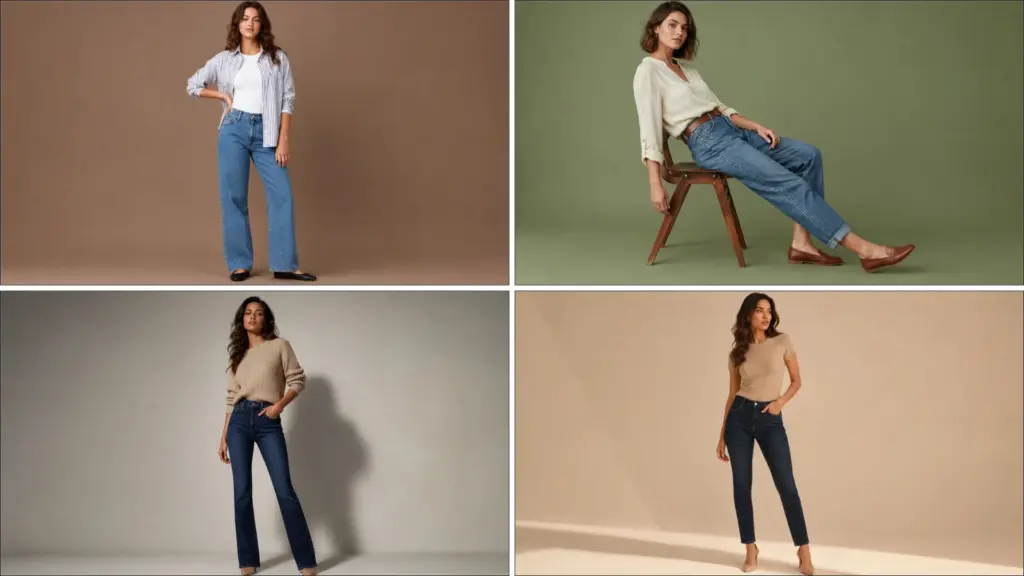
Jeans are one of those wardrobe pieces people wear constantly but rarely fully understand until they try on the right fit for the first time.
A pair that looks perfect on a hanger can feel completely wrong once worn, while another unexpected style suddenly becomes the one reached for every week.
That is why learning about different types of jeans matters more than simply following trends.
The cut, rise, shape, and fit can change how an outfit feels, how comfortable a day becomes, and even how confident someone feels walking out the door.
This blog covers the most popular jean styles, how they fit, and simple ways to wear them without overthinking every outfit.
What Fit, Cut, and Rise Mean in Clothing
Before getting into the types, three terms are worth clarifying because they get mixed up constantly.
- Fit refers to how the jeans sit across your body from the waist through the thighs. A relaxed fit gives you room to move. A slim fit follows your shape more closely.
- Cut refers to the shape of the leg from the knee down. A bootcut flares slightly. A tapered cut narrows toward the ankle.
- Rise refers to where the waistband lands on your torso. Low-rise sits below the hip bone. High-rise reaches toward or above the navel.
These three elements combine to create every style you’ll see on a rack. Once you understand them separately, decoding a label like “high-rise wide-leg” or “mid-rise slim straight” takes about two seconds.
Types of Jeans Every Wardrobe Should Have
The styles below cover the full range of denim cuts available, from wardrobe classics to shapes that have gained traction more recently. Each entry includes how it fits, who it tends to suit, and how to wear it.
1. Straight-Leg Jeans
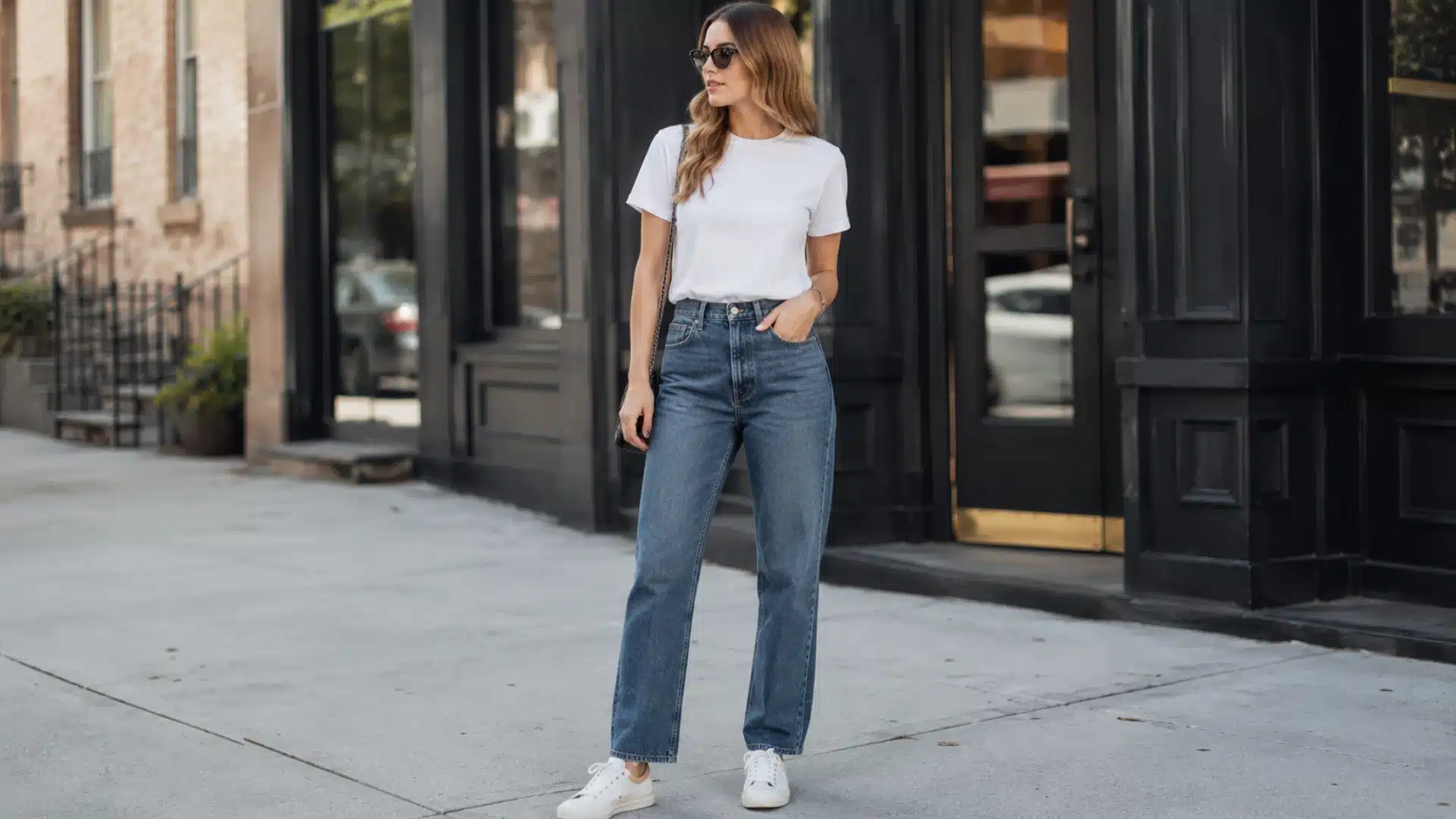
Straight-leg jeans keep a consistent width from hip to ankle. They do not taper in or flare out. The result is a clean, unfussy line that works across most body types and almost every occasion.
A tucked shirt and flat shoes, and you are done. Add a blazer and loafers for a sharper look. Straight-leg is the base note every wardrobe needs, and it is the style most stylists reach for first.
2. Skinny Jeans
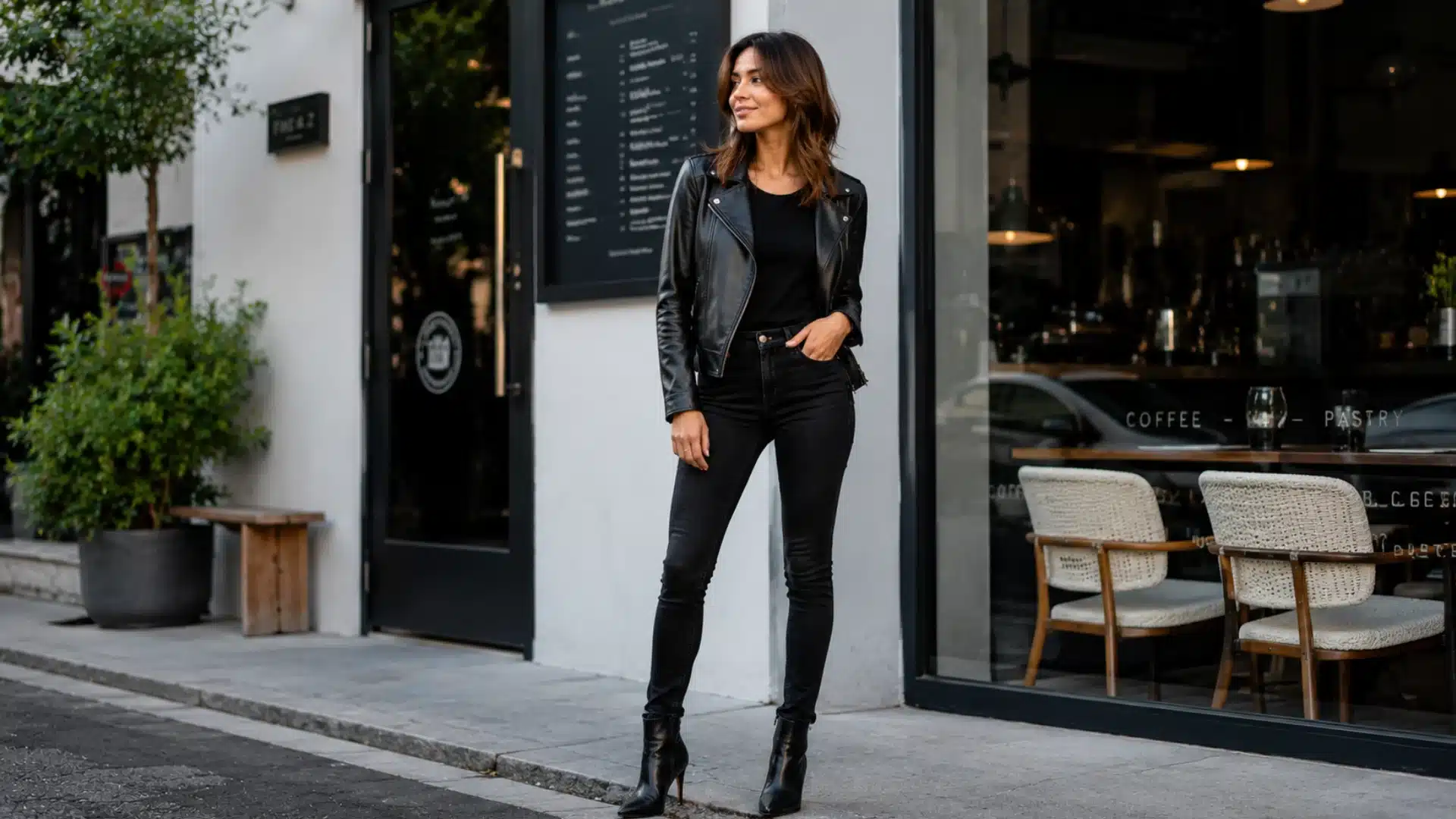
Skinny jeans fit close to the leg from the thigh all the way to the ankle. Most are made with stretch denim, so they’re comfortable to wear despite the fitted silhouette.
They work well with oversized tops, long cardigans, and chunky boots because the contrast in volume creates a balanced look.
The current version is a little more relaxed through the thigh, closer to a slim straight.
3. Slim-Fit Jeans

Slim-fit jeans are the middle ground between straight and skinny. They follow the leg without hugging it.
There’s enough room to feel comfortable, but not so much that the silhouette reads as relaxed.
These are a strong choice for anyone who finds skinny jeans too restrictive but wants something more tailored than a classic straight leg.
4. Wide-Leg Jeans
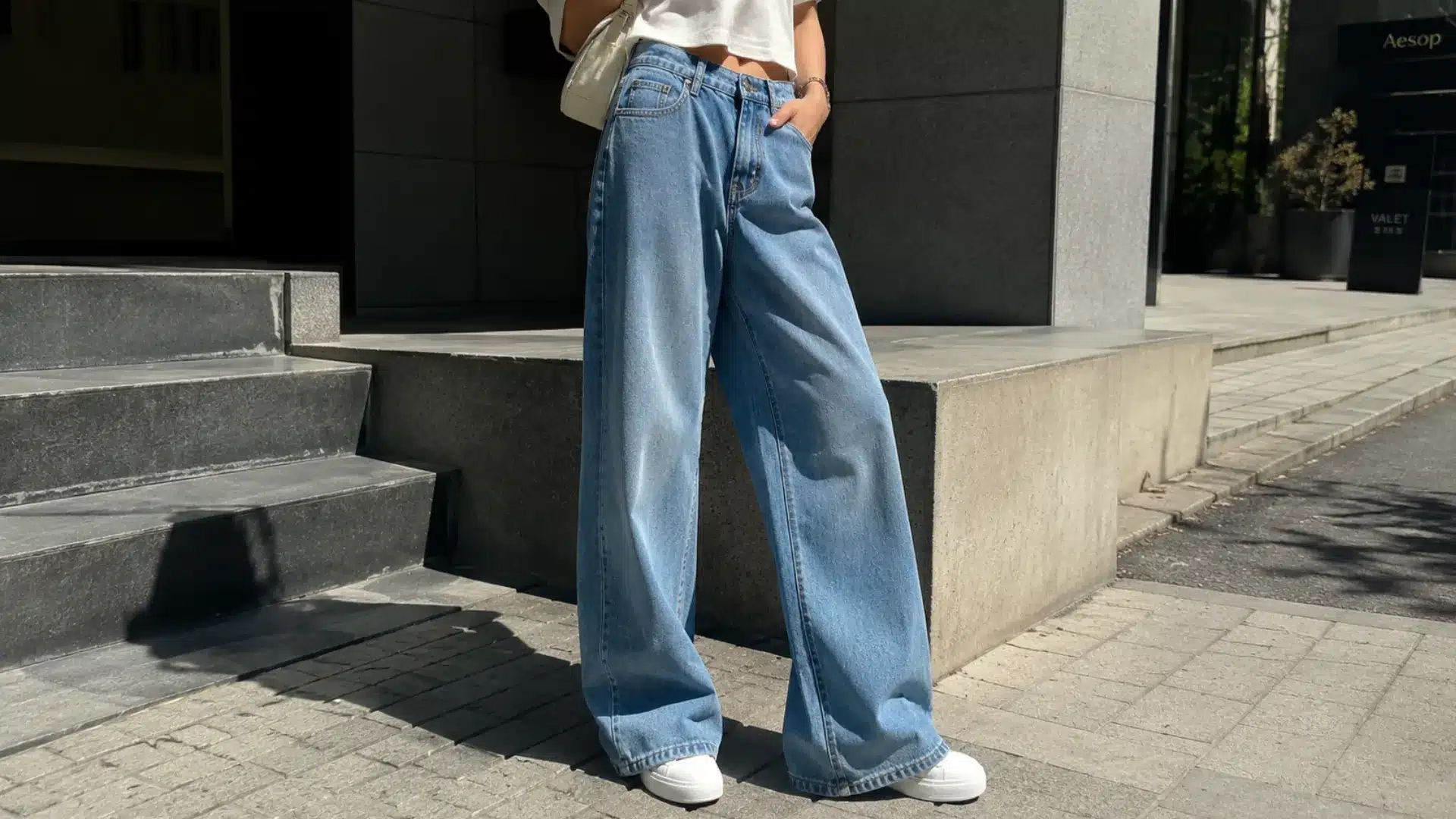
Wide-leg jeans flare from the hip downward, creating a generous, relaxed silhouette throughout the entire leg.
They’ve been one of the strongest denim shapes for a few seasons now and show no sign of slowing down.
The key to wearing them well is balancing the volume below with something fitted on top. A snug ribbed tank or a tucked-in blouse keeps the proportions from reading as shapeless.
5. Bootcut Jeans
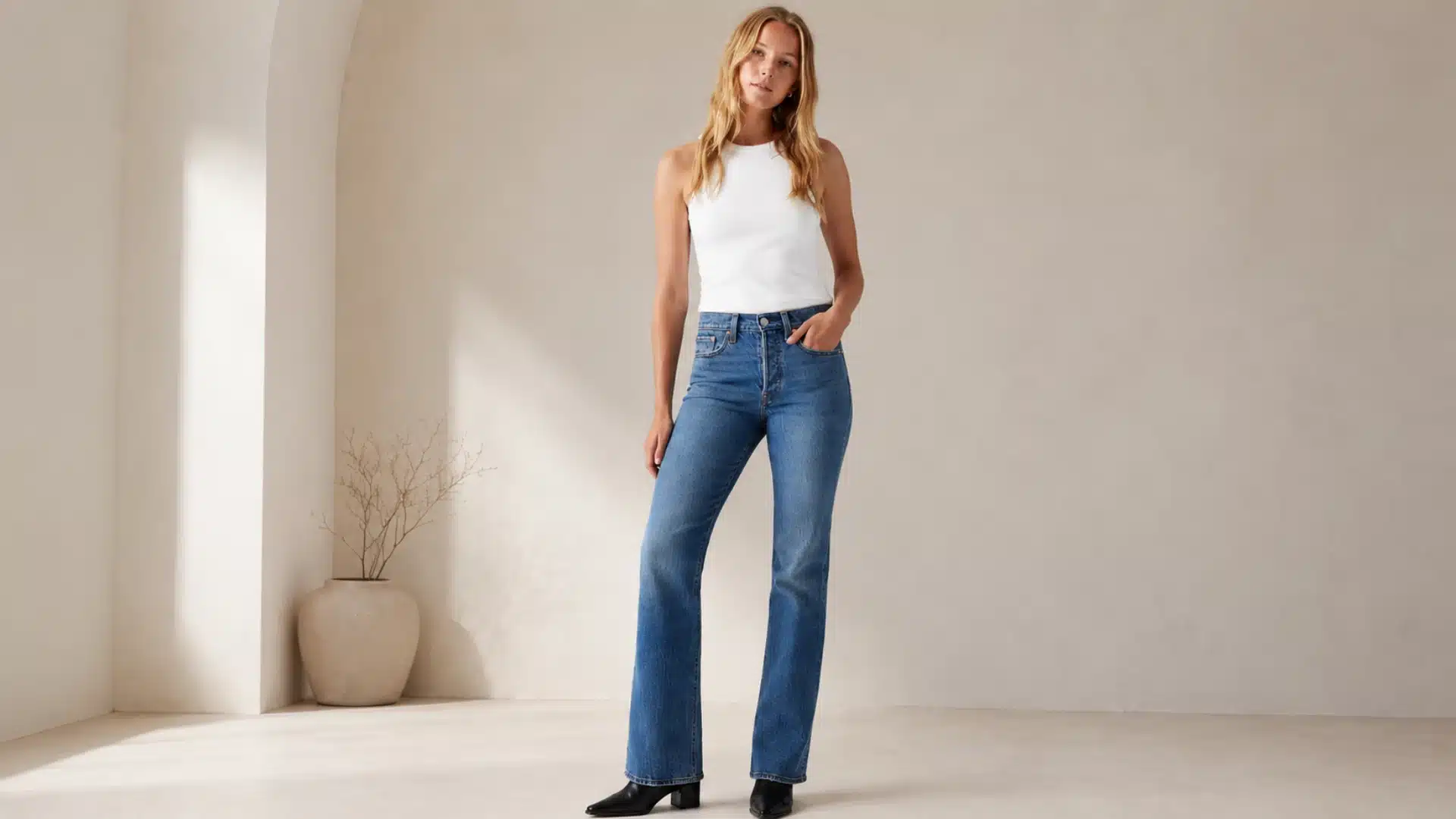
Bootcut jeans fit close through the thigh and open slightly from the knee to the hem. The original purpose was practical: room for a boot.
The style effect is flattering for almost everyone because the slight flare at the hem balances the hip.
They pair well with heeled boots (the flare grazes the shaft naturally) and look clean with pointed-toe flats too.
6. Flare Jeans
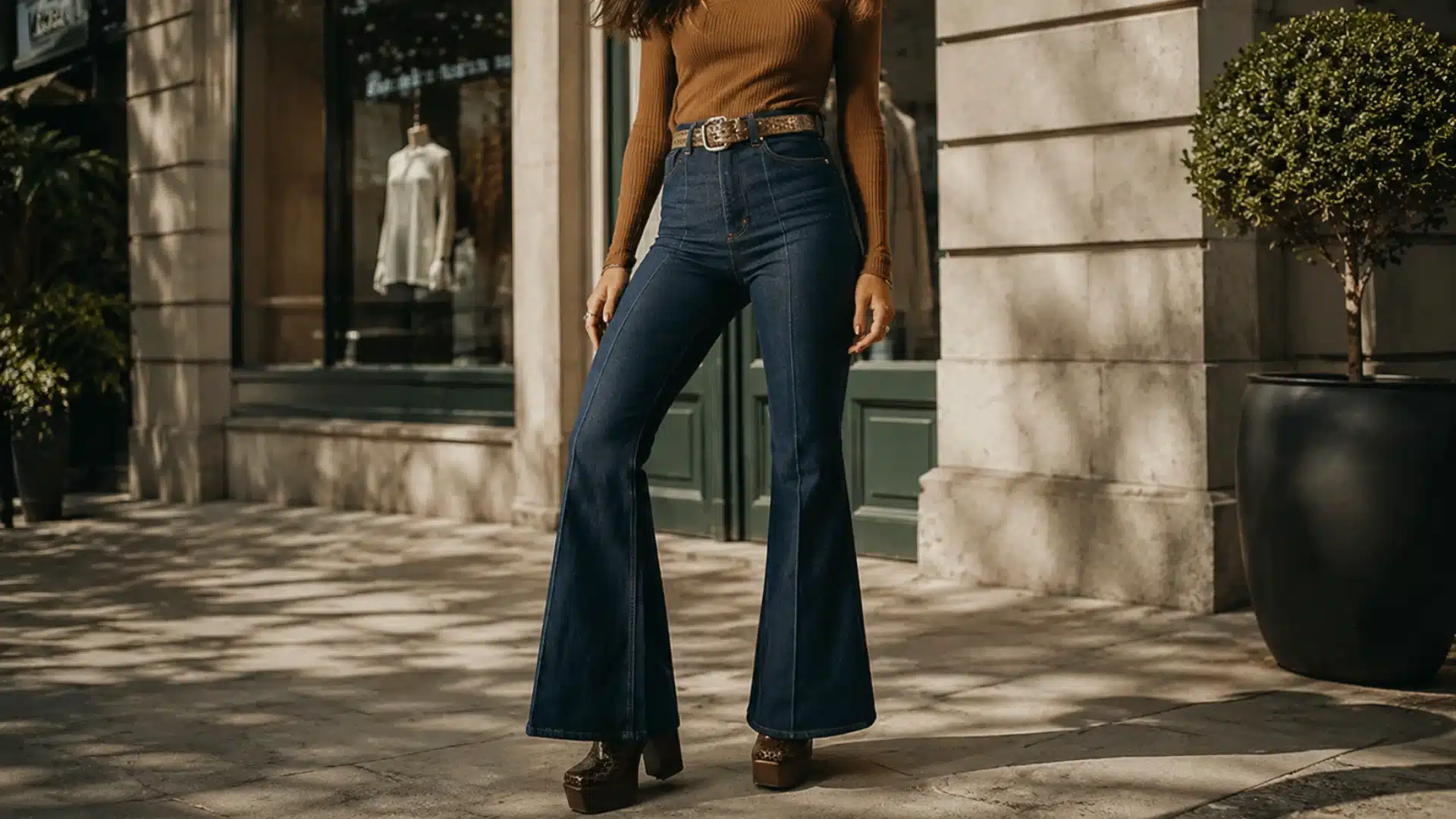
Flare jeans are more dramatic than bootcut. The flare starts higher, usually mid-thigh, and the leg opening is significantly wider.
Think the 1970s, and you’re in the right territory. They create the illusion of longer legs and balance wider hips beautifully.
Fitted tops work best here, either tucked in or cropped. Let the leg do the talking.
7. Mom Jeans
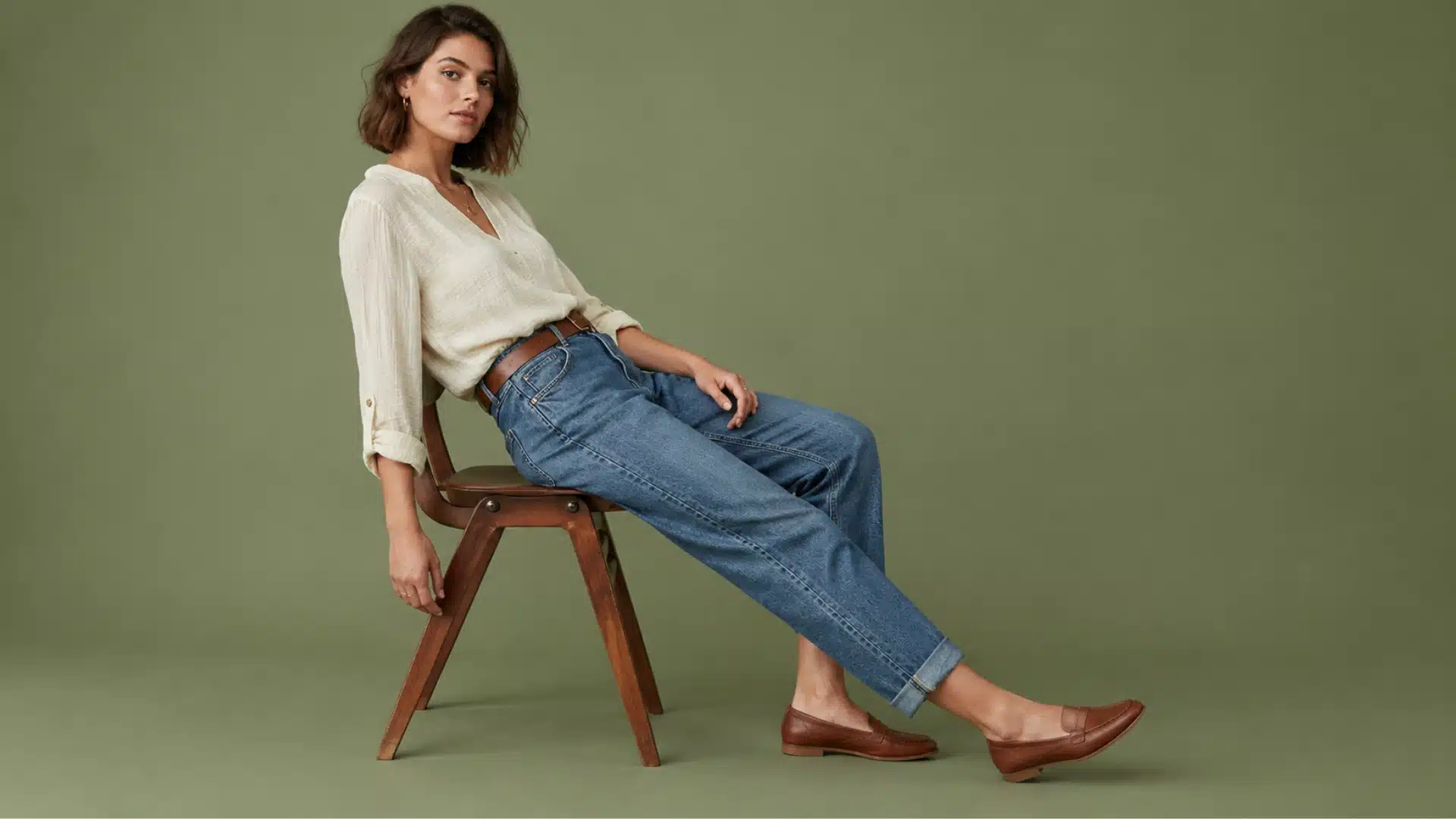
Mom jeans have a high rise, a relaxed fit through the hips and thighs, and often taper slightly toward the ankle.
The name comes from the silhouette popular in the late 1980s and 1990s. What makes them appealing now is comfort.
There’s room to breathe, the high rise is flattering when paired with a tucked top, and the slightly tapered leg keeps the look from feeling sloppy. They’re casual without being careless.
8. Boyfriend Jeans
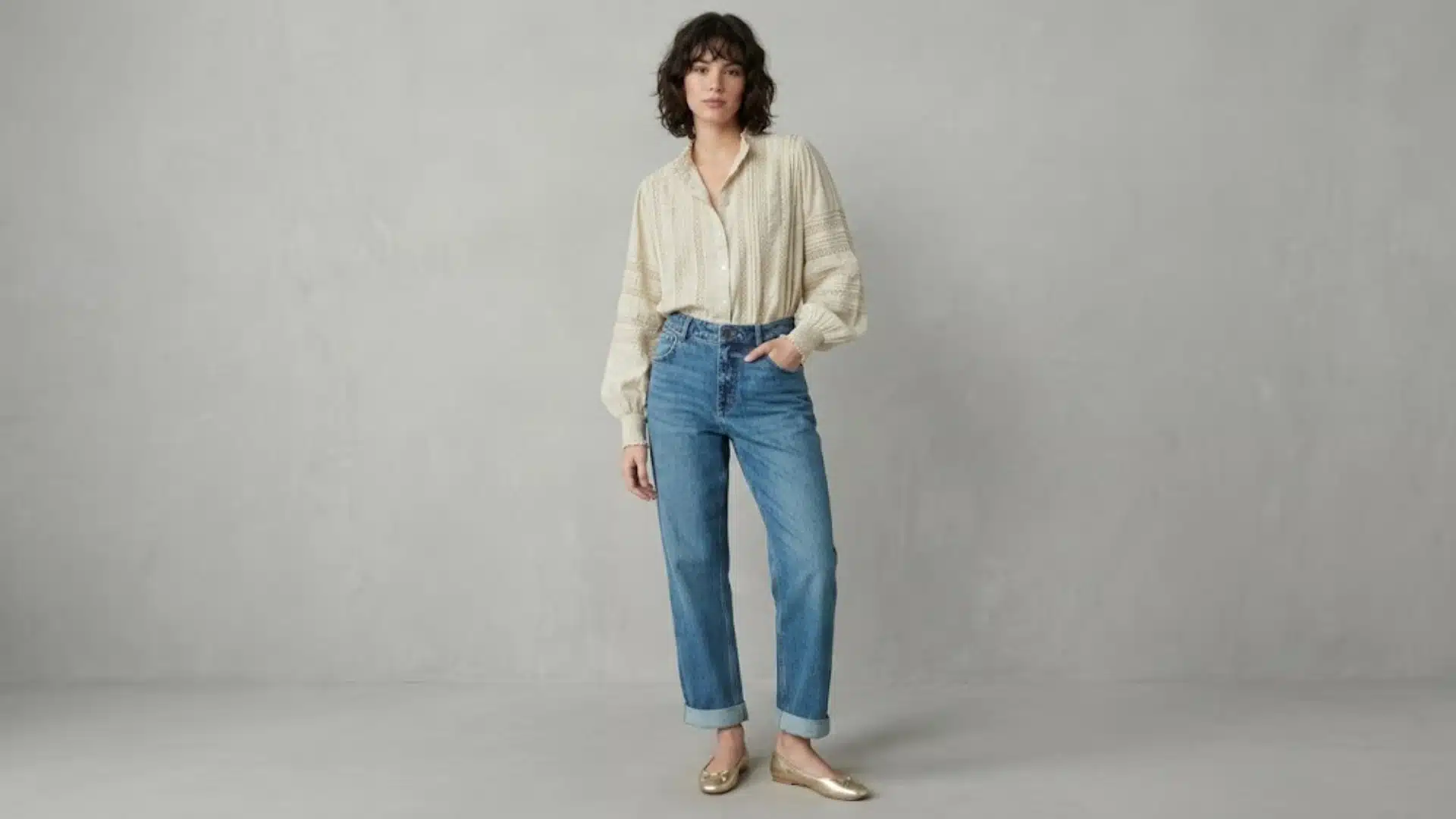
Boyfriend jeans are cut with a relaxed, slightly oversized fit, as though you borrowed them from someone with a larger frame.
They’re typically straight or slightly tapered and sit lower on the hip than mom jeans. The vibe is effortless.
Roll the hem once, add a simple tee and clean sneakers, and you have an outfit that looks easy without looking like you didn’t try.
9. Dad Jeans
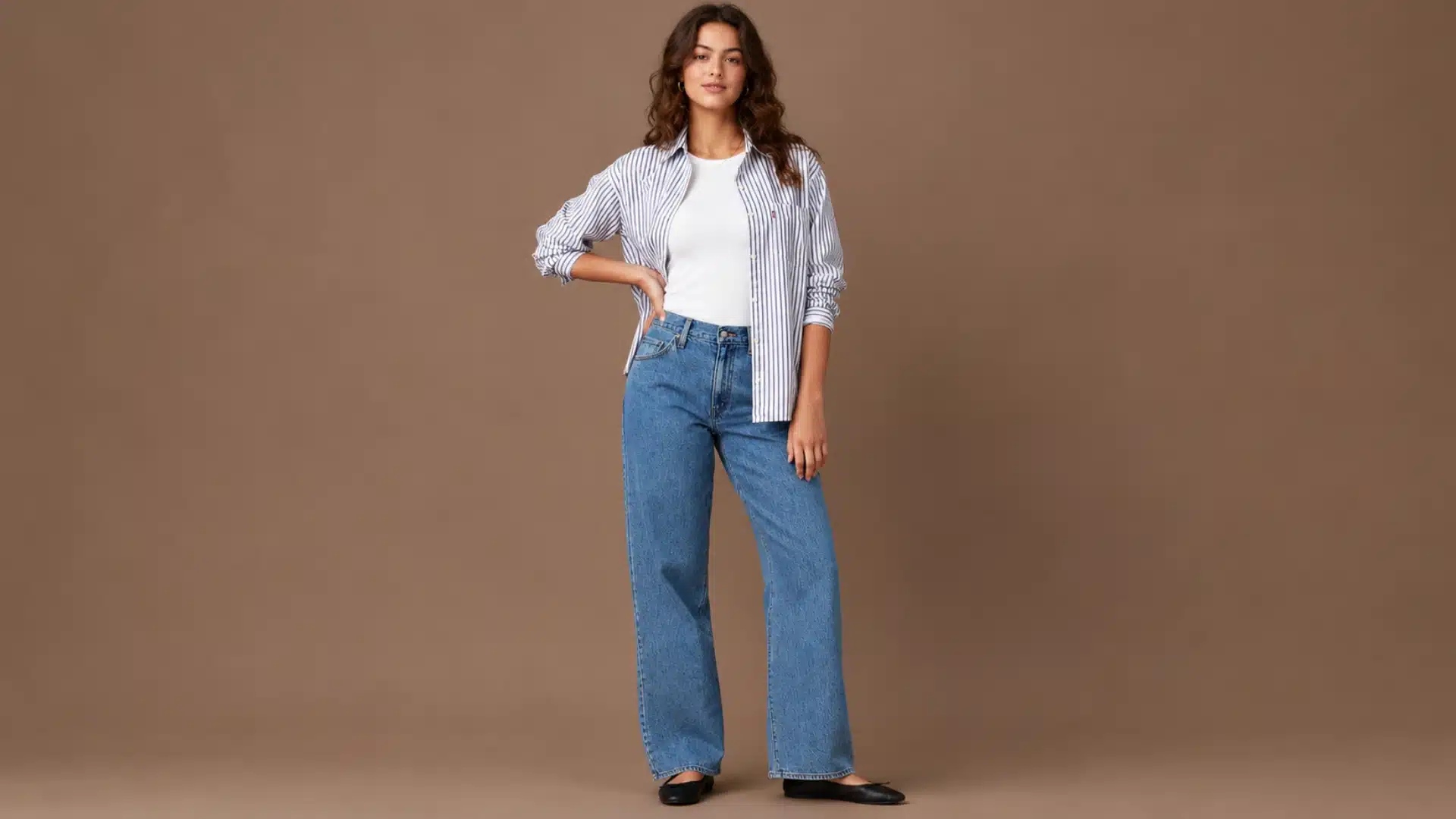
Dad jeans are the baggier sibling of boyfriend jeans. Where boyfriend jeans borrow from a lean frame, dad jeans borrow from a broader one.
More room in the seat and thighs, a higher rise, and usually a straighter leg.
They’re currently having a genuine moment in fashion. The trick is to wear them with something more structured on top, a fitted shirt or a blazer, to keep the silhouette intentional rather than accidental.
10. Barrel-Leg Jeans

Barrel-leg jeans are the shape that has been gaining the most ground recently.
They’re wide through the thigh and seat, then taper in toward the ankle, creating a curved, almost oval silhouette.
The effect is sculptural and relaxed at the same time. They read as contemporary without being trendy in a fleeting way.
They work especially well with simple tops and clean footwear because the leg itself is already making a statement.
11. Cigarette Jeans
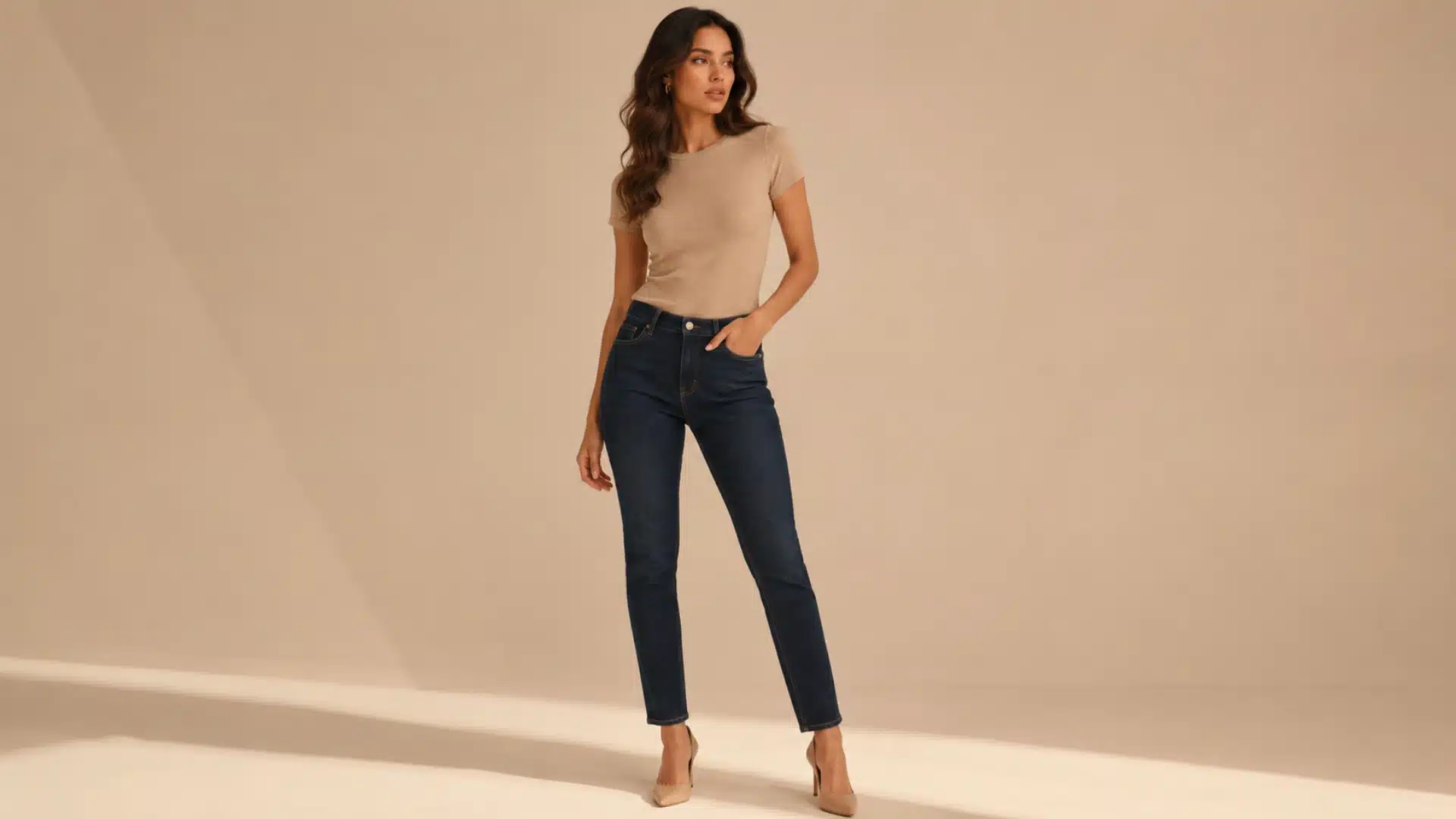 Cigarette jeans are slim and straight, similar to skinny jeans but with less stretch and a slightly looser fit. The leg is narrow but not tight.
They’re the cut that fashion editors and off-duty stylists tend to reach for because the silhouette is precise without being restrictive.
They look particularly good with loafers, ballet flats, and pointed-toe shoes.
If straight-leg jeans feel too roomy and skinny jeans feel too constricting, cigarette jeans are worth trying.
12. Stovepipe Jeans
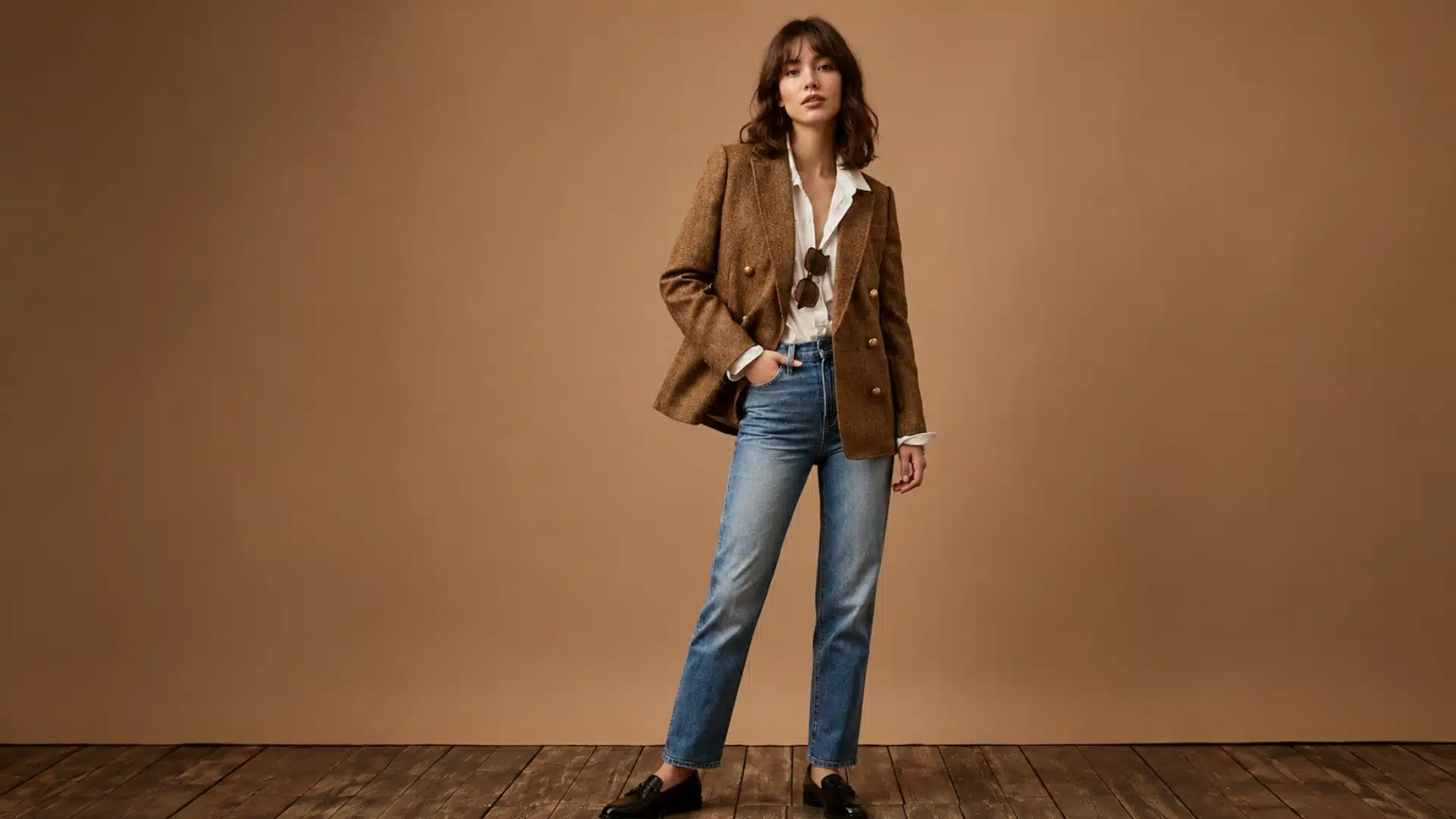
Stovepipe jeans sit between cigarette jeans and straight-leg jeans.
The leg is narrow and consistent from hip to hem, but without the taper of a cigarette cut or the flare of a straight.
They create a long, lean vertical line and are among the cleaner silhouettes heading into 2026. They suit most body types because the consistent width doesn’t interrupt the eye line.
13. Tapered Jeans
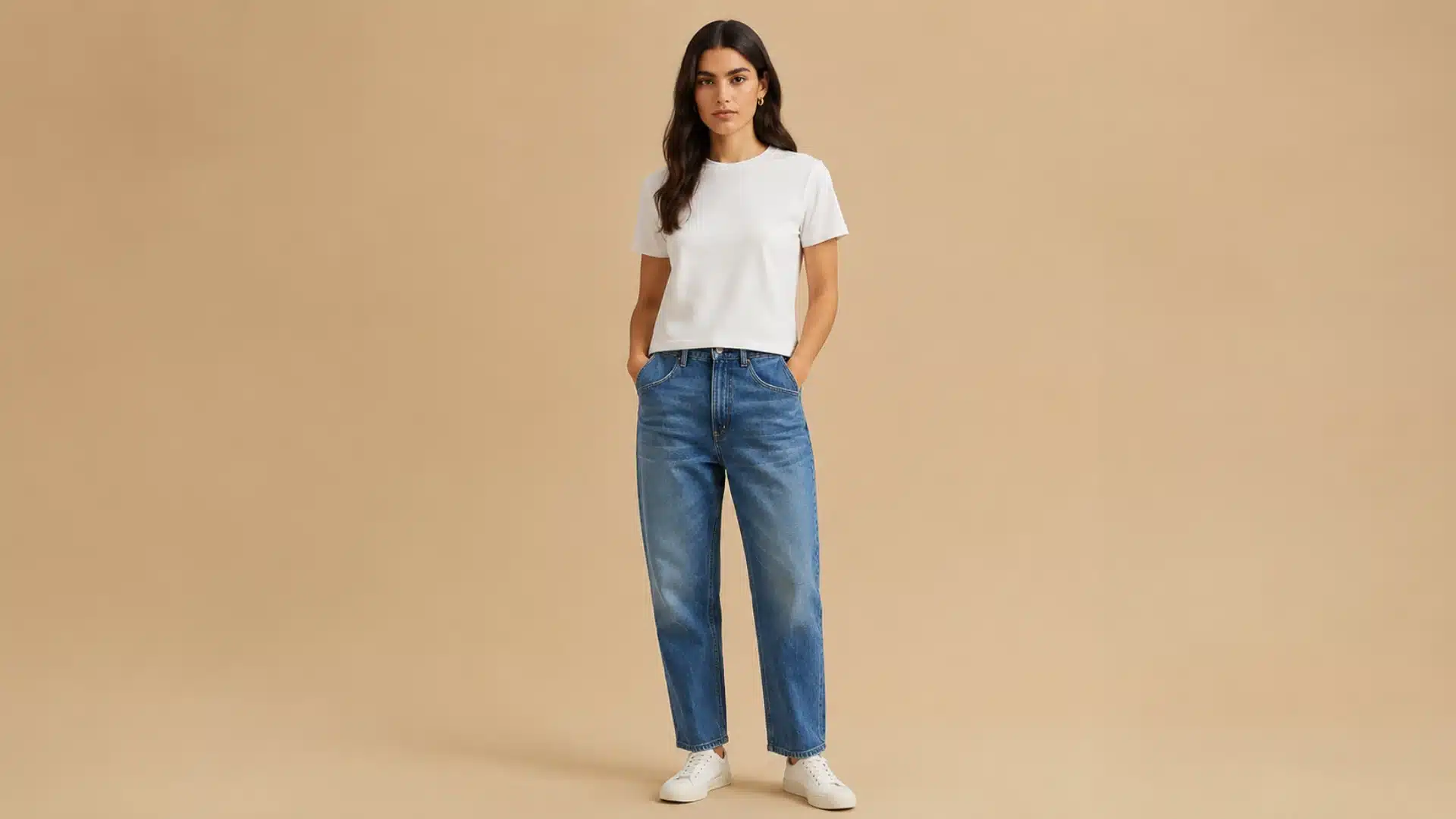
Tapered jeans are roomier through the thigh and gradually narrow toward the ankle. The effect is comfortable up top with a cleaner finish below.
They’re a good alternative to skinny jeans for anyone who wants shape at the ankle without the full-leg tightness.
They pair well with sneakers and ankle boots because the tapered hem naturally draws attention to the shoe.
14. Cropped Jeans
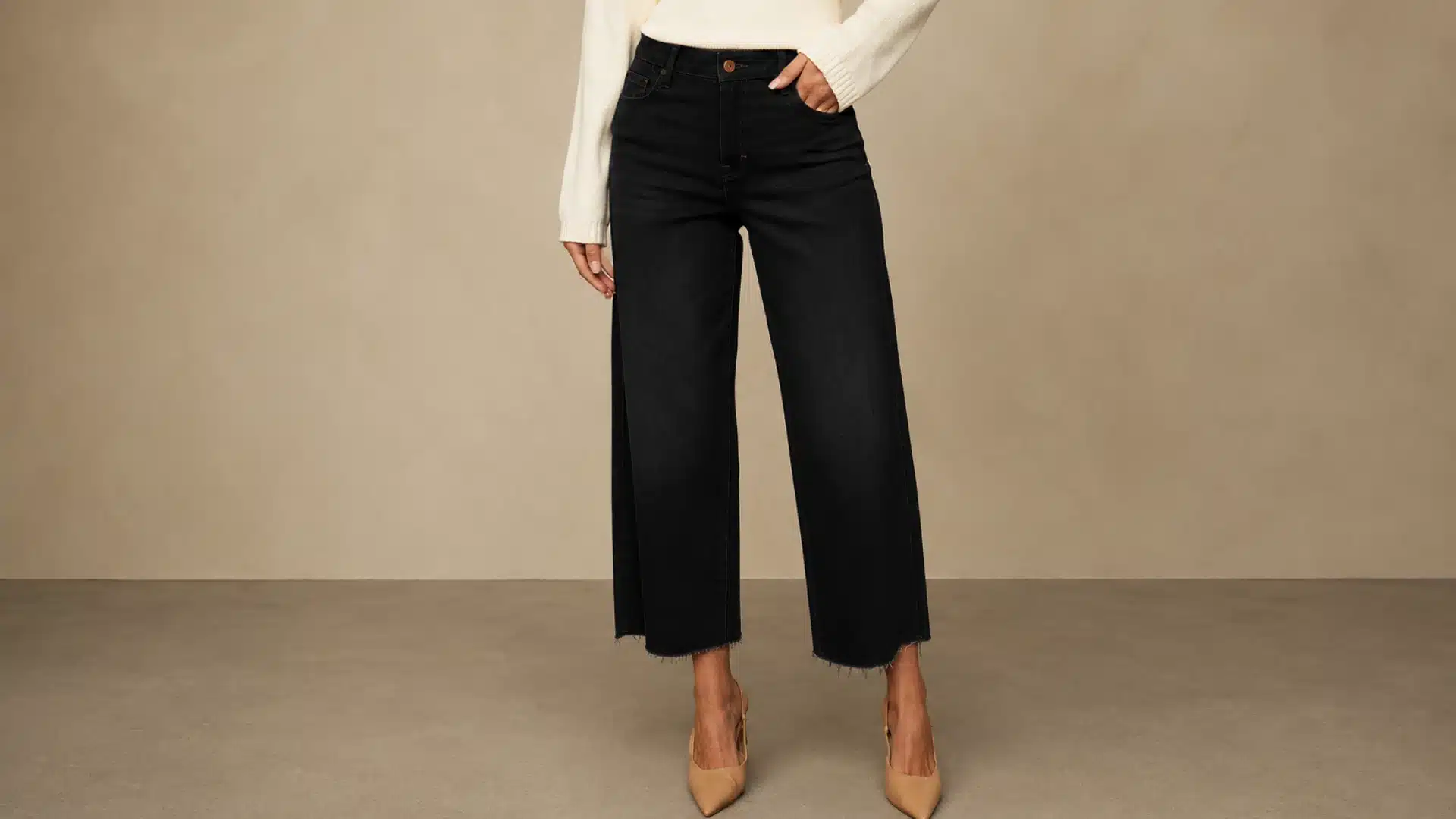
Cropped jeans are cut shorter than a standard inseam, usually ending mid-calf or above the ankle.
The shorter length draws attention to the shoe, which makes it a great choice when footwear is a key part of the outfit.
They come in almost every cut, so a cropped wide-leg is a different look from a cropped skinny, but the shortening principle is the same.
Worth noting that full-length proportions are trending this season, so cropped works best when the rest of the outfit is refined.
15. High-Rise Jeans
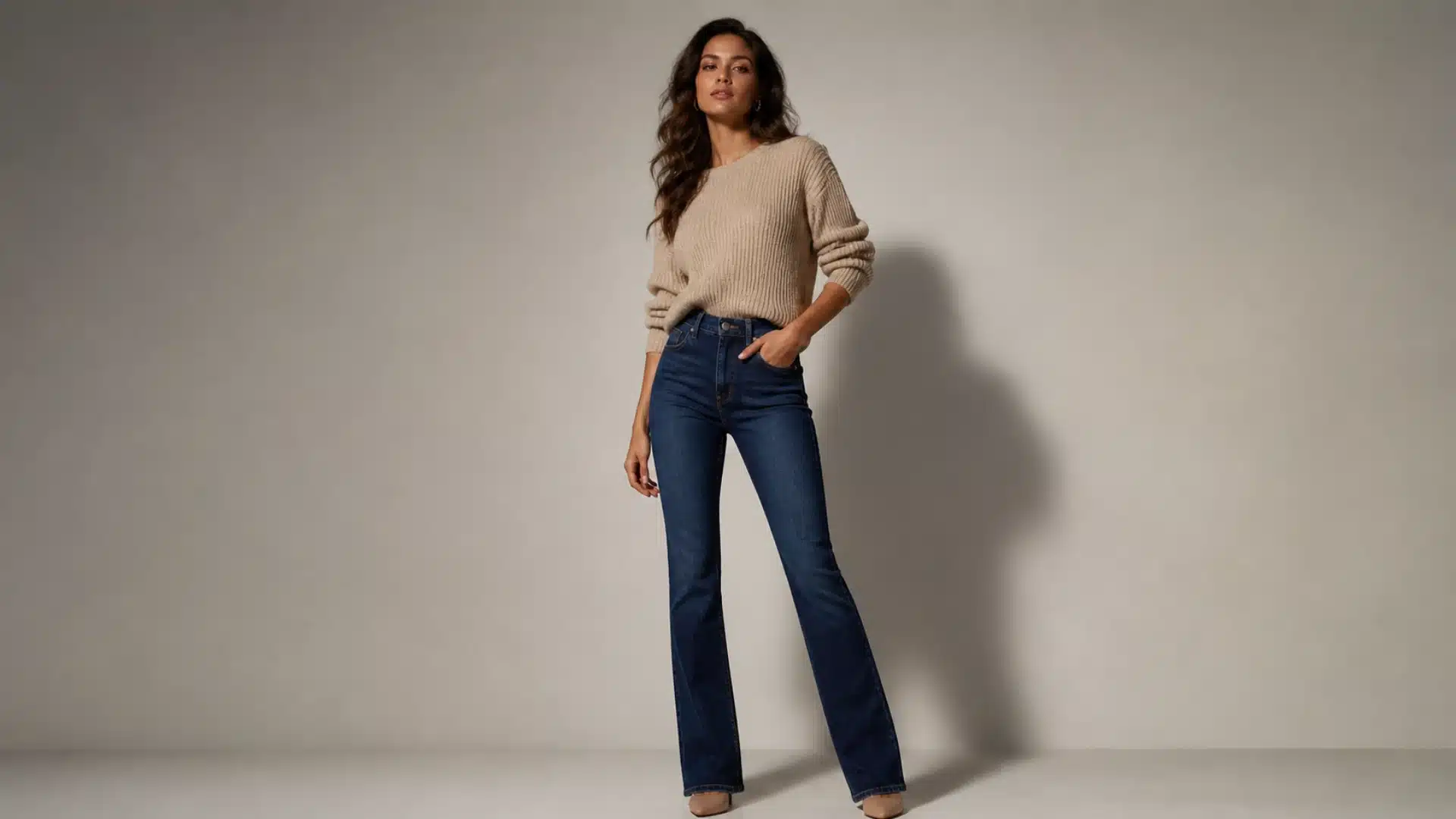
High-rise jeans sit at or above the natural waist, typically at or just above the belly button.
The higher waistband has a few practical effects: it creates definition at the waist, it’s comfortable to tuck into, and it tends to flatter a range of body shapes by pulling in the narrowest point of the torso.
They come in every cut, from straight to wide-leg to skinny, so “high-rise” is a rise description rather than a style on its own.
16. Low-Rise Jeans
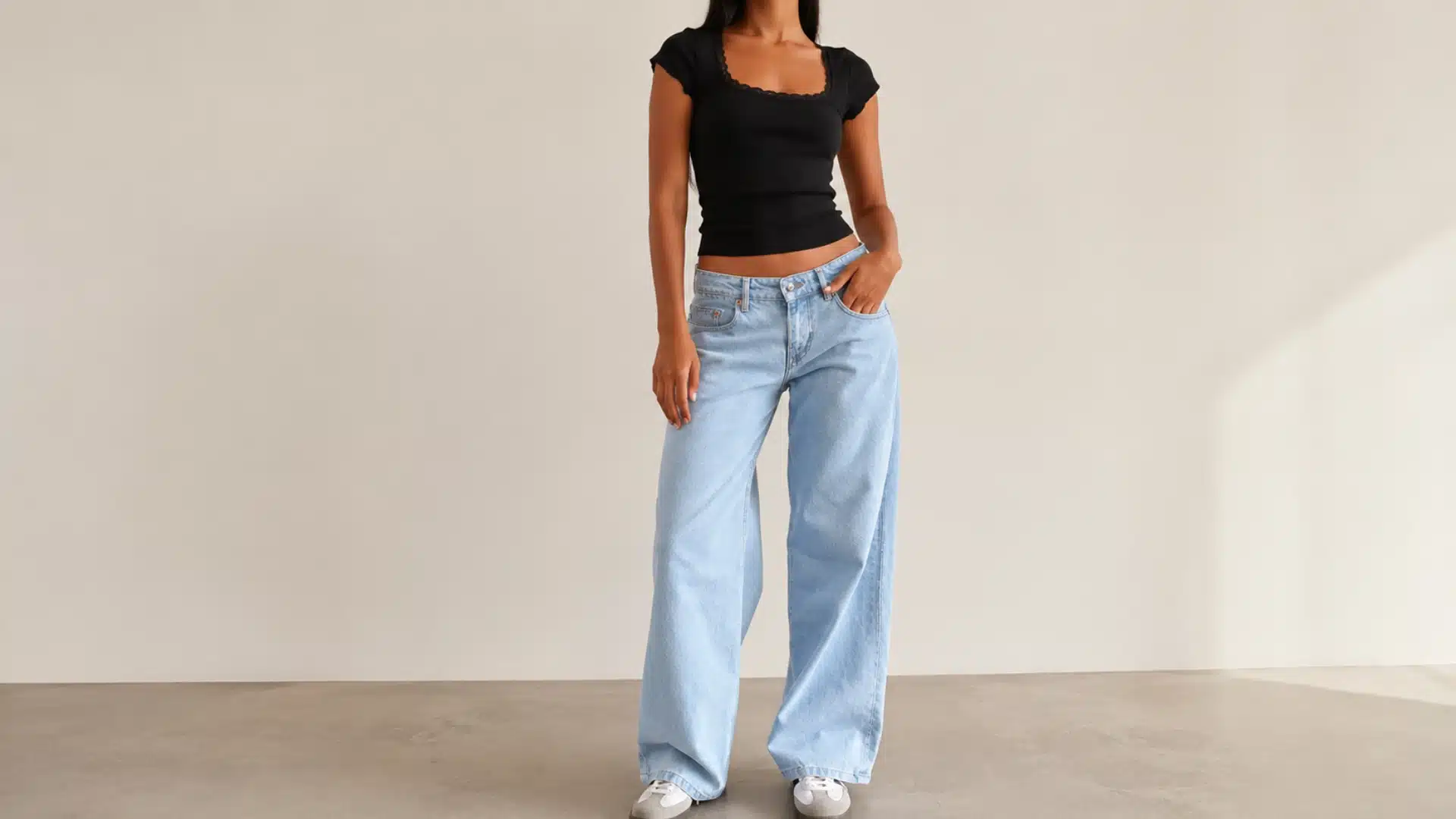
Low-rise jeans sit below the hip bone, a few inches lower than mid-rise.
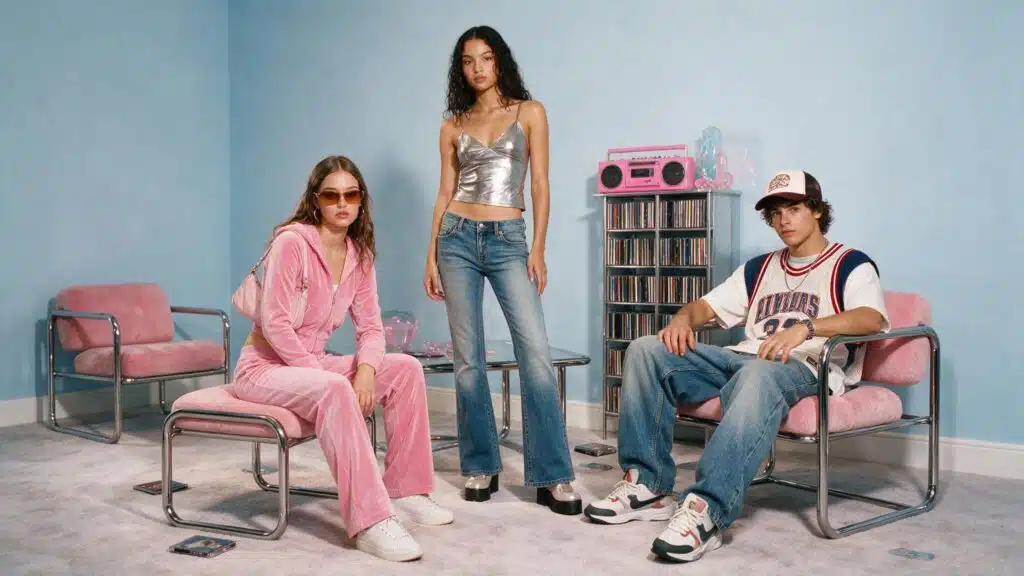
They were the dominant silhouette in the early 2000s and are returning in a slightly softer version now.
The current iteration is less extreme than the ultra-low styles from two decades ago. They work well with longer tops that hit at the hip, creating a balance that feels intentional.
17. Mid-Rise Jeans
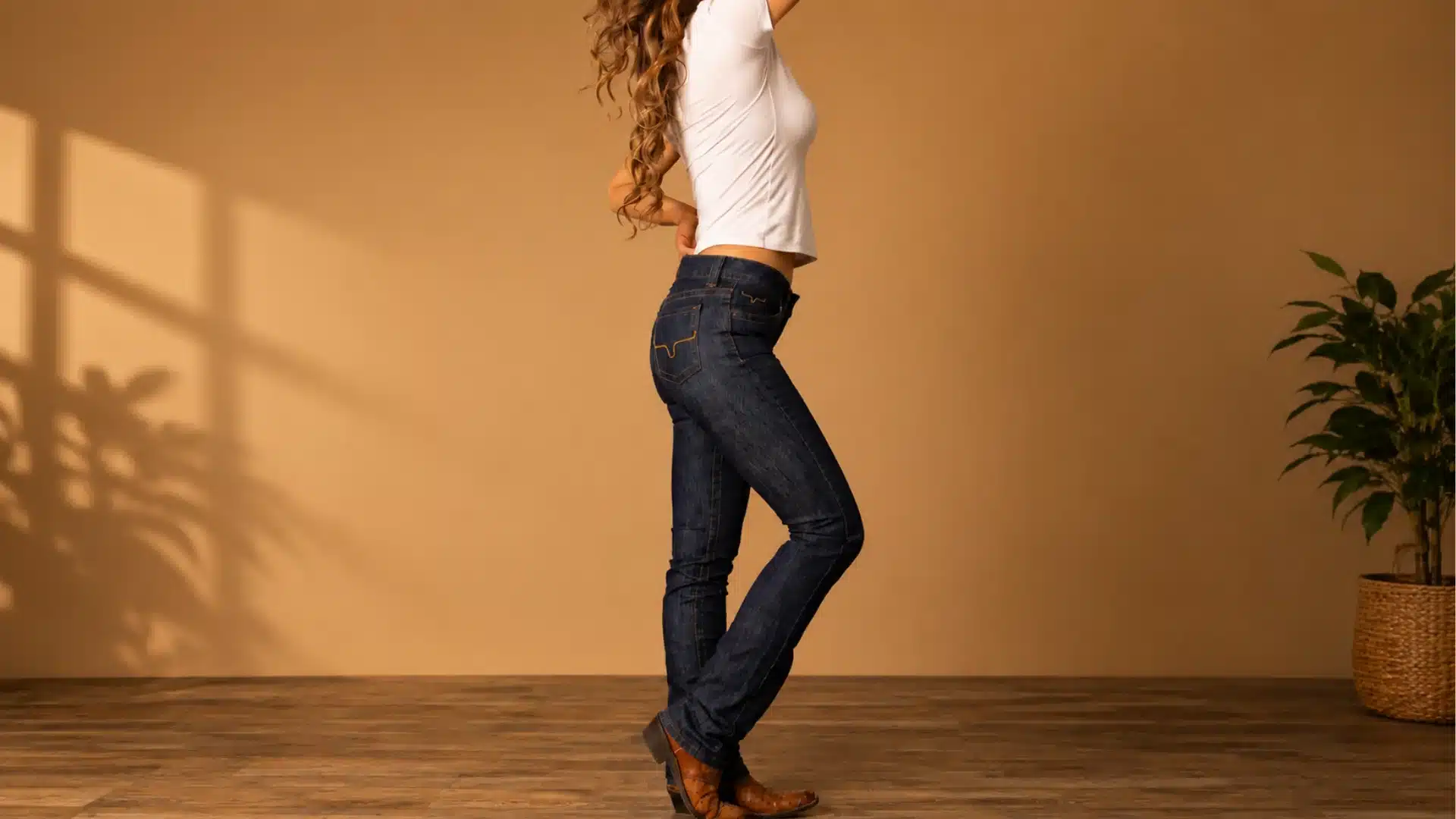
Mid-rise jeans sit between the hip bone and the natural waist.
They’re the most common rise because they work on most body types with minimal adjustment. If you’re not sure where to start, mid-rise is usually the safest entry point for fit.
They feel balanced, comfortable, and easy to style with both tucked and untucked tops, making them a reliable option for everyday casual outfits and long wear throughout the day.
18. Jeggings
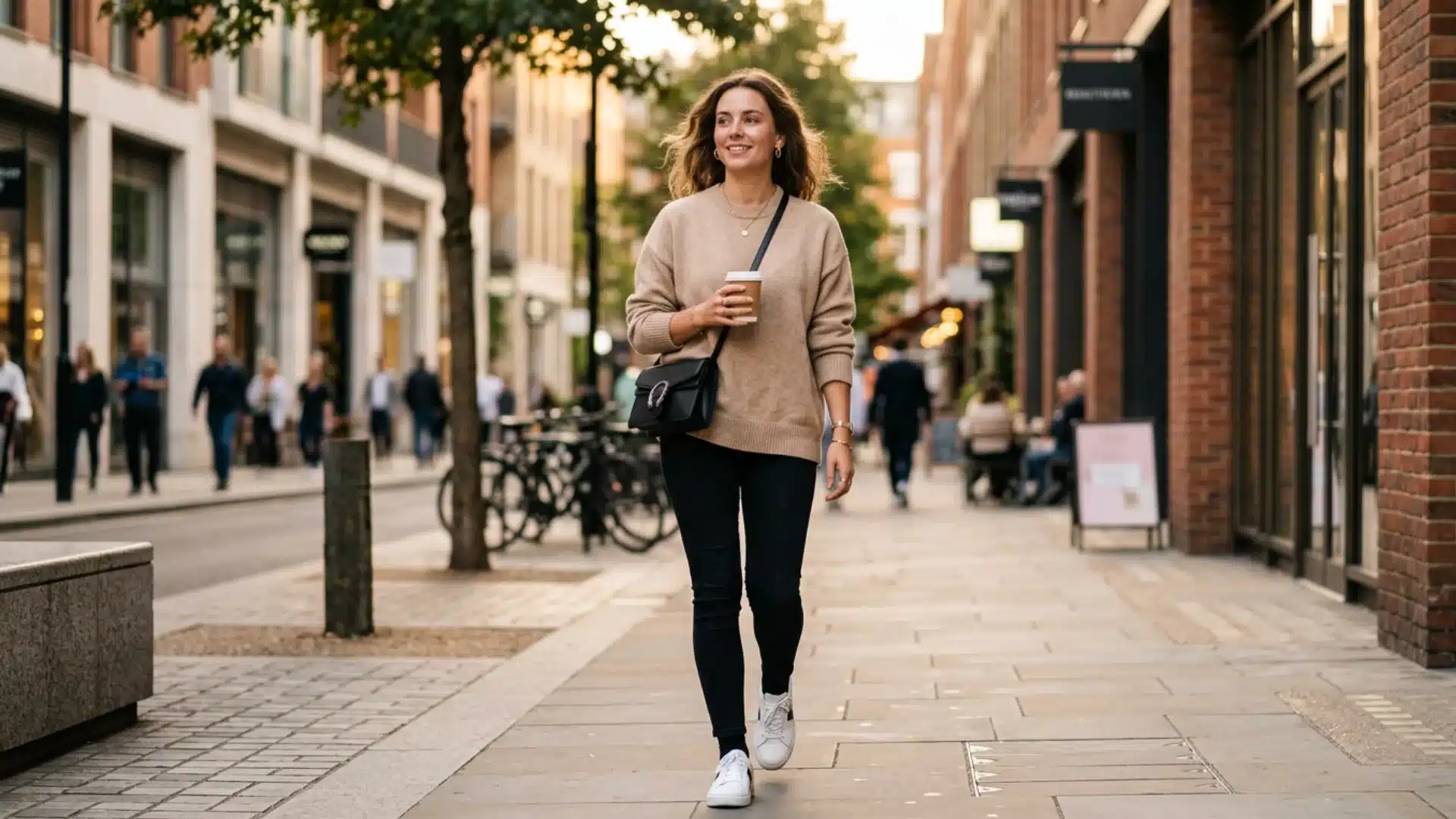
Jeggings are denim-look leggings. They’re made from stretchy fabric that mimics the appearance of jeans but fits like leggings. The comfort level is high.
The styling flexibility is similar to skinny jeans. They work well under longer tops, tunics, and oversized sweaters.
If you’re after the look of fitted jeans without the structure, jeggings are worth a try.
19. Distressed Jeans

Distressed jeans feature intentional wear details: rips, fraying, fading, or a combination of all three. They add a casual, relaxed energy to an outfit.
The level of distress ranges from subtle (a small tear at the knee) to heavy (shredded throughout).
For a polished result, keep the rest of the outfit clean and simple. A well-fitted white shirt and distressed jeans read very differently from a rumpled top and the same jeans.
20. Cargo Jeans

Cargo jeans have functional pockets on the sides of the thighs, inspired by workwear and military clothing.
They add volume to the leg, so they tend to read more casual and street-influenced.
They work well with simple tops because the pockets themselves are a visual detail. A fitted t-shirt or a clean crewneck keeps the outfit from feeling heavy.
21. Brown Jeans
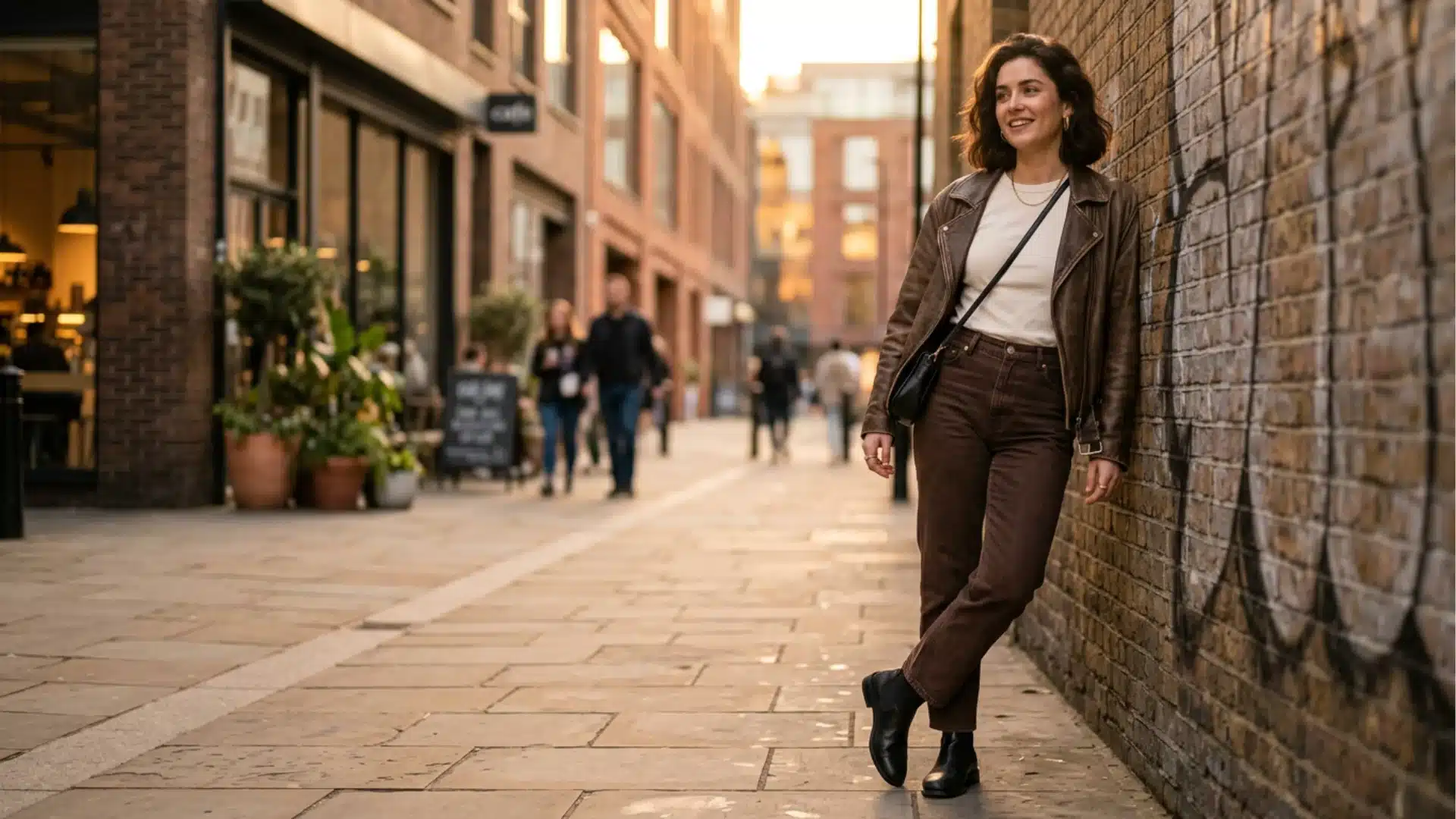
Brown jeans follow the same cuts as standard denim but bring a softer, earthier feel than blue or black denim.
They work especially well in straight, relaxed, bootcut, and wide leg fits because the color already feels grounded and casual.
For easy styling, pair brown jeans with cream, white, black, tan, camel, olive, denim blue, or soft gray.
For a more detailed style guide, the colors that go with brown break down the best shades and outfit combinations for every look.
22. Selvedge Jeans
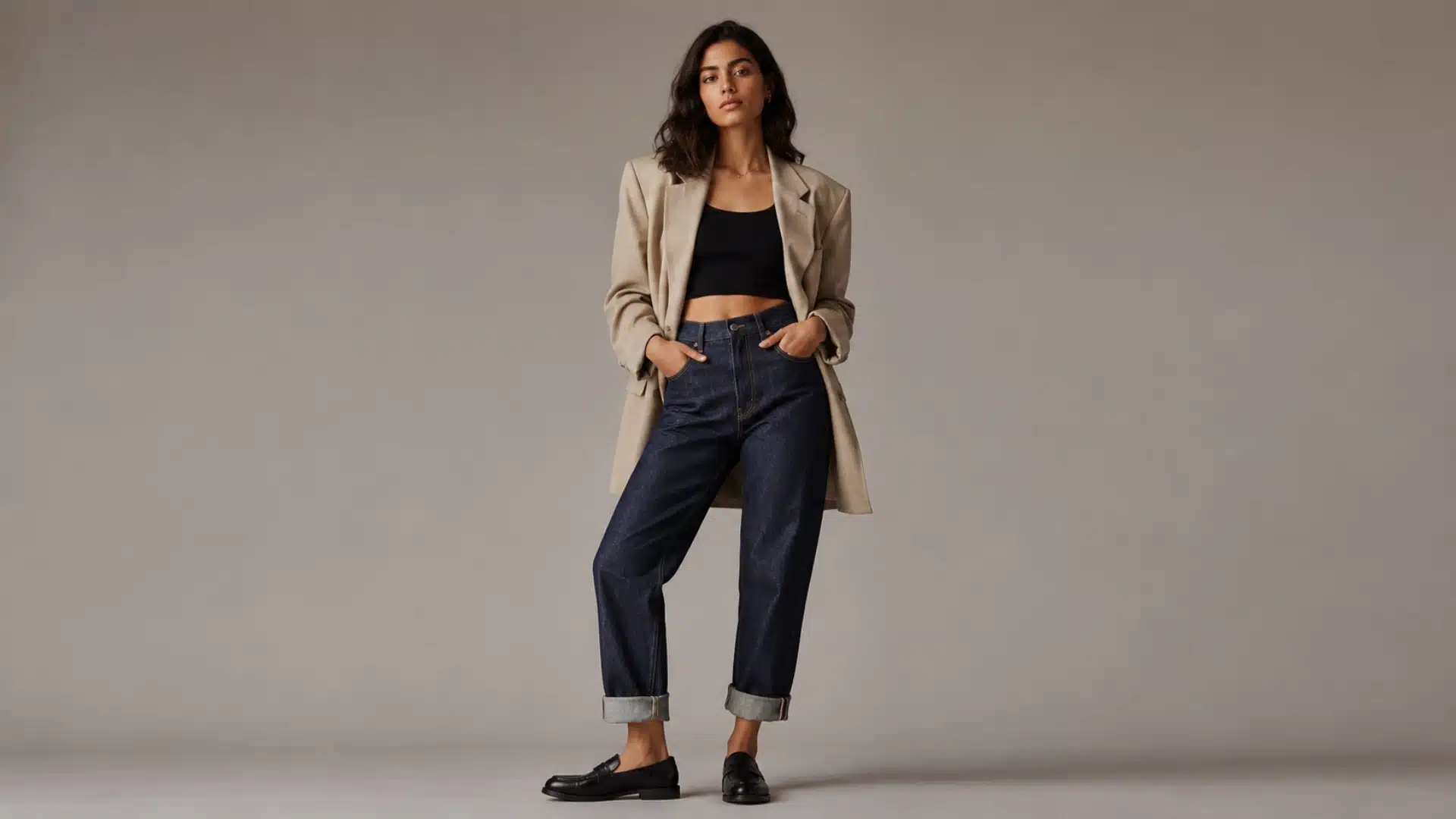
Selvedge jeans are made from denim woven on traditional shuttle looms, which produces a tightly woven edge that resists fraying.
The fabric is usually denser and stiffer than standard denim. They’re typically unlined and unwashed when sold, so they mold to the wearer over time.
The fit is usually straight or slim. They’re a longer investment but tend to last significantly longer than mass-produced denim if cared for properly.
23. Paperbag Waist Jeans
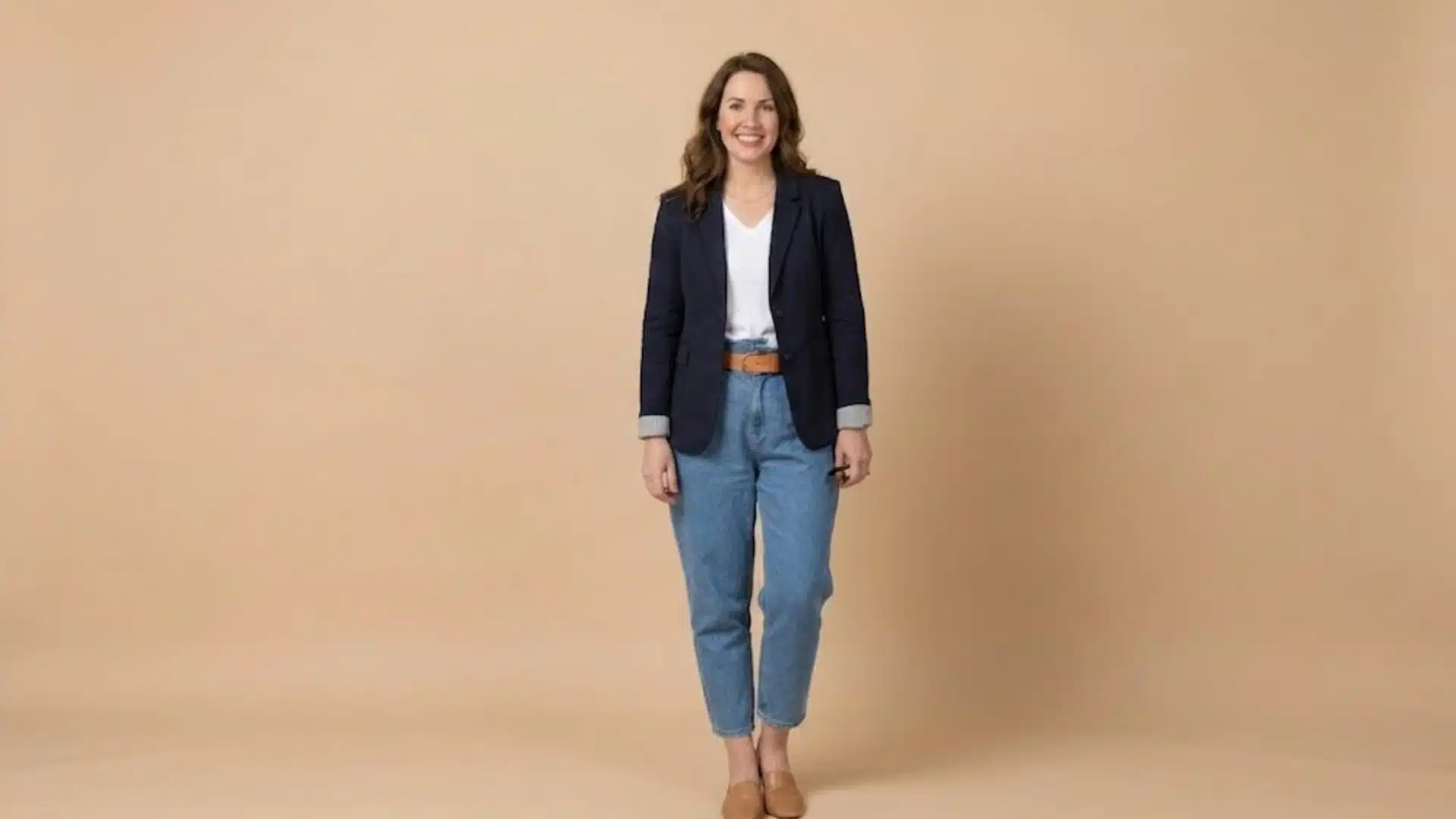
Paperbag waist jeans feature a high rise with a gathered or cinched waistband that often ties at the top for added shape and detail.
The fit feels relaxed through the hips while naturally drawing attention to the waistline.
These jeans pair best with fitted tops, tucked blouses, or cropped knits and work especially well with flat mules, sandals, or low heels for polished everyday outfits.
Denim Washes: How They Change the Look
The cut of the jeans shapes the silhouette. The wash shapes the mood. These are the most common denim washes and what they communicate in an outfit.
- Raw or dry denim: No wash applied after dyeing. The fabric is stiff and dark indigo, and it develops a personal fade pattern with wear. Popular with selvage jeans.
- Dark wash: Deep indigo, minimal fading. Reads as polished and works well in smart-casual or office contexts.
- Medium wash: The most versatile option. Works casually and dresses up without looking overdone.
- Light wash: Faded, relaxed, and best for casual or warm-weather outfits. Less formal than darker washes.
- Acid wash: High-contrast bleached patches. A strong aesthetic choice that reads as deliberate streetwear or vintage-inspired styling.
How to Style Different Types of Jeans by Occasion
Different types of jeans can easily match any occasion when paired with the right tops, shoes, and accessories for a casual, smart, or polished look.
| Occasion | Best Jeans Styles | Easy Styling Ideas |
|---|---|---|
| Everyday casual | Straight-leg, mom, or boyfriend jeans | Pair with t-shirts, sweatshirts, and sneakers. Simple tops and clean shoes work best. |
| Smart casual or office looks | Cigarette, slim-fit, or tailored wide-leg jeans | Dark washes look polished with blazers, neat knits, loafers, flats, or ankle boots. |
| Evening outfits | Skinny, flare, or barrel-leg jeans | Match with fitted or textured tops and heeled shoes for a dressed-up feel. |
| Warm weather | Cropped jeans | Wear with sandals or mules. Light washes, white, cream, and soft neutral shades suit warmer days. |
How to Find Your Correct Jeans Size
Jeans sizing is inconsistent across brands, so it’s worth knowing your actual measurements rather than relying on a number from a previous pair.
- Waist: Measure around the narrowest part of your torso, usually just above the hip bone, while standing. This is your waist measurement in inches.
- Inseam: Measure from the crotch seam to the ankle bone along the inside of your leg. This is the number that determines hem length.
- Hip: Measure around the fullest part of your hips and seat. For relaxed or wide-leg fits, especially, this number is what you want to match to the sizing chart.
Once you know these measurements, comparing size charts becomes much easier when shopping online or trying new brands.
It also helps reduce sizing mistakes, especially with rigid denim or styles that fit differently through the waist, hips, or legs.
Taking measurements before buying jeans can save time, improve comfort, and make finding the right fit far less frustrating overall.
Which Types of Jeans Work for Different Body Shapes
Different types of jeans can highlight body proportions in different ways, which is why one fit may feel more comfortable or flattering than another.
| Body Shape | Best Types of Jeans |
|---|---|
| Curvier hips and thighs | Straight-leg, bootcut, wide-leg jeans |
| Petite frames | Cropped jeans, ankle-length straight jeans, slim-fit high-rise jeans |
| Athletic or straighter frames | Flare jeans, wide-leg jeans, mom jeans, barrel-leg jeans |
| Tall frames | Wide-leg jeans, flare jeans, long inseam denim |
| Soft, natural body types | Relaxed straight-leg jeans, wide-leg jeans, mom jeans |
Common Jeans Mistakes to Avoid While Styling Jeans
Small fit mistakes can change how jeans look and feel. Paying attention to length, comfort, and outfit balance makes denim look more natural and polished.
- Wrong hem length: Jeans that drag too much or sit too high can make the outfit look unfinished.
- Overly tight fits: Denim should feel comfortable while sitting, walking, and moving throughout the day.
- Ignoring body balance: Wide jeans pairedwith oversized tops can sometimes look too heavy without shape.
- Wearing the wrong shoes: Some cuts work better with sneakers, boots, or heels, depending on the hem width.
- Choosing trends over comfort: Popular styles do not always suit every body type or everyday wardrobe.
Conclusion
Finding the right types of jeans becomes much easier once you understand what works with your body shape, comfort level, and everyday style.
Some people prefer the clean structure of straight leg jeans, while others feel more comfortable in relaxed boyfriend jeans, wide leg denim, or classic slim fits.
The best part about denim is that there is no single “correct” style because every type of jeans creates a different look and mood depending on how it is styled.
Trying new cuts, pairing jeans with different shoes, and experimenting with proportions can completely change how an outfit feels.
A great pair of jeans should make getting dressed easier, not more complicated.
What’s your go-to jean style right now? Drop a comment below and share the types of jeans you wear the most or the fit you’re excited to try next.
Frequently Asked Questions
Why Do Some Jeans Feel Stiff At First?
Rigid denim jeans often feel stiff initially because they contain little or no stretch fabric. They usually soften over time as the material adjusts to regular wear.
How Do I Know if Jeans Fit Correctly?
Well-fitting jeans should sit flat at the waist, feel comfortable while moving, and avoid pulling or bunching. Constant adjusting or discomfort usually means the fit is wrong.
Can I Wear Wide-Leg Jeans to the Office?
Wide-leg jeans can work for the office in dark washes or neutral shades. Pair them with blazers, fitted tops, loafers, or heels for a polished appearance.