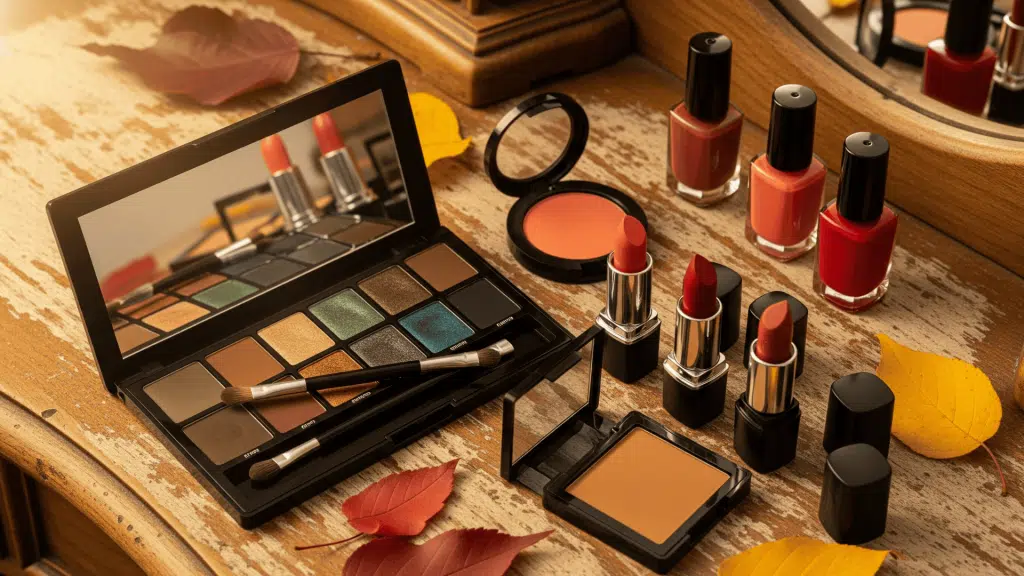

A sun-kissed glow may look effortless, but the products used to achieve it can make a big difference to your skin.
Many people reach for tanning oil hoping for faster results, without realizing how it interacts with UV rays or how easily it can increase the risk of sun damage.
Learning the facts before spending time in the sun helps you tan more safely and avoid common mistakes.
So, what does tanning oil do? It helps speed up the skin’s tanning response during sun exposure while adding moisture and a glossy finish, but it is not a substitute for sunscreen.
This blog post explains how tanning oil works, how to use tanning oil correctly, and why applying sunscreen first is an important step for healthier skin.
What Does Tanning Oil Actually Do?
Tanning oil helps skin darken faster during sun exposure by changing how UV light interacts with the skin’s surface.
The oil reduces light reflection, so more UV rays can reach the skin and trigger melanocytes to produce melanin, the pigment behind a tan.
Most formulas also contain moisturizing oils, fragrance, and sometimes bronzers that give the skin an instant warmer look. However, tanning oil is not the same as self-tanner.
Self-tanner adds color without UV exposure, while tanning oil needs sunlight to work.
SPF tanning oils offer some protection, but many regular tanning oils have little or no. For safer use, apply broad-spectrum sunscreen first, then layer tanning oil on top.
What’s Actually Inside Tanning Oil?
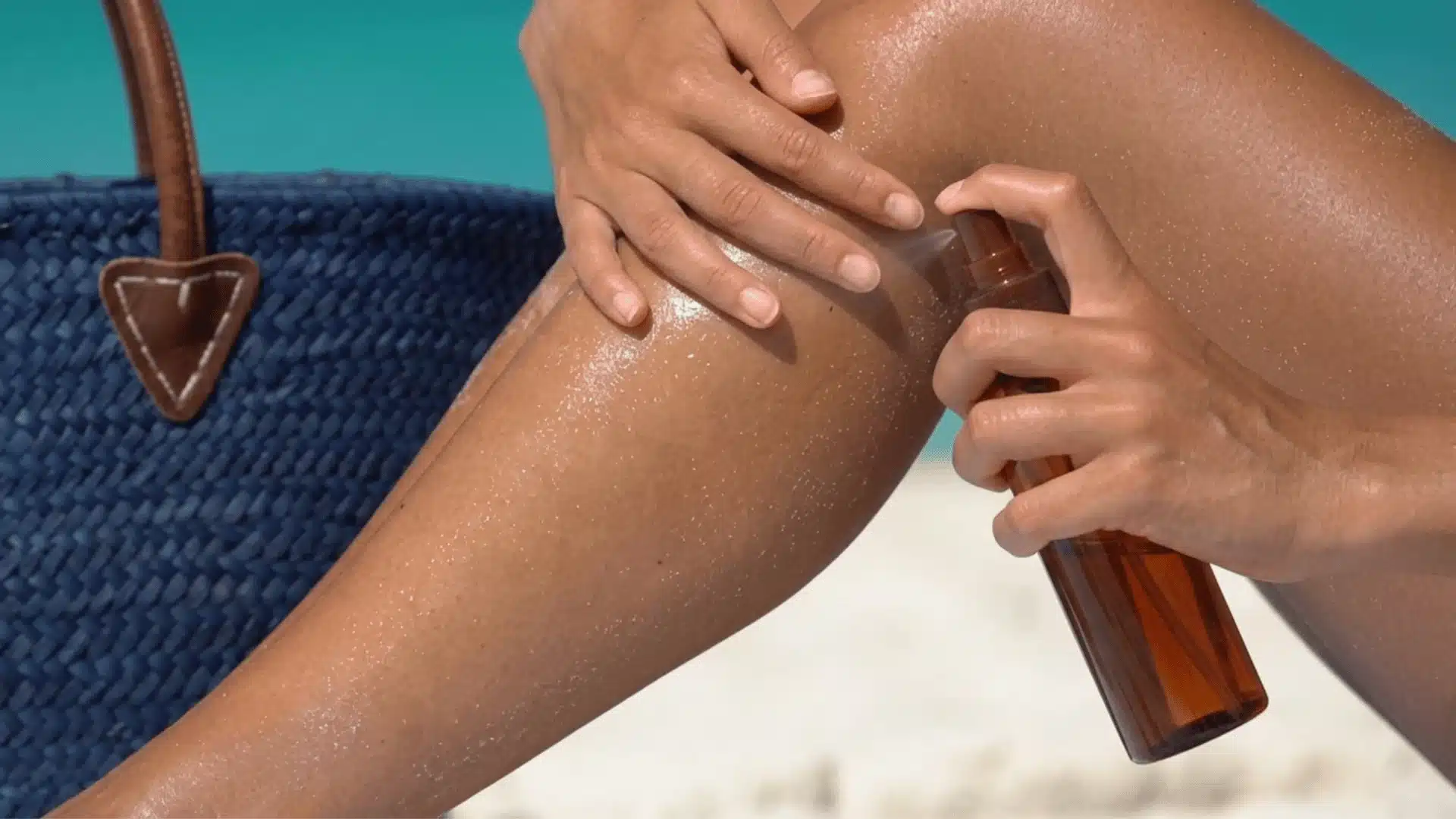
Formulas vary, but most share a similar ingredient framework. Here’s what you’ll typically find:
- Coconut oil: A natural moisturizer that softens skin and adds a subtle sheen. Suits most skin types.
- Avocado oil: Rich in fatty acids; nourishes dry or mature skin during sun exposure.
- Jojoba oil: Lightweight and close in structure to the skin’s own sebum. Good for oilier skin types.
- Vitamin E: An antioxidant that helps reduce surface dryness and supports the skin barrier.
- Carrot seed oil or walnut extract: Natural tanning accelerators believed to support melanin stimulation.
What to avoid: mineral oil and petrolatum, which can clog pores, and oxybenzone, linked to skin irritation and environmental concerns.
How to Use Tanning Oil the Right Way
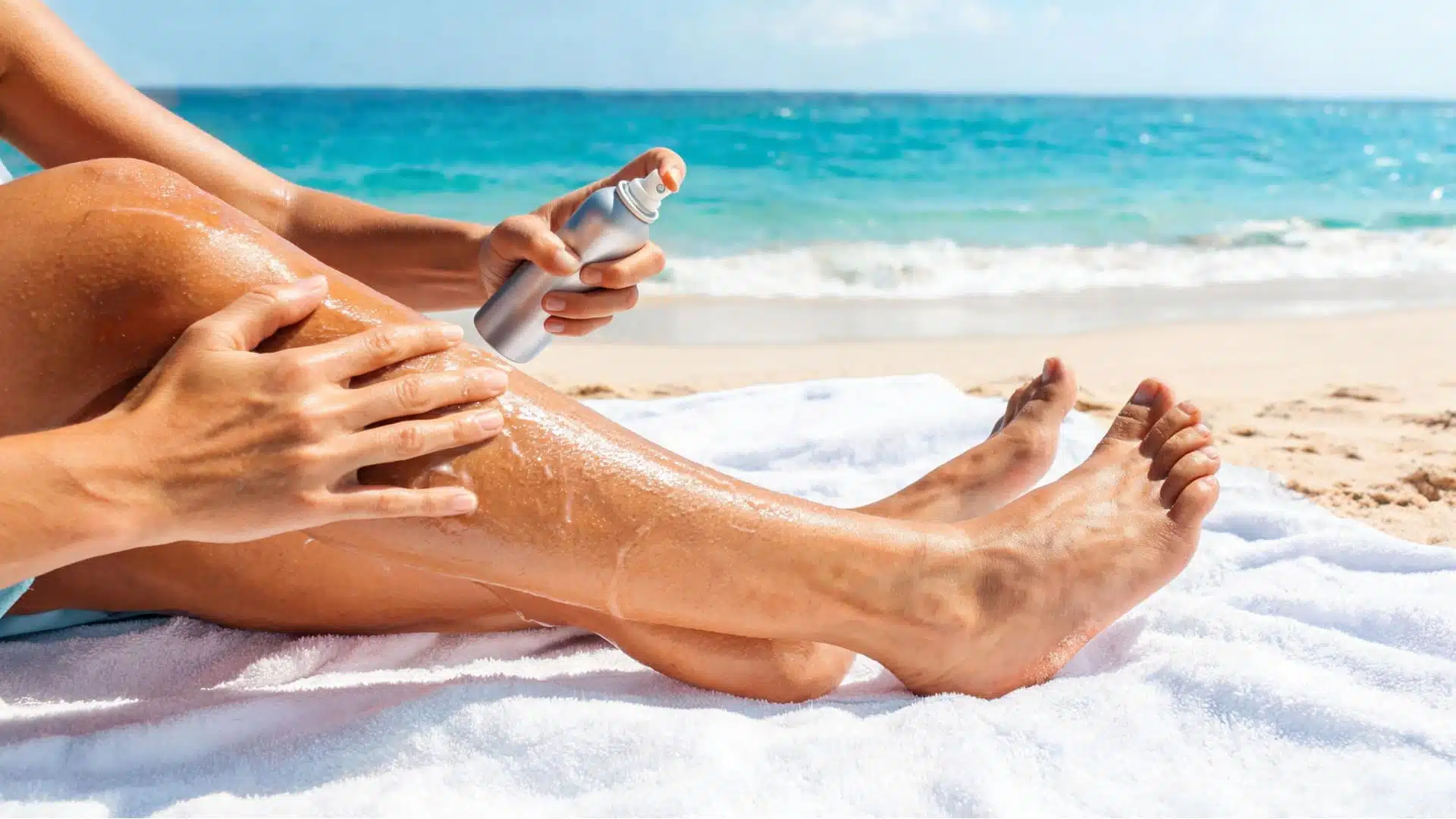
Getting the most from tanning oil comes down to preparation, timing, and aftercare. Follow the steps below in order, and your skin will respond better from the first session.
1. Before You Go Outside
Exfoliate the day before your session, not the same day. A light scrub removes the dead skin cells that create uneven tanning.
Fresh skin picks up color more smoothly and holds it longer. Drink water before heading out. Hydrated skin tans more evenly.
Choose your oil based on skin type: lightweight jojoba for oilier skin, avocado or coconut for drier skin.
2. During Sun Exposure
Rotate your position every 15 to 20 minutes so color develops evenly on all sides.
Limit sessions to 60 minutes of direct sun and avoid the window between 10 AM and 3 PM when UV is at its strongest.
Reapply both sunscreen and tanning oil every two hours, and immediately after swimming or heavy sweating.
Keep water nearby and sip regularly, as sun exposure dehydrates faster than most people expect. If skin feels hot, tight, or red, get out of the sun immediately.
Disclaimer: Sun exposure carries real risks, including sunburn, premature aging, and increased risk of skin cancer. Consult a dermatologist if you have concerns about UV sensitivity.
3. After Tanning
Rinse with lukewarm water, not hot. Heat strips natural oils and causes color to fade faster.
Apply a gentle moisturizer while the skin is still slightly damp to lock in hydration and help the tan settle evenly.
Skip exfoliation for 24 to 48 hours so the surface color has time to develop fully. Keeping skin moisturized in the days after makes a visible difference in how long the color holds.
Tanning Oil vs. Sunscreen: What’s the Difference?
Sunscreen reduces the amount of UV rays reaching your skin. Tanning oil does the opposite by drawing more UV in to speed up color development. Read more about whether SPF prevents tanning to understand how both interact on the skin.
| Tanning Oil | Sunscreen | |
|---|---|---|
| Primary goal | Accelerate tanning | Block / absorb UV rays |
| UV effect | Increases UV absorption | Reduces UV penetration |
| SPF | None, or very low (4-15) | SPF 30+ recommended |
| Skin protection | None | Yes (broad-spectrum) |
| Apply order | Second, over sunscreen | First, directly on the skin |
| Reapply | Every 2 hours / after water | Every 2 hours / after water |
Should You Put Sunscreen or Tanning Oil on First?
Sunscreen goes on first. Always. Sunscreen needs direct skin contact to form a protective film, and applying tanning oil first prevents it from forming a proper barrier.
- Start with clean, dry skin: Product residue and sand affect how evenly sunscreen absorbs.
- Apply a broad-spectrum SPF 30 or higher: Cover all exposed skin generously.
- Wait 20 minutes: Sunscreen needs time to set before oil goes on top. Most people skip this step.
- Apply tanning oil on top: Pat gently, as rubbing aggressively can displace the sunscreen underneath.
- Reapply both after swimming or sweating: Oil reduces sunscreen’s water resistance. After water, restart the sequence.
Think of it this way: sunscreen is the foundation, and tanning oil is the finish. Skip the foundation, and the rest doesn’t hold. A lot of people rush this step or skip the 20-minute wait entirely, and that’s where protection breaks down.
Is Tanning Oil Safe?
The concern isn’t toxicity, but it’s increased UV exposure, which is the primary driver of long-term skin damage.
The American Academy of Dermatology notes that a tan is a UV stress response, not a sign of healthy skin.
Every time melanin production ramps up, it’s the body reacting to damage, not building a healthy glow.
For fair skin or anyone who burns easily, tanning oil considerably raises the risk of sunburn without a proper SPF applied first.
For people managing hyperpigmentation, the added UV exposure can worsen existing dark spots and slow any progress from a brightening routine.
Conclusion
Understanding what tanning oil actually does changes how you reach for it. It’s not a replacement for sunscreen, and it’s not a shortcut to skip the waiting and layering.
It’s a product that speeds up a process your skin was already going to undergo, and it works better when your skin is prepared, protected, and well hydrated.
The twenty minutes between applying SPF and applying oil aren’t wasted time.
They’re the part that makes the rest of it work. Go in with that sequence in place, limit your session, and your skin will respond better.
Have you ever used tanning oil with or without sunscreen and noticed a difference? Drop your experience in the comments below.
Frequently Asked Questions
Can I Use Tanning Oil on My Face?
Most Tanning Oils are Too Heavy for Facial Skin. Look for Non-Comedogenic or Face-Safe Formulas, or Mix One Drop into Your Regular Moisturizer. Always Patch Test First.
Does Tanning Oil Work in a Tanning Bed?
Only if the Formula is Labeled for Indoor Use. Standard Outdoor Tanning Oils Can Damage Acrylic Tanning Bed Surfaces and Should Not Be Used Indoors.
How Soon Will I See Results After Using Tanning Oil?
Many people notice a difference after one 30- to 60-minute session. A deeper, lasting tan typically builds over several sessions across one to two weeks.