Finding a small bump on the neck can leave you wondering what it actually is and why it appeared. I have seen how confusing these skin changes can feel, especially when several types of growths look alike.
Warts on the neck are often linked to HPV, but understanding the reason behind them requires knowing more than just their appearance.
This information covers what causes a wart, how neck warts may look, the common types, and the signs that can help identify them correctly.
It also discusses available treatment options and when professional advice may be useful. Learning the basics can help you make better decisions about any unusual neck growth and understand what steps to consider next without jumping to conclusions.
What are Warts on the Neck?
A wart is a noncancerous skin growth caused by certain types of human papillomavirus, or HPV. The virus infects the outer layer of skin and triggers extra cell growth, which produces a raised or textured bump instead of smooth skin.
One type, the filiform wart, commonly develops around the face, chin, eyelids, lips, and neck. These growths often have a narrow base and a longer tip, which sets them apart from the firmer, rounder warts typically seen on the hands.
HPV is a large family that includes dozens of distinct types, and the strains behind genital HPV are not the same ones that cause ordinary skin warts.
When a neck growth is hard to identify from appearance alone, a visual examination by a dermatologist is often the fastest way to get a clear answer.
What Causes a Wart on the Neck?
A wart on the neck develops when certain HPV strains infect the outer layer of skin. Several factors can make it easier for the virus to enter or spread.
- HPV infection: Human papillomavirus (HPV) is the main cause of warts. The virus enters through tiny cuts, scratches, or weak areas in the skin and triggers extra skin cell growth.
- Skin irritation or small injuries: Shaving cuts, scratching, or frequent friction around the neck can create openings where HPV may enter.
- Direct skin contact: Touching a wart on another person or coming into contact with infected skin can spread the virus.
- Sharing personal items: Using shared razors, towels, or grooming tools may increase the chance of transferring HPV.
- Picking or scratching existing warts: Touching or damaging a wart can spread the virus to nearby skin areas.
- Weakened immune response: A lower immune response may make it harder for the body to fight HPV and clear wart growths.
Understanding these causes can help reduce exposure risks and prevent warts from spreading. However, the presence of a neck bump does not always mean it is a wart, so proper identification matters.
What Do Warts on the Neck Look Like?

Appearance varies quite a bit depending on the wart type, natural skin tone, size, and exact location on the neck. Recognizing these differences is a useful first step before deciding on next steps.
1. Filiform Warts
Filiform warts are narrow, thread-like or finger-shaped projections that tend to grow quickly around the face and neck.
They may be flesh-colored, tan, brown, or slightly darker than the surrounding skin, and they often stand out because of their pointed or branching shape.
2. Flat Warts
Flat warts are small, smooth, and only slightly raised above the skin surface, which sometimes leads to them being mistaken for small, flat moles.
They frequently appear in clusters and can spread across areas that are shaved regularly, since the razor can nick the skin and carry the virus to nearby spots.
3. Common Warts
Common warts have a firmer, rougher, or grainy surface compared to flat or filiform types. They show up most often on the hands and fingers, but they can develop on the neck once the virus spreads from another part of the body.
Texture and shape offer helpful clues, but they are not a substitute for a proper diagnosis, particularly when a growth looks unusual or changes over time.
Is It a Neck Wart or Another Skin Growth?
Not every raised bump on the neck is a wart. Skin tags, seborrheic keratoses, molluscum contagiosum, and even a developing cyst can all resemble a wart closely enough to confuse.
| Growth | Typical Appearance | Common Clue |
|---|---|---|
| Filiform wart | Thin or finger-like | Rough projections |
| Skin tag | Soft and hanging | Attached by a small stalk |
| Seborrheic keratosis | Waxy or stuck-on | More common with age |
| Molluscum contagiosum | Smooth and rounded | Small central indentation |
| Mole | Flat or raised | Usually evenly colored |
Photographs and online descriptions cannot confirm which of these a person actually has. A lesion that changes shape, bleeds, causes pain, color shifts, or grows rapidly needs a professional look rather than a guess based on appearance alone.
Are Warts on the Neck Contagious?
Yes, Warts spread through direct contact with the growth itself and through nearby skin that has been damaged or irritated. Scratching, shaving, or picking at a wart can carry the virus to nearby, untouched areas.
This is why a single wart sometimes turns into several, a pattern worth knowing since it also explains why bumps come back after certain removal methods.
- Avoid cutting or picking at the growth
- Do not shave directly over it
- Wash your hands after touching it
- Do not share razors, towels, or grooming tools
- Keep personal grooming tools clean
Contact with HPV does not guarantee that a visible wart will develop, since the immune system clears many exposures before a growth ever forms. Even so, these habits reduce the odds of passing the virus to new areas of skin or to another person.
How are Neck Warts Diagnosed?
A dermatologist can often identify a wart by examining its surface, shape, color, and growth pattern during a routine office visit.
Dermoscopy, a handheld magnifying tool, may help the clinician get a closer look at the surface details that distinguish a wart from other growths.
A biopsy may be recommended when the growth changes quickly, resembles another skin condition, looks like an open sore, bleeds without a clear reason, or fails to respond as expected to treatment.
This step is not routine for every wart, but it gives a definitive answer when the appearance is unclear.
Most appointments focus on a visual exam first, with additional testing reserved for cases where the diagnosis is not obvious from the surface alone.
How to Get Rid of Warts on the Neck Safely
Treatment depends on the diagnosis, the wart’s position, its size, how many growths are present, and the person’s overall health. A dermatologist typically weighs these factors before recommending a specific approach.
1. Cryotherapy

Cryotherapy uses liquid nitrogen to freeze the wart, causing the treated tissue to blister or form a crust before it falls off. Most people heal within a few weeks, although temporary redness or mild discomfort is common.
More than one appointment may be needed because a single freezing session does not always remove the wart completely.
2. Electrosurgery and Curettage
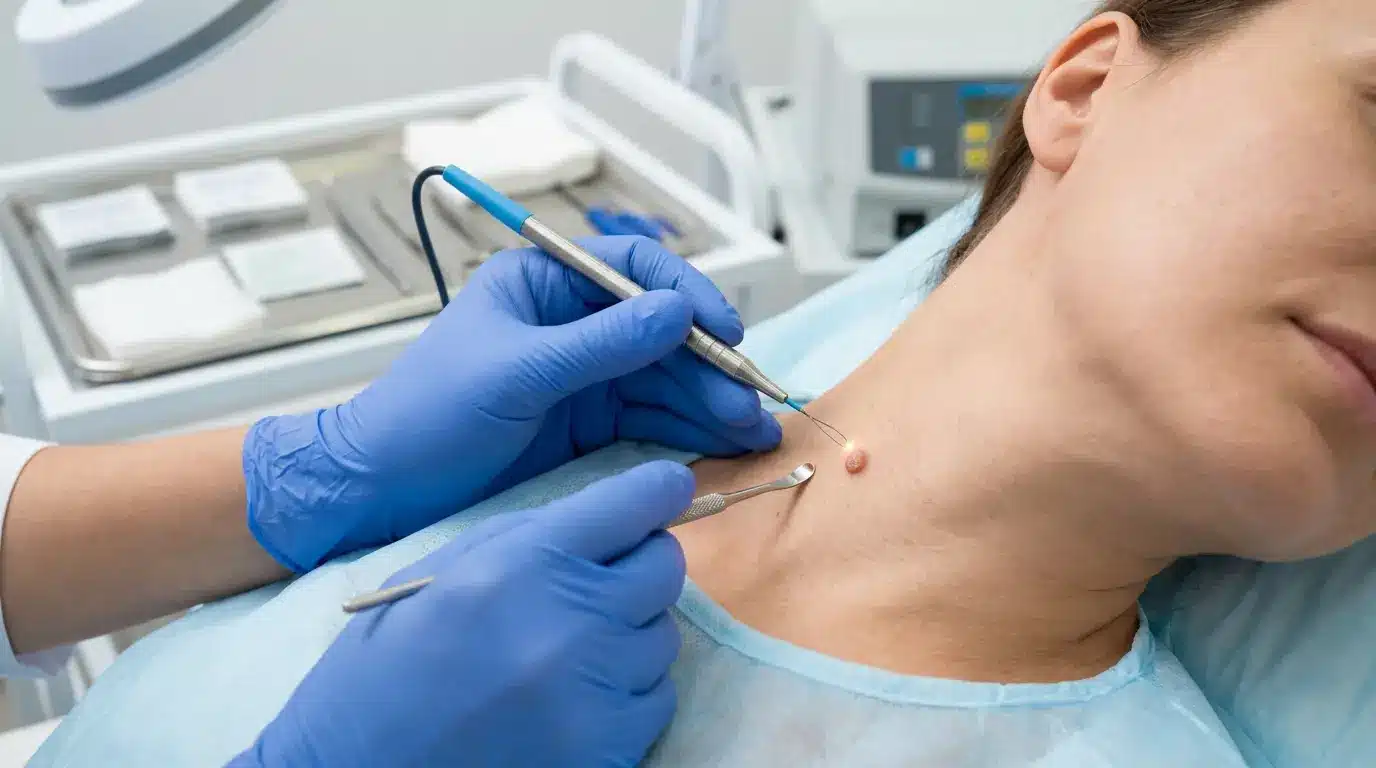
This procedure begins with a local anesthetic to numb the area. The dermatologist then burns the wart with an electric current and carefully scrapes away the remaining tissue.
Mild soreness, temporary discoloration, minor bleeding, or scarring can occur, so this method is generally reserved for larger or persistent warts.
3. Surgical Removal

Some filiform warts can be removed through a simple surgical excision, providing immediate removal in a single visit.
Because the neck is a visible area, the dermatologist will consider the wart’s size and location before recommending this option. Proper wound care afterward also helps reduce the chance of noticeable scarring.
4. Treatment for Persistent Warts

Warts that return or do not respond to standard treatments may require a different approach.
Depending on the individual case, a dermatologist may recommend prescription medications, laser therapy, or another treatment designed for stubborn or recurring warts. Follow-up visits may be needed to confirm the wart has been completely removed.
The most appropriate treatment depends on the wart’s characteristics, its location, your medical history, and your dermatologist’s assessment. A professional evaluation helps determine which option offers the best balance between effectiveness and the risk of scarring.
Can Neck Warts Go Away on Their Own?
Yes, some neck warts can go away without treatment as the immune system gradually fights the HPV infection that caused them. However, the timeline can vary, and some warts may remain for months or even longer before clearing.
Small or newly developed warts are more likely to disappear naturally, while older or recurring growths may be harder to clear. Avoid picking or scratching the wart, as this can spread the virus to nearby skin.
If a neck growth changes in size, shape, or color, causes discomfort, or does not improve over time, a dermatologist can help confirm the cause and suggest suitable treatment options.
Can You Treat a Neck Wart at Home?
Over-the-counter salicylic acid is a common option for certain warts. Still, it should not be applied to an unidentified neck growth without guidance from a doctor or pharmacist first. Getting the diagnosis wrong before starting treatment can make the problem worse rather than better.
A few products and habits are worth avoiding altogether.
- Cutting the growth with scissors or a razor
- Burning it with unapproved chemicals
- Applying treatment near the eyes
- Using treatment on irritated or broken skin
- Treating a suspected mole or skin tag as a wart
- Repeatedly freezing the area without confirming the diagnosis
The neck sits in a visible spot, faces regular friction from clothing and shaving, and sits close to sensitive facial skin, which makes correct identification especially important before trying any home remedy.
When Should You See a Dermatologist?
It’s worth seeing a dermatologist any time you can’t confidently identify a growth just by looking at it, rather than assuming it’s harmless and waiting it out. Get it checked if it starts bleeding, hurting, itching, or burning, grows quickly, or changes color noticeably.
The same goes for an open sore that won’t heal, a spot that keeps crusting over, or warts that keep coming back or showing up in multiple places.
A growth near the eye needs a professional look no matter what, as does anything that hasn’t responded to treatment you’ve already tried.
If you have diabetes or a weakened immune system, or you’re not sure whether it’s a wart at all, don’t guess. And never treat a suspicious or changing growth purely for cosmetic reasons; doing so can delay catching something more serious.
Final Thoughts
A neck bump may seem harmless, but knowing what it is can help you choose the right next step. I have seen how easily warts can be confused with other skin growths, which is why understanding their causes and signs matters.
Warts on the neck are often linked to HPV, but similar-looking bumps may need different care. You now know what causes a wart, how to identify common types, ways they can spread, and when professional advice may be needed.
I hope these details help you avoid unsafe removal methods and make better choices for your skin. Share your thoughts or experiences in the comments, and check out related skin care topics for more helpful information.
Frequently Asked Questions
Why Am I Getting New Bumps Suddenly?
New exposure, shaving irritation, self-spread from an existing growth, or a temporary shift in immune response can all play a role. There is rarely one single explanation, so a dermatologist visit helps narrow down the cause.
Does Having this Growth Mean I Have HPV?
Yes, true growths of this kind are caused by HPV, but the strains responsible for common skin growths differ from those most often linked to genital infection or cancer risk.
Can Shaving Spread These Growths?
Shaving can nick the growth and the surrounding skin, which may transfer the virus across the treated area. Using a fresh blade and avoiding direct contact with the bump lowers this risk.