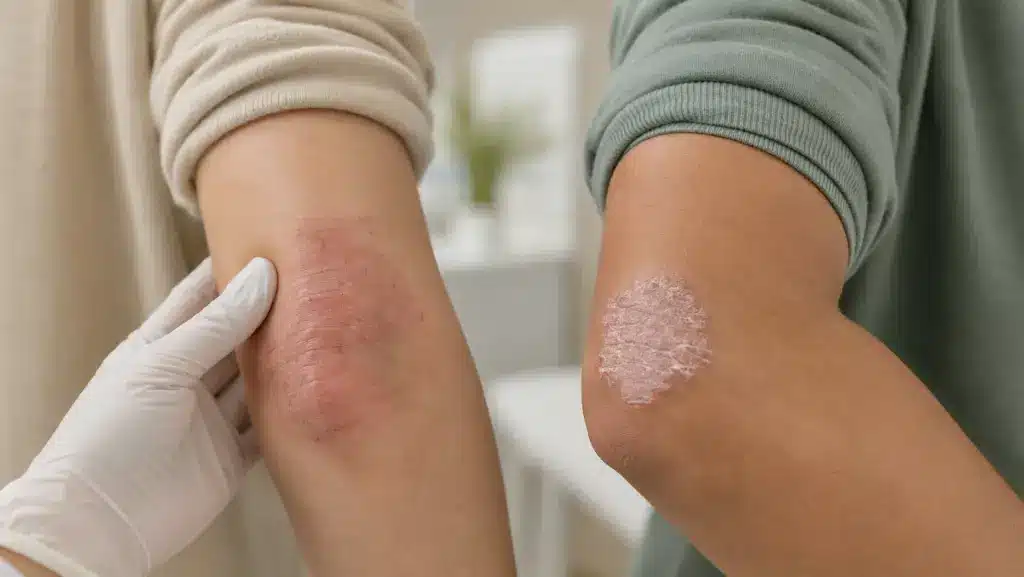
Eczema causes intensely itchy patches with soft, less-defined edges, while psoriasis usually creates thicker plaques with clearer borders and visible scales.
However, appearance alone cannot confirm the condition. Many people compare skin photos and still feel unsure because both conditions can look similar, especially across different skin tones and body areas.
In my skin consultations, people often want a clear answer from a single patch or photo. A proper diagnosis needs more than that.
Understanding the key differences, common triggers, similar-looking conditions, treatment options, and warning signs can help you recognize patterns and know when to seek professional advice.
What are Eczema and Psoriasis?
Eczema is a group of inflammatory skin conditions that affect the skin barrier, making it dry, sensitive, and easily irritated.
It commonly causes itchy, red, brown, or gray patches, dryness, cracking, and sometimes small bumps or blisters. Atopic dermatitis is the most common type of eczema and often affects areas like the face, hands, neck, and skin folds. It’s also common: NIAID prevalence data shows it affects roughly 10 to 30 percent of children and up to 10 percent of adults in the United States.
Psoriasis is a chronic inflammatory skin condition caused by an overactive immune response that speeds up skin cell production.
This leads to thick, raised patches called plaques, often covered with white, silver, or gray scales. Plaque psoriasis is the most common type and usually affects areas like the scalp, elbows, knees, and lower back. Some people may also experience nail changes or joint symptoms.
Difference Between Eczema and Psoriasis at a Glance
Eczema usually causes very itchy, dry patches with less-defined edges. Psoriasis more often forms thicker plaques with clearer borders and visible scale. These are common patterns, not firm rules.
| Feature | Eczema | Psoriasis |
|---|---|---|
| Underlying cause | Skin barrier problems and immune response contribute to inflammation | Immune activity speeds up skin cell production |
| Patch borders | Often less defined | Often clear and well defined |
| Thickness | May feel dry, rough, swollen, or leathery | Often forms raised thick plaques |
| Scale | Fine, flaky, or crusted | Often thicker and silvery, gray, or white |
| Color | Pink, red, brown, purple, or gray | Pink, red, violet, dark brown, or gray |
| Itching | Often intense | May itch, burn, sting, or feel sore |
| Moisture | May ooze, weep, or crust after scratching | Usually dry, though cracks may bleed |
| Common areas | Hands, face, neck, skin folds, ankles, around eyes | Scalp, elbows, knees, trunk, palms, soles |
| Age | Often starts in childhood but can begin anytime | Can begin at any age |
| Nails and joints | Nail changes are less typical | Nail changes and joint symptoms may occur |
Important: No single sign can confirm eczema or psoriasis. Doctors consider the complete pattern, including appearance, symptoms, location, medical history, and skin examination, a process outlined in NIAMS diagnostic guidelines.
Pictures of Psoriasis and Eczema: What Do They Look Like?
Pictures can reveal useful patterns when comparing eczema and psoriasis, but the most important clues come from texture, location, scaling, and how the skin feels.
Eczema and Psoriasis on the Face and Scalp
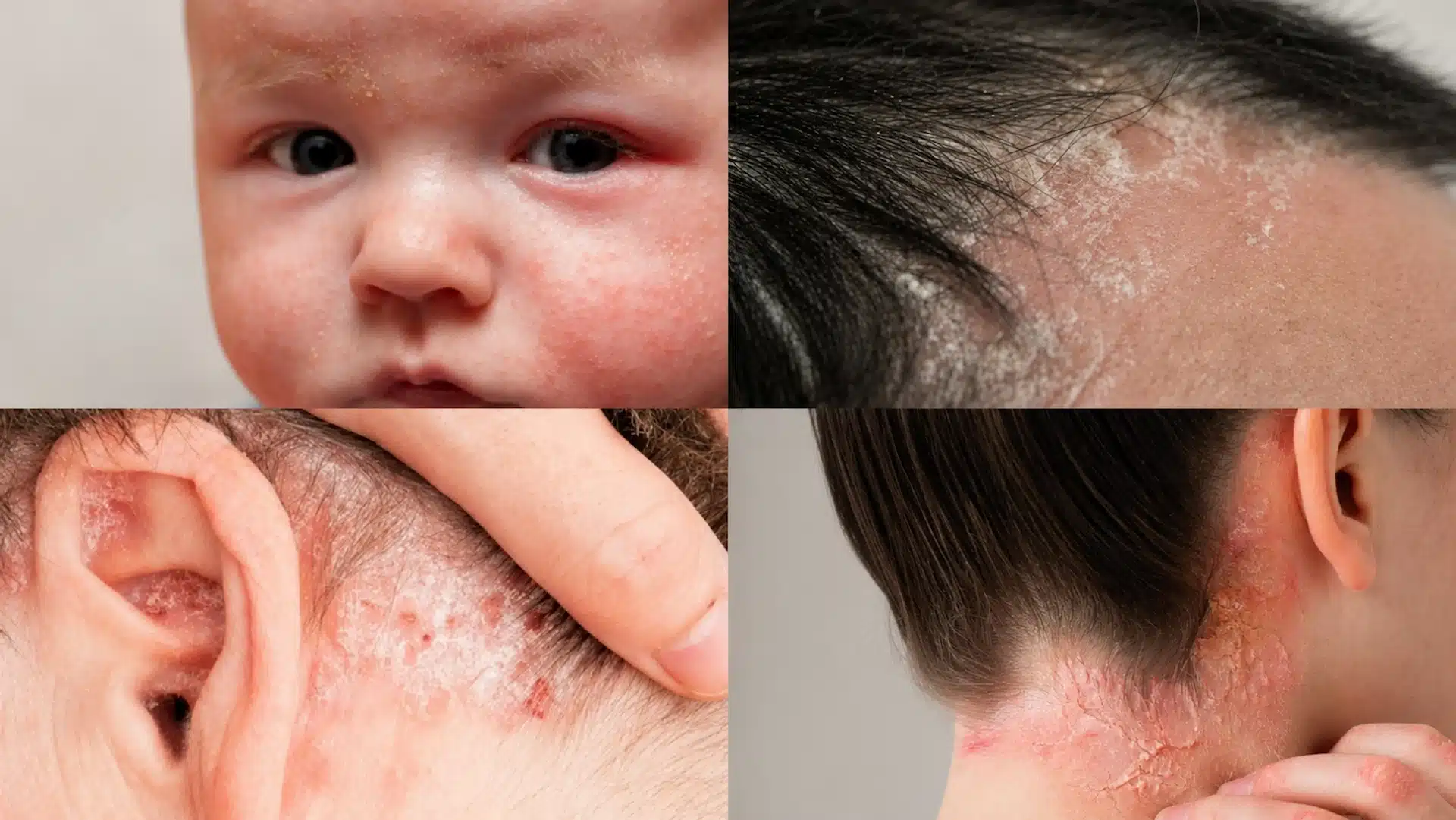
- Facial eczema may affect the eyelids, cheeks, skin around the mouth, or ears.
- It can look dry, swollen, cracked, or crusted and may feel very itchy. Many people reach for makeup to help reactive skin look softer while a patch heals. Scalp eczema may produce fine or greasy-looking flakes.
- Facial psoriasis often appears near the hairline, eyebrows, ears, or between the nose and upper lip.
- Scalp plaques tend to have firmer borders and thicker scale that may extend beyond the hairline. Seborrheic dermatitis can resemble either condition.
Eczema and Psoriasis on the Arms and Skin Folds
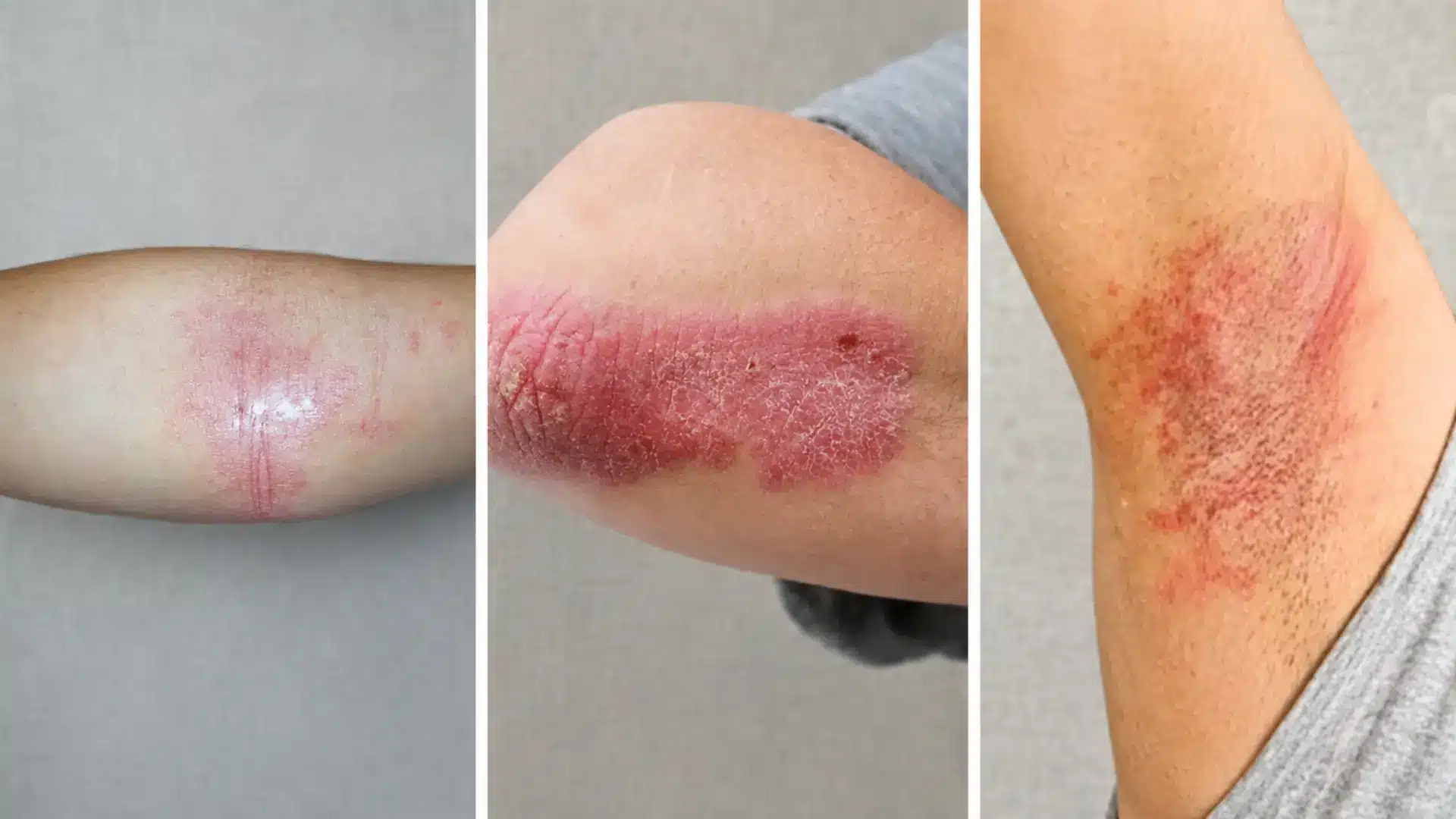
- Atopic eczema often settles inside the elbows. The patch may have soft edges, scratch marks, small bumps, cracks, or thickened skin.
- Plaque psoriasis more often appears outside the elbows as a raised patch with a clearer outline.
- Inverse psoriasis is an important exception. It appears in the armpits, groin, beneath the breasts, or other folds.
- Friction and moisture can make it look smooth and inflamed rather than heavily scaly.
Eczema and Psoriasis on the Hands, Knees, and Legs
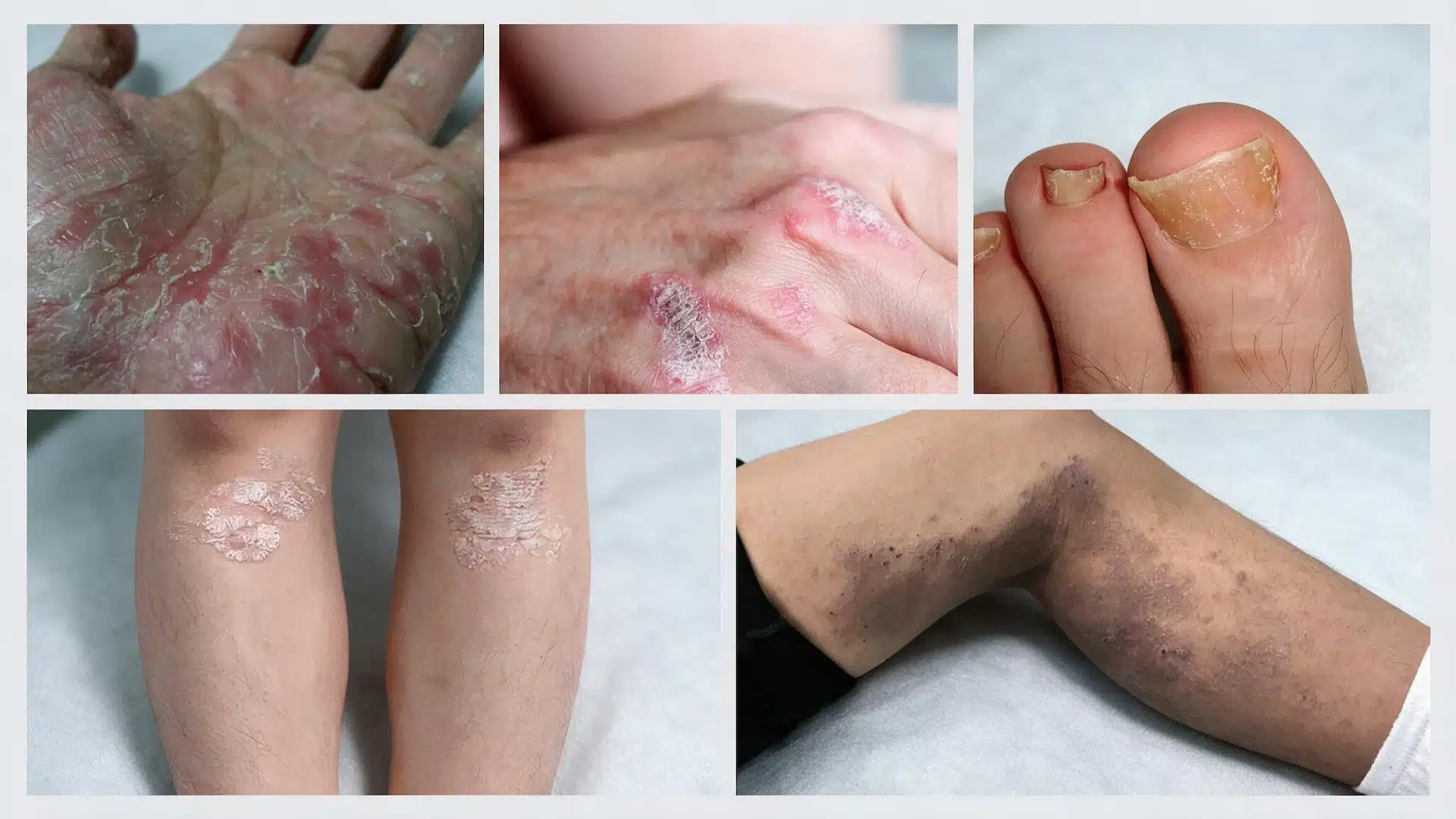
- Hand eczema may look dry, cracked, raw, blistered, or weepy. Frequent washing and irritants can worsen it. Keeping a barrier-support moisturizer nearby after washing can ease some of that dryness.
- Hand psoriasis may cause thicker plaques on the palms, knuckles, or fingers, though the two conditions can be hard to distinguish by sight.
- On the legs, psoriasis often favors the outer knees, while eczema commonly sits behind the knees. Long-term scratching can leave eczema thick and leathery.
- Small nail pits, lifting, unusual thickness, or crumbling support psoriasis as a possibility, but nail fungus and injuries can cause similar changes.
Visual differences can help you notice possible signs of eczema or psoriasis, but combining several clues and seeking medical advice provides a clearer understanding.
Eczema and Psoriasis on Darker Skin
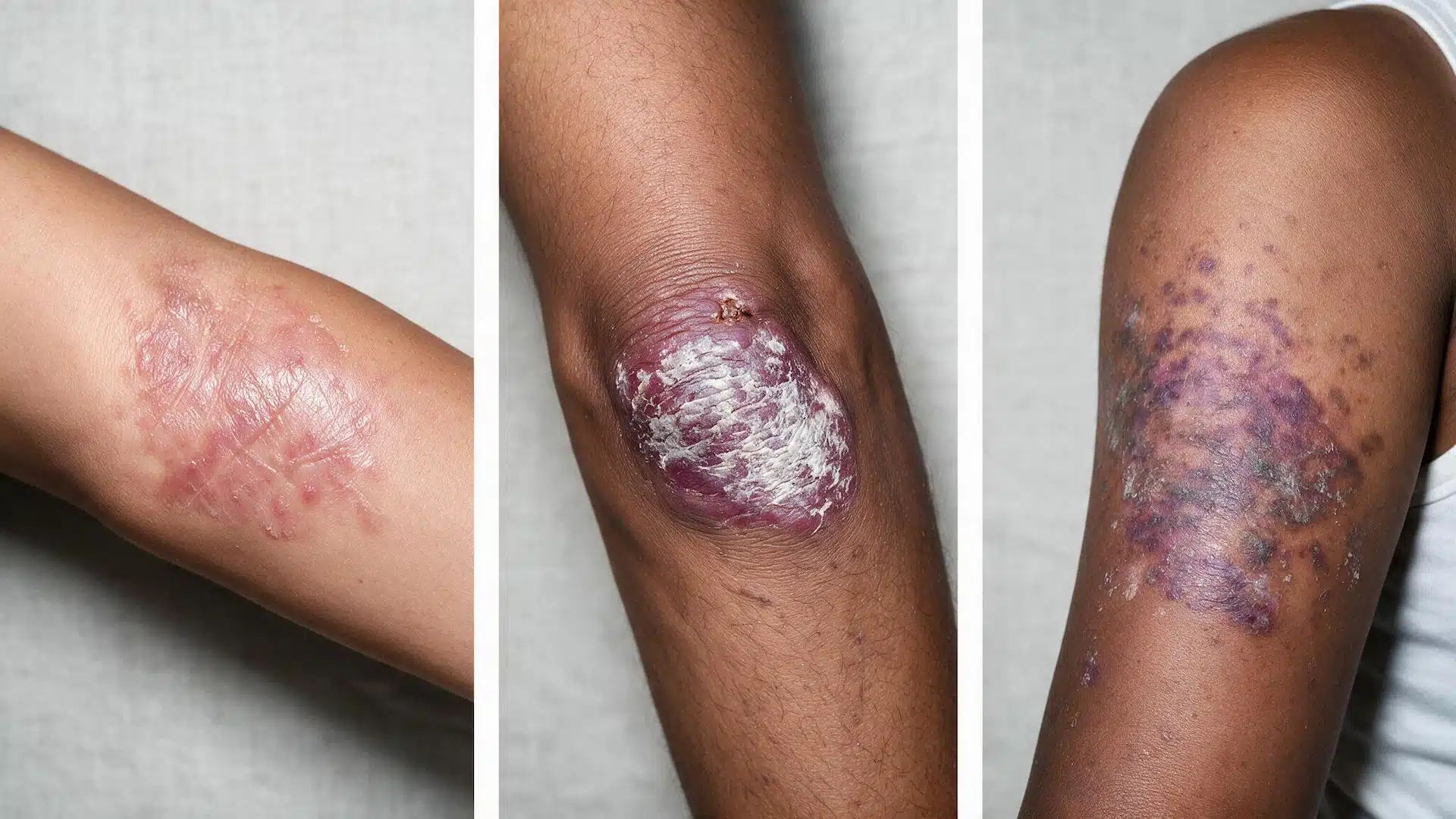
- Inflammation does not always look bright red. Eczema can appear dark brown, purple, gray, or ashen on darker skin.
- Psoriasis may look violet or dark brown, with gray or pale scale. Both conditions may leave lighter or darker areas after a flare settles.
- These changes do not always mean inflammation is active. AAD guidance on psoriasis in skin of color says the marks may take months to fade.
- Color is one clue. Also note texture, border, location, sensation, and changes over time.
How Do Eczema and Psoriasis Feel Different?
Eczema is often defined by itch. It can become strong enough to disturb sleep, and scratching may lead to cracks, bleeding, clear fluid, crusts, or thicker skin.
The itch can start before the patch becomes easy to see. Simple scratch-control habits, the kind covered in NIAMS care guidance, can help limit that damage.
Psoriasis can itch too, but many people also report burning, stinging, tightness, or soreness. Thick plaques may split and bleed, especially over moving joints or on dry hands and feet.
Neither feeling belongs to only one condition. Compare sensation with location and appearance. Joint pain, morning stiffness, heel pain, or a swollen finger or toe needs medical assessment because psoriasis can occur with psoriatic arthritis.
Common Triggers that Make Eczema and Psoriasis Worse
Flare-ups can occur when certain factors disrupt the skin barrier or trigger inflammation. While eczema and psoriasis have different causes, some triggers can affect both conditions.
| Trigger | Eczema | Psoriasis |
|---|---|---|
| Stress | Common trigger that may increase itching and irritation | Common trigger that may activate flare-ups |
| Dry weather | Often worsens dryness and skin cracking | Can increase scaling and discomfort |
| Skin irritation | Very common, especially from soaps, detergents, and friction | Possible, especially on already affected areas |
| Infections | May worsen symptoms by increasing inflammation | Can trigger new flare-ups in some people |
| Skin injuries | May irritate sensitive skin | Can create new plaques through the Koebner phenomenon |
| Harsh products | Common trigger, especially fragrances and chemicals | Less common but may still cause irritation |
Triggers both conditions may share: Stress, illness, weather changes, and repeated skin irritation can affect either condition. Tracking your own flare-up pattern is more useful than any general list, since in my experience, the same trigger can behave completely differently from one client’s skin to the next.
Understanding personal triggers can make flare-ups easier to manage. While avoiding common irritants helps, identifying individual patterns is often the most useful step for long-term skin care, alongside simple swaps like a fragrance-free daily moisturizer for irritated spots.
How Do Atopic Dermatitis, Rosacea, and Similar Rashes Differ?
Several inflammatory, allergic, and infectious skin conditions can resemble eczema or psoriasis. Location and shape may narrow the options, but close look-alikes often need a clinician’s examination or a simple skin test.
1. Atopic Dermatitis: Atopic dermatitis is the most common type of eczema. It causes dry, inflamed, intensely itchy skin and often begins in childhood. It commonly affects skin folds, and people may also have asthma or hay fever.
2. Rosacea: Rosacea mainly affects the center of the face and may cause flushing, visible blood vessels, acne-like bumps, burning, or eye irritation. Unlike psoriasis, it usually does not create thick plaques.
3. Seborrheic Dermatitis: Seborrheic dermatitis commonly affects the scalp, eyebrows, sides of the nose, ears, and chest. It may cause white, yellow, greasy, or powdery flakes. Scalp psoriasis usually has thicker scales and clearer borders.
4. Contact Dermatitis, Ringworm, and Other Look-Alikes: Contact dermatitis often appears after exposure to an irritant or allergen. Ringworm can cause itchy, scaly, ring-shaped patches, but it requires proper identification.
Do not apply a leftover prescription cream to an unidentified patch. Some steroids can change the appearance of a fungal infection and delay the right treatment.
How Do Doctors Tell Eczema and Psoriasis Apart?
A dermatologist usually makes the diagnosis by combining the rash pattern with the person’s symptoms and health history. The appointment may follow these steps:
- Ask when the rash began, how it has changed, and what seems to trigger it.
- Review itching, pain, burning, oozing, sleep problems, family history, allergies, asthma, and previous treatment.
- Examine the borders, thickness, scale, moisture, color, and body distribution.
- Check the scalp, nails, hands, feet, and joints for supporting clues.
- Test for fungus or consider allergy testing when another cause seems possible.
- Remove a tiny skin sample for a biopsy when the appearance remains unclear.
There is no single blood test that identifies every case. NIAMS describes psoriasis diagnosis as an assessment of the skin, scalp, and nails, sometimes supported by a biopsy. Photos can show changes between visits but cannot replace that assessment.
How are Eczema and Psoriasis Treated?
Some daily-care steps overlap, but prescription plans can differ. Treatment depends on the diagnosis, location, severity, age, other health conditions, and how the skin responded to earlier care.
| Care or Treatment | Eczema | Psoriasis |
| Moisturizer | Helps support the skin barrier and reduce dryness | Helps soften scale and reduce cracking |
| Gentle bathing | Short, lukewarm bathing may reduce irritation | Gentle bathing can soften plaques and scale |
| Trigger control | Focuses on irritants, allergens, heat, sweat, and dry skin | Focuses on illness, injury, stress, weather, and other personal triggers |
| Topical corticosteroids | Often used for flares at a strength suited to the body area | Often used for plaques, sometimes with other topical medicine |
| Nonsteroid topicals | Several prescription options control inflammation or itch | Vitamin D-related, retinoid, and other prescription topicals may be used |
| Light therapy | May help moderate or severe disease | May help widespread or resistant plaques |
| Oral or injected medicine | May be used for harder-to-control disease | May be used for moderate to severe skin disease or joint involvement |
| Infection treatment | Needed when a bacterial, fungal, or virus-caused infection is present | Used only when a separate infection is present |
| Scalp care | Depends on eczema type and degree of scale | Often includes medicated products that loosen scale and treat inflammation |
| Joint care | Not a usual part of eczema treatment | Rheumatology care may be needed for psoriatic arthritis |
Medication strength and placement matter, especially on the eyelids, face, genitals, and skin folds. A product that helps one condition may irritate another or hide an infection. Use prescription medicine only as directed, and ask before treating a new body area.
When Should You See a Dermatologist?
Arrange a medical assessment when the rash is hard to identify, keeps returning, spreads, interrupts sleep, or does not improve.
Seek prompt medical care for:
- Pus, warmth, swelling, worsening pain, or honey-colored crusts
- Fever, flu-like symptoms, or rapidly spreading redness
- Painful blisters or sores near the eyes
- A rash affecting the eyes or genitals
- Widespread blistering, peeling, or very painful skin
- Facial swelling, trouble breathing, or another sign of a serious allergic reaction
Do not wait for an online photo to match perfectly. Rashes change as they heal, become infected, or respond to treatment, and color can look different under household lighting.
Final Thoughts
Skin changes can feel confusing, especially when eczema and psoriasis share similar signs like itching, dryness, and irritation. Learning the patterns behind each condition can help you understand what your skin may be trying to show you.
I believe knowing the difference between eczema and psoriasis makes it easier for you to notice important clues, track flare-ups, and seek the right care when needed.
The appearance, location, triggers, and treatment approaches all play a role in understanding these conditions better.
Pictures can provide guidance, but professional advice is important for proper diagnosis. Share your thoughts in the comments or check related skin care topics for more helpful information.
Frequently Asked Questions
Can Eczema Turn into Psoriasis?
No. Eczema and psoriasis are separate inflammatory conditions. One does not usually become the other, though a person can have overlapping features or both conditions.
Are Eczema and Psoriasis Contagious?
No. Neither condition spreads through touch, shared towels, close contact, or swimming. An infection occurring on affected skin may be contagious, depending on its cause.
Can Someone Have Eczema and Psoriasis Together?
Yes, though it is uncommon. A dermatologist may need to examine several body areas and review treatment response when both conditions or mixed features are suspected.
Can a Skin Biopsy Confirm the Difference?
A biopsy can support the diagnosis when the rash is unclear. Many cases are identified without one through medical history and close examination of the skin and nails.