You’re about to book a pedicure and one question comes up before anything else: how much time should you actually set aside?
It’s the first thing clients ask me at the start of an appointment, and it’s a completely fair question, because the answer depends entirely on the service you choose.
Salon visits are meant to feel relaxing, yet schedules, errands, or lunch breaks often make timing important.
Pedicure length can vary depending on the service you choose, the condition of your feet, and whether you prefer simple polish or extra pampering treatments.
Some appointments focus on quick grooming, while others include massages, exfoliation, and skin treatments that slow the pace in the best way.
This blog covers how long different pedicure types take, what each one includes, what you can expect to pay, and a few things I’ve learned from years of working with clients, including ones who arrive with very tired, very chlorinated feet.
How Long Do Different Types of Pedicures Take?
Different pedicure styles involve varying levels of care and pampering, so the overall appointment experience can feel quick and practical or slow and deeply relaxing.
| Pedicure Type | Average Time |
|---|---|
| Basic pedicure | 30 to 45 minutes |
| Spa pedicure | 45 to 60 minutes |
| Gel pedicure | 60 to 75 minutes |
| Deluxe pedicure | 75 to 90 minutes |
Prices vary by location, salon tier, and technician experience. Salons in larger cities like New York or Los Angeles typically run $10–$20 higher than the ranges above. These figures reflect mid-range US salons and are a useful baseline when comparing options in your area.
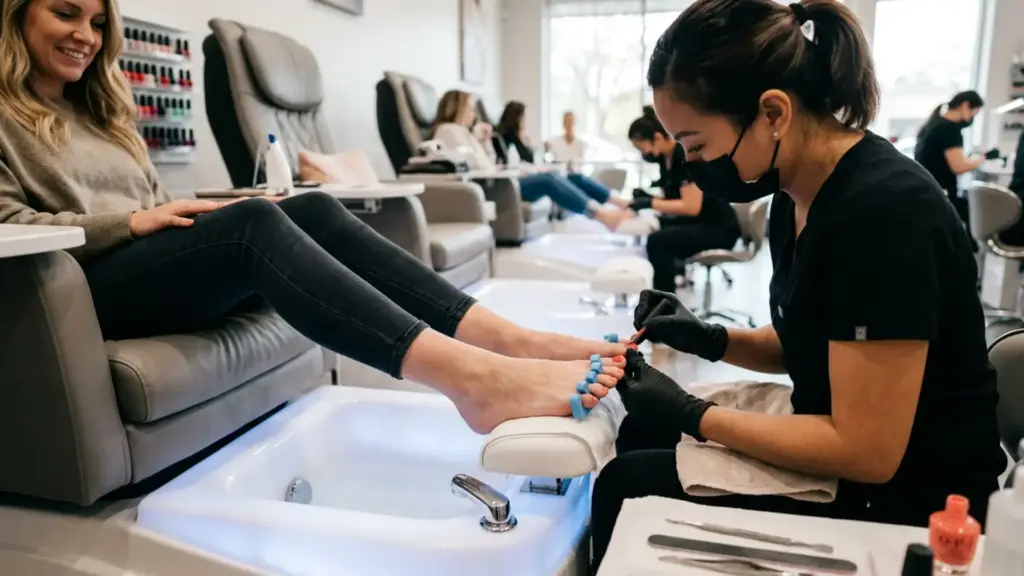
How Long Do Pedicures Take at Nail Salons
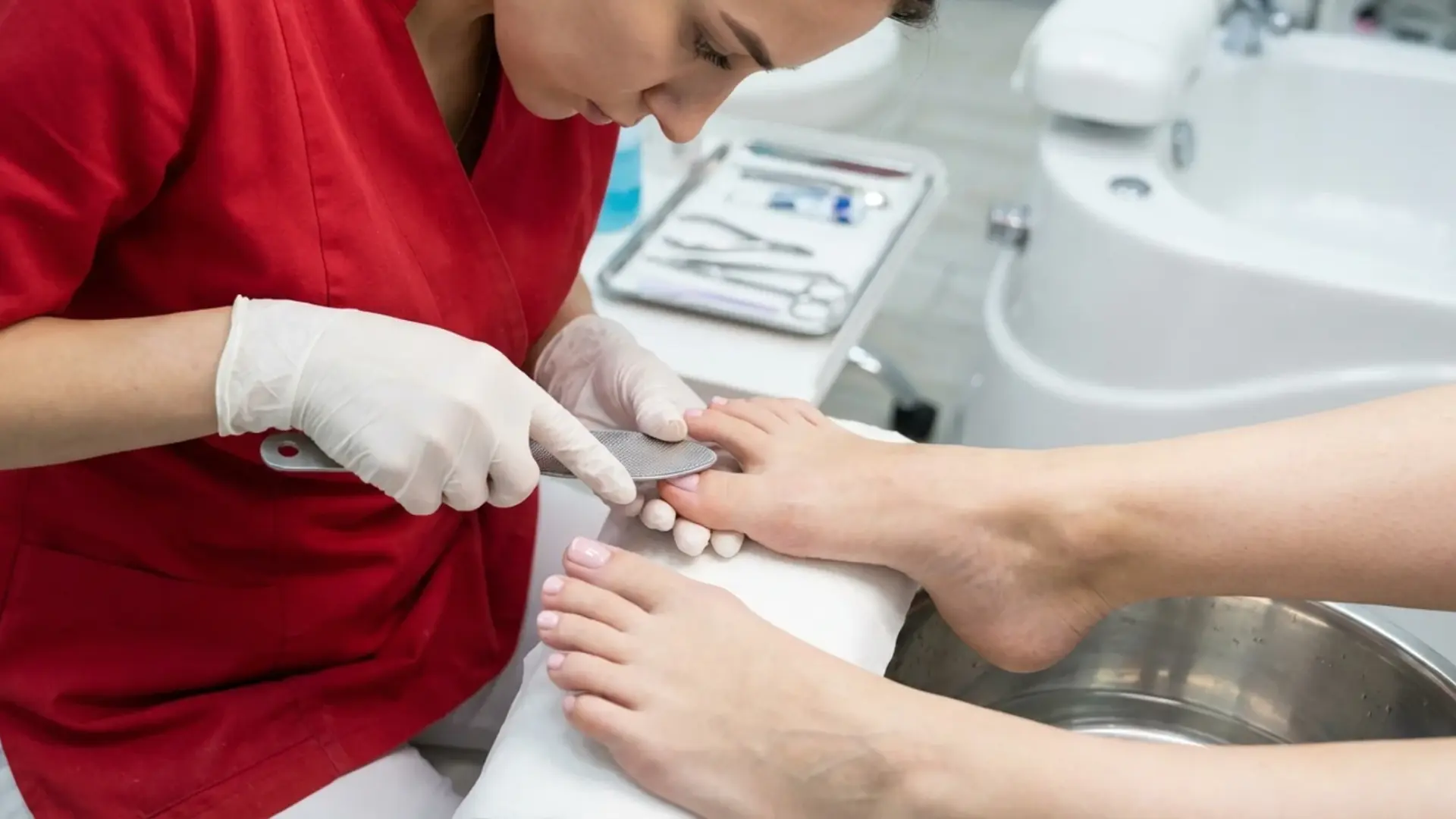
Pedicure experiences vary based on treatment type, relaxation level, and the level of care, from quick grooming sessions to deeply pampering spa-style services.
1. Basic Pedicure: 30 to 45 Minutes
This is the most practical starting point, ideal for first-timers who want to understand the process without committing to a longer service, weekly regulars maintaining their routine, or anyone working a real appointment into a real schedule.
The process starts with a 10 to 15 minute warm foot soak to soften skin and relax tired muscles. Your technician then trims and shapes toenails, gently handles cuticles, files away dry skin or light calluses, and gives a quick 5-minute foot and lower-leg massage.
Finally, they apply regular polish with base and top coats. Regular polish will need 20 to 30 minutes of air-dry time after application, plan for open-toed sandals or flip-flops for the walk out. It’s a clean, no-fuss service that covers everything essential.
First-timers: the technician will walk you through every step and ask your preferences before starting. There is nothing intimidating about the process once you’re in the chair.
2. Gel Pedicure: 45 to 60 Minutes
A gel pedicure covers the same foundation as a basic, like soak, trim, cuticle care, exfoliation, and a brief massage, then finishes with gel polish instead of regular lacquer. Each layer of gel (base, color, and top coat) is cured under a UV or LED lamp for 30 to 60 seconds per coat.
This curing process is what gives gel its signature durability. The result lasts up to 3 weeks with almost no chipping. It’s a smart pick for busy people who want long-lasting shine without frequent touch-ups.
One practical note: gel polish requires a UV or LED lamp to cure, which is standard at any professional salon. Removal at your next appointment will take a few extra minutes of soaking time, so factor that in when rebooking.
3. Spa Pedicure: 60 to 75 Minutes
This option turns your pedicure into a mini spa escape with extra pampering that makes the extra time feel wonderful.
After the standard soak, trim, and exfoliation, technicians add aromatherapy oils, an extended 15–20 minute massage with scented creams, hot towel wraps, and sometimes a cooling mask.
If you have sensitive skin or a condition like eczema or keratosis pilaris, the spa pedicure’s exfoliation and massage products can sometimes irritate reactive skin.
In my practice, I always ask clients about skin sensitivities before selecting products. It’s worth mentioning yours at the start of your appointment so the technician can choose accordingly.
The mood is intentionally slow because the focus is pure relaxation. Many clients say their feet feel lighter and their minds calmer.
It’s perfect for anyone craving stress relief along with beautiful feet. The warm, personal touch makes first-timers instantly comfortable.
4. Deluxe Pedicure: 75 to 90 Minutes
The deluxe (sometimes called luxury or medical-style) pedicure is the gold standard for special occasions like bridal prep, vacations, or seasonal self-care treats when you want to genuinely pamper yourself.
It builds on spa elements with even more luxury, with a longer soak, deep callus removal, hydrating masks, and paraffin wax dips to lock in moisture.
Some deluxe services also include a hydrating mask and a hot stone massage with smooth, heated stones worked along the soles and calves to relieve deep muscle tension.
Polish application comes last, with premium long-wear formulas. First-timers often say it’s like a full foot reset.
5. French Tip Pedicure: 45 to 60 Minutes NEW
A French tip pedicure follows the same prep and care steps as a basic service, but finishes with the classic white-tip polish design, a sheer or nude base with a crisp white edge on each toenail.
The design adds roughly 10 to 15 minutes to the standard application time due to the precision required for clean lines.
French tips can also be done in gel polish for longer wear, which pushes the total appointment closer to 60 to 75 minutes.
Step-by-Step: What Happens During a Pedicure in a Salon
Every pedicure follows a set sequence of steps; each one serves a specific purpose for both the health and appearance of your feet.
- Foot Soak: Feet are submerged in warm, often salt- or oil-infused water to soften skin and loosen debris around the nails, making every step that follows easier and more effective.
- Nail Trimming & Shaping: Nails are cut to your preferred length and filed into your chosen shape, preventing painful snags, ingrown nails, and uneven edges.
- Cuticle Care: A softening solution is applied before the technician gently pushes back or trims excess cuticle tissue, creating a cleaner nail bed and reducing the risk of hangnails.
- Exfoliation & Callus Removal: A scrub, pumice stone, or foot file is used to buff away dead skin and rough patches, leaving the skin noticeably smoother.
- Foot & Leg Massage: Moisturizing lotion or oil is massaged into the feet, ankles, and lower calves to hydrate the skin, improve circulation, and relieve muscle tension.
- Polish Application: A base coat, two layers of color, and a top coat are applied with care. Regular polish needs air-dry time.
How Much Do Add-Ons Affect Your Total Time
Add-on treatments are where appointment timing often exceeds expectations. Here is a realistic breakdown of how much time each common add-on adds to your base service:
| Add-On Service | Extra Time Added | Approximate Cost |
|---|---|---|
| Callus removal (intensive) | +10 to 15 minutes | $5 – $15 |
| Foot mask/hydration wrap | +10 to 15 minutes | $10 – $20 |
| Paraffin wax dip | +20 to 30 minutes | $10 – $25 |
| Extended massage | +15 to 30 minutes | $10 – $25 |
| Nail art / French tips | +10 to 30 minutes (design complexity) | $5 – $20 |
If you are booking a basic pedicure but plan to add callus removal and paraffin wax, your actual time in the chair is closer to 70 to 85 minutes, not 30 to 45. Knowing this before you book prevents the frustrated mid-session clock-check.
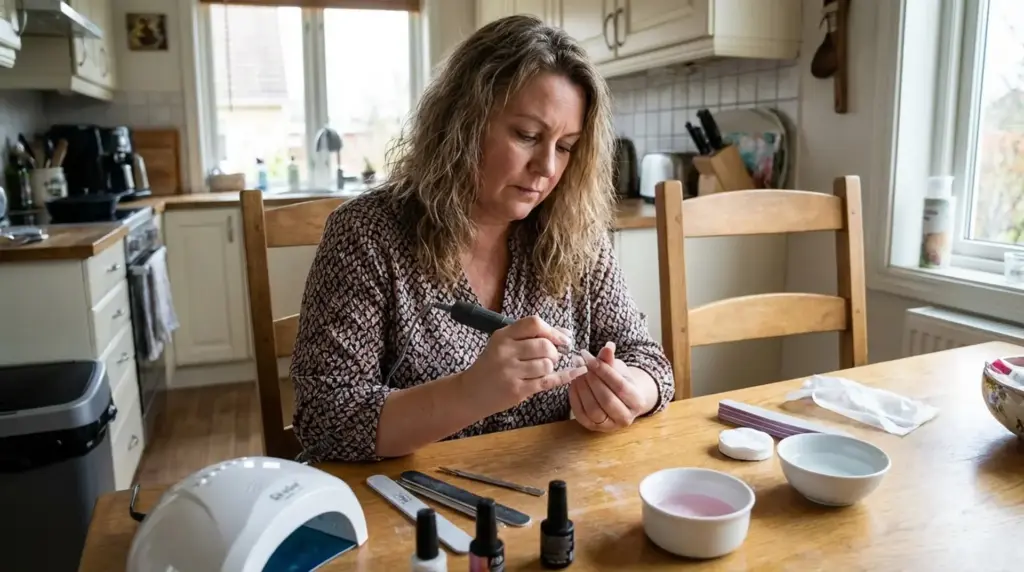
How Long Does a Pedicure Take at Home?
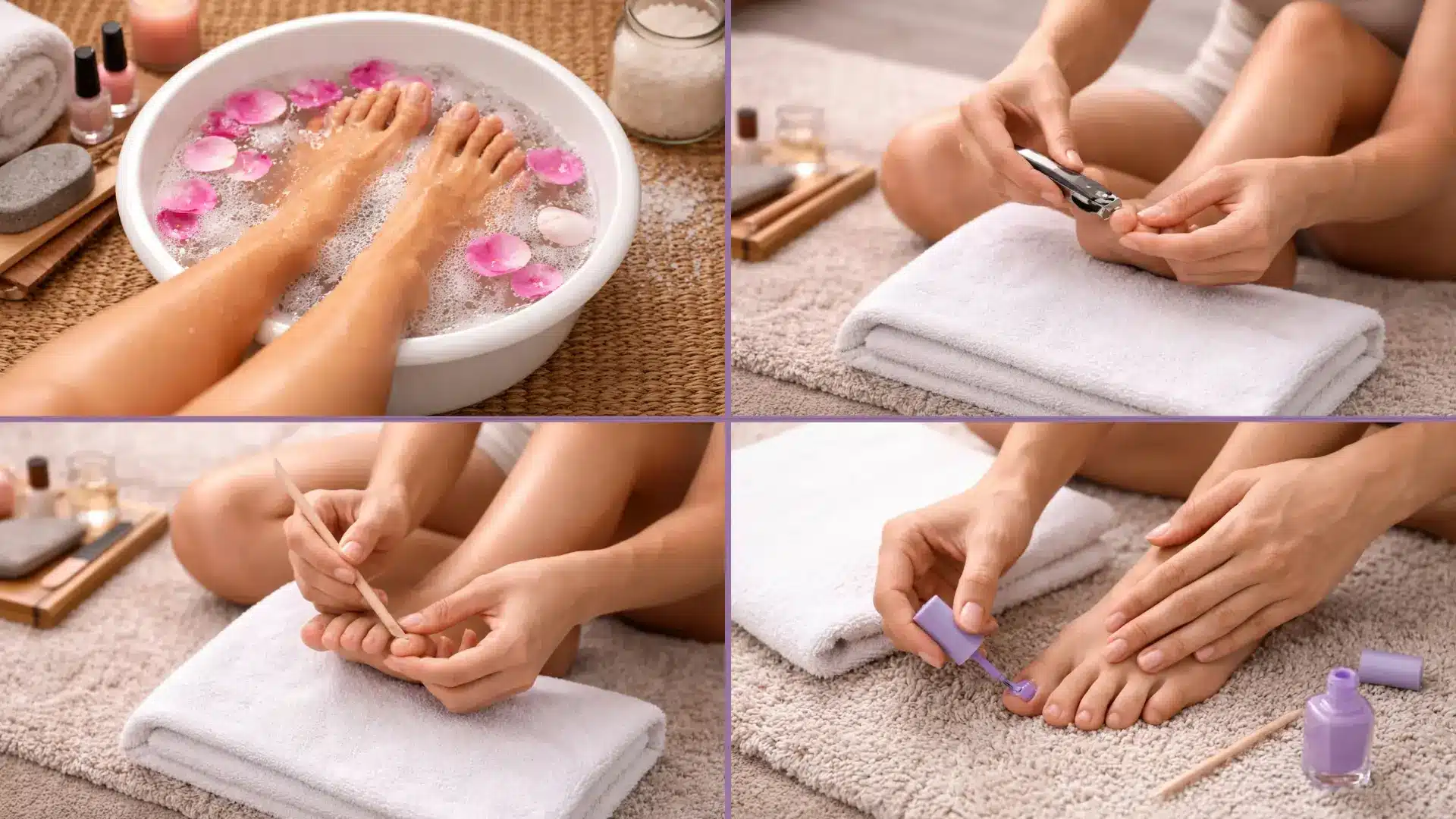
At-home pedicures offer a practical alternative to pricey salon visits, allowing comfortable self-care, gentle grooming, and relaxing foot treatments with simple tools and basic products.
Items You’ll Need for a Home Pedicure
- Foot basin or large bowl for soaking
- Nail clippers, emery board, and cuticle pusher
- Pumice stone for calluses
- Exfoliating scrub
- Rich foot cream
- Cotton balls, polish remover, base/top coat, and your favorite color
- Optional: LED lamp for gel polish
Steps for a Pedicure at Home
- Step 1: Fill a basin with warm water and add Epsom salt or a gentle foot soak. Relax feet in the water to soften skin and prepare nails for grooming.
- Step 2: After soaking, dry the feet and remove any old nail polish. This helps the surface stay clean before trimming and shaping.
- Step 3: Use nail clippers to trim toenails straight across. This simple step helps prevent ingrown nails and keeps the shape neat.
- Step 4: Smooth rough edges with a nail file. Gentle filing creates an even nail shape and removes any sharp corners.
- Step 5: Apply a small amount of cuticle oil or cream. Use a wooden stick or pusher to softly move cuticles back without cutting them.
- Step 6: Wipe nails with a cotton pad to remove oil or lotion. Apply a base coat, then two thin layers of nail color, and finish with a protective top coat for shine and durability.
- Step 7: Let the polish dry completely before walking or wearing shoes. A quick-dry spray or a fan can help prevent smudging while the polish sets.
A complete at-home pedicure typically takes 45 to 75 minutes, depending on how thoroughly you work through each step and how long you allow for drying.
It’s longer than most people expect when done properly, which is part of why salon visits feel like genuine time-savers for the foot care alone.
What to Check Before Booking a Pedicure Salon
Not all salons operate at the same hygiene or quality standard, and as a licensed aesthetician, this is the part of the conversation I wish more clients had before their first appointment, rather than after a reaction or infection.
Before booking, look for these:
- Visible license display: State cosmetology boards require licenses to be posted in the salon. If you cannot spot one, it’s worth asking.
- Tool sterilization: Reusable metal tools should be sterilized in an autoclave between clients. Single-use files and buffers should be disposed of after each service. You can always ask how instruments are cleaned a reputable salon will answer without hesitation.
- Foot bath sanitation: Whirlpool foot baths carry a real risk of bacterial infection if not properly cleaned between clients. Ask how the basin is disinfected and how long it sits before your use. Many high-quality salons now use liner bags per client as the cleanest option.
- Technician communication: A good technician asks about your nail condition, skin sensitivities, and preferences before starting. Silence from start to finish is not necessarily a problem, but zero intake conversation before a first service can be.
Factors That Affect How Long a Pedicure Takes
Not every pedicure appointment runs on the same clock. Many variables can quietly add or shave minutes off your total time.
- Your Foot & Nail Condition: Calluses, cracked heels, thickened nails, or significant buildup require extra attention from your technician, naturally extending the appointment. First appointments after a long gap between pedicures almost always run 10 to 20 minutes longer than a maintenance visit on the same service tier.
- Pool and Chlorine Exposure: Clients who swim regularly, whether competitively or recreationally, often arrive with accelerated callus buildup and rougher cuticles than non-swimmers at the same appointment frequency. Chlorine strips the skin’s natural oils quickly and repeatedly, which means the foot prep stage takes noticeably longer. If you’re a regular swimmer, booking a spa or deluxe service rather than a basic pedicure is likely to give you a more complete result.
- Type of Polish Chosen: Regular polish needs 20–30 minutes of air-dry time after application. Gel polish cures under an LED lamp in seconds, making it the fastest finish option once applied.
- Nail Art Complexity: A single solid color can be applied quickly. Detailed designs, French tips, ombre blends, or nail embellishments can add anywhere from 10 to 30 minutes.
- Technician’s Experience Level: A skilled, experienced nail technician works with precision and efficiency. Less experienced technicians may take longer to complete the same steps.
- Salon Pace & Scheduling: A busy salon with back-to-back bookings may move at a brisker pace.
- First-Time vs. Regular Client: First-time clients often have more buildup, longer consultations, and more questions, all of which add a few extra minutes.
Tips to Make Your Pedicure Appointment Faster
A few small choices before and during your appointment can help the pedicure move smoothly without cutting back on quality care.
- Schedule During Off-Peak Hours: Early morning or mid-weekday appointments usually move more quickly since salons are less crowded and technicians can focus fully on your service.
- Choose Your Polish Beforehand: Picking a color beforehand avoids spending extra minutes browsing polish racks while your technician waits to begin.
- Skip Complex Nail Designs: Detailed nail art, embellishments, or layered designs require careful work, hence extending the service time.
- Maintain Foot Care at Home: Regular moisturizing and gentle exfoliation help reduce callus buildup, allowing technicians to complete the pedicure more quickly.
- Book Appointments in Advance: Pre-booking helps salons better plan their schedules, reducing wait times.
- Arrive With Clean Feet and Nails: Removing old polish and washing feet beforehand lets the technician start the treatment immediately.
- Communicate Your Preferences Clearly: Let the technician know your polish choice, nail shape, and service expectations early to avoid pauses during the appointment.
- Wear the Right Clothing: Wear pants or cropped leggings you can easily roll above the knee, and bring open-toed sandals or flip-flops for after the appointment. Tight shoes immediately after a regular polish application will smudge the finish; open-toed footwear eliminates this entirely.
- Tip Your Technician: A standard tip at US nail salons is 15 to 20% of the service total. Tipping in cash when possible is generally preferred and appreciated, particularly since card tips are not always passed directly to the technician at every salon.
Summing Up
At the end of the day, a pedicure is only as long as you need it to be. It’s a small pause in the week where foot care, relaxation, and a bit of self-attention come together.
A basic service gets the job done fairly quickly, while a deluxe treatment gives you a full reset that’s worth every extra minute in the chair.
The key is matching the service type to your schedule and expectations. If time is tight, a basic or gel pedicure keeps things efficient.
Understanding how long pedicures take helps you plan your schedule and pick the service that fits your lifestyle.
If you’re craving real comfort, a spa or deluxe treatment with soothing massage and deeper skin care is absolutely worth blocking out the extra time.
Have a favorite pedicure routine or salon experience? Share it in the comments and keep the conversation going with other readers.
Frequently Asked Questions
Should I Shave My Legs Before Getting a Pedicure?
Avoid shaving right before a pedicure. Freshly shaved skin has micro-cuts that increase the risk of infection when exposed to soaking water and exfoliation tools.
How Often Should I Schedule a Professional Pedicure Appointment?
Most nail professionals recommend getting a pedicure every 4 to 6 weeks to maintain healthy nails, smooth skin, and proper cuticle care.
Is It Better to Choose Gel or Regular Polish?
Gel polish lasts longer and resists chipping, while regular polish is easier to remove and change frequently. The choice depends on lifestyle and maintenance preference.