
Scroll through any hair forum, and you’ll hear it all about Olaplex. One person swears it saved her hair after three rounds of bleach.
Another says it left her strands dry and straw-like, or mentions shedding more than usual. So which story is true? Is Olaplex good for your hair, or is it overhyped?
Honestly, most of these stories are true, just for different people, different hair types, and different routines.
Below, you’ll find how Olaplex actually works, who it helps most, the honest risks worth knowing, and what real Olaplex reviews say once you separate brand claims from genuine experience.
By the end, you’ll have a clearer sense of if it’s worth adding to your routine.
Is Olaplex Good for Your Hair?
Yes, for the type of damage it’s actually built to fix, though “working” doesn’t mean the same thing for every head of hair.
Olaplex targets bond damage from bleach, color, chemical processing, and heat styling, not general dullness or everyday dryness.
Bleached and color-treated hair usually sees the clearest improvement, since that’s exactly the damage the formula addresses, while heat-styled hair tends to see smaller gains like less breakage and easier detangling.
Between brand claims and real Olaplex reviews, the honest takeaway is that it works best on genuine bond damage, not as a universal fix for every hair complaint.
How Does Olaplex Actually Work?
Understanding how Olaplex works makes it easier to decide whether it matches your hair concerns.
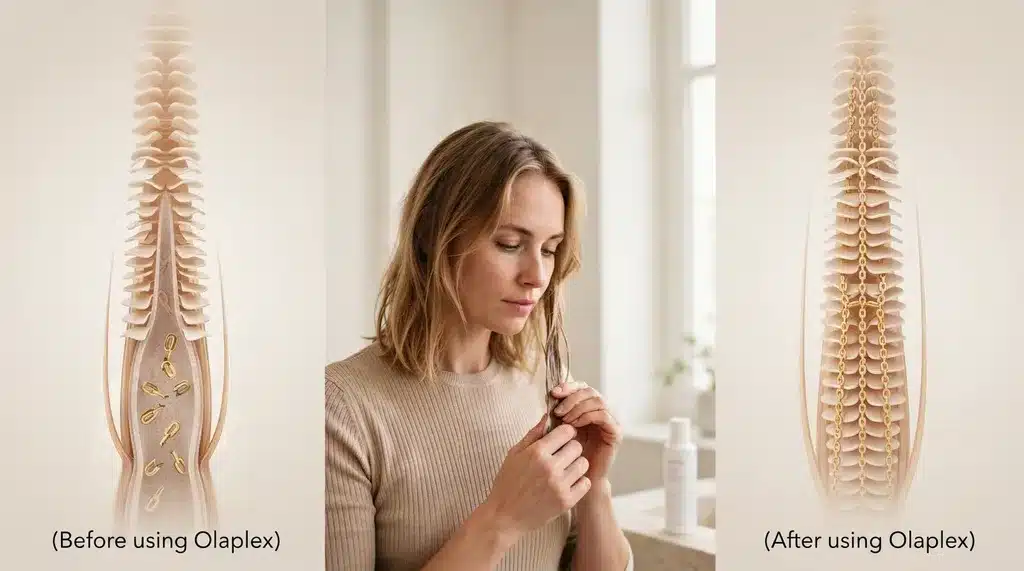
Hair strength depends partly on internal bonds called disulfide bonds, and the hair physiology overview from NCBI describes these bonds as key to the structure, elasticity, and overall strength of each strand.
Chemical processes such as bleaching, coloring, and perming can break these bonds, leaving hair weaker, more fragile, and more likely to snap.
Olaplex uses a bond-building ingredient called bis-aminopropyl diglycol dimaleate, which is designed to support damaged hair bonds during and after chemical stress.
Unlike scalp treatments that focus on hair growth, Olaplex works on the existing hair strand. It does not affect follicles or create new hair growth.
Who Olaplex Works Best For? Benefits Based on Hair Type
Olaplex works best when the problem is structural damage rather than simple dryness. Since different types of damage affect hair differently, the results depend heavily on your current hair condition.
1. Bleached or Heavily Colored Hair

Bleaching and repeated coloring, especially the kind of damage that builds up from frequent box dye touch-ups, can weaken the internal structure of hair by breaking the bonds that help keep strands strong. This is where Olaplex usually provides the most noticeable results.
People with chemically treated hair often report:
- Less breakage during brushing
- Improved softness and manageability
- Hair that feels stronger after repeated treatments
- Reduced roughness from overprocessing
This does not mean Olaplex reverses all damage caused by bleach. Hair that has already broken off cannot be restored, but strengthening weakened areas may help reduce additional breakage.
2. Heat-Damaged Hair

Frequent use of flat irons, curling tools, and blow dryers, particularly without shielding strands beforehand, can gradually weaken hair structure. While heat damage is different from chemical damage, it can still affect the strength and flexibility of the hair shaft.
For heat-damaged hair, Olaplex may help with:
- Reduced breakage during styling
- Smoother texture
- Easier detangling
- Improved overall feel
However, the results are usually less dramatic than they are with bleached hair because the level of bond damage may be different.
3. Healthy or Undamaged Hair

If your hair is already strong, untreated, and relatively healthy, you may not notice a major transformation from Olaplex.
The reason is simple: bond-repair products target weakened areas. When there is little existing damage, there is less for the product to improve.
Some people with healthy hair still enjoy Olaplex products because they notice:
- Smoother texture
- Better manageability
- Extra shine
However, if your main concern is dryness, lack of moisture, or frizz, a hydrating mask or moisturizing conditioner may provide more noticeable results.
What Makes Bond Repair Different From Regular Hair Care?
Many traditional conditioners and masks, including richer conditioning treatments, focus mainly on improving how hair feels on the outside. They can make strands smoother, softer, and easier to manage.
Bond-building treatments work differently because they target structural damage inside the hair fiber. The difference is:
| Product Type | Main Purpose |
|---|---|
| Bond builders | Support weakened hair structure |
| Conditioners | Improve softness and moisture |
| Hair masks | Hydrate and smooth strands |
| Oils | Add shine and reduce surface friction |
This is why Olaplex is often recommended after bleaching or chemical services. Those treatments create the type of damage bond builders are specifically designed to address.
Does Olaplex Cause Hair Loss?
This is the question behind a lot of the more alarming reviews, and it deserves an honest, direct answer rather than a brand-defensive one.
Olaplex products aren’t formulated to affect hair follicles or growth cycles, so a direct causal link to permanent hair loss isn’t well established, and MedlinePlus notes that normal daily shedding is a routine part of the hair cycle for everyone regardless of products used.
That said, some users have genuinely reported increased shedding and breakage after using Olaplex, reports serious enough that they led to real lawsuits and public scrutiny.
Reactions can stem from individual sensitivity, scalp irritation, misuse, or unrelated factors, which is exactly why unexplained or sudden shedding deserves a conversation with a dermatologist rather than guesswork or assuming the worst from one social media story.
How to Use Olaplex Properly for Better Results
Using Olaplex correctly matters just as much as choosing the right product. Many negative experiences come from unrealistic expectations or using products more frequently than recommended.
- Apply pre-treatments correctly: use No.3PLUS on damp, towel-dried hair before shampooing, following the timing on the label rather than extending it
- Don’t exceed the recommended frequency: stick to one to three times a week for intensive treatments, since Olaplex is a bond builder, not a daily conditioner, despite some widely shared “used it every day” content online
- Rinse thoroughly: move on to shampoo and conditioner only after a full rinse, and avoid mixing directions from different products in the range
- Use daily items as directed: fit leave-ins or shampoos into your normal routine as labeled, since these are formulated differently than the intensive treatments
Following the label rather than chasing faster results is genuinely the easiest way to avoid the overuse issues some reviews describe.
Real Olaplex Reviews: What People Actually Say
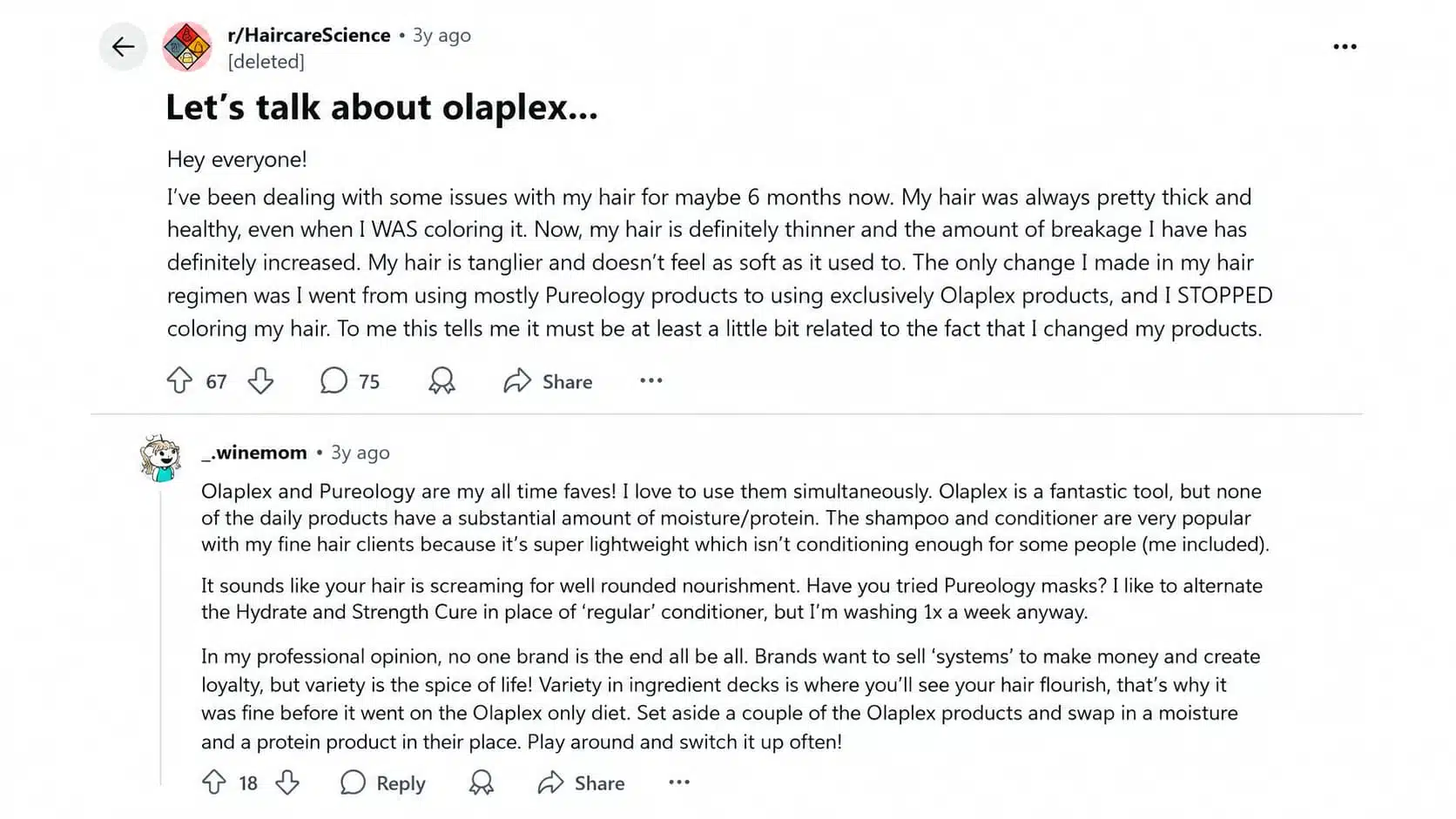
Beyond brand marketing, some of the most useful answers to Is Olaplex good for your hair come from people who’ve actually tested it.
One popular blogger used Olaplex No.3 every night for a week, well beyond the recommended one to three times weekly, and reported her hair felt just as smooth as with the standard routine, later settling back into weekly use out of convenience rather than any difference in results.
A more skeptical discussion in r/HaircareScience digs into what the bond-repair claims actually mean chemically and how much holds up against independent testing rather than brand-funded studies.
A consistent pattern emerges either way: people with real bond damage report genuine improvement, while people expecting a fix for unrelated hair concerns tend to walk away disappointed.
Which Olaplex Product Should You Use?
Olaplex has multiple products, and each targets a different hair concern. The right choice depends on whether your priority is repair, moisture, frizz control, or maintenance.
| Olaplex Product | Best For | Main Purpose |
|---|---|---|
| No.3 Hair Perfector | Damaged and chemically treated hair | Pre-shampoo bond repair treatment |
| No.4 Bond Maintenance Shampoo | Regular maintenance | Cleanses while supporting damaged hair |
| No.5 Bond Maintenance Conditioner | Dry or fragile strands | Improves softness and manageability |
| No.6 Bond Smoother | Frizz and styling concerns | Leave-in smoothing and moisture support |
| No.7 Bonding Oil | Heat styling and dullness | Adds shine and helps protect against styling stress |
No.3 Hair Perfector remains the most reviewed Olaplex product because it targets weakened bonds caused by bleach, coloring, and chemical processing.
However, it is not a replacement for a moisturizing mask or conditioner. Hair that lacks hydration may need additional moisture-focused products for the best results.
When Should You Stop Using Olaplex?
While Olaplex works well for many people, it may not suit every hair type or routine. Watch for changes and adjust your routine if your hair reacts negatively. Consider reducing or stopping use if you notice:
- Persistent scalp irritation: Redness, itching, burning, or discomfort may indicate sensitivity to an ingredient.
- Increased dryness after repeated use: Hair that feels rough, brittle, or less flexible may need more moisture instead of repair treatments.
- Unusually stiff or difficult-to-manage strands: Too many strengthening products can make some hair types feel less soft and manageable.
- More breakage despite correct use: Continued snapping or damage may mean the product is not addressing the actual cause.
Reactions like this are worth taking seriously because, as the FDA explains, allergic reactions to ingredients in hair care and coloring products are a recognized risk for some users, even with correct use.
If you notice sudden or unexplained shedding, consider other factors such as stress, health changes, or scalp conditions instead of immediately blaming one product.
Olaplex Benefits and Risks At a Glance
Seeing both sides together, as the most honest Olaplex reviews do, makes it easier to set realistic expectations before you commit to a routine.
| Benefits | Risks |
|---|---|
| Reduced breakage during brushing and styling | Dryness or stiffness, especially with overuse |
| Stronger-feeling hair after bleach or color services | Scalp irritation in sensitive individuals |
| Improved manageability and easier detangling | Reported shedding, not always confirmed as product-caused |
| Smoother, glossier appearance on damaged strands | Diminishing effectiveness if used too frequently without following directions |
None of these risks affect everyone, but they’re worth taking seriously rather than dismissing every negative review as user error.
Is Olaplex Worth the Money?
Whether Olaplex is worth the money depends on your hair condition and what you expect from the product.
It can be a good investment for bleached, colored, chemically treated, or heat-damaged hair because it focuses on supporting weakened hair bonds that regular conditioners may not repair.
People dealing with breakage, rough texture, or fragile strands are more likely to notice visible improvements.
However, it may not be necessary for healthy, untreated hair or those mainly looking for moisture, frizz control, or hair growth support.
Since Olaplex works best for specific types of damage, it is important to match the product to your hair needs rather than buying it based only on positive reviews. The right expectations will help you decide if it deserves a place in your routine.
Final Thoughts
So, is Olaplex good for your hair? For genuinely bond-damaged hair, especially after bleach, color, or heavy heat styling, the honest answer is yes, and most credible Olaplex reviews back that up.
It’s not a miracle product for every hair complaint, and the hair loss concerns some users report deserve real attention rather than dismissal, but used correctly and on the right type of damage, it genuinely delivers on what it promises.
If your hair has real chemical or heat damage, it’s worth a fair try, starting at the recommended one to three times a week rather than jumping straight to daily use.
Pay attention to how your hair responds over the first few weeks before deciding if it earns a permanent spot in your routine.
Frequently Asked Questions
Can You Use Olaplex on Extensions or Wigs?
Yes, bond-repair treatments can help synthetic-blend or human hair extensions maintain strength, though it’s wise to check the specific extension material first.
Does Olaplex Expire?
Yes, most Olaplex products have a shelf life of two to three years unopened, and changes in texture, smell, or consistency signal it’s time to replace the bottle.
Is Olaplex Vegan and Cruelty-Free?
Yes, Olaplex products are formulated without animal-derived ingredients, and the brand states its products are not tested on animals.
Can You Mix Olaplex with Other Hair Brands?
Generally, yes, since Olaplex bond-repair treatments are designed to work as a pre-treatment step before your regular shampoo and conditioner, regardless of which other brands you use.