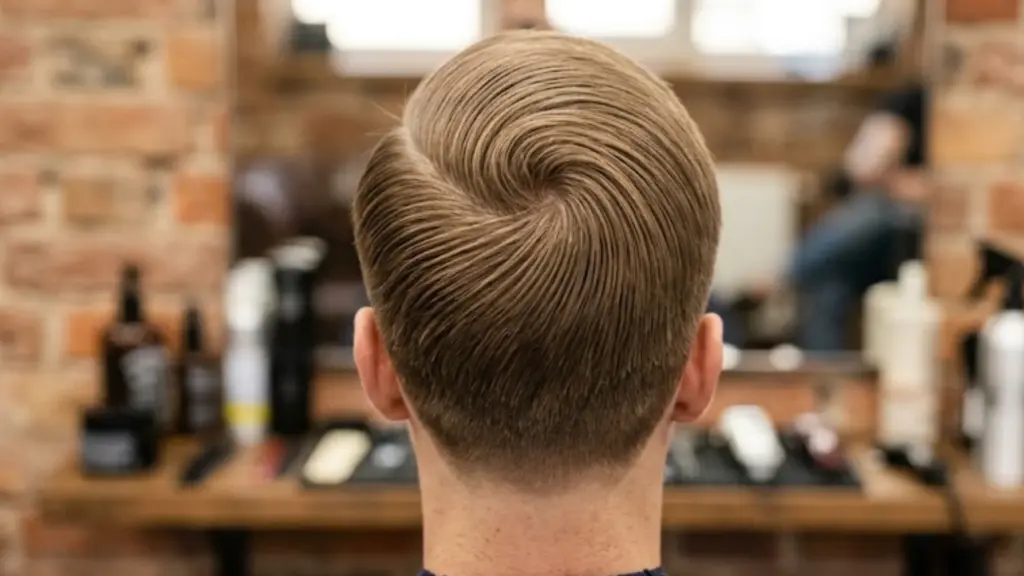
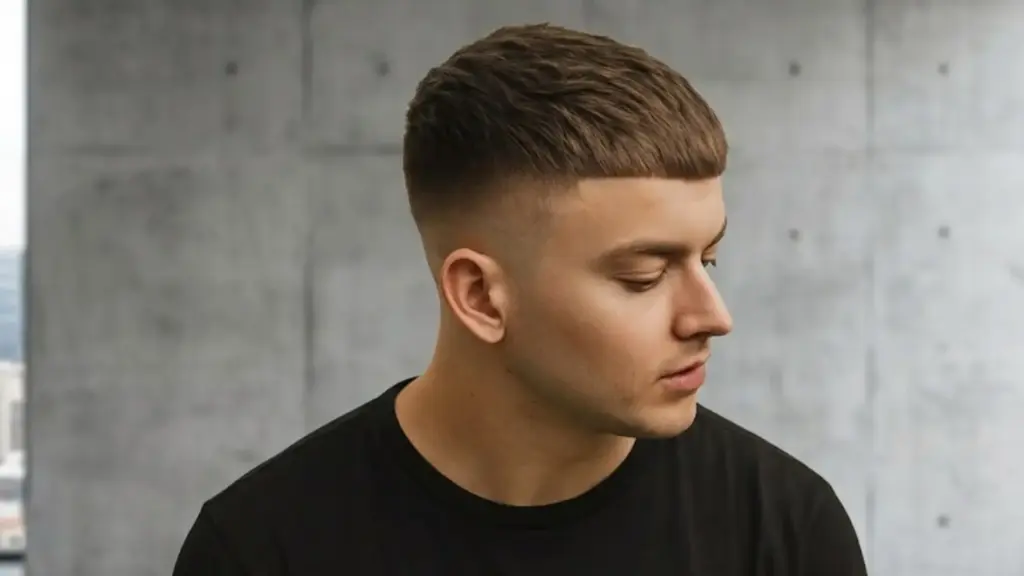
I’ve had my fair share of bad haircuts. Once, I walked into a shop asking for “just a fade” and came out looking like I’d joined the military without signing up. That’s when I realized, a fade isn’t just a fade.
There are different styles, heights, and finishes, and if you don’t know them, you’re taking a chance every time you sit in the chair.
In this guide, I’ll walk you through some different types of fade haircuts.
We’ll talk about low, mid, high, and skin fades, plus some more creative options. I’ll share how to choose the right one for your face shape, hair type, and lifestyle.
By the end, you’ll know exactly what to ask for so there’s no confusion at the barber’s chair.
What is a Fade?
A fade is a haircut where the hair gradually gets shorter from the top of the head down to the sides and back. The shortest part is usually near the neckline or around the ears, and it blends smoothly into the longer hair above.
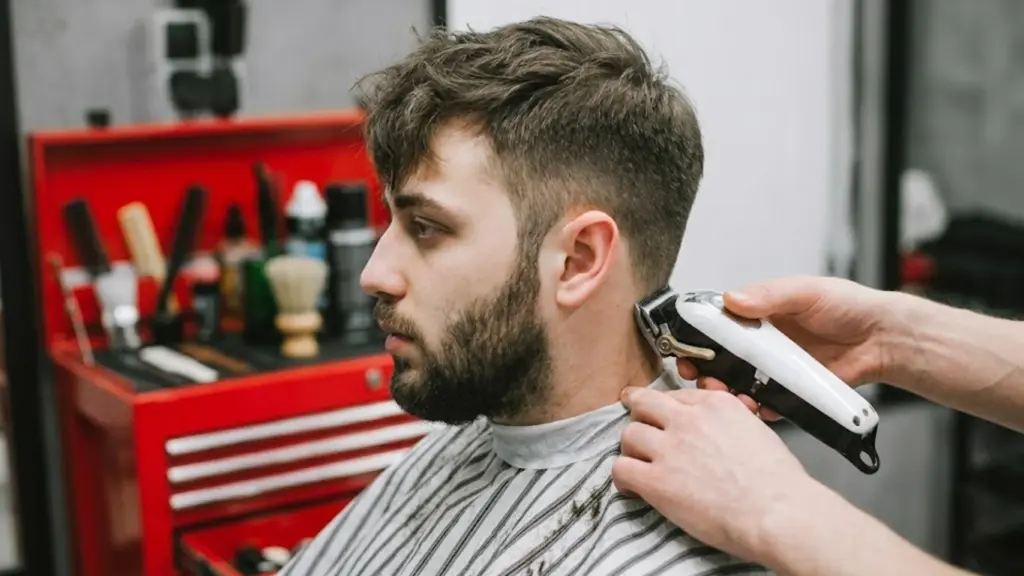
The transition can be subtle or dramatic, depending on the style. Barbers use clippers with different guard sizes to create that smooth blend.
The beauty of a fade is that it works with almost any hairstyle on top, from buzz cuts to long textured looks.
For me, the fade has always been a go-to because it feels fresh, grows out evenly, and can be customized. You can make it neat and professional or bold and edgy just by changing the height or finish
Different Types of Fade Haircuts for Men
Fades come in different heights and finishes. The height is where the shortest part of the fade starts, and the finish is how far it blends down. It’s sometimes too thin, sometimes leaving a light shadow.
1. Low Fade
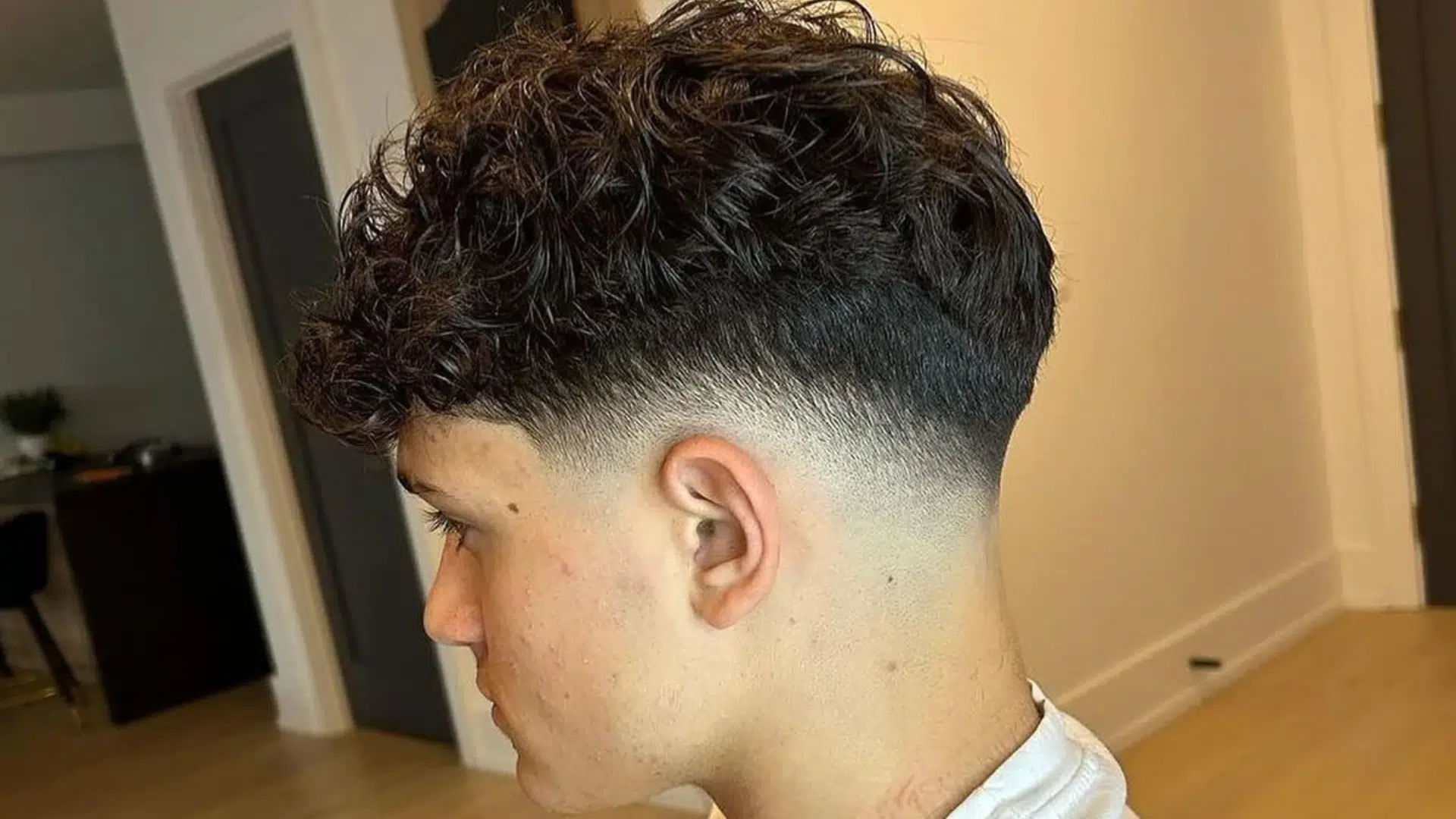
A low fade starts just above the ear, blending the hair gradually into shorter lengths. Because the fade sits low on the head, the transition is subtle, giving a neat and professional look without being too bold.
It’s one of the easiest fades to wear daily, whether you’re in the office or relaxing on the weekend.
When I had a low fade during a busy work month, I noticed it stayed tidy even after three weeks.It grows out evenly, making it a clean, low-maintenance choice.
Best for:
- Professional settings
- Longer styles on top
- Men who want a softer, less dramatic cut
2. Mid Fade
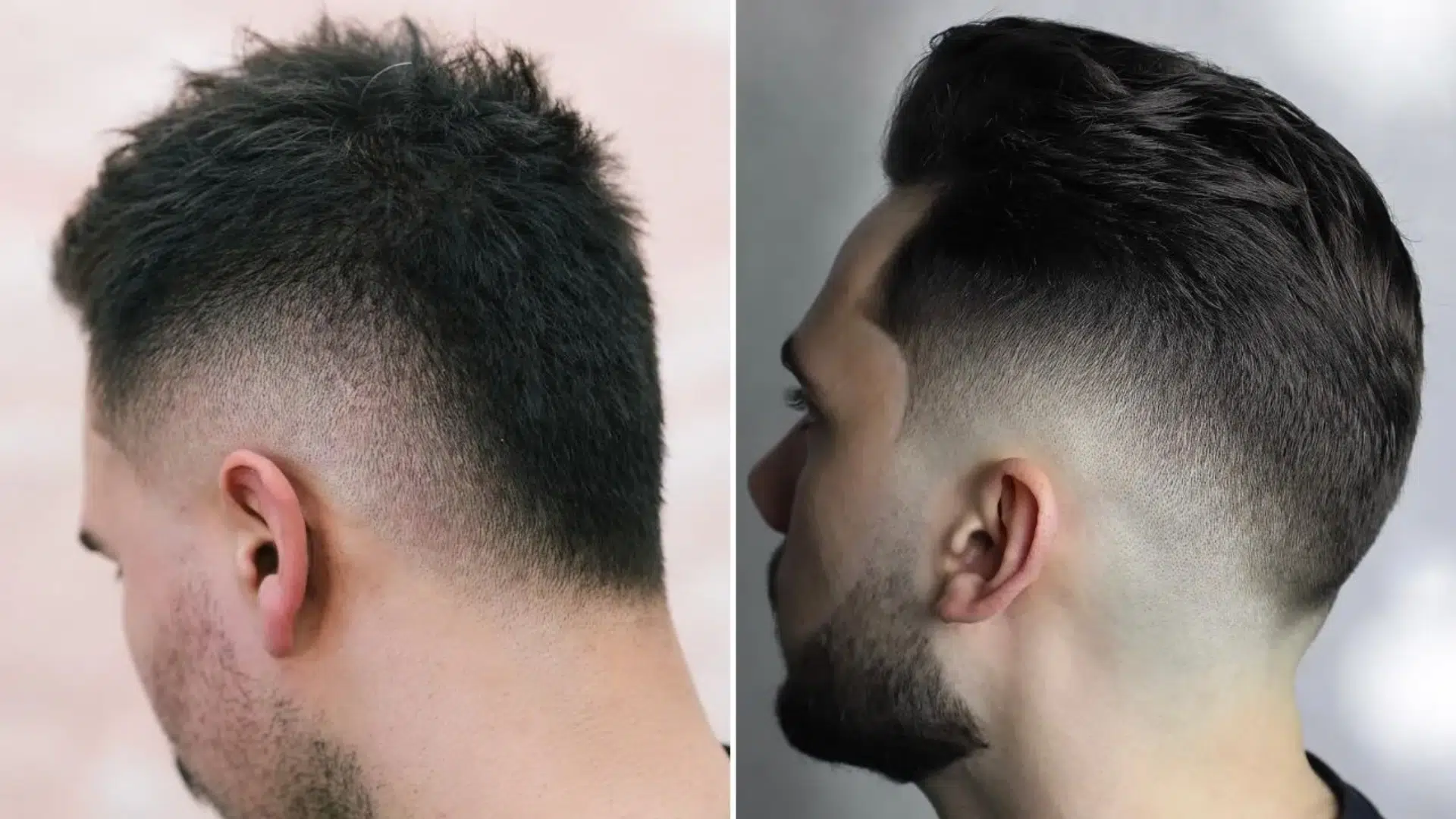
The mid fade sits between the ear and the temple, offering balance between subtle and bold. Its placement suits many hair types, adding definition while staying relaxed for daily wear.
This is my go-to when unsure, pairing well with crops, pompadours, slick-backs, or waves.
Maintenance is straightforward, and it suits most face shapes without needing much adjustment. If you’re new to fades, this is one of the most versatile starting points.
Why it works:
- Fits most face shapes
- Easy to style and maintain
- Pairs well with many top styles, from a crop to a slick-back
3. High Fade
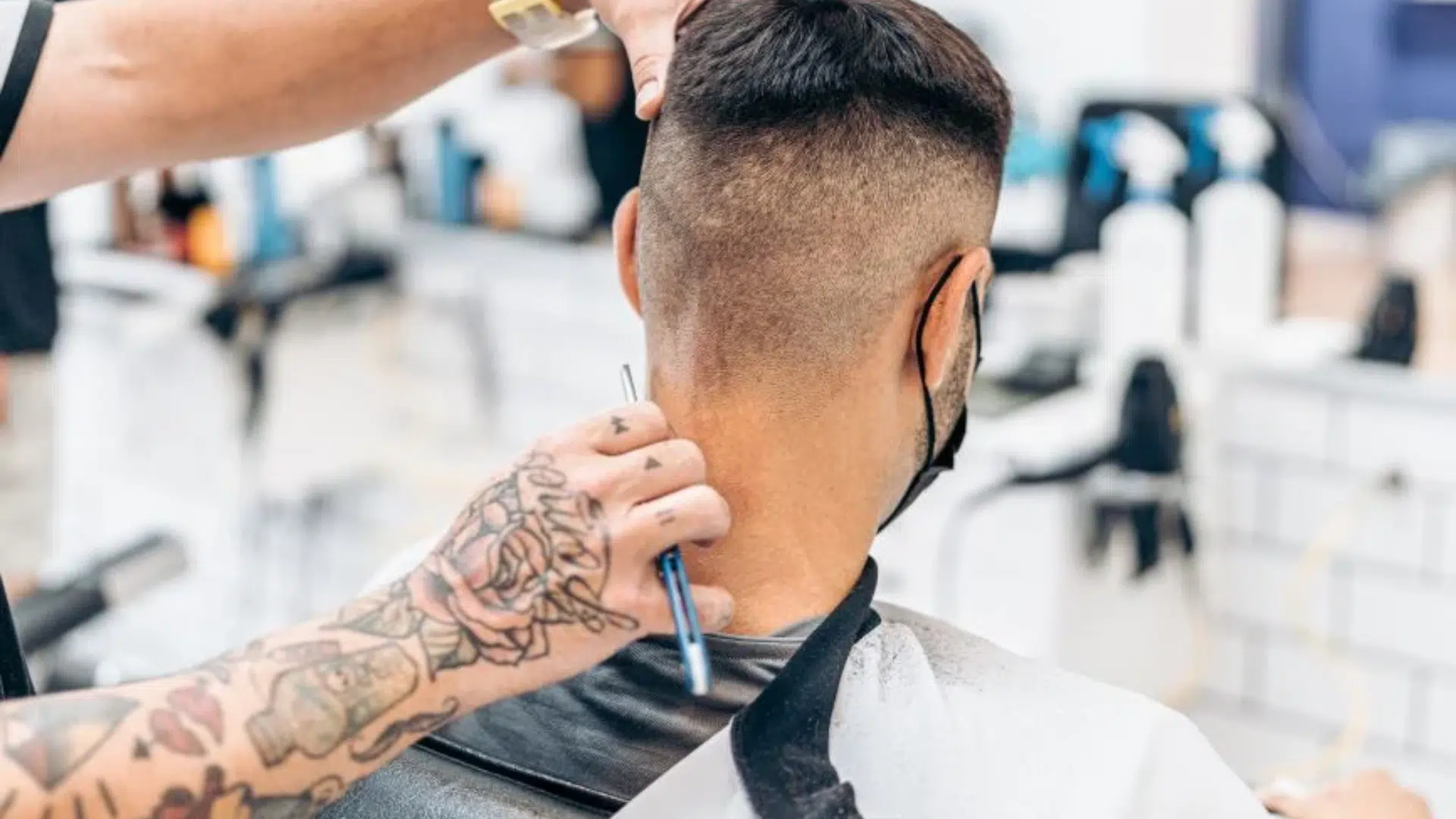
The high fade begins near the temples and quickly tapers upward, leaving a strong contrast between the sides and the top. This contrast makes the top look fuller, which is why it’s popular with shorter cuts
I once had a high fade with a messy crop, and it made my face look longer, sharper, and more defined.
It’s a strong choice for men who want their haircut to stand out and make a statement. The high fade requires more upkeep than a low fade, but the bold look is worth it if you like modern styles.
Best for:
- Adding height to round faces
- Bold, modern styles
- Shorter top cuts where you want the sides almost gone
4. Skin Fade (Bald Fade)
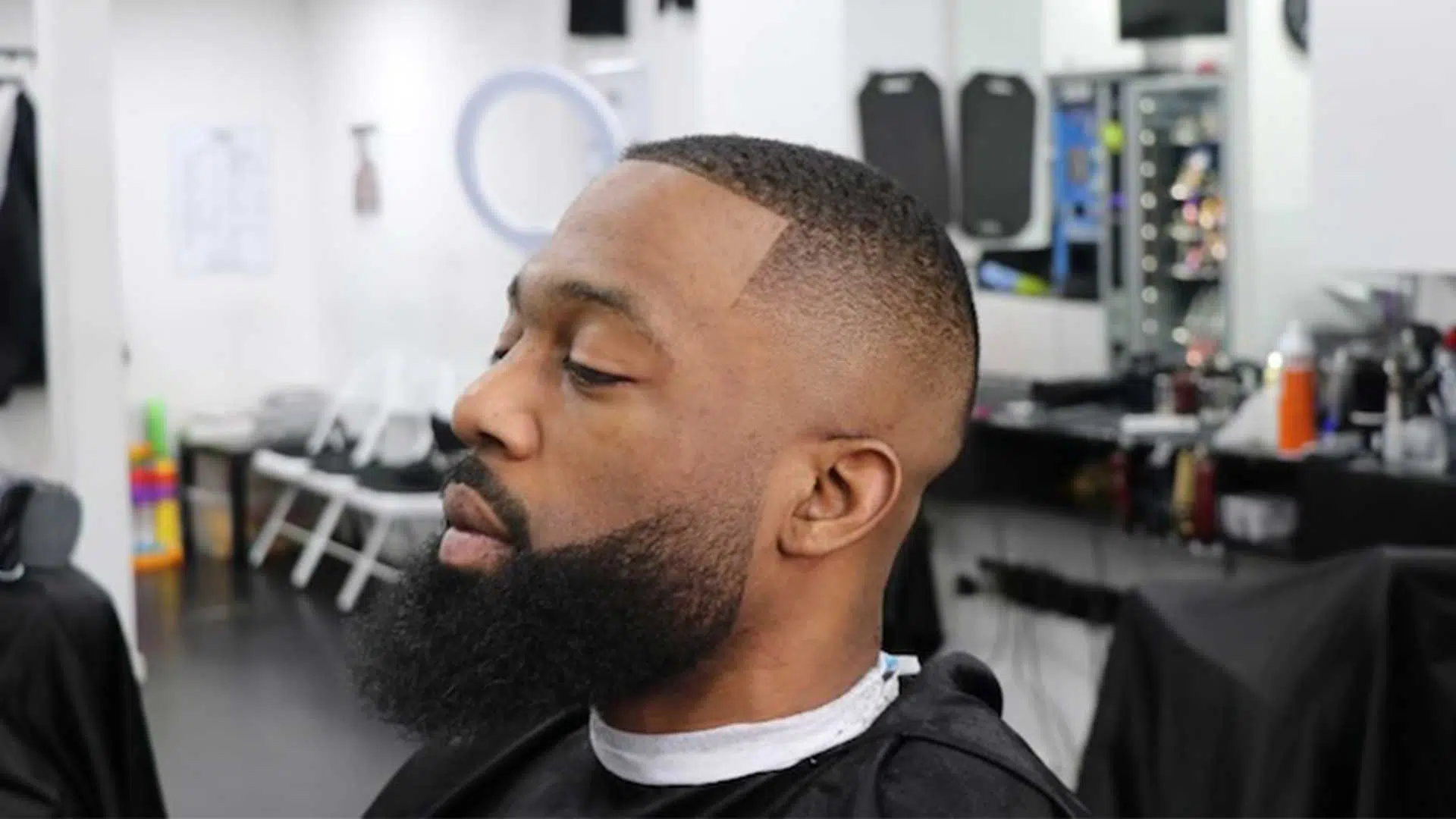
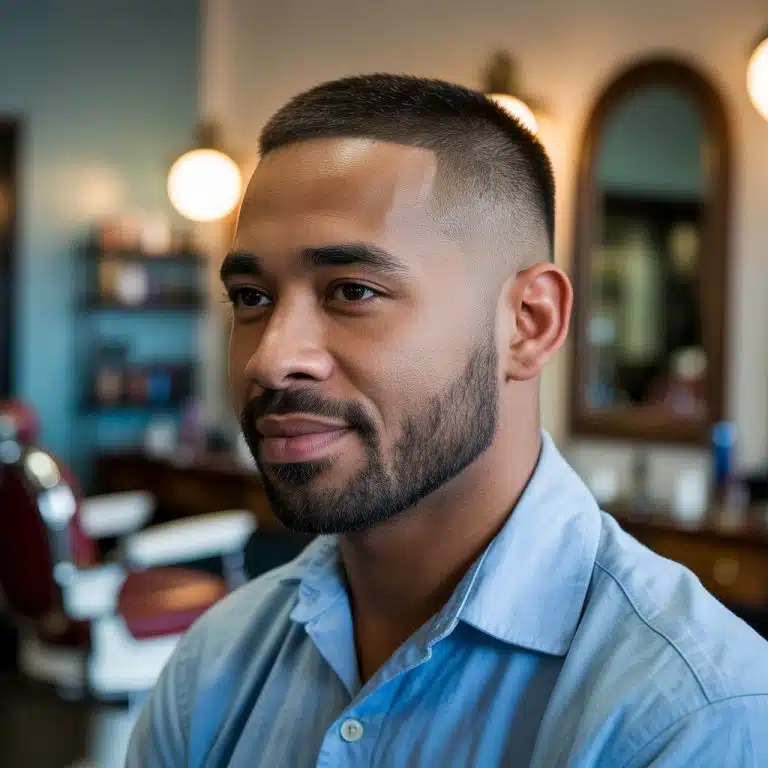
The skin fade takes the fade down to the skin at its shortest point, removing all visible hair in the faded area.
Depending on how high or low the fade begins, it can be subtle or very striking. It’s a cut that looks extremely sharp when fresh, but needs regular upkeep to stay clean.
I like this in the summer because it feels lighter and cooler, though it does mean I need to visit the barber more often. The style also highlights any design or detail on top, making it a great option if you want contrast.
Variations:
- Low Skin Fade
- Mid Skin Fade
- High Skin Fade
5. Drop Fade
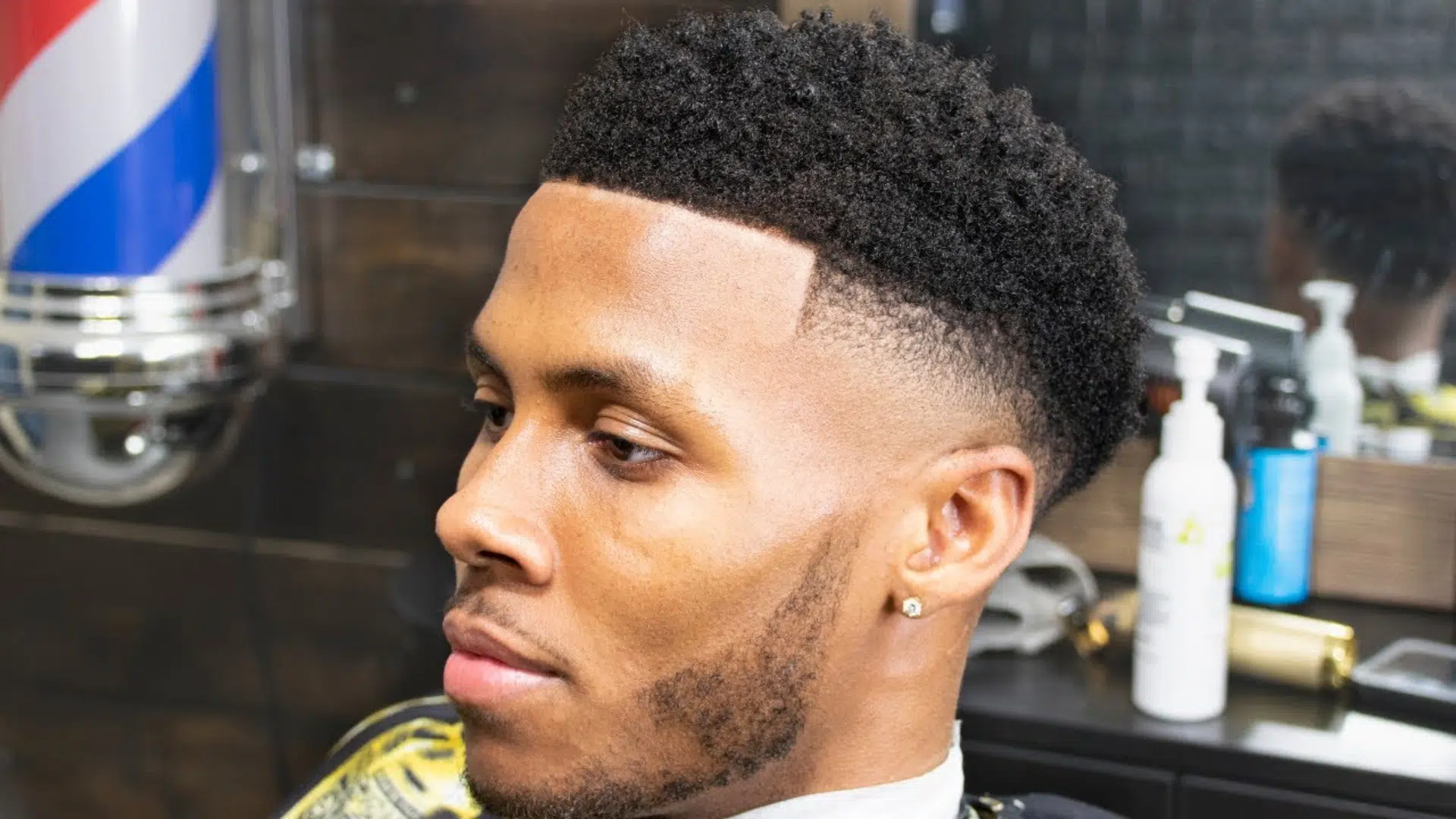
A drop fade curves around the ear and dips lower in the back, following the natural shape of the head. This creates a rounded effect that adds contour and dimension to the haircut.
Its curved outline looks more tailored and works well with textured or curly tops, as the dip frames the shape nicely.
From the side, it gives a stylish arc that stands out from standard fades. For men who want something sharp but not overly bold, this is a great balance.
Best for:
- Textured or curly tops
- Adding contour to the head shape
- Styles needing a sharp but natural outline
6. Burst Fade
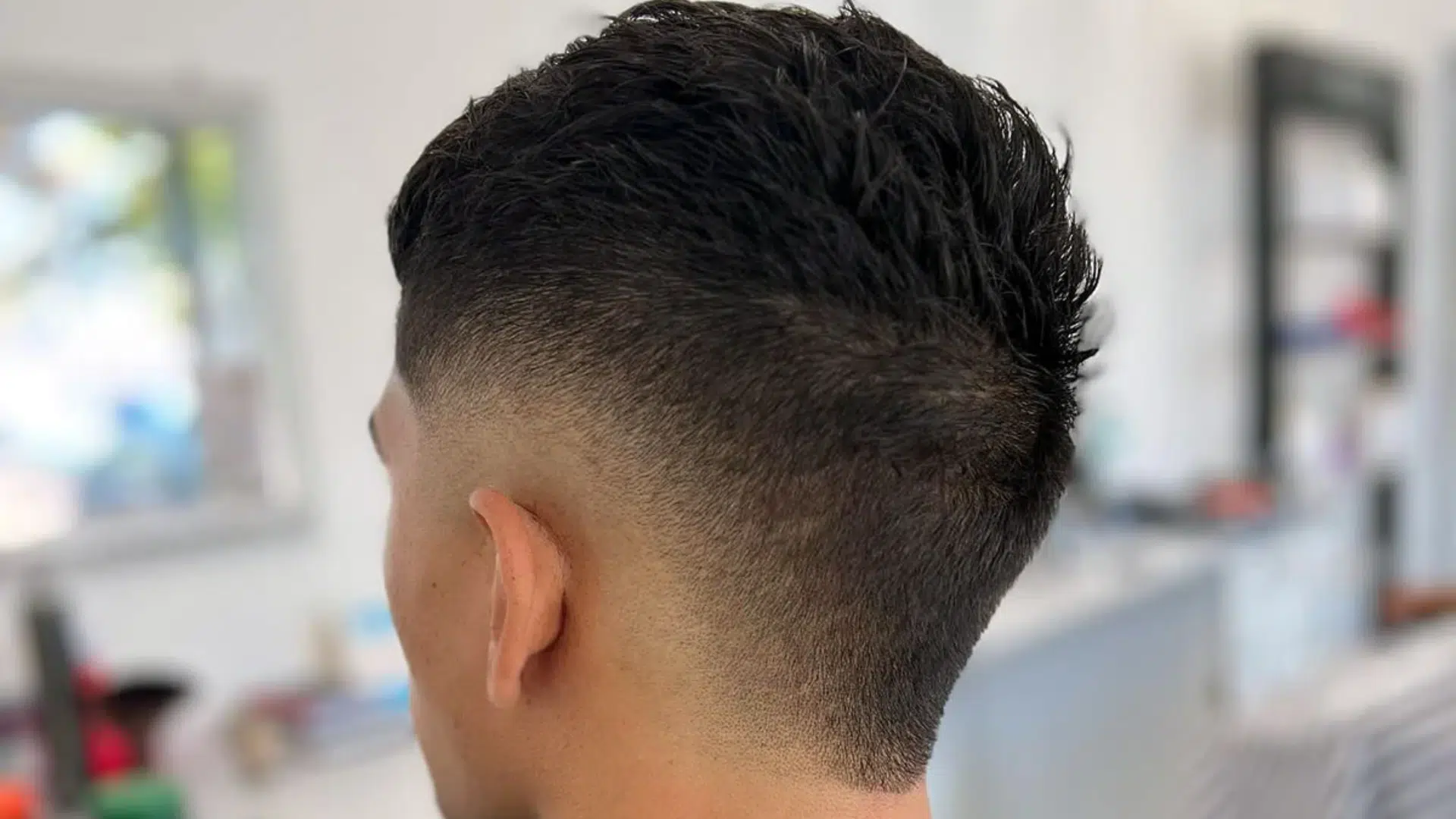
The burst fade arcs around the ear in a semicircle, creating a “sunburst” effect. This fade is dramatic and works best with statement hairstyles like mohawks and mullets, where the sides stay sharp and the top stays full.
Because it leaves length at the back while tapering around the ears, it adds flair and movement.
It’s eye-catching and not as common as a regular fade, so it instantly stands out. If you want a bold style that makes an impression, the burst fade is one of the best options.
Best for:
- Mohawks and mullets
- Trendy, eye-catching looks
- Men who want a more dramatic style
7. Temple Fade (Brooklyn Fade)
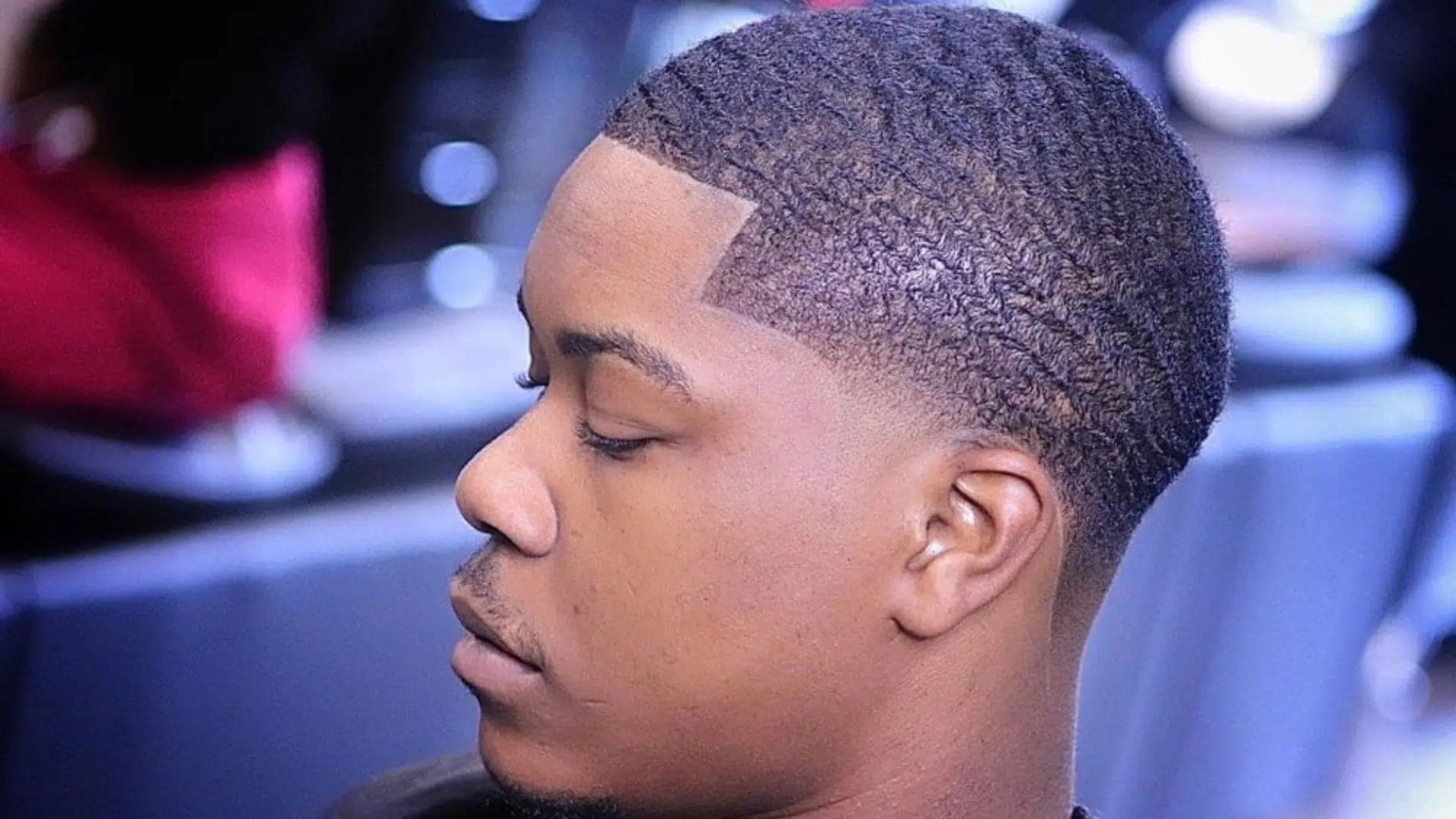
The temple fade, or Brooklyn fade, focuses on fading just around the temples and sometimes the neckline.
Unlike full fades, most of the hair remains longer, with only the edges cleaned up. This creates a sharp outline without changing the overall hairstyle too much.
It’s especially popular with curly and coily hair because it frames the texture well while still keeping length. The temple fade works in both casual and formal settings, adding detail without committing to a full fade.
Why it works:
- Frames natural curls and coils
- Keeps more length on the sides
- Sharp detail without full fade commitment
8. Shadow Fade
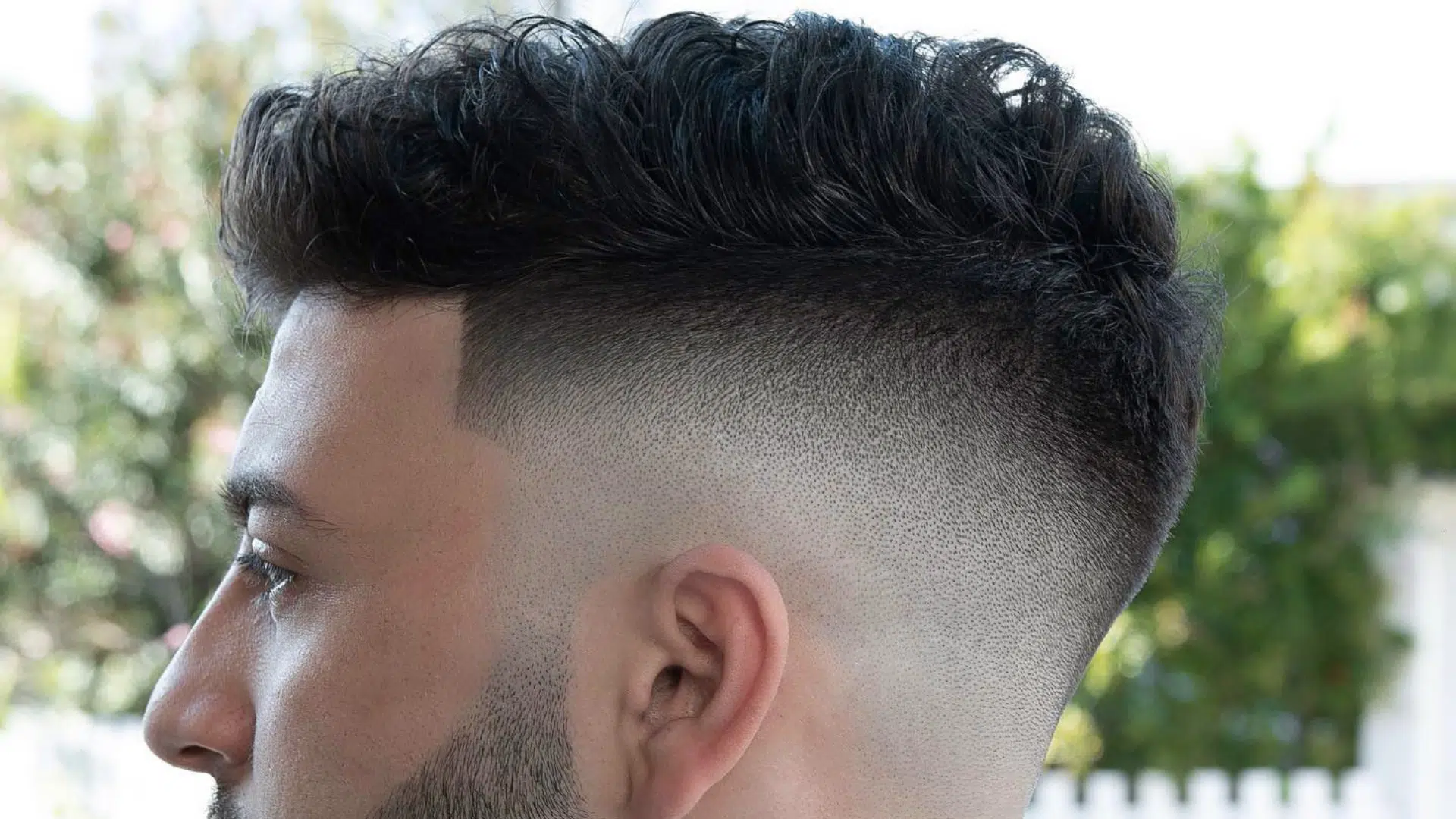
The shadow fade creates a gradual transition but leaves some hair visible at the shortest point rather than cutting down to the skin.
It’s perfect if you want the look of a fade that lasts longer as it grows out, since the hair doesn’t show stark regrowth.
The shadow fade also works well in professional environments because it looks clean but not too extreme. It’s one of the most practical fades for men who want low-maintenance style with a refined edge.
Best for:
- Softer transitions
- Professional settings with style
- Anyone wanting a fade without an exposed scalp
How the Fade Became a Global Style?
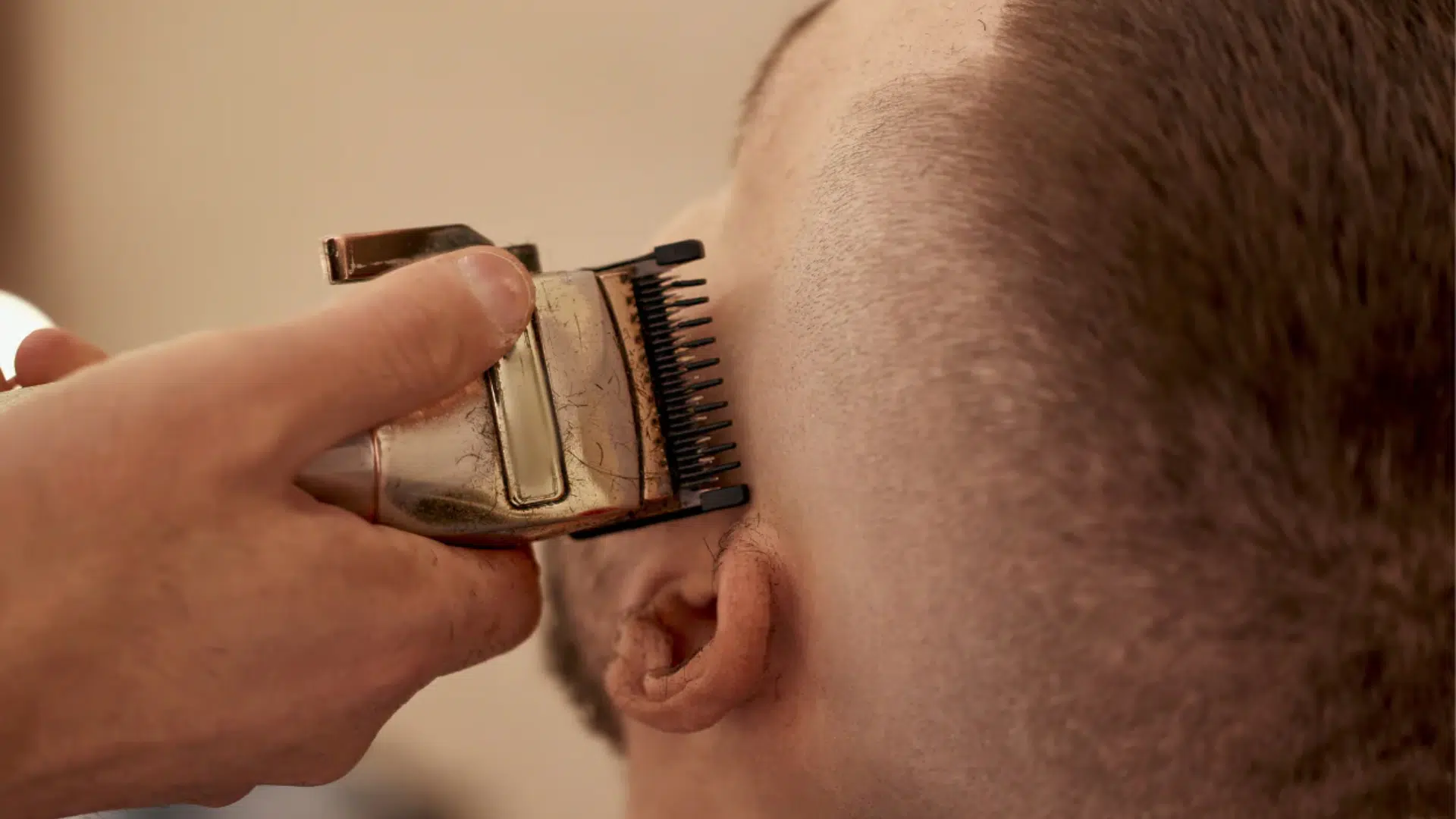
The fade has a history that’s as interesting as its style.
It began in the 1940s military, where short, clean cuts were practical and uniform. In those years, the look also appeared on the big screen, worn by leading men in classic Hollywood war and noir films.
In the ’80s, it took on new life in urban communities, becoming a symbol of identity and creativity. Over time, it spread worldwide, adapting to different cultures and trends. What keeps the fade relevant is its flexibility.
You can make it sharp and bold or keep it low-key and professional. Either way, it speaks to your personality and taste.
Beyond fashion, the fade has been tied to music, sports, and street culture, shaping how entire generations express themselves. From hip-hop icons to NBA players, it has become a global symbol of style and confidence.
Its ability to move from red carpets to playgrounds shows why the fade isn’t just a trend. It’s a lasting part of modern identity.
Choosing the Right Fade for You
Choosing the right fade isn’t just about picking what looks cool. It’s about finding what works for your face, hair, and lifestyle. A little thought before you sit in the chair can save you from a cut you regret.
When I’m deciding on a fade, I look at these three things:
| Fade Type | Face Shape | Hair Type | Upkeep Level |
|---|---|---|---|
| Low Fade | Long face – Keeps balance | Thin hair – Creates a fuller look | Lasts longer before looking grown out |
| Mid Fade | Oval face – Works well for balance | Thick hair – Manages bulk without losing shape | Moderate upkeep, touch-ups every few weeks |
| High Fade | Round face – Adds height | Curly/coily – Frames texture with temple or burst fade | Needs frequent trims to stay sharp |
Maintenance Tips for a Fade Cut
A fade can lose its sharpness faster than expected. Keeping it fresh between barber visits makes all the difference in how it looks.
- Touch up every 2–3 weeks to keep the edges clean
- Moisturize the scalp, especially with a skin fade
- Use matte clay to add texture
- Try sea salt spray for natural volume
- Apply pomade for shine and hold
Conclusion
A good fade does more than tidy your hair; it improves your overall look by adding shape and definition. The right fade can make your jawline appear sharper, bring focus to your eyes, or highlight a hairstyle you like.
In this guide, we’ve covered the main fade types and how to choose the right one based on your face shape, hair texture, and daily routine.
You’ve also learned the key habits that help keep a fade looking neat between barber visits.
Think of this as a simple reference you can use before your next haircut. Go in with a clear idea, explain it to your barber, and you’ll walk out with a fade that feels clean, sharp, and tailored to you.