
I remember standing in front of my closet before a creative agency walkthrough, choosing between dark jeans and tailored slacks.
Many people wonder if jeans are business casual or if they still look too relaxed for the office.
The answer often depends on how the jeans are styled, the workplace culture, and the confidence behind the outfit.
Modern offices have changed a lot over the years, and business casual jeans are now more common than ever in many industries.
Still, finding the right balance between professional and comfortable can feel confusing. One wrong choice can make an outfit appear too formal or far too casual.
What Does Business Casual Mean?
Business casual is not a uniform. The formal end includes tailored blazers, pressed trousers, and structured dresses.
The relaxed end allows for chinos, fitted knitwear, and yes, the right pair of jeans.
What business casual rules out is anything that reads as purely recreational: athletic wear, graphic tees, distressed clothing, overly baggy fits, or items with bold logos.
The goal is clothing that feels approachable and put-together at the same time.
Business casual can include brighter colors and offers more personal expression than formal dress codes, but athletic wear, shorts, and anything with bold logos typically fall outside its boundaries.
The honest framing is this: Business casual is clothing you’d feel confident wearing in a meeting with someone you haven’t met yet. If your jeans pass that test, they’re probably fine
Are Jeans Business Casual?

Yes, jeans can be business casual, but not every pair qualifies.
The difference comes down to wash, fit, and condition. Dark indigo or black jeans with a clean fit and no distressing look are polished in most office settings. Faded or ripped denim does not.
Business casual sits between formal wear and everyday clothing. It leaves room for personal style while still reading as professional.
Over time, many workplaces have relaxed their stance on denim, but the acceptable range still stops well short of weekend jeans.
It also varies by workplace. A tech startup may be fine with sneakers and jeans, while a corporate office often expects something a little more put-together.
In creative industries, polished denim is often common, especially when paired with blazers, button-down shirts, or smart shoes that help maintain a professional appearance throughout the workday.
Which Jeans are Business Casual?
Not all denim works for the office. Small details like wash, fit, and condition can change the entire read of an outfit.
- Dark-wash denim: Dark blue, indigo, and black jeans look more polished and pair well with business-casual pieces. They’re also more versatile across seasons than lighter washes.
- Slim and straight-leg cuts: These create a cleaner, more structured silhouette. Straight-leg jeans tend to be the safer choice in more formal offices; slim cuts work well across most environments.
- High-waisted styles: A high-waisted, well-fitted dark jean often reads closer to tailored trousers, especially when tucked into a blouse or paired with a blazer. Finding the fit that works for your body shape makes a genuine difference in how polished the final look feels.
- Avoid baggy styles: Oversized or loose denim reads as too casual even when paired with formal pieces.
- No distressing or rips: Frayed hems, fading, and tears can quickly take an otherwise clean outfit down.
- Black jeans: Well-fitted black denim is often the easiest call. It’s the one wash that genuinely mimics the look of trousers, and it transitions from desk to after-work without effort.
How to Style Jeans for a Business Casual Look?
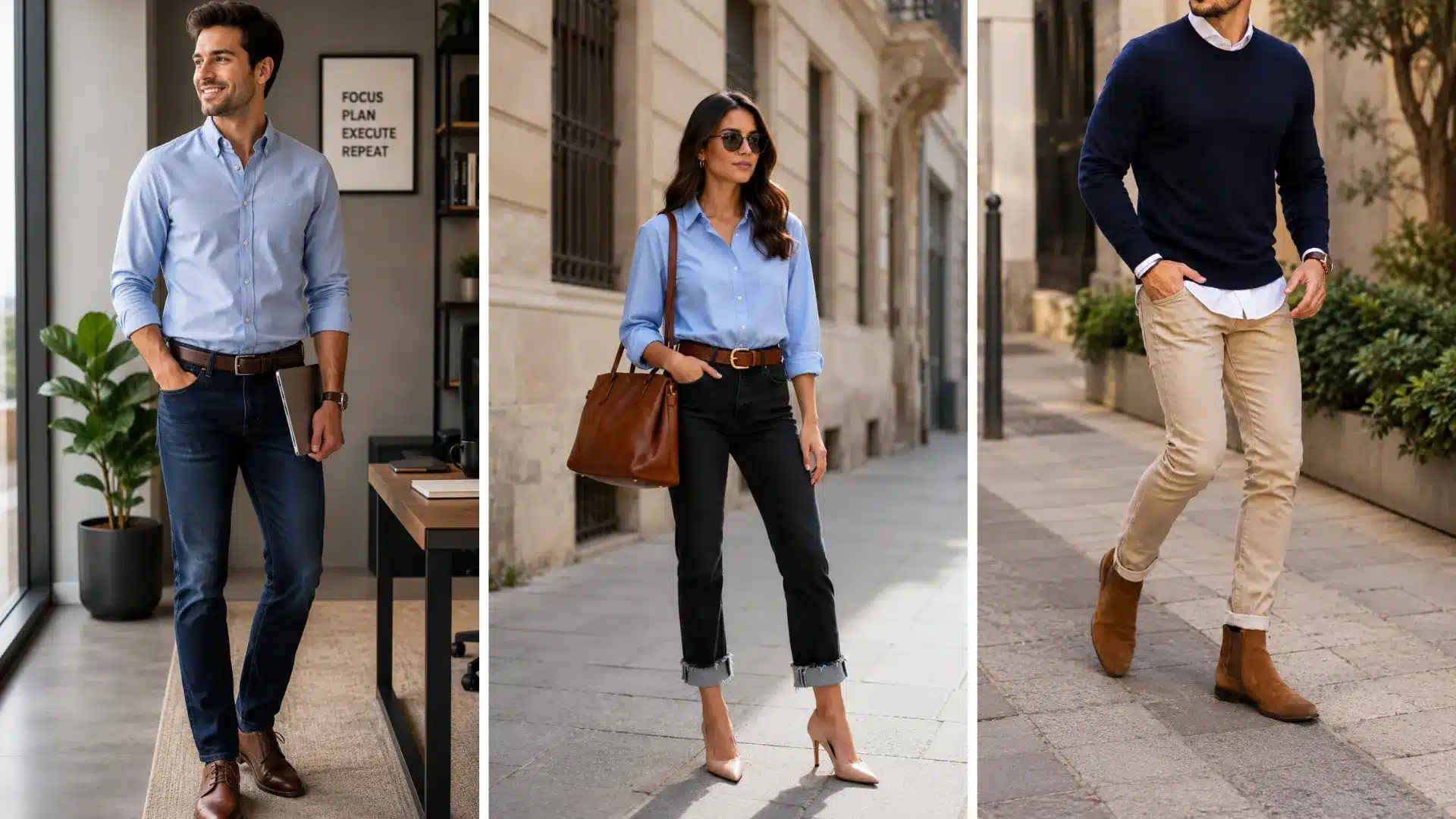
Jeans can fit into a business casual wardrobe when the rest of the outfit looks polished and balanced. The goal is to make denim appear intentional rather than overly relaxed.
1. Tops to Wear with Business Casual Jeans
Blazers are one of the safest choices because they add structure and polish to denim.
A black pair of jeans and a navy blazer combination works well for meetings or office days.
Button-down shirts also create a clean business casual appearance, especially a dark denim and white Oxford shirt pairing.
Polo shirts offer a relaxed but neat option for casual workplaces.
Structured sweaters and fitted turtlenecks are great during colder months because they look refined while still feeling comfortable and easy to wear.
2. Accessories That Make Jeans Look More Professional
A quality leather belt helps create a cleaner and more put-together appearance, especially with dark denim.
Structured bags also add a professional touch because they look more refined than casual backpacks or slouchy totes.
Watches are another easy way to elevate business casual outfits since they add a smart and polished detail.
Minimal jewelry works best in office settings because it keeps the outfit clean and balanced instead of overly flashy or distracting.
3. Shoes to Wear with Jeans at Work
Loafers and Oxfords give denim a clean, office-friendly finish that works in many professional settings.
Chelsea boots are another strong choice because they look modern and polished with dark jeans.
Dress sneakers can work if they are simple, clean, and free from bright colors. Ballet flats also pair nicely with business casual outfits for women.
Athletic sneakers often fail business casual standards because they appear too sporty and informal for most workplace dress codes.
When Jeans Don’t Belong in the Office?
Even well-styled dark denim has its limits. High-stakes client meetings, formal presentations, and external business events usually call for dress trousers or a tailored skirt instead.
Conservative industries, such as law, finance, and government, often maintain stricter standards even under a “business casual” policy.
In those environments, denim may be technically permitted on paper but quietly read as out of place.
If you’re starting a new role, it helps to watch what colleagues actually wear before reaching for jeans. Workplace culture often tells you more than the employee handbook does.
When in doubt, dress slightly more formally, especially for interviews and first meetings
For ideas on building a polished layered look around denim, the dark academia style has useful principles that translate well to office dressing.
Common Mistakes When Wearing Jeans as Business Casual
Jeans can work well in a business casual outfit, but small styling mistakes can quickly make the look feel too relaxed for the workplace.
- Wearing Ripped or Distressed Jeans: Tears, frayed hems, and heavy fading usually make jeans look too casual for most offices. Clean denim creates a more professional appearance.
- Choosing Light Wash Denim: Very light blue jeans often feel relaxed and weekend-focused. Dark wash or black jeans generally fit business casual dress codes better.
- Picking Baggy or Overly Tight Fits: Loose jeans can appear sloppy, while extremely tight styles may look unprofessional. Straight or slim fit jeans usually work best.
- Pairing Jeans With Athletic Sneakers: Running shoes and sporty sneakers often clash with business casual outfits because they look too informal for workplace settings.
- Wearing Casual Graphic Tops: Hoodies, oversized tees, and graphic shirts can make jeans feel too laid back. Structured tops create a cleaner, office-friendly look.
- Ignoring Workplace Culture: Some offices accept jeans daily, while others allow them only on casual Fridays. Paying attention to company dress expectations is important.
- Overaccessorizing the Outfit: Flashy jewelry, oversized bags, or loud accessories can make the outfit feel unbalanced. Minimal and polished accessories usually work better.
Business Casual Alternatives to Jeans
Jeans are popular in many modern workplaces, but they are not the only option for a business casual wardrobe.
Some offices still prefer clothing that looks slightly more formal and structured throughout the week.
- Chinos are one of the best alternatives because they feel comfortable while still looking polished and professional.
- Tailored trousers also work well for meetings, presentations, and traditional office environments where denim may feel too casual.
- Ponte pants are another great choice, especially for people looking for comfort with a cleaner appearance.
- Smart casual slacks can easily match with blazers, button-down shirts, sweaters, and office-friendly shoes.
These alternatives give more flexibility for different workplace settings while still keeping outfits professional, simple, and easy to style for daily office wear.
Conclusion
Jeans can work well in a business-casual wardrobe when styled with intention.
I’ve worn dark denim to office presentations and client check-ins, and the right layers always make the difference between looking put-together and looking like you forgot to change.
The most common mistake is defaulting to the most comfortable pair you own.
Comfort jeans and office jeans are usually different garments; one holds its shape through a long day, the other doesn’t.
Once you find a pair that keeps its color, holds its fit, and sits well on your frame, the rest of the styling decisions get much easier.
What’s your go-to combination for wearing jeans to work? Share your everyday style formula in the comments below.
Frequently Asked Questions
Are Wide-Leg Jeans Business Casual?
Wide-leg jeans can work for business casual when paired with polished pieces like a fitted blouse, a structured blazer, and clean shoes. Dark washes and tailored fits look more professional, while straight or slim-fit jeans remain the safer choice for conservative office environments.
Can You Wear Jeans to a Job Interview if the Company is Business Casual?
Even in a business casual workplace, jeans are usually not the best choice for a job interview. Dressing slightly more formal with tailored trousers or a structured skirt helps create a more professional first impression.
Are Jeans Business Casual for a Conference?
Yes, jeans can be business casual for a conference if the event has a relaxed or modern dress code. Dark wash, clean, and well-fitted jeans paired with a blazer or button-down shirt usually work best.
Which Industries Rarely Accept Jeans as Business Casual?
Law firms, financial services, government offices, and healthcare administration tend to maintain stricter dress standards, even when the stated policy is “business casual.”