The first time I walked a client through a salon color wall, she held two boxes side by side, both labeled “medium brown,” and asked me to explain why they looked completely different.
One was warm and almost reddish. The other was cool, almost grey-brown. Same level. Different tone. That’s where most people get stuck.
Most hair color choices are made by instinct, but when the result looks brasher, colder, or slightly off, the tone is usually the reason. The hair color chart helps remove that guesswork.
This guide explains how the chart works, what the numbers and letters mean, and how to use your skin’s undertone to choose the right shade before buying.
What a Hair Color Chart Actually Shows You?
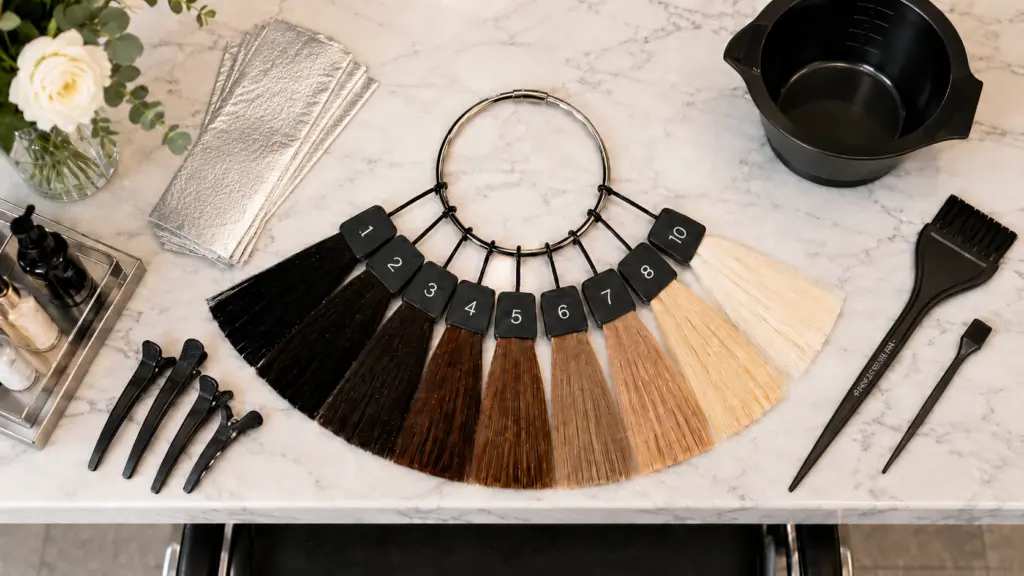
A hair color chart has two pieces of information: level and tone.
Level refers to depth. It shows how dark or light the shade will be on a scale from 1 to 10.
- Level 1: Deep black
- Level 4: Dark brown
- Level 6: Dark blonde
- Level 8: Medium blonde
- Level 10: Lightest blonde
These numbers stay fairly consistent across most professional brands, which is why colorists rely on them when discussing hair color formulas.
Tone changes the personality of the color. Two shades at the same level can still look completely different depending on their undertone.
For example:
- A level 6 golden blonde looks warm and sun-lit
- A level 6 ash blonde looks cool and smoky
Tone usually appears after the level number:
- 6.3 = Dark golden blonde
- 6.1 = Dark ash blonde
Every hair color combines both elements: level plus tone. Understanding both helps predict how the final shade will actually appear before opening the box.
| Level | Shade name | Underlying pigment when lifted |
|---|---|---|
| 1 | Black | Red |
| 2 | Darkest brown | Red |
| 3 | Dark brown | Red-orange |
| 4 | Medium brown | Orange-red |
| 5 | Light brown | Orange |
| 6 | Dark blonde | Orange-yellow |
| 7 | Medium blonde | Yellow-orange |
| 8 | Light blonde | Yellow |
| 9 | Very light blonde | Pale yellow |
| 10 | Lightest blonde | Almost clear |
Research published through the National Library of Medicine explains that natural hair color comes from two pigment types: eumelanin, which produces blacks and browns, and pheomelanin, which produces reds and blondes.
When color or lightener is applied, those underlying pigments become exposed, which is exactly why knowing your tone matters so much when lifting.
How to Find Your Current Hair Color Level
Before you pick a new shade, you need to know where you’re starting. A correct starting level makes the final result much more predictable.
- Check your roots in natural daylight: Not inside, not under warm overhead bulbs, actual outdoor light, or at least a window in the middle of the day.
- Avoid artificial lighting: Artificial light alters both depth and tone, making accurate assessment almost impossible.
- Try a black-and-white photo: If your hair is very dark and you can’t tell whether it’s a 2 or a 3, take a photo and convert it to grayscale.
- Focus only on depth: The grayscale version strips away tone, leaving only depth for easier comparison.
- Compare it to a level scale: Once the tone is removed, the correct level usually becomes much clearer.
- Understand realistic lifting: Box color typically lifts 1 to 2 levels on natural, previously uncolored hair.
- Know what’s achievable: Starting at level 4 and reaching level 6 at home is possible. Reaching level 9 in one session is not.
- Going darker is more forgiving: Moving from a level 7 to a level 5 at home usually gives closer, more predictable results.
- Stay within two levels of your natural color: The farther the jump, the less predictable the outcome tends to become.
Why Hair Color Tones Matter More Than You Think?
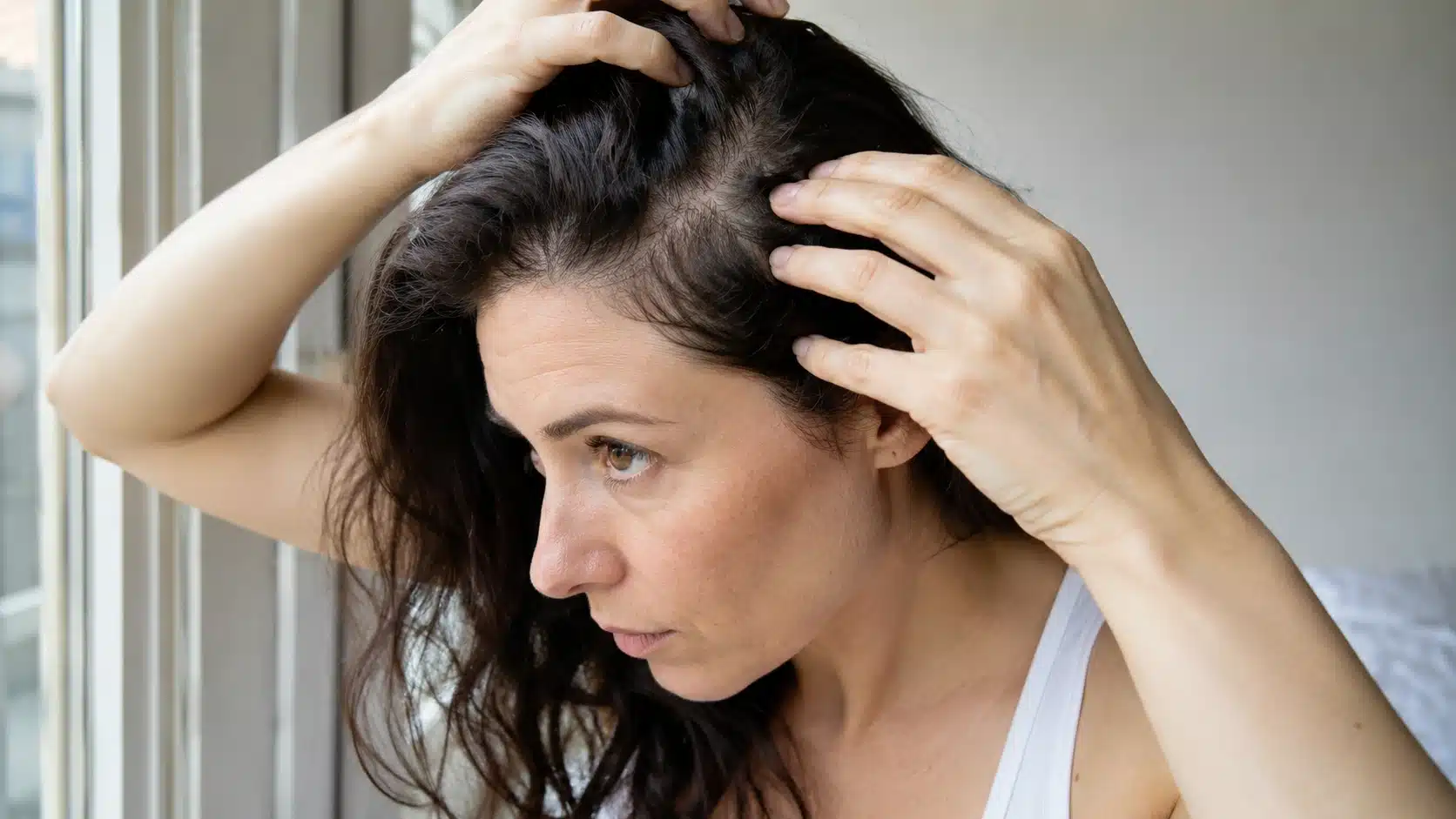
Warm, cool, neutral. These three categories cover almost every tone on any chart.
Warm Tones
Warm tones include:
- Gold
- Copper
- Auburn
- Red
They add brightness and heat to color. These are the shades that read as rich, luminous, and sun-worn.
Cool Tones
Cool tones include:
- Ash (which has a blue or green base)
- Violet
- Platinum
They neutralize warmth and add a clean, polished finish.
Neutral Tones
Neutral tones are balanced, neither obviously warm nor noticeably cool. They’re often the safest choice when you’re unsure.
The Hair Color Wheel and Tone Correction
The hair color wheel sits underneath all of this. Tones that are opposite each other on the wheel cancel each other out.
- Ash, which is blue-based, cancels orange
- Violet cancels yellow
This is why purple shampoo preserves blonde: it deposits a cool tone to offset yellow buildup.
If lifting dark hair is producing brassy orange, an ash-based tone at the same target level will bring it back.
Color and tone principles apply far beyond hair. The same logic behind warm and cool pairing shapes how brow color is selected. The eyebrow tinting guide walks through how tone-matching works for brows, which matters a lot when your hair shade changes.
Common Tone Codes on Box Dyes
Tone codes on box dyes differ slightly by brand, but the most common letters are:
- N or 0: Neutral
- G or 3: Gold
- A or 1: Ash
- C or 4: Copper
- V: Violet
The brand’s own chart is the most reliable translation.
Matching Your Hair Color Chart Choice to Your Skin Undertone
This is the step that makes hair color look natural rather than slightly “off.”
Your skin has a consistent undertone year-round. Most undertones fall into three categories:
- Warm: Yellow or golden beneath the skin
- Cool: Pink or bluish beneath the skin
- Neutral: A balance of both
The quickest way to check is the vein test in natural light:
- Greenish veins: Usually warm undertones
- Bluish or purple veins: Usually cool undertones
- A mix of both: Usually neutral undertones
Jewelry can help confirm it:
- Gold tends to flatter warm undertones
- Silver usually suits cool undertones better
- Neutral undertones often suit both
The American Academy of Dermatology also notes that skin tone affects how the complexion reacts to sun exposure. Lighter, cooler-toned skin often burns faster, while warmer or deeper tones usually tan more easily
Once you know your undertone, the chart narrows significantly.
| Undertone | How to identify | Best hair color shades | Shades to avoid |
|---|---|---|---|
| Warm | Greenish veins, gold jewelry flatter, tans easily | Golden blonde, honey, caramel, copper, chestnut, warm brown | Icy platinum, blue-ash, cool espresso |
| Cool | Bluish or purple veins, silver jewelry flatters, and burns before tanning | Ash blonde, platinum, cool brown, espresso, burgundy, blue-red auburn | Golden, copper, orange-based auburn |
| Neutral | Hard to read vein color, both gold and silver work | Most shades read naturally; start with a neutral-toned level, then test warm or cool | Extreme warm or extreme cool tones until tested |
Warm undertones usually look best with golden and copper-based shades because they echo the warmth already present in the skin.
Cool undertones generally suit ash, platinum, and cooler brunette shades better because they reduce redness and create cleaner contrast.
Neutral undertones are the most flexible. Starting with a neutral-toned shade at your target level is usually the safest approach.
If you know your seasonal color type, that clarity carries across your whole beauty routine. To understand how undertone shapes your base choices across makeup, the foundation shade guide ties it all together.
What Do the Letters and Numbers on a Box Dye Mean?
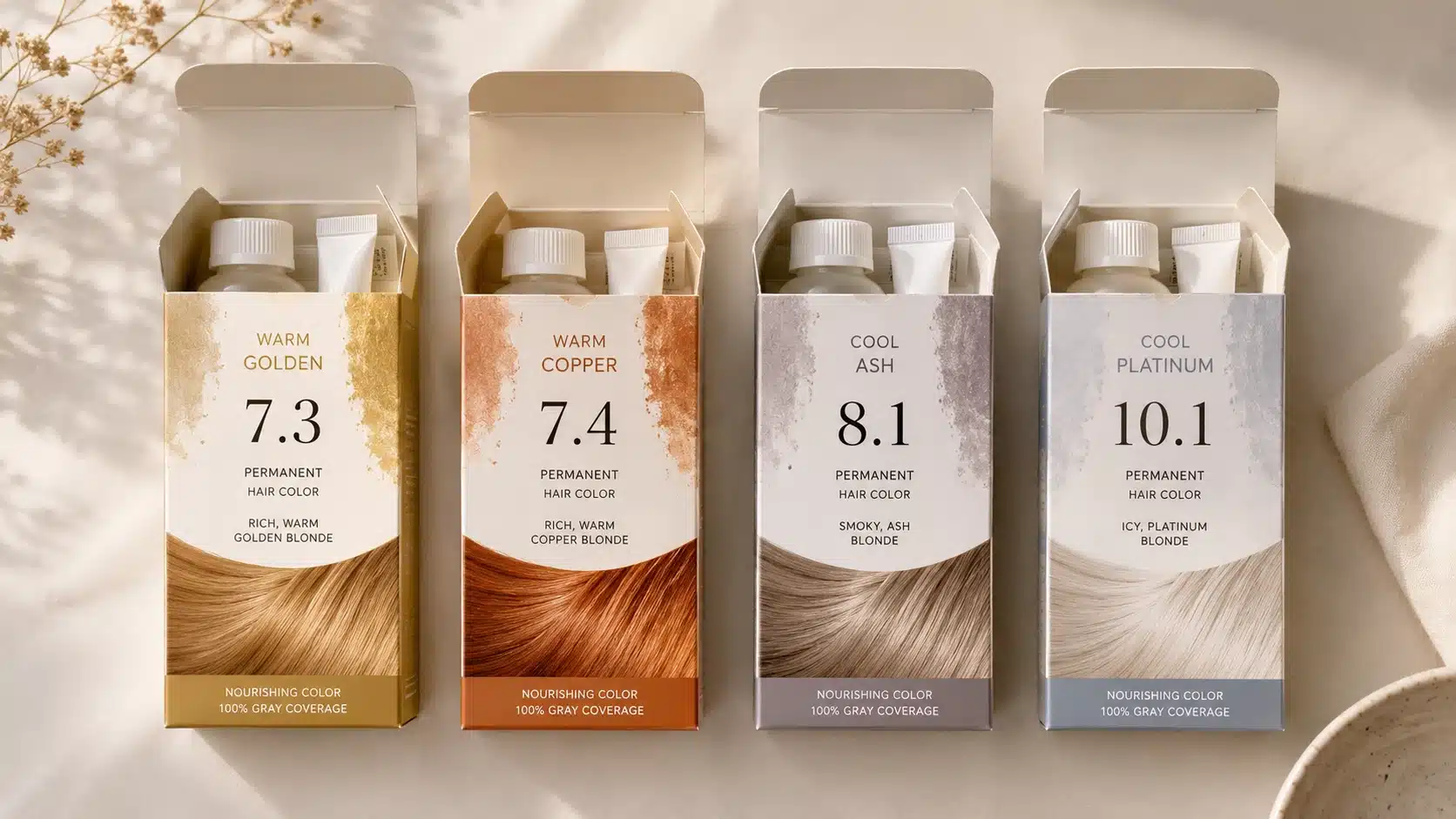
Box dye uses a simplified version of the professional numbering system, but the core logic is identical.
The first number is always level. A 5 is medium brown. A 7 is medium blonde. A 3 is dark brown.
Everything before a dot, slash, or hyphen is depth. What follows is tone. 5.3 is medium golden brown. 7.1 is medium ash blonde.
Some boxes add letters: N for neutral, G for gold, A or B for ash, C for copper, V or R for violet and red. A code like 6VA means level 6 with a violet-ash tone, cool, smoky, with a slight purple shift.
The important thing to know: numbering is not standardized across brands. A level 6 from one company may read noticeably warmer or cooler than a level 6 from another.
The color swatch on the box, checked in daylight against your skin, is a more reliable guide than the number alone.
If the box only uses descriptive names, “chestnut,” “spiced mahogany,” “cool espresso,” look for a level indicator on the back. Most brands include it somewhere, even if it’s small.
Step by Step: Using a Hair Color Chart to Pick Your Shade
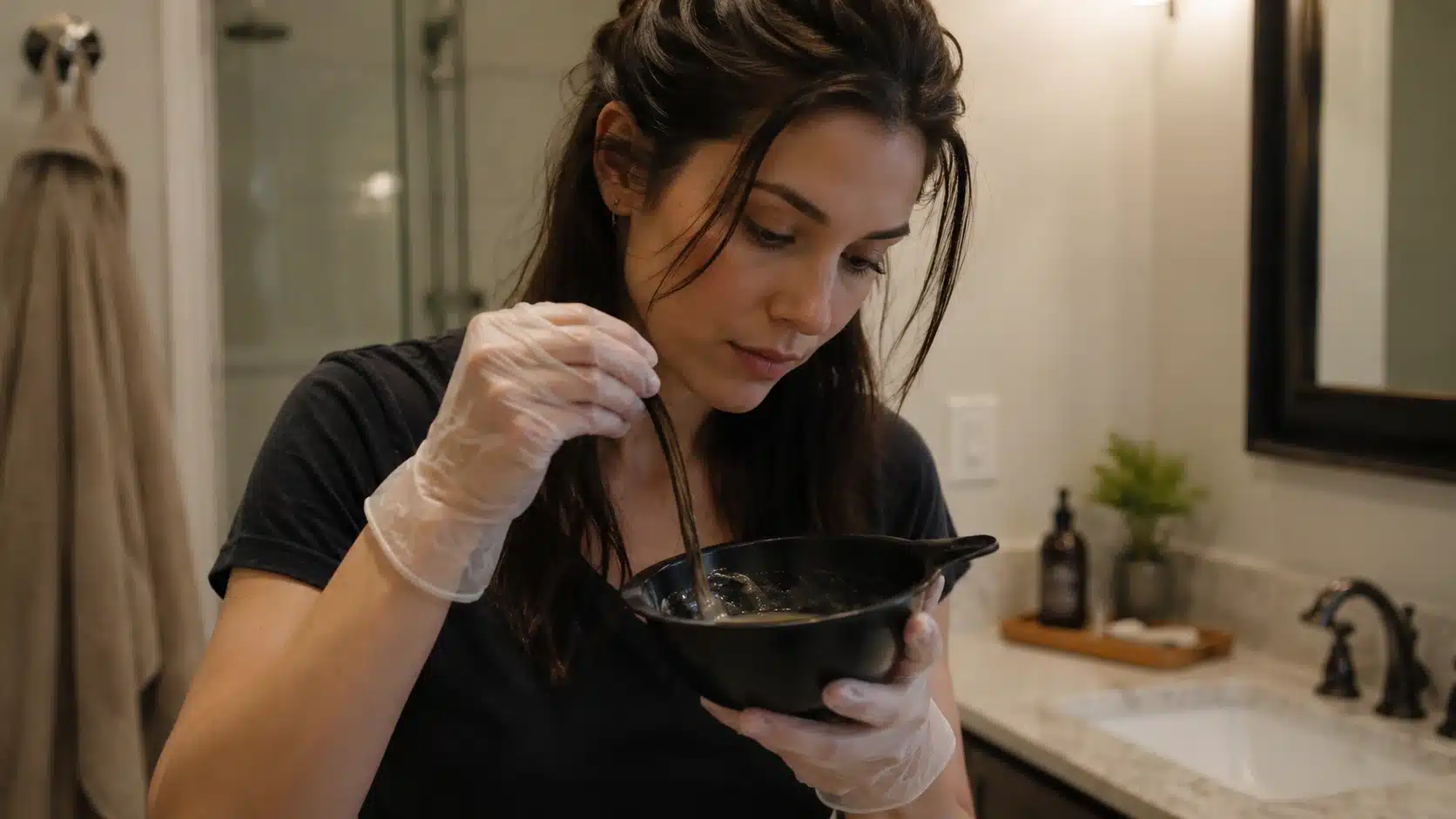
Once you know your current level and undertone, the process becomes clear.
- Locate your current level: Find your current hair level on the chart first because that becomes your starting point.
- Choose your target carefully: Decide how light or dark you want to go, keeping the change within 1 to 2 levels at home.
- Pick your tone direction: Warm undertones usually read naturally with golden or copper shades instead of cooler ash tones.
- Think about contrast: Cool undertones, such as warm auburn, should determine whether they want contrast or a softer neutral result.
- Do a strand test first: Take a small section from the back, apply the dye, and develop it fully before full application.
- Follow FDA guidance: The FDA recommends strand and patch testing because it shows how the formula develops on actual hair.
- Check for reactions early: Testing first also helps identify possible allergic reactions before applying color across the entire head.
- Keep a color record: Write down the brand, shade code, processing time, and result so future
Conclusion
Choosing the right shade gets much easier once you stop relying only on the photo on the box.
A hair color chart gives you a clearer system: level shows how light or dark the color is, tone explains the warmth or coolness, and your skin undertone helps you choose a shade that feels natural on you.
If you are coloring your hair at home, stay within one to two levels of your current shade, check the tone code carefully, and do a strand test before full application.
That small step can save you from brassiness, flat color, or a result that doesn’t look like what you expected.
The better you understand the chart, the easier it becomes to choose shades that look natural and suit your features better.
Still deciding between two shades? Share your current level, target color, and undertone in the comments for extra guidance.
Frequently Asked Questions
Can I Use a Hair Color Chart if My Hair is Already Color-Treated?
Yes. Previously colored hair behaves differently because its natural pigment has already been altered. Lightened lengths absorb color faster and may look different from fresh roots. When changing color, treat the roots and lengths as separate starting points for more accurate results.
Why Does My Hair Turn Orange when I Try to Go Lighter?
Orange appears because warm pigments are exposed as dark hair lightens. Red tones show around levels 4 to 5, orange at 6 to 7, and yellow at 8 to 9. Using an ash or blue-based toner at the target level helps neutralize unwanted orange tones.
How Often Should I Refresh My Color to Stay on the Chart?
Most people need touch-ups every 4 to 6 weeks if the color differs greatly from their natural shade. Staying closer to the natural color can extend refreshes to 8 weeks or longer. Color-safe shampoo and proper root application also help maintain the shade longer.
Is a Professional Hair Color Chart Different from a Box Dye Chart?
Both use the same 1 to 10 level system. Professional charts offer more tone options, precise formulas, and better control for lifting or blending. Box dye charts simplify choices for home use, while professional systems work better for major color changes or gray coverage.