
That moment when the mole is gone but a mark takes its place can feel unexpected. Many expect smooth skin right away, but healing tells a different story.
A mole removal scar often becomes the real concern after the procedure.
Questions start building quickly. Will it fade with time, or is there anything that can help it look better?
These thoughts are common, especially when the skin does not bounce back instantly. Healing depends on several factors, and no two results look exactly the same.
This blog walks through what actually happens after mole removal, what influences scarring, and the simple steps that can support smoother, healthier-looking skin over time.
What Does a Mole Removal Scar Look Like?
A mole removal scar can look different from person to person, which is why it often catches people off guard. In the early days, the area may appear red, slightly swollen, or even a bit shiny.
This is a normal part of the skin repairing itself. As healing continues, the scar usually settles into a more defined appearance.
Some scars stay flat and fade into a lighter tone that blends with the surrounding skin. Others may look slightly raised or darker, especially on deeper removals or sensitive skin.
Two specific scar types are worth knowing about. A hypertrophic scar forms when the body produces excess collagen during the healing process. It looks raised and firm, but stays within the boundary of the original wound.
A keloid scar spreads beyond the wound site and is more common in people with deeper skin tones.
Most scars soften and become less noticeable over 6 to 12 months, though the final result depends on the removal method, skin type, and how consistently the area is cared for during healing.
Types of Mole Removal Methods and Their Impact on Scarring
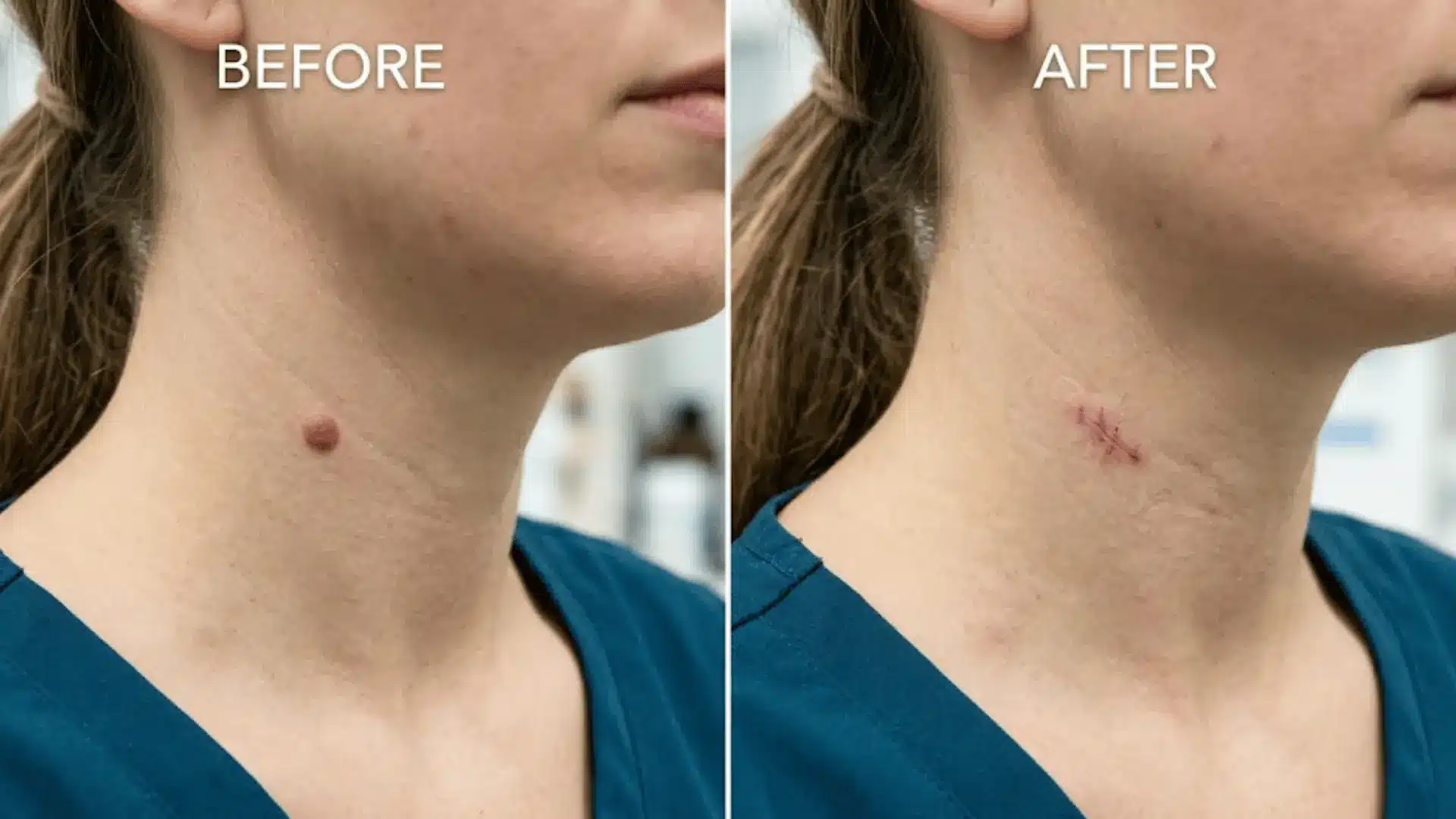
The way a mole is removed plays a big role in how the skin heals and what kind of scar forms. Each method affects the deeper layers of skin differently, which is why results can vary.
The method chosen also affects mole removal costs, which is often a deciding factor alongside scarring risk when weighing options with a provider.
- Shave Removal: This method removes the mole from the surface. It usually heals into a flat, lighter mark that blends more easily over time. Stitches are generally not needed.
- Surgical Excision: The mole is cut out along with a small margin of skin. This often leaves a thin, straight-line scar that fades gradually. Stitches are typically removed 1–2 weeks after the procedure, though many providers now use dissolvable stitches or skin glue that require no follow-up visit.
- Laser Removal: Works on pigment rather than cutting the skin. Scarring is often minimal, but results depend on how deep the mole sits.
- Punch Removal: A small tool removes the mole in a circular shape. This can leave a tiny round scar that becomes less noticeable as it heals.
- Electrodessication: A fine electric current removes surface mole tissue. It is minimally invasive and typically used for small, flat moles, leaving a very small mark that fades with proper care.
Mole Removal Scar Healing Stages and Timeline
Healing after mole removal follows a clear sequence, and each stage comes with its own timeline. While results vary, most people move through these phases in a similar pattern.
| Timeline | Healing Stage | What Happens |
|---|---|---|
| Days 1-7 | Initial Stage | Redness, swelling, tenderness, and scab formation |
| Weeks 1-3 | Recovery Stage | Scab falls off, new pink skin appears |
| Weeks 3-8 | Early Remodeling | Redness reduces, texture begins to smooth |
| 2-6 Months | Remodeling Stage | Scar fades, flattens, and blends gradually |
| 6-12 Months | Final Healing | Scar becomes faint and less noticeable |
One thing I remind clients: the two-to-three week mark is when the wound closes, not when the scar is done.
The remodeling process that determines how the scar ultimately looks continues quietly for up to a year. Managing expectations at this stage makes the whole process feel less discouraging.
Factors that Affect Mole Removal Scars
Not every mole removal scar heals the same way, and that often comes down to a few key factors. These elements influence how noticeable the scar becomes and how well it fades over time.
- Skin Tone and Sensitivity: Some skin types are more prone to darker marks or raised scars during healing. People with deeper skin tones are at higher risk of hyperpigmentation and keloid formation, which should be discussed with a provider before the procedure.
- Size and Depth Of The Mole: Larger or deeper moles usually take longer to heal and may leave more visible scars.
- Removal Technique Used: Different methods affect the extent of skin involvement, which alters the final result.
- Sun Exposure During Healing: Direct sun can darken the scar and slow down the fading process.
- Consistency of Aftercare: Proper care, including keeping the area clean and protected, supports smoother healing outcomes.
- Mole Location on the Body: Areas with better blood circulation, like the face, tend to heal faster than the arms, legs, or back. Scars in high-movement areas (such as joints or the neck) may also take longer to settle because the skin is repeatedly stretched.
- Age: Younger skin generally heals faster and with less visible scarring. Older adults may find that healing takes longer and that scars remain more noticeable.
- Lifestyle Habits: Smoking and excessive alcohol consumption both slow tissue repair and can increase the visibility of post-procedure scars. These should be factored into timing if a procedure is planned.
One thing worth knowing: if pigment reappears in the healed area, it does not always mean the scar is worsening; in some cases, it signals a mole growing back in the scar, which has its own causes and next steps.
At Home Care Options to Improve Skin Healing
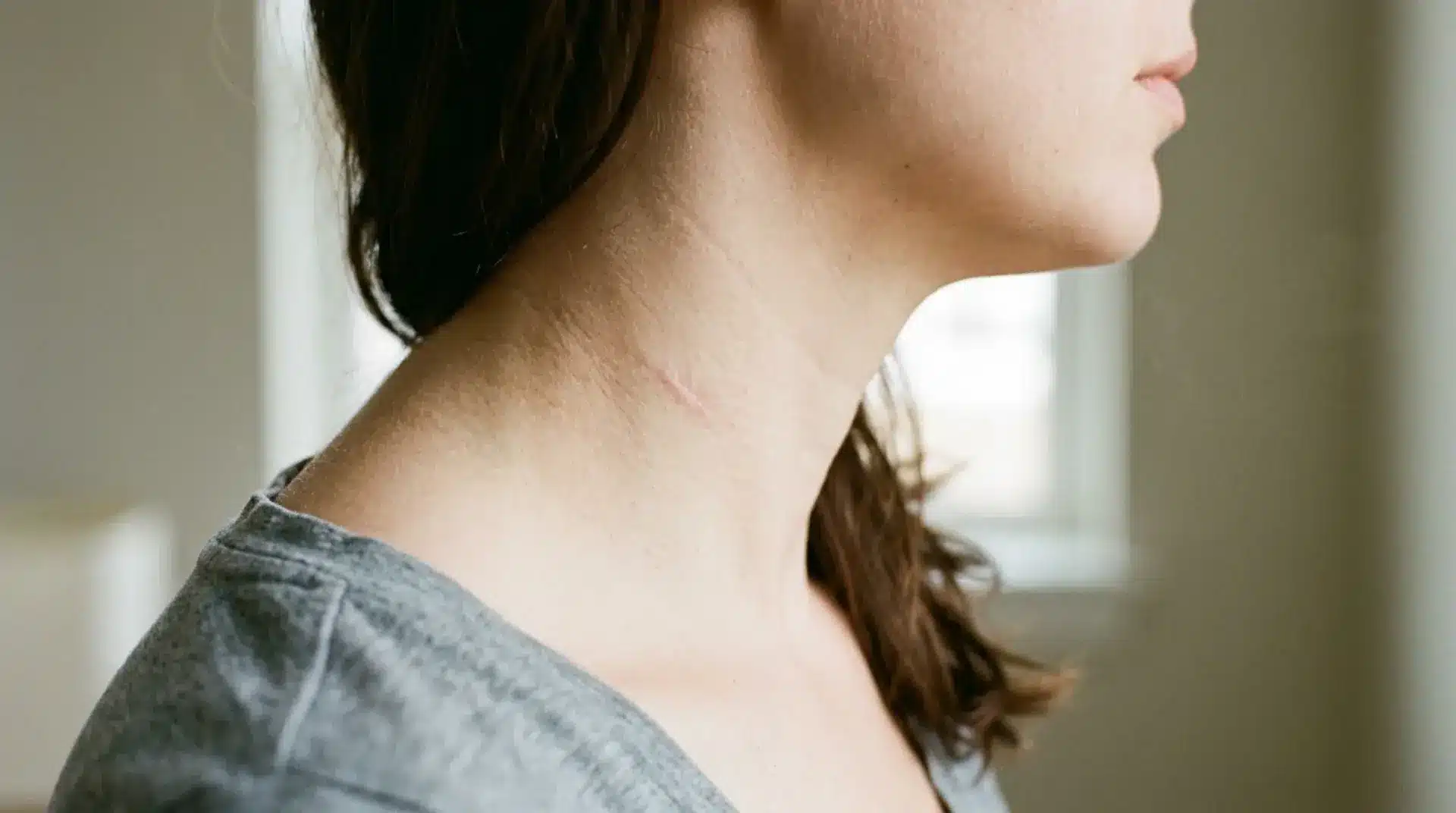
In the first 24 to 48 hours after the procedure, most providers recommend applying a thin layer of petroleum jelly under a sterile bandage to keep the wound moist and reduce the risk of scabbing and early scarring.
Silicone gel sheets or silicone-based scar gels are widely recommended by dermatologists as a first choice, as regular daily use can help flatten raised scars and gradually reduce redness over time.
In addition, topical scar creams containing ingredients such as niacinamide or allantoin may help improve texture and even skin tone, but it is important to patch-test any new product before applying it to healing skin.
Consistent use of sunscreen is essential during this stage, as sun exposure can darken healing areas and turn temporary marks into long-lasting ones, making SPF one of the most important parts of post-wound care.
Topical care matters, but what is happening internally also affects the result. Prioritizing lean proteins and vitamin C supports collagen synthesis during the remodeling phase.
Zinc plays a role in skin repair, and adequate hydration keeps skin cells plump enough to regenerate effectively.
Alcohol and processed sugar are worth limiting during active healing, as both have been linked to slower tissue repair.
When to be Concerned About a Mole Removal Scar?
Some changes during healing are normal, but certain signs should not be ignored. Signs that warrant a check-in with your provider include:
- Persistent or worsening redness beyond the first two weeks
- The scar continues to grow or spread beyond the original wound site (possible keloid)
- Unusual thickening, firmness, or a raised texture that is not improving (possible hypertrophic scar)
- Ongoing pain, warmth, or discharge (possible infection)
- Any new irregular pigmentation or changes in the surrounding skin
This is the moment to pause home care and seek professional help.
As someone who regularly works with post-procedure skin, my general rule is: if something looks or feels wrong at the two-week mark, do not wait to see if it resolves on its own.
Early intervention leads to significantly better scar outcomes.
Clinical Treatment Options for Stubborn Scars
When at-home care does not deliver the desired improvement, clinical treatments can offer more targeted and effective results. These options are designed to address deeper skin concerns.
1. Laser Therapy: Targets discoloration and stimulates collagen remodeling. Effective for red or pink scars and for improving skin texture.
2. Microneedling: Creates controlled micro-injuries to prompt new collagen growth. Best suited to textured or pitted scars.
3. Chemical Peels: Help even out surface tone and smooth texture, particularly useful for post-inflammatory hyperpigmentation.
4. Corticosteroid Injections: Used specifically for raised hypertrophic or keloid scars to reduce their bulk and firmness.
5. Cryosurgery: Typically used for larger keloid scars. A single session can significantly reduce scar size.
6. Scar Revision Surgery: Reserved for scars that have not responded to other treatments and remain a significant cosmetic concern after full healing.
7. Dermatologist-Guided Plan: For complex cases, a personalized combination of the above is particularly important in darker skin tones, where hyperpigmentation risk is higher.
Conclusion
A mole removal scar is a natural part of the healing process, and while it may feel noticeable at first, it rarely remains so.
The final appearance depends on patience, proper care, and how the skin responds over time. Most scars gradually fade, soften, and blend in with the surrounding skin when given the right attention.
Simple habits like consistent aftercare and daily sun protection can make a clear difference in how the skin heals.
It is also important to keep expectations realistic, as every skin type heals differently.
Every skin type heals on its own schedule. Patience, protection, and knowing when to escalate that combination covers most of what healing actually requires.
Have you noticed changes in your scar over time, or still waiting for it to fade? Share your experience below.
Frequently Asked Questions
Can a Mole Grow Back after Removal?
Yes, it can be particularly problematic during shave removal, when the roots of the mole may not be fully removed. If regrowth occurs, pigment can reappear within the scar tissue, often causing the scar to darken or change.
How Big will the Scar be compared to the Original Mole?
Slightly larger, and that is normal. With surgical excision, a mole around 5mm wide can leave a linear scar of 7–10mm once the wound closes. Shave removal tends to leave a mark closer in size to the mole itself.
Does Scar Massage Help in Healing?
Yes, it does, and it costs nothing. Once the wound is fully closed and the scab has gone, usually around the two-week mark, gentle massage with two fingers in small circular motions, then vertically and horizontally along the scar, can improve blood flow and help the tissue soften.