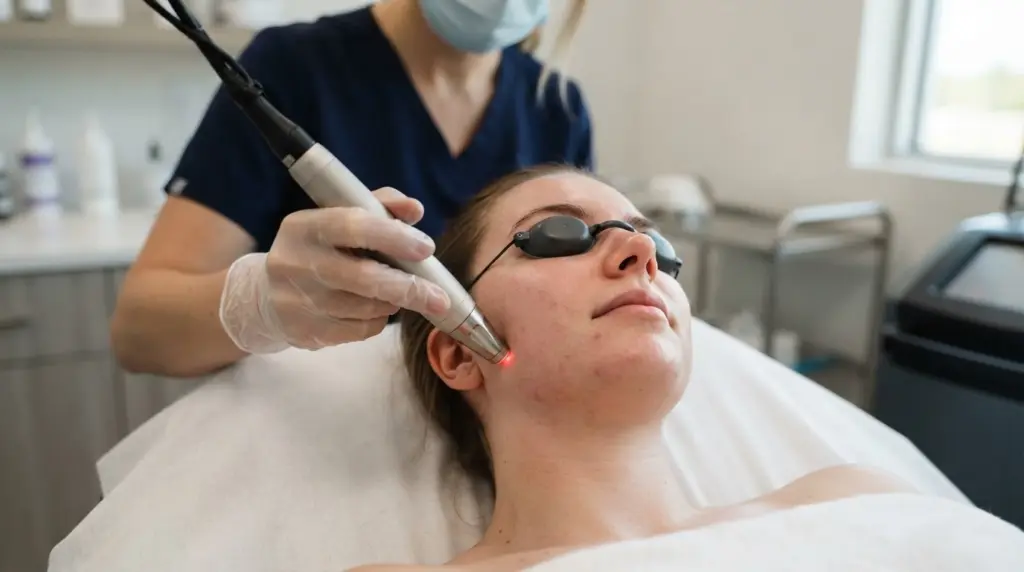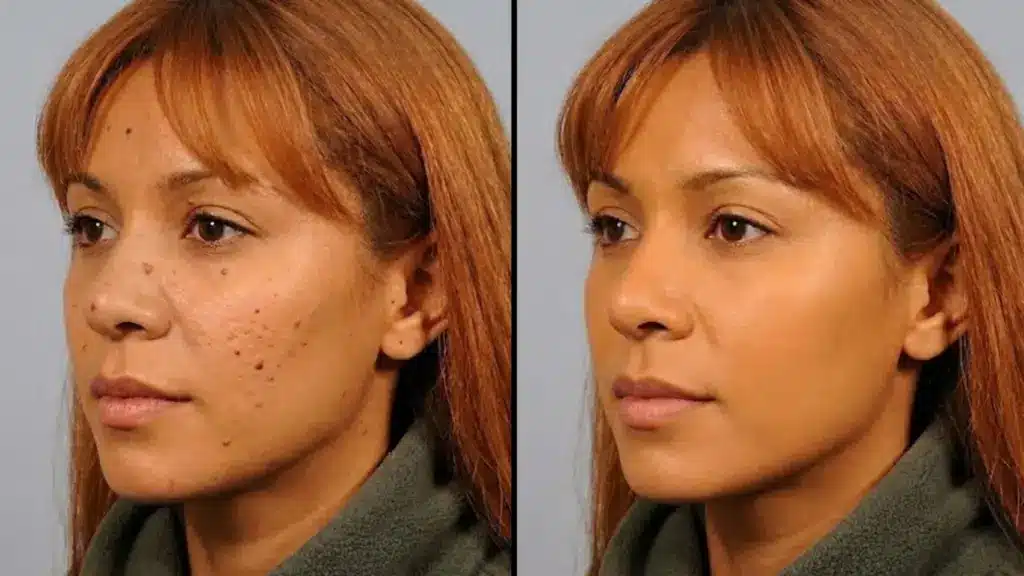
A small mole might seem harmless at first, and then one day, it starts to bother you. Maybe it catches your eye in the mirror, or a doctor suggests getting it checked.
That’s when the question hits: how much does mole removal cost, and is it really worth it?
The answer is not always simple, and that uncertainty can feel frustrating. Some people worry about the price, while others worry about their skin and what the mole could mean.
In this guide, I break down every cost you need to know, so you can walk into a consultation prepared, not surprised.
As a licensed aesthetician who has guided clients through skin decisions for years, I know the anxiety that comes with not knowing what something will cost before you even pick up the phone.
It becomes more than just a cosmetic concern, and it turns into a decision about health, confidence, and peace of mind.
If you have been thinking about removing a mole, you are not alone in wondering where to start.
What are Moles and Why Should They Be Removed?
Moles are small growths on the skin that appear when pigment-producing cells grow in clusters instead of spreading evenly.
They can be flat or raised, light brown to dark in color, and may appear anywhere on the body.
According to the American Academy of Dermatology, most adults carry between 10 and 40 moles somewhere on their body, so you are far from alone.
Most moles are harmless and stay the same over time, but some can change in size, shape, or color. These changes may signal a potential skin concern, including skin cancer, which is why monitoring them matters.
Removal is usually recommended for two main reasons: medical and cosmetic.
A doctor may suggest removing a mole if it looks suspicious, bleeds, itches, or grows irregularly.
In other cases, people choose removal for appearance, especially if the mole is on the face or a visible area.
Even when removal is cosmetic, it is still important to have it evaluated first to rule out any health risks before proceeding.
How to Know If a Mole Needs to Be Checked: The ABCDE Rule
Before you think about cost, it helps to know whether your mole genuinely warrants attention.
Dermatologists use the ABCDE framework as a first-line self-check:
- A(Asymmetry): One half of the mole does not match the other.
- B(Border): The edges are ragged, notched, or blurred rather than smooth.
- C(Color): The mole has uneven shades, different tones of brown, black, or patches of red, white, or blue.
- D(Diameter): It is larger than 6 mm, roughly the size of a pencil eraser.
- E (Evolution): It is changing in size, shape, color, or you have new symptoms like itching, bleeding, or crusting.
I tell my clients: photograph the mole on the same day each month under the same lighting.
It sounds overly careful, but patterns are hard to catch by memory alone, and catching a change early is what makes all the difference between a simple shave removal and a more complex procedure.
If any single ABCDE flag is present, see a dermatologist before worrying about cost at all.
How Much Does Mole Removal Cost?
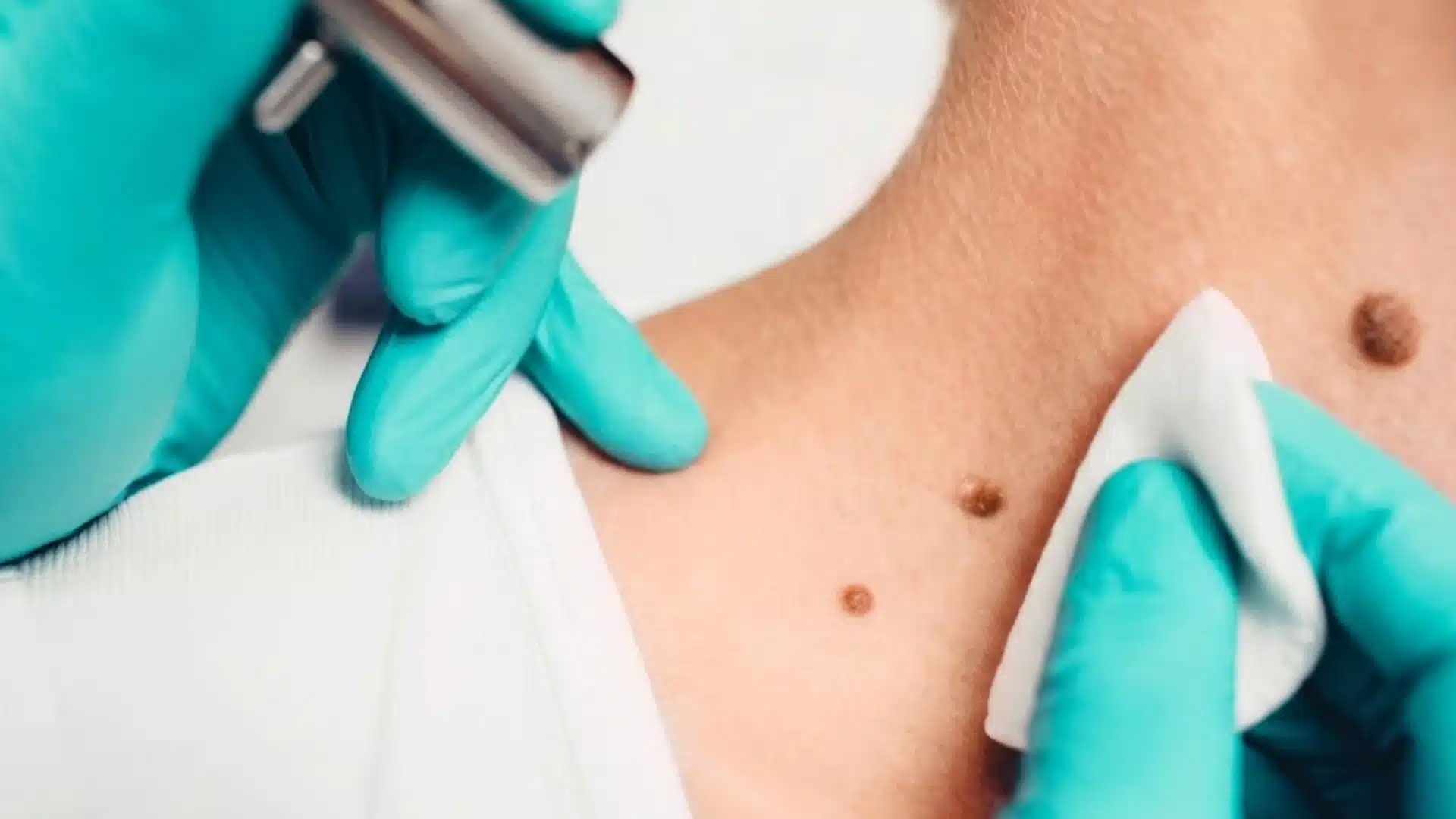
The average cost of mole removal ranges from $150 to $500 per mole, with many people paying around $300 for a standard procedure.
Prices can start as low as $116 for simple cases and go up to $1,500 or even $2,000 for more complex ones.
The final cost depends on factors such as the size and location of the mole, the removal method used, the doctor’s experience, and whether additional testing is required.
If the mole is removed for medical reasons, such as concerns about skin cancer, insurance may cover most or all of the cost after your deductible.
Cosmetic removals are usually paid fully out of pocket. Costs also vary by location and clinic, so it is a good idea to compare quotes from different dermatologists.
Always ask for a full price estimate upfront to avoid unexpected charges later.
Mole Removal Cost by Procedure Type
Some procedures are quick and simple, while others require more time, stitches, or specialized tools. Understanding these differences makes it easier to compare treatments.
1. Shave Removal
Shave removal is one of the most affordable options. It typically costs between $100 and $350, with an average of around $150 per mole.
This method is best for small, raised moles that sit above the skin. The area is numbed, and the mole is shaved off using a small blade; no stitches are needed.
Because the process is simple and quick, the cost stays lower. Healing is usually fast, often within a few days.
This option is commonly chosen for harmless moles that need a straightforward solution.
2. Surgical Excision
Surgical excision costs more because it is a more detailed procedure. Prices usually range from $100 to $600, with an average of around $325 per mole.
This method of mole removal surgery is used for deeper moles or those that may need testing for skin cancer.
The doctor removes the mole along with a small margin of surrounding skin and closes the area with stitches. It offers complete removal and reduces the chance of regrowth.
Healing takes about one to two weeks, and a small scar may remain. This option is preferred when safety is the main concern.
3. Punch Excision
Punch excision is a less commonly discussed but widely used technique, especially for small, round moles.
A circular cutting tool is used to remove the mole cleanly, and suturing follows if needed. Costs generally range from $150 to $400.
It is more precise than shave removal for certain mole types and causes less surrounding skin disruption than a full surgical excision.
4. Laser Mole Removal
Laser mole removal is often chosen for cosmetic areas like the face. Costs generally range from $150 to $500, averaging about $531 per mole.
The laser targets pigment in the mole without cutting the skin, which reduces bleeding and often limits scarring. It works best for flat or pigmented moles.
Some cases may require multiple sessions, which can increase the total cost. Recovery is usually quick and gentle.
This method is mainly used for non-suspicious moles where appearance matters most.
5. Cryotherapy (Freezing)
Cryotherapy involves freezing the mole using liquid nitrogen. It usually costs between $100 and $392, with an average of $209 per mole.
This method is commonly used for flat, non-cancerous moles or similar skin growths. The freezing process destroys the cells, causing the area to scab and fall off within a week or so.
It is a quick procedure and does not require stitches. The total cost may vary depending on how many moles are treated in one session.
It works best for surface-level moles and is not ideal for deeper or suspicious ones.
6. Electrosurgery
Electrosurgery uses a controlled electric current to burn away the mole tissue. It is commonly combined with other methods, such as shave removal, and is effective for small, benign moles.
Costs typically range from $100 to $400. The procedure is quick, requires no stitches, and leaves minimal downtime.
It is not recommended for suspicious moles that require biopsy, as burning the tissue can interfere with pathology testing.
7. Mohs Micrographic Surgery
Mohs surgery is a specialized technique used when a mole has been confirmed as cancerous or is highly suspected of being so.
During the procedure, thin layers of skin are removed and examined under a microscope in real time until no cancer cells remain.
It has the highest cure rate of any skin cancer treatment and the smallest possible margin removal, making it the preferred option for cancerous moles on the face, hands, or feet where tissue preservation matters.
Costs range from $1,000 to $2,500 or more and are typically covered by insurance when medically indicated.
Key Factors That Affect Mole Removal Cost
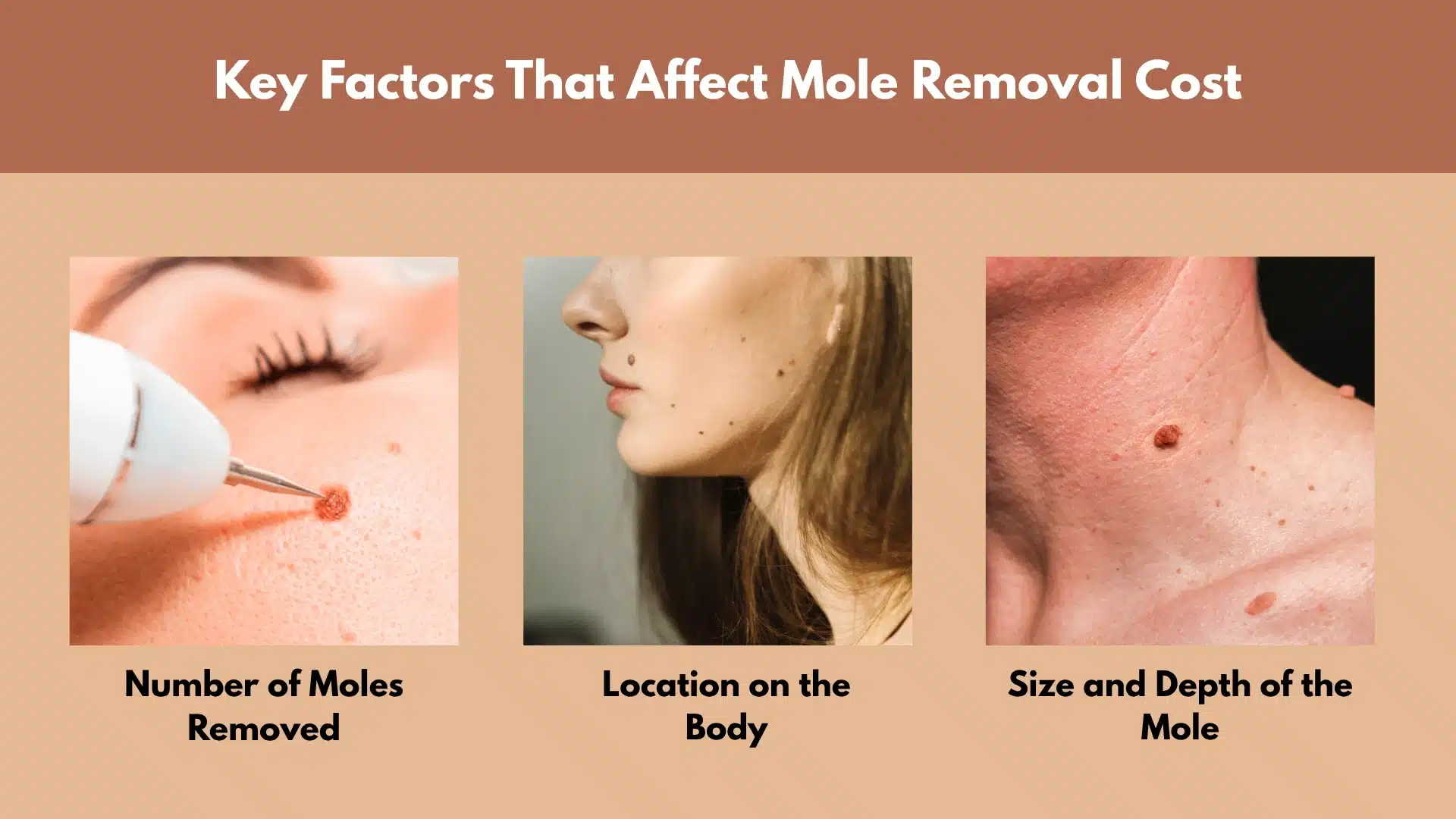
The cost of mole removal is not fixed and can vary based on several important factors. Understanding these helps set realistic expectations before visiting a clinic and explains why two people may pay very different prices for a similar procedure.
- Size and Depth of the Mole: Larger or deeper moles require more time, precision, and sometimes stitches, which increases the overall cost.
- Location on the Body: Moles on visible and sensitive areas like the face, neck, or nose cost more due to the need for careful removal and minimal scarring, while areas like the back or legs are usually less expensive.
- Number of Moles Removed: Removing multiple moles increases the total cost, though some clinics may offer discounted package pricing.
- Type of Provider: Dermatologists typically charge $150-$400 for non-surgical methods. Plastic surgeons, who specialize in cosmetic outcomes, tend to charge $500-$1,500.
- Geographic Location: Prices are generally higher in large cities and urban areas compared to smaller towns or rural locations.
- Need for Biopsy or Lab Testing: Suspicious moles may require testing, adding an extra $100–$200 or more to the total cost.
Mole Removal Cost With Vs Without Insurance
The cost of mole removal can change significantly depending on whether insurance applies. In most cases, coverage depends on whether the procedure is considered medically necessary or purely cosmetic.
| Factor | With Insurance | Without Insurance |
|---|---|---|
| When It Applies | Covered if the mole is suspicious, changing, or linked to potential skin cancer | Applies when removal is for cosmetic reasons (appearance) |
| Average Cost | Low out-of-pocket cost, usually $25–$150 (copay or deductible) | Full cost ranges from $150 to $1,500+ per mole |
| Biopsy & Testing | Often covered if medically required | Additional $100–$200+ for lab testing |
| Doctor Visit | Partially or fully covered, depending on plan | Consultation may cost $100–$250 |
| Procedure Type | Usually, standard medical removal methods | Cosmetic options like laser may cost more |
| Follow-Up Visits | Often included in coverage | Extra charges may apply for each visit |
| Approval Requirement | May need prior approval or medical justification | No approval needed, paid directly out-of-pocket |
Hidden Costs of Mole Removal You Should Budget For
When you get a mole removed, the main procedure price is not the only cost to consider.
- Consultation fee: $100 to $250 for the first visit, where the dermatologist examines the mole and recommends treatment.
- Lab or biopsy testing: $50 to $300 or more if the mole appears suspicious and requires pathology.
- Follow-up visits: $50 to $150 per visit to check healing or remove stitches.
- Anesthesia: Local anesthesia is usually included, but complex procedures may add $100 to $300.
- Scar treatment: If a scar develops after removal, treatments like silicone gel, steroid injections, or laser resurfacing can add $100 to $500 to the total cost, depending on severity.
Is Mole Removal Worth the Cost?
Mole removal can be worth the cost depending on the reason behind it.
- If a mole looks unusual, changes over time, or causes symptoms like itching or bleeding, removal becomes medically important.
- In such cases, the value is not just about cost but about protecting long-term skin health and catching serious conditions early.
- On the other hand, cosmetic removal is a personal choice, often done to improve appearance or comfort, especially for visible areas.
- Ignoring a suspicious mole to save money can lead to higher risks later, including more complex treatments if a problem develops.
Skin decisions should be based on safety first, then appearance, so the cost feels justified in the long run.
One thing I always flag for my clients, especially those who swim or spend a lot of time outdoors: avoid prolonged water exposure and direct sun on a healing wound.
I spent years coaching competitive swimmers, and I saw firsthand how chlorinated water and sun exposure could slow skin healing and worsen pigmentation around a treated area.
SPF 30+ on the scar once it closes, every single day, is non-negotiable for the first few months.
If your mole grows back after removal, see your doctor promptly. Regrowth can occasionally be a sign of melanoma and should be evaluated, not watched.
Tips to Save Money on Mole Removal
Mole removal costs can add up quickly, but a few smart steps can help reduce expenses without compromising safety. The goal is to focus on value, not just the lowest price.
- Check Insurance Eligibility: If a mole shows signs of medical concern, insurance may cover part or all of the cost, so always get it evaluated first.
- Compare Multiple Clinics: Prices can vary widely between providers, so getting quotes from different clinics helps find a reasonable and fair cost.
- Ask About Bundled Pricing: Some clinics offer discounts when removing multiple moles in one session, which can lower the overall cost.
- Consider Medical Necessity Evaluation First: A professional assessment may classify the removal as medically necessary, reducing out-of-pocket expenses.
- Avoid DIY Methods: At-home removal may seem cheaper, but it can lead to infections, scarring, or complications that end up costing more to fix.
- Use an HSA or FSA: If your removal qualifies as medically necessary, using pre-tax dollars from a health or flexible spending account reduces the effective cost.
Conclusion
Mole removal costs can vary widely, but understanding the key factors makes it easier to plan ahead.
From simple procedures to more complex treatments, the final price depends on the method, provider, and whether the removal is medical or cosmetic.
If you have been wondering: how much does mole removal cost, the answer is not one fixed number but a range shaped by your specific case.
Taking the time to compare options, check insurance coverage, and get a clear estimate can help you avoid surprises and make a confident decision.
Skin health should always come first, so never ignore a suspicious mole just to save money.
Have you had a mole removed recently, or are you considering it? Share your experience and cost in the comments below.
Frequently Asked Questions
Can Moles Fall Off Naturally?
No, moles do not usually fall off on their own, and if one does, it may be due to irritation or injury, and it should be checked by a doctor.
Is It Safe to Freeze a Mole at Home?
Freezing a mole at home is not safe, as it can cause infection, scarring, or incomplete removal. A medical professional should always handle mole removal procedures.
How Long Do Results of Mole Removal Last?
Mole removal results are usually permanent. Once removed properly, the mole does not return, though new moles can appear over time depending on skin type and sun exposure.