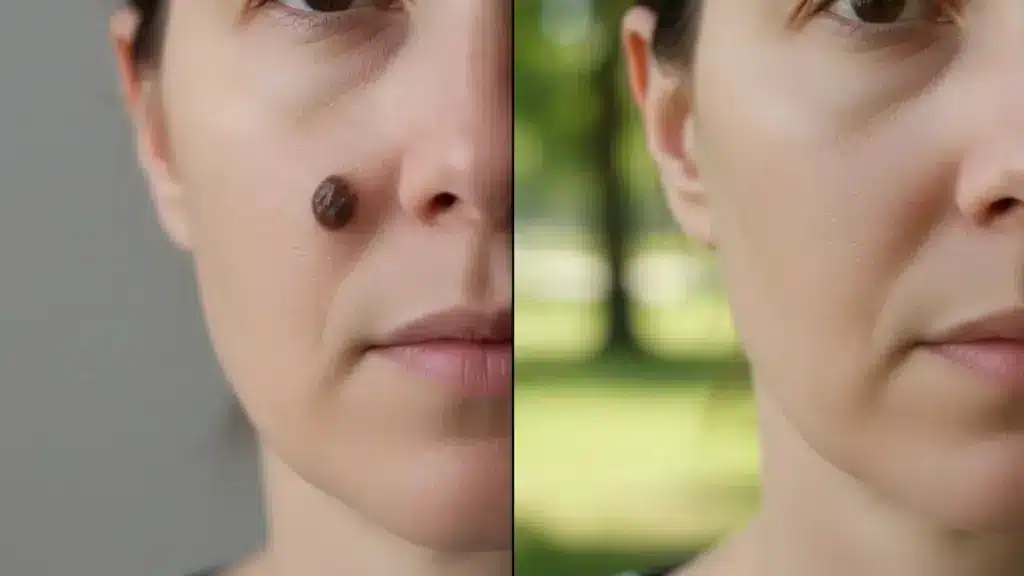
Moles are common, but not all of them stay the same over time. Some change in shape or color, while others simply become a concern because of how they look.
That is usually when people start thinking about removal, either for health reasons or for a cleaner appearance.
If you are considering mole removal surgery, it helps to understand what actually happens and what options are available.
This guide breaks things down in a simple way. It covers why moles are removed, the different methods used, and what happens during the procedure.
It also explains what to expect after treatment and how to choose the right specialist in your area. By the end, the whole process should feel clear and easier to approach.
What is Mole Removal Surgery, and Why Consider It?
Mole removal surgery is a procedure used to remove a mole from the skin in a safe and controlled way. People choose it for different reasons.
Some want to remove a mole that looks odd, feels raised, or affects their appearance. Others need it checked because it has started to change.
A doctor may recommend removal if a mole grows bigger, becomes uneven, changes color, or develops an unusual border.
It may also be advised when a mole rubs against clothing, gets nicked while shaving, or feels sore and irritated often.
Moles on visible areas, such as the face or neck, are also common reasons for treatment, especially when they affect comfort or confidence.
In some cases, the removed tissue is sent to a lab so it can be tested more closely. The method used can vary, since not every mole is removed in the same way or for the same reason.
The American Academy of Dermatology explains that removal becomes important when a mole shows signs of being atypical or suspicious.
Types of Mole Removal Surgery
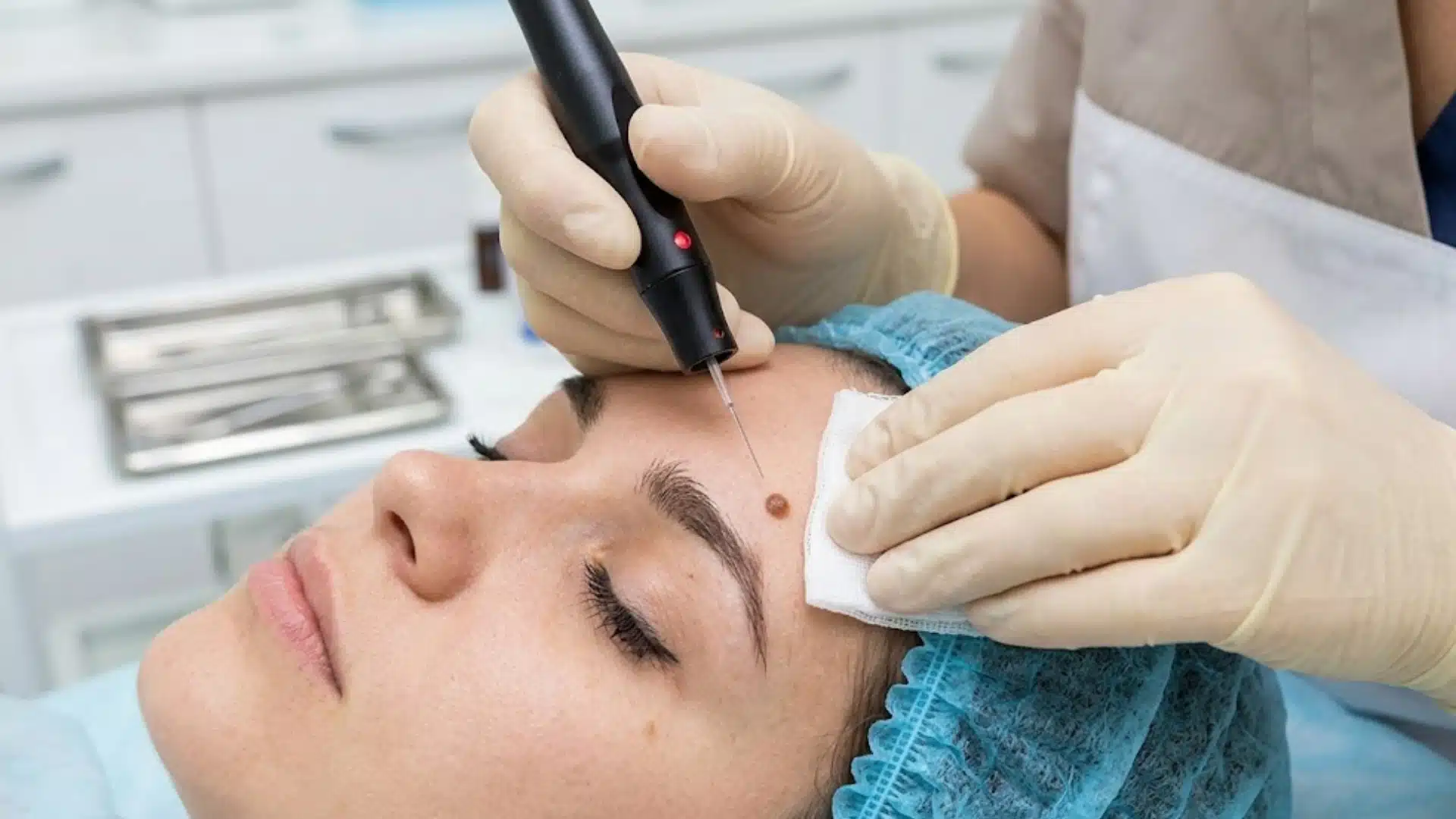
Different mole removal methods vary in depth, precision, healing time, and suitability. The right choice depends on the mole’s type, location, and whether medical testing is required. Here is a breakdown of all the main approaches.
1. Surgical Excision for Deep or Suspicious Moles
Surgical excision is the most thorough method and is typically used for deep or suspicious moles.
After numbing the area with a local anesthetic, the dermatologist removes the entire mole along with a small margin of healthy tissue.
This margin helps ensure no abnormal cells are left behind. The wound is closed with stitches, and the removed tissue is sent for pathology testing, which is essential when melanoma is suspected.
Stitches are usually removed within 10 to 14 days. Your provider may use traditional stitches that require a follow-up removal visit, or dissolvable stitches that absorb on their own.
It is worth asking about during your consultation if follow-up visits are a concern. A small linear scar is expected, but it tends to fade gradually over 6 to 12 months with proper aftercare.
2. Shave Excision for Raised Benign Moles
Shave excision is a simple, quick option for moles that sit above the skin surface. After applying local anesthesia, the dermatologist uses a fine blade to shave the mole flush with the surrounding skin.
No stitches are needed, and healing is typically faster with minimal scarring. This method is often chosen for clearly benign, raised moles when downtime needs to stay low.
However, it may not remove the entire root, so regrowth is possible if melanocytes remain beneath the surface.
I usually tell clients to think of it this way: shave excision is ideal when the concern is cosmetic, and the mole has already been evaluated as benign.
3. Laser Mole Removal for Cosmetic Flat Moles
Laser mole removal uses concentrated light energy to break down pigmented cells, allowing the body to clear them naturally.
It is the least invasive option, with no cutting or stitches, and carries a low risk of visible scarring. This method works best for small, flat, non-cancerous moles, especially on visible areas like the face or neck.
Since no tissue is collected, it is not suitable for suspicious moles that require biopsy. Most cases need two to three sessions for full removal.
Those with sensitive skin should consult a provider first, as skin type can influence how well light-based treatments are tolerated.
Common Mole Removal Methods Compared
This table gives a quick look at the main removal options, including healing time, scar chances, and when each method may or may not work well.
| Procedure Type | Key Advantage | Stitches Required | Recovery Time | Scar Risk | Main Limitation |
|---|---|---|---|---|---|
| Surgical Shave | Quick, simple, minimal downtime | No | 1-2 weeks | Low, usually flat, faint mark | May not remove full depth, possible regrowth |
| Surgical Excision | Most thorough, full diagnostic testing | Yes (10–14 days) | 2-3 weeks initial | Moderate, fades over months | Leaves stitches and a small linear scar |
| Laser Removal | Least invasive, best cosmetic outcome | No | A few days to 1 week | Very low | Not suitable for suspicious moles |
What Happens During Mole Removal Surgery
Mole removal surgery usually starts with a consultation where the doctor checks the mole and the surrounding skin.
They look at its size, shape, and any recent changes before deciding the best way to remove it.
Once the plan is clear, the area is cleaned and numbed with a local anesthetic so there is little to no pain during the procedure.
The removal step depends on the method chosen. Some moles are shaved off from the surface, while others are cut out more deeply.
If the deeper method is used, the skin may be closed with stitches to help it heal properly.
In certain cases, especially when there are unusual features, the removed tissue is sent to a lab. This helps check if there are any medical concerns that need further attention.
Before and After Mole Removal: What to Expect
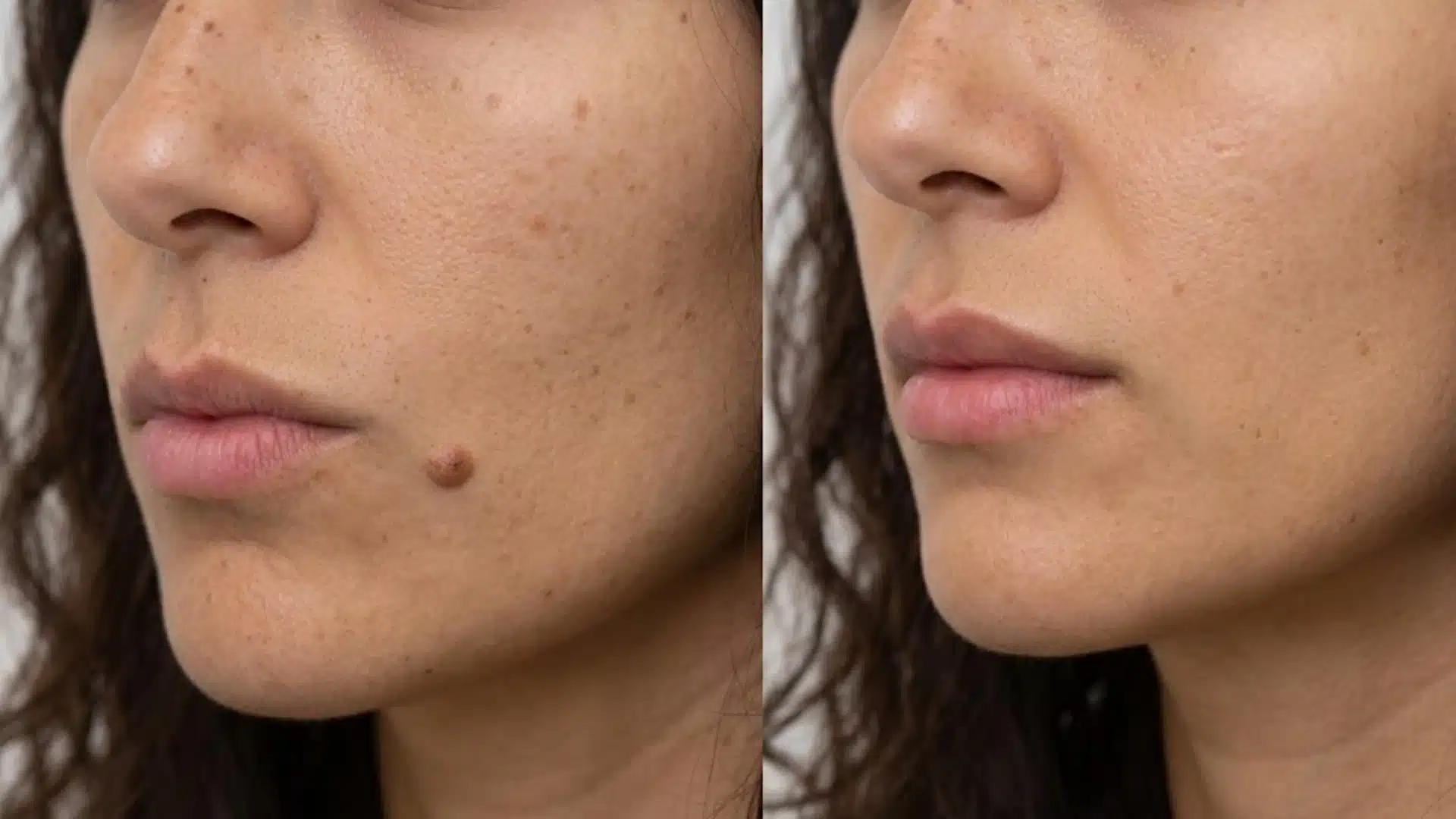
A quick look at how to prepare, what the procedure feels like, and how healing, care, and follow-up usually go after mole removal.
- Before the visit: Avoid applying makeup, creams, or lotions on the area. Share your medical history and any skin changes with the doctor.
- During the procedure, The area is numbed, so there is little discomfort. You may feel slight pressure, but not sharp pain.
- Recovery time: Most people heal within one to three weeks, depending on the method used and the size of the mole.
- Wound care: Keep the area clean and dry. Follow instructions for dressing changes and avoid picking at the site.
- Healing and scarring: A small mark may form at first, but it usually fades over time with proper care.
- Follow-up visits: A check-up may be needed to remove stitches or review healing, especially if the sample was tested.
Mole Removal Surgery Risks and Side Effects You Should Know
Most mole removal procedures are safe, but, as with any skin treatment, there can be minor side effects that vary depending on the method and aftercare.
- Redness and swelling: Mild irritation around the area is common for a few days and usually settles without any treatment.
- Pain or discomfort: Slight soreness may be felt after the numbing wears off, but it is generally manageable and short-lived.
- Scarring: A small scar can form, especially with deeper removal, though it often fades gradually over time.
- Infection risk: Poor wound care can lead to infection; keeping the area clean and following instructions are important.
- Pigment changes: The skin may appear lighter or darker at the site, and this change can improve slowly but may not fully return to normal.
Note: Healing time and side effects can vary based on the mole’s size, depth, location, skin type, and the removal method used. Increasing pain, pus, fever, spreading redness, or delayed healing should be checked by a healthcare professional, as these may be signs of infection or complications.
Mole Removal Cost: What Affects the Price
The cost of mole removal can vary based on several factors, and it is not the same for every case or treatment approach.
The type of removal plays a big role, since simple shave methods usually cost less than deeper surgical excision.
The size and location of the mole also matter, as larger or hard-to-reach areas may need more time and care. The experience of the specialist can affect pricing, too, with more skilled professionals often charging higher fees.
In some cases, lab testing is performed after removal, which can increase the total cost, along with any follow-up visits.
Insurance may help cover the cost if the procedure is performed for medical reasons, such as screening for skin concerns, but cosmetic procedures are usually not covered.
Understanding how much mole removal costs will help you go into that conversation fully prepared.
How to Choose the Right Dermatologist or Cosmetic Surgeon
Choosing the right specialist can make the whole process smoother and more reassuring. Start by checking board certification, since that shows the doctor has proper training in skin or cosmetic procedures.
It also helps to look for someone with solid experience in mole removal, not just general skin treatments.
During the consultation, ask which removal method they use most often and why they would suggest it for your case.
You should also ask how they handle scar care and whether the removed tissue will be sent for biopsy when needed.
Reviews can be helpful, but they should be read with care, since not all of them tell the full story.
When available, before and after photos can also give a better idea of the doctor’s work. A good specialist should explain things clearly and make the next steps easy to understand.
Conclusion
Taking care of your skin is a lifelong commitment, and sometimes that means addressing small changes before they escalate into bigger concerns.
Deciding to undergo mole removal surgery is ultimately about prioritizing your health, comfort, and peace of mind.
It is completely normal to feel a bit apprehensive before the procedure, but armed with the right knowledge, you can approach the process with confidence.
A qualified provider makes all the difference, turning an anxiety-inducing appointment into a quick, routine visit.
If a spot on your skin has been bothering you physically or changing recently, do not wait it out. Schedule a consultation with a board-certified dermatologist today.
Have you ever had a mole removed? Drop your experience or tips in the comments below to help others feel more at ease!
Frequently Asked Questions
Does Health Insurance Pay for Mole Removal Surgery?
Insurance typically covers removal if a dermatologist deems it medically necessary, like for suspicious or atypical moles. Purely cosmetic removals usually require out-of-pocket payments. Always verify coverage details directly with your provider beforehand.
Is Swimming Safe with Healing Mole Removal Stitches?
Stay out of pools, hot tubs, and open water until your stitches are removed and the wound is fully closed. Submerging a fresh wound introduces bacteria that can easily cause severe infection
Can I Get a Tattoo Over an Existing Mole?
Professional artists will not tattoo directly over a mole. Ink obscures the color and borders, making it incredibly difficult for a dermatologist to spot early warning signs of skin cancer in the future.