
Protein shakes are a staple for athletes, gym-goers, and anyone trying to increase their daily protein intake.
But if you’ve noticed more breakouts after adding whey protein to your routine, you may be wondering whether the two are connected.
The answer isn’t a simple yes or no. While whey protein doesn’t cause acne in everyone, research suggests it can trigger or worsen breakouts in people who are already prone to hormonal or inflammatory acne.
In this blog post, you’ll learn what the latest research says about whey protein and acne, who is most likely to be affected, and practical steps you can take without necessarily giving up your fitness goals.
Does Whey Protein Actually Cause Acne?
Yes, whey protein can cause or worsen acne in some people, especially those with acne-prone or hormonally sensitive skin.
It does not trigger breakouts for everyone, so it should not be treated like a guaranteed acne-causing food. The link is more about how whey may affect hormones involved in oil production.
Whey is absorbed quickly, which can raise insulin levels and may increase IGF-1 activity. These changes can lead to increased sebum production, faster skin cell buildup, and clogged pores.
If your skin is already oily, inflamed, or prone to hormonal breakouts, this extra push may be enough to worsen acne. For others, whey protein may not cause any visible skin changes.
How Whey Affects Your Skin?
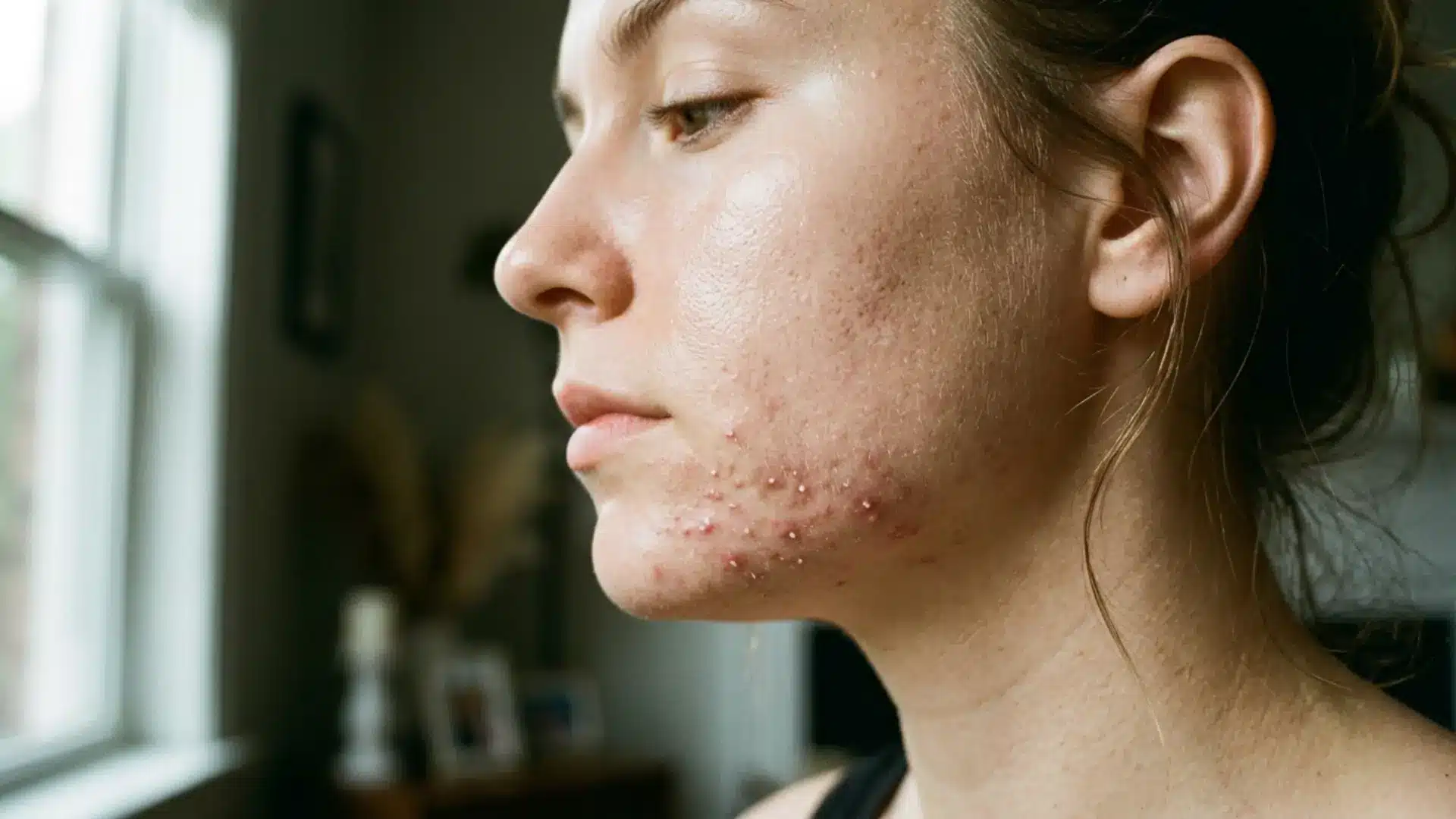
Whey protein may affect your skin by increasing insulin and IGF-1 activity, two signals linked with oil production.
When whey is digested quickly, it can raise insulin levels more sharply than some other protein sources. This may also increase IGF-1, a growth-related hormone connected to dairy intake.
Higher IGF-1 activity can encourage the skin to produce more sebum and shed skin cells faster. When excess oil mixes with dead skin cells, pores can clog more easily and lead to acne.
This does not mean whey affects everyone the same way. If you already deal with hormonal breakouts, oily skin, or stress-related flare-ups, your skin may be more sensitive to this pathway.
If you’re seeing a similar pattern, it’s worth reading through our guide on breaking out along the jawline, since the hormonal triggers overlap.
How to Prevent Acne From Whey Protein
Small changes in how you use whey protein can help reduce breakouts while keeping your protein intake and fitness routine on track.
1. Reduce Your Whey Protein Intake
If you use multiple scoops of whey every day, consider cutting back to one serving and watching how your skin responds over the next two to four weeks.
A smaller amount may reduce the hormonal response linked to acne while still supporting your protein needs.
If your breakouts improve after lowering the dose, whey may be contributing to the problem.
2. Take Whey Protein with a Balanced Meal
Instead of drinking whey on an empty stomach, have it with a meal that includes healthy fats, fiber, and complex carbohydrates.
This combination may slow digestion and reduce rapid changes in insulin levels compared with taking whey alone.
It can also help you feel fuller for longer while supporting more balanced nutrient intake throughout the day.
3. Choose Unsweetened or Low Sugar Whey
Some flavored protein powders contain added sugars or sweeteners that may increase the overall insulin response.
Choosing an unflavored or low-sugar whey protein can help reduce unnecessary ingredients while still providing high-quality protein.
Always read the nutrition label carefully and compare products before buying, especially if you have acne-prone or oily skin.
4. Alternate with Plant-Based Protein
You do not have to rely on whey protein every day. Using plant-based options such as pea, soy, hemp, or rice protein for some workouts or rest days can reduce your overall whey intake.
Many plant proteins provide adequate protein for muscle recovery and may be a suitable choice if you notice that your skin consistently reacts to dairy-based supplements.
5. Follow an Acne-Friendly Skincare Routine
Good skincare cannot stop whey from affecting hormones, but it can reduce clogged pores and help control excess oil.
Wash your face with a gentle non-comedogenic cleanser, moisturize daily, and use sunscreen every morning.
Avoid harsh scrubs or over-washing because they can irritate the skin and make existing acne appear more inflamed.
6. Try a Four-Week Elimination Test
The simplest way to find out if whey protein is causing your breakouts is to stop using it for about four weeks.
Keep the rest of your diet, exercise routine, and skincare products as consistent as possible during this period.
If your skin improves and acne returns after you restart whey, the supplement is more likely to be a personal trigger.
Whey Isolate vs Concentrate: Does the Type Matter?
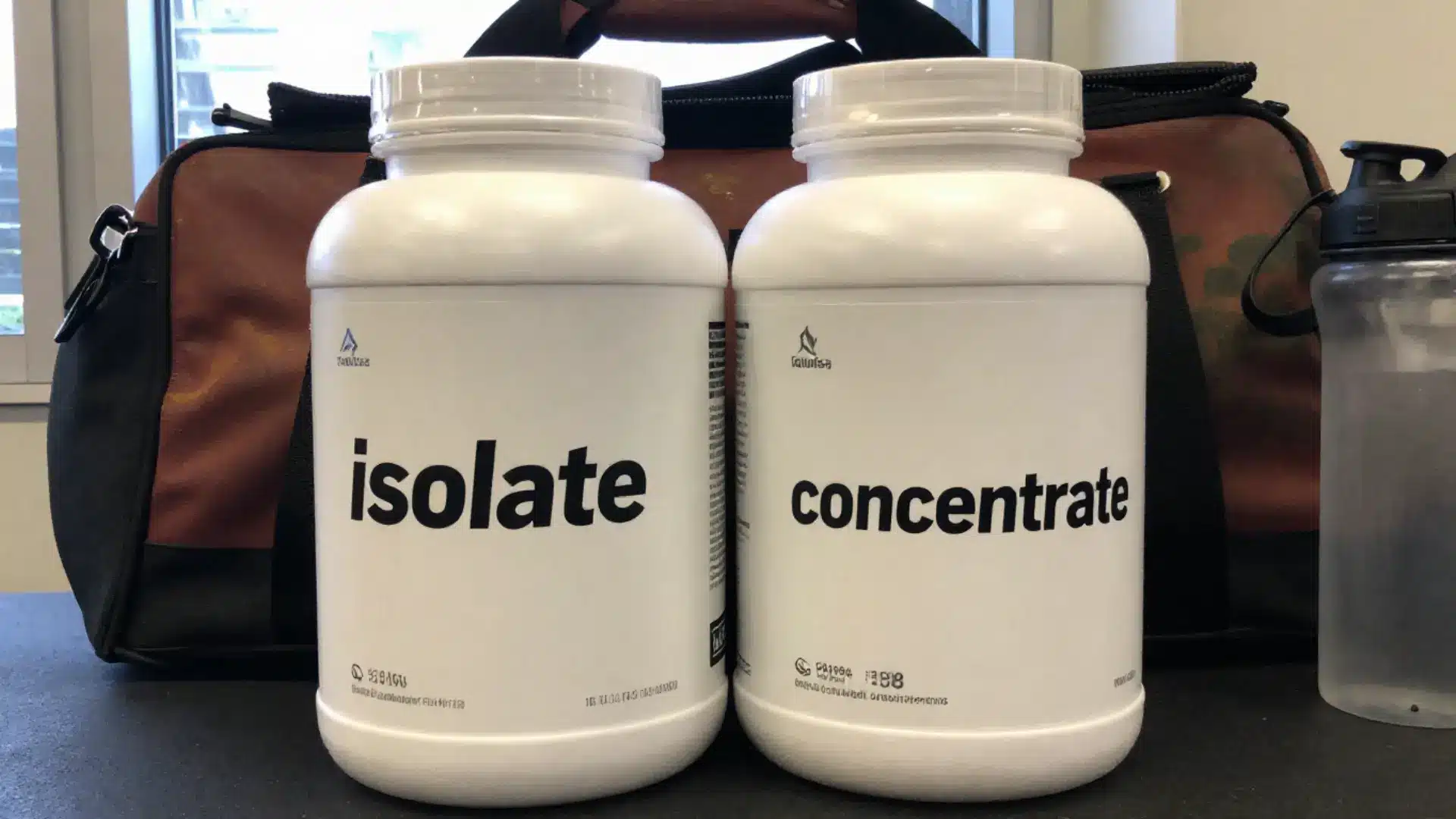
Whey isolate contains more protein and less lactose and fat than whey concentrate, leading many people to believe it is less likely to cause acne.
While some individuals find isolation easier to tolerate, current research does not show that it completely removes the risk of breakouts.
Both whey isolate and whey concentrate can increase insulin and IGF-1 activity, which are linked to higher oil production and clogged pores in acne-prone skin.
If your acne is triggered by these hormonal changes, switching to isolate alone may not solve the problem.
Paying attention to your serving size, how often you use whey, and how your skin responds over time is usually more helpful than choosing one type over the other.
Whey Protein and Acne: What Research Shows
One study of young athletes in Jordan found that whey protein users were nearly three times as likely to have acne as those who did not use it. This suggests whey may trigger breakouts in some people.
Other reviews say that most of the evidence comes from small case reports rather than large clinical trials. It means whey may be linked to acne, but it has not been proven to cause it for everyone directly.
So, the accurate answer is whey protein probably does not cause acne in everyone, but it may worsen breakouts if your skin is already acne-prone or hormonally sensitive.
Who is Most Likely to Break out From Whey?
Not every whey user develops new breakouts, and the research points to a few patterns among those who do.
- Family history of acne: Genetics shape how your skin responds to hormone swings, including the ones that trigger acne.
- Existing hormonal acne: If your skin already flares with your cycle or stress, it is already sensitized to the same IGF-1 pathway that it activates.
- Naturally oily skin: More baseline oil production means less room before a clogged pore tips into a breakout.
- High daily whey volume: Two or three scoops a day is a bigger hormonal signal than one scoop after a single workout.
- Flavored or sweetened blends: Added sugar spikes insulin on top of whey’s own effect, stacking the trigger.
Signs Your Breakouts are Whey Related

Plenty of things cause breakouts, so before you blame your shake, check whether the pattern actually fits. There are some signs you should check:
- Recent whey increase: New breakouts started within a few weeks of starting whey protein or increasing your daily serving size.
- Hormonal breakout areas: Pimples appear around the jawline, chin, back, chest, or shoulders, where oil-related acne often develops.
- No other routine changes: Your skincare, diet, medication, sleep, and workout habits stayed mostly the same when the breakout began.
- Skin improves after stopping whey: Acne starts calming down after pausing whey protein for a few weeks while keeping everything else consistent.
If two or three of those line up, whey is a reasonable suspect. If your skin has looked the same for months and the breakout came out of nowhere, look elsewhere first.
This section is for informational purposes only and does not constitute medical advice. Consult a qualified professional before making any decisions.
Conclusion
Whey protein is not the villain some corners of the internet make it out to be, and it is not risk-free either.
It sits somewhere in the middle as a real trigger for a specific group of people, and a total non-issue for everyone else.
The way to find out which camp you are in is not guessing, but rather testing. Drop your dose, watch your skin for a few weeks, and adjust from there.
If you have run this experiment on yourself, drop a comment with what you found. It genuinely helps the next person staring at their own shaker bottle wondering the same thing.
Frequently Asked Questions
Can Whey Protein Cause Acne on the Back and Chest, Not Just the Face?
Yes. Whey-related breakouts commonly appear on the back, chest, and shoulders because these areas have more oil glands and produce more sebum.
Does Taking Whey Protein at Night Make Acne Worse?
A nighttime shake on an empty stomach may spike insulin faster than one taken alongside a balanced meal, but the effect is about the meal context, not the clock.
Will Cutting Out Whey Protein Clear up Existing Acne Scars?
No. Cutting out whey protein may help prevent new breakouts, but it will not remove existing acne scars or dark spots.
Is Plant-Based Protein Guaranteed to Be Acne-Safe?
Not always. Plant-based protein may be less likely to trigger acne than whey, but individual reactions vary, and some products contain added sugars or fillers.