A permanent eyebrow tattoo can sound like a simple way to wake up with ready brows, but the results are not always the same for everyone.
Some people love how much time it saves, while others wish they had known more about the healing, fading, shape, and color changes before booking.
This guide on permanent eyebrow tattoos will walk through what real reviews often say, what people usually like, and what they sometimes regret later.
You will also get a clearer idea of the common downsides, how the brows may look right after the procedure, and what can affect the final result.
By the end, you will know what to check before choosing an artist, what questions to ask, and what to expect once the brows start healing.
What is a Permanent Eyebrow Tattoo?
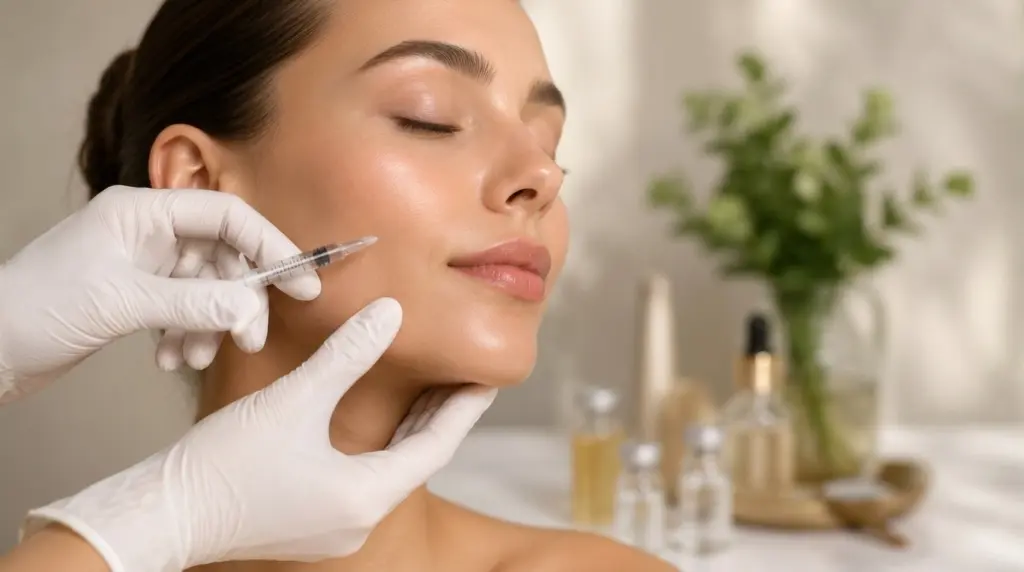
A permanent eyebrow tattoo is a cosmetic tattoo procedure that deposits pigment into the skin to create the look of fuller, more defined brows.
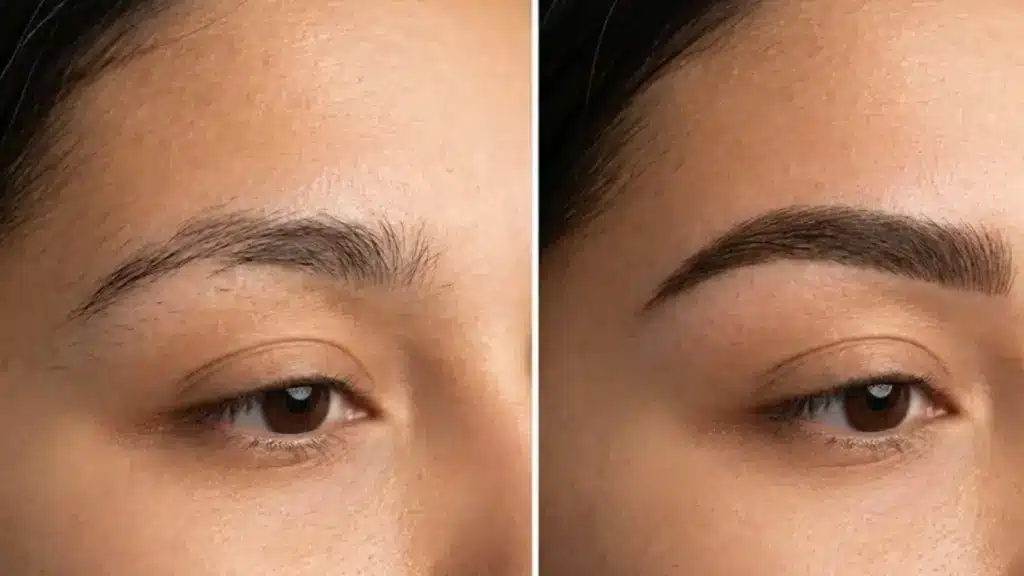
The goal is to add color, fill sparse areas, and give the brows a more defined outline.
It can help make uneven brows look more balanced, but the final look depends on the artist, skin type, pigment choice, and healing.
This is different from daily brow makeup because the color stays on the skin rather than washing off at night.
Pencils, gels, and powders can be changed every day, while tattooed brows last longer and may need touch-ups as they fade.
Many people choose it because it feels low-maintenance. It can save time in the morning and reduce the need to fill brows every day.
Why Do People Choose Permanent Eyebrow Tattoo?
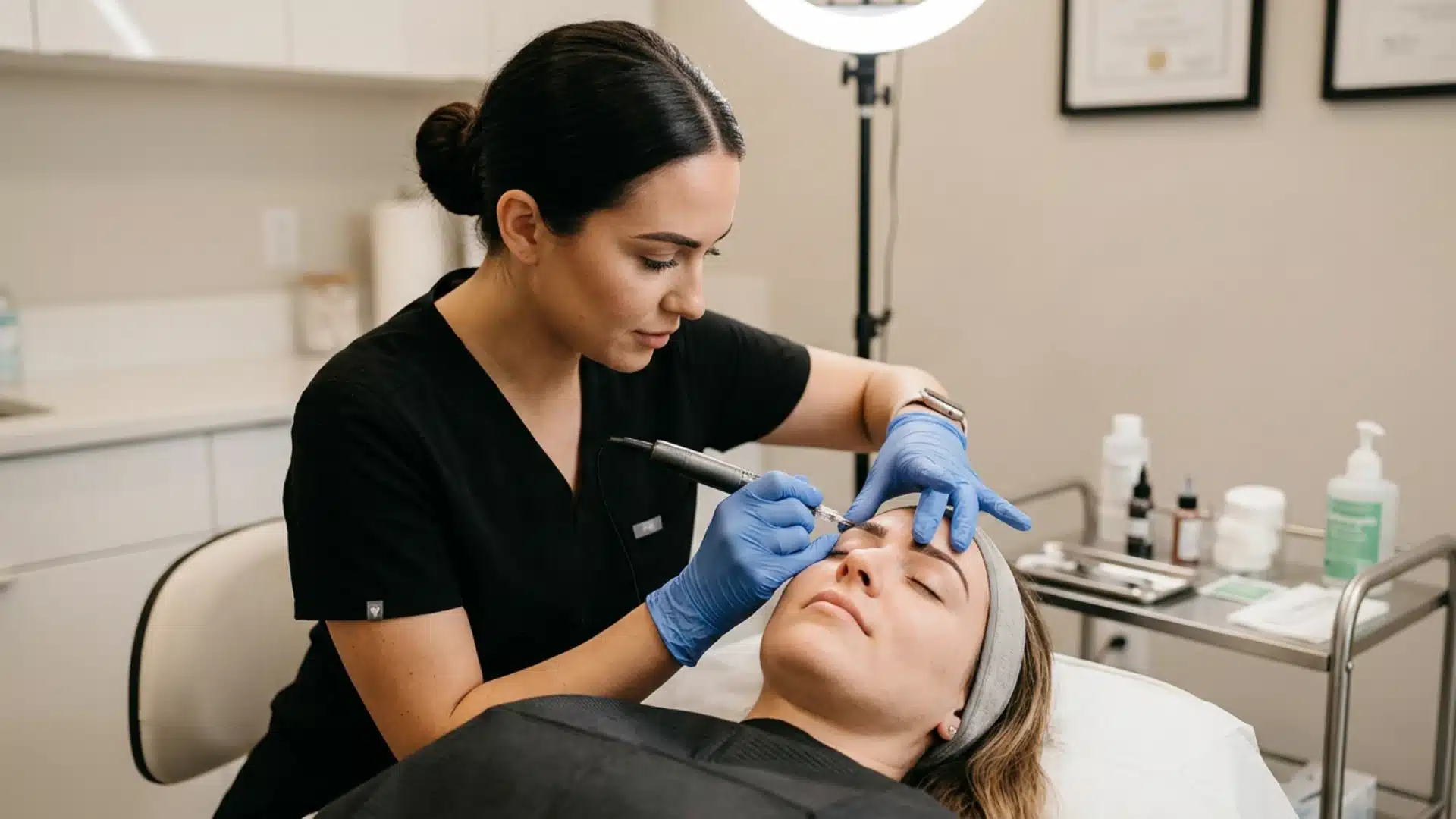
Many people choose this brow treatment because it can make daily grooming feel easier. The biggest reason is time.
Instead of shaping and filling the brows every morning, the brows already have a set shape and color.
This can be helpful for busy mornings, school runs, workdays, or anyone who does not want to spend extra time in front of the mirror.
It can also help with:
- Thin brows that need more shape
- Patchy brows with empty spots
- Uneven brows that look different on each side
- Light brows that need more color
- A fuller brow look without daily products
For people who are tired of using pencils, gels, or powders every day, this option can feel more low-maintenance. The brows still need care, but the daily effort becomes much smaller.
Permanent Eyebrow Tattoo Downsides To Know
Even when the brows look good later, the early-stage and long-term changes can surprise people, so these points are worth knowing.
- Too dark at first: Fresh brows can look much darker than expected, and many people feel shocked before the color softens during healing.
- Wrong shape: A shape that looks good in photos may not suit every face, especially if the arch or thickness feels too strong.
- Color changes: The pigment can fade, blur, or shift toward warmer or cooler tones over time, potentially altering the brow’s appearance.
- Touch-ups: Many people need touch-ups to keep the shape, color, and edges looking even after the first healing stage.
- Hard removal: Fixing or removing unwanted brows can take several sessions, cost more than expected, and still may not fully erase everything.
Health Risks to Know Before Brow Tattooing
Infection is one risk people should take seriously. The brow area is still a small wound after the procedure, so poor hygiene, unclean tools, contaminated pigment, or skipped aftercare can let bacteria in.
This is why the studio, artist training, and cleaning process matter so much. Allergic reactions are less common, but they can happen with tattoo pigments.
Some people may notice redness, itching, swelling, bumps, or irritation after the procedure. A patch test can help show how the skin reacts to the pigment before the full appointment.
People who have had keloid scars before should be extra careful. Tattooing breaks the skin, and skin that scars easily may form raised scar tissue after the procedure.
Anyone with skin disorders, a history of keloids, severe allergies, or immune-related conditions should seek medical advice before undergoing brow tattooing. A qualified professional can assess individual risks and recommend the safest approach.
Eyebrow Tattoo Aftercare: What Affects the Final Look
The way brows heal can change the final color, shape, and evenness, so aftercare matters more than many people expect.
1. Picking Scabs Can Pull Out Pigment
Scabbing can happen while the brow area heals, but picking at it can ruin the final look.
When scabs are pulled too early, they may take some pigment with them. This can leave light spots, uneven color, or patchy areas that need correction later.
It can also irritate the skin and slow down healing. Letting the scabs fall off on their own gives the pigment a better chance to settle evenly.
2. Heavy Sweating Can Disturb Healing Skin
Sweating too much during the early healing stage can affect how the brows settle. Sweat can make the skin damp, cause irritation, and disturb the pigment before it has healed properly.
This is why many artists suggest avoiding hard workouts, saunas, and long heat exposure for a short time.
Light daily movement is usually fine, but excessive sweating too soon may cause faded or uneven areas.
3. Harsh Skincare Products Can Irritate The Brow Area
Strong skincare products can be a problem while the brows are healing.
Products with acids, retinol, exfoliants, or strong fragrance may irritate the treated skin. They can also make the area feel sore, dry, or more sensitive.
In some cases, they may affect how the color heals. Keeping skincare simple around the brows gives the skin time to repair without extra stress.
4. Too Much Water Can Make Healing Harder
Getting the brow area too wet can make healing harder in the first few days.
Long showers, swimming, steam, or soaking the skin may soften scabs too early and affect the pigment. The brows still need to stay clean, but excessive water can disrupt the healing process.
Gentle care works best. Follow the artist’s cleaning advice and avoid letting water sit on the brows.
5. Skipping Care Steps Can Affect Color And Shape
Skipping eyebrow tattoo aftercare steps can lead to uneven healing, faded color, or patchy brows.
Each artist may give slightly different instructions, but they usually focus on keeping the area clean, dry, and protected.
Missing those steps can cause the skin to heal poorly and alter the final result. Good care does not have to be hard. It just needs to be consistent during the healing stage.
What Do People Think About Permanent Eyebrow Tattoos?
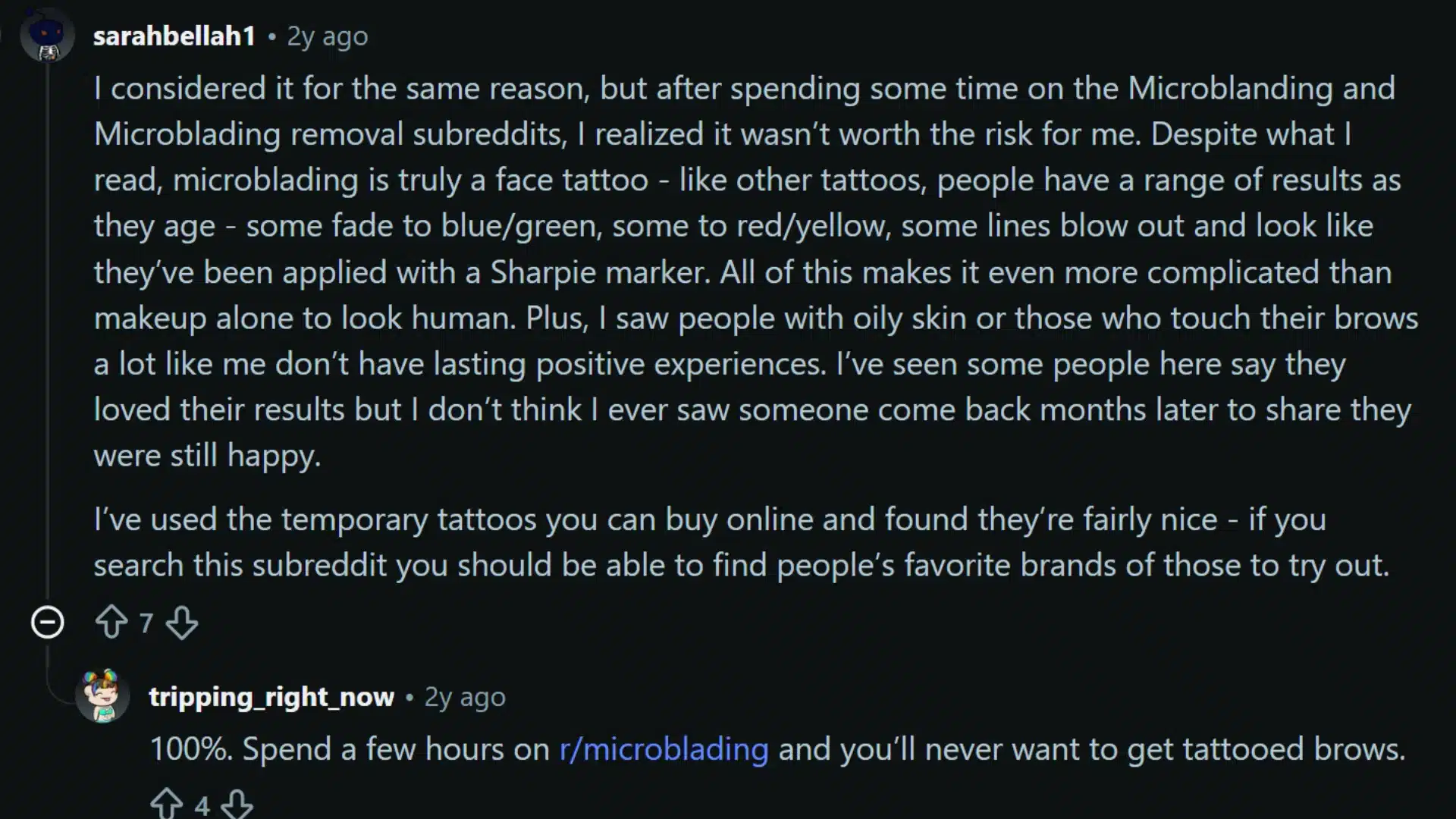
Looking across community discussions, one of the most common surprises is how dark brows appear immediately after the procedure.
Many people report temporary scabbing, peeling, and fading during the first two weeks before the color gradually settles. By around six weeks, most say their brows look much softer and closer to the results they expected.
The biggest advantage people mention is convenience. Many say waking up with defined brows saves time, boosts confidence, and reduces the need for daily makeup.
People with sparse brows or hair loss often describe the results as particularly worthwhile. Common concerns include fading, color changes over time, and poor-quality work.
One theme appears repeatedly across community reviews: people are far more likely to regret rushing the decision or choosing the cheapest option than they are to regret getting the procedure itself.
Realistic expectations and choosing a qualified artist often make the biggest difference in overall satisfaction.
How Long Does it Last and What Touch-Ups Cost?
Longevity varies by technique and skin type:
| Technique | Typical duration | Touch-up frequency |
|---|---|---|
| Microblading | 1-2 years | Every 12-18 months |
| Nano brows | 1.5-2.5 years | Every 12-24 months |
| Powder brows | 2-5 years | Every 18-24 months |
| Traditional permanent | Indefinite (fades/shifts) | Annually for freshness |
Touch-up appointments are usually scheduled 6–8 weeks after the initial session to refine the shape, enhance color, and fix any uneven healing.
After that, occasional color refreshes help maintain the results and often cost around 30% of the original treatment.
Waiting longer between touch-ups typically means more fading and higher maintenance costs. Permanent eyebrow tattoo pricing varies widely.
While lower prices may seem appealing, they can sometimes reflect lower-quality pigments, less experience, or weaker hygiene standards.
Choosing a skilled, reputable artist is often worth the investment for both safety and results.
Is a Permanent Eyebrow Tattoo Worth It?
For the right person, a permanent eyebrow tattoo can be a worthwhile investment.
It’s especially popular among people with sparse brows, thinning hair, or conditions that affect eyebrow growth, as well as those who want to spend less time on daily makeup.
However, it may not be the best choice if you’re still experimenting with brow shapes, have very oily skin that fades pigment quickly, or have a history of keloid scarring or healing-related skin conditions.
If you’re unsure, consider alternatives first. Comparing brow lamination vs microblading can help determine whether a non-invasive treatment might meet your needs.
Conclusion
After reviewing the results, risks, and healing process, one thing is clear: a permanent eyebrow tattoo can be well worth it, but success largely depends on choosing the right artist, selecting the right technique, and having realistic expectations.
The best outcomes usually come from people who do their research, pick a method suited to their skin type, and follow aftercare instructions closely.
Most regrets, on the other hand, come from rushing the decision or choosing based on price alone.
If you’re still considering it, take your time. Review healed results, ask questions, and make sure you’re comfortable with your choice. A little extra research now can save a lot of frustration later.
If you’ve had a permanent eyebrow tattoo, I’d love to hear about your experience. What surprised you most, and would you do it again?
Frequently Asked Questions
Does a Permanent Eyebrow Tattoo Hurt?
Most people describe the procedure as mildly uncomfortable rather than painful. A topical numbing cream is usually applied beforehand, which significantly reduces discomfort. Microblading often feels like light scratching, while powder brows and nano brows are generally considered more comfortable.
Can You Remove or Correct a Permanent Eyebrow Tattoo?
Yes, but removal can be challenging. Laser treatments may help fade unwanted pigment, though some cosmetic pigments can react unpredictably. In many cases, a correction or color adjustment by an experienced artist is easier and more effective than complete removal.
Will a Permanent Eyebrow Tattoo Look Natural as It Fades?
In most cases, yes. Modern semi-permanent techniques are designed to fade gradually and evenly over time. The best results come from high-quality pigments and proper aftercare. Reviewing healed, long-term results from your chosen artist can give you a realistic expectation.