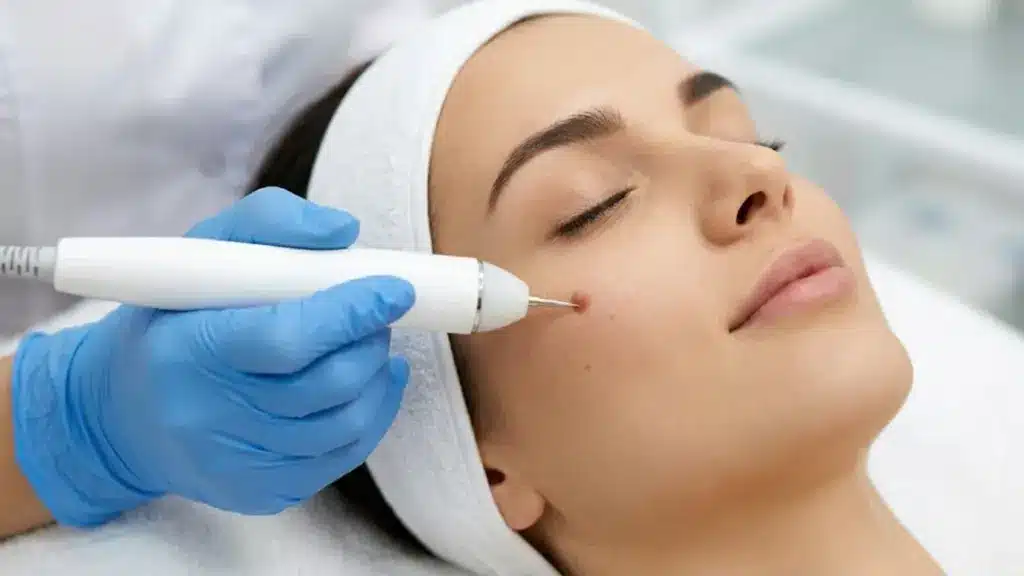
A small mole might seem harmless at first, something easy to ignore.
But over time, it can start to stand out in photos, catch on clothing, or simply feel out of place on your skin. That’s when the thought of removing it begins to linger.
Many people turn to laser mole removal because it sounds quick, clean, and less intimidating than surgery.
Still, questions come up. Will it hurt or leave a mark? Is it even safe for every mole? These doubts are common, especially when it comes to your skin and appearance.
This method is getting pretty popular, especially for those small, visible moles. But here’s the thing: it doesn’t work the same for everyone.
Your skin type and how deep the mole is can change the results completely. So yeah, knowing this before you book that appointment actually makes a big difference.
What is Laser Mole Removal & Why People Choose It?
Laser mole removal is a non-surgical dermatological procedure that uses focused light energy to break down pigment within a mole without cutting the skin.
The laser targets melanocytes, which are the pigment-producing cells, and gradually reduces the appearance of the mole over one or more sessions.
This method is considered less invasive than surgical excision because it does not require stitches and usually involves minimal downtime.
According to the American Academy of Dermatology (AAD), a dermatologist will remove a mole that is bothersome, changing, or suspicious, and the method chosen depends on the mole’s individual characteristics.
It is best suited for small, flat, and benign moles that are not suspected to be cancerous, as deeper or atypical lesions often need biopsy and surgical evaluation.
Many people choose it for cosmetic reasons, especially when moles are on the face or other visible areas. Others seek treatment due to irritation from clothing or shaving.
In some cases, changes in size, color, or shape raise concerns, while for many, improving skin appearance also supports confidence.
In my experience working with clients in an aesthetics setting, the most common motivation is surprisingly simple: they want to feel less self-conscious in photos and in person, and that’s a completely valid reason to explore your options.
How Laser Mole Removal Works?
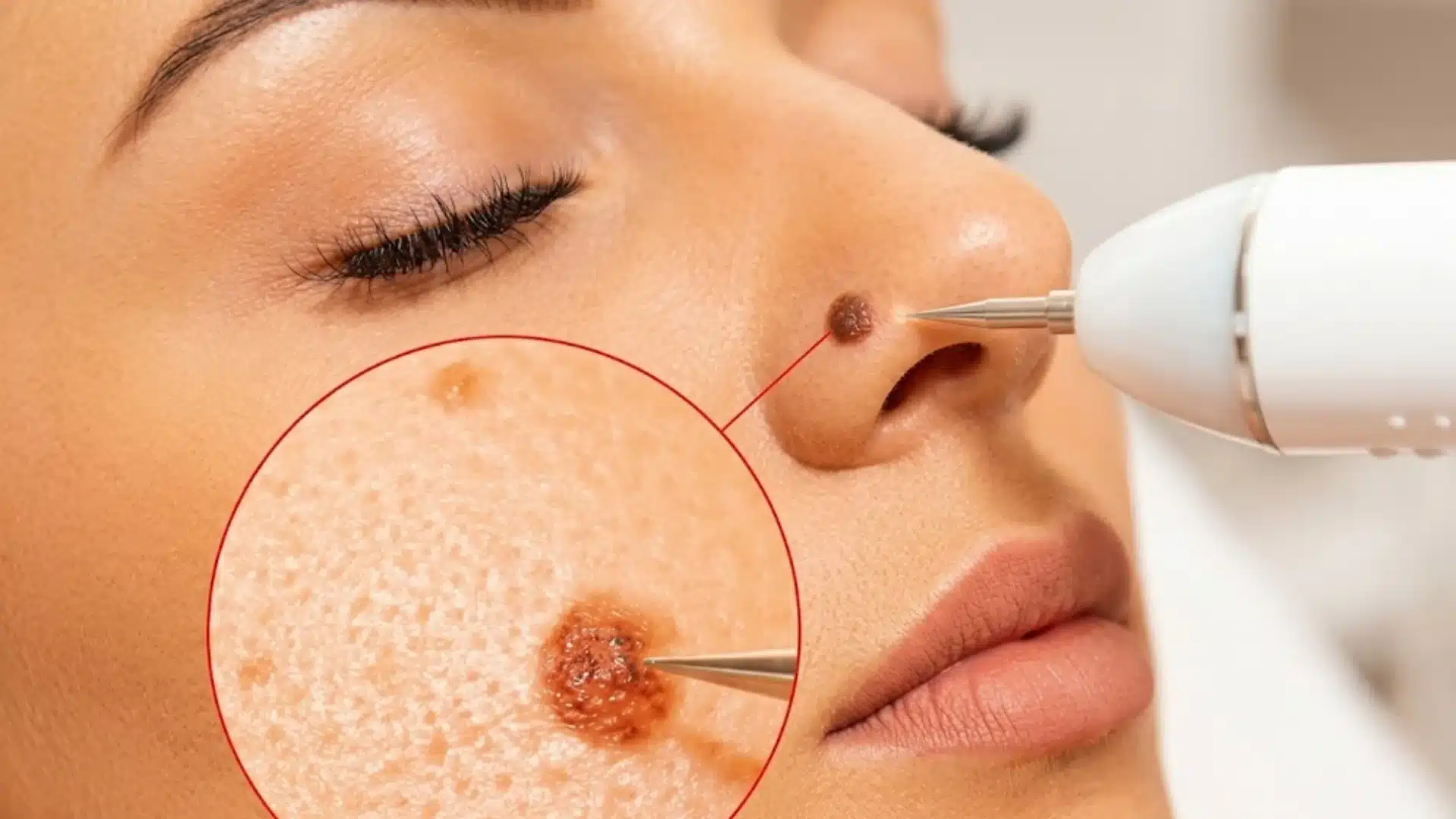
Laser mole removal works by directing concentrated light energy at the pigment inside a mole, leaving the surrounding skin intact.
The procedure usually begins with a dermatologist examining the mole, ideally using a dermoscope, a magnification tool that allows the doctor to assess pigment patterns and rule out suspicious features before any laser is used.
The area is then cleaned, and in some cases, a topical anesthetic is applied to reduce discomfort.
During mole removal, short pulses of laser light penetrate the skin and are absorbed by melanocytes, gradually fragmenting the pigment.
Each session typically lasts between 10 and 30 minutes, depending on the size and location of the mole.
Smaller, superficial moles may require only one session, while deeper or darker moles may need multiple sessions spaced a few weeks apart.
Over time, the treated area heals, and the mole fades as the body naturally clears the broken pigment particles.
Types of Mole Removal Methods
Mole removal is not a one-size-fits-all process. Dermatologists choose the method based on the mole’s size, depth, and whether there is any medical concern.
1. Surgical Excision
Surgical mole removal is a more advanced method used for deeper moles or those that may show signs of skin cancer.
In this procedure, a dermatologist cuts out the entire mole along with a small margin of surrounding tissue.
Stitches are required to close the area, and the removed tissue is often sent for lab testing. While this method has a higher chance of leaving a scar, it ensures complete removal.
Laser mole removal cannot replace this approach when medical safety and diagnosis are the priority.
2. Shave Removal
Shave removal is typically used for raised moles that sit above the skin surface. The dermatologist uses a small blade to carefully shave off the mole at the skin level.
This method is quick and does not usually require stitches, making it a convenient option for many patients. However, it may leave a slight mark or uneven texture after healing.
Unlike laser mole removal, shave removal physically removes the mole in one session, but it may not always eliminate deeper pigment if present below the surface.
3. Cryotherapy
Cryotherapy involves freezing the mole using liquid nitrogen to destroy the tissue. This method is less commonly used for mole removal but may be considered in certain cases.
The extreme cold causes the mole cells to break down and eventually fall off. However, there is a higher risk of skin discoloration, especially in individuals with darker skin tones.
Compared to laser mole removal, cryotherapy offers less precision and control, which is why it is not the first choice for cosmetic mole treatment in most dermatology practices.
4. Electrocautery
Electrocautery uses a fine-tipped heated electrode to remove mole tissue, including deeper layers.
Unlike laser treatment, it physically removes the entire mole in a single session, which can reduce the risk of regrowth.
It may be a good option to discuss with your provider if you want a more definitive one-session result, especially for raised or deeper moles that laser treatment may not remove completely.
Who Should Consider Laser Mole Removal?

Laser mole removal is best suited for people who have a confirmed benign (non-cancerous) mole that’s already been checked by a dermatologist.
The ideal mole is small, flat, and stable, meaning it has not changed in size, color, or shape recently. Candidacy also depends on your Fitzpatrick skin type.
People with darker skin tones (Fitzpatrick IV-VI) have a higher risk of post-inflammatory hyperpigmentation (PIH) or hypopigmentation after laser treatment because melanin absorbs laser energy more broadly.
This does not mean laser is unsuitable, but it does mean the provider should have strong experience treating diverse skin tones and should adjust the wavelength, fluence, and pulse duration carefully.
Always ask about their experience with your skin type.
A laser is usually not the best choice if you have a personal or family history of melanoma, take photosensitizing medications, or are prone to keloid scarring.
If the mole is in a high-friction area (such as a joint or eyelid), healing can be less predictable.
The Skin Cancer Foundation advises that individuals with atypical moles, a family history of melanoma, or four or more dysplastic nevi should have any mole carefully evaluated before any removal procedure is considered.
Overall, it works best for cosmetic cases where the mole is benign, superficial, and visible, and the goal is to reduce the chance of noticeable scarring.
Benefits & Limitations of Laser Mole Removal
It is widely chosen for its convenience and cosmetic appeal, but it is not suitable for every type of mole. Understanding both sides helps set realistic expectations and ensures safer decision-making.
| Benefits | Limitations |
|---|---|
| Non-invasive procedure with no cutting or stitches required | Not suitable for deep or suspicious moles that may require biopsy |
| Minimal discomfort during the procedure | May not completely remove the mole in one session |
| Quick treatment sessions, often completed within minutes | Multiple sessions may be needed for larger or darker moles |
| Little to no bleeding compared to surgical methods | Cannot provide tissue for lab testing or cancer screening |
| Faster healing time and lower downtime | Risk of pigmentation changes, especially in darker skin tones |
| Lower chance of noticeable scarring when properly done | Results may vary depending on mole type and skin response |
Does Mole Removal Leave Scars?
The risk of scarring from mole removal depends on the method used and how the skin heals.
Laser mole removal generally has a lower chance of visible scarring compared to surgical excision because it does not involve cutting or stitches.
However, results are not always scar-free, and some mild marks or pigmentation changes can still occur.
Scarring likelihood depends on skin type, since some people are more prone to hyperpigmentation or keloid formation.
The size and depth of the mole also matter, since deeper lesions are harder to treat without affecting the surrounding tissue.
Mayo Clinic notes that you may have a small scar after mole removal, and following your provider’s aftercare instructions is the key to minimizing scarring.
Some providers will recommend a test patch on a less visible area first, which is a practice I strongly support from an aesthetician’s standpoint.
Patch test, observe, then commit. I’ve seen clients rush back to the pool or beach within a week of treatment and pay for it with prolonged discoloration.
Healing quietly is genuinely the best thing you can do for your results. It is important to have realistic expectations, as marketing claims may suggest flawless results, but outcomes can vary from person to person.
Real User Experience with Laser Mole Removal
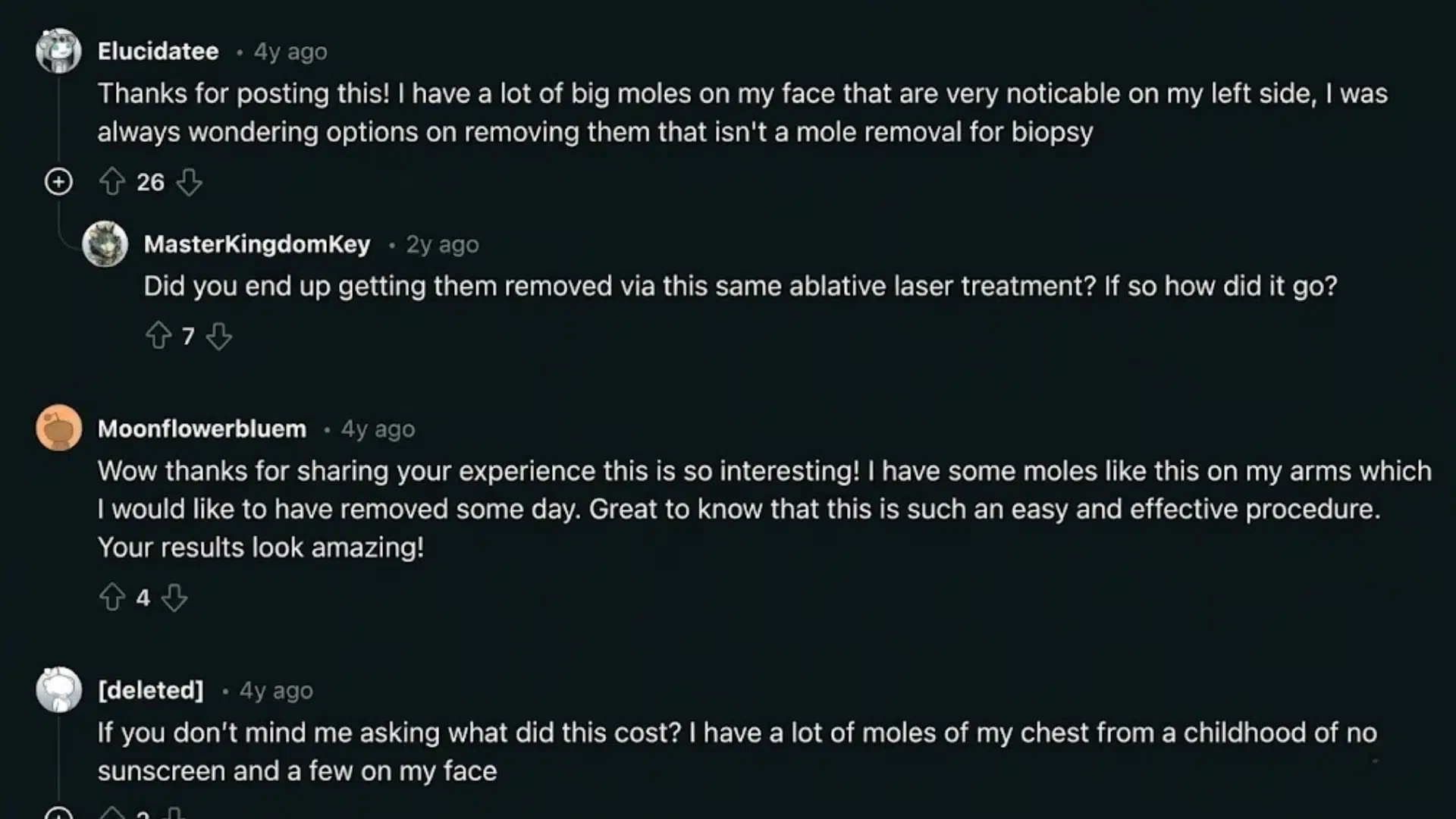
A detailed Reddit review highlights what many people actually go through with flat mole removal using ablative laser treatment.
One user shared removing multiple dark facial moles that affected facial balance and were hard to conceal with makeup.
The procedure itself was quick, taking around 30 minutes, and involved controlled laser sparks that remove the mole layer by layer.
Recovery appeared manageable, with dark spots forming initially and peeling off within a few days, followed by redness that faded over the next few weeks.
Complete healing took about two months, and while the moles didn’t vanish entirely, they became faint and far less noticeable.
The overall sentiment was positive, especially for clearer-looking skin.
However, users also noted risks like slight scarring, possible regrowth, and the need for strict sun protection after treatment.
Laser Mole Removal Cost Breakdown
The costs typically range from $400 to $1,500 per mole, with an average of around $500 to $1,000 depending on the case.
Prices can go lower for small, simple moles or higher for larger or more complex ones that need multiple sessions.
Clinics with a strong reputation and experienced dermatologists or plastic surgeons usually charge more because they deliver better results with less scarring.
The number of sessions matters too; some moles clear in one visit, while others need two or three treatments.
The mole’s location also plays a role; removing a mole from the face or sensitive areas costs more due to the extra care and precision required.
Cosmetic mole removal, done purely for appearance, is not covered by insurance, and you pay out of pocket.
Medical removal, when the doctor suspects the mole could be cancerous or problematic, may be partially or fully covered by insurance after proving medical necessity. Always check with your provider first.
Aftercare Tips for Proper Healing
Aftercare is where outcomes are made or lost. In my work with post-procedure clients, the ones who heal best are the ones who treat the recovery phase with the same seriousness as the procedure itself.
- Keep the Area Clean: Gently clean the treated area with mild soap and water to prevent infection and remove any buildup.
- Avoid Touching or Picking: Do not scratch, rub, or pick at the healing skin, as this can lead to scarring or delayed recovery.
- Apply Prescribed Ointments: Use any recommended creams or healing ointments to protect the skin barrier and support faster healing.
- Protect from Sun Exposure: Apply sunscreen and avoid direct sun exposure to prevent pigmentation changes after laser mole removal.
- Avoid Harsh Products: Stay away from strong skincare products like exfoliants or acids until the skin has fully healed.
- Avoid Pools, Saunas, and Heavy Sweating: This one I feel strongly about, chlorinated water in particular can disrupt wound healing and increase infection risk. I learned this the hard way with swim clients who pushed back too soon.
- Watch for Signs of Infection: Look for unusual redness, swelling, or discharge, and consult a doctor if symptoms appear.
- Follow Up if Needed: Attend follow-up visits if advised to monitor healing and ensure proper results after mole removal.
How to Choose a Reputable Mole Removal Specialist?
Choosing the right specialist matters just as much as choosing the right method.
Always look for a board-certified dermatologist or licensed medical professional with experience in skin procedures, as this ensures proper evaluation and safety.
It is helpful to check clinic reviews, patient feedback, and before-and-after photos to understand the quality of results.
A trustworthy clinic will use modern laser equipment that is suitable for different skin types and designed to reduce risks.
During the consultation, the specialist should clearly explain which mole removal method is appropriate for your mole and discuss possible outcomes, risks, and aftercare.
Transparency is key, including honest advice if another method is safer.
Clinics that follow strict hygiene standards and proper safety protocols are more reliable and help reduce the chance of complications.
Conclusion
Laser mole removal offers a simple and less invasive option for treating small, non-cancerous moles, especially when appearance and quick recovery matter.
From understanding how the procedure works to knowing the right aftercare and choosing a qualified specialist, each step plays a role in getting safe and satisfying results.
While mole removal has clear benefits, it is still important to approach it with realistic expectations and proper medical guidance.
Every skin type responds differently, so professional evaluation always comes first.
Have you tried this method, or are you still weighing your options? Share your experience or concerns in the comments below.
Frequently Asked Questions
Does Mole Removal Cause Pain?
Mole removal usually involves minimal discomfort. Laser treatments feel like a mild stinging sensation, while surgical methods may require local anesthesia to keep the area numb during the procedure.
Is it Safe to Remove a Mole at Home?
Removing a mole at home is not recommended. It can lead to infection, scarring, and missed diagnosis of serious conditions like skin cancer. Always consult a qualified dermatologist.
Can a Mole Grow Back After Laser Removal?
In some cases, a mole may return after laser treatment if pigment cells remain. Deeper moles are more likely to recur, which is why proper evaluation before removal is important.