You know the feeling after finishing a fresh manicure. The color looks smooth, the shine looks clean, and every finger stays carefully in the air because one wrong move can ruin everything.
A phone buzzes, a hair strand sticks, or a hand reaches for something without thinking. One tiny swipe appears across the polish, and suddenly the whole nail needs fixing.
Annoying moments like this are exactly why learning how to make nails dry faster matters.
Faster drying helps save time, prevent dents, and keep a fresh manicure looking neat for longer. No complicated trick is needed either.
Thin coats, short waiting time, the right quick-dry product, and a little aftercare can make a real difference. Let’s look at what actually works and what might be slowing the Polish down.
Why Does Nail Polish Take So Long to Dry?
Regular nail polish is made with film-forming polymers, pigments, resins, and volatile solvents.
When polish is brushed onto the nail, the solvents begin to evaporate. As those solvents leave, the polish starts forming a hard, colored film on the nail surface.
The process sounds simple, but thick polish slows it down considerably. A heavy coat may feel dry on top while the lower layers stay soft.
This is why a manicure can look set, then dent or wrinkle later. Humid air also slows solvent evaporation, which is why a bathroom or steamy kitchen is a poor spot to paint your nails.
Touch Dry vs. Fully Cured: The Difference Matters
Most people underestimate this. Regular nail polish feels touch-dry within 10–15 minutes, but it takes 1–2 hours to fully cure through every layer. That difference matters more than most people realize.
Touch dry means the surface no longer feels wet when you lightly tap it. Fully cured means the polish has hardened all the way through, including the base and color coats underneath.
Most smudges happen in that window between touch-dry and fully cured, when the top feels safe, but the layers below are still soft.
The table below breaks down what each stage actually means, so you know when it is safe to get on with your day.
| Stage | Touch dry | Fully cured |
|---|---|---|
| What it means | Surface feels dry when lightly touched | Polish has hardened through all layers |
| Time needed | Usually 10–15 minutes | 1–2 hours for regular polish |
| Smudge risk | Still high if pressure is applied | Much lower once fully set |
| Best care tip | Avoid touching, pressing, or using your hands heavily | Normal activity is safer after full curing |
Gel polish works differently. It cures under a UV or LED lamp rather than air-drying, which is why it sets so much faster.
If you want to understand the difference, this guide on how gel nails work covers it from formula to finish.
How to Make Nails Dry Faster
A simple guide to drying fresh nail polish faster, avoiding smudges, and keeping a manicure looking smooth for longer.
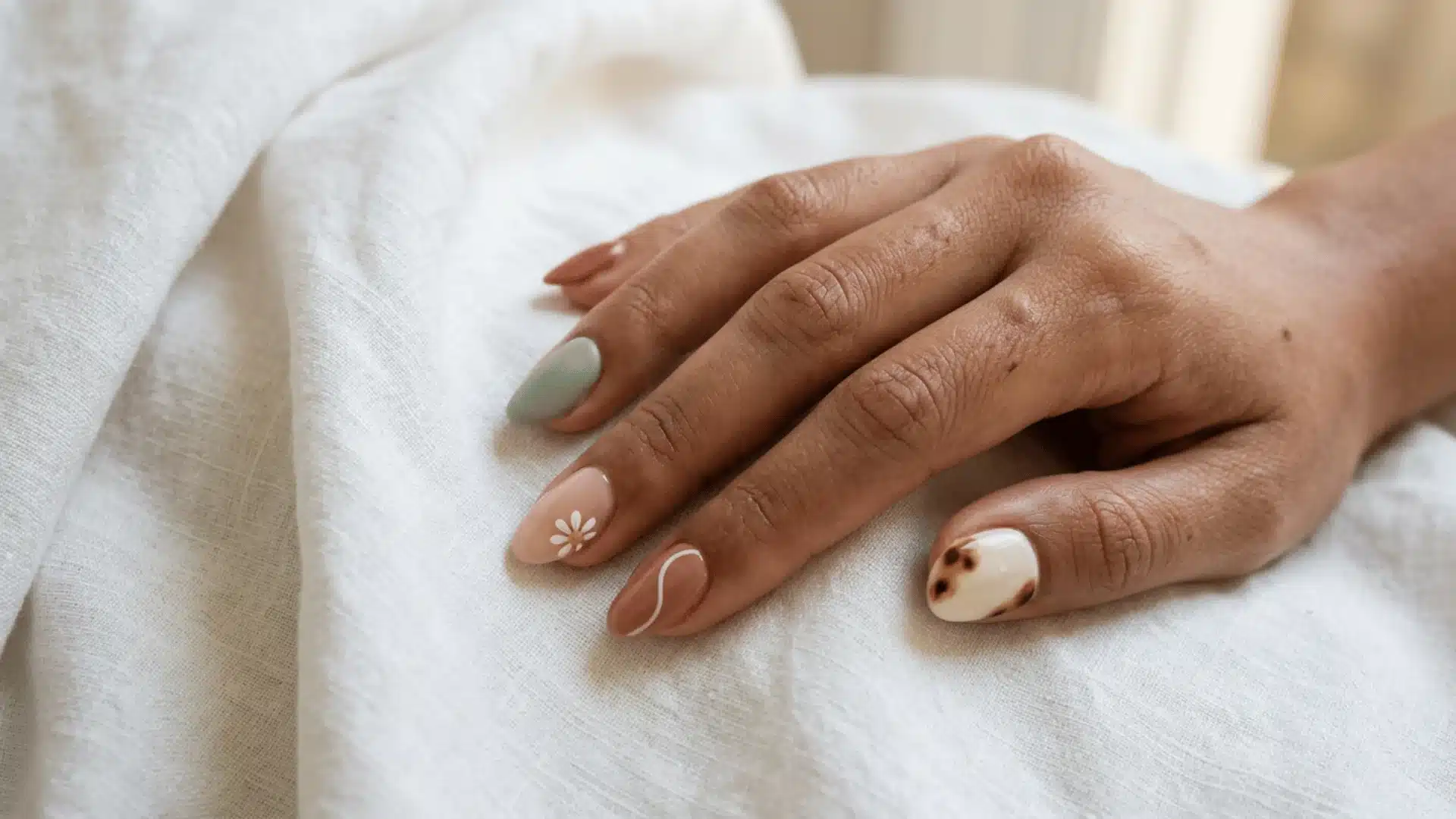
1. Apply Thin, Even Coats
Thin coats are the most important step. A thick coat may look faster because it gives stronger color in one swipe, but it takes longer to dry and smudges more easily.
Use 3 brush strokes per nail when possible. Start with one stroke down the center, then one on each side. The goal is even coverage, not a heavy layer.
If the color looks streaky after the first coat, avoid adding more polish right away. Let the first layer set, then apply another thin layer. Two or three thin coats usually dry better than one thick coat.
2. Wait 1 to 2 Minutes Between Each Layer
Waiting between coats gives each layer time to start setting before the next one goes on. This small pause helps prevent soft, gummy polish.
A good rule is to wait 1 to 2 minutes after each coat. The polish does not need to feel fully dry before the next layer, but it should not look wet or overly glossy.
This step matters most when applying base coat, two-color coats, and top coat. Rushing through every layer traps solvent between coats, which makes the final manicure easier to dent.
3. Use a Quick Dry Top Coat
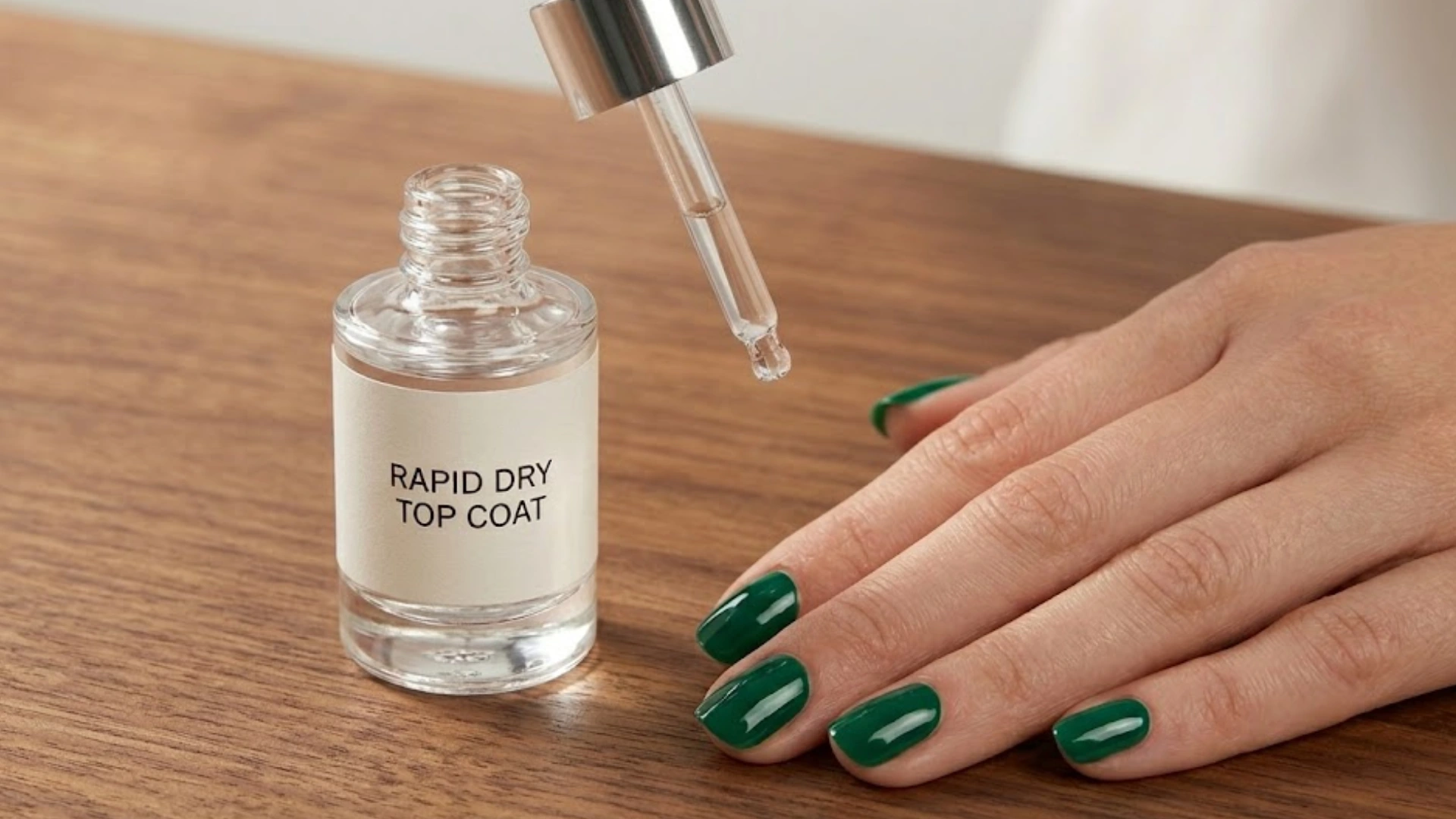
A quick-dry top coat is one of the easiest ways to speed up nail drying. It helps seal the surface, adds shine, and lowers the chance of early smudges.
Apply it after the color has had a short moment to settle. Use a thin, even layer and cap the free edge of the nail by brushing a tiny amount across the tip. This helps protect the manicure from chips.
A quick dry top coat works best when the polish underneath is not too thick. It can speed up surface setting, but it cannot fully cure heavy coats instantly.
4. Dip Nails in Ice-Cold Water
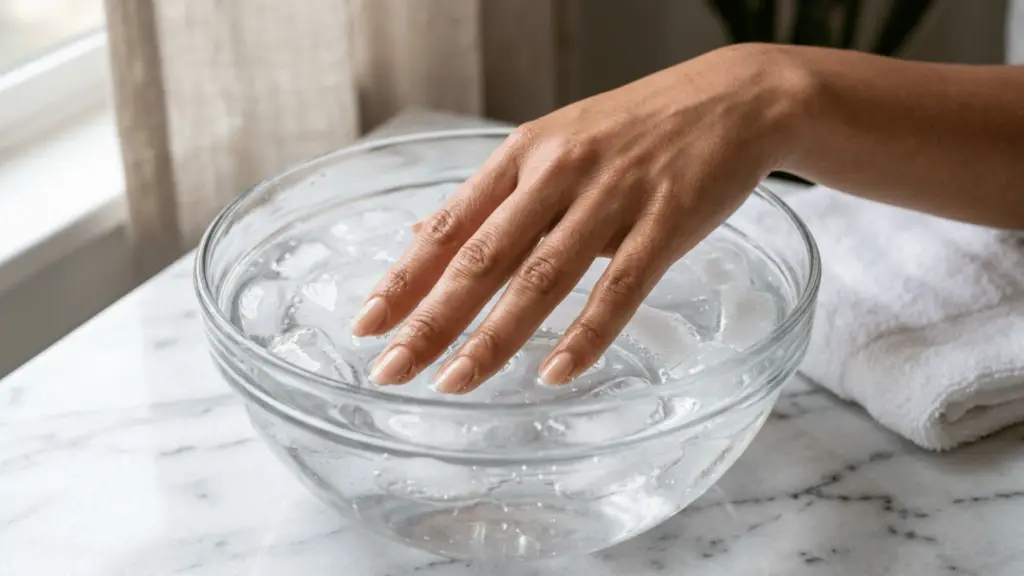
The cold water trick can help firm the surface of fresh polish. Wait about 2 minutes after applying polish, then dip nails into ice-cold water for 30 to 60 seconds.
Do not dip nails immediately after painting. A very wet polish can ripple, dent, or lose shine if it hits water too soon. Letting the surface settle first gives better results.
Cold water does not fully cure every layer. It mainly helps harden the surface and reduce smudging. After dipping, let your hands air-dry rather than rub them with a towel.
5. Use the Cool Setting on Your Hair Dryer
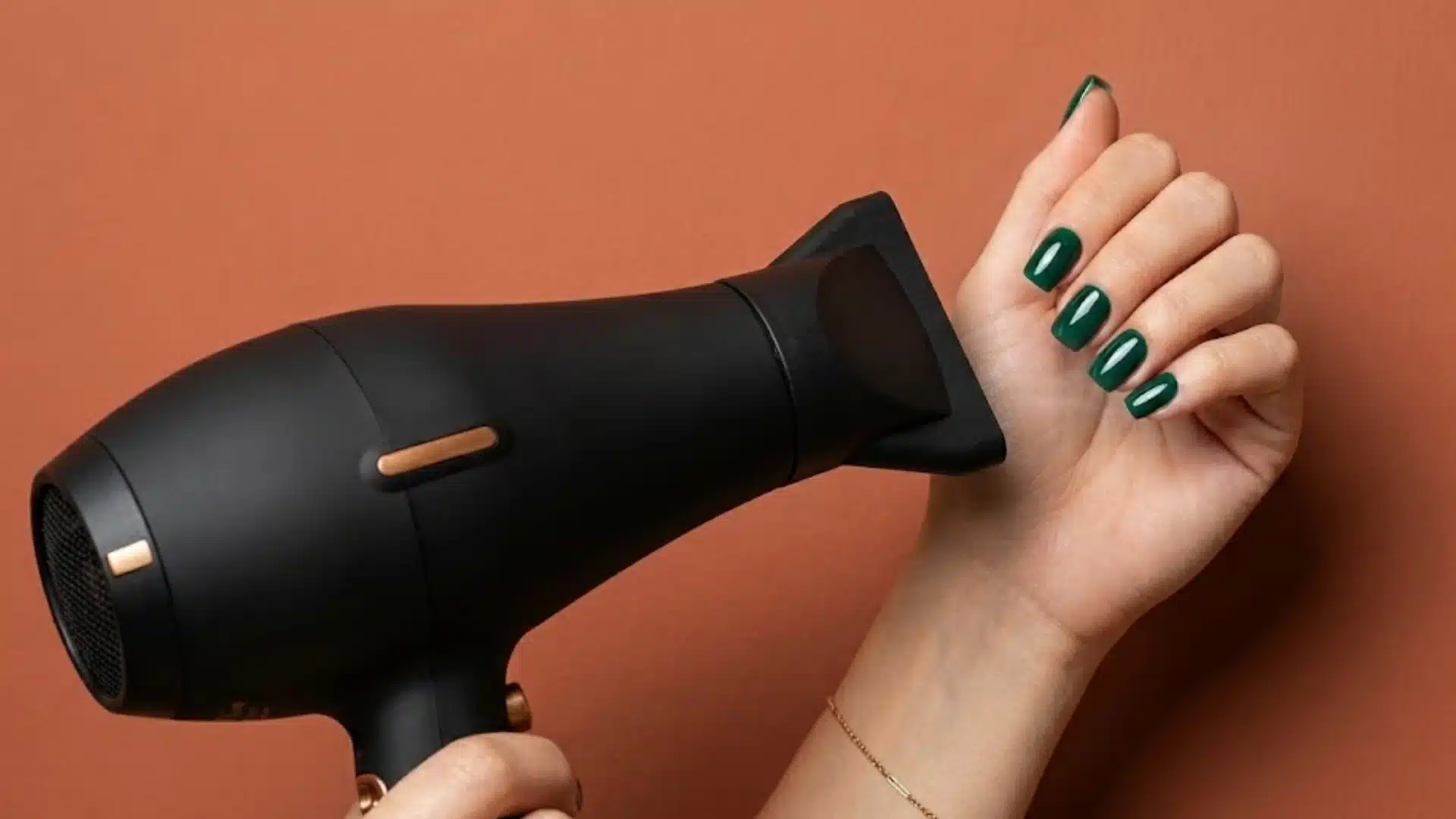
Cool air can help with solvent evaporation without softening the polish. Use the cool setting only and hold the dryer about 6 to 8 inches away from the nails.
Keep the airflow gentle. Strong air can push wet polish, cause ripples, or create tiny bubbles. Move the dryer slowly around the nails instead of blasting one spot.
Avoid hot air, as heat can make polish stay soft, bubble, or dry unevenly. Cool and steady airflow is the better choice.
6. Apply Cuticle Oil or Baby Oil After Polish Sets
Oil does not magically cure nail polish, but it can help protect the surface from light smudges. Once the polish has started to set, apply a small drop of cuticle oil or baby oil to each nail.
The oil creates a slick layer that makes dust, lint, and small particles less likely to stick. It can also make the manicure look smoother and help the cuticles look neat.
Wait for a few minutes before using oil. If the polish is still very wet, the brush or dropper may disturb the surface.
7. Use a Nail Drying Spray or Drops
Nail-drying sprays and drops are designed for people who need a faster manicure. They help the polish surface set more quickly and reduce smudging.
Drying drops are usually placed near the cuticle and allowed to spread across the nail. Sprays are misted lightly over the manicure. Both should be used after the final polish layer or top coat.
These products are helpful, but they still work best with thin coats. Thick polish underneath can remain soft even when the top feels dry.
8. Prep Your Nails Properly Before You Start
Nail prep affects drying time more than many people think. Polish dries better on a clean, dry nail plate.
Before painting, fully remove the old polish. Wash hands, dry them well, then wipe each nail with a small amount of nail polish remover or alcohol based nail cleanser. This removes oil, lotion, and residue.
Avoid applying hand cream right before polish. Lotion can leave a slick film that prevents polish from adhering evenly to the nail. That can lead to streaks, peeling, and slower drying.
For longer-lasting results, some readers may prefer learning how to do gel nails at home instead of using regular polish.
9. Choose the Right Polish Formula for Your Timeline
Some formulas dry faster than others. If time is short, choose quick-dry polish, sheer shades, or thinner formulas.
Dark polish may need more coats for even coverage. Glitter, metallic, and thick crème polish can also dry more slowly because of extra layers or denser texture.
For a fast manicure, avoid old, sticky polish. Use nail polish thinner or replace the bottle, but never use remover because it can damage the formula.
Does Blowing on Nails Help Them Dry Faster?
Blowing on wet nails is one of the most common manicure habits, but it does little to help. In some cases, it can slow the process down.
The breath is warm and humid. Nail polish dries as solvents evaporate, and humid air can slow that process. Blowing can also disturb the smooth surface of fresh polish, especially if the layer is still very wet.
There is also the issue of airflow quality. Cool, dry air is more useful than warm breath. A fan or hair dryer on the cool setting is a better choice because it gives steady airflow without adding moisture.
So, instead of blowing on nails, keep your hands still for a few minutes, then use cool air, drying drops, or cuticle oil once the polish has begun to set.
Mistakes that Make Nail Polish Dry Slower
Small habits during application can keep polish soft for longer. Avoiding these mistakes helps nails dry more smoothly and cleanly, with fewer smudges.
- Thick coats: Heavy polish dries on the surface first while the layers underneath stay wet. Thin, even coats dry more evenly and are less likely to dent later.
- Painting over lotion: Oil and cream leave a slippery layer on the nail. Polish cannot grip properly, so it may apply unevenly and take longer to set.
- Old or thick polish: Sticky polish spreads unevenly, creating heavy, slow-drying layers. A fresh formula or nail polish thinner can help it apply smoothly.
- Humid room: Moisture in the air slows the evaporation of solvents during the drying process. A cool, dry room helps nail polish set faster and cleaner.
- Skipping the base coat: Bare nails can absorb polish unevenly, which can affect the finish. A base coat creates a smoother surface and helps the color dry more evenly.
- Skipping the wait between coats: Wet layers blend together when coats are applied too quickly. Waiting 1 to 2 minutes helps each layer set before the next one is applied.
- Using hot air: Heat can soften the polish rather than dry it properly. Cool air is safer and helps prevent bubbles, ripples, or uneven texture.
- Touching too soon: Nails can feel dry on the surface while the deeper layers are still soft. Gentle care during the first hour helps prevent smudges and dents.
What to Do if Your Nails Still Feel Tacky
Tacky nails usually mean the coats are too thick, the room is humid, the polish is old, or each layer was applied too quickly before the previous one had time to set.
Give the nails more time and sit near cool airflow for 5 to 10 minutes. Keep your hands flat, avoid touching the polish, and let the layers settle naturally.
Apply drying drops or a little cuticle oil once the surface starts to set. This helps protect the polish from lint, dust, and light smudges while it keeps curing.
Avoid adding more top coat while the polish is still tacky. Another wet layer can soften the manicure and increase the risk of dents.
Next time, check the polish texture before painting. Use nail polish thinner for thick polish, but avoid nail polish remover because it can damage the formula and affect the finish.
What to Avoid While Your Nails Are Curing
Fresh polish still needs care after it becomes touch-dry. The surface may feel safe, but pressure, heat, or friction can still ruin the finish.
- Avoid hot showers: Steam and heat can soften fresh polish and leave dents. Wait until the manicure has fully cured before using hot water.
- Avoid washing dishes: Warm water, soap, and pressure can weaken fresh polish. Use gloves only after the nails feel fully set.
- Avoid tight gloves or closed shoes: Tight pressure can press marks into soft polish. This matters most after a fresh pedicure.
- Avoid digging through a purse: Keys, zippers, and small items can scrape or dent fresh nails. Keep your hands relaxed until the polish feels firmer.
- Avoid applying lotion too early: Creams and oils can drag across soft polish, dulling the shine. Apply lotion only after the manicure has had more time to set.
For a full overview of how nail products are regulated and what safe use looks like at home, the FDA nail care product guide is a useful reference.
Conclusion
A fresh manicure should feel satisfying, not stressful. Once nail polish is applied, the best thing to do is give each layer enough time to settle and protect the finish while it cures.
Small choices, like using cooler airflow, avoiding pressure, and staying gentle with hands for a little while, can make the final result look much smoother.
The biggest takeaway is simple: polish may feel dry before it is fully ready. Treating nails carefully during that soft stage can prevent most smudges, dents, and sheet marks.
A little patience after painting can save the whole manicure from needing a redo. Have a nail-drying trick that works every time? Share it in the comments.
Frequently Asked Questions
Can Hand Sanitizer Help Nail Polish Dry Faster?
No. Hand sanitizer can break down fresh polish, dull the shine, or make the surface sticky. Use it only after nails have fully cured.
Should Nail Polish Be Stored in the Fridge to Make it Dry Faster?
No. A fridge is not needed. Store nail polish in a cool, dry place away from sunlight to keep the formula smooth and usable.
Why Does Nail Polish Stay Soft Even After Many Hours?
Polish can stay soft if the bottle is expired, the formula is too thick, or too many layers were applied. In that case, the manicure may need to be removed and redone with thinner coats.
Can I Sleep After Painting My Nails?
Yes, but only after giving the polish enough time to harden. For regular polish, waiting at least 1 to 2 hours is safer to avoid sheet marks.