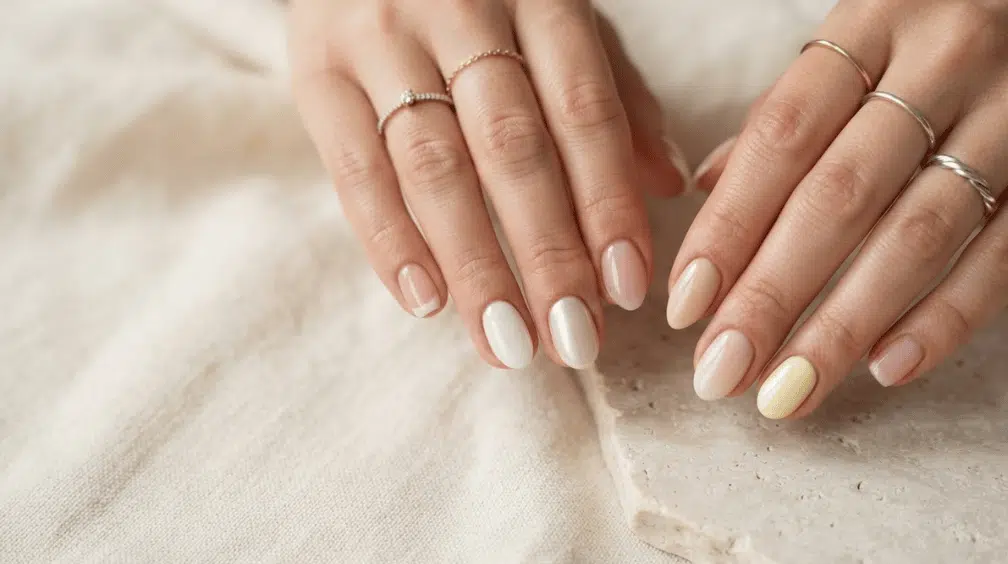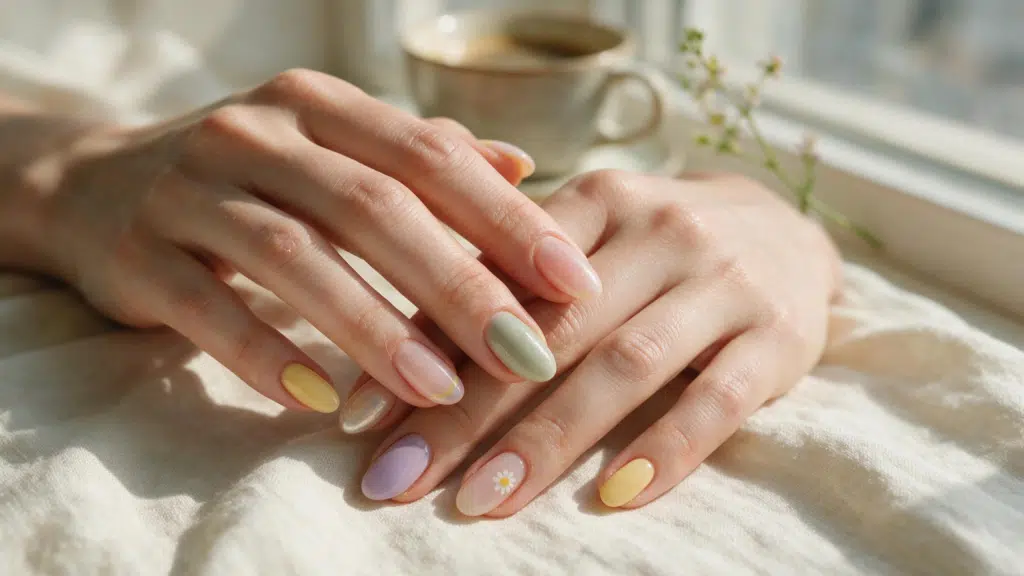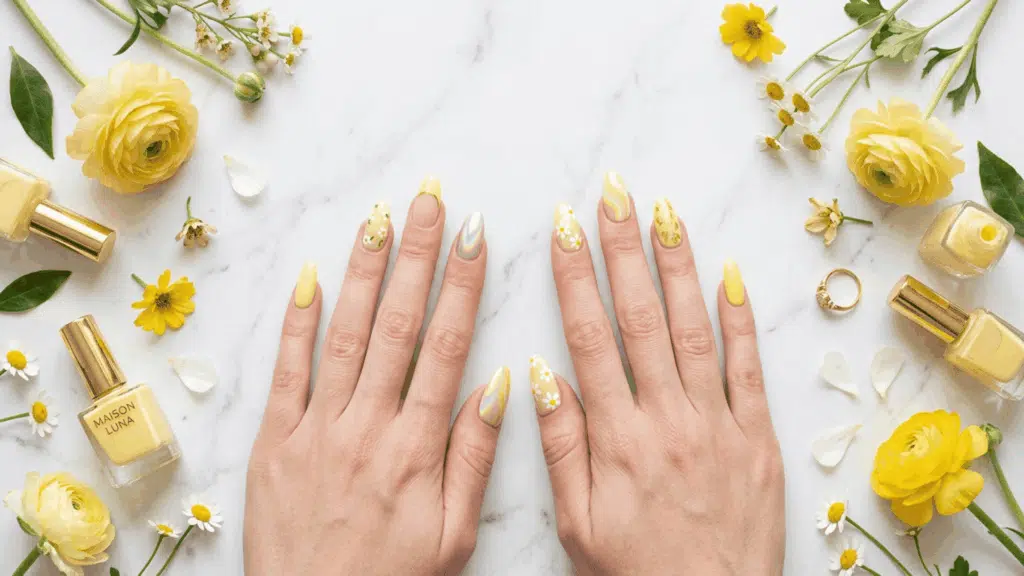
My hands gave me away before I really looked at them.
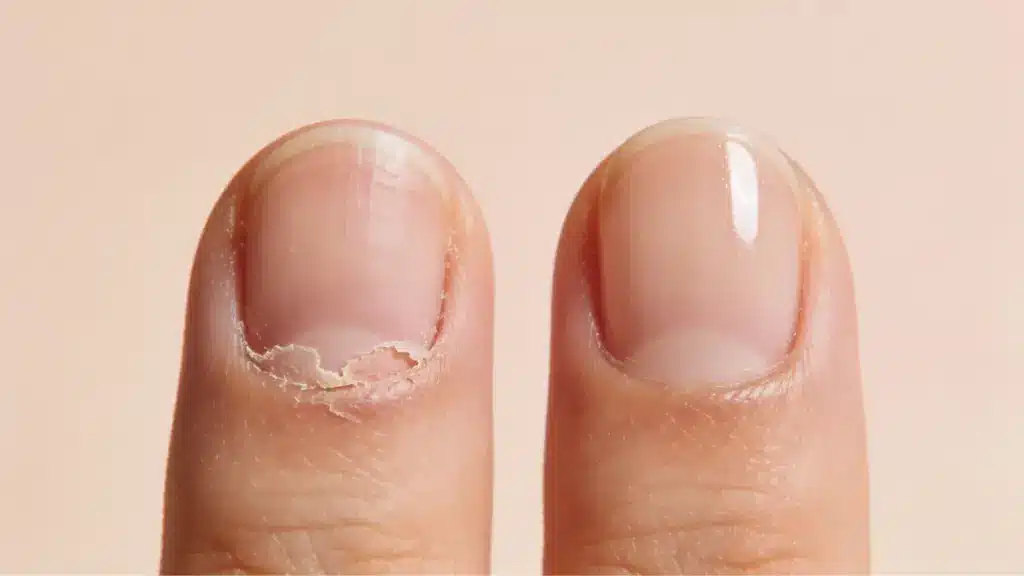
After a week of dish duty and late nights, every nail started snagging on fabric, with the skin around each one feeling tight and rough.
I had done my nails for years, but never built a steady routine for the cuticle area itself.
The good news is that nail cuticle care is simple. Keep the area clean, soft, moisturized, and protected without cutting live skin. Small daily habits matter more than one-off fixes.
This guide covers a daily routine, safe grooming, moisturizing options, gel and salon aftercare, dietary support, common mistakes, and signs that need a doctor’s attention.
What are Nail Cuticles?
The nail cuticle is the thin skin at the base of each nail, but it is not one single part.
The true cuticle is dead tissue attached to the nail plate, while the eponychium is the living skin just behind it.
Together, they create a seal that protects the nail matrix, where new nail cells grow.
This seal helps keep bacteria and fungi away from the nail fold. When it breaks because of dryness, cutting, or picking, the risk of paronychia, a painful nail fold infection, can increase.
Healthy cuticles look smooth, sit close to the nail, and do not snag or peel. When they look dry, ragged, or lifted, it is usually safer to hydrate them than to trim them.
Regular oil, cream, and gentle pushing at home can protect the area without damaging its natural barrier over time.
Step-by-Step Routine for Cuticle Care at Home
Cuticle care gets confusing because most of us learned the wrong thing about it first. The routine below is what actually keeps the nail cuticle healthy day to day – no tools, no products you don’t own, just consistent small habits.
Step 1: Trim and Clean Your Nails First
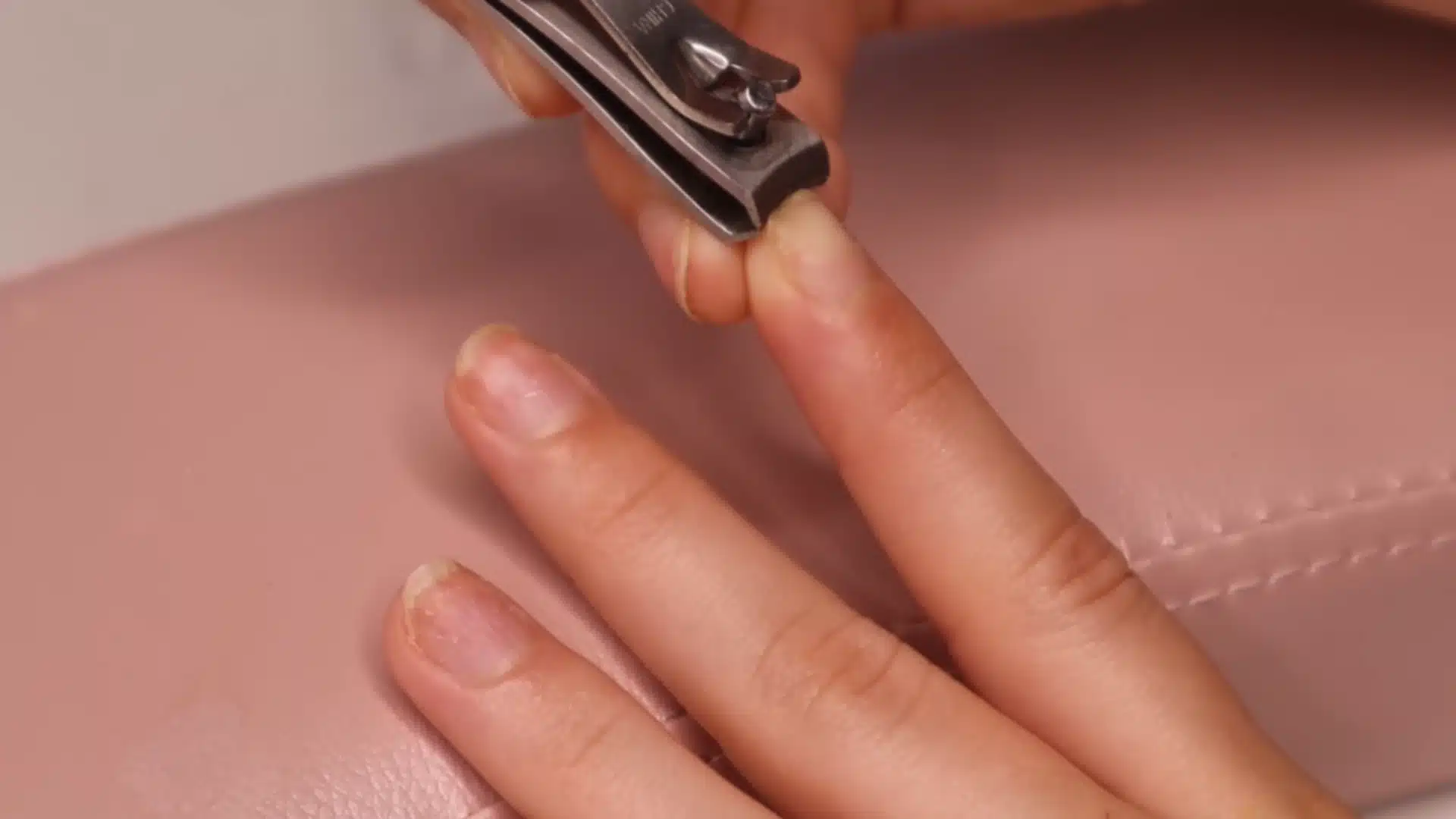
Start with clean nails before touching the cuticle area. Trim only if the nails are uneven, broken, or too long.
Do not cut them too short because that can make filing harder. After trimming, clean under each nail with a gentle tool or soft brush.
This removes dirt and buildup before nail prep starts.
Keeping the nails clean from the start makes the whole cuticle-care routine easier, safer, and better for beginners doing nail care at home.
Step 2: File the Nail Edge Gently
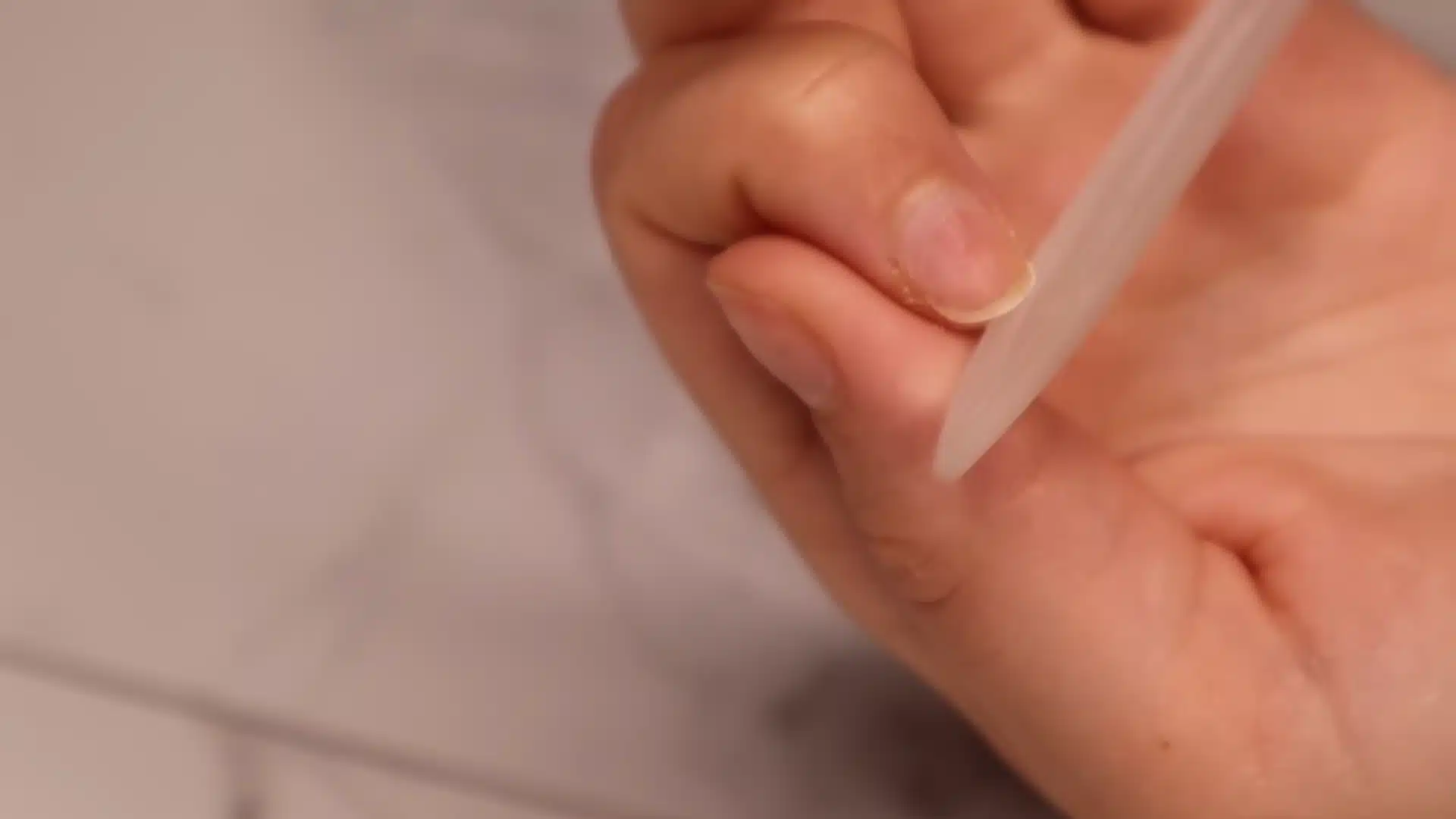
Use a crystal nail file to smooth the free edge of each nail. A crystal file is gentle and helps stop rough edges from catching on clothes, hair, or fabric.
File in one direction instead of moving back and forth quickly. This reduces stress on the natural nail and helps prevent splitting.
The goal is not to change the nail shape too much. Just smooth the edges so the nails feel neat before starting the cuticle care steps.
Step 3: Apply Cuticle Remover
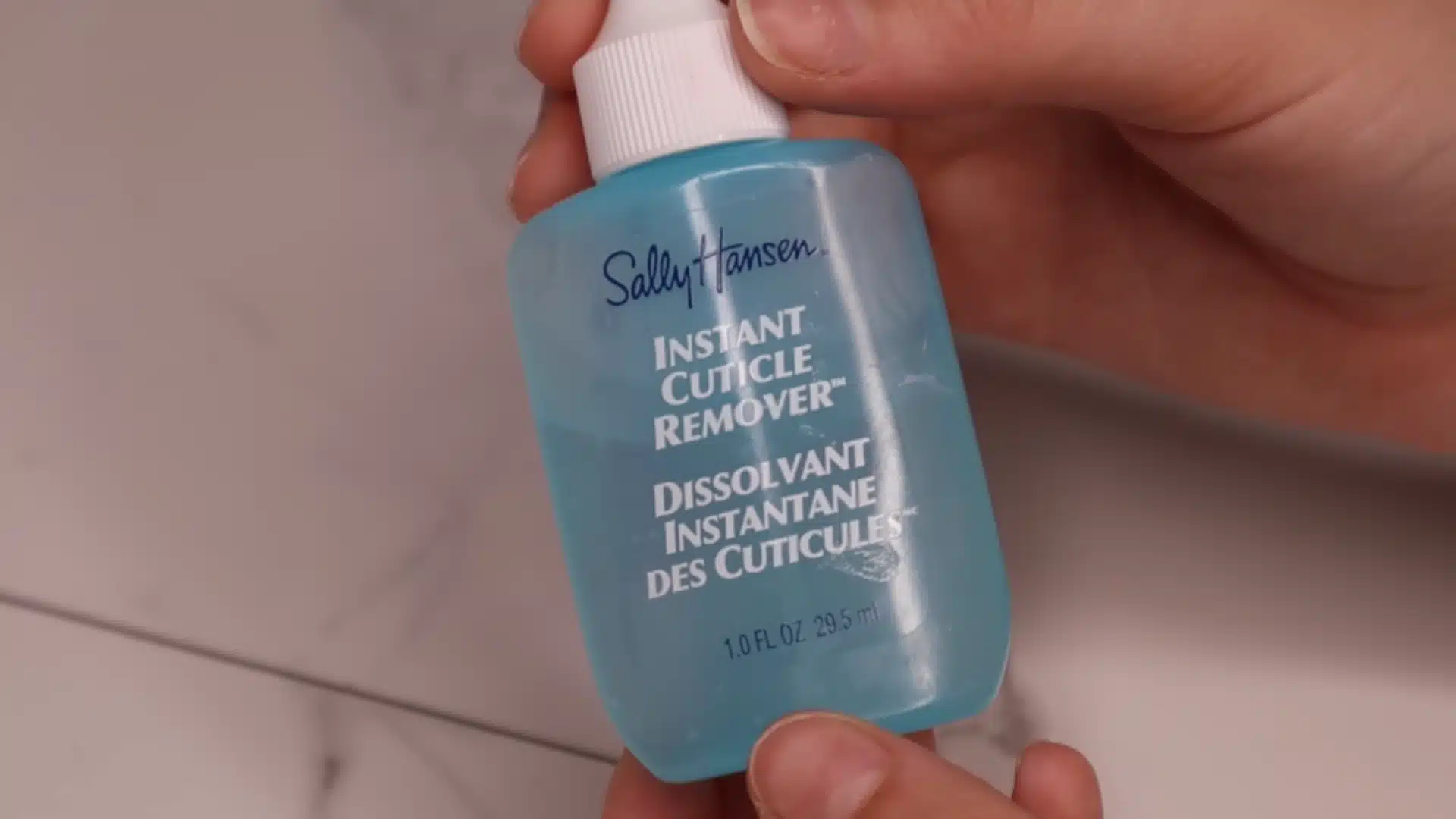
Cuticle remover is optional, but it helps soften the dead skin on the nail plate. Apply a small amount near the base of each nail and let it sit for about 15 seconds.
Do not leave it on for too long because it may irritate the skin. Beginners can also skip this product and work on dry nails.
Cuticle remover simply makes it easier to loosen the thin cuticle layer that can affect polish, gel, or nail extensions.
Step 4: Push Back the Skin Gently
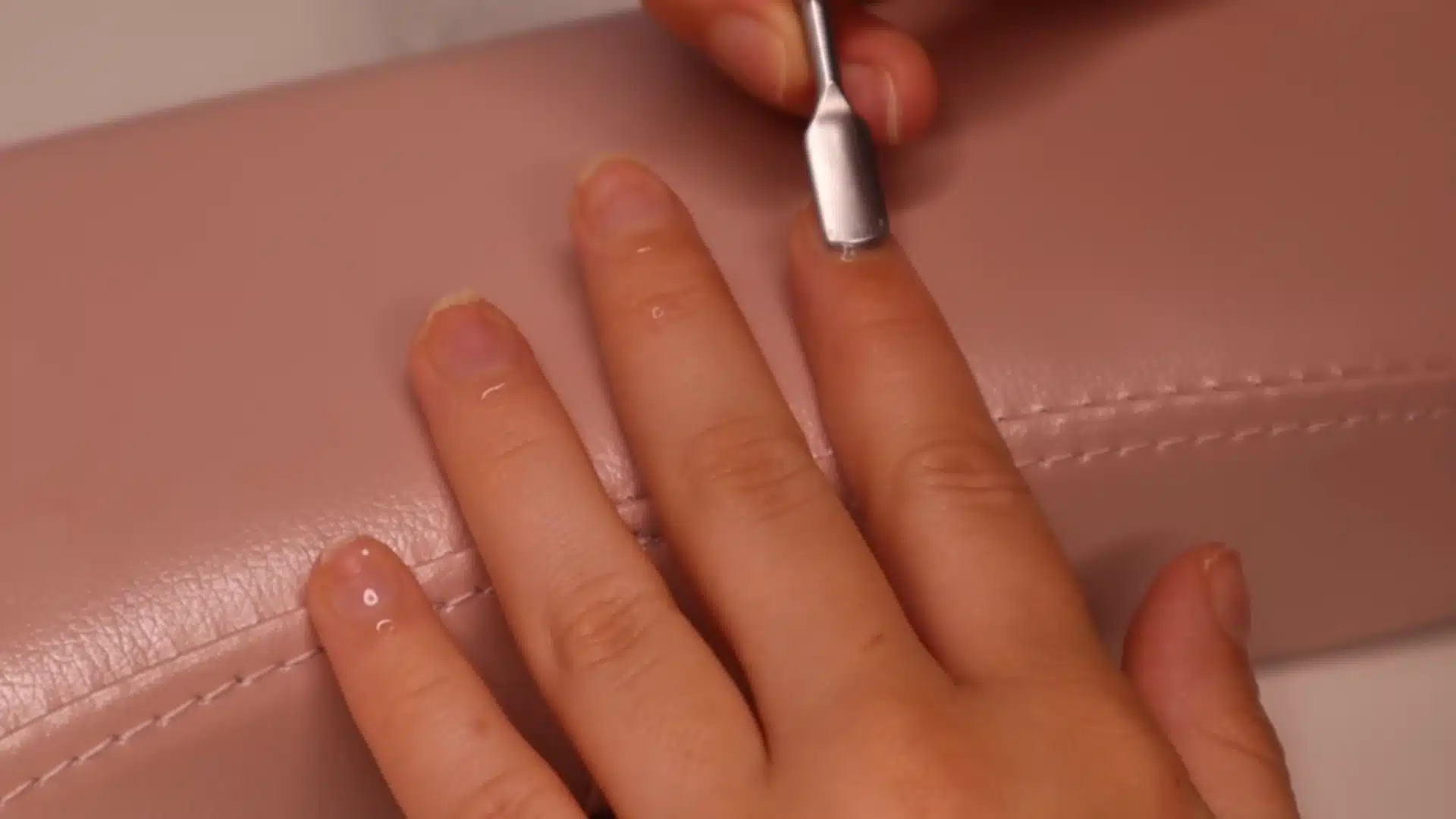
Hold the cuticle pusher as flat as possible against the nail. Push the skin back slowly with light pressure.
Do not scrape hard or force the tool under the skin.
The skin at the base of the nail is called the eponychium, and it protects the nail area. Beginners should avoid cutting it.
Step 5: Remove the Cuticle from the Nail Plate
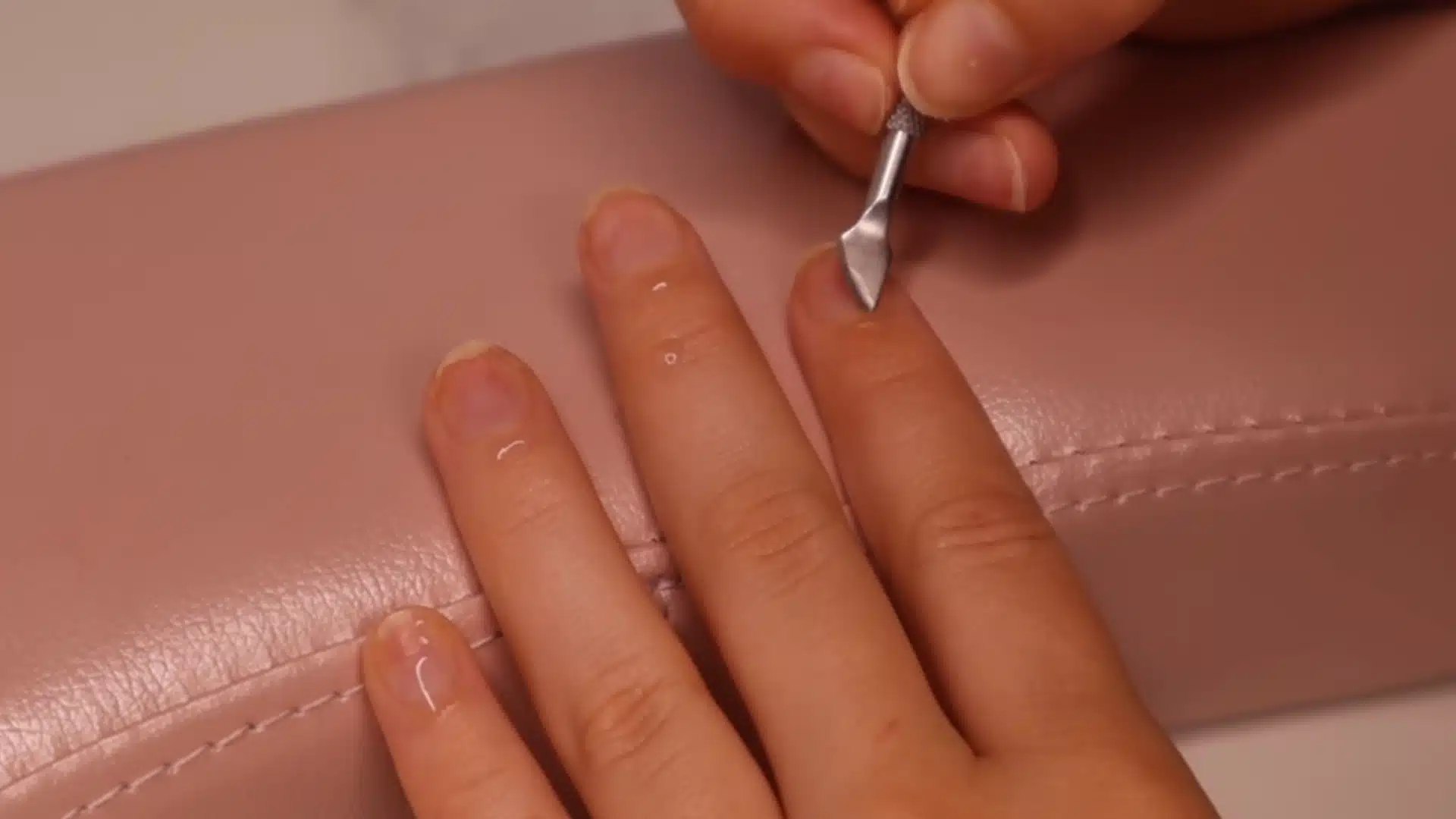
The real cuticle is the thin dead skin stuck to the nail plate, not the living skin at the base.
Use the scraper side of the cuticle pusher to gently remove this dead skin. Move slowly around the base of the nail until the nail plate looks clean.
This step matters because leftover cuticle can cause polish, gel, acrylic, or extensions to lift sooner.
Stop once the nail looks clean, smooth, and free from visible buildup.
Step 6: Wash Hands and Trim Loose Skin Only
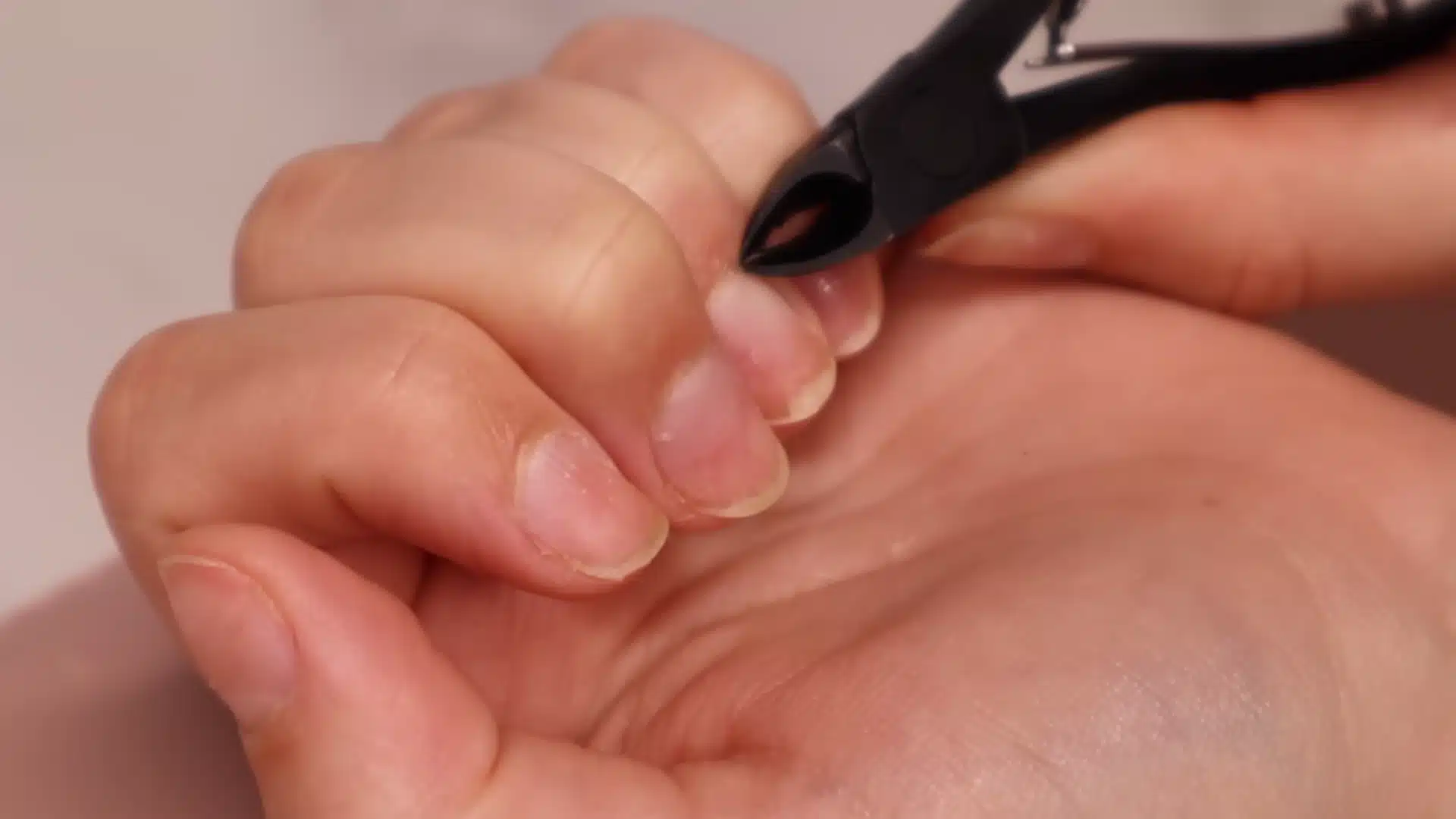
After pushing and scraping, wipe off the cuticle remover and wash your hands. This removes leftover product from the skin and nails.
Once dry, check for tiny loose pieces of dead skin. If needed, use cuticle nippers very carefully, but only trim skin that is already lifted.
Do not cut living skin or the eponychium. If the area feels sore, red, or irritated, stop. Gentle care is safer than overcutting when starting out with cuticle care.
Step 7: Moisturize with Cream and Cuticle Oil
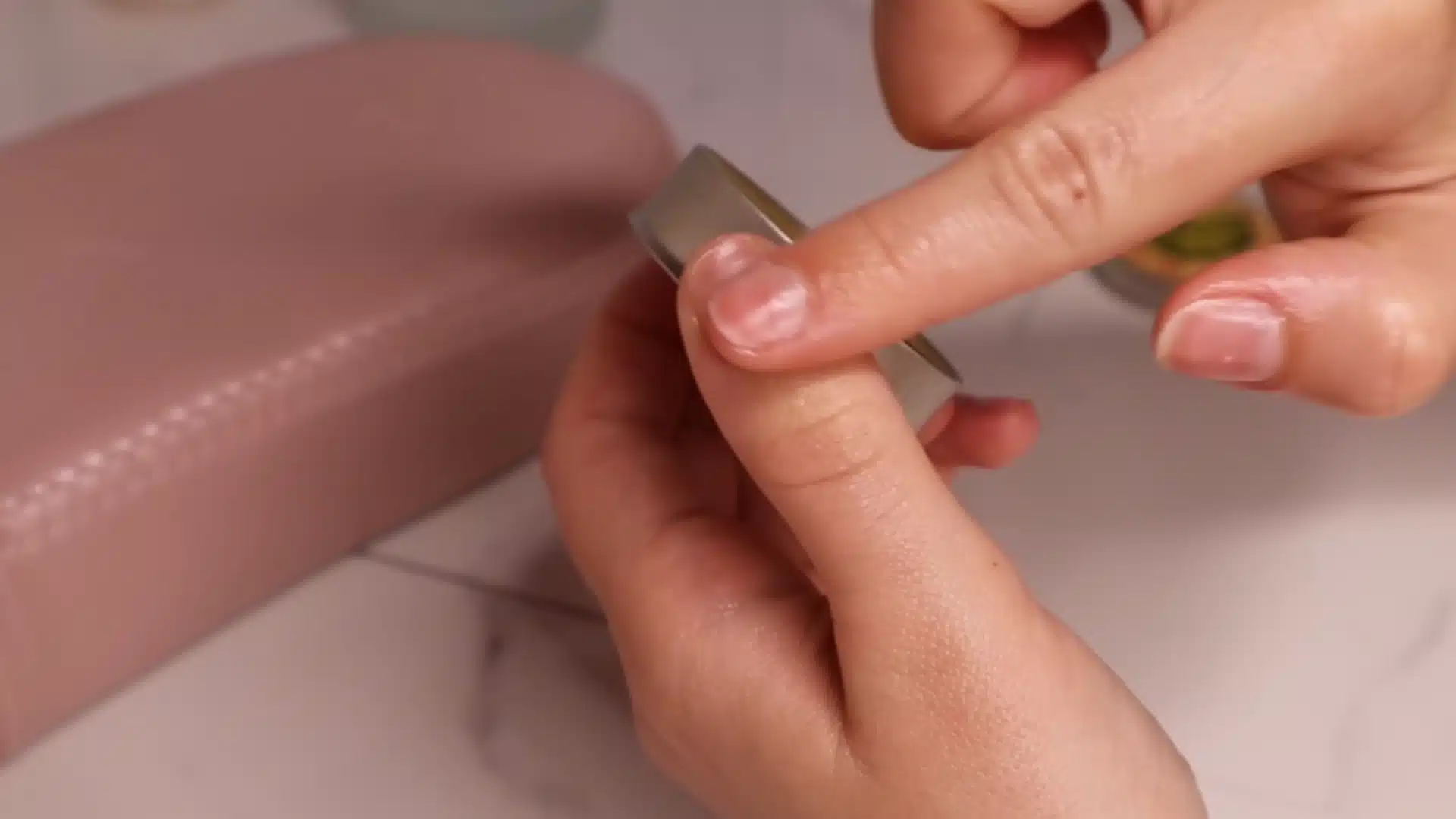
Finish by applying hand cream, cuticle cream, and cuticle oil. Massage the products around the nail base, sidewalls, and under the free edge if that area feels dry.
Moisture is one of the most important parts of cuticle care because dry nails can become brittle and break more easily.
A full routine can be done every one to two weeks, but cuticle oil can be used daily to keep the nails and skin soft.
This tutorial is based on a helpful video by Kayli Boyle. You can check out the original video on their YouTube channel here or watch it below.
Why Cutting Your Nail Cuticle Can Cause Problems
The nail cuticle works like a small gasket. It sits exactly where the nail meets the skin and closes off the space where new nail cells grow.
When that seal is intact, bacteria and fungi have no easy entry point.
Cutting, peeling, or picking at that area breaks the seal. Even a small tear creates an opening.
The Cleveland Clinic notes that trauma from manicure tools is one of the most common triggers of paronychia – a painful nail fold infection that can require medical treatment to resolve.
The one exception: Hangnails and loose dead skin that have already separated from the nail can be carefully trimmed with clean, sharp nippers. The rule is to trim only what is already detached. Never pull, and never cut skin that is still attached or living.
Best Products for Nail Cuticle Hydration

Nail cuticle hydration works best with light natural oils that soften dry skin, support repair, and keep nails flexible without feeling too greasy.
- Jojoba oil: Absorbs quickly, feels light, and works well for daily nail cuticle care because it closely matches the skin’s natural oil.
- Vitamin E: Helps soothe dryness, supports damaged skin, and works well with jojoba oil in daily cuticle products.
- Argan oil: Rich and nourishing, making it a good overnight choice for dry, peeling, or brittle cuticles.
- Sweet almond oil: Lightweight and gentle, helping soften the cuticle area while leaving nails looking smoother.
- Coconut oil: Locks in moisture on the surface, making it useful after a lighter oil, especially at night.
If you want a simple starting point, jojoba and vitamin E together cover most of what nail cuticles need. Apply before bed and leave overnight.
For days when you’re wearing gel nail polish, a quick oil application before the appointment helps protect the cuticle area during prep.
What Your Diet Does for Your Nail Cuticle
Topical oils work on the surface. But the nail cuticle and nail plate grow from inside the body, which means nutrition is part of the story most cuticle guides skip entirely.
Biotin (vitamin B7) is the most researched nutrient for nail health.
A clinical study cited by Biology Insights found that 2.5 mg of daily biotin increased nail thickness by 25% in participants with brittle nails over five to six months.
Zinc supports cell growth and repair, while vitamin E works from inside the body as an antioxidant that protects cells from damage.
Omega-3 fatty acids help maintain the skin’s natural oil production, which directly affects how dry or flexible the cuticle stays.
Food sources include eggs, almonds, sweet potato, pumpkin seeds, lentils, red meat, sunflower seeds, spinach, avocado, salmon, chia seeds, and walnuts.
Supplements make the most sense when there is a confirmed deficiency or a very restrictive diet.
Common Nail Cuticle Mistakes to Avoid
Most nail cuticle damage comes from small habits repeated often, such as cutting live skin, pulling hangnails, skipping gloves, or using strong polish remover without moisture afterward.
| Mistake | Why It Hurts Cuticles | What To Do Instead |
|---|---|---|
| Cutting live cuticle skin | Breaks the protective seal and can let bacteria enter. | Push back gently after softening. Trim only loose, dead skin. |
| Pulling hangnails | Tears near the skin may create a sore spot. | Soften with oil, then clip only the loose piece. |
| Pushing cuticles while dry | Dry skin can crack or tear under pressure. | Use oil or a short warm soak first. |
| Skipping gloves during cleaning | Soap, sprays, and water strip natural oils. | Wear rubber or vinyl gloves for dishes and cleaning. |
| Using acetone too often | Dries the nail cuticle and can cause cracking. | Follow with cuticle oil and hand cream. |
| Picking skin around the nail | Creates small tears and keeps the area ragged. | Use a cuticle oil pen or balm when the habit starts. |
| Applying polish over the cuticle | Causes messy edges, chips, and possible irritation. | Keep polish slightly above the cuticle line. |
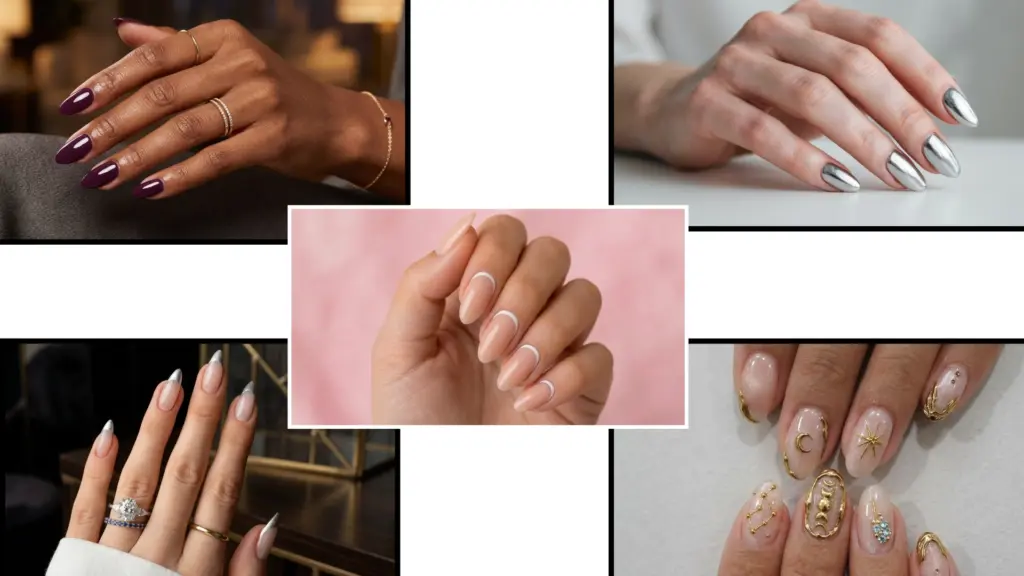
For more inspiration on what healthy nails can look like, the nail design ideas gallery is worth a scroll.
Signs Your Cuticles Need Extra Care
Cuticles often show warning signs when they become dry, irritated, or damaged. Paying attention to these changes can help prevent bigger nail problems.
- Redness: Skin around the nail looks pink or red and may feel irritated. This can happen after picking, biting, or exposure to harsh products.
- Swelling: The area near the nail appears puffy or enlarged. Swelling often develops when the skin becomes irritated or reacts to an injury.
- Pain: Tenderness or discomfort around the nail can signal damage to the cuticle. Even mild pain should not be ignored if it lasts for several days.
- Cracks: Dry and split skin around the nail is a common sign of dehydration. Cracked cuticles can make everyday tasks uncomfortable and increase irritation.
- Pus or Warmth Near The Nail: Yellow discharge or a warm sensation around the nail may indicate an infection. Professional care may be needed if these symptoms appear.
When to See a Professional
Some cuticle problems can heal with gentle care, but certain signs need expert help.
See a professional if the pain does not go away after a few days, even with cuticle oil and hand cream, and after avoiding picking.
Ongoing pain can mean the skin is damaged or irritated deeper than it looks. You should also get help if swelling gets worse or spreads around the nail.
This can be a sign that the area is not healing well. If signs of infection appear, such as pus, warmth, severe redness, or throbbing, do not try to treat it at home.
A nail tech or doctor can guide you safely. Also, if cuticle damage keeps coming back, there may be a habit, product, or nail routine causing it.
Conclusion
Cuticle care is one of those small habits that quietly changes how your hands look and feel.
When the skin around the nails stays calm, flexible, and cared for, manicures sit better, natural nails appear cleaner, and daily tasks feel less irritating.
The key is paying attention before dryness turns into cracks or soreness. Think of this routine as basic hand care, not an extra beauty step.
A few minutes of steady attention can prevent the rough, picked-at look that often makes nails seem neglected.
Keep your tools clean, listen to your skin, and choose gentle over aggressive every time.
For more simple nail care tips, bookmark this guide and share it with someone who needs healthier cuticles today.
Frequently Asked Questions
How Often Should I Push Back My Cuticles?
Push back cuticles once weekly. Soften first with oil or warm water, then use gentle pressure and a rubber or wooden tool to avoid irritation.
Can I Use Face Oil on My Cuticles?
Some face oils may work, but avoid formulas with strong actives, fragrance, or acids. Plain plant-based oils are usually safer.
How Long Does It Take Cuticles to Look Better?
Mild dryness may improve in a few days. Rough, peeling cuticles can take a few weeks of steady moisture and gentle care.