That soft modal shirt or pair of pajamas may feel gentle on the skin, but the story behind the fabric is not as simple as its smooth texture suggests.
Modal begins with beech tree pulp, then goes through several processing steps before it becomes the silky material found in underwear, sleepwear, activewear, and everyday basics.
That mix of plant-based origin and chemical processing is exactly why many shoppers pause and ask, Is modal fabric toxic?
The answer depends on more than the fabric name on the label. Production methods, dyes, finishing treatments, blends, and certifications all play a role.
This blog post breaks down what a modal is, how it is made, where safety concerns come from, and what to check before buying.
What is Modal Fabric?
Modal is a regenerated cellulose fabric made from beech tree pulp. The wood pulp is turned into cellulose, dissolved in a chemical solution, pushed through tiny spinnerets, and then formed into soft fibers that can be spun into yarn.
This is why modal is not fully natural like cotton, but not fully synthetic like polyester either.
It sits in the same fabric family as viscose and lyocell, though modal is usually smoother, stronger, and more resistant to shrinking than regular viscose.
Branded options like Lenzing Modal and TENCEL Modal follow stricter production and sourcing standards. Generic modal may offer less transparency about how it was made or finished.
If the label just says “modal” with no brand name or certification, that’s worth paying attention to.
Its fine fiber structure gives it a silky feel, easy drape, and good dye retention. Modal also absorbs more moisture than cotton, which makes it common in underwear, sleepwear, activewear, and soft everyday clothing.
Is Modal Fabric Toxic?
Modal fabric is not usually considered toxic in its finished form, but the production process deserves attention. Making a modal can involve sodium hydroxide and carbon disulfide.
Sodium hydroxide is highly caustic during direct exposure, while carbon disulfide can affect the nervous system when workers face long-term, poorly controlled exposure.
These risks matter most inside factories, not in the clothing hanging in a closet.
After processing, modal fibers are washed and purified, so production chemicals should not remain in meaningful amounts in the finished garment.
The safer choice is certified modal. OEKO TEX Standard 100 is especially useful because it tests the full textile, including dyes, threads, and trims, for harmful substance limits before the garment reaches the skin.
Are Modal Dyes and Finishes Safe for Your Skin?
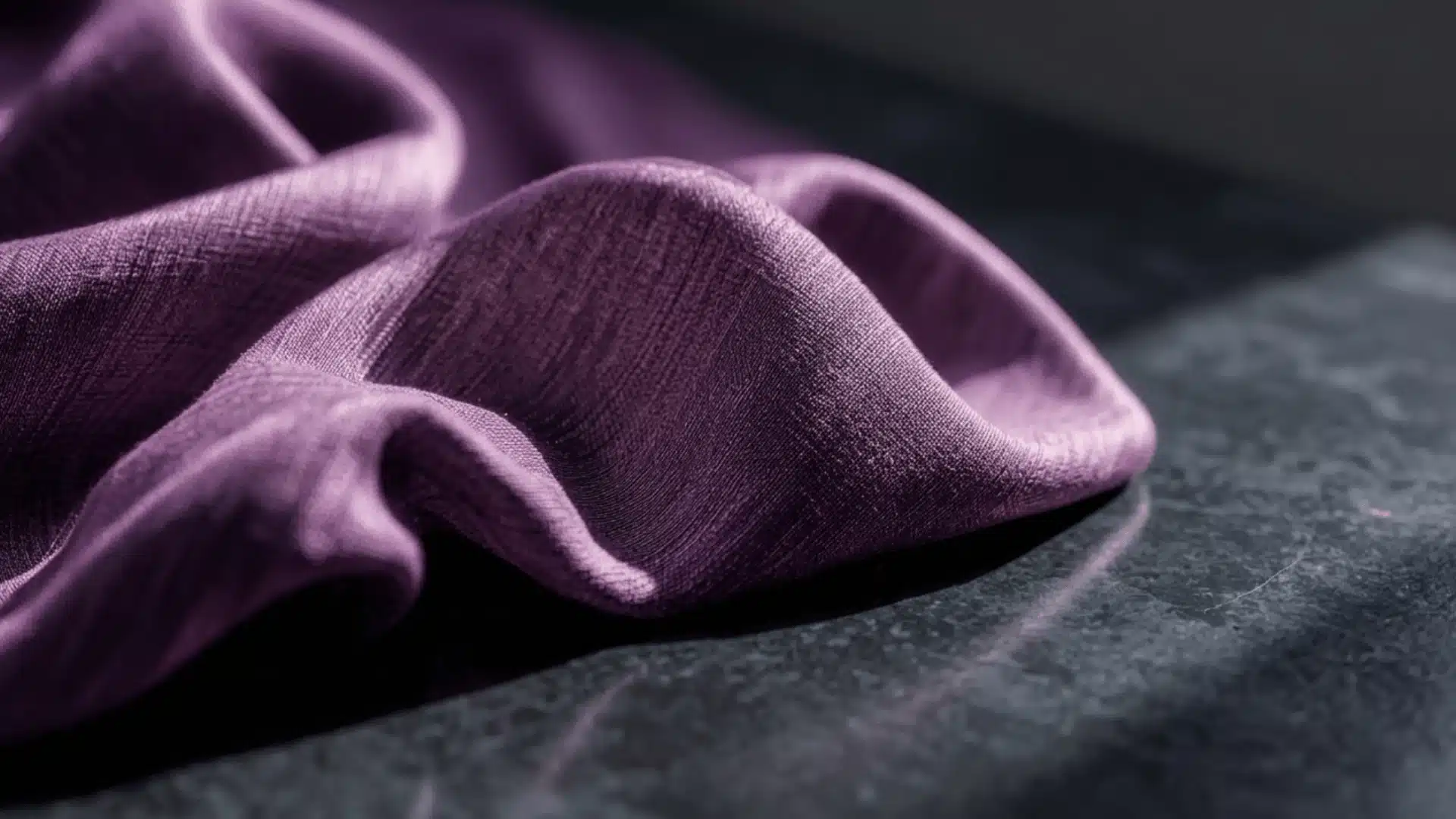
The fiber itself is only part of the story. Dyes and finishing treatments applied after the modal fiber is made can be just as relevant to skin safety as the fiber itself.
Some concerns to know about:
Azo dyes are widely used in textiles because they’re inexpensive and come in a wide range of colors. Certain azo dyes can break down on skin contact and release compounds that may cause reactions in sensitive individuals.
Formaldehyde-based finishes are sometimes used to make fabrics wrinkle-resistant or crease-proof. These can remain on untested garments and irritate skin.
PFAS (forever chemicals) are occasionally used in stain-resistant or water-repellent finishes. For everyday basics like modal underwear or sleepwear, these are unnecessary and worth avoiding.
This is another reason OEKO-TEX Standard 100 matters: it tests for over 100 harmful substances across the full garment, including dye residues, finishing agents, and heavy metals.
A certified label is the clearest signal that what’s on the fabric has been independently verified.
Modal Fabric Pros and Cons
Modal fabric has clear comfort benefits, but its production method, blends, and certifications decide whether it is the right choice for everyday wear.
| Pros | Cons |
|---|---|
| Soft, smooth feel that works well for underwear, sleepwear, and loungewear. | Chemical processing is required to turn beech pulp into fabric. |
| More moisture absorbent than cotton, which helps with comfort in warm weather. | Generic modal may offer less transparency than branded or certified modal. |
| Drapes well and feels lighter against the skin than many cotton fabrics. | Modal polyester blends can reduce breathability and biodegradability. |
| Holds dye well, so colors often stay fresh after repeated washing. | Can pill or lose softness if washed with high heat or rough fabrics. |
| Usually resists shrinking better than standard viscose rayon. | Not fully natural, which may matter to shoppers avoiding semi-synthetic fabrics. |
| Certified modal can be a good option for sensitive skin and direct skin contact. | Higher-quality modal may cost more than regular cotton or polyester basics. |
Is Modal Fabric Safe for Sensitive Skin?
Modal can be a comfortable choice for sensitive skin because its fibers are smooth, soft, and less rough than many heavier fabrics.
The main thing to check is not only the modal fiber, but the full garment. Dyes, finishing agents, elastic, seams, and added fibers can affect how it feels on reactive skin.
For underwear, sleepwear, or fitted tops, choose certified modal with a high modal percentage and avoid scratchy trims or stiff printed designs.
Wash new modal clothing before wearing it to remove surface residues from packing, handling, or finishing.
Note: Anyone with eczema, allergies, or frequent irritation should patch test the garment at home before wearing it for a full day.
What Reddit Users Think About Modal Fabric
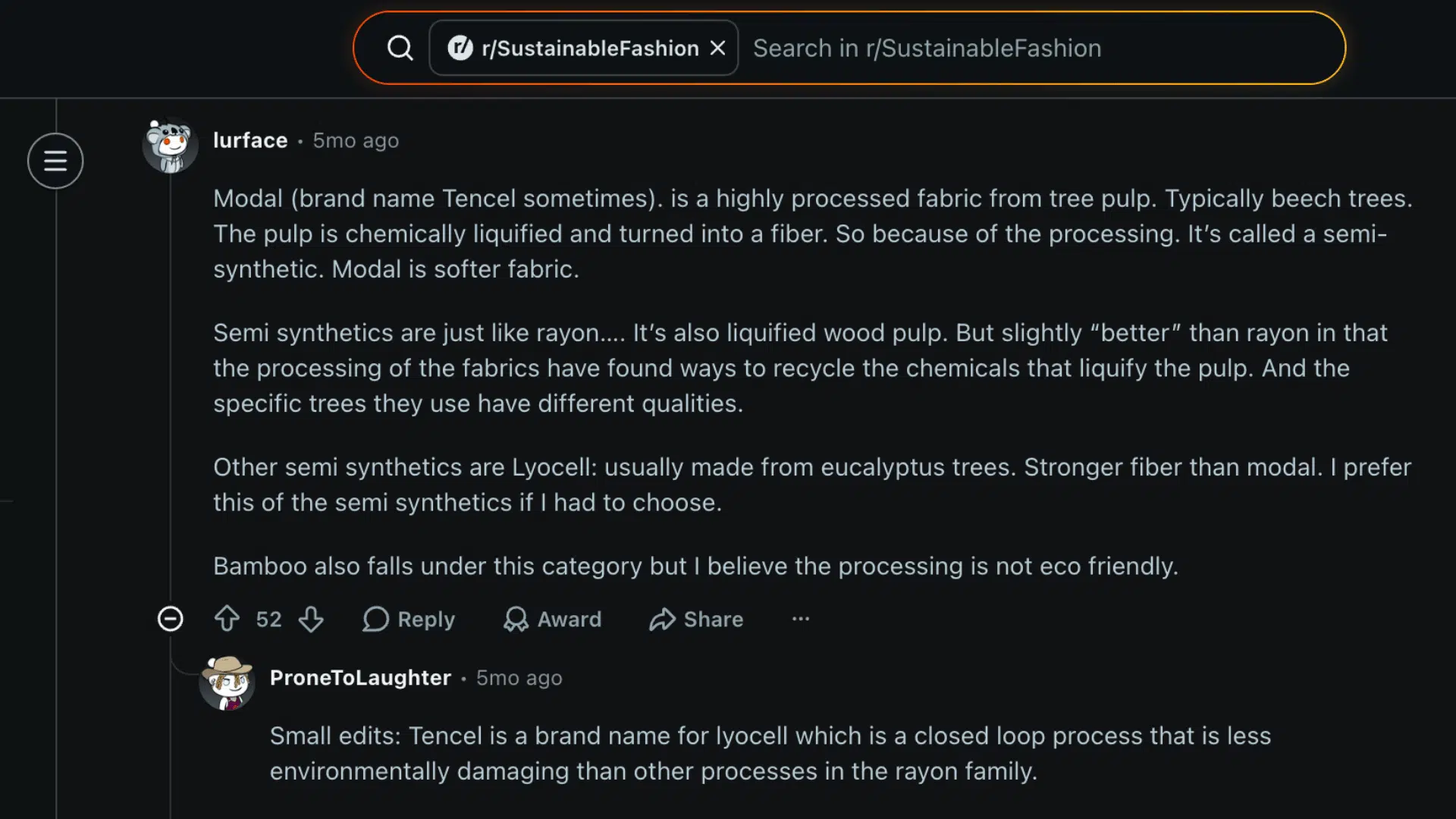
According to Reddit discussions, modal fabric is generally viewed as a soft, breathable, and comfortable material that works well for everyday clothing.
Many users point out that modal fabric is made from tree pulp, usually sourced from beech trees, but it undergoes significant chemical processing before becoming a wearable fiber.
Because of this manufacturing process, it is classified as a semi-synthetic fabric, similar to rayon, viscose, bamboo, and lyocell.
Reddit users also note that while some chemicals used during production can be harmful to the environment, the finished fabric itself is considered safe since those chemicals are removed during processing.
Environmental impact often depends on how the fabric is produced, with closed-loop systems being a more sustainable option.
Overall, Reddit users see modal fabric as a soft and breathable choice, especially when found in quality thrifted clothing.
How Does Modal Compare to Other Fabrics?
Modal sits between natural and synthetic fabrics, offering good comfort and breathability while still depending on certification, sourcing, and production standards.
If you’re thinking about how fabric choices connect to your overall wardrobe, it helps to start with dressing in sync with your natural aesthetic before narrowing down materials.
| Fabric | Skin safety (finished garment) | Production transparency | Breathability |
|---|---|---|---|
| Modal (certified) | Good | Medium (depends on the manufacturer) | High |
| Organic cotton | Very good | High (GOTS-certified) | High |
| Polyester | Lower (microplastics, synthetic dyes) | Low | Low |
| TENCEL/Lyocell | Very good | High (closed-loop system) | High |
| Standard cotton | Good | Low (pesticide-heavy) | High |
How to Choose Safer Modal Clothing
Choosing safer modal comes down to reading the label closely, checking proof of testing, and avoiding blends or finishes that may irritate skin.
- Look for OEKO-TEX Standard 100: This is the most accessible and reliable safety marker for finished modal garments. It’s not a marketing claim; it’s a third-party certification.
- Prefer Lenzing-branded modal: Lenzing Modal and TENCEL Modal are produced under Lenzing AG’s documented environmental standards. Generic or unverified modal from unknown manufacturers may not follow the same chemical management practices.
- Check the blend: Modal cotton blends are gentler and more breathable than modal-polyester blends. Aim for 90%+ modal content when softness and skin comfort are the goal.
- Wash before wearing: This is a simple step worth doing with any new garment, but especially with semi-synthetic fabrics. A wash removes any surface residues from the manufacturing or shipping process.
- Avoid heavily dyed modal: The dye and finishing chemicals applied after the fiber is made can be just as relevant to skin safety as the fiber itself. Certified garments are tested for these too.
Conclusion
Modal fabric becomes easier to understand once the focus shifts from fear to label awareness.
The fabric itself can be a practical choice for soft daily clothing, especially when the garment is certified, well blended, and washed before wear.
The bigger concern is not the feel of modal on skin, but how responsibly it was made and finished before reaching the store.
That is why certification, producer transparency, dye quality, and fiber blend all matter. For shoppers who want comfort without ignoring safety, modal can fit well into a thoughtful wardrobe.
Before buying, read the care tag, check for trusted testing, and avoid unclear claims.
Have you worn modal clothing before? Share your experience in the comment section.
Frequently Asked Questions
Does Modal Shrink in the Wash?
Modal is more resistant to shrinking than cotton and standard viscose. Washing in cool water on a gentle cycle preserves the fibers.
What is the Difference Between Modal and Micro Modal?
MicroModal is a finer version of modal, made from fibers that are thinner than standard modal fibers. This makes MicroModal softer to the touch and slightly lighter in weight.
Can Modal Fabric Hold Odors?
Modal can hold less odor than many synthetic fabrics because it absorbs moisture better. Still, tight blends with polyester may trap sweat smell more easily.