Noticing tiny white bumps under your eyes can feel frustrating, especially when they do not act like pimples or fade with your usual skin care routine.
You may look closer in the mirror, wonder if makeup is making them worse, or feel unsure about touching them at all.
That is often the moment people start searching for milia under their eyes and asking what these stubborn little bumps really mean.
Years ago, when I was still coaching competitive swimming, I started noticing tiny white bumps forming under my eyes.
I assumed it was sunscreen buildup or some reaction to chlorine. Turned out it was milia, and I had been making them worse by switching between thick eye creams, trying to fix the dryness.
Understanding what is happening beneath the surface can make the whole thing feel less confusing.
What are Milia Under the Eyes?
Milia under the eyes are small white or yellow bumps that form just beneath the skin.
They often look like tiny pimples, but they are not acne and should not be squeezed. Milia happen when keratin, a natural protein found in the skin, gets trapped instead of shedding normally.
The under-eye area is a common spot because the skin there is thin, delicate, and often treated with heavy creams or makeup.
These bumps are usually painless, harmless, and not a sign of poor hygiene. Some milia may go away on their own, while others can stay for weeks or months.
Since the skin around the eyes is sensitive, safe care matters. A dermatologist can confirm milia and suggest the right treatment.
Reviewing your morning and night skincare routine is often a good place to start, since product layering and timing can directly contribute to milia buildup.
What Do Milia Under Eyes Look Like?
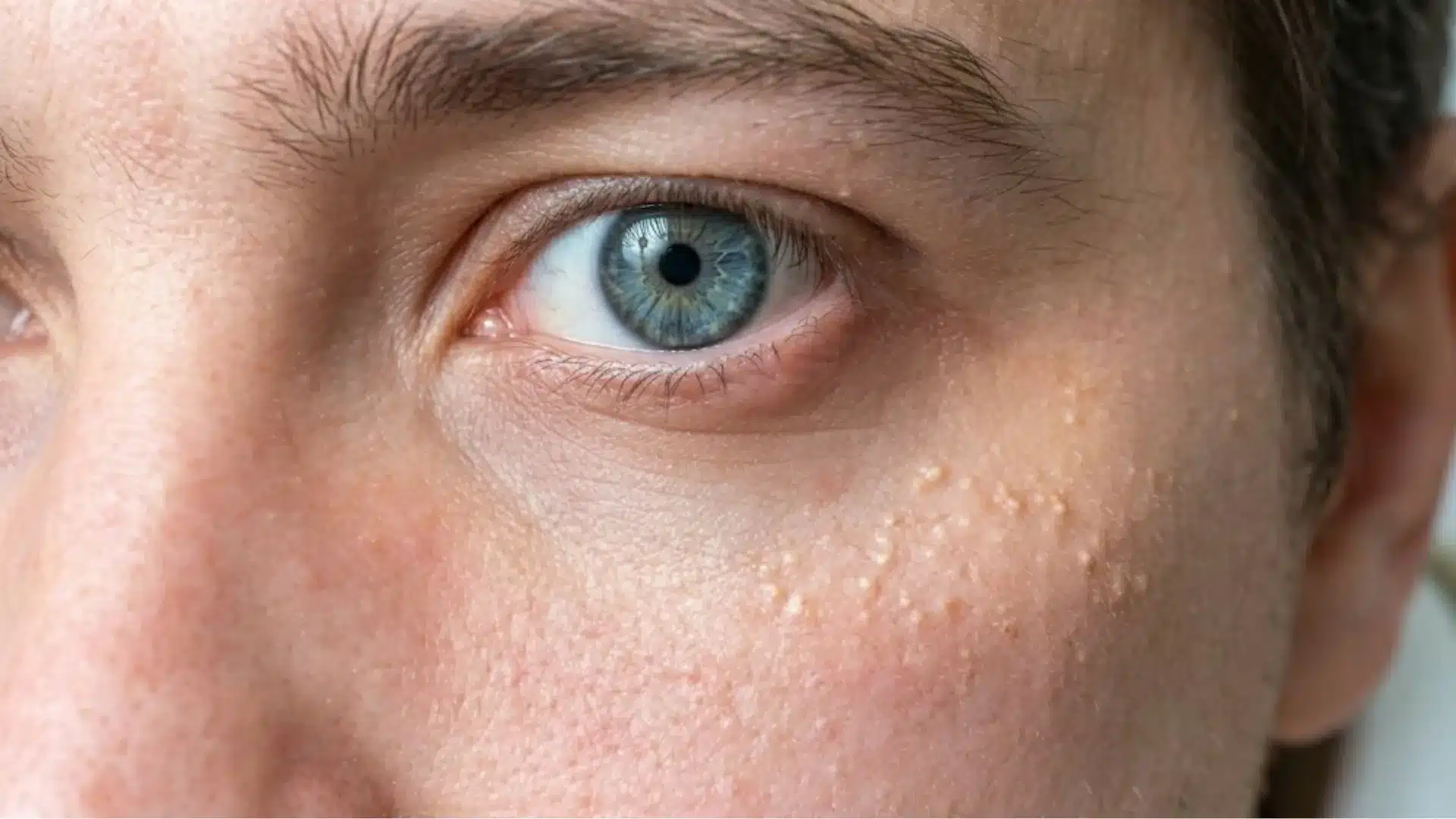
Milia under the eyes usually appear as tiny, firm bumps that sit just beneath the skin. They are often easy to mistake for whiteheads, but they do not look or behave like regular acne.
- Small white bumps: Milia often look like tiny white or yellow dots under the eyes.
- Firm texture: These bumps usually feel hard and do not flatten when touched gently.
- Round shape: Most milia have a smooth, raised, pearl-like shape on the skin.
- No redness: Milia are usually not red, swollen, painful, or filled with pus.
- Clustered appearance: Several bumps may appear close together under the eyes or near the eyelids.
Types of Milia Under the Eye
Not all milia are the same. Knowing which type you have helps set realistic expectations for how long they’ll last and what will clear them.
- Primary milia form on their own, without an obvious trigger. They’re most common around the eyes, nose, cheeks, and forehead. They can last for months but sometimes resolve without treatment.
- Secondary milia develop after skin damage, a rash, a burn, or certain cosmetic treatments. The skin traps keratin while it heals. These can be more persistent.
- Neonatal milia affects newborns and usually clears within two to four weeks on its own. They’re very common, with some estimates suggesting nearly half of all full-term newborns experience facial milia.
Adults dealing with milia under the eyes are almost always dealing with primary or secondary milia.
What Causes Milia Under the Eye?
Milia under the eyes can happen when dead skin cells or keratin get trapped beneath the skin instead of shedding naturally.
1. Heavy Skin Care Products
Thick creams, rich eye creams, facial oils, and heavy balms can sometimes lead to milia under the eyes. These products may feel soft and moisturizing, but they can also sit on the skin and trap dead skin cells.
The under-eye area is very delicate, so buildup can happen more easily there. Some people notice milia after using heavy night creams or oily makeup removers.
This does not mean all eye creams are bad. It simply means lightweight, non-greasy products may be a better choice for milia-prone skin.
2. Slow Skin Cell Turnover
Skin naturally sheds old cells and replaces them with new ones. When this process slows down, dead skin cells can stay on the surface longer than they should.
Around the eyes, this buildup may trap keratin under the skin and form milia.
Slow skin cell turnover can happen with age, dry skin, or a routine that does not include gentle exfoliation.
Since the under-eye area is sensitive, harsh scrubs are not a good idea. A gentle routine is usually safer and easier for the skin to handle.
3. Sun Damage
Sun damage can affect the way skin looks and feels over time. When skin gets too much sun, it may become thicker, rougher, or less smooth.
This can make it harder for dead skin cells to shed properly. As a result, keratin may get trapped and form small bumps under the eyes.
The sun can also weaken the delicate skin around the eyes, making texture issues more noticeable.
4. Skin Injury or Irritation
Milia can sometimes appear after the skin has been irritated or injured. This may happen after burns, rashes, blisters, harsh skin treatments, or certain cosmetic procedures.
When the skin repairs itself, keratin can become trapped beneath the surface. The under-eye area is especially sensitive, so even strong products or rough rubbing may cause irritation.
Not every rash or treatment will lead to milia, but damaged skin can be more likely to develop small bumps.
5. Genetics and Skin Type
Some people are simply more likely to get milia because of their skin type or family history.
If skin naturally holds on to dead cells or produces buildup easily, milia may appear more often. People with dry, sensitive, or thicker-textured skin may notice these bumps around the eyes.
Genetics can also play a role, which means milia may show up even with a good skincare routine.
Can Milia Under the Eyes Go Away on Their Own?
They can go away on their own, but it depends on the person and the type of milia.
Some small bumps may clear within a few weeks, especially if the skin sheds naturally and no heavy products are trapping buildup.
Other milia can stay for months and may not disappear without treatment. Since milia sit under the skin, they usually do not pop like pimples.
Squeezing them can irritate the delicate under-eye area and may cause scarring. A gentle skin care routine may help prevent new bumps, but it may not remove existing ones quickly.
If milia under the eye do not fade, keep coming back, or sit close to the lash line, a dermatologist can check them and suggest safe treatment.
How to Safely Treat Milia Under the Eye?
Treating milia under the eye needs care because the skin in this area is thin and sensitive. Some bumps may fade on their own, while others may need help from a dermatologist.
1. Gentle Exfoliation
Gentle exfoliation may help reduce buildup that can lead to milia under the eyes. It works by helping dead skin cells shed more smoothly instead of staying trapped on the skin.
Mild chemical exfoliants may be used in some routines, but the eye area needs extra caution.
It is better to exfoliate slowly and carefully. If the skin burns, stings, or becomes red, stop using the product and speak with a skin care professional.
2. Retinol or Retinoids
Retinol and retinoids may help support skin cell turnover, which means they can help old skin cells shed more regularly.
This may lower the chance of keratin getting trapped under the skin. However, the under-eye area is very sensitive, so these products should be used carefully.
Some people may need a very gentle formula, while others may be told to avoid retinoids in that area.
A dermatologist can guide the right strength and placement, especially near the eyes
3. Lighter Eye Creams
Heavy eye creams can sometimes make milia under the eyes more noticeable, especially if they leave a thick layer on the skin.
Rich creams, heavy oils, and greasy balms may trap dead skin cells and create buildup. Switching to a lighter, non-greasy eye cream may help if the bumps started after using a thick product.
Look for formulas that hydrate without feeling oily or sticky.
A simple routine is often better than layering many products. If a product seems to cause new bumps, stop using it and watch how the skin responds.
For product-selection guidance, our round-up of treatments suited for sensitive skin covers what to look for and what to avoid.
4. Professional Extraction
Professional extraction is one of the safest ways to remove stubborn milia under the eyes.
A dermatologist or trained skin professional can use sterile tools to open the surface gently and remove the trapped material. This should not be done at home.
Using a needle, squeezing the bump, or digging into the skin can cause bleeding, infection, scarring, or injury near the eye.
Since milia do not pop like pimples, force usually makes things worse. If a bump has stayed for a long time, professional removal is a safer choice.
5. In-Office Treatments
Some cases of milia under the eye may need in-office treatments, especially when the bumps are stubborn or keep coming back.
A dermatologist may suggest options like chemical peels, laser treatment, cryotherapy, or other treatments based on skin type and location.
These methods are not right for everyone, and the under-eye area must be treated with extra care.
The doctor may also check whether the bumps are truly milia or another skin concern.
When Should You See a Dermatologist?
You should see a dermatologist if milia under the eye do not go away, keep coming back, or appear close to the lash line.
The skin around the eyes is thin and sensitive, so removing bumps at home can cause irritation, infection, or scarring.
A dermatologist can check whether the bumps are truly milia or another skin concern, such as a stye, skin tag, or cholesterol deposit.
You should also get medical advice if the bumps become red, painful, swollen, itchy, or start changing in size, shape, or color.
Professional care is also helpful when milia affect your confidence or daily skin care routine. A dermatologist can suggest safe options, including extraction or in-office treatment, based on your skin type.
Milia Under Eye vs Other Skin Bumps
Milia, whiteheads, and syringomas can look similar, especially around the eyes. Still, they have different causes and need different care. This simple comparison can help readers understand what each bump may be and when to see a dermatologist.
| Feature | Milia | Whiteheads | Syringomas |
|---|---|---|---|
| What they are | Small cysts filled with trapped keratin under the skin. | Clogged pores filled with oil, dead skin, and bacteria. | Harmless bumps that form from sweat gland tissue. |
| Common look | Tiny white or yellow firm bumps with a pearl-like shape. | Small white bumps that may look softer or slightly raised. | Skin-toned, yellowish, or flesh colored bumps in clusters. |
| Main cause | Keratin gets trapped instead of shedding naturally. | Oil and dead skin block the pore opening. | Sweat duct cells grow more than usual. |
| Can you pop it? | No, squeezing can irritate or scar the skin. | Picking is not safe and may cause marks or infection. | No, they are not clogged pores. |
| Best care | Gentle skin care or dermatologist removal. | Acne care, gentle exfoliation, and non-greasy products. | Dermatologist treatments like laser or cautery may help. |
How to Prevent Milia Under the Eyes?
Preventing milia under the eyes starts with gentle skin care and smart product choices. The under-eye area is thin, so heavy creams, rough scrubbing, and leftover makeup can make buildup more likely. A simple routine can help keep the skin clean, smooth, and less prone to tiny bumps.
- Cleanse gently: Wash the face daily with a mild cleanser to remove oil, sweat, makeup, and sunscreen buildup.
- Remove makeup fully: Take off concealer, mascara, and eye makeup before bed to keep the under-eye area clear.
- Use lightweight products: Choose non-greasy eye creams and moisturizers that hydrate without leaving a thick layer on the skin.
- Avoid harsh scrubs: Skip rough exfoliants near the eyes because they can irritate and damage delicate skin.
- Wear sunscreen: Protect the under-eye area from sun damage with sunscreen, sunglasses, or a wide-brim hat.
- Keep routines simple: Avoid layering too many heavy products, especially oils, balms, and rich night creams.
Conclusion
Milia under the eyes can be annoying, but they are usually harmless and manageable with the right care.
These tiny white bumps often form when keratin or dead skin cells get trapped beneath the delicate under-eye skin.
Heavy creams, slow skin turnover, sun damage, irritation, and skin type can all play a role. Some milia may fade on their own, while others may need help from a dermatologist.
The safest approach is to keep your routine gentle, avoid squeezing, choose lighter products, and protect your skin from the sun.
If the bumps stay, spread, or look unusual, professional advice is always worth it.
Have you dealt with milia under your eyes before? Share your experience in the comments below and help other readers learn from it too.
Frequently Asked Questions
Can Children Get Milia Under The Eyes?
Yes, children can get milia under the eyes. In babies, milia are common and often fade without treatment. Avoid squeezing and ask a doctor if concerned.
Can Home Remedies Remove Milia Under Eyes?
Home remedies are not the safest choice for milia under the eyes. Lemon juice, baking soda, toothpaste, and rough scrubs can irritate or burn the thin skin near the eyes.
Do Milia Come Back After Removal?
Yes, milia can come back after removal, especially if the skin is prone to buildup. Lightweight products, gentle cleansing, and sun protection may help reduce recurrence.