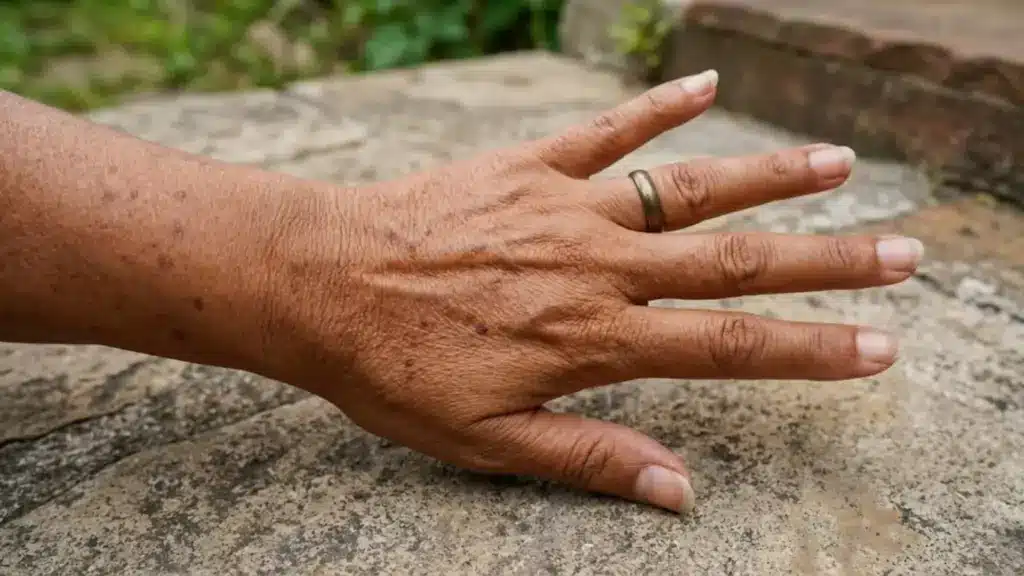
Have you ever looked at your hands and noticed small, dark spots that weren’t there before? They might seem harmless at first, but seeing them can spark a mix of curiosity and concern.
Spots on hands often appear gradually, catching many of us by surprise, and they can make even the simplest gestures feel like a reminder of time passing.
While age and sun exposure play a big role, the sudden realization that your skin is changing can be unsettling.
As an aesthetician who spent years coaching swimmers, I saw firsthand how much sun and chlorine damage accumulates on skin that doesn’t get the same SPF attention as the face.
Hands are almost always overlooked in a skincare routine, and they show it.
You might wonder why these spots appear, whether they signal something serious, or if there’s a way to prevent them from spreading.
What are Spots on Hands?
Spots on hands, often called age spots, liver spots, or sunspots, are small, flat patches that usually appear brown, black, or gray.
They commonly develop on areas frequently exposed to the sun, such as the backs of the hands, fingers, and sometimes forearms.
These spots are caused by extra pigment in the skin and tend to appear more often as people get older, which is why they are associated with aging.
Age spots are generally harmless and do not cause pain, itching, or other symptoms. It is important to distinguish them from other skin conditions, such as moles, rashes, or more serious issues like skin cancer.
Unlike irregular or rapidly changing spots, age spots usually have a consistent shape and color and develop gradually over time.
Understanding their appearance helps identify them correctly and avoid unnecessary worry, while still keeping an eye on any unusual changes.
Types of Spots on Hands
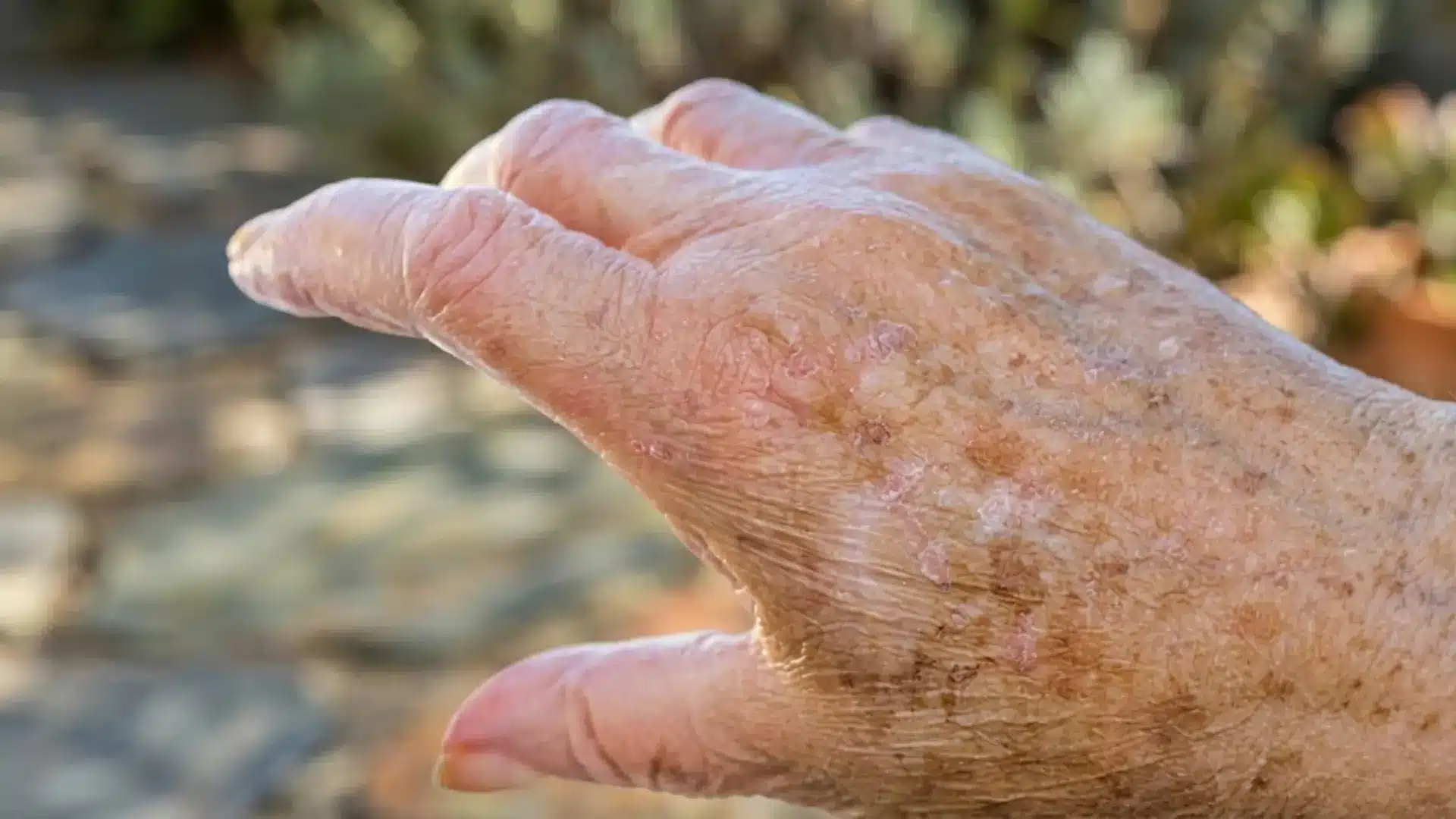
Not every spot on your hands is a classic age spot. Three types show up regularly, and telling them apart is useful before you start any treatment.
1. Age Spots (Solar Lentigines)
Flat, evenly colored patches, usually tan to dark brown. They don’t change texture and stay consistent over time.
Caused by cumulative UV exposure, most common after age 40, these spots often appear on the backs of hands, forearms, face, and other areas regularly exposed to the sun.
While they are harmless, they can become more noticeable with age, especially on lighter skin tones, and may affect confidence or appearance.
2. Seborrheic Keratosis
These often get mistaken for age spots, but they have a waxy or slightly rough texture and a “stuck-on” appearance. They can be tan, brown, or even black.
According to Yale Medicine, more than 90% of adults over 65 have at least one. They are benign and don’t require removal unless irritated or cosmetically unwanted.
3. Actinic Keratosis
These are the ones worth paying attention to. Actinic keratoses are rough, scaly patches caused by sun damage, and they are classified as pre-cancerous.
They are easier to feel than to see. If a spot on your hand feels rough or crusty, see a dermatologist before attempting any self-treatment.
Signs to Watch for Spots on Hands
Spots on hands are usually harmless, but it’s important to notice any changes that could indicate something more serious.
Knowing what to look for helps identify age spots from other skin conditions and ensures early attention if needed. Most spots develop gradually and remain consistent, but certain signs require closer monitoring.
- Color: Age spots are brown, black, or gray with an even tone. Sudden darkening or multiple colors within one spot may need evaluation.
- Shape: Usually oval or round with smooth, defined edges. Irregular or spreading borders are a warning sign.
- Size: Most remain small and stable. Any spot that grows quickly should be checked.
- Texture: Age spots are flat. A spot that becomes raised, rough, or crusty is likely not a simple age spot.
- Pain or itching: Age spots don’t cause discomfort. Itching, bleeding, or soreness means something else is going on.
Common Causes of Spots on Hands

Spots on hands usually appear because of changes in the skin that happen over time or due to outside factors. While they are most common in older adults, anyone can develop them.
1. Sun Exposure
Sun exposure is the most common reason for spots on the hands. Ultraviolet (UV) rays from the sun trigger extra pigment production in the skin, creating dark patches.
Even short periods in the sun, repeated over months and years, can gradually cause spots.
Hands are especially prone because they are often uncovered and receive more direct sunlight than other parts of the body.
2. Aging
Aging naturally affects how the skin works and repairs itself. As we get older, skin cells slow down, and pigment-producing cells can create uneven patches.
This leads to the small brown or black spots commonly seen on hands. Over time, these spots become more noticeable because the skin thins and loses elasticity.
While aging is inevitable, taking care of the skin with moisturizers and sun protection can help keep spots less prominent.
3. Genetics
Family history can play a big role in developing spots on the hands. Some people are more likely to get age spots because of the genes they inherit.
If parents or grandparents had spots, there is a higher chance they may appear in the next generation.
Genetics affects how the skin responds to sun exposure and aging, meaning some people develop spots earlier or more prominently than others.
4. Medical Factors
Certain medications and health conditions can increase the likelihood of spots forming on the hands.
Drugs like some antibiotics, chemotherapy medicines, or hormone treatments may make the skin more sensitive to sunlight.
Additionally, conditions affecting the liver or immune system can sometimes cause changes in skin pigmentation.
Effective Treatment Options for Spots on Hands
Spots on hands are usually harmless, but many people want to reduce their appearance for cosmetic reasons. Treatment options range from simple home care to professional procedures. Each approach has different results, costs, and recovery times.
| Treatment Option | Details |
|---|---|
| Topical Creams | Skin-lightening creams containing hydroquinone or retinoids can gradually fade spots. Results take weeks to months. |
| Chemical Peels | Professional application of acids removes the outer skin layer, helping reduce pigmentation. Multiple sessions may be needed. |
| Laser Therapy | Targets pigment directly with precise laser light, often producing faster results. Usually requires a few sessions. |
| Cryotherapy | Freezes spots using liquid nitrogen, causing them to peel off over time. Effective for small, stubborn spots. |
| Microdermabrasion | A gentle mechanical exfoliation that removes the top skin layer, improving skin tone and texture over time. |
| Home Remedies | Natural treatments like lemon juice or aloe vera may slightly lighten spots but work slowly and with limited effectiveness. |
For a broader look at professional options beyond creams, the blog on skin-lightening treatment options covers what to realistically expect from each approach.
While treatments can reduce the appearance of spots, it’s important to set realistic expectations. Some spots may fade partially, and new spots can appear without proper sun protection.
Consulting a dermatologist ensures safe and effective treatment, especially for persistent or changing spots, and helps prevent irritation or scarring.
Tips to Prevent Spots on Hands
Spots on hands can be minimized with consistent care and protective measures. Preventing new spots is easier than removing existing ones. Simple lifestyle changes and daily habits help maintain an even skin tone and reduce sun-related damage over time.
- Sunscreen Daily: Apply broad-spectrum sunscreen to hands every day, even in cloudy weather, to block harmful UV rays effectively.
- Protective Gloves: Wear gloves while gardening or outdoors to reduce direct sun exposure and prevent skin pigmentation changes.
- Limit Sun Exposure: Avoid prolonged sun exposure during peak hours, typically 10 a.m. to 4 p.m., to reduce skin damage risk.
- Moisturize Regularly: Keep skin hydrated with daily moisturizers, which support healthy skin and improve its resistance to sun damage.
- Healthy Lifestyle: Eat a balanced diet, stay hydrated, and avoid smoking to help maintain youthful, evenly toned skin naturally.
When to See a Dermatologist
Most spots on hands are harmless, but it’s important to know when professional advice is needed.
You should see a dermatologist if a spot changes in color, size, or shape, becomes raised or rough, or starts to itch, bleed, or hurt.
Sudden new spots that appear quickly or look different from existing ones also require evaluation.
A dermatologist can determine whether the spots are simple age spots or a sign of a more serious condition, such as skin cancer. Early detection ensures prompt treatment and prevents complications.
Even if spots seem minor, professional guidance provides peace of mind and helps you choose safe and effective treatment options.
Regular skin check-ups, especially for those over 40 or with extensive sun exposure, are a good habit.
Conclusion
Spots on hands are a common part of daily life, and in most cases, they are harmless.
Understanding what they are, why they appear, and how to manage or prevent them helps you take control of your skin health.
Paying attention to changes in color, shape, or size ensures any potential issues are caught early.
Everyone’s skin reacts differently, so what works for one person may not work for another.
Share your experience in the comments below, whether you’ve tried prevention tips, treatments, or noticed changes; your story could help others better understand and care for their skin.
Frequently Asked Questions
Can Spots Return After Treatment?
Yes, even after treatments like laser therapy or chemical peels, new spots may appear if hands are exposed to sunlight without protection or if skin continues to age.
Is There a Difference Between Age Spots and Freckles on Hands?
Yes, freckles are usually smaller and lighter and appear earlier in life, while age spots are darker and larger and typically develop in adulthood due to cumulative sun exposure.
Can Men and Women Get Spots on Hands Equally?
Yes, age spots affect both men and women. Women may notice them earlier due to sun exposure combined with hormonal changes, but the risk increases with age for everyone.