Waking up to a random bump on your skin can feel frustrating, especially when it shows up without warning and leaves you wondering what exactly you are dealing with.
Most people assume every blemish works the same way, but that is where things start to go wrong.
Not all bumps behave the same way, and treating them as if they do can make things worse instead of better.
Right in the middle of that confusion comes the whole pimple vs cyst question, and that is where most people get stuck.
If a bump sticks around for weeks, it becomes harder to tell what it really is. This blog clears that up by explaining how each one forms, what they look like, what causes them, and how to handle them the right way.
What is a Cyst?
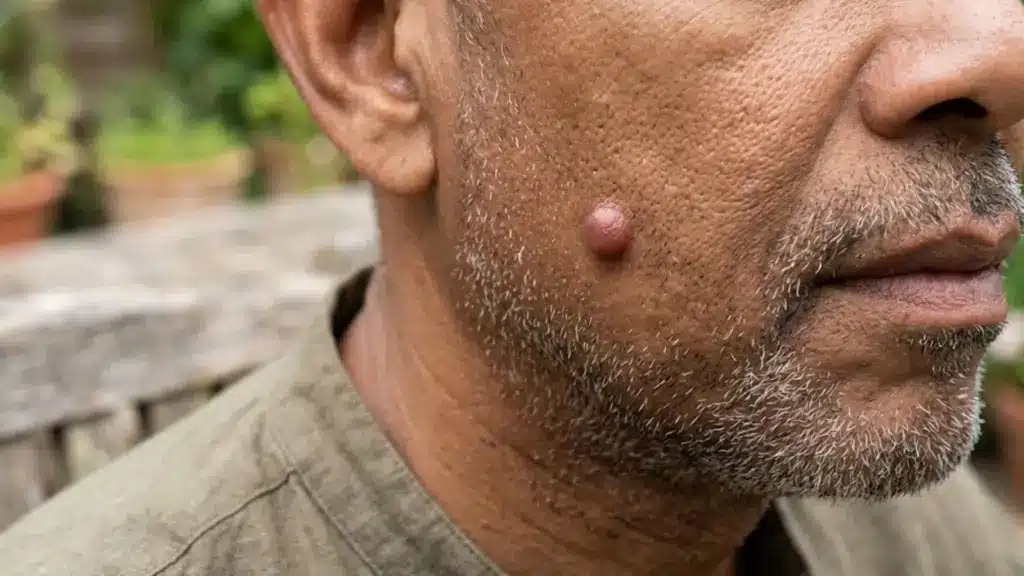
A cyst is a deeper bump that forms under the skin and is filled with fluid, pus, or thicker material.
Unlike a regular pimple, it develops when a pore gets heavily blocked, and the inflammation moves deeper into the skin instead of staying near the surface.
Because of this deeper position, cysts feel firm to the touch and do not respond well to basic skincare products. They take longer to heal and can be harder to manage at home.
They are usually larger, more painful, and tend to stick around for a while. Common areas include the face, neck, back, scalp, and even behind the ears.
It is also worth knowing that not all cysts are the same; pilar, sebaceous, and epidermoid cysts each have different origins and behave differently under the skin.
In my work with clients who have had a bump near the ear that keeps draining and coming back, it is almost always a preauricular or sebaceous cyst rather than acne, and that distinction matters because squeezing it makes things significantly worse.
I would not treat it casually, since picking or pressing can lead to infection or long-term scarring.
What is a Pimple?
A pimple is a small skin bump that forms when a hair follicle gets clogged with oil, dead skin cells, or bacteria.
It usually stays close to the surface of the skin, which is why it tends to heal faster than deeper bumps. Pimples can appear in different forms, and each looks slightly different.
Whiteheads are closed bumps with a light or flesh tone, while blackheads are open pores that turn dark when exposed to air.
Papules are small red bumps without pus, and pustules are those with a visible white or yellow center.
There is also something called a blind pimple, which forms under the skin without a visible head and can feel painful when touched, making it easy to confuse with something more serious.
They mostly appear on areas like the face, nose, chin, back, chest, and shoulders, where oil production is higher.
How to Identify a Pimple or Cyst by Sight and Touch
Telling the difference becomes easier once you know what to focus on.
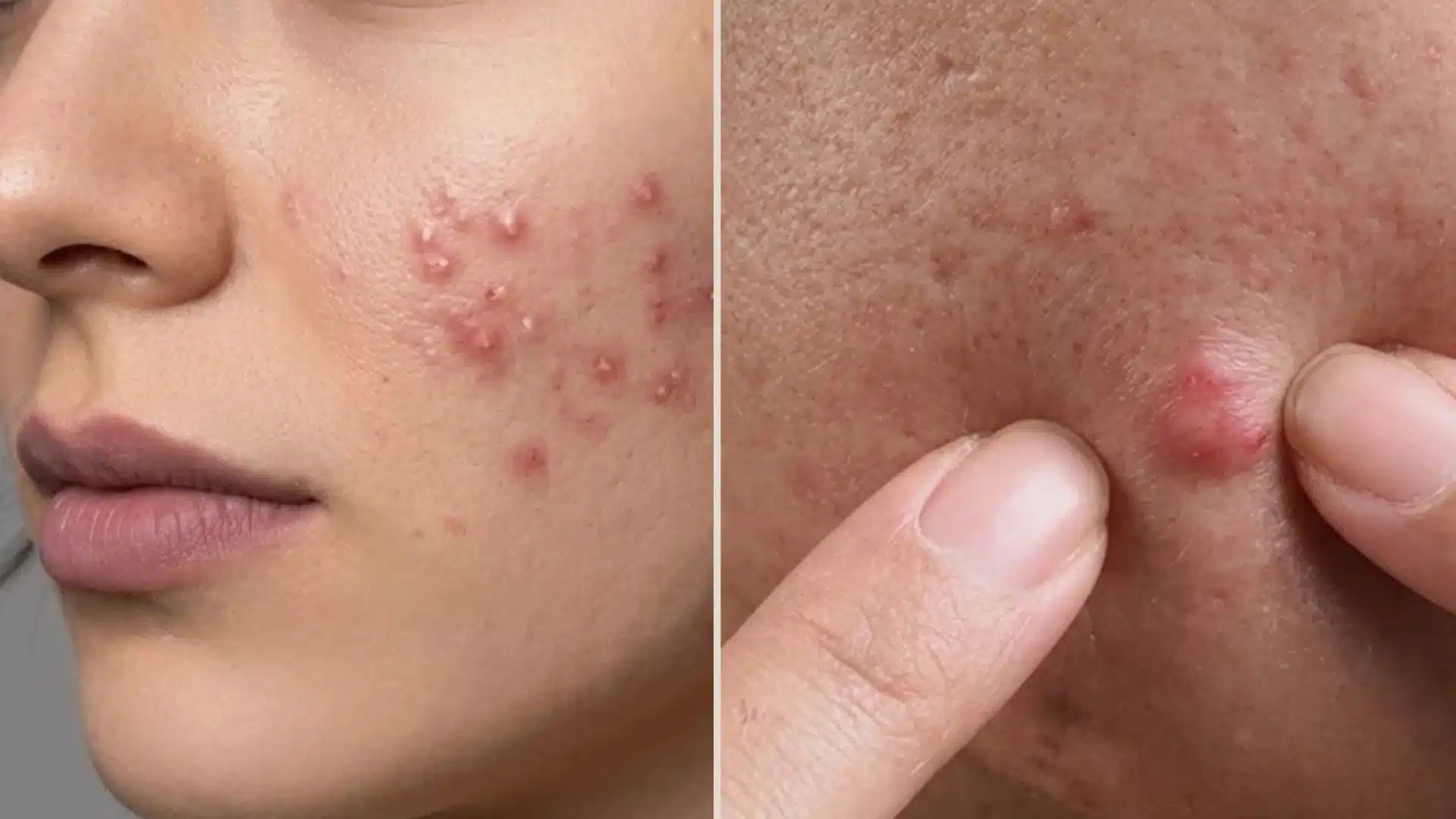
A pimple usually sits close to the surface and often has a visible white or yellow head, with slight redness around it and a small, defined area of swelling.
A cyst looks very different, as it has no visible head and appears as a smooth, rounded lump under the skin, sometimes with mild redness or even a normal skin tone.
The swelling is more spread out and less defined. When touched, a pimple feels like a small raised bump that stays in place, while a cyst feels deeper and softer, almost like a small movable lump under the skin.
Another clear sign is movement: a cyst can shift slightly when pressed around it, since it sits inside a sac, while a pimple stays fixed in one spot.
If a bump feels deep, has no head, and does not behave like a surface blemish, it is likely a cyst.
Pimple vs Cyst: Key Differences
Understanding these differences helps avoid wrong treatments and gives a clearer idea of what kind of bump you are actually dealing with.
| Feature | Pimple | Cyst |
|---|---|---|
| Depth in Skin | Surface level | Deep in the dermis |
| Size | Small, around 1 to 5 mm | Larger, usually 5 mm or more |
| Shape | Small, defined bump | Round, dome-shaped lump |
| Pain Level | Mild to moderate | Often painful, even without touch |
| Healing Time | A few days to 1 to 2 weeks | Can take weeks or even months |
| Risk of Scarring | Low to moderate | High, especially if squeezed |
| Comes to a Head? | Usually, yes, pus is visible | Rarely, no visible head |
| Response to OTC Treatments | Often works well | Rarely responds |
What Causes Pimples and Cysts?
These causes show that pimples form from surface-level issues, while cysts develop due to more serious damage, stronger inflammation, and long-term internal or genetic factors.
Common Causes of Pimples:
- Excess oil production: Too much sebum mixes with dead skin and blocks pores, creating the ideal setup for small surface-level breakouts to form quickly.
- Dead skin buildup: When old skin cells are not shed properly, they clog hair follicles and trap oil, which leads to visible bumps on the surface.
- Bacteria growth: Cutibacterium acnes multiplies inside clogged pores, causing inflammation, redness, and sometimes pus formation in common acne spots.
- Hormonal changes: Shifts during puberty, periods, or stress increase oil production, making pores more likely to clog and form pimples.
- Heavy skincare products: Thick or pore-clogging products sit on the skin and block follicles, especially if not removed properly after long use.
Common Causes of Cysts:
- Deep follicle blockage: Severe clogs form deeper inside the skin, trapping oil and debris in a way that cannot easily reach the surface.
- Bacterial infection: When bacteria spread deeper into the skin layers, it causes stronger inflammation, leading to larger and more painful cyst formation.
- Hormonal imbalance: High androgen levels increase oil production, which raises the chance of deep and stubborn cystic acne over time.
- Genetic factors: A family history of cystic acne increases the likelihood of developing similar deep skin issues that are harder to treat.
- Repeated skin trauma: Constant squeezing or picking damages follicles over time, which can lead to deeper infections and long-lasting cysts.
When Should You See a Doctor
Most pimples can be handled at home, but some signs should not be ignored.
If a bump is large, has no visible head, and stays for more than 2 to 3 weeks, it is likely not a regular pimple.
Pain is another strong signal: if it keeps increasing even without touching the area, it usually means the issue is deeper under the skin.
Repeated breakouts in the same spot or multiple deep bumps at once can point to hormonal or genetic causes that need proper treatment.
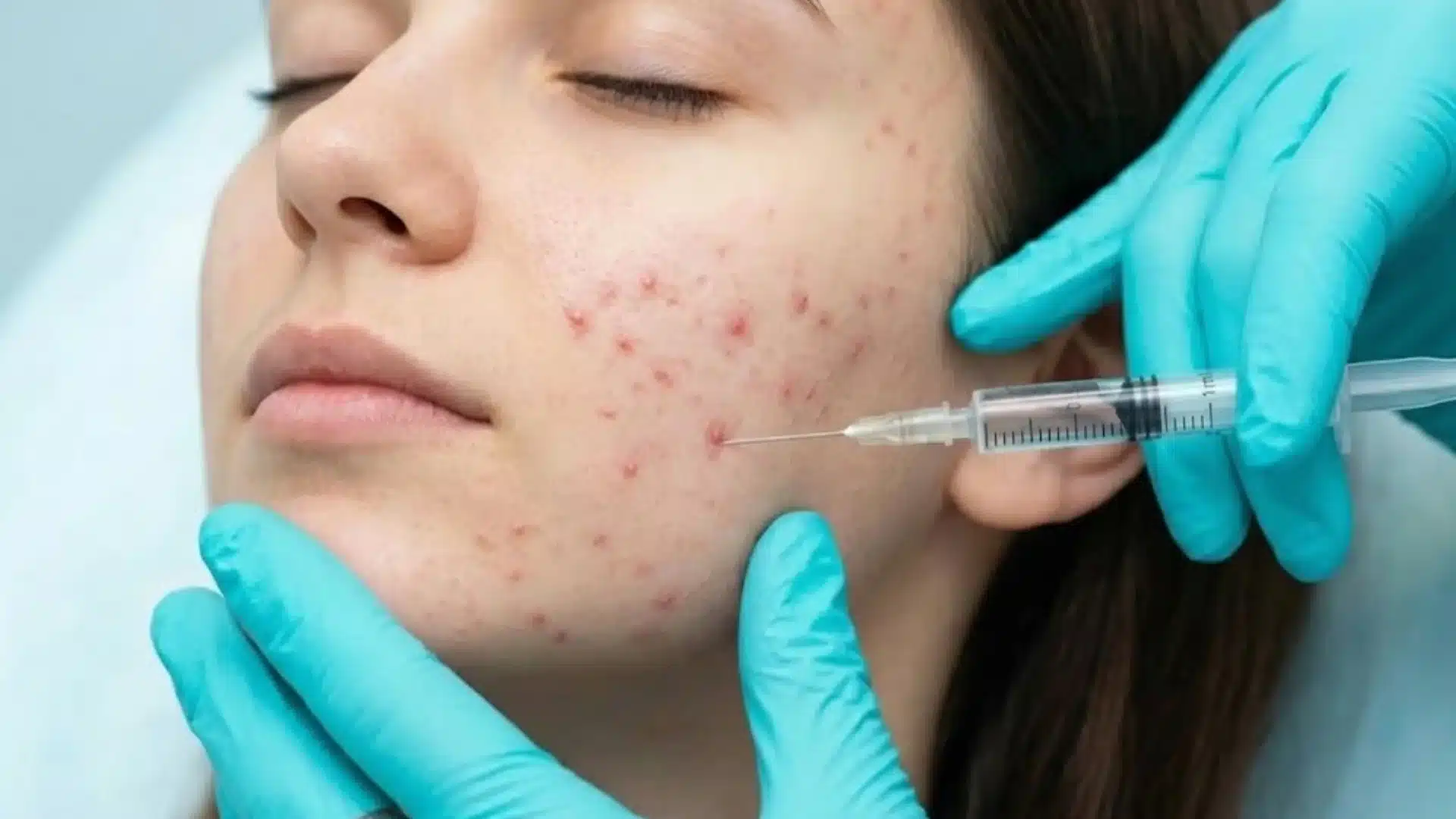
If a lump keeps coming back in the exact same place, it often means the root was never removed, and only a professional procedure can fully fix it.
Warmth, sudden growth, or fluid coming out on its own can also suggest infection and needs quick attention.
Trying to squeeze or drain it at home can make things worse by spreading bacteria and increasing inflammation. A dermatologist can treat it safely with the right methods and prevent long-term damage.
How to Treat a Pimple vs a Cyst
Treatment depends on how deep the issue is, since surface-level bumps and deeper ones need very different approaches to heal properly.
| Treatment Type | Pimples | Cysts |
|---|---|---|
| Over-the-Counter | Benzoyl peroxide, salicylic acid, adapalene gel | Usually ineffective for true cysts |
| Topical Treatments | Spot treatments, retinol creams | Prescription retinoids like tretinoin |
| Oral Medications | Rarely needed | Antibiotics, hormonal therapy, and isotretinoin |
| Professional Procedures | Dermatologist extractions | Cortisone shots, incision, and drainage |
| Home Remedies | Warm compress, gentle cleansing | May reduce pain but will not cure |
| Surgical Options | Not needed | Full removal of the cyst wall prevents its return |
| What NOT to Do | Avoid overuse and popping | Never squeeze or try to drain |
Tips to Prevent Pimples or Cysts
Prevention focuses on keeping pores clear and avoiding deep skin damage, which helps reduce both surface breakouts and more stubborn under-the-skin issues.
- Consistent skincare routine: Cleanse daily with a gentle face wash and use non-pore-clogging products to keep oil and dirt from building up.
- Avoid heavy products: Thick creams or makeup can block pores easily, so choosing lighter, non-comedogenic makeup options for sensitive skin helps reduce the risk of breakouts.
- Do not pick or squeeze: Pressing or popping bumps damages the skin and can push bacteria deeper, increasing the chance of cyst formation over time.
- Manage sweat and friction: Wash skin after sweating and avoid tight clothing or gear that traps heat and irritates sensitive areas.
- Balance hormones and lifestyle: Stress, sleep, and diet can affect oil production, so keeping these in check helps control both pimples and deeper cysts.
Conclusion
Skin issues feel easier to handle once you know what you are dealing with, between a pimple vs cyst.
A pimple usually stays on the surface and fades with simple care, while a cyst sits deeper and often needs proper treatment to go away.
If a bump has been there for more than two weeks and nothing seems to work, the problem may not be your products.
It may be that you are treating the wrong thing. That is where understanding the pimple vs cyst difference actually helps.
Pay attention to what your skin shows you, and do not ignore signs that feel unusual.
Have you ever mistaken one for the other, or dealt with a stubborn bump that wouldn’t go away? Drop your experience in the comments.
Frequently Asked Questions
Can a Cyst Turn into a Pimple Over Time?
No, a cyst does not turn into a pimple. They are different types of skin issues, and a cyst usually stays deep unless treated properly over time by a professional.
Are Cysts Always Related to Acne?
Not always. Some cysts form due to blocked glands or other skin conditions, even if you do not have regular acne or any history of breakouts.
Can Diet Alone Cause Cysts?
Diet can influence skin health, but cysts are usually linked to deeper factors like hormones or genetics, not just what you eat or your daily habits alone.