You noticed it in a certain light, or in a photo that didn’t quite capture how you feel. The skin along your jawline sits differently now.
The texture around your cheeks has shifted in a way that feels sudden, even though it was not.
So you search, and within minutes, you are buried in collagen creams, gua sha tutorials, face yoga reels, and serums that claim clinic-level results from a jar.
Most of it will not work the way the packaging suggests. Some of it genuinely will. The difference matters, especially if you have already spent money on things that let you down.
I have been a licensed aesthetician for over a decade. Before that, I coached swimming. I spent years watching what unprotected daily sun exposure and chlorine did to skin, up close, season after season.
In this guide, you will find the at-home face tightening tips that actually have evidence behind them, the ingredients worth your money, how to adjust by skin type, and where a home routine reaches its real limits
What Causes Face Skin to Look Loose
Skin starts to look loose when collagen and elastin decline. Collagen keeps skin firm, while elastin helps it bounce back after movement.
After around age 20, collagen production drops by about 1% each year, according to research in the British Journal of Dermatology.
Age matters, but sun exposure often speeds the process. UV rays break down collagen, leading to fine lines, a thinner texture, and sagging.
Weight loss can also change facial support as underlying fat shifts or reduces. Dryness does not cause true sagging, but dehydrated skin can look dull, flat, and less firm.
Poor sleep, smoking, stress, and a low-protein diet can make the decline happen faster.
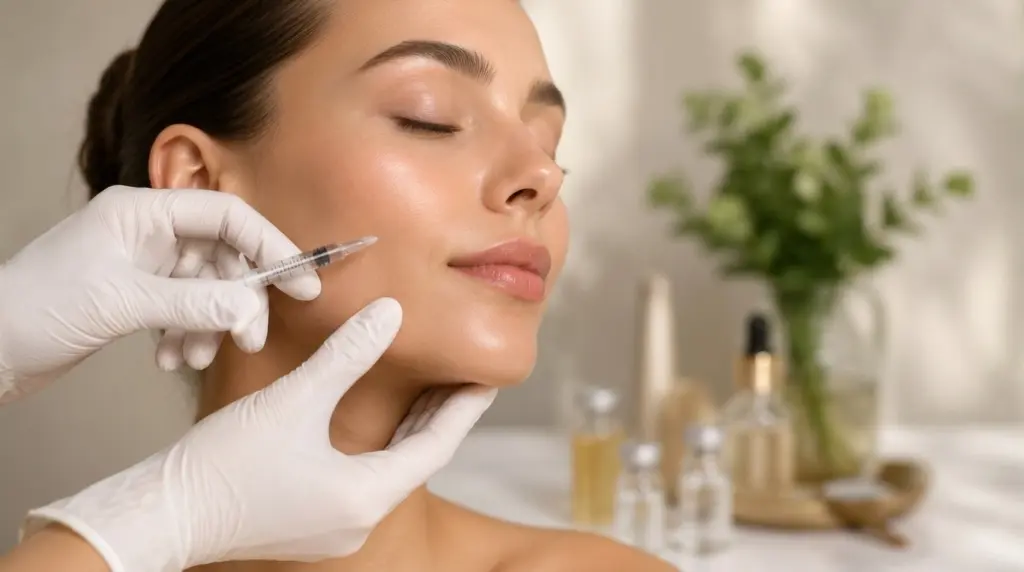
Professional Non-Surgical Skin Tightening Options
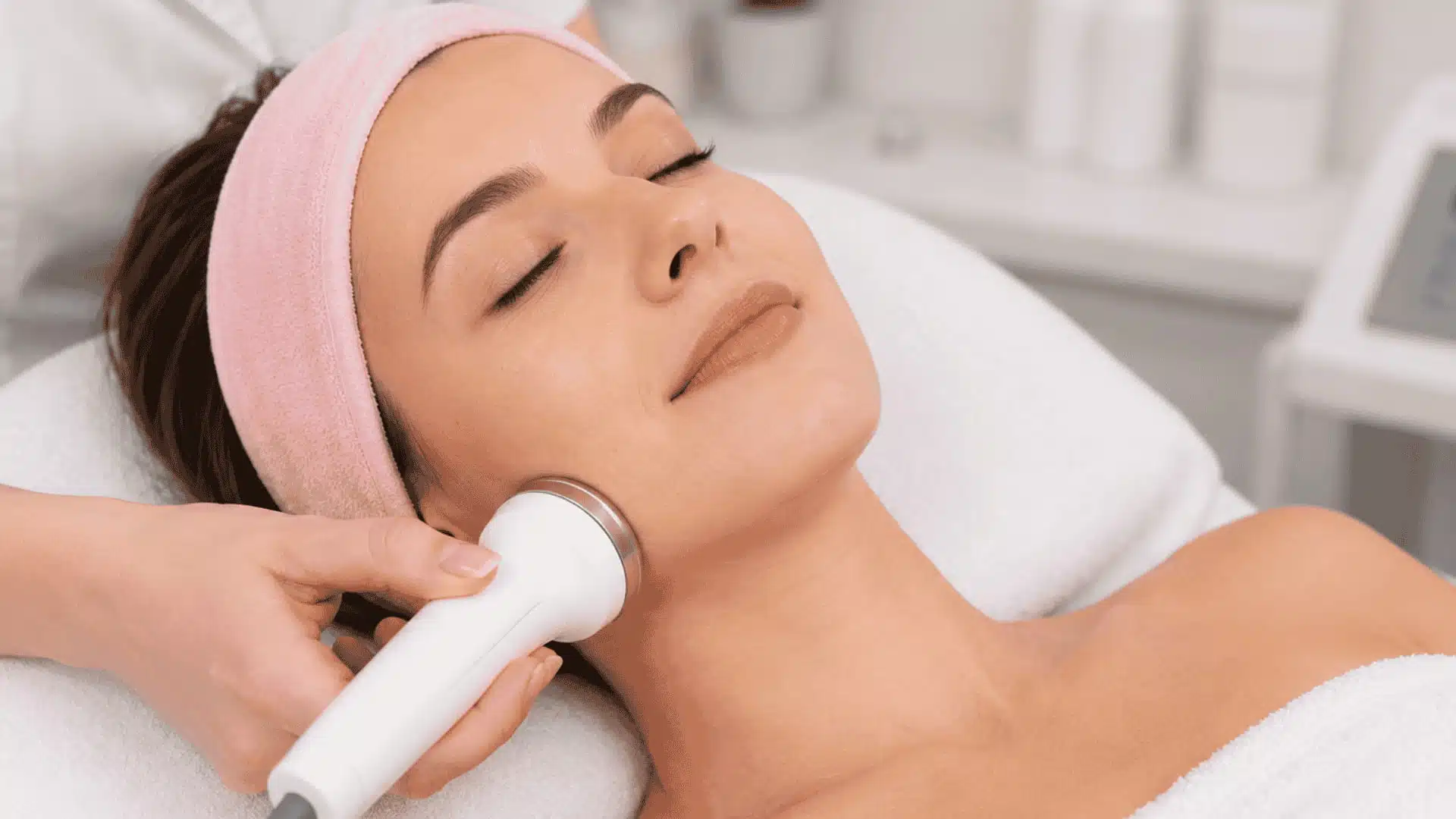
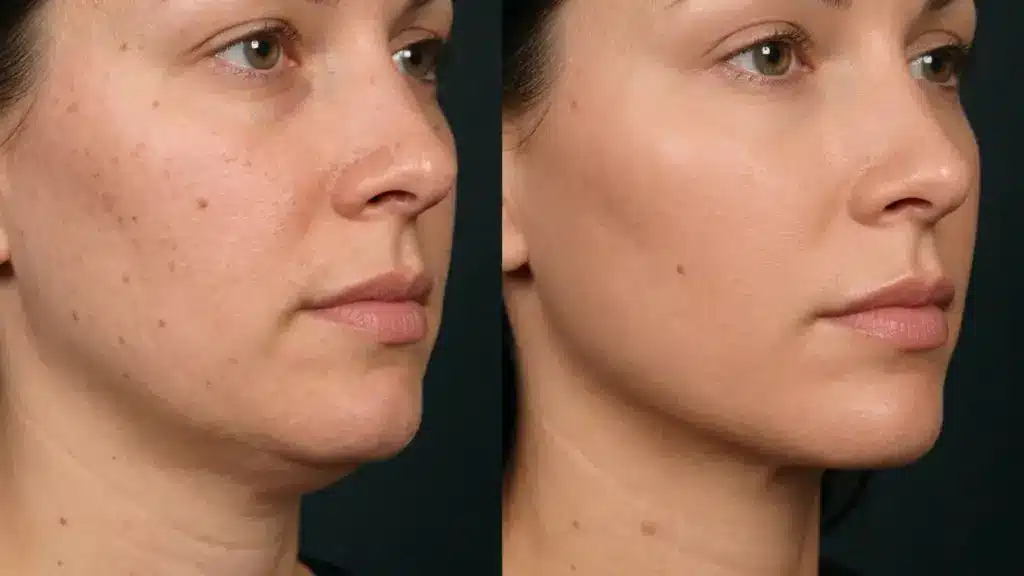
Professional non-surgical skin-tightening options can help when home care yields only small changes after several months of consistent effort.
1. Radiofrequency Skin Tightening
Radiofrequency skin tightening uses controlled heat to warm the deeper layers of the skin and support collagen production.
It is often chosen for mild to moderate looseness around the face, neck, or jawline. Results appear gradually because collagen takes time to rebuild.
Most people need more than one session, and maintenance treatments may help keep the skin firmer longer.
2. Focused Ultrasound Treatment
Focused ultrasound treatment, often known as HIFU or Ultherapy, targets deeper skin layers without cutting the surface.
It helps trigger collagen remodeling in areas where creams cannot reach. This option may suit people looking for a subtle lift rather than a dramatic change.
Results usually build slowly over a few months as the skin becomes firmer.
3. Microneedling with Radiofrequency
Microneedling with radiofrequency combines tiny controlled skin punctures with heat energy to support collagen and elastin renewal.
It can help improve skin texture, fine lines, and mild laxity at the same time. The treatment may cause temporary redness or sensitivity, but results develop gradually.
A series of sessions is often recommended for better firmness and smoother skin.
4. Laser Resurfacing
Laser resurfacing works by treating damaged outer skin layers while encouraging deeper collagen repair.
It may help with fine lines, uneven texture, sun damage, and mild sagging. Some lasers have more downtime than others, so aftercare matters.
Results are not instant, but the skin may look smoother and tighter as healing and collagen renewal continue.
Massage and Tools: Helpful, but Limited

Facial massage and at-home tools can help improve temporary puffiness and support circulation, but their effects are usually short-term and do not replace professional treatments.
| Method or Point | What It Does |
|---|---|
| Facial massage | Facial massage can temporarily reduce morning puffiness and give the face a slightly lifted appearance. |
| Lymphatic drainage and circulation | It helps move lymphatic fluid and improves circulation, leaving skin looking fresher for a short time. |
| Upward-stroke massage | A simple upward-stroke massage for three minutes can make a visible difference before treatment, but the effect usually does not last all day. |
| Gua sha and rollers | Gua sha and rollers work similarly. They may feel relaxing and reduce puffiness, but they do not rebuild collagen or change skin structure. |
| Sensitive or damaged skin | If skin is sensitive or barrier-damaged, keep tools clean, use light pressure, and avoid pulling. |
If you are building a routine from the ground up and want a practical starting point, this weekly skincare and glow-up guide covers the foundational habits that make the biggest difference early on.
Realistic expectations: Results take weeks to months, and at-home devices usually have weaker evidence than clinical-grade options.
Ingredients that May Help Skin Look Firmer
These face-tightening tips focus on sunscreen, hydration, retinol, vitamin C, peptides, and barrier care to help skin look firmer over time.
- Retinol: Retinol stimulates cell turnover and supports collagen over time. It is the most evidence-backed home ingredient for skin firmness. Start with 0.025% to 0.05% and increase slowly.
- Bakuchiol: A plant-based option for those who find retinol too irritating. Bakuchiol supports collagen production with less risk of redness or peeling, making it a practical swap for sensitive or reactive skin.
- Peptides: Peptides are gentle signal molecules that may encourage the skin to produce more collagen. They are easy to add to most routines and work well under moisturizer.
- Hyaluronic acid: Hyaluronic acid does not tighten skin, but it plumps it visibly by drawing water into the upper layers. Apply it to damp skin and seal it with moisturizer to prevent it from pulling water out of the skin.
- Vitamin C: Vitamin C defends against pollution and UV-related oxidative damage. Choose a formula with L-ascorbic acid in stable packaging. Concentrations between 10% and 20% tend to be most effective.
- Niacinamide: Supports the skin barrier, improves elasticity over time, and is well-tolerated by most skin types. A low-risk addition that pairs well with retinol and vitamin C.
- Ceramides: Ceramides support the skin barrier. A calm, intact barrier allows the use of actives like retinol without constant irritation, which matters for long-term routine consistency.
How to Choose Face Tightening Products for Your Skin Type
Not every product above suits every skin type, and using the wrong ingredient too aggressively can weaken the skin barrier rather than improve firmness.
Small adjustments based on skin type make routines easier to tolerate and more consistent in the long term.
- Dry or dehydrated skin: Use ceramide moisturizers before actives and sandwich retinol between moisturizer layers.
- Oily or combination skin: Choose lightweight gel moisturizers and fluid SPF formulas to avoid heaviness.
- Sensitive or reactive skin: Focus on barrier repair first and consider bakuchiol before retinol.
The goal is not to use the strongest products possible, but to build a routine your skin can handle consistently without irritation.
Conclusion
The clients I have seen get the best results from face tightening tips are not the ones who tried the most products.
They are the ones who stayed consistent with a short routine long enough for it to work.
Sunscreen, a barrier-friendly moisturizer, retinol, and vitamin C used consistently for six months will outperform ten products rotated through every two weeks.
Natural remedies and tools can make skin feel refreshed, but protection and consistent care do the heavy lifting.
If the skin still feels noticeably looser than expected after several months of a consistent routine, it is worth booking a skin consultation before spending more on products.
If this routine gave you a clear place to start, save it, try it for 8 weeks, and notice what shifts.
What skin-tightening step are you planning to start with first? Drop a comment below and share what changes you are hoping to see in your skin.
Frequently Asked Questions
Can Loose Facial Skin Tighten Naturally?
Mild looseness can look better with consistent use of sunscreen, hydration, retinol, and peptides over several months.
Deep or structural sagging usually requires clinical treatment to achieve a visible change. Home care improves texture and surface quality; it does not lift skin the way a clinical procedure can.
Do Lifestyle Habits Affect Skin Firmness?
Yes. Poor sleep, chronic stress, smoking, and a low-protein diet all accelerate collagen breakdown.
Getting adequate sleep, reducing stress, not smoking, and eating enough protein alongside antioxidant-rich foods create the internal conditions that allow at-home skincare to work more effectively. Lifestyle habits do not replace topical care, but they support it.
Is Retinol or Vitamin C Better for Skin Firming?
They do different things and work best together rather than instead of each other. Retinol promotes collagen synthesis and speeds up cell turnover over time.
Vitamin C protects collagen from daily damage caused by UV and pollution. Using vitamin C in the morning and retinol at night is the standard approach.