Oily skin is very common, and it can be frustrating when the shine keeps coming back a few hours after washing your face.
The tricky part is that the fix is not about drying your skin out or using the strongest products you can find. Skin still needs balance, and too much stripping can make things worse.
In this blog on how to fix oily skin, the focus is on simple daily habits, ingredients that actually help, and treatment options that make sense if oiliness comes with clogged pores or breakouts.
You will also get a clear idea of which skincare mistakes can backfire, what products are worth your time, and when it may be smart to see a dermatologist.
By the end, the full picture should feel much easier to understand and follow.
Why Does Your Skin Produce So Much Oil?
Your skin makes oil through tiny glands called sebaceous glands. They secrete a waxy substance called sebum. Sebum keeps skin soft and acts as a natural barrier against moisture loss.
The problem starts when these glands go into overdrive.
Genetics plays a major role in this process. If your parents had oily skin, there is a strong chance you will too. Hormones also push oil production higher.
Androgens, especially during puberty or stress, stimulate these glands to make more sebum.
Overactive sebaceous glands can sometimes cause problems beyond shine, including sebaceous gland conditions like cysts.
Environmental factors like humidity and heat make things worse. Even your diet contributes. A 2019 study found that diets higher in meats, dairy, and alcohol correlated with increased sebum output.
One surprising upside: people with oily skin tend to have thicker skin and fewer wrinkles over time.
Ingredients That Actually Reduce Oil Production
These ingredients stand out because they do more than cut surface oil. They help clear pores, calm skin, and support better long-term oil control.
1. Salicylic Acid
Salicylic acid is a beta-hydroxy acid that can enter oily pores and clean them from the inside. It breaks down the oil-dead skin mix that leads to clogged pores and blackheads.
This makes it a go-to option for oily and acne-prone skin. Regular use can also reduce the look of enlarged pores.
A 1% to 2% formula in cleansers or toners is usually enough. Start slow to avoid dryness. With steady use, skin feels smoother and less greasy throughout the day.
2. Niacinamide (Vitamin B3)
Niacinamide is a form of vitamin B3 that helps regulate oil production without irritating the skin.
It supports the skin barrier and improves overall texture, which makes it useful for daily use. Studies have shown that lower strengths, like 2% to 4%, can reduce excess sebum over time.
It also helps with redness and uneven tone. One of its biggest advantages is how well it pairs with other ingredients. You can use it with acids or retinoids without much risk of conflict.
3. Retinoids (Vitamin A Derivatives)
Retinoids increase cell turnover, helping prevent pores from becoming clogged with oil and dead skin cells. Over time, they can reduce both breakouts and excess oil production.
Adapalene is a common over-the-counter option that suits beginners. These ingredients also improve skin texture and can help fade acne scars.
Start with a small amount at night and use it a few times a week at first. Consistency matters more than strength. Results take time, but the long-term benefits are strong.
The Most Common Reasons Skin Gets Extra Oily
Oily skin does not just happen randomly. It is usually driven by internal and external factors that affect how much oil your skin produces.
- Hormones: Changes in hormones, especially androgens, can increase oil production. This is common during puberty, stress, or hormonal imbalances.
- Heat and humidity: Warm weather and high humidity can trigger the skin to produce more oil. This often leads to a shinier appearance during the day.
- Overwashing: Washing your face too often strips your skin of its natural oils. The skin reacts by producing even more oil to compensate.
- Heavy or pore-clogging products: Thick creams and comedogenic products can block pores. This traps oil, leading to buildup on the skin surface.
- Stress and acne-prone skin patterns: Stress can affect hormone levels, which may increase oil production. Acne-prone skin also tends to produce more sebum over time.
Science-Backed Treatments for Oily and Acne-Prone Skin
Some treatments do more than reduce shine for a few hours. They target clogged pores, breakouts, and the marks oily skin can leave behind.
| Treatment | How It Helps |
|---|---|
| Benzoyl Peroxide | Helps reduce acne-causing bacteria and calm inflamed breakouts on oily, acne-prone skin. |
| Adapalene and Retinoids | Speed up skin cell turnover to keep pores clear and reduce blackheads and repeated breakouts. |
| Azelaic Acid | Helps fade post-acne marks and improve uneven tone, while remaining gentle for many skin types. |
| Prescription Treatments | May be needed for deeper or stubborn acne that continues returning despite regular skincare routines. |
| Consistent Use Over Time | Most acne treatments require several weeks of steady use before noticeable results appear. |
What Real Users Say About Oily Skin Fixes
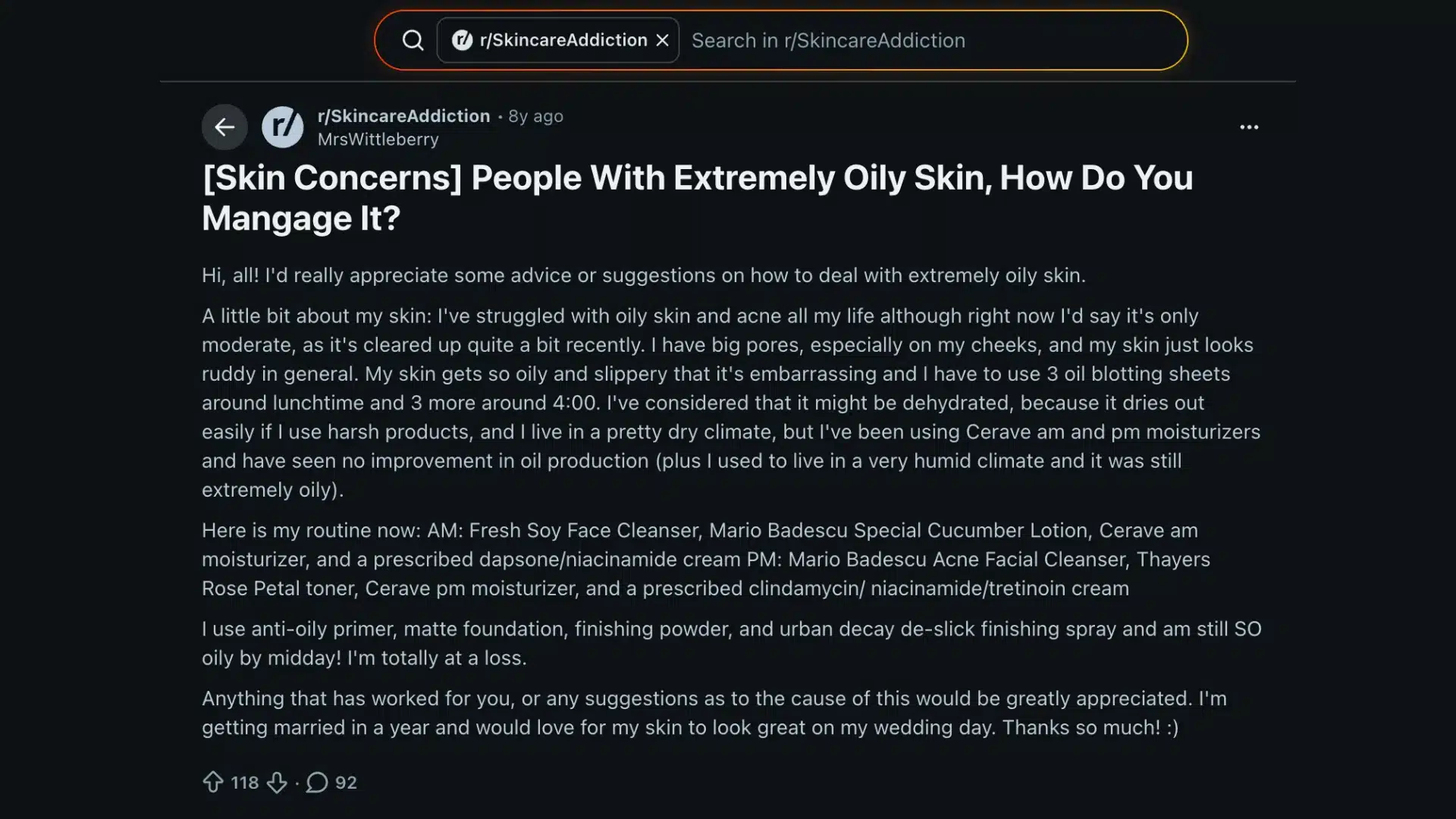
Clinical studies provide the foundation, but this Reddit user’s feedback adds a useful perspective.
One user shared, “Many oily-skinned people are often dehydrated. It’s important to add that hydration back to the skin, but not necessarily more oil.”
This matches the science. Dehydrated skin triggers more sebum, not less. Another common pattern: simple routines outperform complex ones.
The most upvoted routines for oily skin follow just 3 steps: cleanser, treatment, and a lightweight moisturizer with SPF. Users who stacked 8 to 10 products often reported worse results.
Blotting sheets also get consistent praise as a midday fix. They absorb surface oil without removing sunscreen underneath.
Mistakes That Can Make Oily Skin Worse
Small daily habits can quietly make oily skin harder to manage. These common mistakes often increase oil production or lead to more clogged pores over time.
- Using strong alcohol toners: These can strip the skin too much. The skin reacts by producing even more oil to make up for the loss.
- Washing too often: Frequent washing removes natural oils. This can trigger the skin to produce extra sebum, making it look oilier later.
- Skipping moisturizer: Oily skin still needs hydration. Without it, the skin may try to balance itself by producing more oil.
- Layering too many actives: Using multiple strong ingredients together can irritate the skin. This may lead to more oil and breakouts instead of improvement.
- Picking at spots: Touching or squeezing pimples can spread bacteria. It can also worsen inflammation and increase the risk of marks or scars.
When Skincare Products are Not Enough for Oily Skin
Sometimes oily skin goes beyond what basic skincare can handle. If breakouts are painful, especially with red or swollen spots, it may signal deeper inflammation that needs medical treatment.
Deep breakouts that sit under the skin and do not come to a head are harder to treat with regular products. Scarring is another clear sign.
If marks or dents are forming, early treatment can prevent long-term damage. Sudden changes in oiliness, without a clear cause, may also point to hormonal shifts that require proper evaluation.
Another sign is no real improvement even after using over-the-counter products consistently for several weeks.
In such cases, a dermatologist can suggest stronger treatments, adjust your routine, and target the root cause instead of just managing surface oil.
Conclusion
I completely understand the frustration of constantly battling shine and breakouts, especially if you have oily skin.
Finding an effective solution can feel overwhelming, but it’s important to remember that fixing oily skin takes patience and a tailored approach.
The science behind skincare is clear: gentle cleansing paired with proven ingredients like niacinamide and salicylic acid can make a significant difference over time.
Instead of diving into a complicated 10-step routine, focus on incorporating just one effective change at a time.
Track how your skin responds to this adjustment, and feel free to tweak your approach based on your findings.
What steps or products have worked for you in managing oily skin? Drop a comment below and share your experiences.
Frequently Asked Questions
Can Oily Skin Become Dry Over Time?
Yes. Skin type can change with age, hormonal shifts, or climate. Many people notice a decrease in oil production after their 30s and 40s. Adjusting your routine as your skin changes is key to maintaining balance.
Does Drinking Water Reduce Oily Skin?
Water alone will not stop oil production. But dehydration damages the skin barrier and can trigger increased sebum production. Proper hydration supports overall skin function and keeps oil levels more stable.
Is it Safe to Use Multiple Active Ingredients at Once?
Combining niacinamide with salicylic acid is generally safe. But mixing retinoids with strong acids on the same night can irritate the skin. Alternate them on different nights for the best results without redness.