That one eyebrow tattoo decision from years ago? Yeah, it’s been staring back at me every single morning, and definitely not in a good way.
I’ve gone through the frustration of figuring out which removal options actually work, which are safe for the skin, and which are just a waste of time and money.
So I put together everything I know about eyebrow tattoo removal.
From laser and saline methods to the full removal process, how much it typically costs, the side effects to watch for, and the key factors that shape results.
Whether you are just starting to explore your options or are already in the process
This guide is designed to give you clear, honest, and practical information so you can move forward with confidence and make the best decision for your skin and situation.
How Eyebrow Tattoo Removal Works
Understanding how removal works starts with knowing where the pigment actually sits. Depending on the technique used, ink can settle at different depths in the skin.
Microblading deposits pigment into the upper dermis, which is relatively shallow, while traditional eyebrow tattoos go deeper into the skin layers.
This difference matters because depth directly affects the number of sessions needed and which removal method works best.
Microblading tends to fade faster for this reason.
The pigment breaks down more quickly over time and responds better to removal treatments compared to conventional tattoo ink, which is placed deeper and holds more firmly.
Every removal method, whether laser, saline, or glycolic acid, works by either breaking down or lifting those pigment particles.
Laser fragments them so the body can flush them out, while saline and chemical methods draw them upward through the skin to the surface.
Eyebrow Tattoo Removal Methods
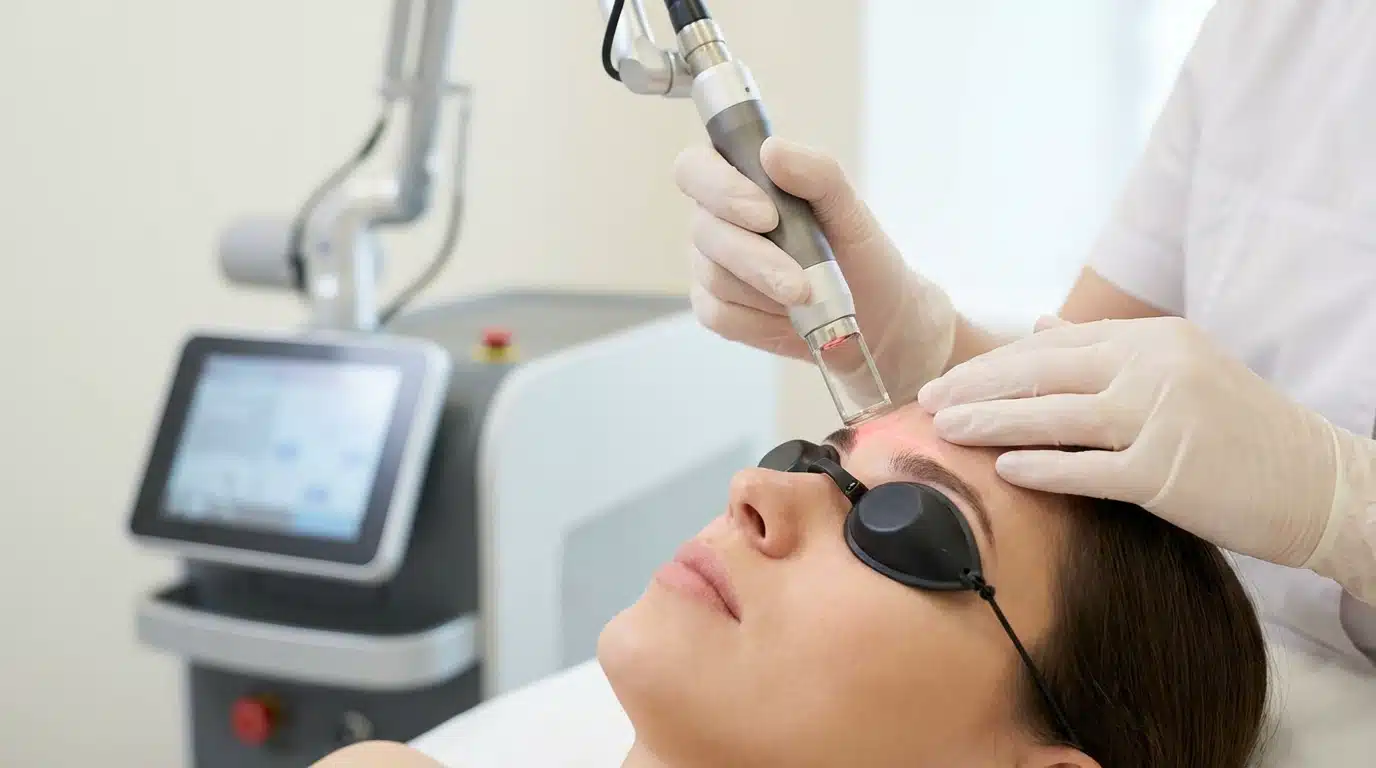
Common eyebrow tattoo removal methods include laser removal, which breaks down ink pigments using concentrated light, and saline removal, which lifts ink out of the skin using a salt solution.
Other methods include chemical removal using glycolic acid and surgical dermabrasion, though laser treatment remains the most effective and widely used option.
1. Laser Removal
Laser removal is one of the most widely used methods for breaking down eyebrow tattoo pigment.
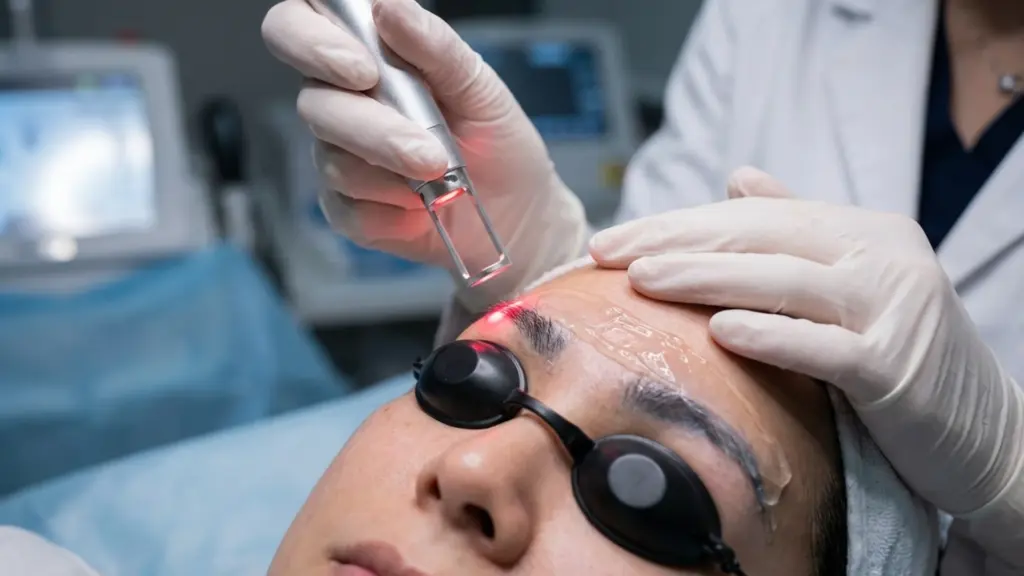
The laser emits concentrated light energy that targets and fragments ink particles beneath the skin.
Once broken down, the body’s immune system gradually clears them out.
- Breaks down pigment using light energy: The laser targets ink particles directly without significantly affecting the surrounding skin.
- Works best for darker inks: Darker pigments absorb light more effectively, making them easier to treat with standard laser wavelengths.
2. Saline Removal
Saline removal uses a salt-based solution introduced into the skin, similar to how the tattoo was originally applied.
The solution draws the pigment upward through osmosis, allowing it to rise to the surface and eventually flake off.
- Draws pigment out using salt-based solution: The osmotic action pulls ink toward the skin’s surface rather than breaking it down internally.
- Suitable for lighter or newer tattoos: Saline works better on tattoos that haven’t fully settled deep into the dermis, making it a good fit for recent or surface-level pigmentation.
3. Glycolic Acid Removal
Glycolic acid removal uses a chemical solution applied to the tattooed area to lift pigment from the skin layers.
It works by exfoliating the skin from within, gradually pushing the ink out.
- Uses a chemical solution to lift pigment: The acid breaks down the skin cells that hold the pigment, allowing it to surface over time.
- Higher risk for sensitive skin: This method isn’t right for everyone. People with reactive or thin skin may experience irritation, inflammation, or uneven fading.
Once your brows have fully healed after removal, eyebrow tinting is a low-commitment way to add definition without going permanent again.
What People are Saying on Reddit

Across Reddit threads, color changes are the biggest complaint, with many reporting that microbladed brows faded into grey, orange, or red tones instead of disappearing cleanly.
Laser also struggles with lighter pigments, such as yellow or blonde tones, sometimes leaving a visible tint even after multiple sessions.
More sessions than expected are the norm, with many people needing 7 or more instead of the anticipated 3 to 4.
Patience, as the community consistently points out, is not optional.
Saline removal receives positive mentions, especially for microblading, as users find it less aggressive and gentler on the skin compared to laser.
Most importantly, the technician made or broke the experience.
Positive outcomes almost always come down to finding a skilled, certified professional, while negative outcomes are typically linked to unqualified technicians or cutting costs on credentials.
Possible Risks and Side Effects of Eyebrow Tattoo Removal
Eyebrow tattoo removal carries several risks and side effects, including redness, swelling, and temporary discoloration that typically fade within a few days.
However, more serious risks like permanent discoloration or scarring can occur if sessions are too aggressive, poorly spaced, or performed by an undertrained technician.
- Redness and Swelling: A natural inflammatory response of the skin after treatment, caused by increased blood flow to the affected area, usually temporary and part of healing.
- Cold Compress Care: A simple method of applying a cool pack to reduce inflammation, soothe irritation, and control swelling without stressing the treated skin.
- Temporary Discoloration: Short-term changes in skin tone due to pigment disruption, where the skin may appear lighter or darker before gradually returning to normal.
- Permanent Discoloration: Long-lasting or irreversible pigment changes that can occur when skin healing is disrupted or exposed to improper care.
- Scarring Risk: The formation of permanent marks or tissue changes when the skin is damaged beyond its ability to heal smoothly, often due to excessive treatment intensity.
- Undertrained Technicians: Individuals lacking proper skill or certification, increasing the likelihood of uneven treatment, skin damage, or unsatisfactory results.
- Qualified Professional: A trained and experienced specialist who follows safe procedures, ensuring effective treatment while minimizing complications and promoting proper healing.
Disclaimer: Laser strength, skin sensitivity, pigment color, and aftercare can all affect healing and final results after eyebrow tattoo removal. Aggressive treatment or improper aftercare may increase the risk of scarring, infection, or permanent skin discoloration. Treatments should only be performed by a licensed and experienced professional.
Cost and Sessions Required
Eyebrow tattoo removal costs vary depending on the method and location.
Laser removal sessions typically range from $36 to $120 per session, depending on the clinic, the technician’s experience, and the complexity of the tattoo.
Saline and glycolic acid methods may be priced slightly lower, though the final cost still depends on the clinic and the technician’s experience level.
The total number of sessions required depends largely on ink type, color, and depth.
Darker and denser pigments may require 6 to 10 laser sessions to fully break down, while lighter or newer microblading can often clear in 3 to 6 saline sessions.
Glycolic acid treatments vary more widely, as results depend heavily on individual skin response and how the skin reacts to each session.
Tips for Safe Removal
Use proper tools, work slowly, avoid force, protect surrounding surfaces, wear gloves if needed, and follow instructions carefully to prevent damage or injury during removal.
- Choose Certified Professionals Only: Always verify that the technician holds proper certifications and has specific training in tattoo removal before booking any session.
- Ask for Proof of Credentials: Do not hesitate to request proof of qualifications upfront, as a certified professional is far less likely to rush or cut corners.
- Review Real Client Results: Ask to see genuine before-and-after photos from previous clients and read verified reviews on platforms like Google.
- Avoid Stock Images: Do not rely on polished marketing content or stock images when evaluating a clinic’s actual results and reputation.
- Never Try DIY Methods: Home solutions and unverified products carry a much higher risk of burns, infection, and permanent skin damage.
- Professional Removal Is Worth the Cost: The money saved from DIY attempts rarely outweighs the serious consequences of scarring or long-term skin damage.
- Research Thoroughly Before Committing: Take time to compare clinics, read multiple reviews, and consult more than one professional before making a final decision.
Conclusion
Getting an eyebrow tattoo removal isn’t a quick fix, but it is absolutely possible when done the right way.
I’ve covered the main removal methods, what the process actually involves, the risks to be aware of, and the factors that shape how well the process goes.
The biggest takeaway? The technician and method you choose matter far more than most people realize.
Take the time to do proper research before booking anything.
If you found this helpful, I’d love for you to check out my other blogs and feel free to drop your thoughts or questions in the comments below.
Frequently Asked Questions
How Long Does Eyebrow Tattoo Removal Take?
The full removal process can take anywhere from a few months to over a year, depending on ink type, depth, and the number of sessions needed. Each session lasts around 15 to 30 minutes with a healing gap of 4 to 8 weeks in between.
Does Eyebrow Tattoo Removal Hurt?
Most people feel mild stinging or scratching during the session, which is managed with a numbing cream applied beforehand.
Can All Eyebrow Tattoo Colors Be Removed?
Darker shades like black and brown respond best to removal, while lighter or mixed tones may need more sessions to fully clear