A single arrow might look simple, but its meaning can shift in powerful ways depending on how it is drawn and interpreted.
From strength and direction to love, protection, and personal growth, the symbolism behind it goes far deeper than its minimal design suggests.
Many people choose it in moments of change, while others see it as a reminder to stay focused on their path.
In modern tattoo culture, styles like fine-line, crossed-arrow, or broken designs add even more layers of meaning.
Understanding these variations helps turn a basic symbol into something personal, intentional, and deeply reflective of life experiences. This is where the true depth of the arrow tattoo meaning becomes clear.
Arrow Tattoo Meaning: What It Represents
At its core, an arrow tattoo stands for a few simple ideas found across many cultures: direction, protection, strength, and moving forward.
Because an arrow moves forward only once released, it is often seen as a symbol of commitment and of not looking back.
- Direction and life path: A reminder to keep moving toward your goals instead of staying stuck.
- Protection and defense: Linked to the arrow’s original use as a weapon for safety and survival.
- Strength and resilience: Represents getting through difficult times and coming out stronger.
- Moving forward after hardship: Often chosen after breakups, loss, or major life changes.
- Focus and purpose: A clean, simple design that reflects clarity and intention.
This simplicity is why arrow tattoos remain popular in modern minimalist and fine-line styles. Even a small design can convey a clear meaning without requiring a large space.
Before choosing your design, it also helps to explore different tattoo styles, since a fine-line arrow and a bold traditional one can feel very different in tone and impact.
The History Behind the Arrow Tattoo
The arrow tattoo carries layered meaning shaped by history, mythology, and culture, evolving from survival tools into symbols of love, protection, direction, and identity.
1. Native American Arrow Symbolism
In many Native American traditions, the bow and arrow were essential tools, not decorative motifs, which is where much of the arrow’s tattoo symbolism originates.
Among Plains peoples especially, the bow and arrow were central to daily survival, supplying food and defending the community, and mastering them was a skill passed down through generations.
Meanings tied to direction, protection, or ceremonies can vary widely between tribes, so treating “Native American arrow meaning” as a single fixed idea oversimplifies diverse histories and traditions.
If a specific tribal design or ceremonial meaning is what drew you to an arrow tattoo, it is worth researching that particular nation’s history rather than defaulting to a generic “tribal arrow” off a flash sheet.
2. Cupid’s Arrow and the Language of Love
The arrow’s other major meaning comes from an entirely different source: Roman and Greek mythology.
Cupid, the Roman god of desire, is usually shown with a bow and arrows that spark love when they strike, a tradition inspired by the Greek god Eros. This is why “struck by an arrow” still means falling in love today.
It is also why an arrow through a heart remains one of the most requested love-themed tattoo variations, whether the design is a couple’s matching piece or a solo tribute to a specific relationship.
If you’re getting a couples tattoo like this, it helps for both partners to understand the healing process beforehand, since uneven healing or scarring can make matching designs look different.
Common Placements for Arrow Tattoos
Arrow tattoos are versatile and can suit nearly any part of the body, with placement often reflecting personal meaning, visibility preference, or design size.
- Wrist: Keeps the design visible as a daily reminder, popular for direction- or focus-themed arrows.
- Forearm: Gives enough room for a longer piece, like a full bow and arrow or an arrow layered with other imagery.
- Behind the ear or nape of the neck: A quieter placement for people who want the meaning to stay personal rather than on display.
- Ankle: Common for smaller single-arrow designs, and fits the “moving forward” meaning since it sits near where you walk.
- Spine: Chosen for longer vertical arrow designs, sometimes paired with the compass-and-arrow variation.
Does Arrow Direction Change the Meaning?
Yes, direction is where the meaning gets specific. The same basic shape reads differently depending on which way it points, so it’s worth deciding on direction before finalizing a design rather than after.
| Direction | General meaning |
|---|---|
| Upward | Growth, ambition, moving toward a goal |
| Downward | Peace, grounding, a decision to slow down |
| Pointing left | Reflection, looking back at where you came from |
| Pointing right | Forward motion, moving on from the past |
| Crossed arrows | Friendship, alliance, or a bond that has held up over time |
| Broken arrow | Peace after conflict, or closing a difficult chapter |
None of these meanings are locked in. Plenty of people choose a direction purely because it looks better on the placement they picked, and that is a completely valid reason too.
Arrow Tattoo Designs and Their Meanings
Arrow tattoos come in many styles, and each variation adds a slightly different layer of meaning while still keeping the core symbolism of direction and movement.
1. Single Arrow
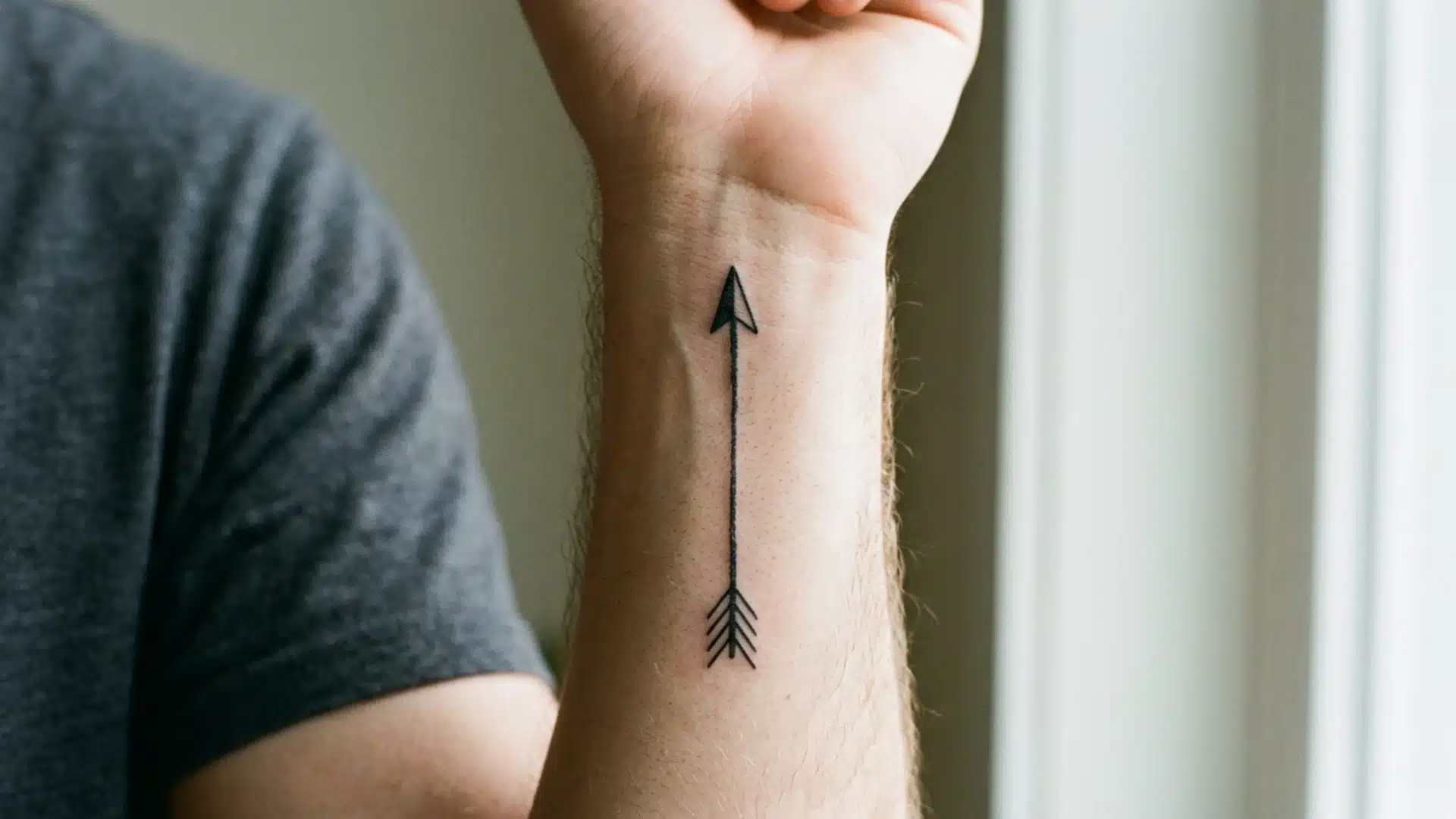
The most common design represents focus, direction, and personal independence in a simple, direct form, often chosen by people marking a new chapter or a clear personal goal.
The clean shape makes it a favorite for minimalist and fine-line work, especially on small placements like the wrist, finger, or behind the ear, where it still reads clearly at a reduced size.
It also leaves room to grow later, since many people add a date or line if the meaning shifts.
2. Crossed Arrows
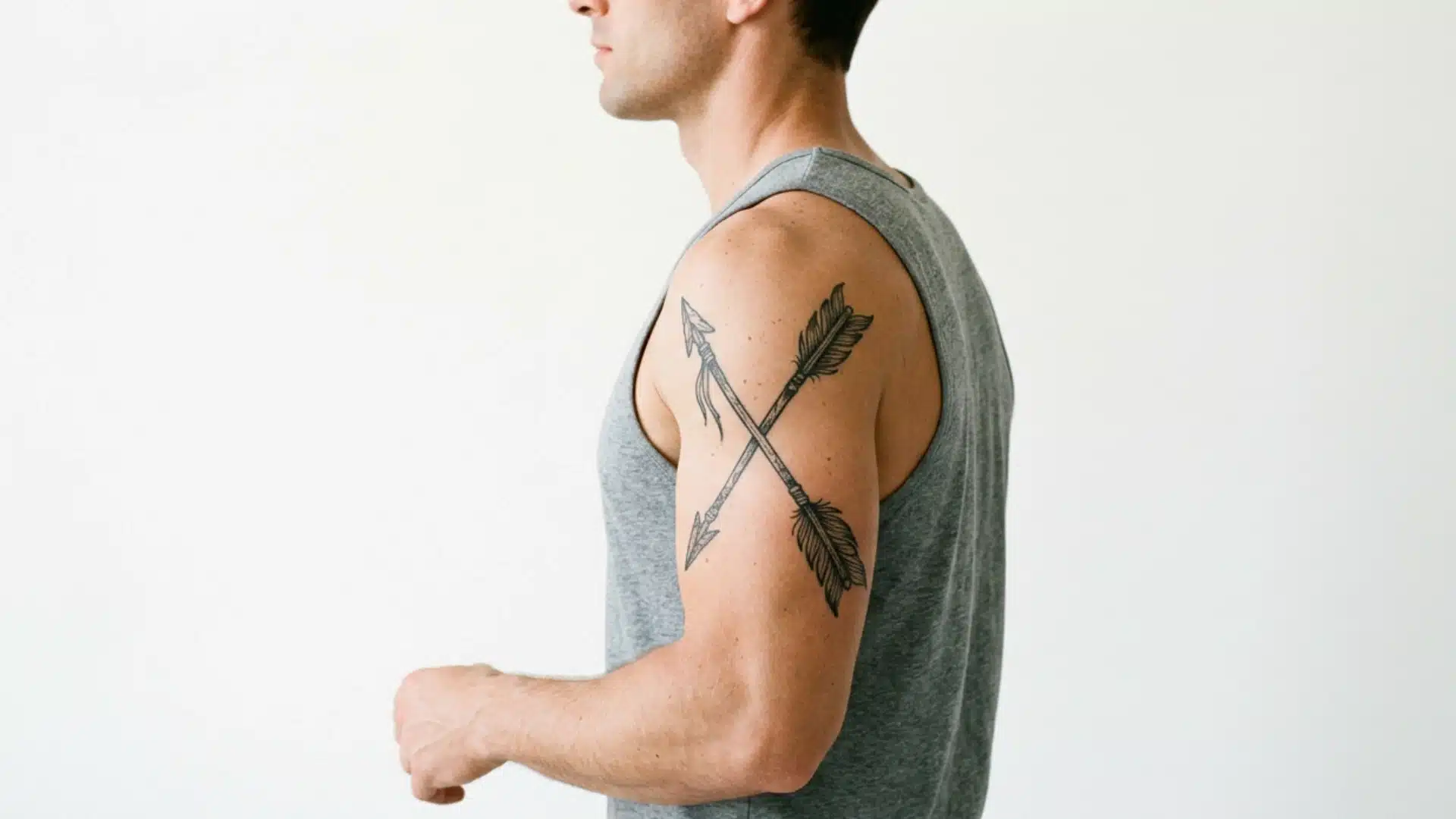
Two arrows placed over each other typically symbolize friendship, unity, or a strong bond between two people, which is why it’s a common matching tattoo between friends or partners.
The overlap visually reinforces connection, with the intersecting lines standing in for mutual support and balance.
Some people choose it after getting through something difficult together, using the crossed shape as a quiet nod to a bond that held up when it mattered most, rather than a passing trend.
3. Broken Arrow
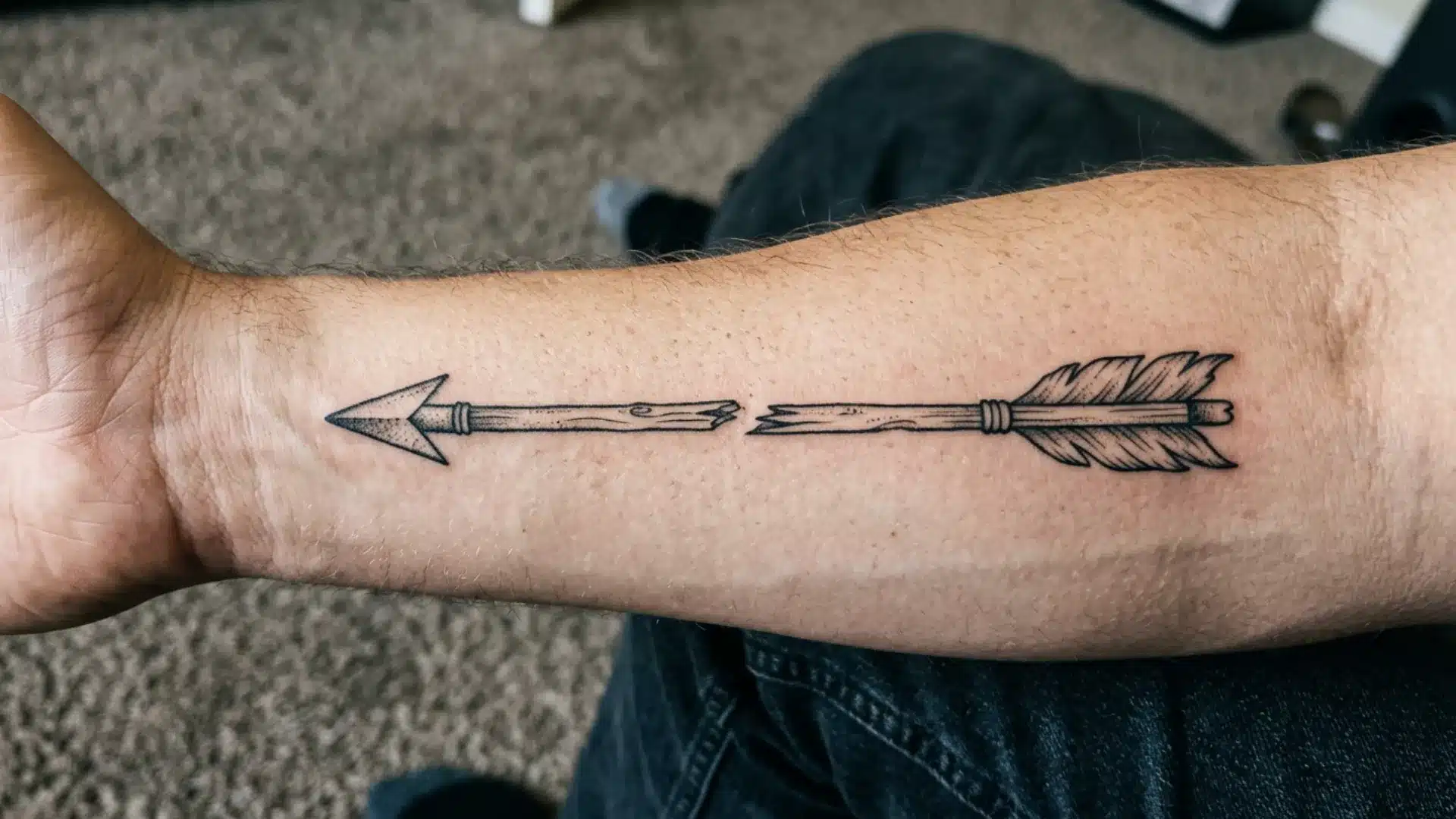
An arrow traditionally associated with peace and reconciliation is shown snapped in half, usually representing the end of a difficult period or letting go of past tension.
Many people choose it as a personal marker of emotional healing after conflict, loss, or change, with the broken form symbolizing what’s left behind.
It works well as a solo statement piece, and some choose it specifically because it marks a closed chapter rather than an ongoing struggle.
4. Arrow Through a Heart
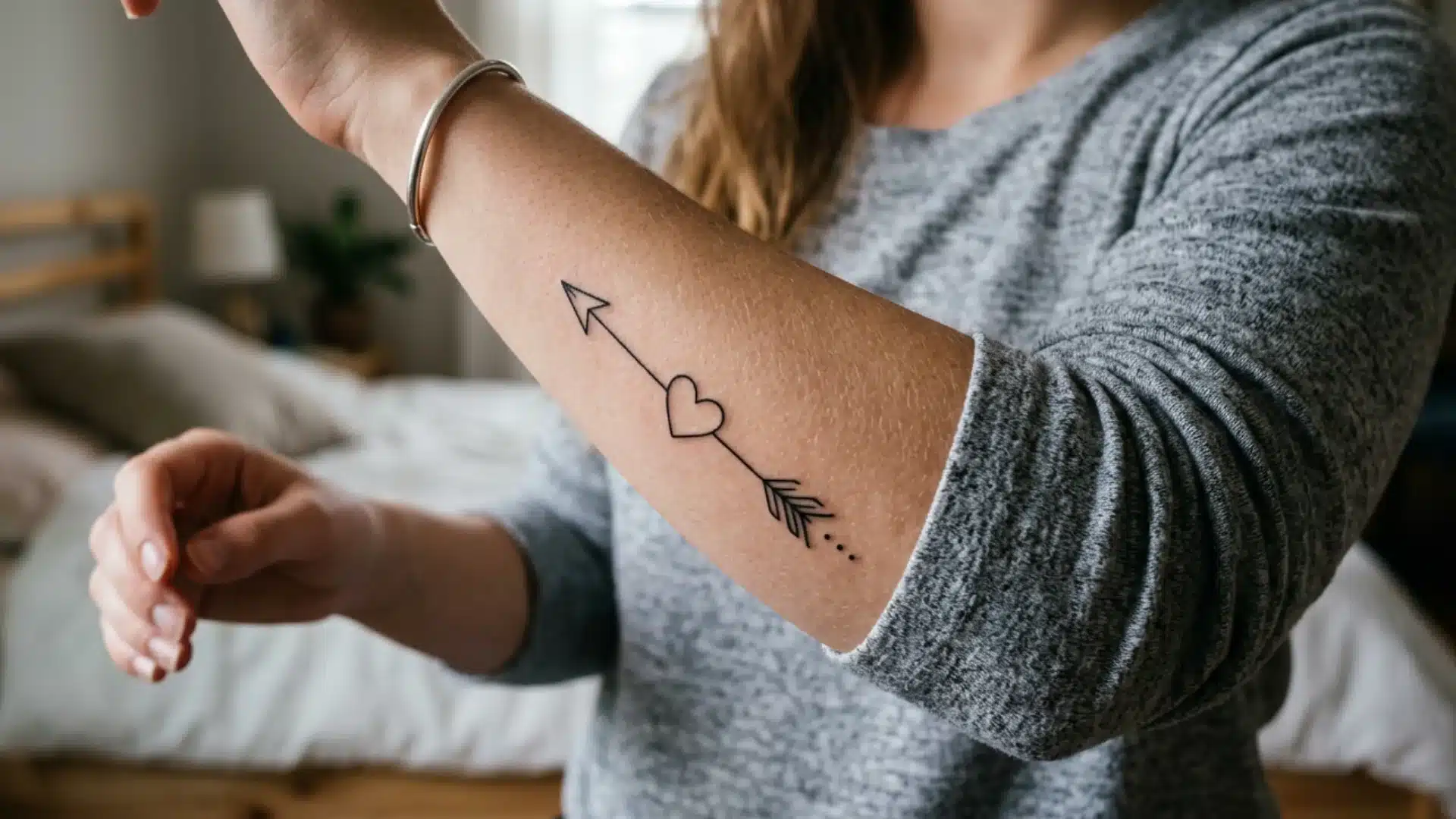
Inspired by Cupid’s mythology, this design usually represents love, romance, or deep emotional connection, and it’s a popular choice for couples or as a tribute to a meaningful relationship.
The heart and arrow together emphasize emotional impact, making it one of the most recognizable romantic tattoo symbols.
It also shows up as a solo tattoo, chosen by people honoring a relationship that shaped them, whether that’s a partner, a parent, or a version of love they don’t want to forget.
5. Compass and Arrow
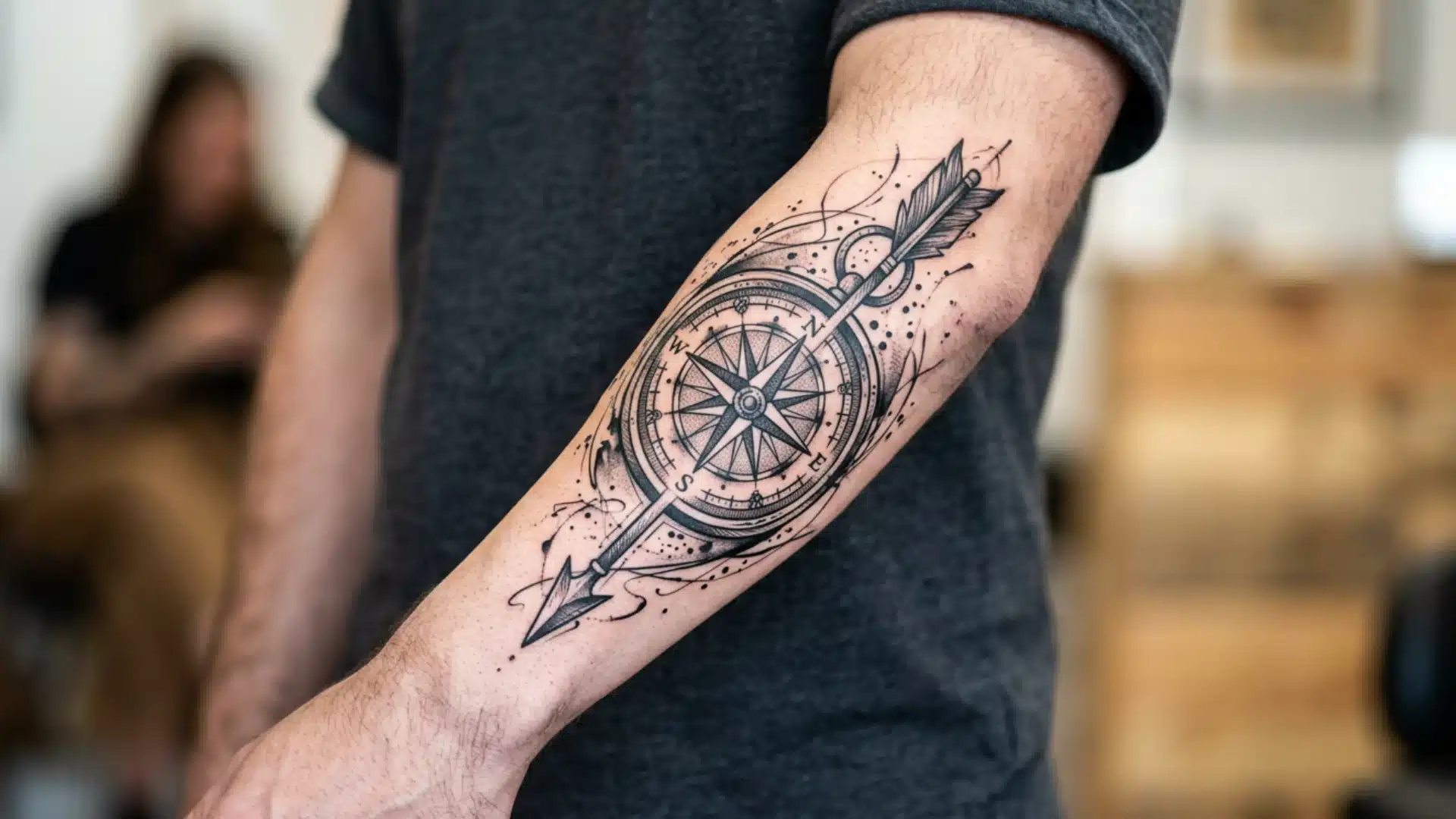
Combining a compass with an arrow emphasizes guidance and life direction, and it’s often chosen by people going through a transition, a new beginning, or a strong pull toward travel and discovery.
The compass element reinforces the idea of always finding your way forward.
This pairing tends to appeal to people who see their lives as an ongoing journey rather than a fixed destination, and it adds a bit more visual detail to the arrow’s simple symbolism.
6. Bow and Arrow
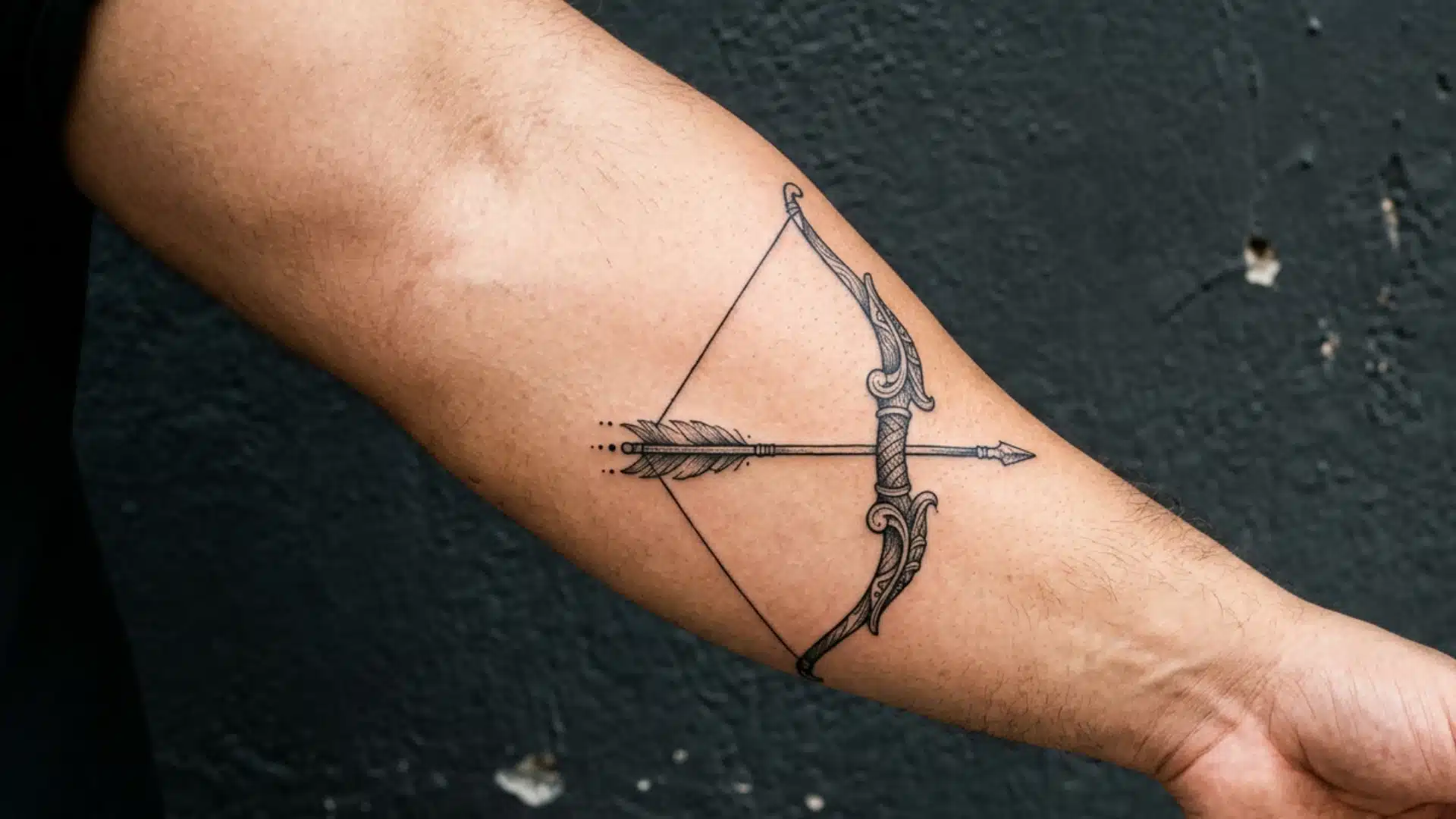
Showing the full weapon is usually read as readiness, tension, or inner strength, depending on the pose.
A drawn bow shows tension before release, symbolizing focus, discipline, and readiness to act when the moment calls.
This design often appeals to people who feel like they’re in a holding pattern, waiting for the right moment rather than rushing forward, and it carries a slightly bolder, more traditional feel than a single-line arrow.
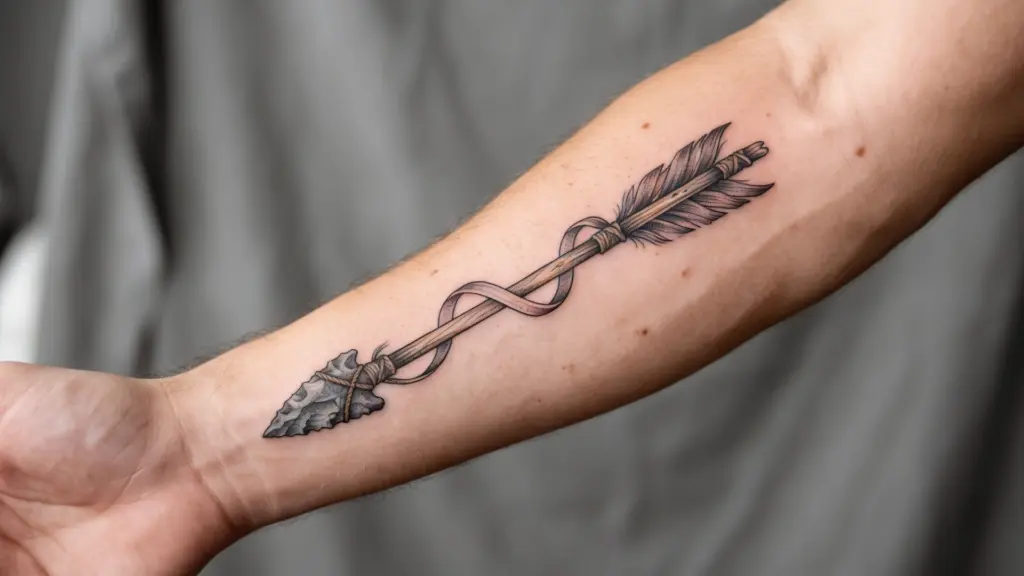
7. Feathered Arrow
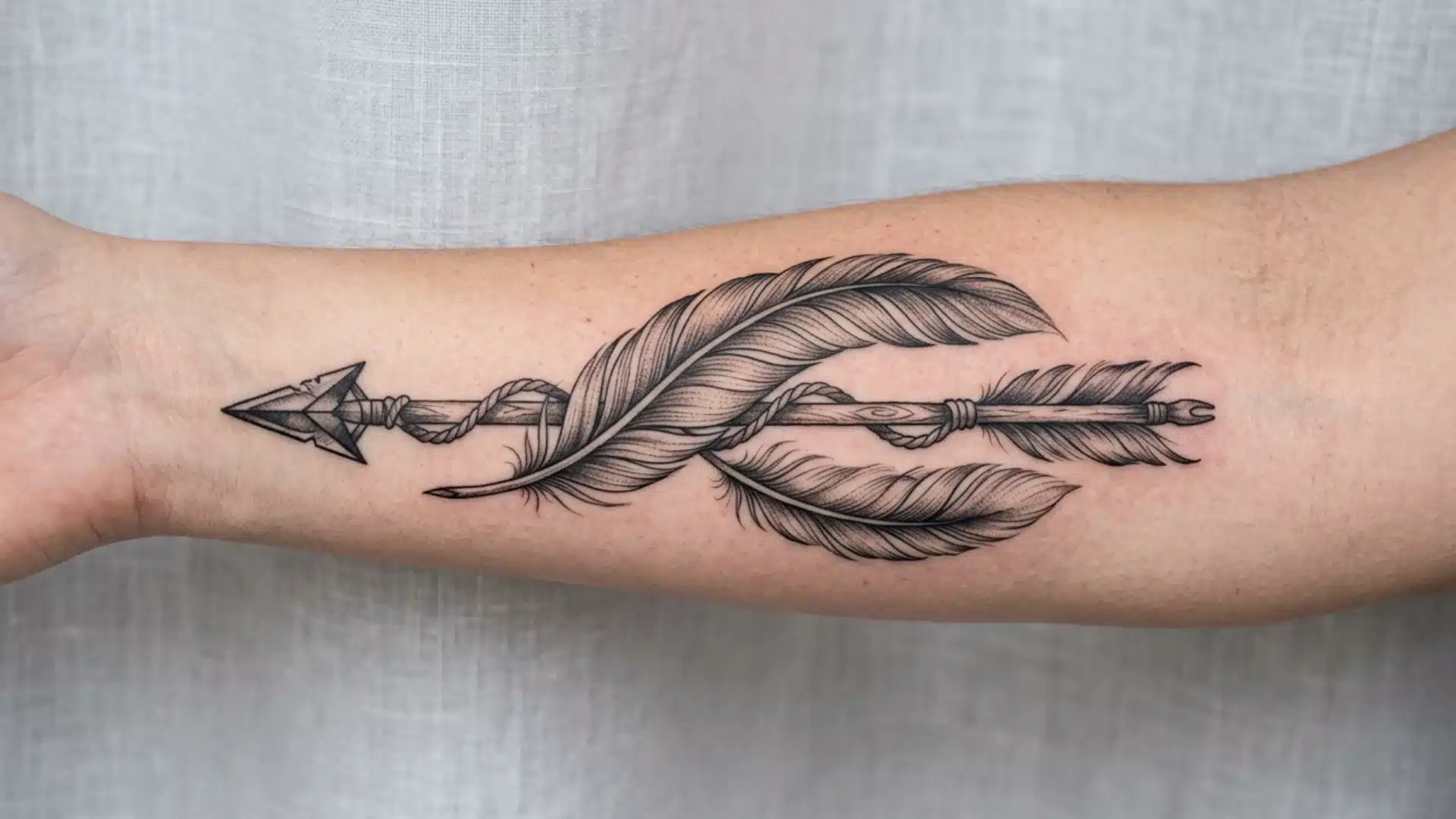
Adding detailed fletching gives the design a more traditional, handcrafted look that nods to the arrow’s origins as a hunting tool, and it’s often paired with Native-inspired aesthetics, though meanings still vary widely by wearer.
The feather detail adds a softer, more artistic touch than a minimal line.
It also gives an artist more room to play with shading and texture, which is why this version tends to suit larger placements like the forearm better than a tiny single-line arrow.
8. Infinity Arrow
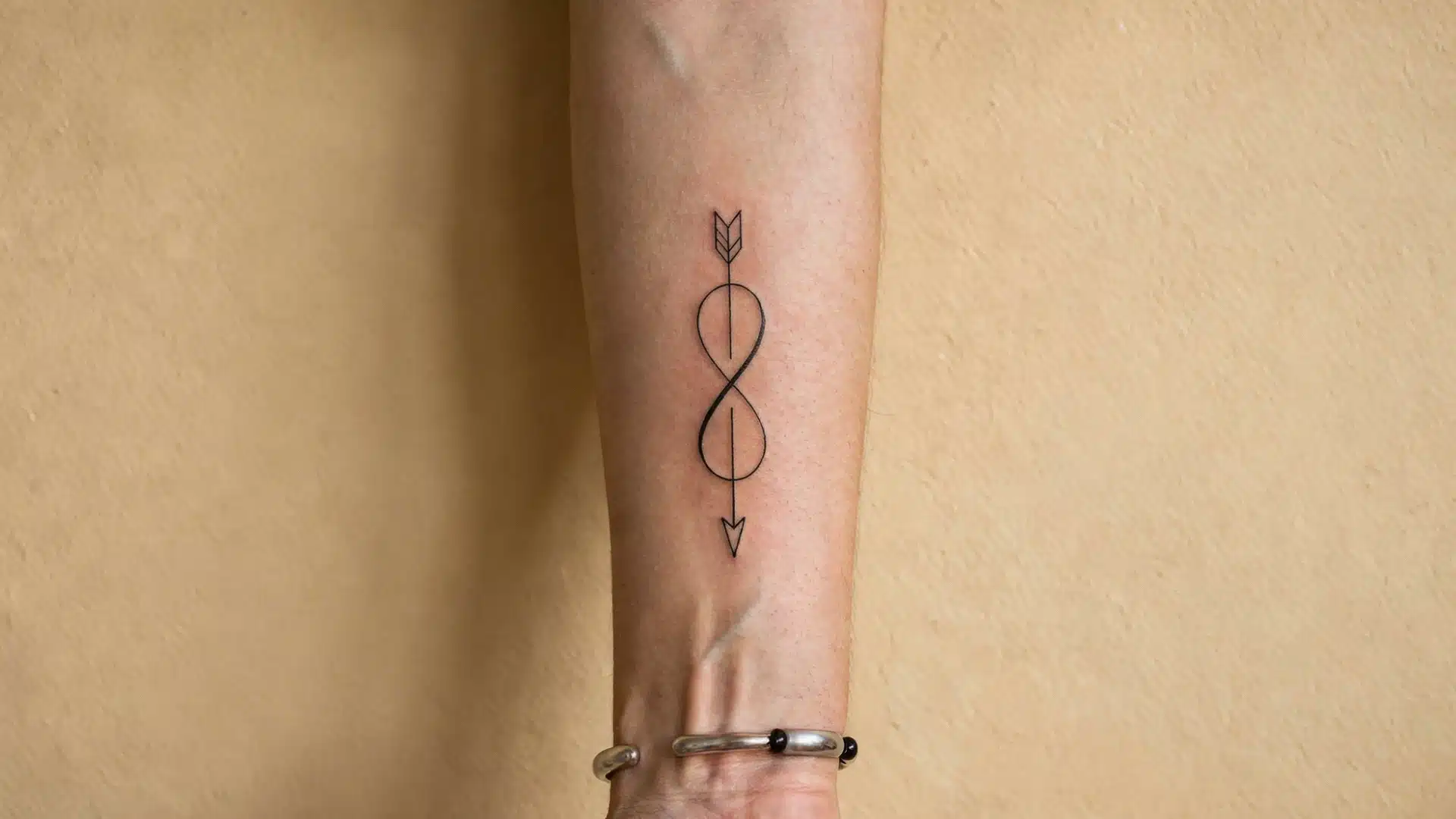
Shaping an arrow into an infinity symbol combines forward movement with the idea of an ongoing journey, commonly chosen to represent lifelong growth or an enduring relationship.
The looped design adds continuity, standing in for progress that never really stops.
It’s a common choice for milestone anniversaries or long friendships, since it reads less like a single decision and more like a commitment that keeps renewing itself over time, which fits its slightly more sentimental tone.
Choosing the Right Arrow Tattoo for You
There is no single “correct” arrow tattoo, since the same shape can mean nearly opposite things depending on the wearer.
Rather than starting from a symbol chart, it helps to start from the specific moment or decision the tattoo is meant to represent.
- Start with the story, not the shape: Decide what moment, relationship, or decision the tattoo should represent before choosing direction or style.
- Pick a design weight that matches the placement: A tiny wrist arrow reads differently than a full forearm piece, so match detail level to the space available.
- Decide if the meaning needs to be visible or private: Some people want a daily reminder in a visible spot; others prefer the story to stay tucked away.
- Bring reference images to your consultation: A tattoo artist can adjust line weight, fletching detail, or direction once they understand the story behind the request.
Conclusion
An arrow tattoo works because it is simple enough to fit almost anywhere and flexible enough to mean almost anything, from a fresh start to a friendship that held up under pressure.
What ties the whole history together, from ancient hunting tools to Cupid’s mythology to modern minimalist flash sheets, is that the symbol has always represented a decision, not a feeling.
Once you have settled on the story behind your own arrow, direction and style become the easier part of the decision.
Share which meaning resonated most with you in the comments; it usually helps the next person figure out their own.
Frequently Asked Questions
Is There an Astrological or Zodiac Connection to Arrow Tattoos?
Yes, the bow and arrow are the traditional symbol for the zodiac sign Sagittarius. People born under this sign sometimes choose an arrow tattoo to represent traits associated with it, such as ambition and a straightforward approach to life, while keeping the design’s other meanings separate.
Does the Number of Arrows in a Tattoo Matter?
It can. While a single arrow usually represents personal direction and two crossed arrows point to friendship, a cluster of three or more arrows is sometimes chosen to represent a specific group, like siblings or a close circle of friends, with each arrow standing in for one person.
How Much Does Getting an Arrow Tattoo Typically Hurt?
Pain depends more on placement and design size than on the arrow shape itself. Areas with less padding, like the wrist, spine, or behind the ear, tend to feel sharper than fleshier spots like the forearm, though a simple single-line arrow is quick enough that most people find it manageable regardless of location.
Do Arrow Tattoos Have Any Significance in Military or Veteran Communities?
Some veterans choose arrow designs to represent service, precision, or moving forward after deployment, often pairing the arrow with other military-related imagery rather than using it alone. This meaning sits alongside the arrow’s broader symbolism rather than replacing it, so context and personal intent still matter most