Types of earrings can change a look faster than almost any other piece of jewelry. A tiny stud can feel clean and simple, while a long dangle can make the same outfit feel polished and elegant.
Earrings have been worn in ancient times, making them among the oldest forms of personal adornment still popular today. Over time, they have reflected fashion, culture, status, and individual style.
I used to choose earrings based only on color, but later realized that shape, size, and placement can make an even bigger difference.
The right pair can highlight facial features, balance proportions, and add personality to an outfit.
Whether subtle or bold, earrings have a unique way of completing a look and helping it feel more intentional and put together.
When Were Earrings Invented?
Earrings are not a recent idea. Archaeological evidence puts them in ancient Mesopotamia around 2500 BCE, where Sumerian women wore simple gold hoops as markers of rank and wealth.
Queen Puabi’s gold hoops, among the oldest earrings ever recovered, date to roughly 2600-2450 BCE and were found with burial items that confirmed her status.
The Minoan civilization on Crete wore hooped earrings by around 1800 BCE, as shown in frescoes from Santorini.
Ancient Persian soldiers wore earrings as protective talismans in battle. Romans used engraved gold earrings to signal political allegiance.
When Tutankhamun’s tomb was opened in 1923, earrings were found inside. For roughly 7,000 years, earrings have been about identity as much as they are about decoration.
Types of Earrings and Their Unique Styles
This is the full range of earring styles you will encounter, from the simplest stud to the most elaborate festival design. Each type has a distinct silhouette, fit, and styling purpose.
1. Stud Earrings
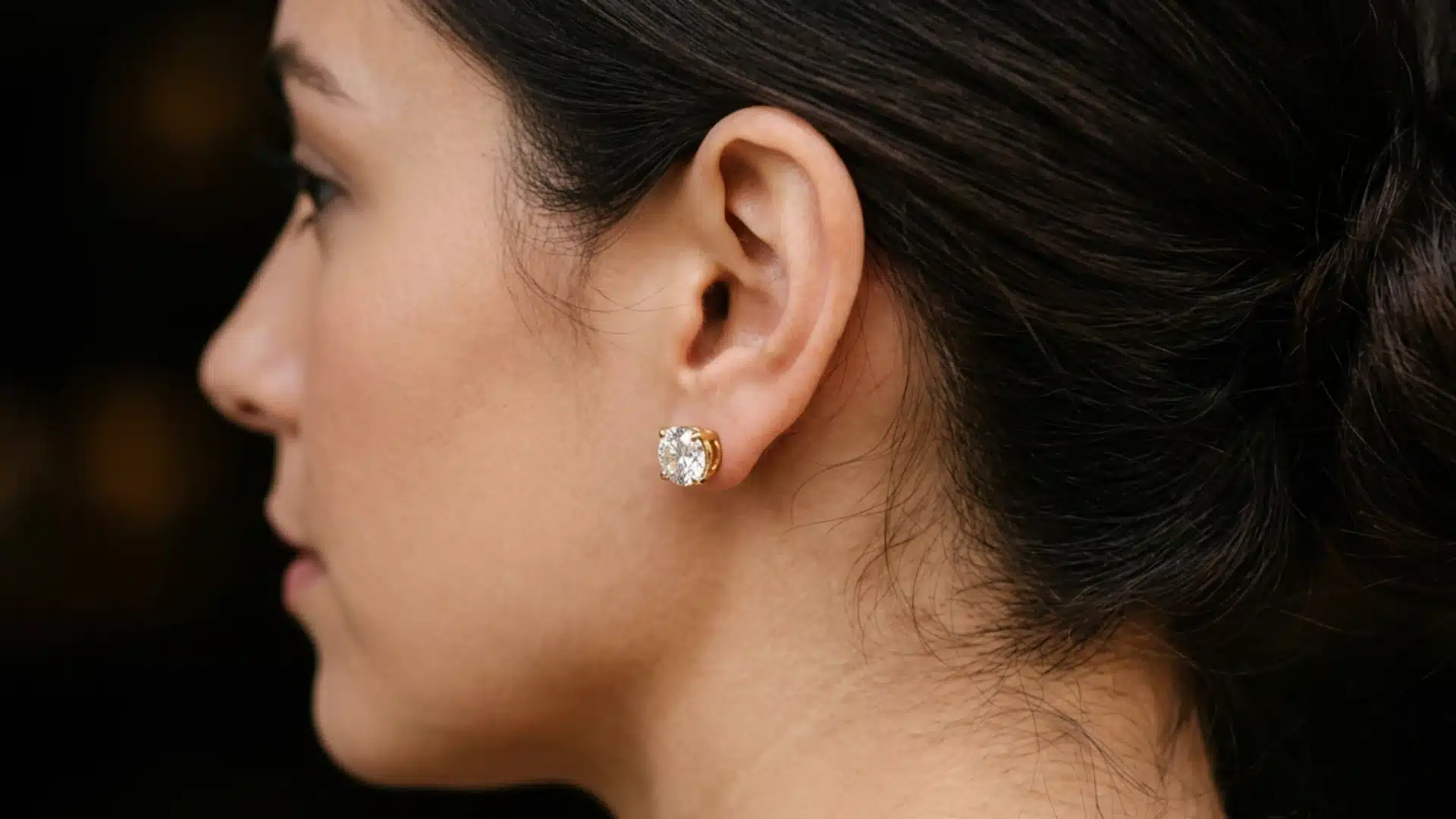
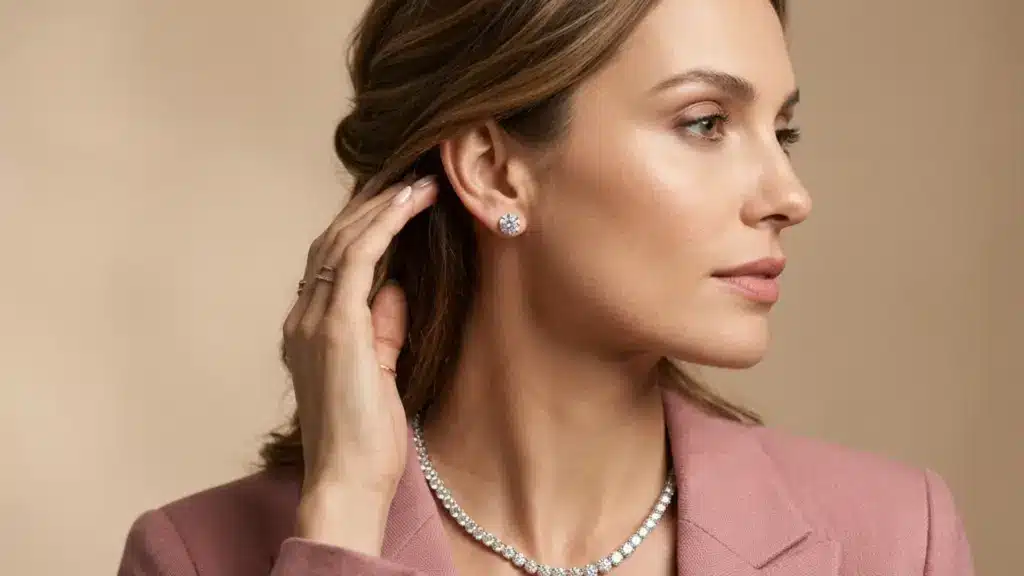
The most worn style in the world, and for good reason. A stud sits flat against the lobe, with a post through the piercing and a backing to keep it secure.
The front can be a diamond solitaire, a pearl, a gemstone, a metal ball, a tiny heart, a star, or an initial.
Its simple shape makes it easy to wear with almost anything. Studs do not pull focus from the outfit, but they still add polish.
They work with office looks, casual clothes, party outfits, and beachwear. That is why many people treat them as their everyday earrings.
2. Hoop Earrings
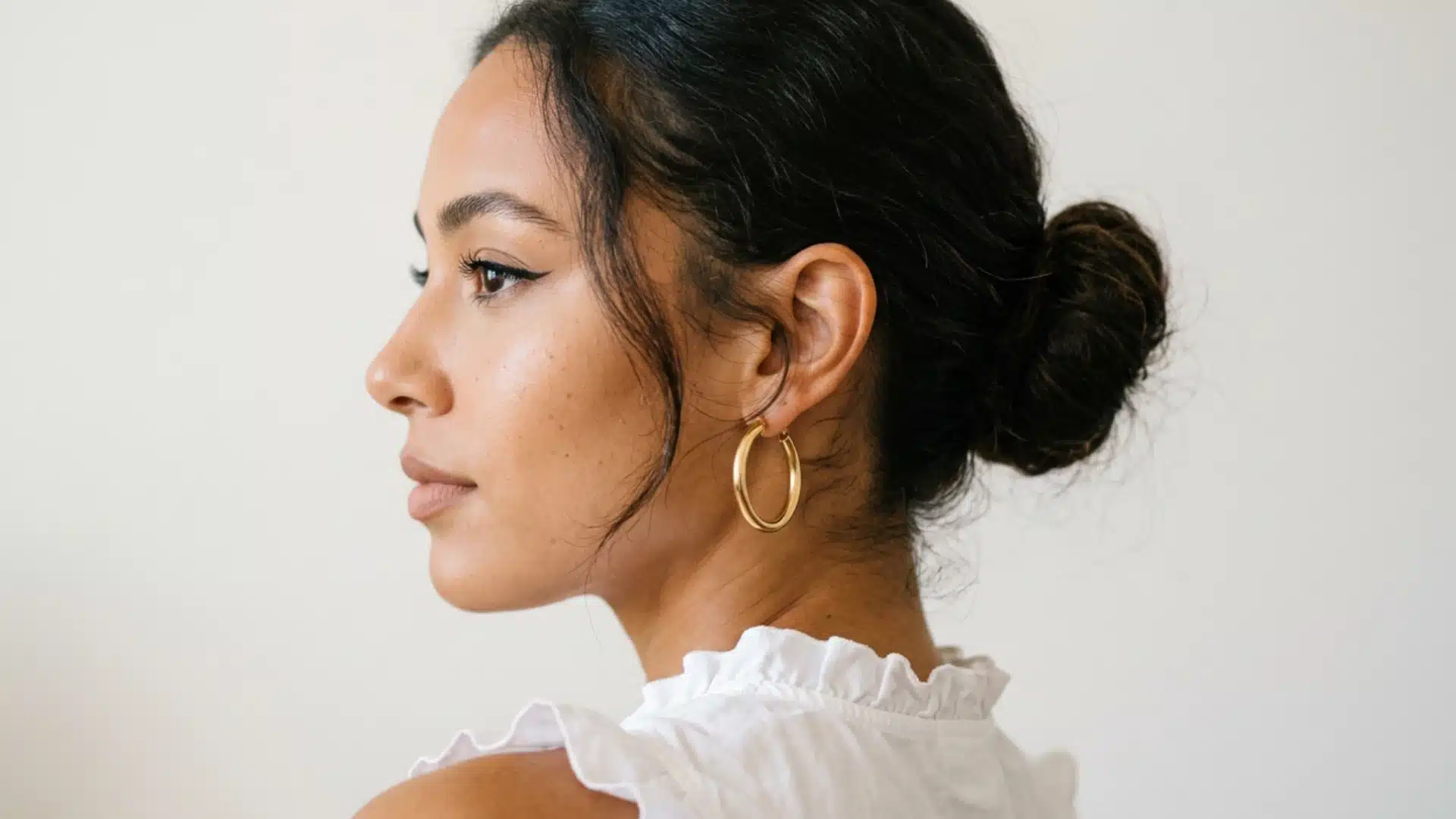
A circular or semi-circular shape that loops from the front of the lobe to the back. Their size changes the whole mood.
A small 10mm hoop feels neat, soft, and easy to wear daily. A large 50mm hoop feels bold and more noticeable.
That is why hoops stay popular across cultures and trends. The same shape can look simple or striking, depending on the diameter, thickness, and finish.
Smaller hoops suit polished looks, while larger hoops frame the face more strongly. Face shape also matters, since the right size can balance the features.
3. Huggie Earrings
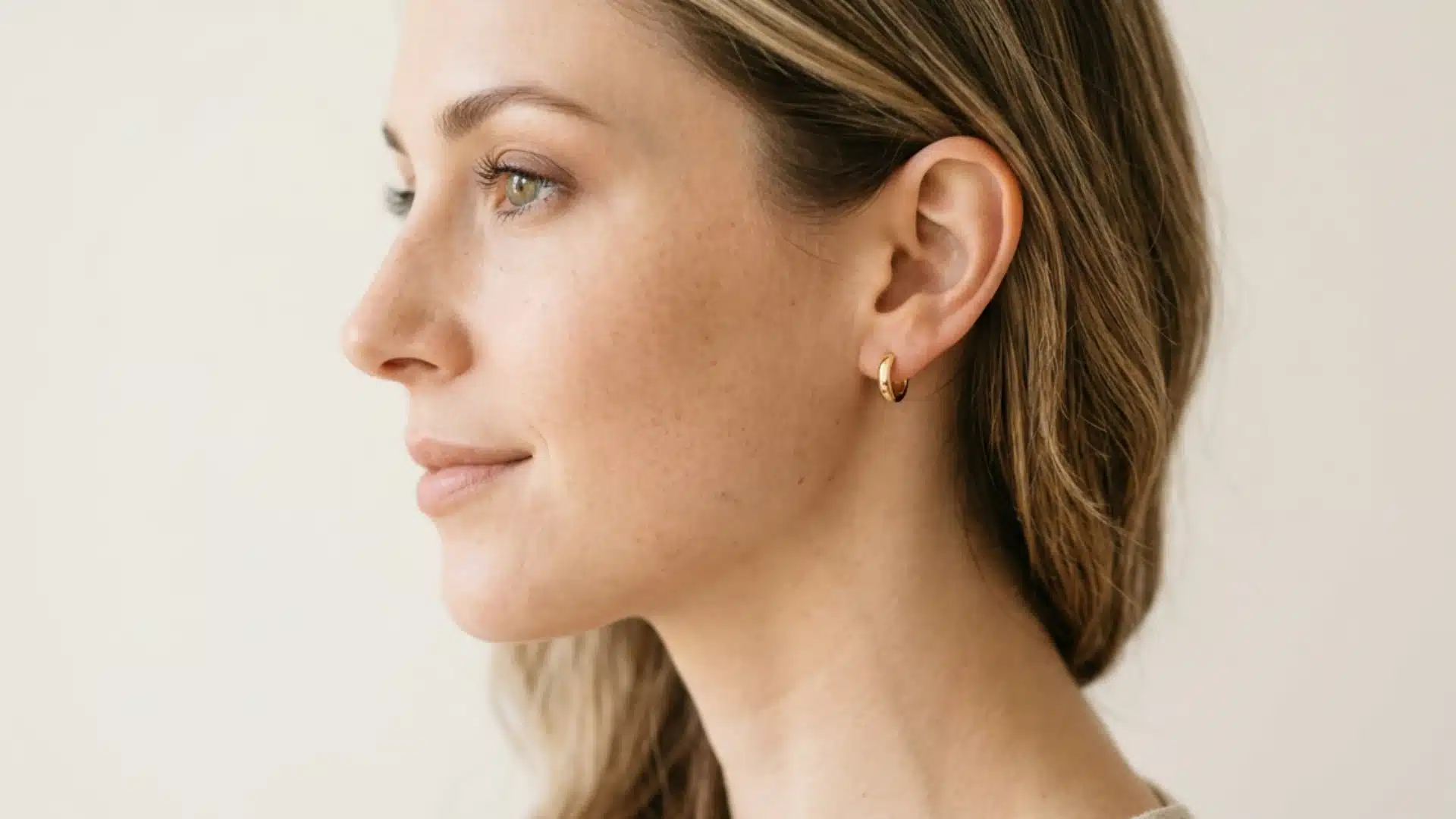
Mini hoops that sit close to the lobe instead of swinging below it. The name fits because they hug the ear with a snug, secure shape.
Most Huggies have a thicker band, which makes them feel clean, modern, and easy to wear.
They are comfortable for long days because they do not pull or move much. Many people also wear them in cartilage piercings because they stay close to the ear.
Huggies are great for stacking, too. Two or three small huggies along the ear can create a layered look without feeling too heavy or busy.
4. Drop Earrings
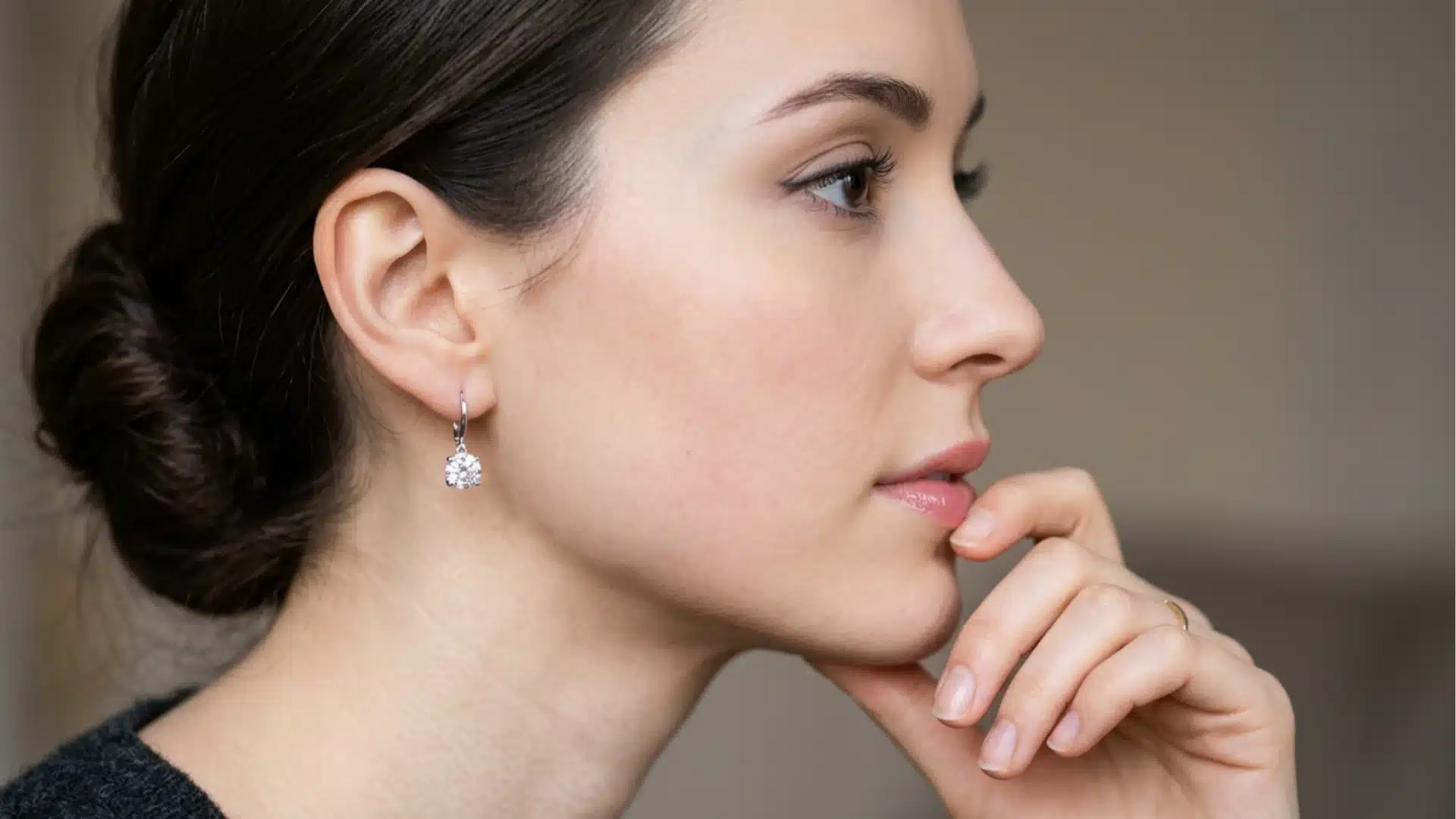
Drop earrings hang just below the lobe, usually through a short chain or a direct attachment.
They move a little when the head turns, but they do not feel as bold as longer styles. That makes them a middle point between studs and dangle earrings.
Their soft movement gives the face a graceful frame without taking over the outfit. Renaissance royals liked this style because it caught candlelight gently.
Today, drop earrings work when a stud feels too plain, but a dramatic earring feels like too much for the moment. They add polish without looking loud.
5. Dangle Earrings
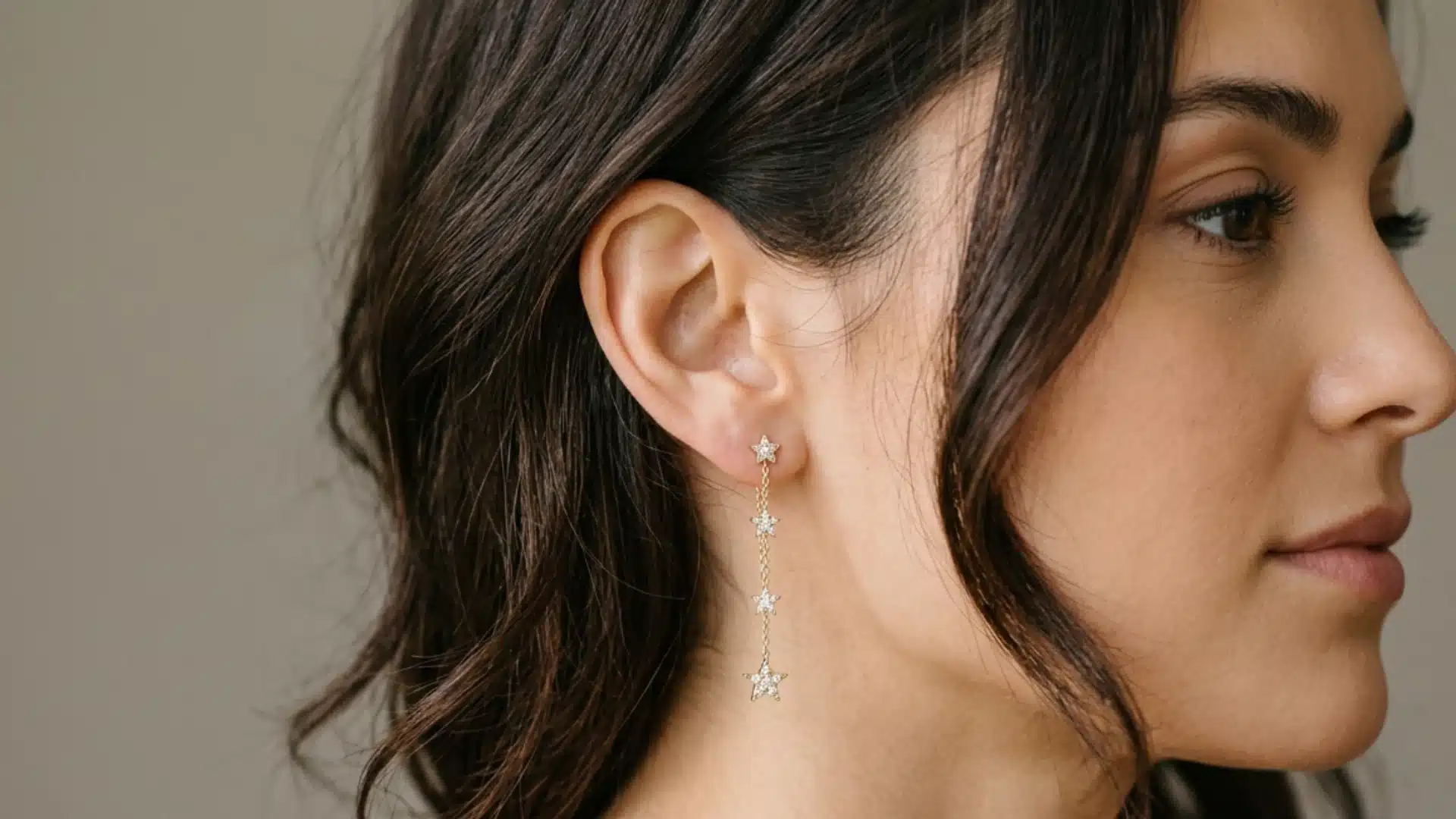
Dangle earrings are longer and more active than drop earrings. They hang freely from the lobe and move with the body.
That length can make the neck look longer and give the face a more lifted shape. Many traditional outfits across cultures feature long earrings because they signal occasion, care, and attention to detail.
The movement is part of the charm, so the rest of the outfit usually works best when it stays simple.
Dangle earrings already bring strong visual interest, especially with stones, metalwork, beads, or color. They are best when the earring is meant to stand out.
6. Chandelier Earrings

A Tiered, branching shape that spreads outward as it drops from the lobe. They usually feel dressy because the design has more detail, width, and movement than simple drops or dangles.
Most people wear them for weddings, parties, dinners, and formal events, though a large beaded pair can also feel fun for festivals.
The shape draws attention to the lower half of the face, so it often balances well with stronger jawlines.
Since chandelier earrings already bring drama, they look best with clean necklines, simple hair, and outfits that let the earrings stay the main detail.
7. Ear Climber or Crawler Earrings
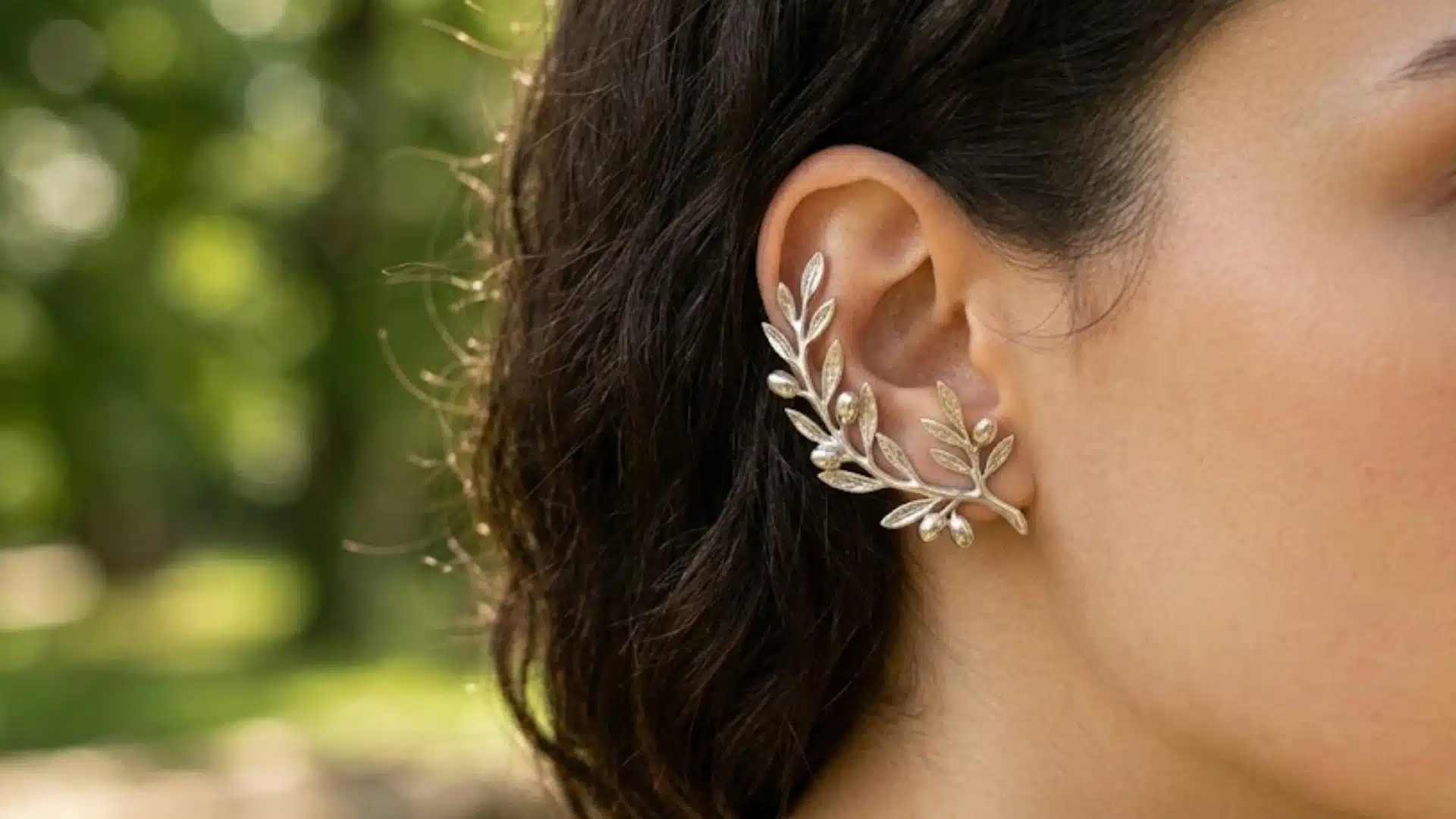
Ear climber earrings travel upward along the outer curve of the ear instead of hanging down from the lobe.
Their shape follows the ear’s natural line, creating a smooth curve or continuous trail of detail.
Most climbers secure through a single lobe piercing, then rest against the cartilage above it. This gives the look of a styled ear without the need for extra piercings.
They can be simple metal bars, crystal rows, leaf shapes, or small linked designs. Ear climbers work well when studs feel too plain, but long earrings feel too much. They add interest while staying close to the ear.
8. Threader Earrings
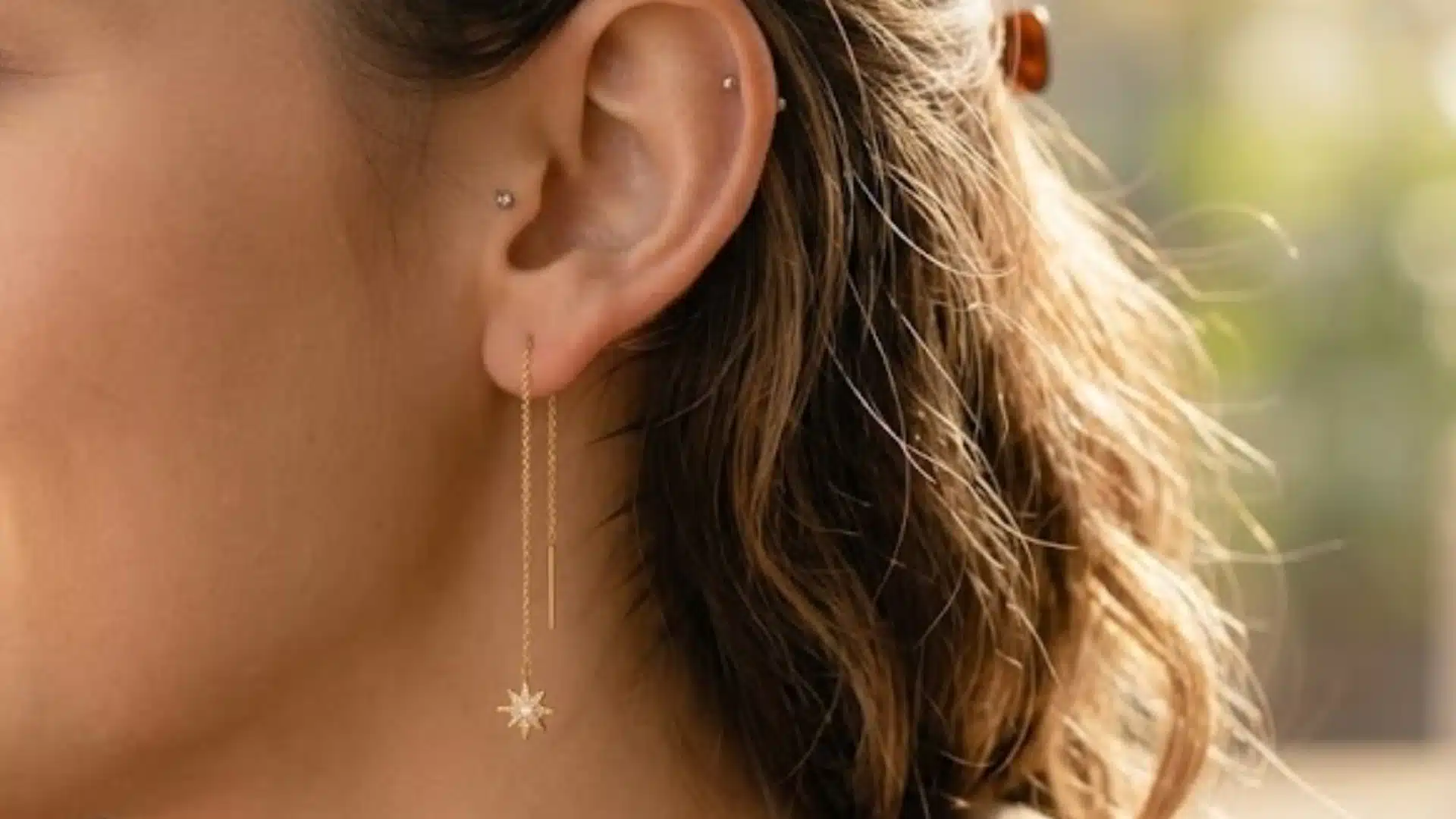
A thin chain or wire that passes through the piercing, leaving the chain visible on both sides of the lobe.
They have no regular post, backing, or clasp, which gives them a light and almost floating look. The way they sit can vary from person to person because earlobes vary in thickness, affecting the drop.
Some threaders are plain chains, while others have tiny bars, pearls, stones, or charms at the end.
They feel minimal but still noticeable. Since they take more care to insert and remove, they are better for slower days than rushed mornings.
9. Ear Jacket Earrings
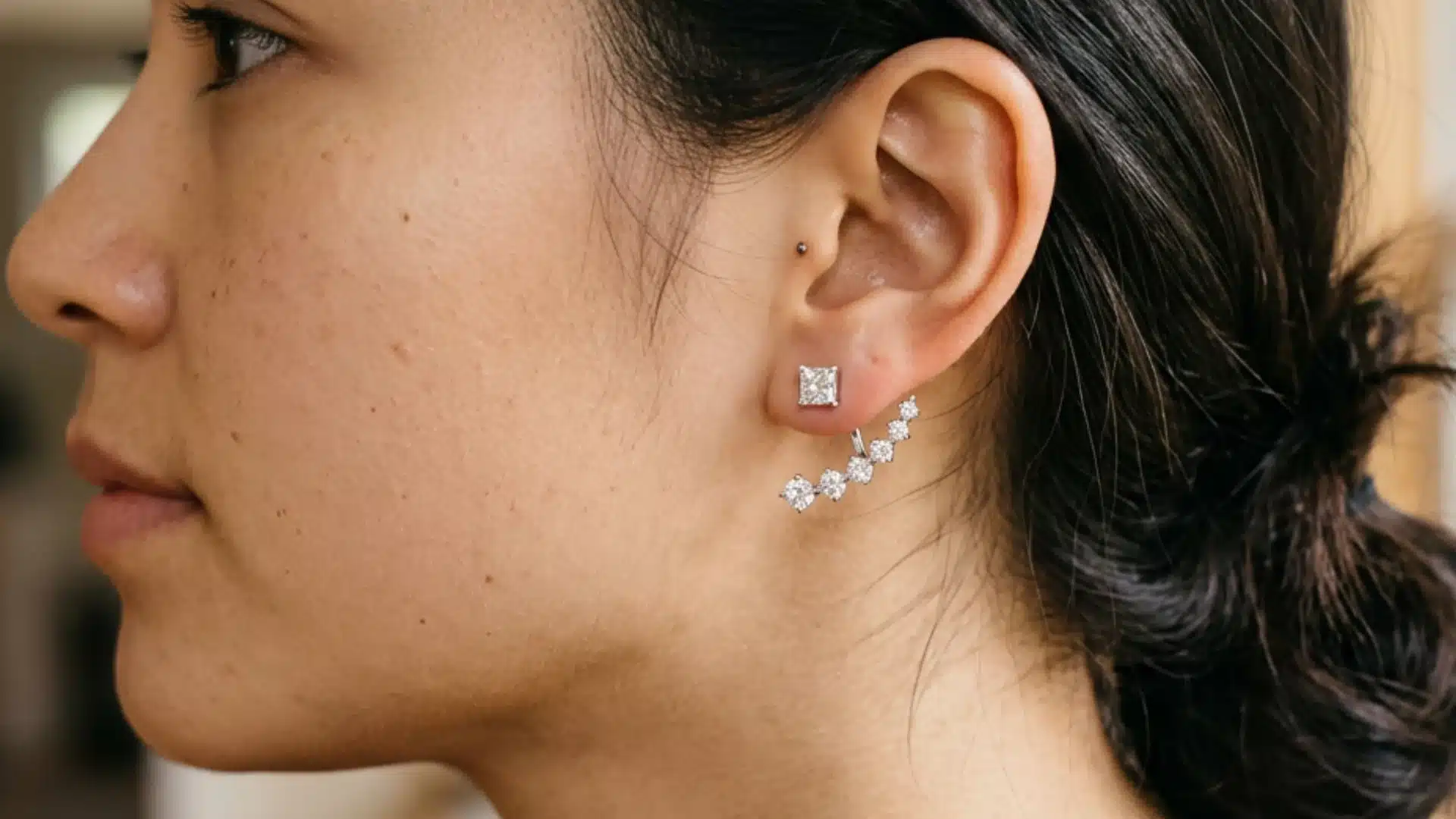
Ear jacket earrings have a front stud and a separate decorative piece that sits behind the earlobe. From the front, they can look simple at first, almost like regular stud earrings.
The detail appears on the back, side, or lower edge of the lobe, adding more depth to the design.
This makes ear jackets useful when a plain stud feels too basic, but a long earring feels too much.
They look especially good in side-profile photos because the back piece becomes more visible. Pearls, bars, crystals, and fan shapes are common in this style.
10. Cuff Earrings
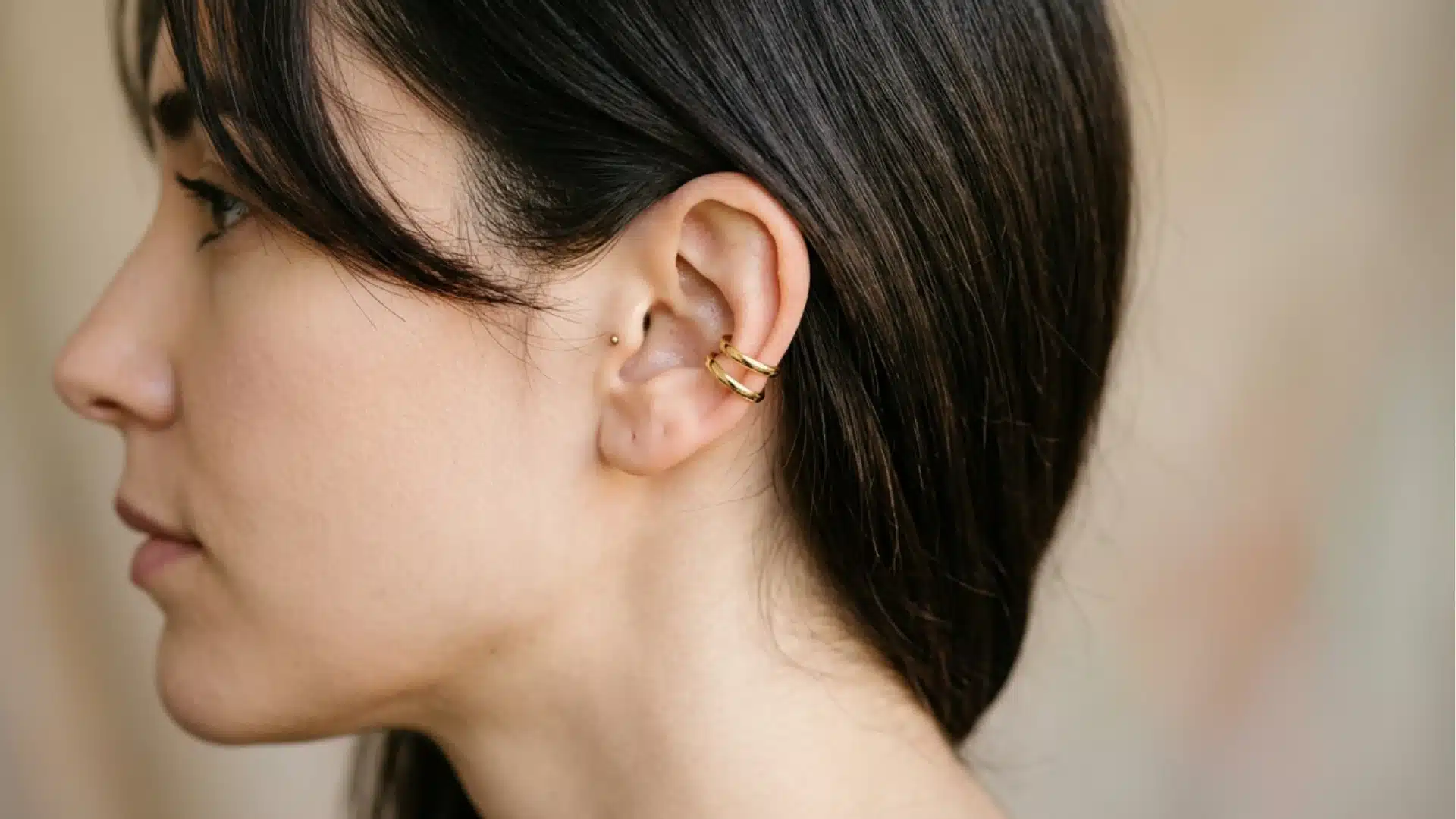
Cuff Earrings Wrap Around the Outer Rim of the Ear without Needing a Piercing.
They grip the cartilage rather than pass through it, making them useful for anyone who wants the look of cartilage jewelry without the healing time.
A cuff can be thin and simple, or bold with stones, chains, or layered metal. Fit matters a lot with this style.
A cuff that is too tight can pinch, while one that is too loose can slide off. The best cuff feels secure but comfortable. It gives the ear a styled look with very little effort.
11. Tassel Earrings
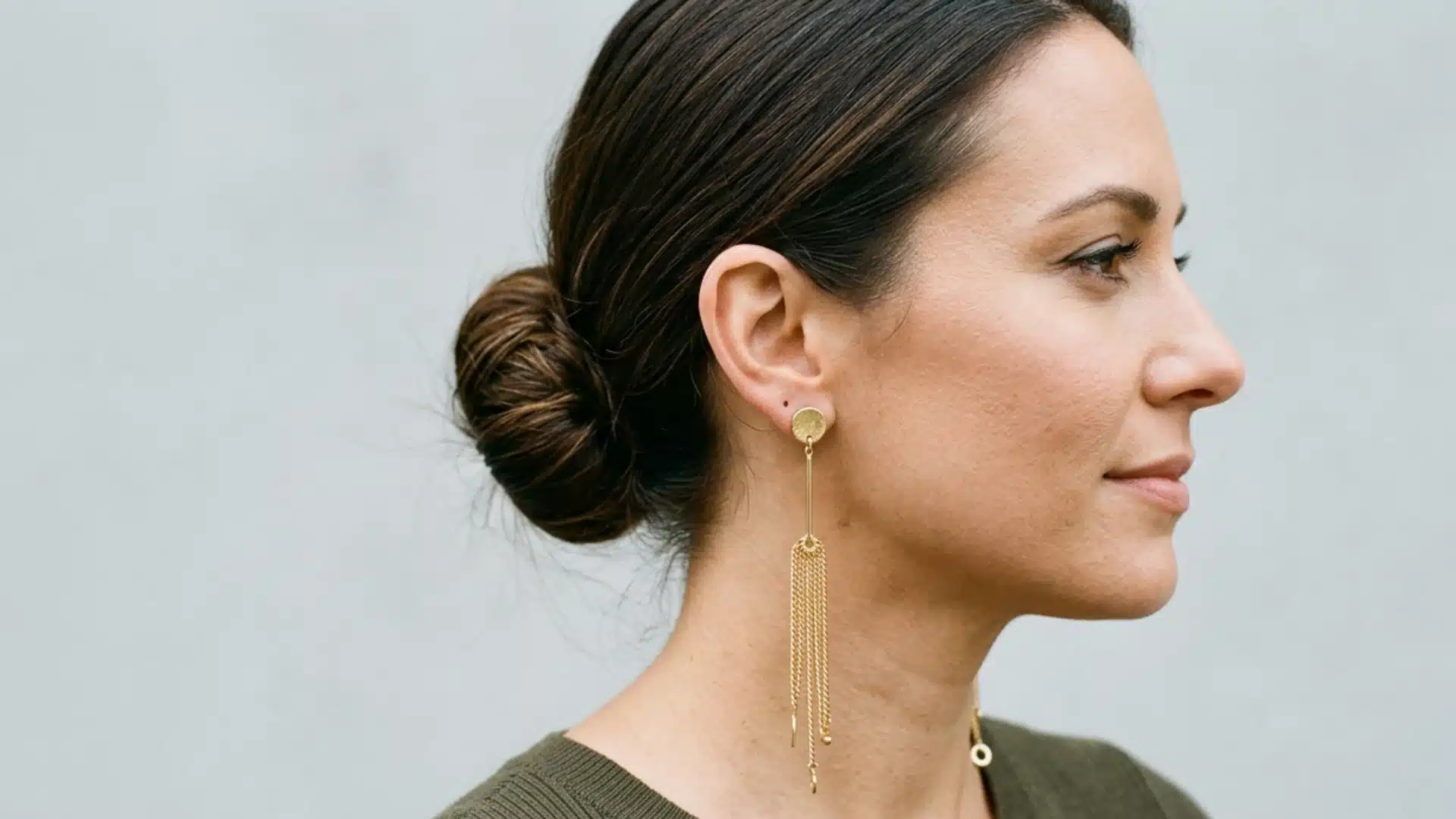
Tassel earrings are long, fringed earrings made with thread, chain, leather cord, beads, or fine metal strands. Their main effect comes from movement.
They sway when the head turns, adding softness to the outfit without requiring heavy stones or thick metal.
Tassels usually feel bold because they have length, texture, and motion at the same time.
That is why they work best when the rest of the outfit stays simple. A plain top, clean neckline, and pulled-back hair can let them stand out. They are a good choice when the outfit needs one clear finishing detail.
12. Pearl Earrings
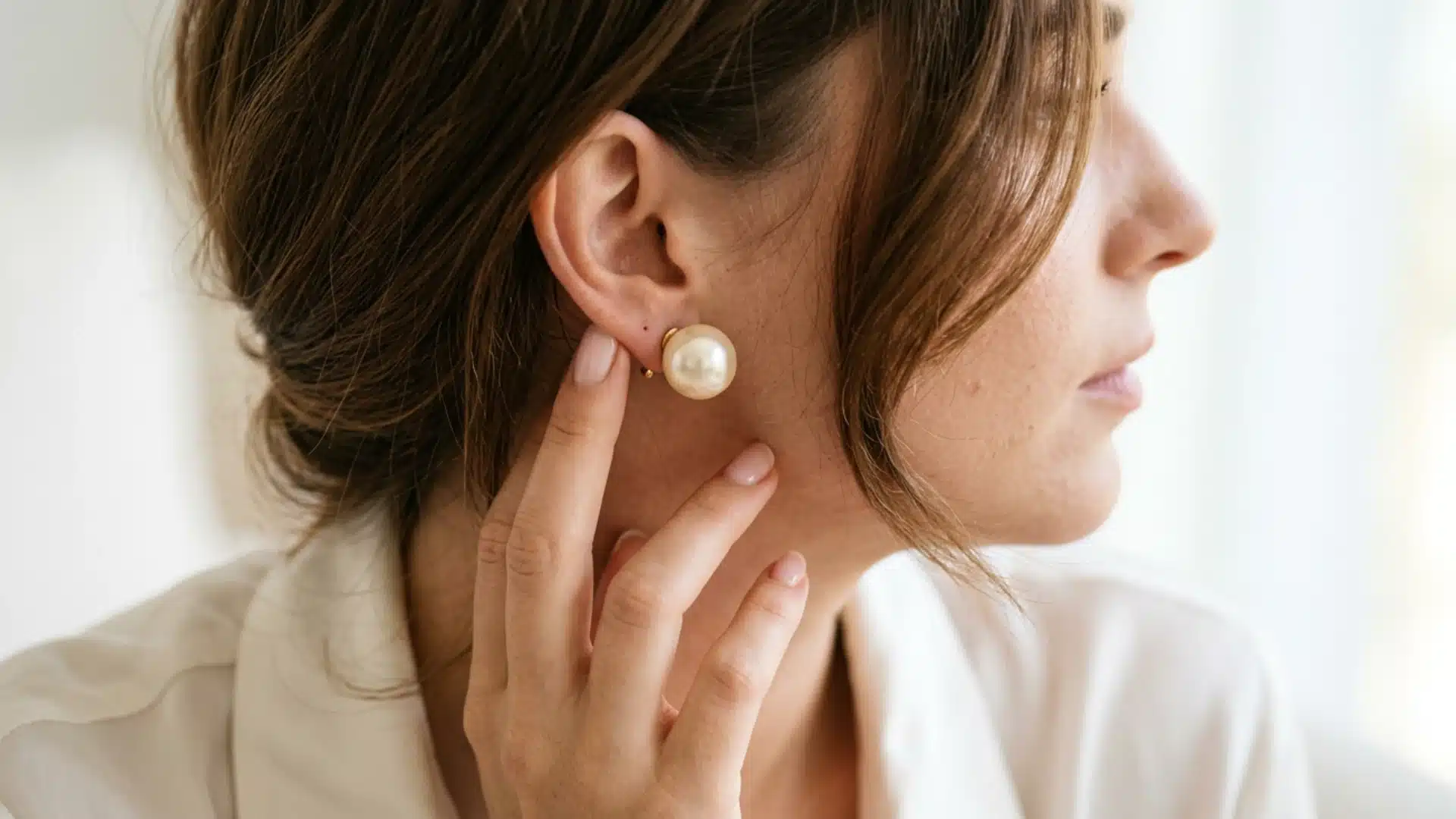
Pearl earrings are more about material than shape, but they still work as their own style category.
A pearl stud feels classic and clean. A pearl drop feels soft and refined. A baroque pearl hoop feels more modern and unexpected.
Pearls can make an outfit look polished without feeling loud, which is why they work for work, dinners, weddings, and everyday wear.
The finish of the pearl matters more than just size. A bright luster and smooth surface usually make the earring look better. Pearl earrings are easy to style because they bring softness to almost any look.
13. Cluster Earrings
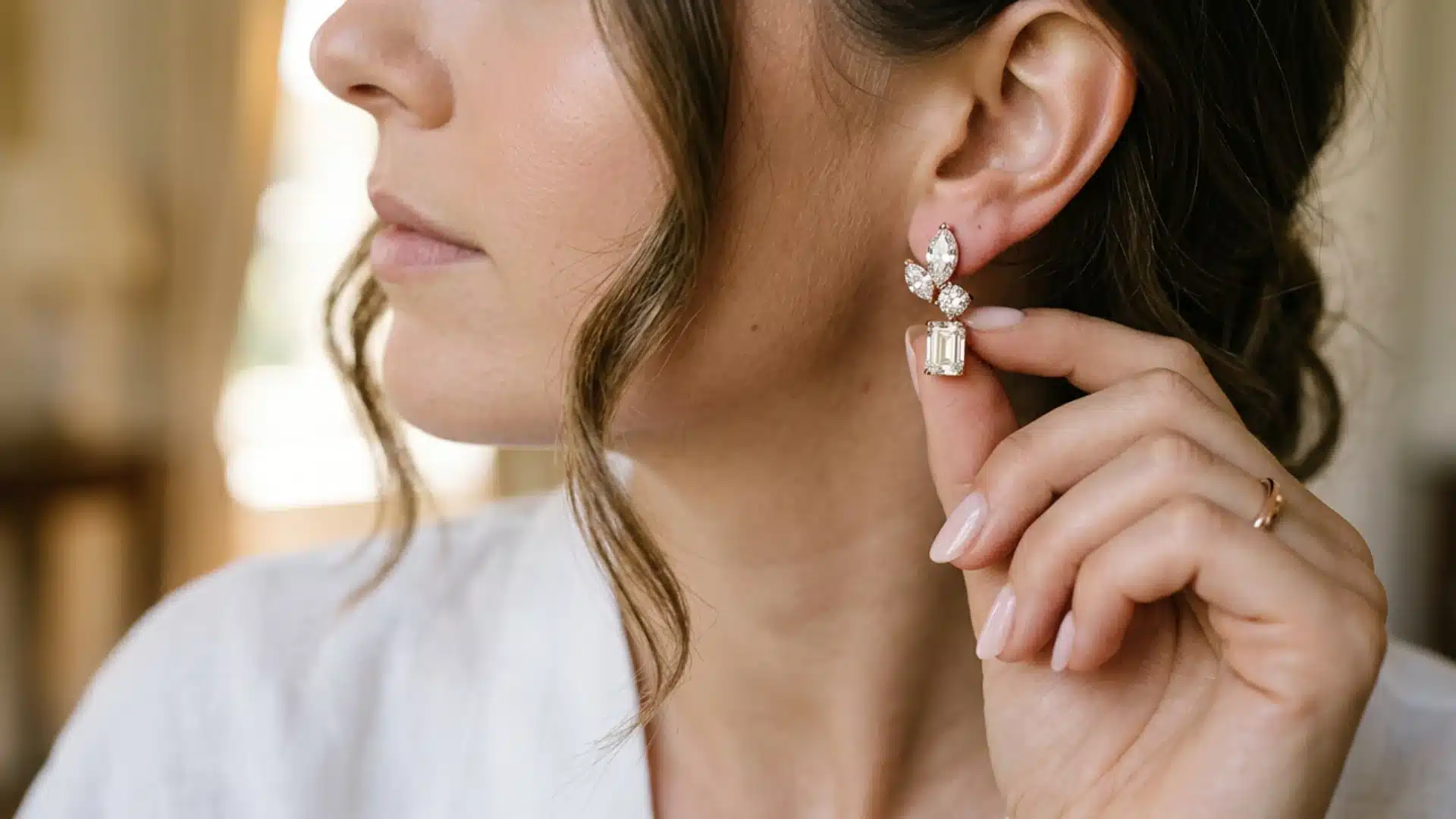
Cluster earrings use several stones, pearls, gems, or beads placed close together to create a fuller design.
They give the look of a larger earring without always adding too much weight. This makes them easier to wear for long hours compared with heavy statement styles.
The cluster can be round, floral, uneven, or geometric, and that shape changes how it frames the face. Round clusters feel soft and classic.
Angular clusters feel sharper and more modern. They are a good option when a single stone feels too plain, but a long dangle feels too dressy or distracting.
14. Teardrop Earrings
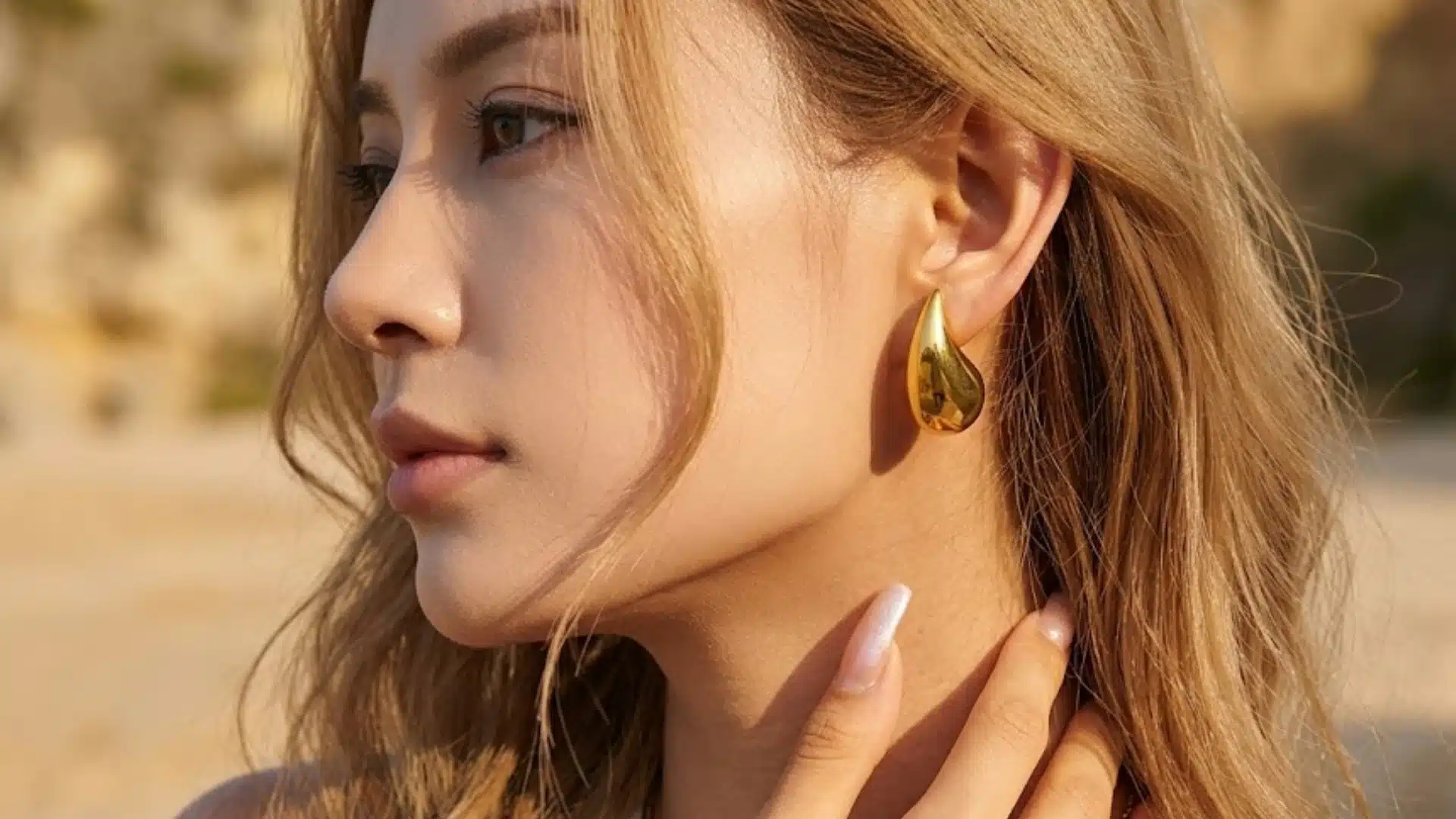
Teardrop earrings are narrow at one end and wider at the other, usually hanging with the wider part near the jawline.
This can help balance faces that are wider at the forehead and narrower at the chin. Teardrops feel graceful without being too formal, so they work for everyday outfits, dinners, and special events.
They can be made with metal, pearls, crystals, or colored stones. The shape is simple, but it gives the face a polished frame.
15. Statement Earrings
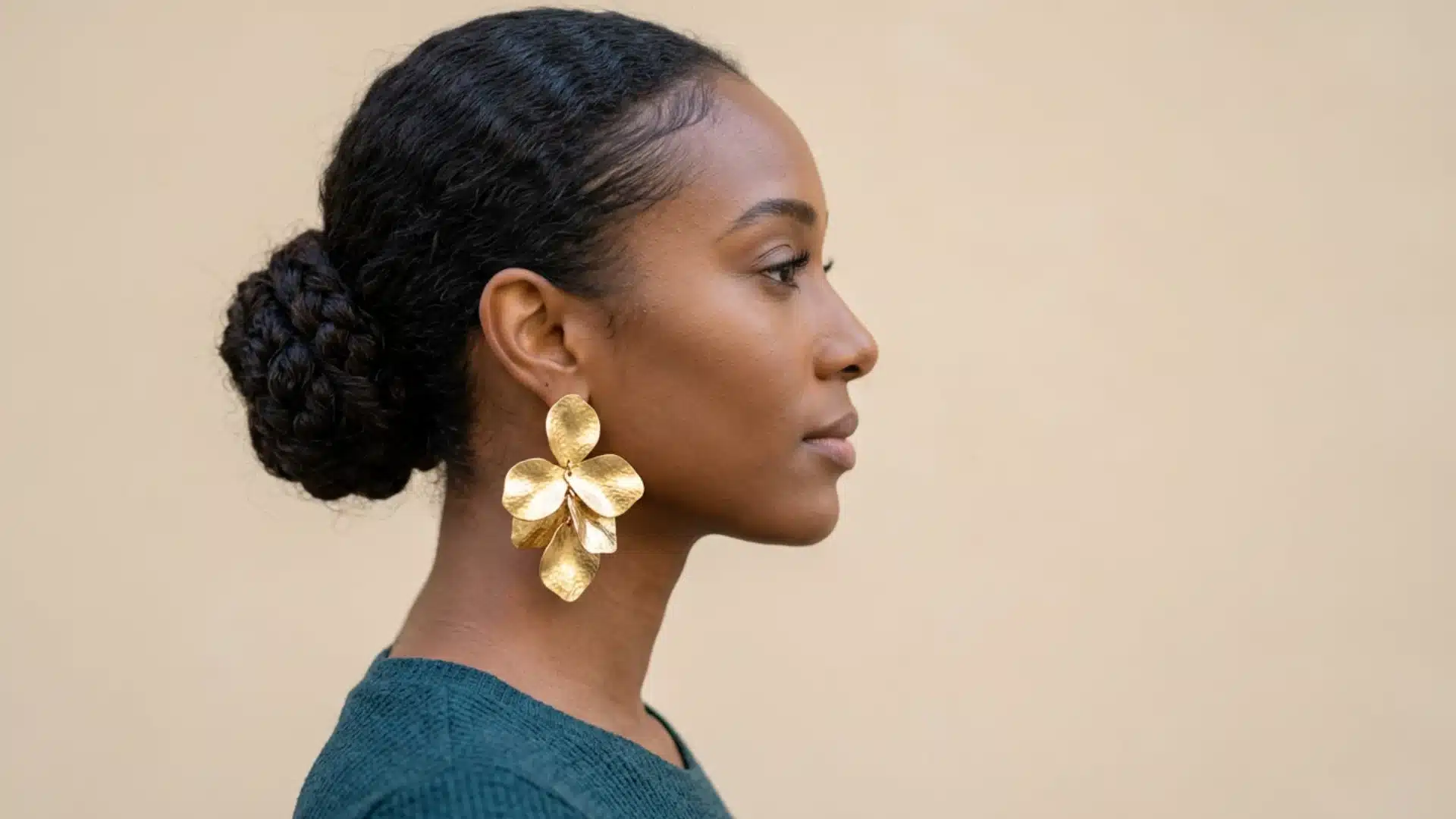
Statement earrings are made to stand out. They are defined more by impact than by one exact shape.
Hoops, drops, chandeliers, cuffs, or studs can all become statement earrings when the size, color, detail, or material feels bold enough.
These earrings usually lead the whole look, so the rest of the outfit should not fight with them. A clean neckline, simple hair, and fewer accessories help them work better.
They are best for days when the earring is meant to be noticed first. The safest styling rule is simple: let one bold piece do the talking.
16. Barbell Earrings
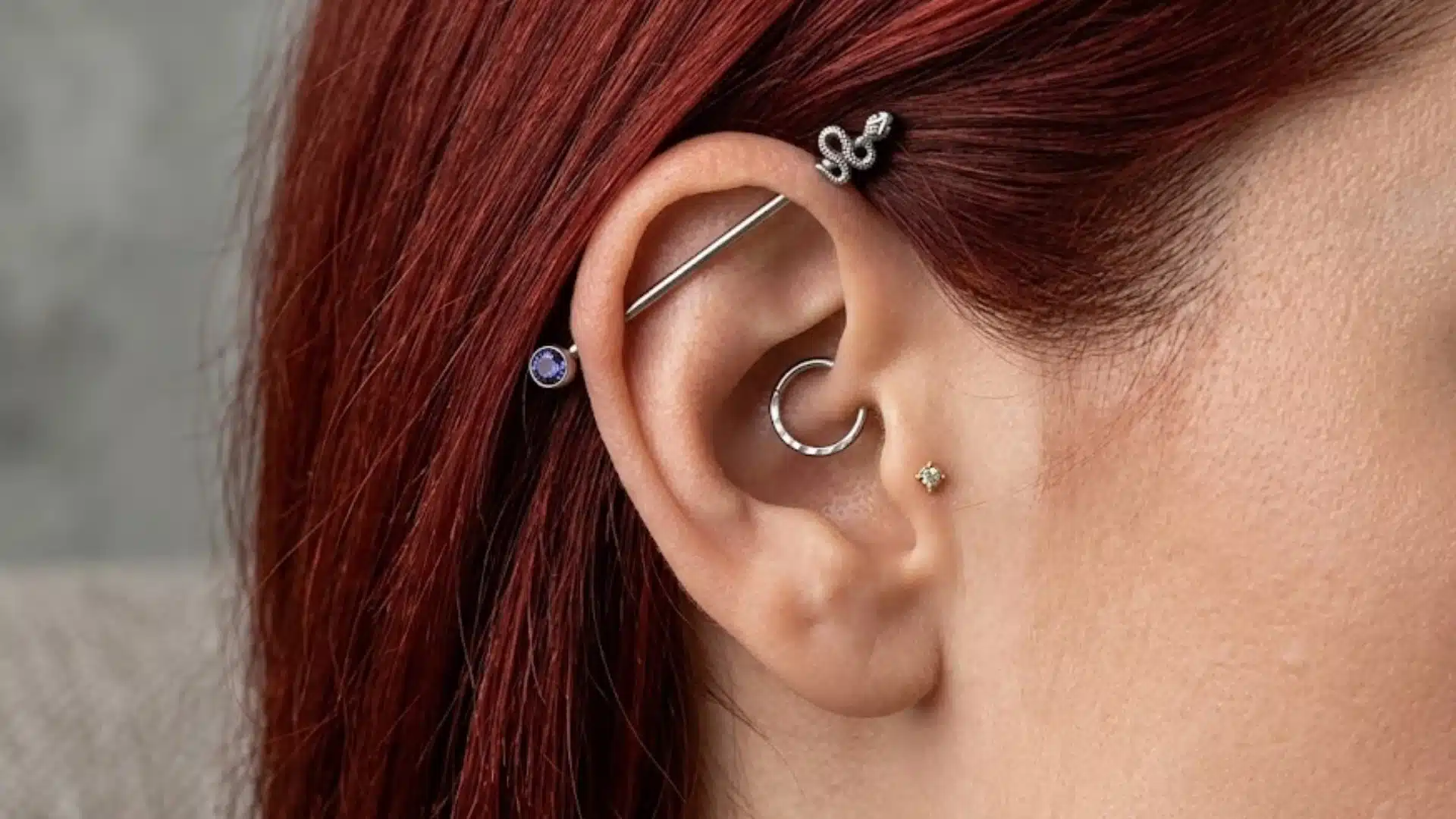
Barbell earrings have a straight or curved bar with a ball, spike, or flat disc at each end. The ends usually screw into place, which helps keep the earring secure.
This style is common in helix, tragus, eyebrow, tongue, and industrial piercings, though smaller barbells can also be worn in the lobe. A straight barbell gives a clean, sharp line.
A curved barbell feels softer and follows the body more closely.
Industrial barbells are especially striking because one long bar connects two cartilage piercings across the upper ear. The look feels modern, bold, and slightly edgy.
17. Ball Earrings
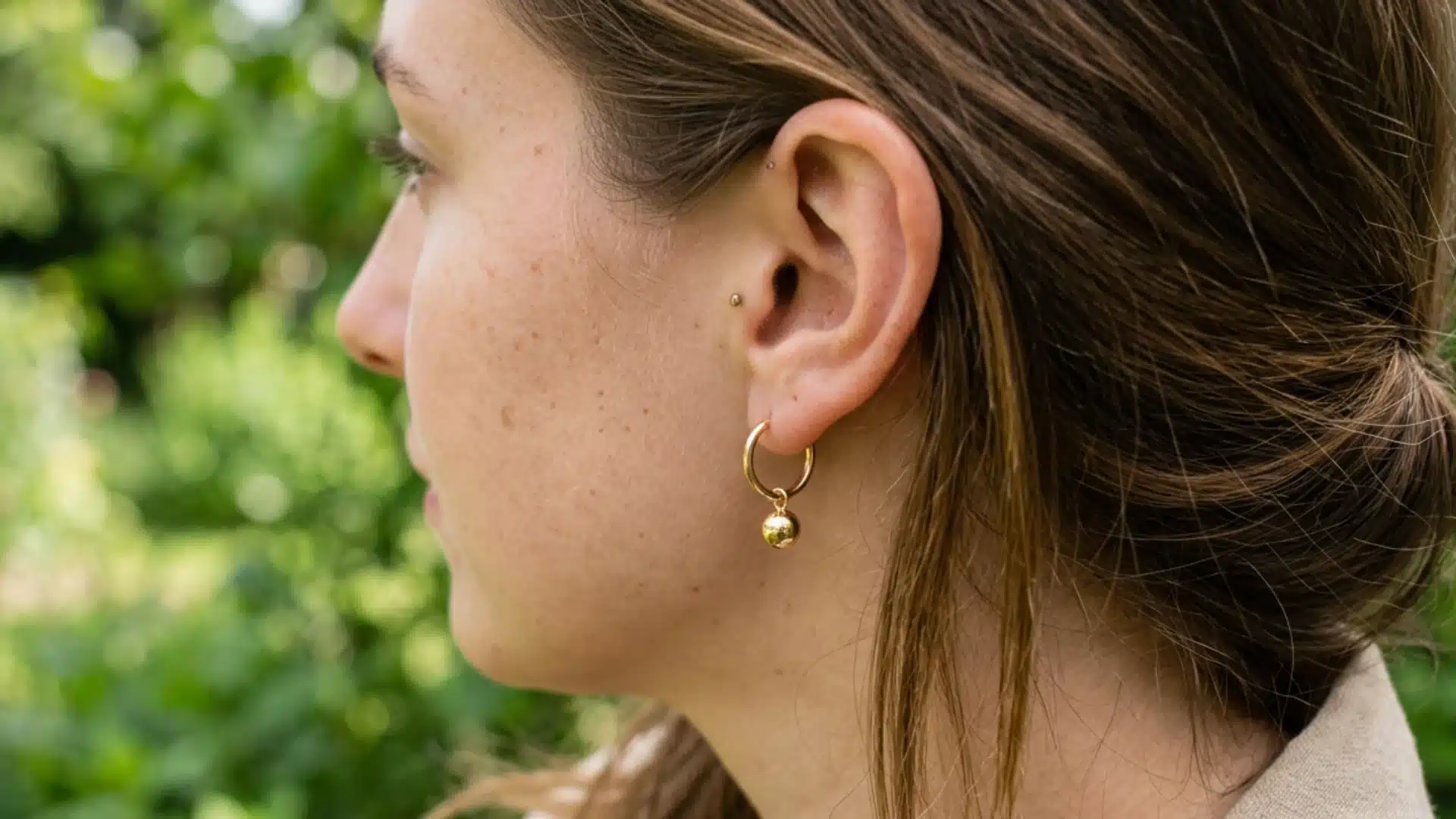
Ball earrings are simple, round bead-style earrings. They can be tiny studs, larger metal balls, pearl-like beads, or posts with a small sphere at the end.
Their rounded shape makes them easy to wear because they do not feel too sharp, too dressy, or too detailed.
A small ball stud works like an everyday earring, while a larger one can feel more playful and modern. Metal ball earrings often look clean and minimal.
colored or glossy ball earrings can feel retro or casual. They are low-maintenance, easy to match, and useful when the outfit needs something simple.
18. Clip-On Earrings
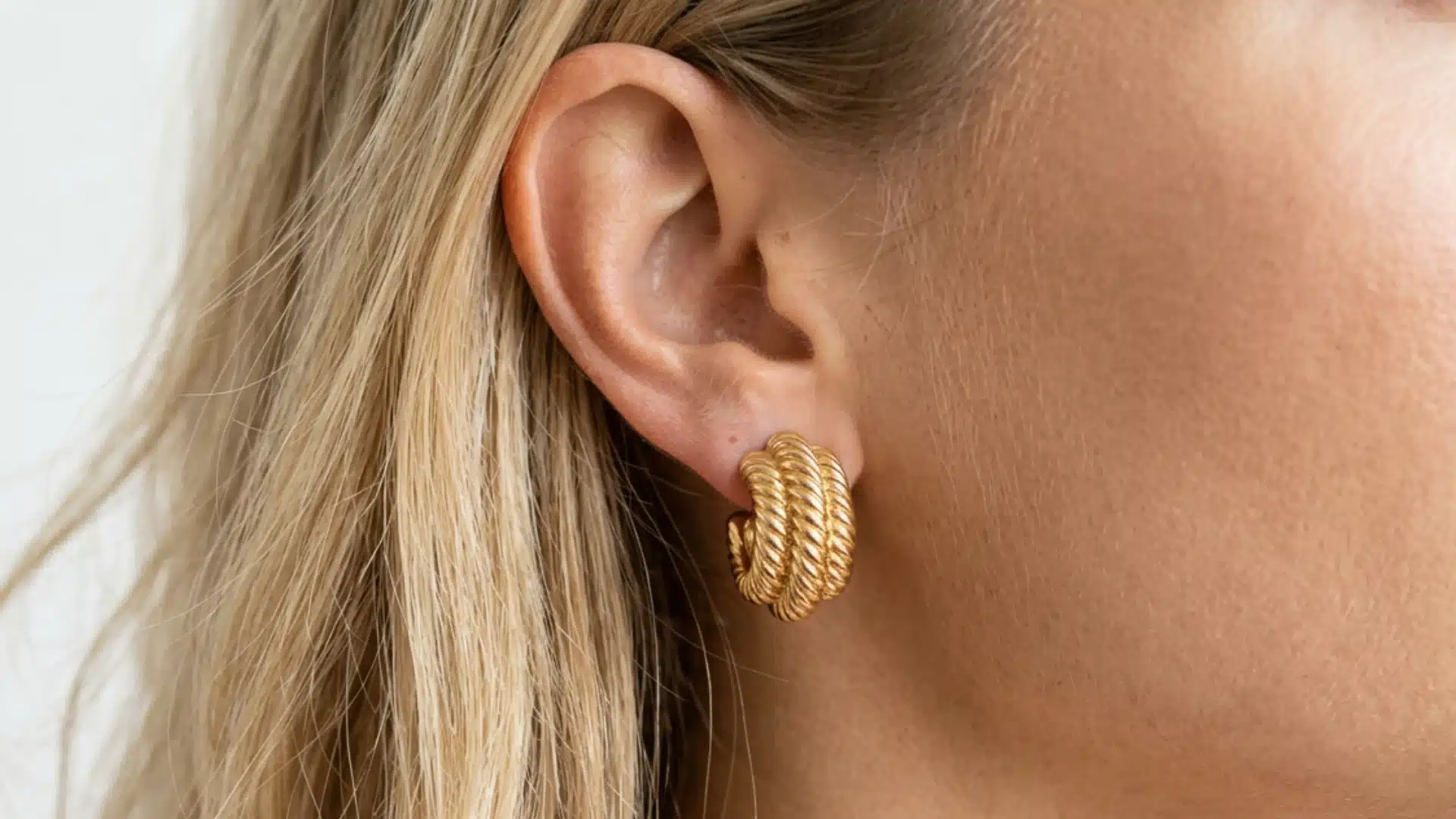
Clip-on earrings are made for ears without piercings. Instead of a post, they use a hinged clamp or screw-back piece that presses against the lobe.
This keeps the earring in place without piercing the skin. Comfort matters a lot with clip-ons. A poor fit can start hurting quickly, especially if the earring is heavy.
Well-made clip-ons are much better and can copy the look of studs, drops, hoops, and even statement earrings.
They are useful for anyone who does not want piercings, cannot wear posts, or wants to try a style before committing.
19. Magnetic Earrings
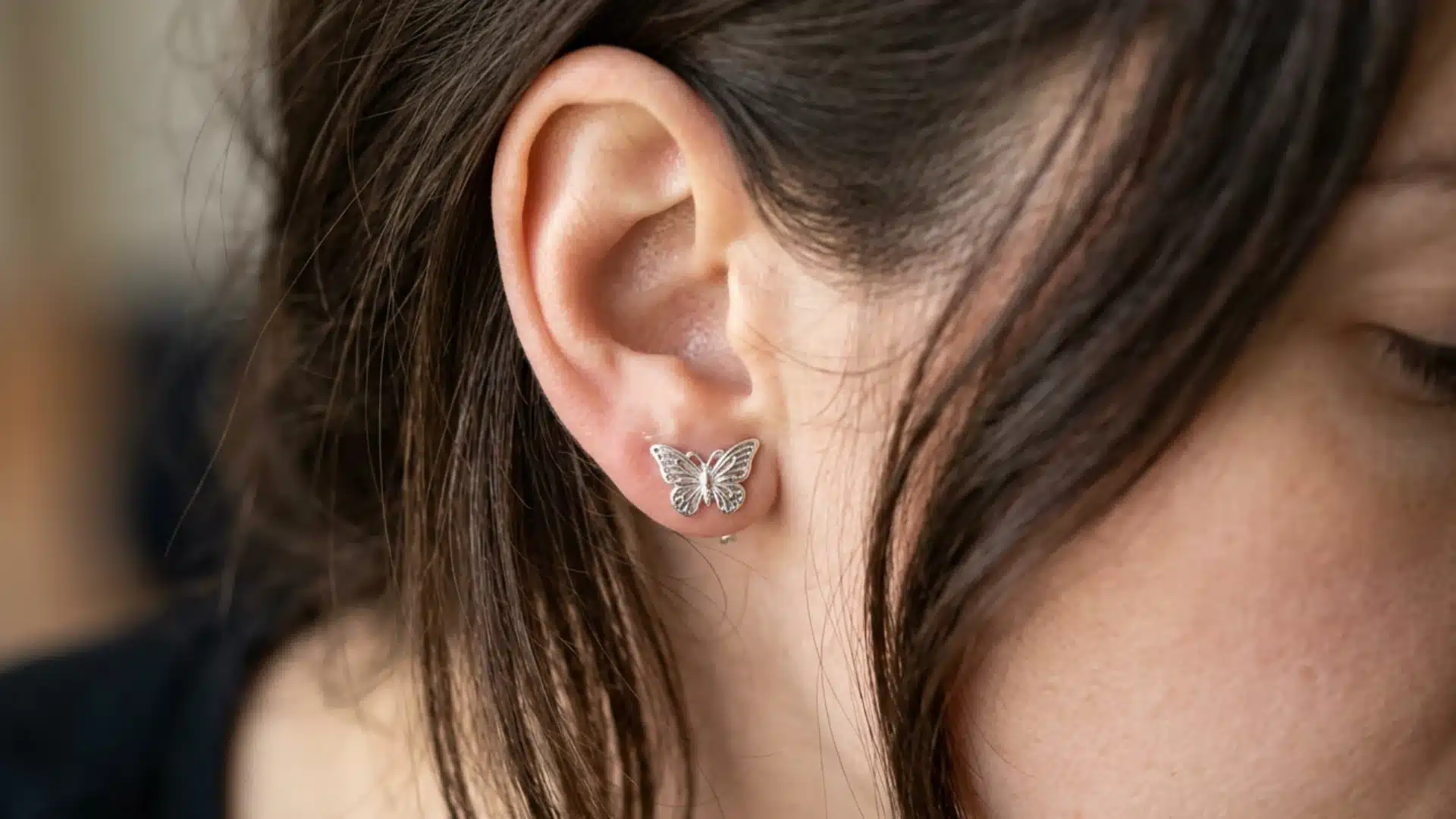
Magnetic earrings use two small magnets, one on the front of the lobe and one behind it.
They give the look of pierced earrings without a hole, post, or clip. This makes them easy to put on and take off.
They are usually comfortable for short wear, but not always the most secure choice for a full day of activity. Running, dancing, or changing clothes can make them shift or fall.
Magnetic earrings work best for calm settings, photos, short events, or testing how earrings look before getting pierced. They are simple, low-commitment, and beginner-friendly.
20. Bajoran Earrings
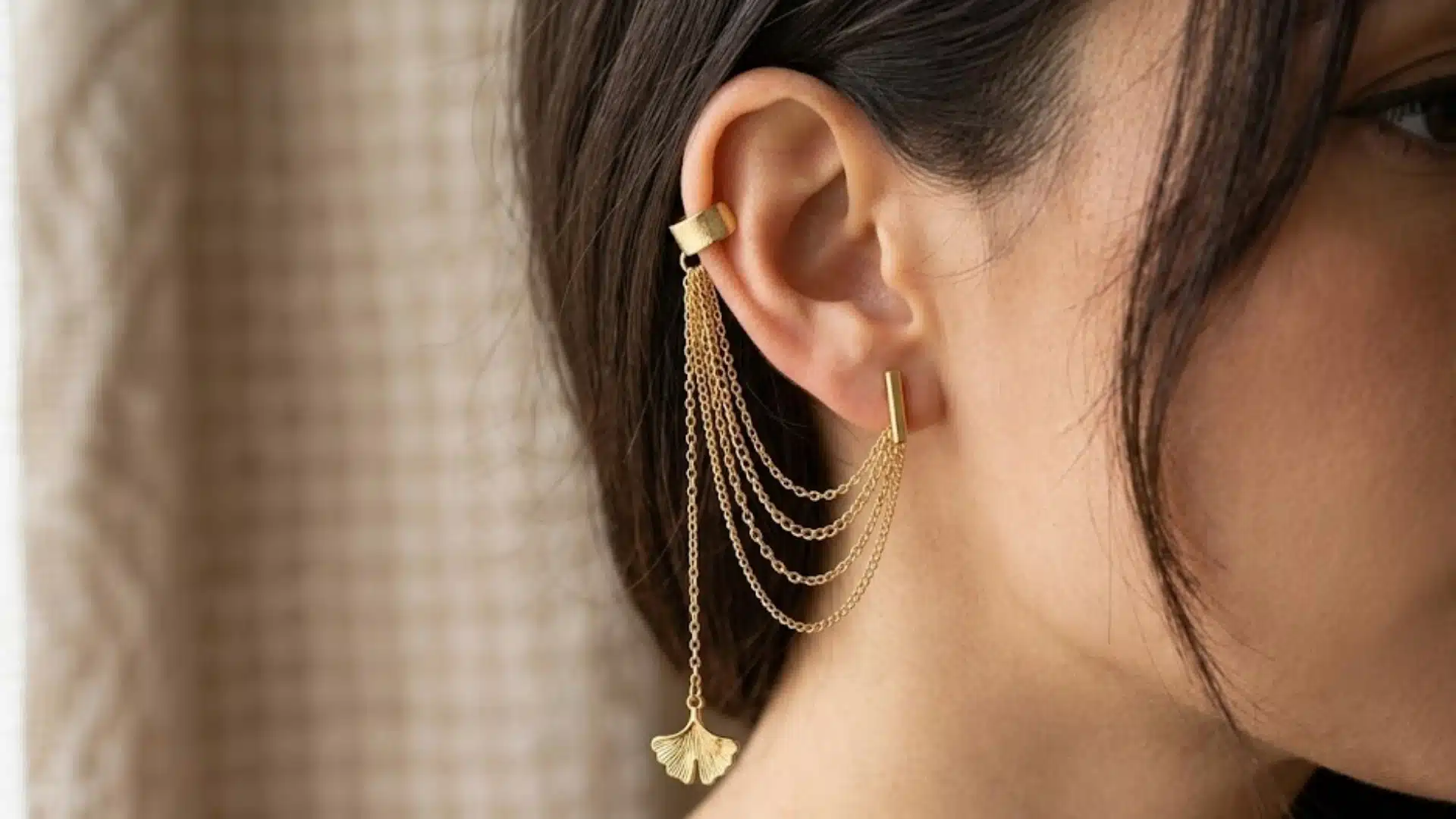
Bajoran earrings have a chain that connects the lobe to the upper part of the ear. Some designs use a cuff, while others need more than one piercing.
They stand out because they frame the ear in a more detailed way than regular earrings. The chain can be simple, beaded, or decorated with charms.
Bajoran earrings work well for bold outfits, themed looks, festivals, and anyone who wants the ear itself to become part of the style.
21. Leverback Earrings
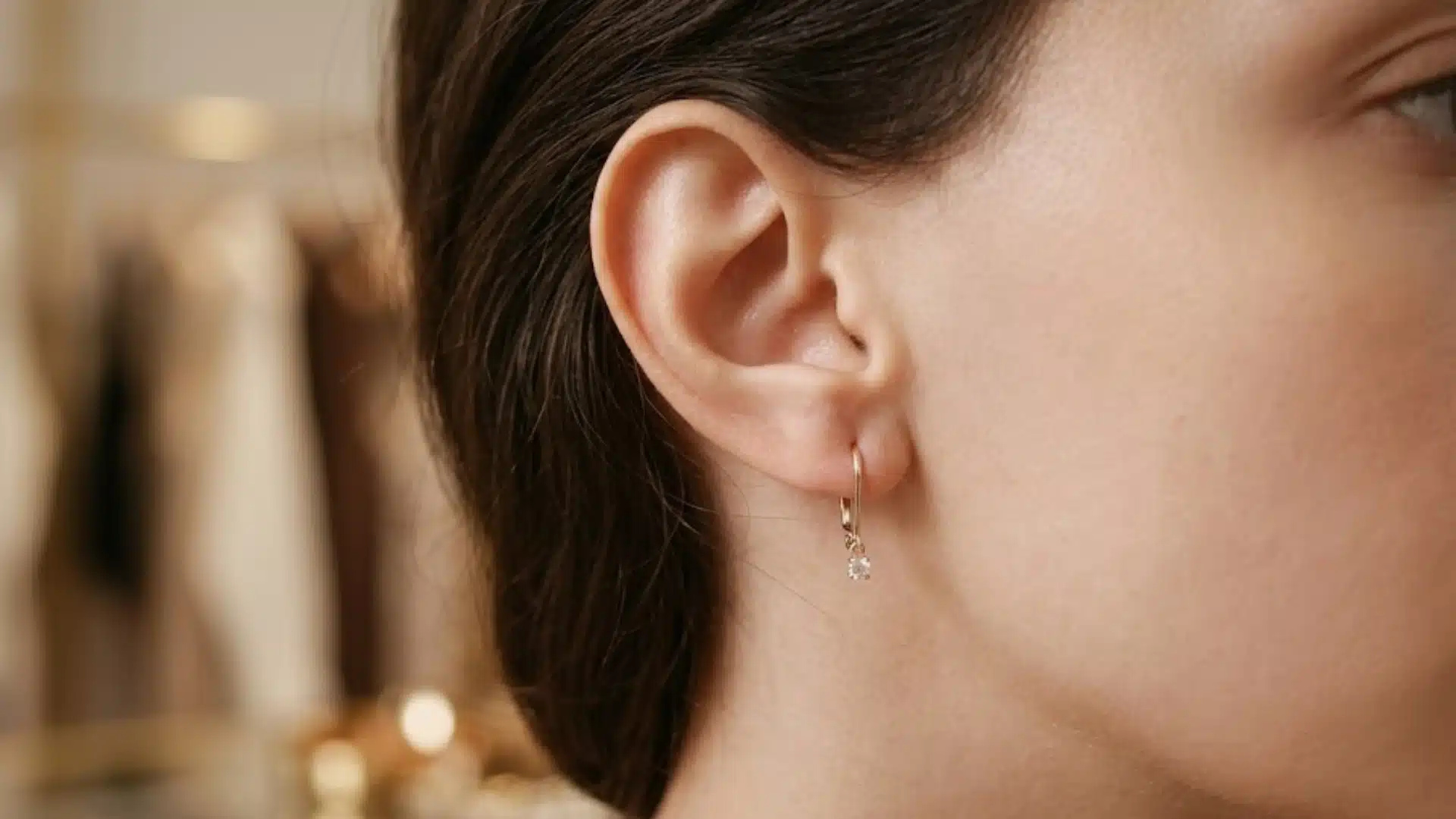
Leverback earrings use a curved hook with a hinged back that closes behind the ear. This makes them more secure than basic hook earrings, especially for drop and dangle styles.
The design is easy to wear because it does not need a separate backing. Many leverback earrings have pearls, stones, beads, or small charms hanging below the hook.
They are a good choice for daily wear, dinners, and dressy outfits because they feel safe, neat, and comfortable.
Types of Earring Backs
The back of an earring affects how securely it stays in place, how comfortable it feels over time, and whether it suits lighter or heavier designs. Here is a quick breakdown of the most common options:
| Back type | How it works | Best for |
|---|---|---|
| Push back (butterfly back) | Slides onto post, pinches to hold | Lightweight studs, everyday earrings |
| Screw back | Threads onto the post and twists to lock | Expensive or heavier studs, children’s earrings |
| Lever back | Hinged loop that closes behind the lobe | Drop and dangle earrings |
| Latch back | Hinged bar that clicks into a notch | Hoop earrings, medium-weight drops |
| Flat back (labret) | Flat disc behind the lobe, threaded post | Multiple piercings, cartilage, face piercings |
| Omega back | Rigid curved clip, no post | Clip-style or heavy statement earrings |
| Hook / French wire | Simple curved wire through the piercing | Dangle and chandelier earrings |
If an earring keeps falling out or feels uncomfortable by the end of the day, the back is usually the problem, not the style. Switching a push-back to a screw-back on a heavier stud can make a real difference.
How to Choose Earrings for Your Face Shape?
Face Shape should not decide your whole style, but it can guide your choice. The right earrings can balance length, width, angles, and softness so your features feel more natural and polished.
- Oval Face: Most earring styles work well, from huggies to chandeliers. Use hair length as your guide. Short or pulled-back hair can handle bolder earrings. Long hair usually looks better with medium-scale earrings.
- Round Face: Longer earrings help create a more lifted look. Drop earrings, dangles, and angular shapes add a vertical line. Wide round hoops can make the face look wider, so oval hoops or smaller hoops often work better.
- Square Face: Soft shapes help balance a strong jawline. Round hoops, oval hoops, teardrops, and rounded drops can soften the face. Sharp rectangles or very geometric earrings may add too much structure.
- Heart-Shaped Face: Earrings with weight near the bottom work best. teardrops, chandeliers, and flared drops add balance near the chin. Very top-heavy earrings can make the forehead look wider.
- Long Face: Short, wide earrings create better balance. Studs, clusters, wide hoops, and short drops can break the vertical line. Very long dangles may make the face look longer.
Consider dressing for your proportions as part of the same system. Earring choice and silhouette work together.
Conclusion
Earrings do more than finish an outfit. They frame the face, shift the mood, and make even simple clothes feel chosen. Once you know how each style works, picking a pair gets much easier.
You do not need every type in your collection for most people; a clean stud, a hoop that suits your face.
One pair that feels genuinely special can cover more looks than you might expect. From there, add what fits your routine and comfort level.
My personal starting point for anyone building from scratch: a small huggie for everyday, a medium hoop for weekends, and one good teardrop or dangle for the moments that call for it.
Which style keeps pulling you back? Drop it in the comments. I am always curious which earrings actually get reached for versus the ones that sit looking good on the stand.
Frequently Asked Questions
Can You Sleep with Earrings On?
Small studs or flat-back earrings are usually the safest for sleep because they sit close to the ear. Large hoops, dangles, threaders, and tassels should be removed before bed because they can pull, bend, or get caught in hair or fabric. If the piercing is new, follow the piercer’s aftercare advice before removing anything.
How Often Should Earrings Be Cleaned?
Earrings worn daily should be cleaned at least once a week. Sweat, skin oil, makeup, and hair products can collect around the post and backing. Use a soft cloth for simple cleaning, and check the care rules for pearls, plated jewelry, or stones before using any liquid cleaner.
Which Earrings Make an Outfit Look More Expensive?
Clean metal hoops, pearl drops, teardrops, and simple studs can make an outfit look more polished without feeling loud. The finish matters more than size. Smooth metal, bright pearls, and clear stones usually look neater than busy designs. A simple pair often works better than wearing too many pieces together.