Every era had a dress that fit one body and was sold to all of them. That’s still how most guides work: one silhouette list, zero context, and a fitting room full of frustration to show for it.
I spent years pulling vintage pieces off rails in cities that didn’t care what the tag said.
What actually taught me proportion was mileage, trying things on, watching what held up by noon, and what felt like a costume by 3 pm.
The best dress for your body type isn’t a style category. It’s a silhouette that works with how your proportions are distributed, where it places volume, and where it moves the eye.
That’s what this blog covers, shape by shape, with the reasoning included, so you can make that call yourself anywhere.
Find Your Body Type First
You don’t need a tape measure to understand your body type. Just look at where your body is widest and narrowest:
- Hourglass: Shoulders and hips are roughly equal in width, with a clearly defined waist.
- Pear: Hips are noticeably wider than shoulders, often with a defined waist.
- Apple: The shoulders and bust are wider than the hips, with weight sitting in the midsection.
- Rectangle: Shoulders, waist, and hips are similar in width, with little natural definition at the waist.
- Inverted triangle: Shoulders are broader than the hips, typically with an athletic build through the upper body.
Most people lean toward one type without fitting it perfectly. Use yours as a starting point, not as a rule to identify your style.
What is the Best Dress for Each Body Type?
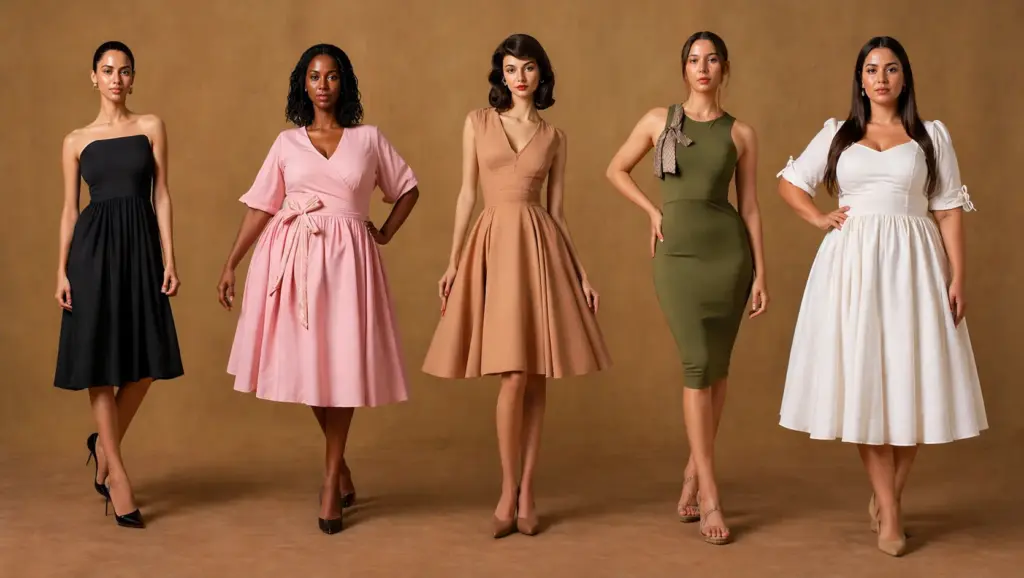
Once you know your shape, you can match it to the right dress style. The logic is always the same: create visual balance by working with your proportions. Here’s what that looks like for each body type.
1. Hourglass Body Type
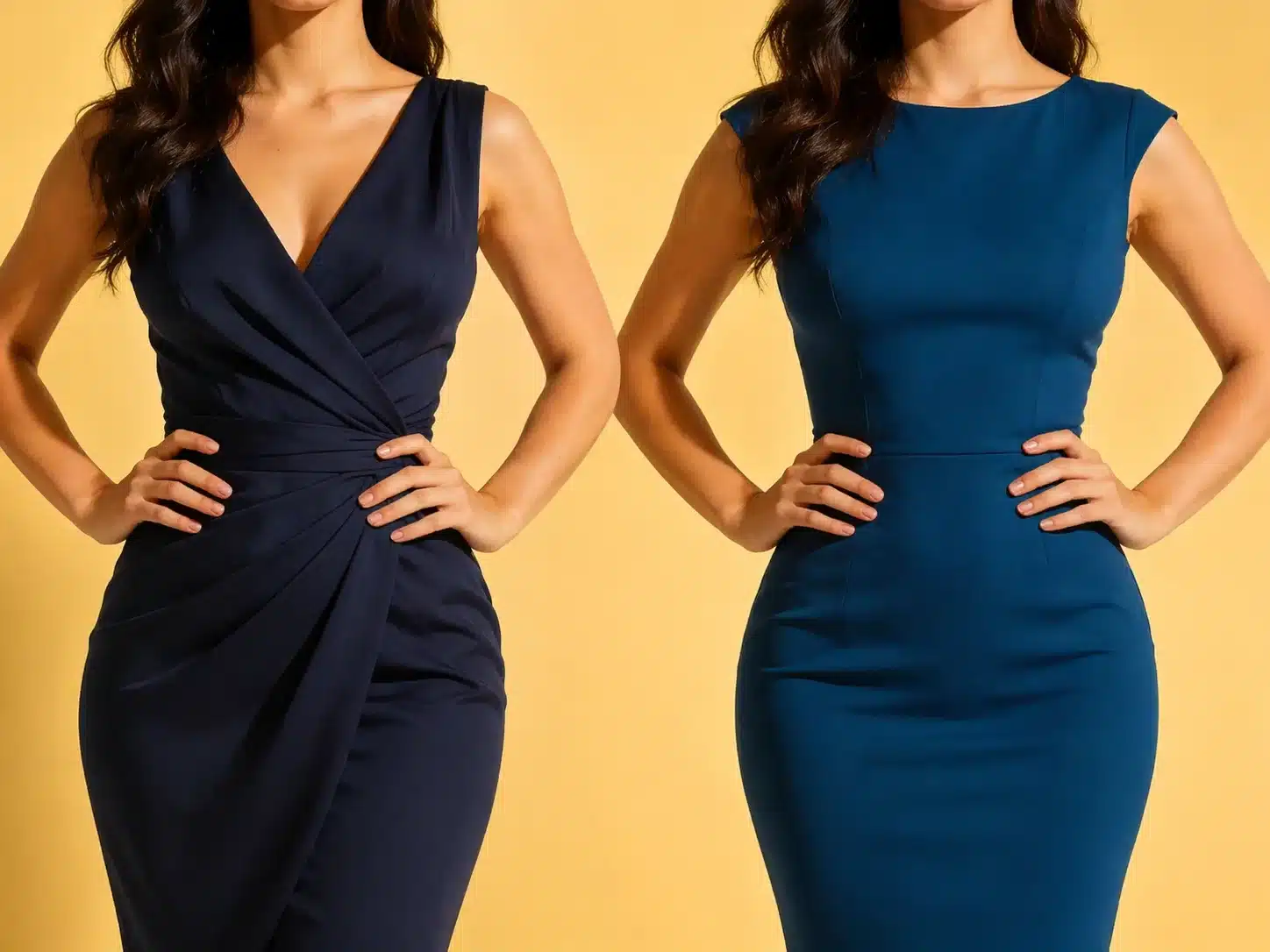
Your proportions are already balanced, so the goal is to follow your shape and not flatten it.
- Best dresses: Wrap dresses (the adjustable tie hits your natural waist), fit-and-flare dresses, and sheath dresses in stretchy fabrics.
- Why they work: These styles echo your shape without gripping it. The waist stays visible, the proportions stay even.
- Skip: Shapeless shift dresses, which erase the waist entirely.
Fabric tip: Stretch crepe, ponte, and modal blends move with your curves instead of fighting them. Stiff fabrics add bulk where you don’t need it.
2. Pear Body Type
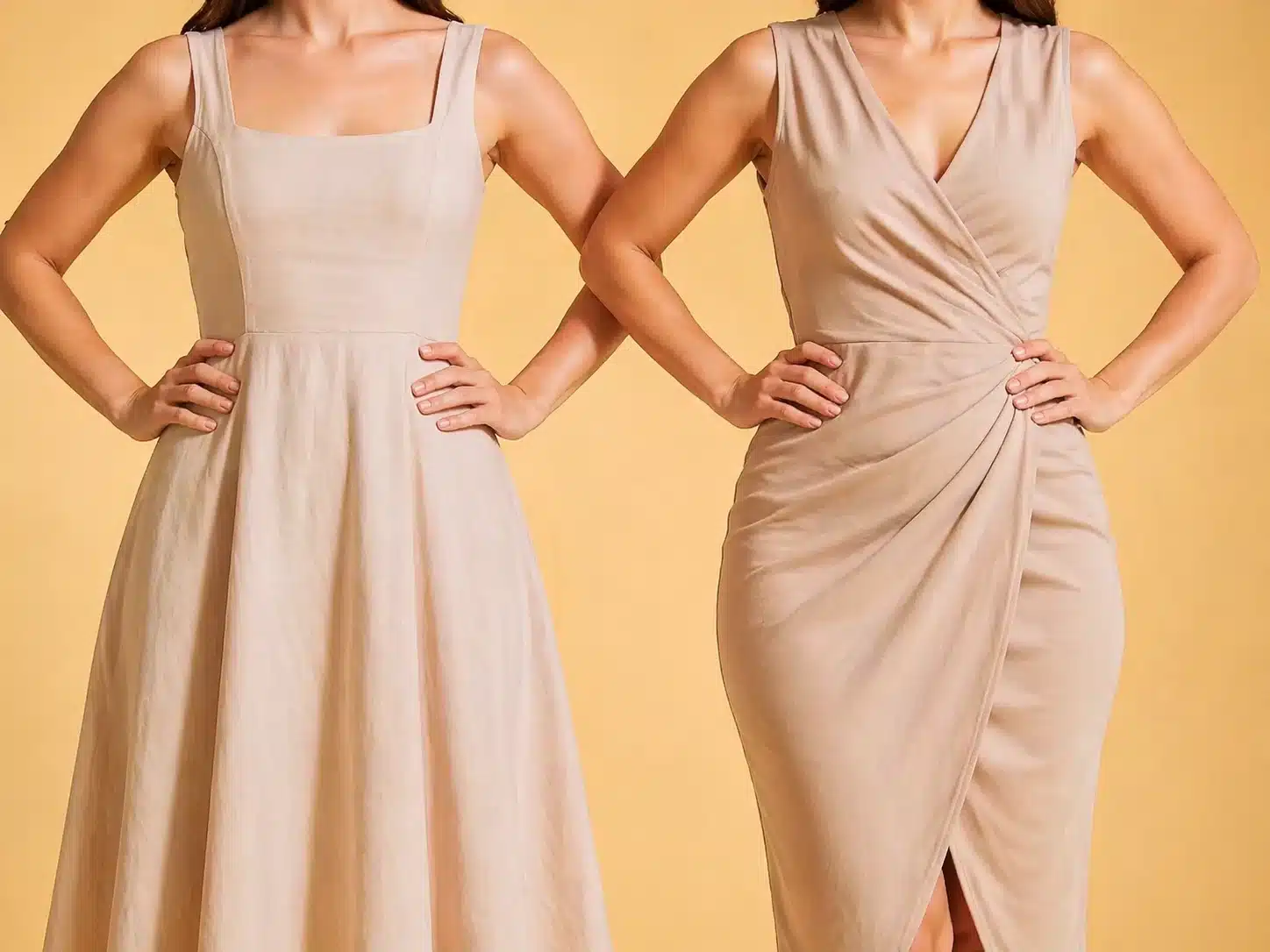
More volume below the waist means the styling goal is simple: add visual interest on top and let the lower half flow freely.
- Best dresses: A-line (you can buy for your top half, the skirt handles the rest), wrap dresses tied at your narrowest point, fit-and-flare with a bold or detailed bodice.
- Why they work: A-lines skim the hips without clinging. A structured or embellished top pulls attention upward, creating balance.
- Skip: Pencil and column dresses, they follow every contour below the waist with nothing to offset it. Horizontal prints at the hip add width where you’re already wider.
Practical tip: Look for interesting necklines; wide V, off-shoulder, ruffled collar. Put the design on top and keep the skirt simple.
3. Apple Body Type
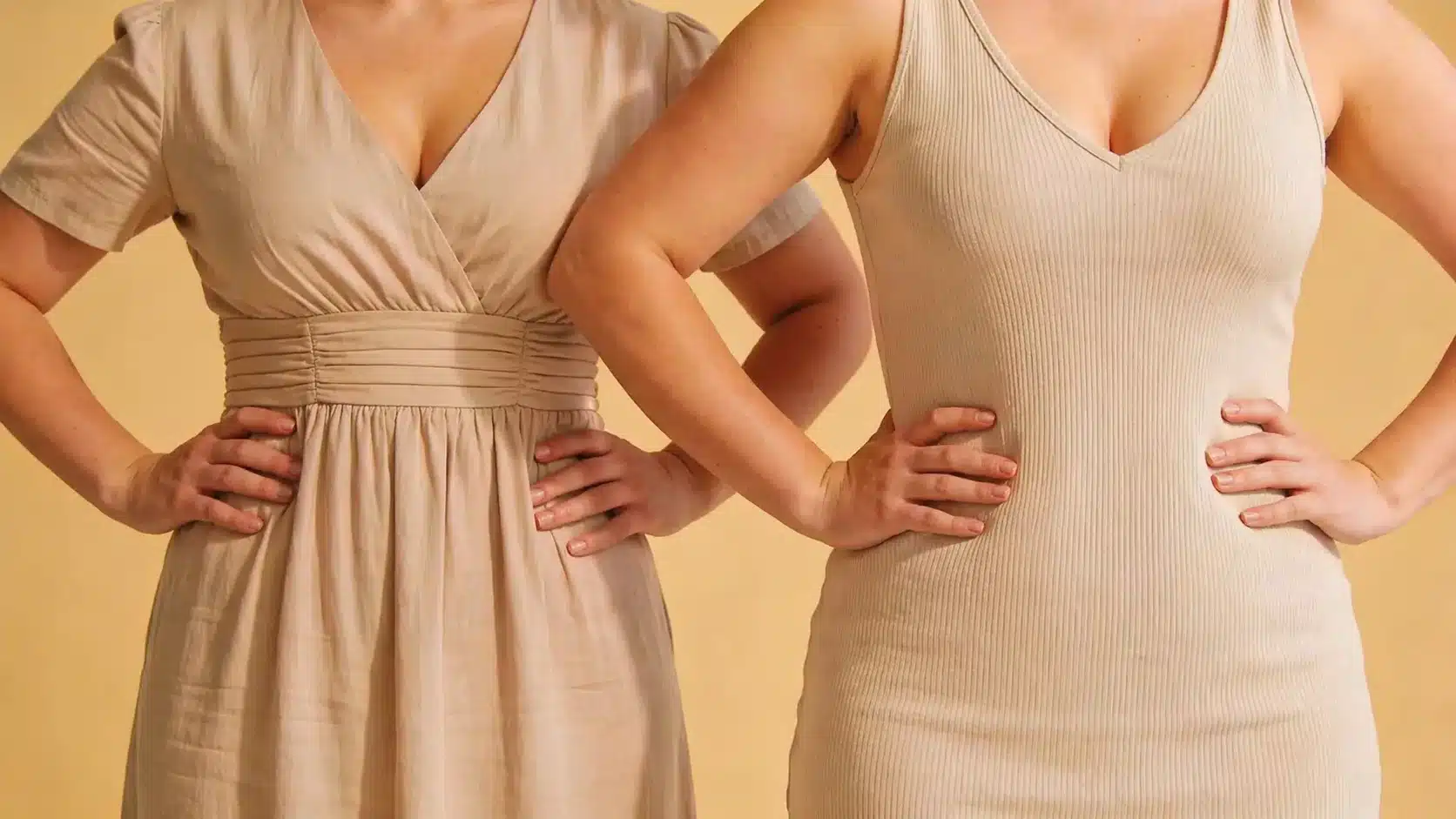
The goal here isn’t to hide the midsection; it’s to draw the eye along vertical lines and toward areas that feel like wins.
- Best dresses: Empire waist (the seam sits below the bust, well above the widest point), V-neck styles in fluid fabrics, flowy A-lines in lightweight materials.
- Why they work: Empire waists create a clean vertical line below the bust. V-necks draw the eye down the center of the body rather than across it. Both elongate without clinging.
- Skip: Fitted styles through the midsection in stiff fabric; they add structure where you want softness. Wide belts cut the torso and draw attention to the middle.
Fabric tip: Chiffon, jersey, and silk blends drape without clinging. Avoid structured cotton or heavy denim in fitted silhouettes, they hold their own shape and compete with yours.
4. Rectangle Body Type
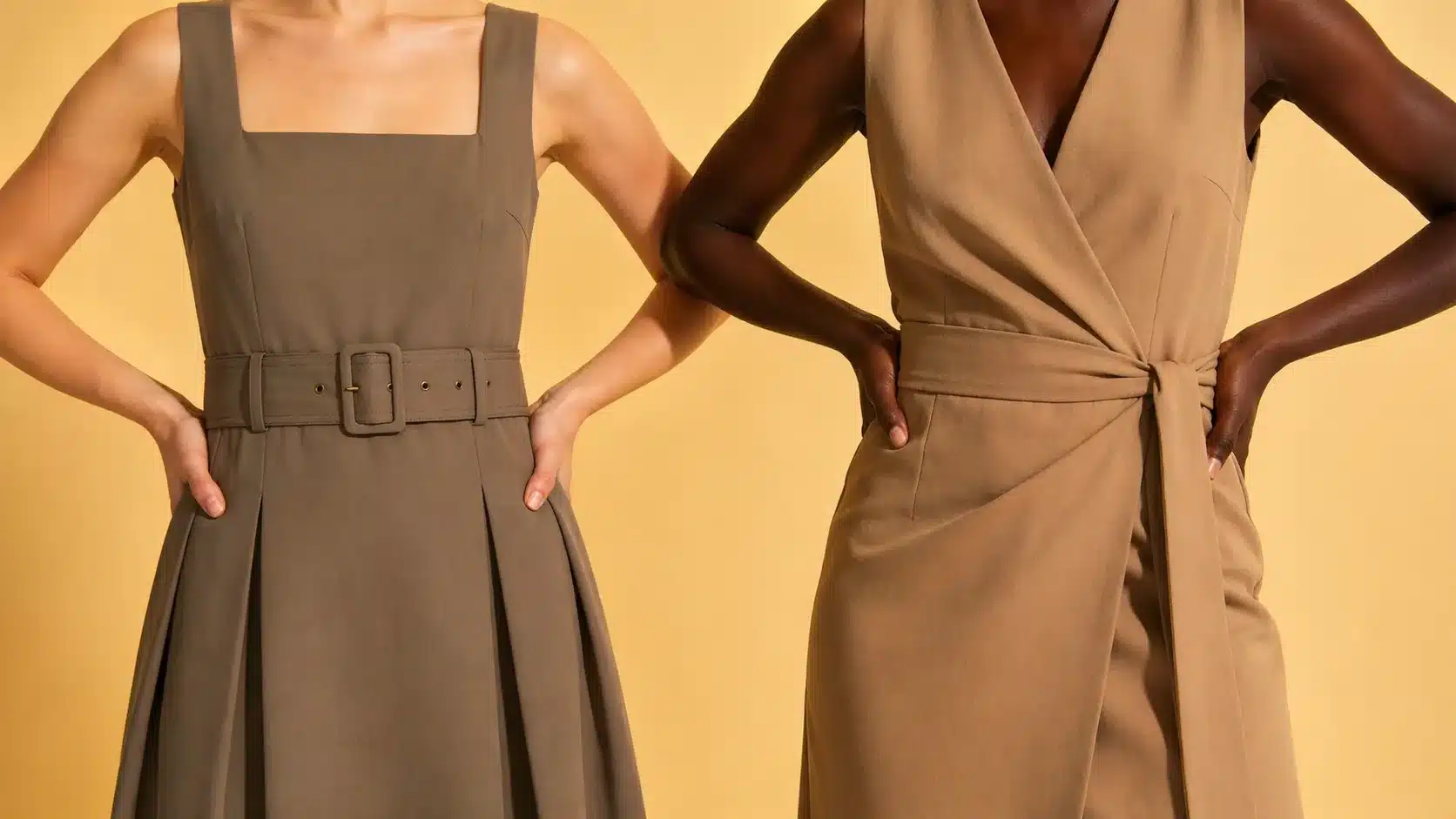
Similar measurements throughout mean the styling goal is to suggest curves, not pretend they’re something they’re not.
- Best dresses: Wrap dresses (the diagonal lines create the illusion of a waist), belted dresses (a belt on almost any dress immediately creates definition), ruffled or tiered skirts, fit-and-flare.
- Why they work: Any detail that pulls in at the waist or adds volume at the hip creates the proportion a rectangle silhouette naturally lacks.
- Skip: Shapeless shift dresses and drop-waist styles both move the eye through the body without interruption, emphasizing the straight line.
Stylist note: Stylist note: Rectangle frames look exceptional in vintage-style dresses with built-in boning or corset details they engineer the shape in. If you love that structured, tailored aesthetic, it crosses over nicely with vintage-style and structured silhouettes that feel just as intentional.
5. Inverted Triangle Body Type
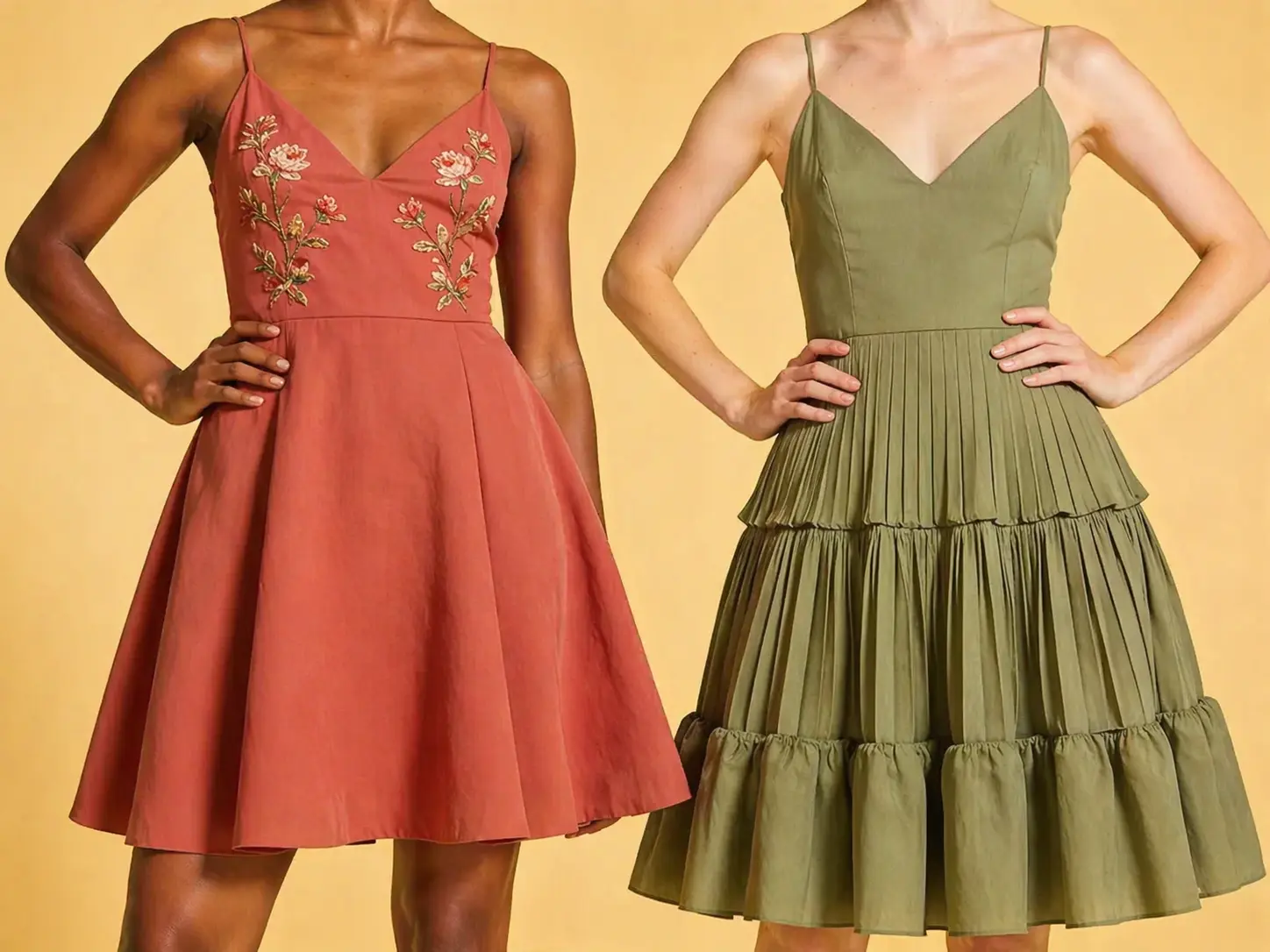
Broader shoulders with narrower hips mean one thing: balance the top by adding visual interest at the bottom.
- Best dresses: A-line and full skirt dresses, fit-and-flare, drop-waist styles, and dresses with patterned or textured skirts.
- Why they work: The volume at the hem counterbalances the width at the shoulder. The eye reads proportional rather than top-heavy.
- Skip: Boat necks, puffed sleeves, ruffled necklines, and more volume on top are the last things this shape needs. Bodycon dresses with no hip volume make the imbalance more visible.
Neckline rule: V-necks, sweetheart, and scoop necks draw the eye inward and downward, that alone can shift how a dress reads on this frame.
Does Height Affect Which Dress Suits Your Body Type?
The same silhouette can look completely different depending on your height, and most body type guides skip this entirely.
If you’re petite (5’4” and under):
Knee-length or above tends to be more proportionate. High-waisted styles and empire waists visually lengthen the leg line.
Avoid very long hemlines in stiff fabrics, as they make you look shorter. Monochromatic dressing creates a continuous vertical line that reads as taller.
If you’re tall (5’8” and above):
Midi and maxi lengths are your playground. Bold prints and horizontal details work proportionally in ways they often don’t on shorter frames. Drop waists and longer-torso silhouettes sit correctly on a longer body.
Conclusion
The best dress for your body type is the one that balances your proportions. Once that clicks, shopping gets quieter, less scanning, more deciding.
Start with your shape, then layer in your height, because the same cut reads completely differently on a 5’3″ frame versus a 5’9″ one.
Fabric is the third variable most people skip: structured materials engineer a silhouette, softer ones follow what’s already there. Both work, but only if you’re choosing intentionally.
And before you reach for an entirely new wardrobe, try a belt first. Or a different neckline. Small adjustments shift proportions more than most people expect.
The fitting room will tell you the truth if you let it. The dress worth keeping is the one that still feels right an hour later, not just under the store lights.
If you found a silhouette that changed how dressing feels for you, drop it in the comments. I’d love to know which shape surprised you most.
Frequently Asked Questions
What is the Most Universally Flattering Dress for Any Body Type?
The wrap dress. It’s adjustable, hits the waist correctly regardless of shape, works in multiple fabrics, and reads polished without being fussy. It’s the first style I tell every client to try.
Do Body Type Rules Always Apply?
No, they’re starting points, not laws. Fit matters more than silhouette theory. If something breaks every rule and makes you feel great, wear it.
How Do I Shop for My Body Type on a Budget?
Focus on the silhouette over the brand. A $30 wrap dress in good draping fabric will do more for your proportions than an expensive dress in the wrong cut. Secondhand and thrift stores are ideal for testing shapes without financial risk.