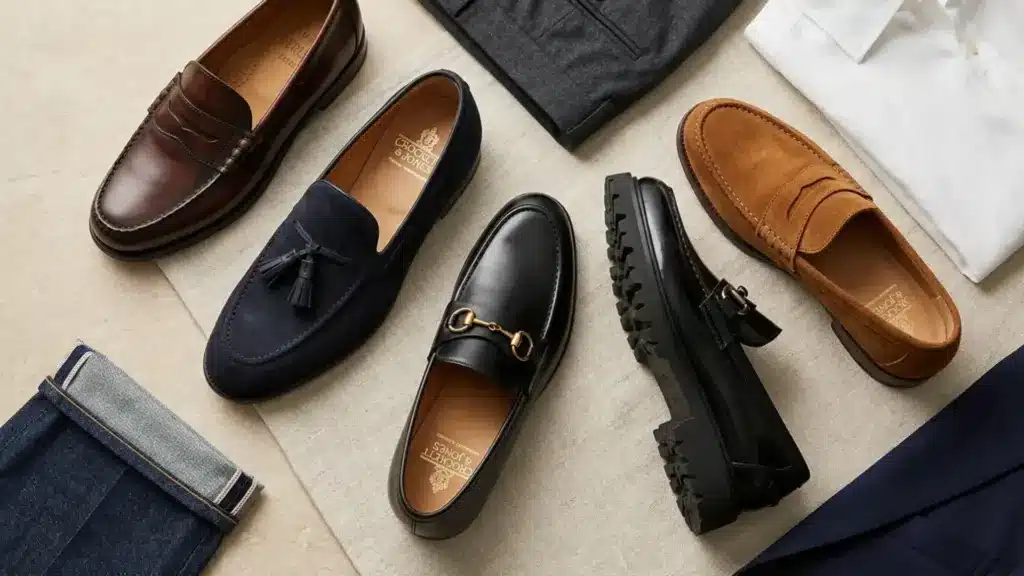
Ever notice how some people look effortlessly well-dressed even in the simplest outfits? More often than not, the difference comes down to the shoes.
Loafers have mastered that rare balance between comfort and polish, which is why they continue to hold their place in modern wardrobes year after year.
The problem is that many people treat every loafer the same, even though each style creates a completely different impression.
A sleek horsebit pair offers a sharper, more refined feel than a relaxed driving loafer designed for casual wear. Understanding those differences makes styling far easier.
In this blog post, I break down the most popular types of loafers, how to wear them properly, and which styles work best for different occasions and outfits.
What are Loafers and Why are They so Popular?
Loafers are slip-on shoes designed without laces or fastenings, built with a low-cut shape that exposes the ankle and sits on a separate sole with a slight heel.
That simple structure is what gives them their clean and versatile look. Unlike moccasins or boat shoes, loafers carry enough structure to work in both casual and formal settings.
Most pairs are made from leather or suede, though modern styles now include patent and canvas finishes as well.
Their popularity comes from how easily they balance comfort and polish. First inspired by Norwegian moccasins, loafers became widely popular in America during the 1930s and have remained a wardrobe staple ever since.
Before getting into the specific styles, it helps to understand that your body type and silhouette can shape which loafer silhouette flatters you most.
Types of Loafers
Different loafer styles offer distinct looks, from everyday classics to formal options, helping you choose the right pair for comfort, style, and occasion.
1. Penny Loafers: Classic Everyday Style
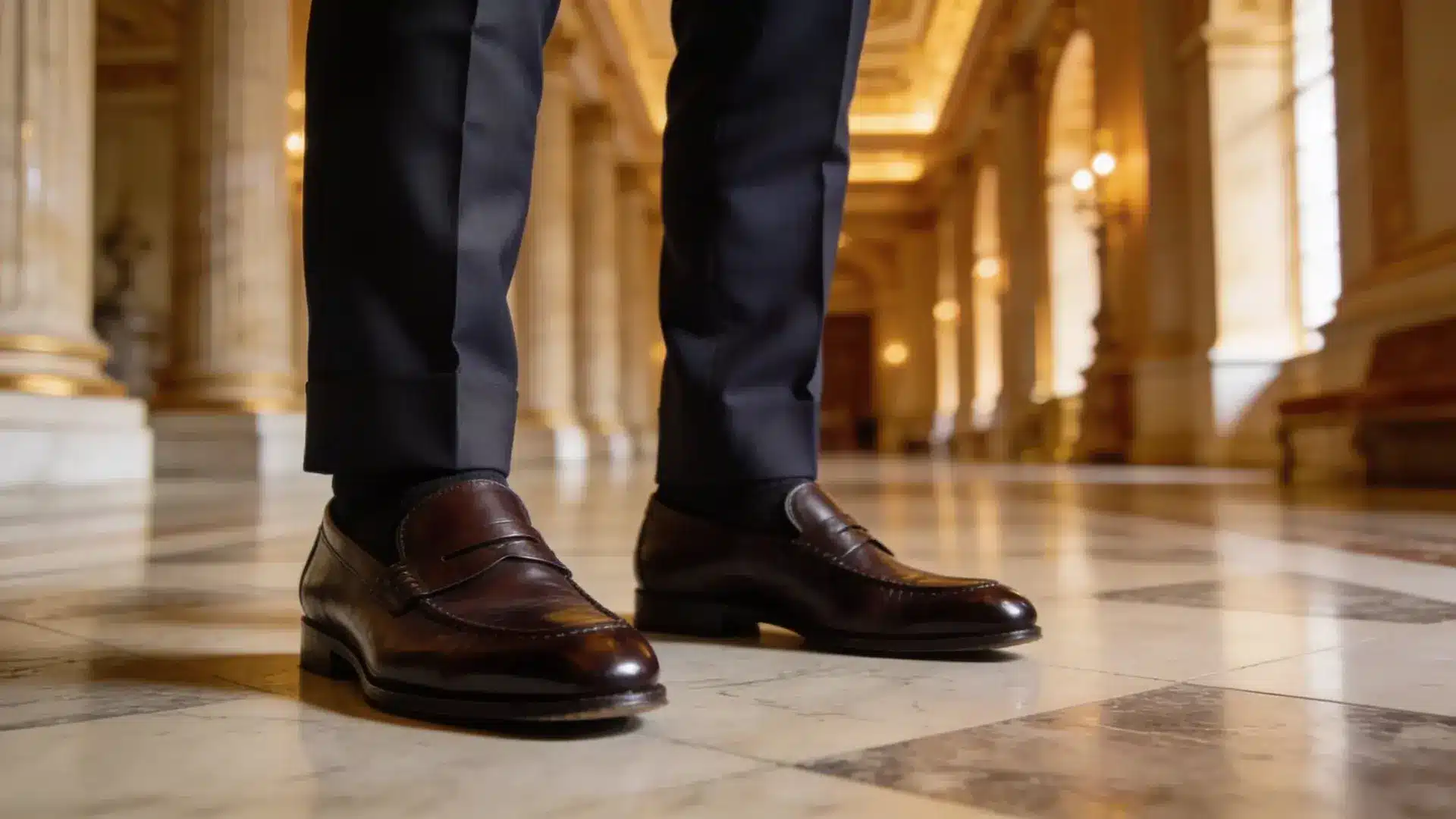
Comfort Level: High | Gender Appeal: Unisex
The penny loafer made its American debut in the 1930s and became the defining shoe of Ivy League campuses by the 1950s.
Students tucked actual pennies into the front strap slot, giving the shoe both its name and its mythology. It has been a wardrobe staple ever since.
Key Features:
- Wide leather strap across vamp with signature central slot detail
- Crafted from full-grain leather for a structured and polished finish
- Toe shapes range from round to almond for varied styling
- Flat sole design supports comfort during long hours of wear
- Pairs best with chinos, dark denim, tailored trousers, midi skirts, or a blazer set
2. Tassel Loafers: Elevated Smart Casual Look
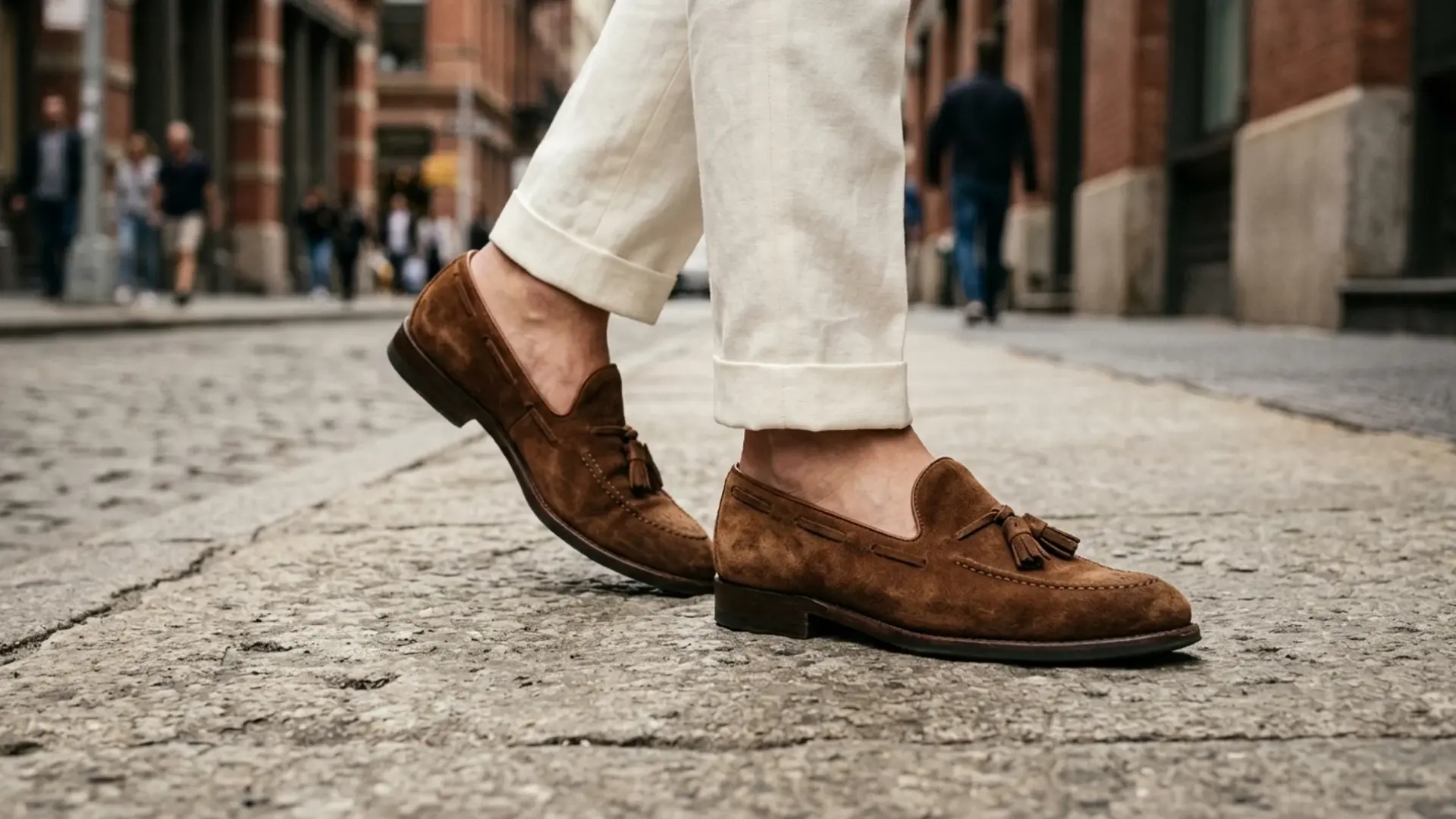
Comfort Level: High | Gender Appeal: Unisex
The tassel loafer reportedly came to life when actor Paul Lukas brought a tasseled Oxford to a New York shoemaker and asked for something similar without laces.
The Alden Shoe Company eventually produced a version that became iconic. That story, whether fully accurate or not, captures the shoe’s personality perfectly.
Tassel loafers fit well in the smart casual dress codes, where you want to show effort without looking overdressed.
Key Features:
- Leather tassels at the vamp add movement and a distinctive visual character
- Commonly crafted in suede or burnished calf for varied styling tone
- Clean vamp design without a strap creates a refined front profile
- Best worn with Slim or tailored trousers, suit pants, dark chinos, or a lightweight blazer
- Slightly slimmer toe shape enhances a tailored and polished outfit pairing
3. Horsebit Loafers: Luxury Icon Design
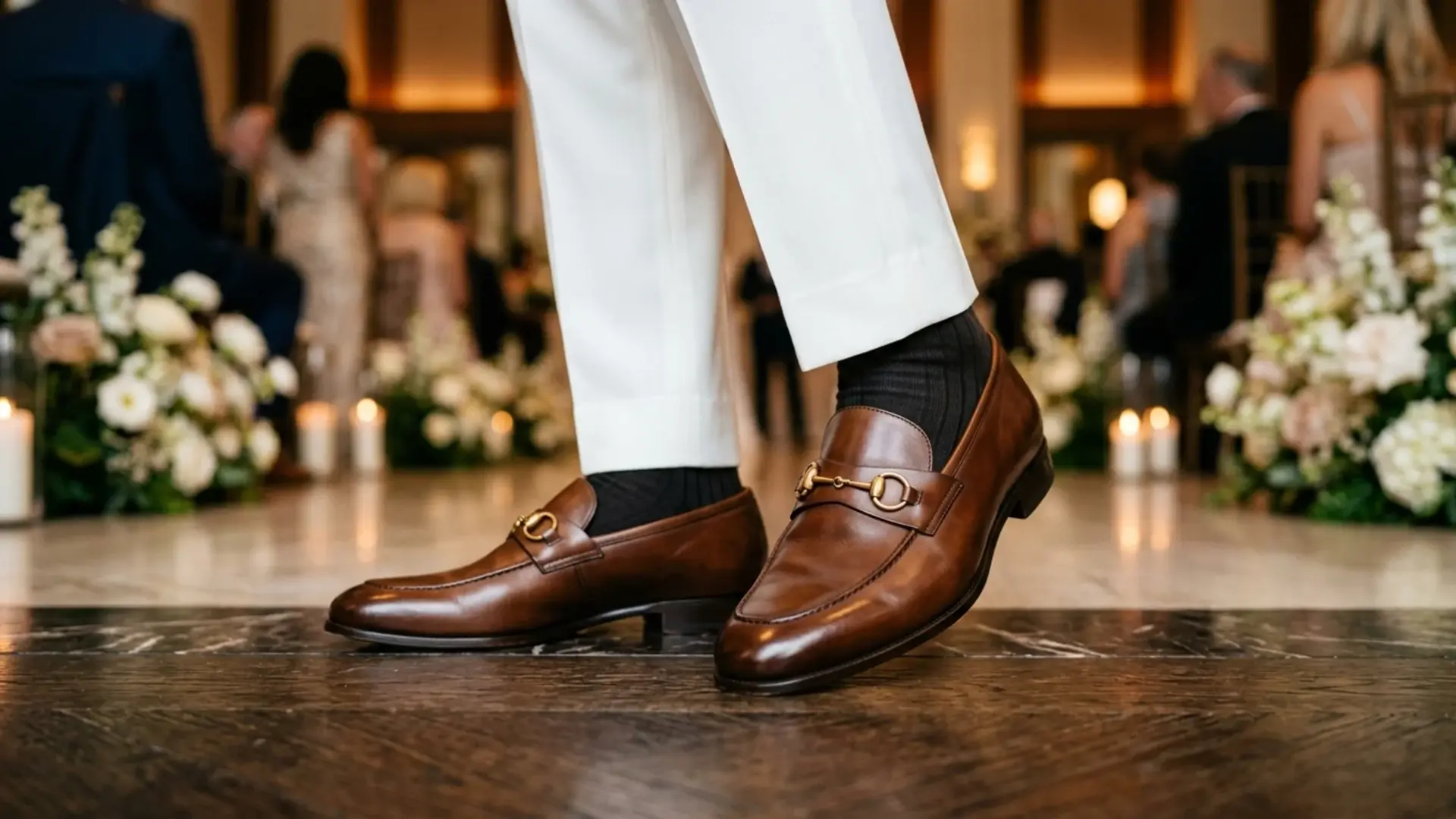
Comfort Level: Medium | Gender Appeal: Unisex, though traditionally marketed to men
Gucci introduced the horsebit loafer in 1953, drawing directly from equestrian culture by placing a metal snaffle bit across the vamp strap.
The design became a favorite among American businessmen and celebrities throughout the 1960s and 1970s.
Gianni Agnelli and John F. Kennedy were among its most visible supporters, the kind of cultural endorsement that locks a shoe into the luxury canon. It has remained a shorthand for status dressing ever since.
Key Features:
- Signature gold-toned horsebit hardware creates an instantly recognizable design detail
- Smooth calf leather upper offers a sleek and refined structured appearance
- Close-fitting silhouette with a slight heel enhances a polished, formal look
- An almond or pointed toe shape adds sharp and modern elegance
- Best suited with tailored trousers, evening blazers, monochromatic suits, or wide-leg trousers for a fashion-forward take
4. Belgian Loafers: Minimal and Refined Style
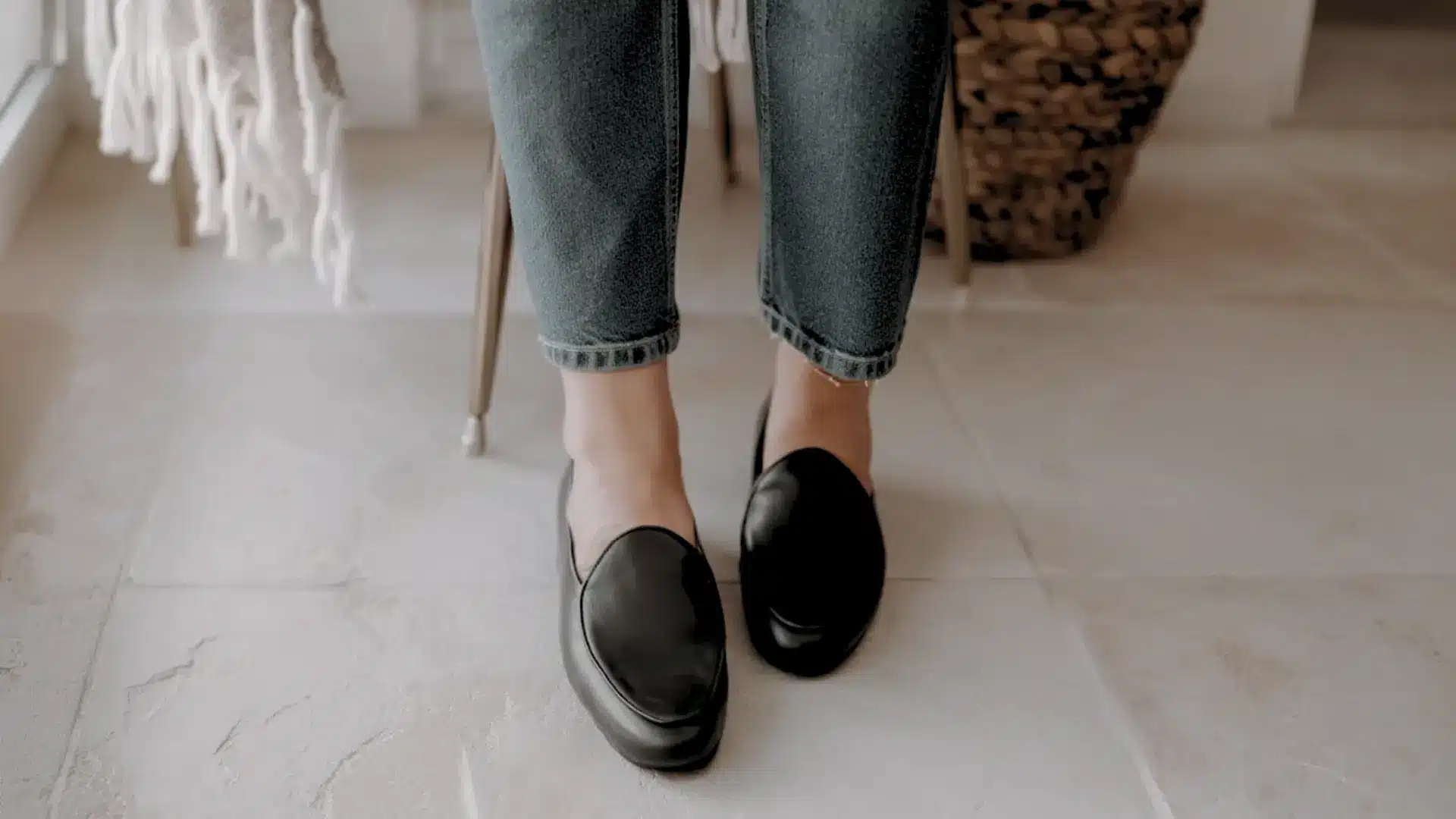
Comfort Level: High | Gender Appeal: Unisex, though particularly popular among men with a European or old-world style sensibility
Belgian loafers trace their origin to New York retailer Henri Bendel, who introduced a shoe made by Belgian monks featuring a soft, unstructured upper and a small decorative bow at the toe.
He called it the “Mr. Casual” and sold it for just $25 in 1960. The Belgian Shoes brand that his family built around still exists today and remains the gold standard for the style.
Key Features:
- Signature gold-toned horsebit hardware creates an instantly recognizable design detail
- Smooth calf leather upper offers a sleek, refined structure
- Close-fitting silhouette with a slight heel enhances a polished, formal look
- Almond or pointed toe shape adds sharp, modern elegance
- Best suited with tailored trousers, evening blazers, monochromatic suits, or wide-leg trousers for a fashion-forward take
5. Driving Loafers: Comfort for Casual Days
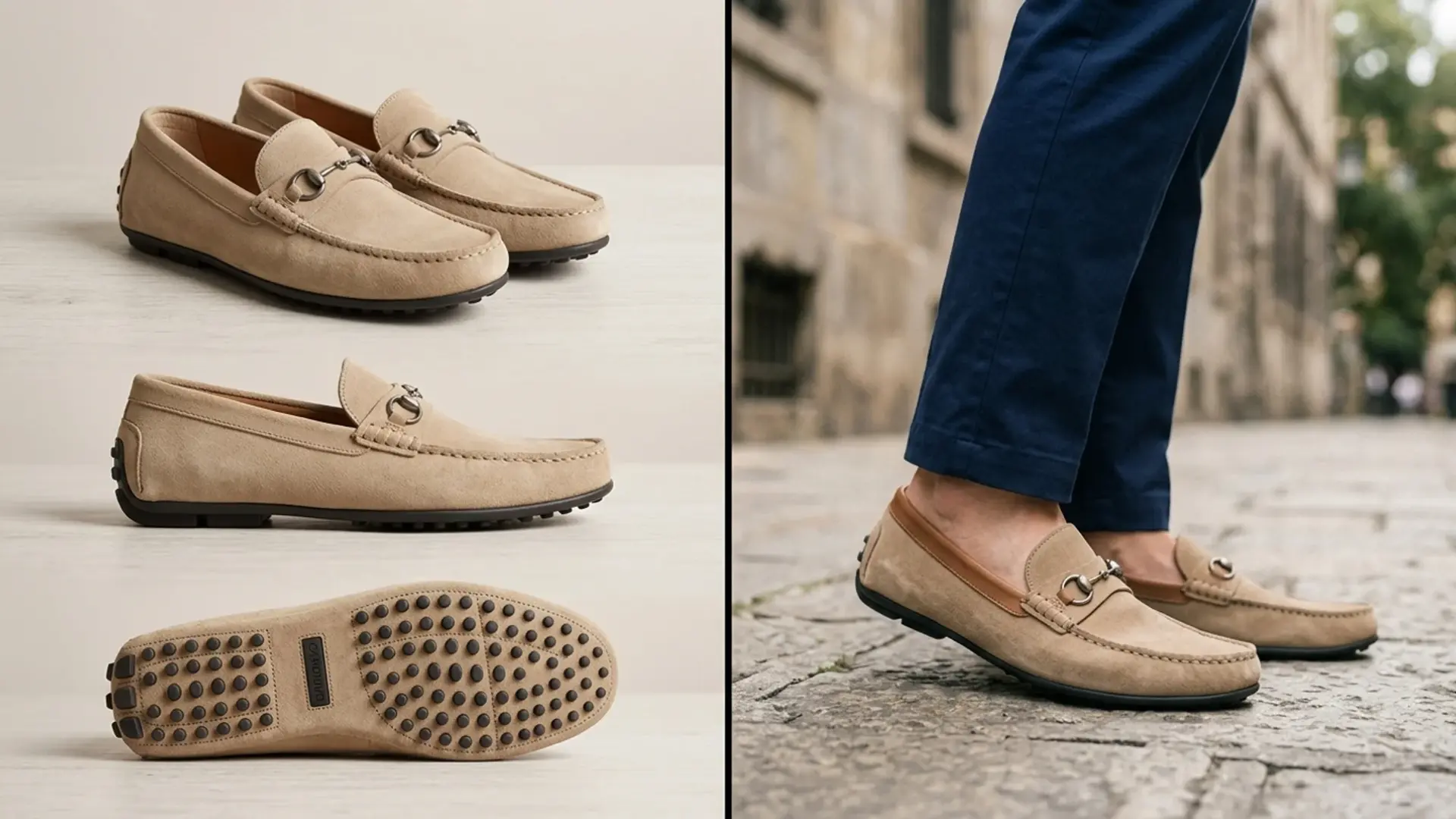
Comfort Level: Very High | Gender Appeal: Primarily men, though unisex versions are growing in popularity
The driving loafer was engineered for a very specific purpose: giving drivers enough tactile feedback and grip to operate pedals with precision.
Tod’s in Italy perfected the form with its Gommino driving shoe, featuring hundreds of rubber pebbles on the sole and heel. The shoe became a staple for weekend driving enthusiasts and eventually a casual footwear icon far beyond the car.
I have worn driving loafers across three continents, and honestly, they are the only shoes I trust for back-to-back travel days when comfort and presentation have to coexist.
Key Features:
- Pebbled rubber sole extends to heel for grip and durability
- Soft leather or suede upper offers instant comfort without break-in
- Unlined design allows flexibility and adapts quickly to foot shape
- Thin sole and no heel create a close-to-the-ground driving feel
- Best suited for relaxed settings rather than formal environments, and goes well with chinos, relaxed linen trousers, shorts, or casual business trousers for warm-weather office environments
6. Slipper Loafers: Velvet and Formal Edge
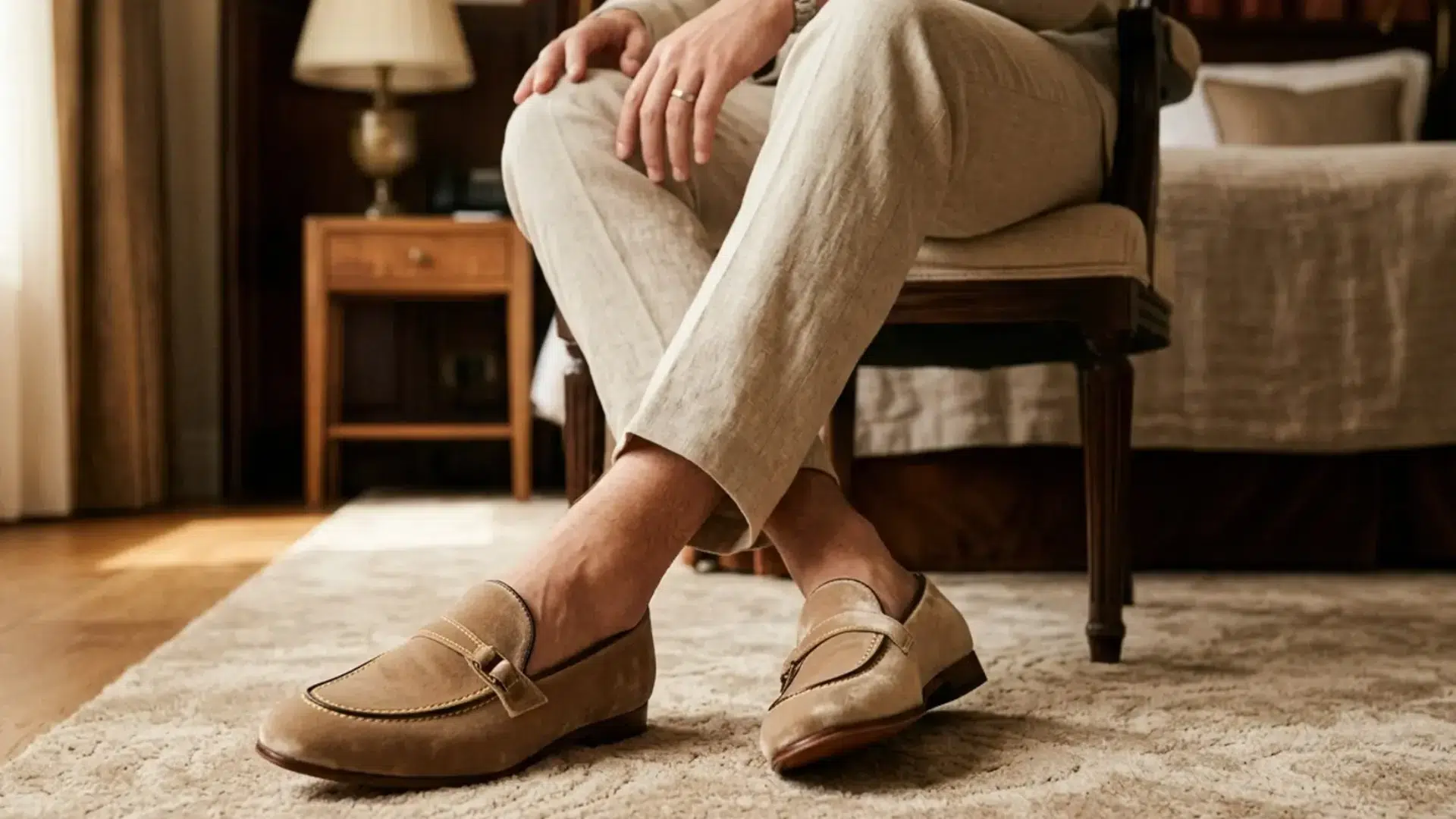
Comfort Level: Medium | Gender Appeal: Primarily men, though women’s fashion has embraced velvet loafer styles recently
The slipper loafer is the closest living relative to the original loafer concept, descending directly from the indoor evening shoes worn by European nobility in the eighteenth and nineteenth centuries.
Those shoes were soft, laceless, and made from rich fabrics. Modern slipper loafers honor that heritage with velvet uppers, grosgrain trim, and sometimes hand-embroidered monograms or crests.
Key Features:
- Velvet uppers in deep tones create rich texture under evening lighting
- Thin leather outsole delivers a sleek, low-profile, elegant foot appearance
- Grosgrain trim and embroidery add refined, personalized decorative elements
- Flat silhouette pairs well with tuxedo trousers, slim evening suits, smoking jackets, or formal evening wear in autumn and winter
- Designed for special occasions rather than frequent everyday use
7. Lug Sole Loafers: Bold Modern Statement
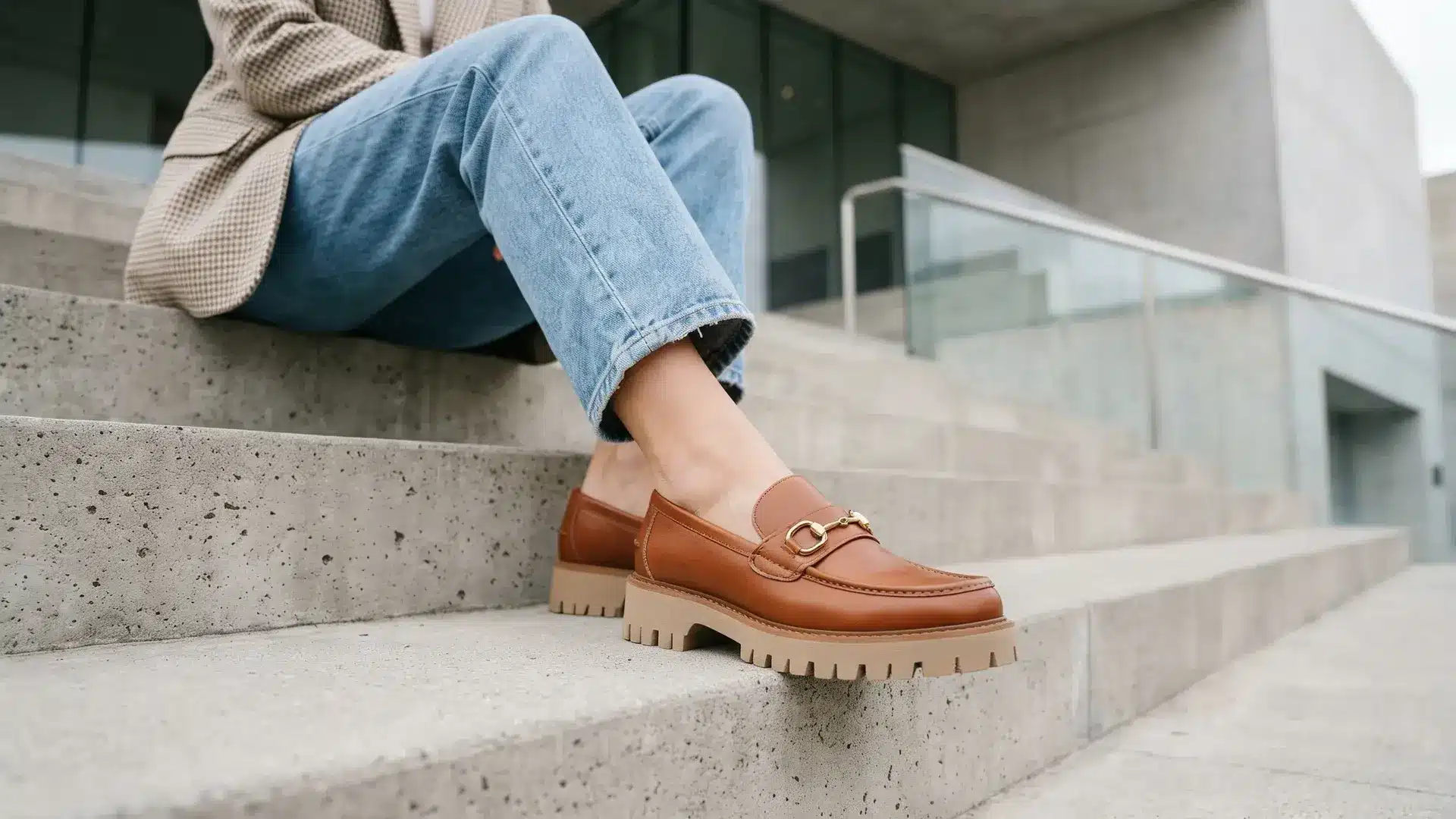
Comfort Level: Very High | Gender Appeal: Unisex, with particularly strong adoption among women and streetwear-oriented dressers of all genders
Lug sole loafers emerged from the intersection of high fashion and utilitarian streetwear that defined the late 2010s and accelerated through the early 2020s.
Designers began grafting the chunky, deeply treaded rubber soles of hiking boots and work shoes onto traditional loafer uppers, creating a shoe that felt both nostalgic and completely current at the same time.
Key Features:
- Thick rubber outsole with deep treads improves grip on uneven surfaces
- Chunky sole height adds bold presence and increases overall durability
- Classic loafer upper contrasts with rugged base for striking visual balance
- Heavy sole design adds weight, complementing cropped or tapered outfits
- Best to wear with straight-leg jeans, mini skirts, oversized coats, or cargo trousers for a utilitarian-fashion crossover look
8. Patent Leather Loafers: For Black-Tie Events
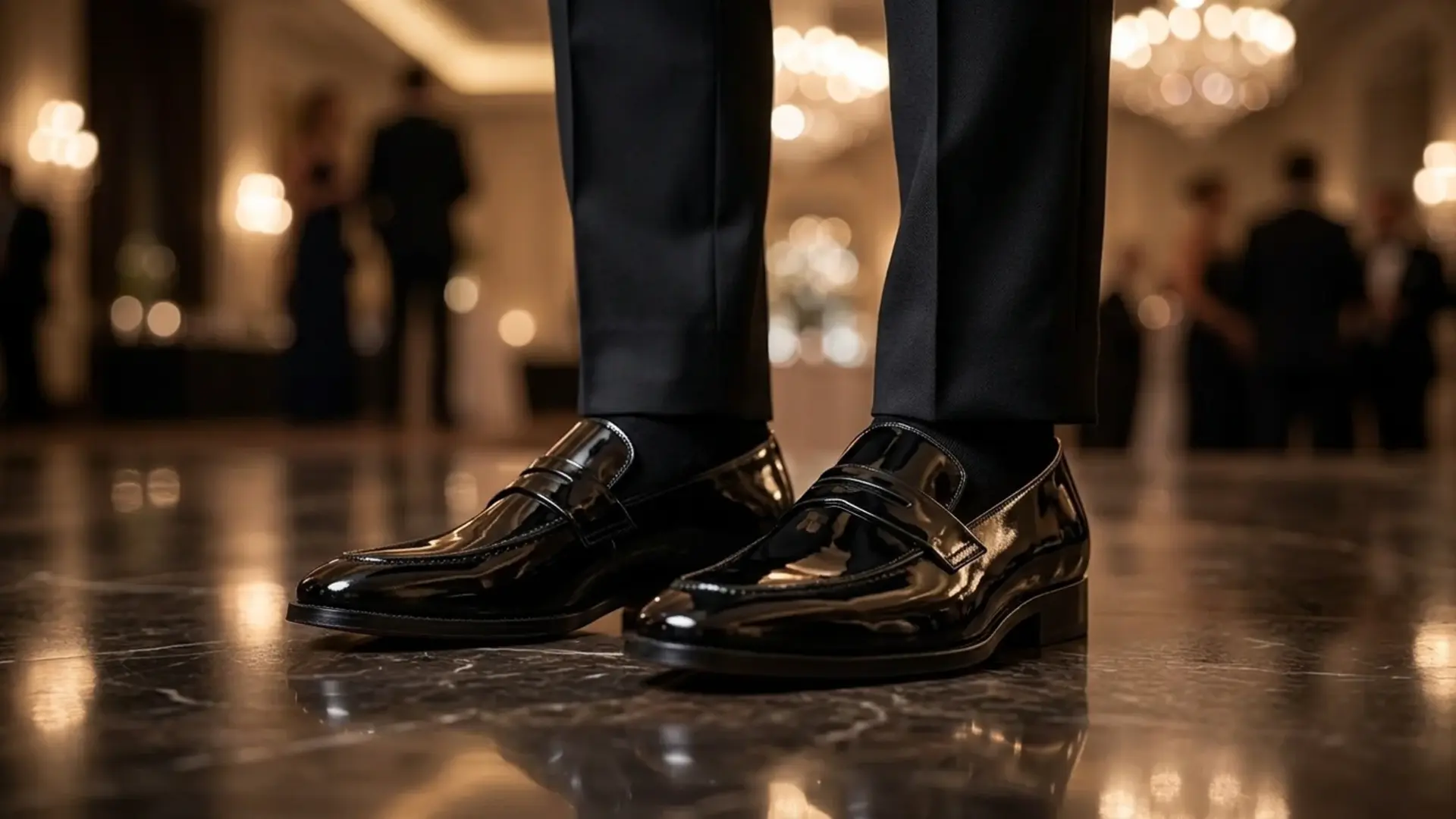
Comfort Level: Low to Medium | Gender Appeal: Unisex
Patent leather as a material dates back to the nineteenth century, when a lacquering process was developed to create a permanently glossy, water-resistant leather finish.
The material became associated with formal footwear almost immediately because its reflective surface communicated luxury and effort. Applied to the loafer silhouette, patent leather transforms the casual slip-on into something genuinely ceremonial.
Key Features:
- High gloss lacquered finish creates a reflective surface with a strong visual impact
- Sleek almond or pointed toes enhance a sharp and refined formal appearance
- Clean upper design without embellishments keeps focus on polished material
- Best paired with tuxedos, evening suits, black-tie formal wear, or slim cocktail-occasion trousers in black or deep navy
- Requires careful storage to maintain shine and prevent visible surface damage
9. Kiltie Loafers: The Connoisseur’s Statement Shoe
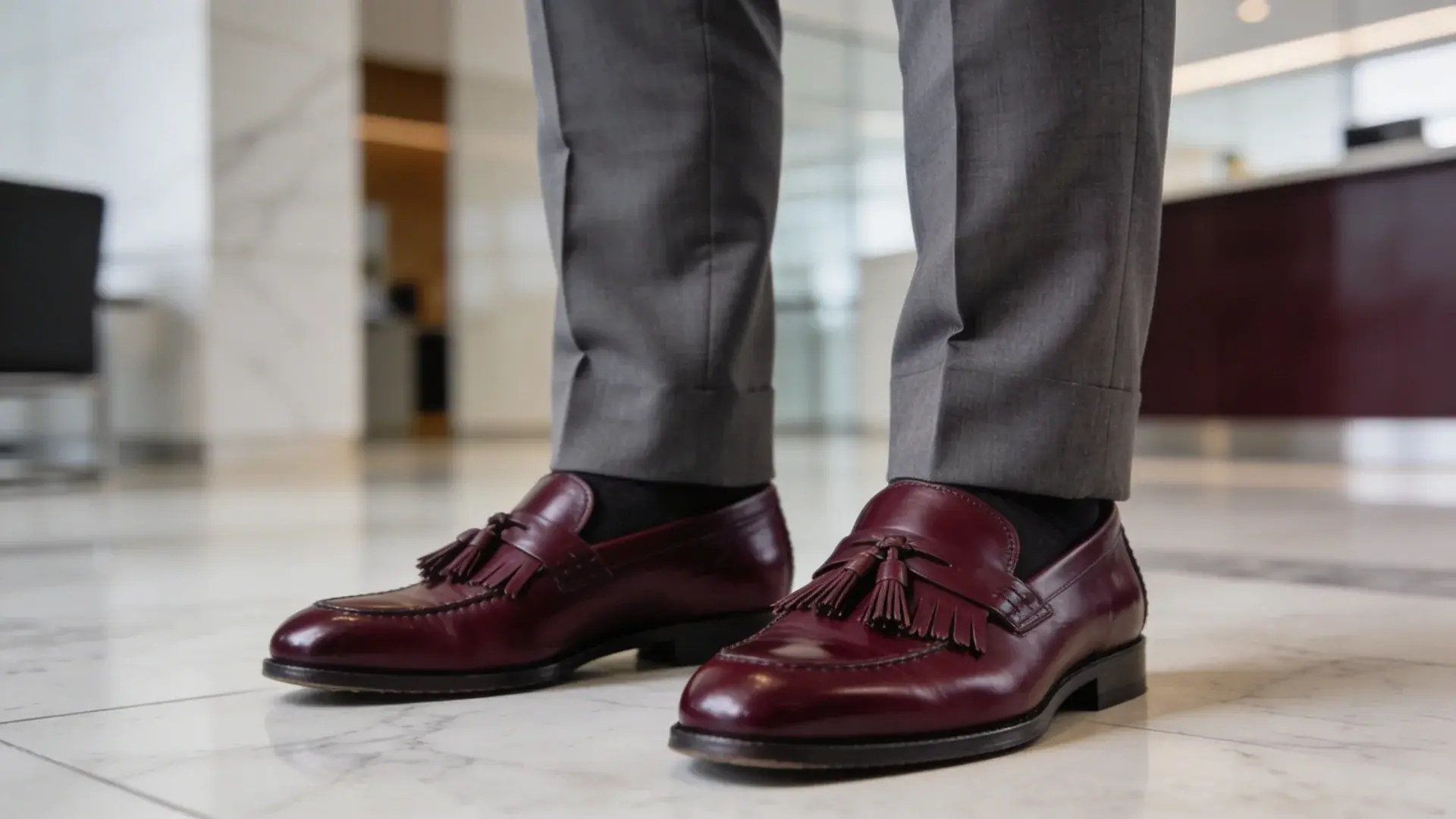
Comfort Level: High | Gender Appeal: Primarily men, with increasing interest in women’s fashion
The kiltie detail originates from Scottish footwear traditions where a fringed leather flap was used on brogues and outdoor shoes to protect the instep from brush, terrain, and weather.
When the detail migrated onto dress shoes and eventually loafers, it retained its visual drama while losing its practical function entirely, becoming purely a mark of heritage craftsmanship.
Key Features:
- A fringed leather flap placed over the vamp adds a layered, textured appearance
- Loose kiltie design moves slightly, creating dynamic visual movement
- Best paired with fitted suit trousers, tailored wool trousers, slim chinos, or a well-cut coat for autumn and winter dressing
- Crafted using full-grain leather with traditional hand-worked construction
- Statement design works best with simple and balanced outfit choices
Types of Loafers Based on Formality Level
Different loafer styles fall across a clear formality range, helping you choose the right pair based on the occasion, outfit, and level of dressiness required.
| Loafer Type | Formality Level | Best Occasions |
|---|---|---|
| Driving Loafer | Casual | Weekends, travel, warm-weather errands |
| Penny Loafer | Smart Casual | Campus, brunch, business casual |
| Belgian Loafer | Smart Casual to Semi-Formal | Creative offices, gallery openings, dinner |
| Lug Sole Loafer | Fashion Casual | Street style, weekend looks, editorial |
| Kiltie Loafer | Smart Casual to Semi-Formal | Autumn outings, tailored weekend looks |
| Tassel Loafer | Smart Casual to Semi-Formal | Office, blazer looks, dinners |
| Horsebit Loafer | Semi-Formal to Formal | Business, evening events |
| Patent Leather Loafer | Formal | Black-tie, cocktail events |
| Slipper Loafer | Black-Tie / Evening | Tuxedo occasions, formal evenings |
How to Choose the Right Type of Loafers
The right loafer depends on where you plan to wear it, how it fits your lifestyle, and how well it works with your existing wardrobe.
- Match the Occasion: Penny and driving loafers work well for casual outfits, while horsebit and tassel styles fit office wear, dinners, and semi-formal settings.
- Focus on Fit: Loafers should feel secure without squeezing the foot. A snug fit prevents slipping and improves comfort during long hours of wear.
- Choose the Right Material: Leather handles daily wear better and ages well over time, while suede offers a softer texture suited for cooler seasons.
- Check the Construction: Blake-stitched loafers feel lighter and more flexible, while Goodyear-welted pairs last longer and can be resoled multiple times.
- Start with Versatile Colors: Black, dark brown, and tan loafers pair easily with most outfits and make styling much simpler across different occasions.
Recommended Brands and Where to Buy Loafers
I have spent more time than I am willing to admit hunting for the right pair of loafers across every price point, and these are the places I actually trust and return to.
| Brand | Best Known For | Price Range | Best For |
|---|---|---|---|
| G.H. Bass & Co. | Classic penny loafers | Mid Range | Every day and smart casual wear |
| Cole Haan | Comfort-focused loafers | Mid Range | Office wear and daily use |
| Tod’s | Premium driving loafers | Luxury | Travel and relaxed luxury styling |
| Gucci | Signature horsebit loafers | Luxury | Formal and statement outfits |
| Alden | Handcrafted heritage loafers | Luxury | Long-term investment in footwear |
Caring for Your Loafers: Keep Them Looking New
Simple care habits and the right products can extend the life of your loafers, keeping them polished, comfortable, and well-shaped with regular wear.
- Brush Before and After Every Wear: A soft-bristled shoe brush removes surface dust and dirt before it settles into the leather or suede grain. For suede specifically, a dedicated suede brush takes less than thirty seconds and prevents long-term dullness and matting.
- Condition Leather Loafers Every 3 to 4 Weeks: Leather dries out with regular wear, and conditioning prevents cracking, scuffing, and loss of shine. A product like Leather Honey Conditioner works across most smooth leather finishes.
- Use Cedar Shoe Trees After Every Wear: Cedar trees absorb moisture, eliminate odor, and hold the shape of your loafer so the toe box does not collapse over time.
- Waterproof your loafers before the first wear: A quality waterproofing spray creates an invisible barrier against rain, puddles, and stains, and works well on both leather and suede. The waterproofing process takes less than 5 minutes but adds many years to your loafers’ life.
- Store them properly between wears: Keep loafers in breathable dust bags away from direct sunlight and heat sources. Stacking shoes or leaving them loose on the closet floor causes the heel counters to collapse and the leather to permanently crease in the wrong places.
- Take them to a cobbler once a year: A professional resoling or heel replacement can add years to a quality pair of loafers and costs a fraction of buying new. If you are not sure where to start, NuShoe is a trusted mail-in cobbler service that handles most loafer repairs cleanly and quickly.
Conclusion
After looking at the wide variety of loafers and how each style serves a different purpose, one thing stands clear. A well-chosen pair does more than complete an outfit.
It quietly boosts your confidence because it feels right and looks considered without demanding attention.
What matters most is understanding which style fits your life. Invest in quality materials, care for them consistently, and let the shoe do the talking.
Once you nail the match between your loafer type and your wardrobe, getting dressed becomes noticeably easier.
Which type of loafer are you leaning toward after reading this? Drop a comment below with your favorite style or the occasion you plan to wear them for.
Frequently Asked Questions
What Season is Best for Wearing Suede Loafers?
Spring and fall are ideal for suede loafers. The moderate temperatures suit the softer material, and the drier conditions help you avoid the moisture damage that rain and snow cause.
How Long Do Quality Leather Loafers Typically Last?
With proper conditioning, regular use of cedar trees, and occasional professional resoling, well-made leather loafers can last anywhere from five to ten years or longer. Resoling a quality leather shoe typically costs 30 to 40 percent of the original purchase price, which makes it one of the most cost-effective maintenance choices in fashion.
Do Loafers Work Well for Wide or Narrow Feet?
Most major brands offer width options worth seeking out. Penny and driving loafers tend to suit wider feet best because of their roomier toe boxes. When in doubt, try half a size down from your normal fit since loafers stretch with wear.