Getting a new tattoo is exciting, but the healing process can be surprisingly stressful, especially when your fresh ink starts to peel.
Many people panic the first time they notice skin flakes coming off, wondering whether the tattoo is fading or something has gone wrong.
If you’ve been asking, “Aretattoos supposed to peel?”, the short answer is yes. Peeling is a normal stage of healing and doesn’t mean you’re losing your tattoo.
Understanding why tattoos peel can help you avoid common mistakes that slow healing or damage the final result. This article explains what to expect, what’s normal, and when peeling may signal a problem instead.
Why Do Tattoos Peel in the First Place
A tattoo needle passes through the epidermis, the outermost skin layer, and deposits ink into the dermis below it.
Your body treats this as an injury and immediately triggers a repair response. White blood cells flood the area. Tissue begins rebuilding.
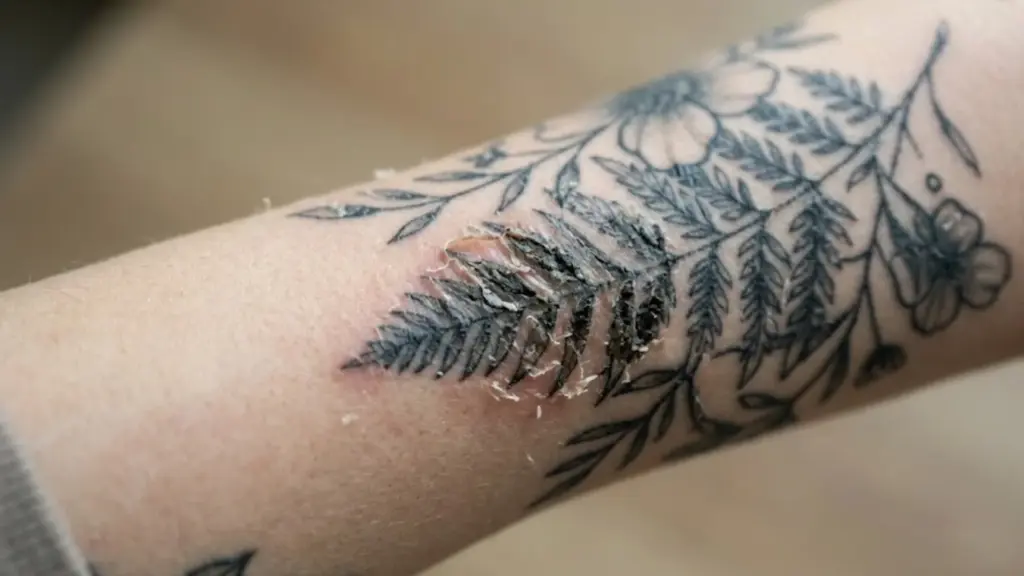
The surface cells that absorbed the direct trauma of the needling get pushed outward and replaced with fresh ones. That shedding process is what you see when your tattoo peels.
According to the American Academy of Dermatology’s wound-healing guidance, this type of surface shedding is a normal part of skin recovery from trauma.
The process is often compared to what happens after a mild sunburn, when the outer layer sheds to reveal newer tissue underneath.
The key difference is that the ink sits in the dermis, beneath the skin that peels away. The color and detail of your tattoo remain intact regardless of what happens on the surface.
What looks like ink falling off is almost always just ink-tinted epidermal cells. The design stays put in the deeper layer.
When Tattoo Peeling Starts and How Long It Lasts
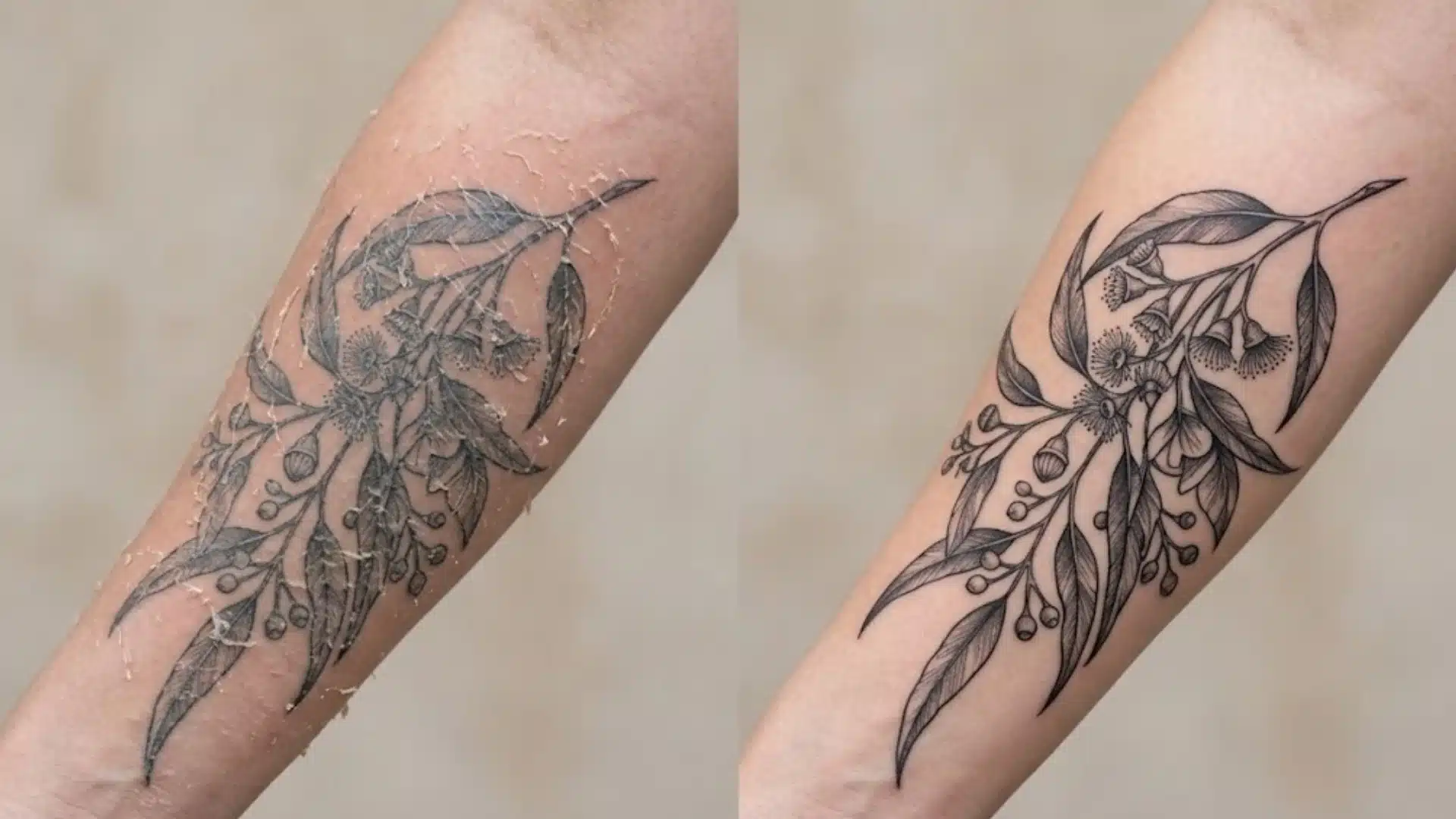
Most tattoos begin peeling between days 3 and 7 after the session. The exact start and duration vary based on tattoo size, placement, and how you’re caring for the area, but the general pattern follows the same broad stages.
- Days 1-3 (inflammation stage): The tattoo looks red, feels warm and tender, and may ooze a little clear plasma or excess ink. This is the immune response at work, sealing off the wound. It’s not comfortable, but it’s expected.
- Days 3-7 (peeling begins): Thin, translucent flakes start to form as the outer layer of skin loosens. Itching usually starts here, too. Areas with better circulation, like the upper arms, tend to peel a little earlier than spots like the ribs or ankles.
- Week 2 (active flaking): Peeling is most visible during this stage. The tattoo may look dull, cloudy, or slightly faded. This is temporary. There’s a layer of new skin forming underneath that hasn’t fully cleared yet.
- Weeks 3-4 (surface healing complete): The peeling finishes, and the skin may still feel tight or dry, but the tattoo starts looking like itself again. Colors sharpen, lines come back into focus.
- Month 1 and beyond (deep healing continues): The surface heals in 2 to 3 weeks, but the dermis, where the ink actually resides, continues to reorganize for 4 to 6 months. This is why freshly healed tattoos can look slightly different at the three-month mark than they did at week four.
Smaller tattoos can finish the surface peel by day 10. Larger or more heavily worked pieces take longer, sometimes stretching close to the two-week mark before the flaking settles down.
Are Tattoos Supposed to Look Faded when Peeling?
Yes, and it’s one of the most common things that unnecessarily sends people back to their artist in a panic.
The dull, washed-out appearance that shows up during the peel stage is not the tattoo fading. It’s a thin layer of healing skin sitting on top of the ink, diffusing the color the way frosted glass diffuses light.
Once that layer forms and the new skin cells fully mature, the color beneath comes through clearly again. Black ink tends to look gray or milky during this phase. Color tattoos can look muddy or less saturated.
Fine line work may seem to have disappeared almost entirely. This is so common it has a name in the tattooing community: the “ugly healing phase.”
It’s temporary, and in almost every case, the tattoo settles back to something close to its original appearance once the skin finishes its job.
If you want to understand how and why tattoos fade over the long term compared to what you’re seeing now during healing, the distinction matters.
Short-term dullness during peeling is a healing artifact. Long-term fading is a different issue, driven by sun exposure, skin type, and placement, and it happens over months and years, not days.
Does Tattoo Peeling Mean Ink is Coming Out?
No. The flakes coming off your tattoo are surface skin cells from the epidermis, not ink from the dermis.
Tattoo ink is deposited into the dermis, the deeper skin layer that sits beneath everything that peels. The shedding happens above it, not through it.
What makes it look like ink is leaving is tinting. The epidermal cells that absorbed surface-level trauma during the tattooing session pick up some pigment.
When those cells shed, the flakes can appear colored. That’s normal and expected. The design itself stays locked in the dermis layer below.
The only way peeling damages ink is if you interfere with it. Pulling off skin before it’s ready, or scratching through the healing surface, can disturb the upper dermis and drag pigment with it. Left alone, peeling causes no ink loss at all.
How to Care for a Peeling Tattoo
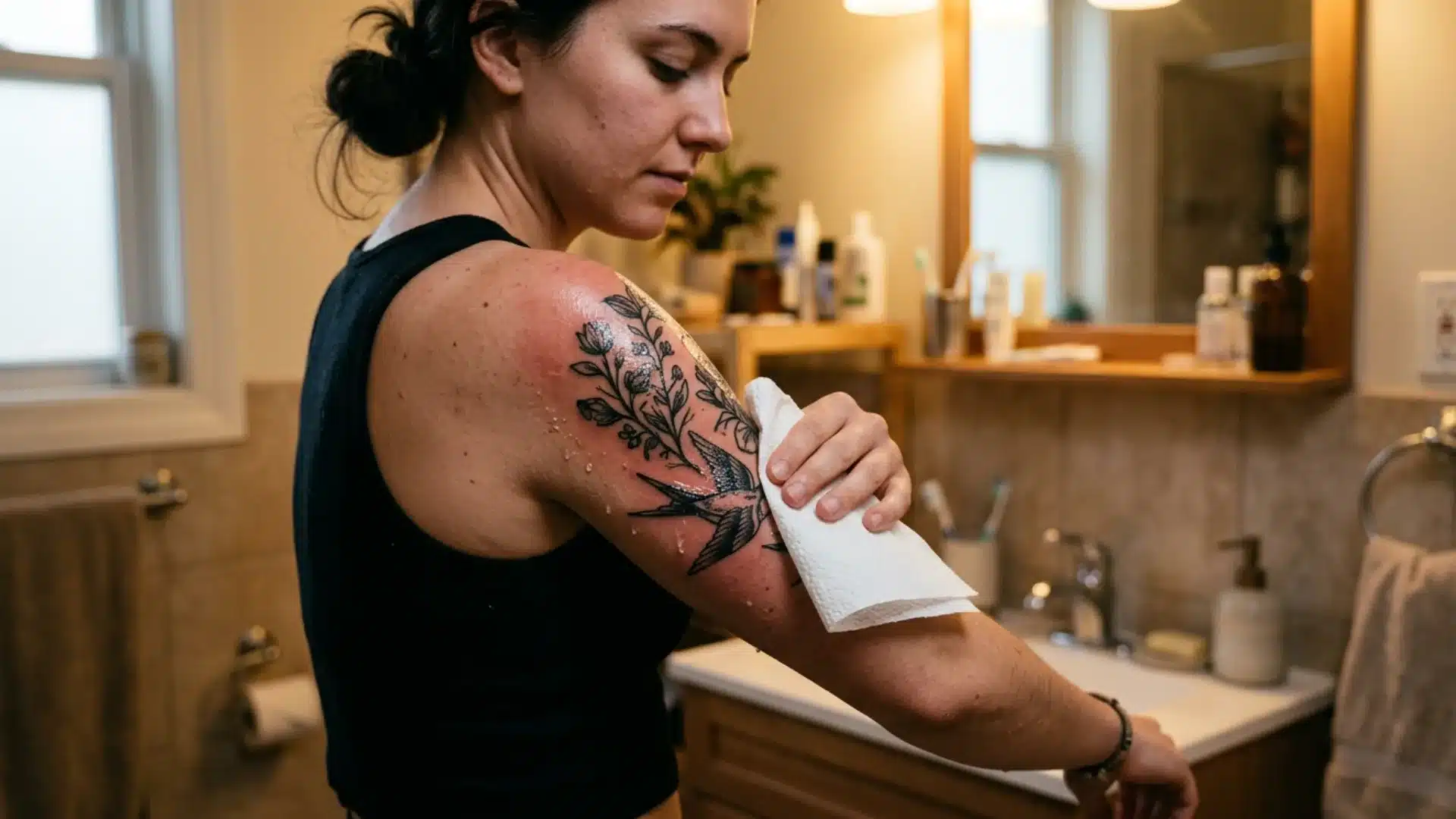
Good aftercare during the peel stage doesn’t need to be complicated. The goal is simple: keep the area clean and hydrated, and don’t interfere with what your body is already doing well.
The full tattoo healing timeline covers every stage in more detail, but here’s what matters most during the peeling phase:
- Gentle cleansing: Wash the tattoo twice a day with lukewarm water and a fragrance-free, antibacterial soap. Use your hands rather than a cloth or loofah. Pat dry with a clean paper towel and let the area air for a minute before applying anything.
- Moisturizing correctly: Apply a thin layer of fragrance-free lotion two to three times a day. Water-based options like CeraVe or Aveeno work well. Avoid thick petroleum-based ointments like Vaseline after the first few days, as they can sit on the skin surface and soften scabs before they’re ready. The goal is hydrated skin, not soaked skin.
- Sun protection: Keep the tattooed area covered or out of direct sun while it’s healing. UV exposure on fresh tattoos slows healing, can cause fading before the ink has fully settled, and irritates sensitive new skin.
- Loose clothing: Friction from tight fabric pulls at peeling skin and can disrupt the area before it’s ready. Wear loose, breathable layers over a healing tattoo where possible.
- Hydration and food: Your skin repairs itself from the inside, too. Drinking enough water and eating well make a real difference to how quickly and evenly the healing moves. A Cleveland Clinic dermatologist notes that tattoos are “controlled forms of trauma to the skin,” and the body needs proper fuel to recover from them.
If you used a second-skin bandage after your session, it’s worth reading about how second skin works before you transition to open healing, since the timing of removal affects how the peeling stage presents.
How Skin Type and Placement Affect Peeling
Not every tattoo peels the same way, and a lot of unnecessary anxiety comes from comparing your healing to someone else’s. Skin type, placement, ink density, needle configuration, and aftercare all shape how the peel stage looks.
Blackwork and heavily saturated color tattoos tend to produce more visible peeling than fine-line work. More skin trauma during the session means a more active surface response.
Areas with thin skin, like the wrists or inner arms, often peel differently from thicker-skinned areas like the outer thighs.
Drier skin types tend to form more obvious flakes, while oilier skin sometimes sheds so subtly that the peeling is barely noticeable. Both are normal.
People who healed under a second-skin bandage for the first several days sometimes notice very little visible peeling afterward, because the barrier keeps the skin evenly hydrated throughout.
If your tattoo isn’t peeling visibly by day 10, don’t try to encourage it. Picking, exfoliating, or scratching to speed things up causes the same damage as picking at active peeling. Some skin types just handle the shedding phase more quietly.
What Reddit Users Say About Tattoo Peeling
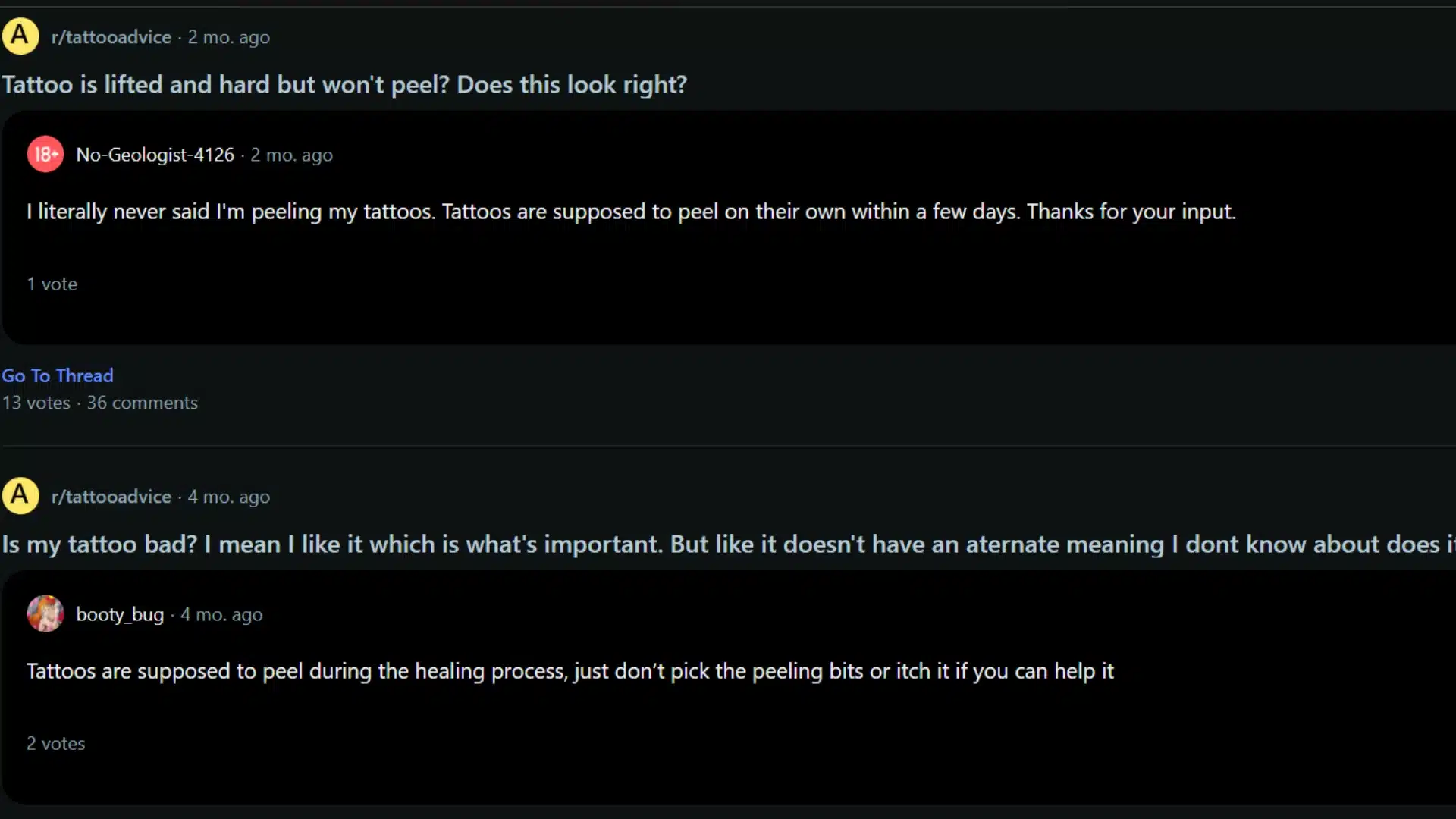
Across Reddit discussions, the overall consensus is clear: tattoos are supposed to peel during the healing process.
Users reassure first-time tattoo owners that light peeling is normal and usually begins a few days after getting tattooed.
Several commenters also warn against picking at peeling skin or scratching the area, as this can interfere with healing and potentially affect the tattoo’s appearance.
Even when a tattoo feels raised or hard before it starts peeling, experienced users note that healing timelines vary from person to person.
The general advice is to be patient, follow proper aftercare, and let the peeling happen naturally.
What Not to Do when Your Tattoo is Peeling
A few simple precautions during the peeling stage can make a big difference in how well your tattoo heals. Avoid the following mistakes to reduce the risk of infection, uneven healing, and ink loss.
- Don’t pick or pull at flakes. The skin lifting away is still attached at the edges. Pulling it off before it’s ready removes it along with ink-holding cells below, which can leave light spots or patchy areas in the finished tattoo.
- Don’t scratch. The itching during week two is driven by histamine release as nerve endings regenerate. It will pass. Scratching breaks the healing surface and introduces bacteria.
- Don’t over-moisturize. More lotion is not better. Applying it too heavily traps moisture, softens the skin prematurely, and can cause the peeling to happen unevenly. A thin layer, applied after cleaning, is what works.
- Don’t submerge the tattoo. Pools, hot tubs, lakes, and long soaking baths expose an open wound to bacteria. Even heavily chlorinated water isn’t sterile enough for fresh ink, and soaking softens the skin in ways that disrupt healing. Showers are fine; submersion is not, for at least 2 to 4 weeks.
- Don’t exfoliate. Scrubs, chemical exfoliants, and rough textures over a peeling tattoo will strip away healing skin before it’s done. Regular exfoliation routines should pause entirely until the tattoo is fully healed.
Note: The information above is general aftercare guidance and not a substitute for advice from your tattoo artist or a licensed dermatologist, especially if your skin reacts unusually to tattooing.
When Peeling is Not Normal: Signs to Watch for
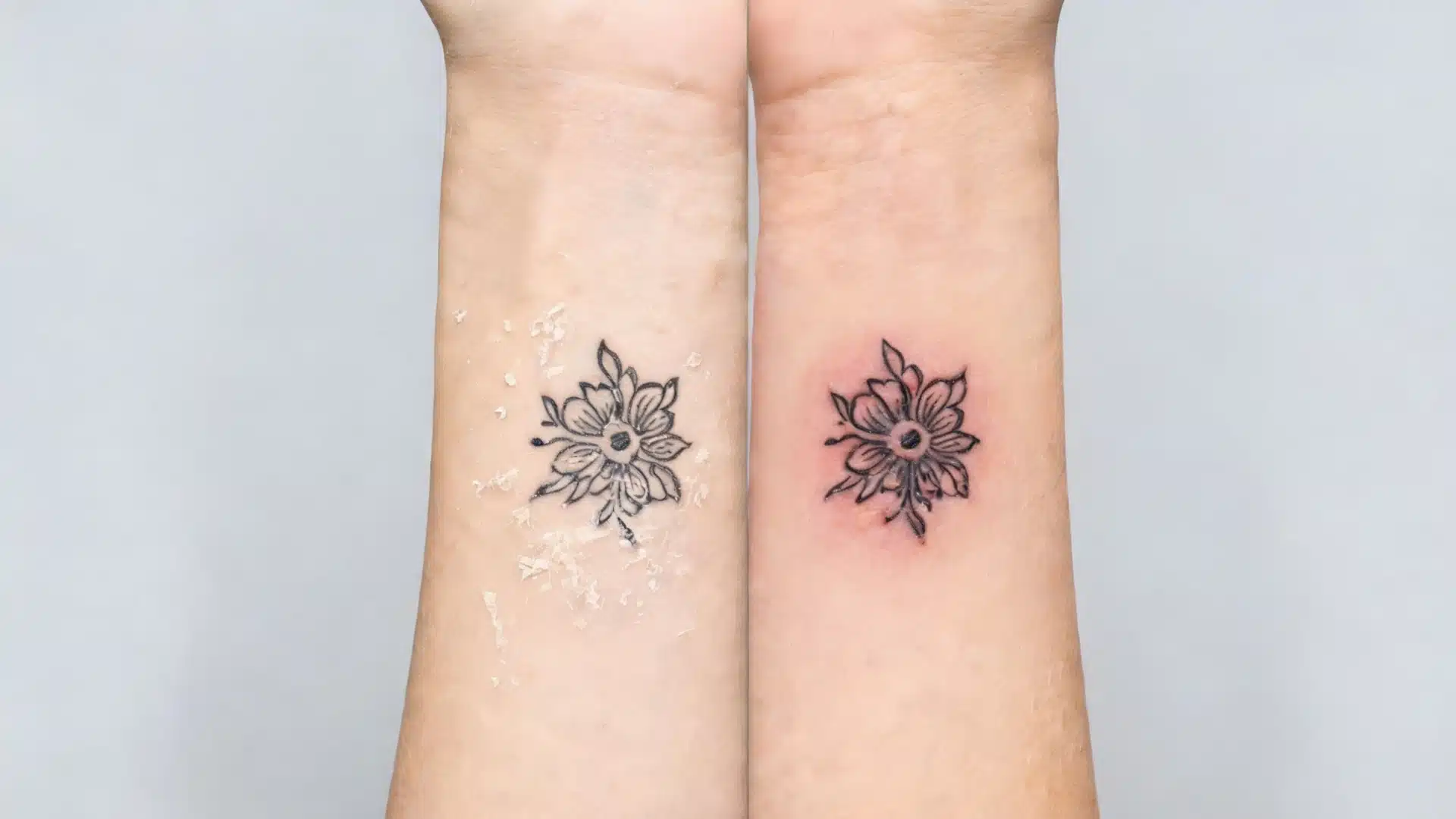
Peeling on its own is not a problem. But some signs alongside peeling, or instead of it, suggest something isn’t healing the way it should.
Knowing the difference saves you from unnecessary worry and, more usefully, tells you when to act quickly.
| Normal healing | Worth watching |
|---|---|
| Thin, translucent flakes | Thick, raised scabs with oozing |
| Mild itching | Intense, worsening itch |
| Light redness for 2-3 days | Redness spreading past the tattoo edges after day 3 |
| Clear plasma in the first 24 hours | Yellow, green, or cloudy discharge |
| Skin feeling tight or dry | Skin feeling hot and swollen days later |
| Dull or cloudy appearance | Red streaks radiating outward from the tattoo |
A healing tattoo should improve a little each day. If redness spreads, pain worsens, or you notice pus or unusual discharge, see a doctor rather than waiting it out.
Allergic reactions to tattoo ink, particularly red and yellow pigments, can also develop during or after the peel stage and are worth taking seriously.
If you’re curious about how alcohol and healing skin may affect tattoo recovery, it’s worth learning how the two are connected.
Tips to Manage Tattoo Itching During Healing
Itching is a normal part of tattoo healing and usually becomes more noticeable as the skin starts to peel. Although it can be frustrating, scratching can damage the healing skin and affect the tattoo’s appearance. These tips can help relieve the discomfort safely.
- Resist the urge to scratch: Scratching can pull away healing skin too early and increase the risk of infection or patchy ink.
- Tap or lightly press the area: Gently tapping or pressing the itchy spot with clean fingers can temporarily reduce the sensation without harming the tattoo.
- Apply moisturizer regularly: A thin layer of fragrance-free lotion helps prevent excessive dryness, which is one of the biggest triggers for itching.
- Wear loose, breathable clothing: Tight fabrics rubbing against the tattoo can make itching feel worse and irritate the healing skin.
- Keep showers lukewarm: Hot water can dry out the skin and increase itching. Use lukewarm water and gently pat the tattoo dry afterward.
- Avoid unnecessary touching: Frequent contact with the tattoo can transfer bacteria and worsen irritation, even if your hands look clean.
- Be patient with the healing process: Most itching gradually fades as the outer layer of skin finishes healing, usually within the first few weeks.
Skin Conditions That Can Affect Tattoo Peeling
Certain skin conditions can make tattoo peeling more noticeable without affecting the final result.
Eczema may cause increased redness, itching, and more severe peeling because the skin reacts more strongly to irritation. Keeping the area moisturized and using gentle aftercare products can help.
Psoriasis requires additional care, as tattooing may trigger new patches through the Koebner phenomenon. If you have psoriasis, speak with a dermatologist before getting tattooed.
People with naturally dry skin may also experience larger, more visible flakes during healing. This is usually normal and does not mean the tattoo is healing incorrectly.
In all of these cases, the aftercare approach stays the same: gentle cleansing, consistent fragrance-free moisturizing, no picking, no sun. The intensity of the peel doesn’t change what the skin needs, just how long patience is required.
Conclusion
If you’ve been wondering, are tattoos supposed to peel? The answer is yes.
Peeling is one of the most common and expected parts of the healing process, and in most cases, it’s a sign that your skin is repairing itself.
Understanding why tattoos peel can help you avoid unnecessary worry and prevent mistakes like picking at flakes or over-moisturizing.
Stick to a simple aftercare routine, protect your tattoo from the sun, and give your skin the time it needs to heal naturally.
If you notice severe pain, spreading redness, or unusual discharge, seek medical advice promptly.
Have you experienced tattoo peeling before? Share your experience or ask your questions in the comments below.
Frequently Asked Questions
Can I Exercise While My Tattoo is Peeling?
Light activity is fine, but avoid heavy sweating or friction on the tattoo. Sweat and rubbing can irritate healing skin and disrupt the peeling process. During the first 1–2 weeks, stick to low-impact exercise that keeps the area clean and dry.
What if My Tattoo Hasn’t Started Peeling After 10 Days?
Not every tattoo peels noticeably. Some people shed only tiny, easy-to-see flakes, or none at all. As long as your tattoo continues improving without signs of infection, healing is likely on track. If it stays raised, dull, or stops improving, check with your tattoo artist or a dermatologist.
Does Color Ink Peel Differently from Black Ink?
Color tattoos often look more dramatic when they peel because the flakes can appear tinted. This is normal. The visible flakes come from the healing surface skin, while the tattoo ink remains safely embedded in the deeper dermis.
Can I Apply Sunscreen to a Peeling Tattoo?
No. Avoid sunscreen while your tattoo is still peeling, as it may irritate healing skin. Once the tattoo is fully healed, use a broad-spectrum SPF 30+ to protect the ink. During healing, cover the tattoo with loose clothing instead.