Acne scars can feel stubborn, especially when you want your skin to look clear fast.
The truth is, natural care can help fresh marks look calmer within a few days, but deep scars usually take longer to fade. So, this blog keeps things real.
It will show what can be improved in a week and what may take longer.
If you are searching for how to remove acne scars naturally in a week, the goal should be safer skin, less redness, and a smoother look, not harsh tricks that damage your face.
Ahead, you will learn the difference between acne marks and true scars, simple natural ingredients that may help, a 7-day routine, habits that support fading, and things you should avoid because they can make scars worse.
Can Acne Scars Really Fade in One Week?
Acne scars can look better in one week, but they usually do not fully fade that fast.
Fresh red or brown marks may start to look calmer when the skin gets enough moisture, sun protection, and gentle care.
Swelling can also subside, making the area look smoother. This is why some people feel their scars are fading quickly, even when the more serious damage remains.
What can improve in 7 days is redness, dryness, rough texture, and dull skin around the marks. The skin may look cleaner and less angry.
What cannot fully go away that fast are deep, pitted scars, raised scars, or old marks that have been there for months. These need more time and sometimes professional treatment.
Difference Between Acne Marks and True Scars
Before trying any treatment, it helps to know whether you have acne marks or true scars. Many people think they are the same thing, but they affect the skin differently and fade at different speeds.
Acne marks are usually a change in skin color left behind after a pimple heals, while acne scars involve changes in the skin’s texture.
Key differences include:
- Acne marks appear as red, pink, brown, or dark spots.
- Acne marks usually fade over time with proper skin care.
- True scars create dents, pits, or raised areas on the skin.
- True scars form when deeper skin tissue is damaged.
- Scars often take much longer to improve than marks.
This distinction matters because fresh acne marks may appear lighter within days, whereas true scars rarely show major changes within a week.
Knowing the difference can help set realistic expectations and avoid disappointment.
If you are unsure what type of breakout caused your marks in the first place, it helps to understand the different types of hormonal acne and how each one tends to heal.
How to Remove Acne Scars Naturally in a Week Without Hurting Your Skin?
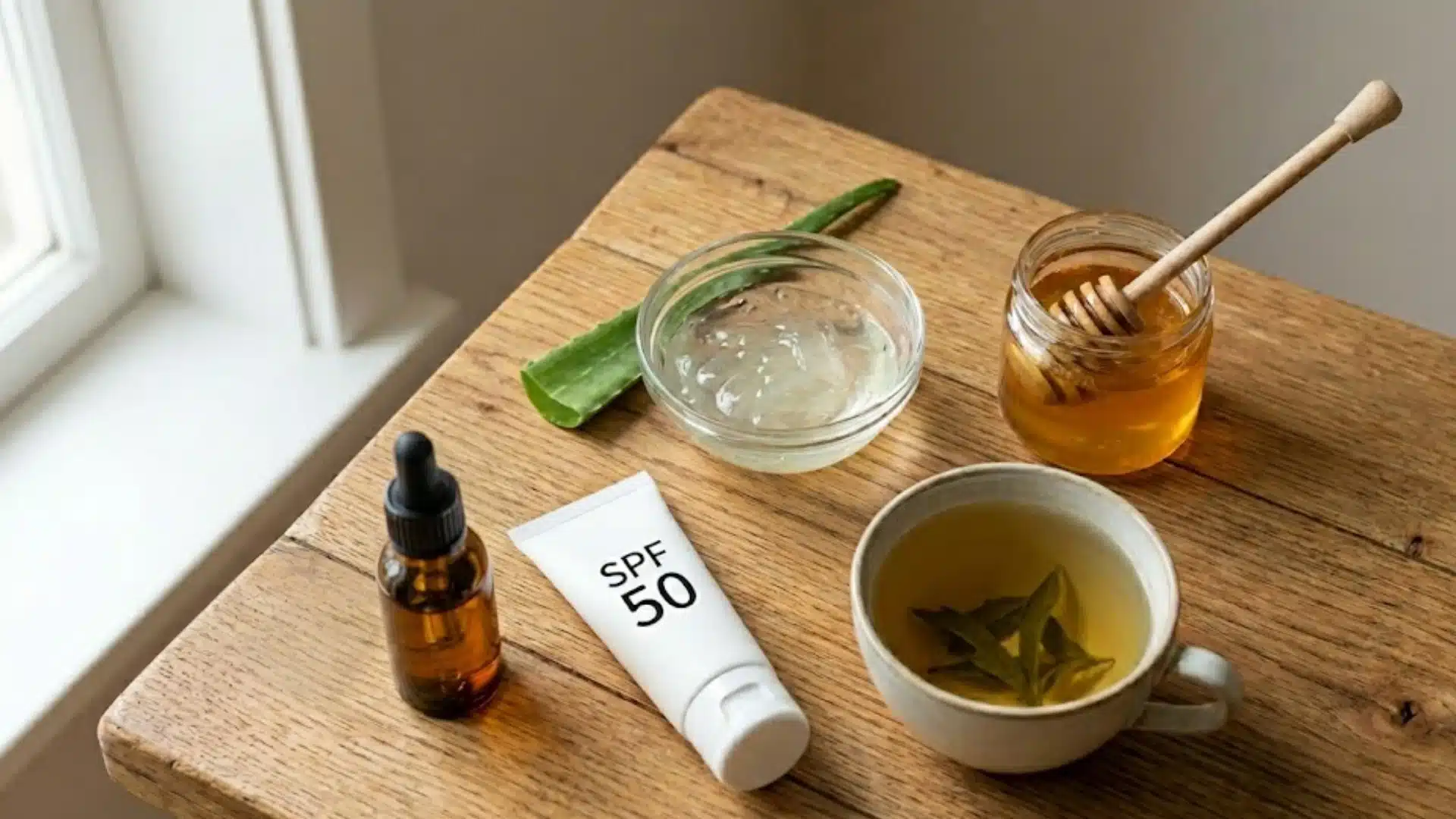
Gentle skincare can help acne marks look calmer and less noticeable within a week. These natural options focus on soothing the skin instead of irritating it.
1. Use Aloe Vera to Calm the Skin
Aloe vera is one of the most popular natural ingredients for skin recovery. It contains compounds that may help soothe irritation and support the skin’s healing process.
This can make red or dark acne marks appear less noticeable over time. Fresh aloe vera gel or a fragrance-free product can be applied after cleansing.
Its lightweight texture absorbs quickly and works well for most skin types. Consistent use may help the skin look healthier and more balanced.
2. Try Honey for Gentle Healing Support
Raw honey is known for its soothing and moisturizing properties. It can help support the skin barrier while calming areas that still feel irritated after breakouts.
Because honey is naturally gentle, it is less likely to cause dryness compared to harsh home remedies.
A thin layer can be used as a short face mask for about 15 to 20 minutes before rinsing. While it will not remove scars overnight, it may help the skin look smoother and more comfortable.
3. Apply Green Tea for Redness
Green tea contains antioxidants that may help reduce visible redness and calm stressed skin. It is often used in skin care because of its soothing effects on inflammation.
Cooled green tea can be applied with a cotton pad, or products containing green tea extract can be added to a routine.
Regular use may help fresh acne marks appear less noticeable while giving the skin a calmer appearance. It is a simple option for those seeking a gentle addition to their routine.
4. Use Rosehip Oil for Dry, Scarred Skin
Rosehip oil is rich in fatty acids and skin-supporting nutrients that help improve moisture levels.
Dry skin can make acne marks and uneven texture stand out more, so keeping the skin hydrated is important. A few drops of rosehip oil can be applied at night after moisturizer.
Its nourishing properties may help the skin feel softer and smoother over time. People with sensitive skin often prefer it because it is lightweight and generally well tolerated.
5. SPF 30+
Sunscreen is one of the most important steps for fading acne marks. Sun exposure can make existing discoloration darker and slow the skin’s natural recovery process.
A broad-spectrum SPF 30 or higher should be applied every morning, even on cloudy days. Reapplying when spending time outdoors helps maintain protection throughout the day.
Without sunscreen, other efforts to improve acne marks may produce slower results. Daily sun protection helps prevent further darkening and supports a more even-looking complexion.
Natural Ingredients that May Make Scars Worse
Some popular home remedies can do more harm than good. Instead of helping acne marks fade, they may irritate the skin and slow recovery.
- Lemon Juice: The high acidity of lemon juice can irritate the skin and weaken its protective barrier. It may also increase sensitivity to sunlight, making dark marks appear worse over time.
- Toothpaste: Toothpaste is designed for teeth, not skin. Many formulas contain ingredients that can cause dryness, redness, and irritation when applied directly to acne marks or scars.
- Baking Soda: Baking soda has a very high pH level that can disrupt the skin’s natural balance. This may lead to irritation, dryness, and increased sensitivity.
- Sugar Scrubs: Rough scrubbing can cause tiny tears in the skin and worsen inflammation. Over-exfoliation may also delay the healing process and make marks more noticeable.
- Undiluted Essential Oils: Essential oils are highly concentrated and can cause irritation or allergic reactions when used undiluted. Sensitive skin is especially prone to redness and discomfort when applied directly.
7-Day Natural Routine for Fading Acne Marks
A simple routine can help acne marks look calmer within a week. The goal is to support healing, avoid irritation, and stay consistent.
Day 1: Patch Test Everything
Before applying any natural ingredient to the entire face, test it on a small area of skin. This helps identify irritation, redness, or allergic reactions before they become a bigger problem.
Aloe vera, honey, rosehip oil, and other ingredients can affect people differently. Apply a small amount behind the ear or along the jawline and wait 24 hours.
Starting slowly is important because irritated skin can make acne marks appear more noticeable and take longer to fade.
Day 2-3: Calm Redness and Stop Picking
The focus during these days should be on reducing irritation and allowing the skin to recover.
Gentle ingredients such as aloe vera or green tea can help soothe redness and support a healthier appearance. Just as important, avoid touching, squeezing, or picking at acne and healing marks.
Picking can further damage the skin and increase the risk of longer-lasting discoloration. Keeping hands away from the face gives the skin a better chance to heal naturally.
Day 4-5: Add Gentle Hydration
Once the skin feels calm, focus on maintaining hydration. Well-moisturized skin often looks smoother and healthier, making acne marks less noticeable.
A lightweight moisturizer or a few drops of rosehip oil can help reduce dryness and support the skin barrier. Avoid introducing strong exfoliants or harsh treatments during this stage.
The goal is to create a comfortable environment for healing. Consistent hydration also helps improve the overall appearance and texture of the skin.
Day 6-7: Protect Skin and Check Progress
The final days are about protecting the progress already made. Apply a broad-spectrum SPF 30 or higher every morning to prevent marks from becoming darker.
Continue using any gentle products that worked well earlier in the week and avoid experimenting with new remedies.
Take a close look at the skin and compare it with how it looked on day one. Redness may be reduced, and fresh marks may appear lighter, even if deeper scars remain unchanged.
Daily Habits that Help Scars Look Lighter
Natural remedies can support the skin, but daily habits often make the biggest difference. Consistent care helps prevent marks from becoming darker and gives the skin a better chance to recover.
- Wear sunscreen every morning: Daily sun protection helps prevent acne marks from darkening and becoming more noticeable.
- Keep skin moisturized: Hydrated skin often looks smoother and healthier, which can make uneven areas stand out less.
- Do not pick active acne: Picking or squeezing blemishes can increase inflammation and raise the risk of long-lasting marks.
- Sleep well: Quality sleep supports the body’s natural repair process and helps maintain healthier-looking skin.
- Drink enough water: Staying hydrated supports overall skin health and helps the skin maintain its natural balance.
While these habits will not remove deep scars overnight, they can improve the appearance of fresh acne marks over time.
For a broader approach to clearing your skin beyond scar treatment, the guide on how to get clear skin covers the full picture.
Mistakes That Slow Down Healing
A few common habits can quietly delay progress or even make post-acne marks worse, even when you’re using the right ingredients consistently.
- Skipping SPF: Sunscreen isn’t just protection; it’s treatment. Without it, UV exposure actively darkens marks and undoes any fading progress from the night before.
- Picking or Pressing at Marks: Touching active marks, even gently, can introduce bacteria and prolong inflammation. It also risks deepening surface PIH into a longer-lasting scar.
- Using Lemon Juice Undiluted on Dark or Sensitive Skin: Undiluted citrus can cause chemical burns and trigger reactive pigmentation, which is the opposite of what you want. The risk is higher on deeper skin tones.
- Over-Exfoliating: Using a physical scrub, AHA, and active spot treatment in the same routine strips the skin barrier. A compromised barrier heals more slowly and becomes more reactive to everything you apply to it.
- Inconsistency: One good evening isn’t enough. Natural ingredients work through accumulation. Missing two or three days in a row resets most of the progress. Keep it simple enough that you can do it every single day.
- Confusing Diy with Medical-Grade Treatment: If scars are deep, pitted, or raised, home methods aren’t the right tool. There’s a difference between supporting your skin’s natural healing and expecting DIY to replace dermatological procedures. Worth understanding what home methods can do and what they can’t before you commit to any approach on your skin.
When to See a Dermatologist
Natural remedies can help improve the appearance of fresh acne marks, but they are not always enough for every skin concern.
It may be time to see a dermatologist if acne scars are deep, raised, painful, or affecting confidence and daily life.
Professional advice is also important when dark marks do not improve after several months of consistent skin care.
Ongoing breakouts that continue to leave new scars should not be ignored, as treating active acne can help prevent further skin damage.
A dermatologist can identify the type of scarring and recommend treatments that match the skin’s needs.
Options such as chemical peels, microneedling, laser treatments, or prescription products may provide better results than home remedies alone.
Getting expert help early can often prevent scars and discoloration from becoming more difficult to treat.
Conclusion
Acne marks can look softer in a week when the skin gets gentle care, enough moisture, and daily sun protection.
Fresh redness may calm down, dry patches may look smoother, and dark spots may appear a little less sharp. Still, deep pits, raised scars, and old texture changes usually need more time than seven days.
That is why the safest approach is to avoid harsh remedies and focus on steady healing.
If you came here looking for how to remove acne scars naturally in a week, the real goal is to improve the look of marks without damaging your skin.
Aloe vera, honey, green tea, rosehip oil, SPF, and better daily habits can all support that process.
Which natural method are you planning to try first? Share your thoughts in the comments below.
Frequently Asked Questions
Can Ice Help Acne Scars Fade Faster?
Ice does not fade acne scars, but it may help calm swelling and redness around active pimples. Wrap the ice in a clean cloth and use it for only a short time.
Should I Exfoliate Acne Marks During the 7-Day Routine?
Gentle exfoliation may help some people, but it is better to avoid it during a short natural routine. Overdoing it can irritate the skin and make marks look darker.
Can Diet Affect How Acne Marks Heal?
Diet will not erase scars in a week, but a balanced diet can support overall skin health. Foods rich in vitamins, protein, and healthy fats may help the skin repair itself more effectively over time.