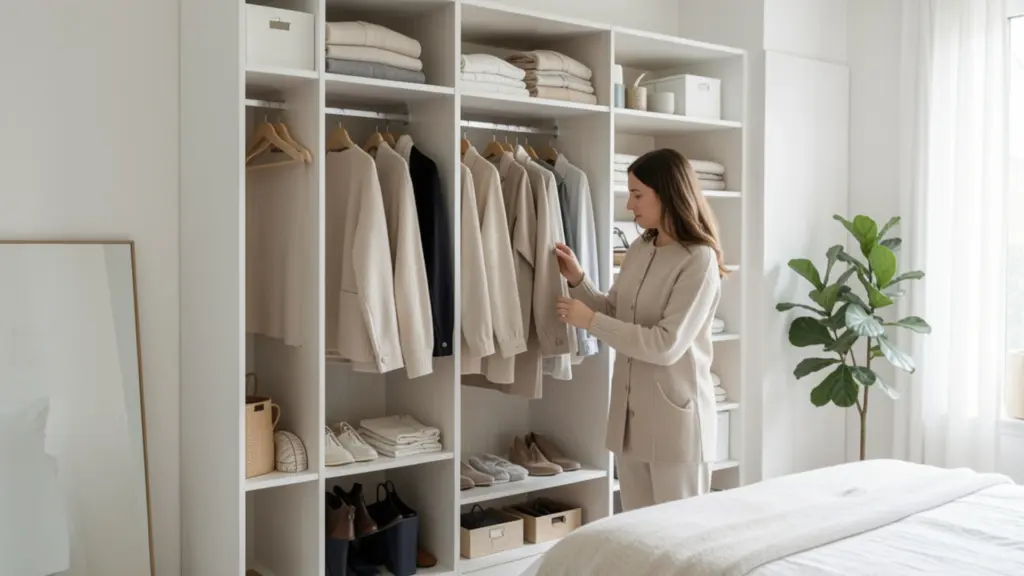
A minimalist wardrobe does not mean dressing in plain outfits every day. It also does not mean throwing away half your clothes just to follow a clean look online.
The real idea is much simpler: keep the pieces that fit your life, feel good to wear, and help you get ready without stress.
In this blog about creating a minimalist wardrobe, you will learn how to reduce the amount of clothing you own without losing your style.
We will go through simple ways to sort your closet, choose better basics, keep the right statement pieces, and build outfits that still feel like you.
By the end, you will know how to own fewer clothes while still having enough looks for daily plans, work, weekends, and everything in between.
What is a Minimalist Wardrobe?
A minimalist wardrobe is a curated closet of around 30 to 50 pieces, where each item has a clear purpose and gets worn regularly. Think of it less as a design aesthetic and more as a calibration: your clothes finally match how you actually live.
When your wardrobe is built this way, getting dressed feels quicker because fewer pieces compete for space, attention, or approval.
The best minimalist wardrobes work across your actual schedule, from workdays to errands, casual plans, travel, and time at home.
With the right mix of basics, layers, shoes, and a few statement pieces, you can have enough outfits without feeling overwhelmed every morning.
How a Capsule Wardrobe Supports Better Habits
A full closet creates more choices, but more choices do not make mornings easier. Decision fatigue is real: the more options you face at the start of the day, the harder every decision after it becomes.
A well-edited wardrobe removes that friction before you’ve had your first coffee. There’s a practical case that compounds over time, too.
Fashion production accounts for roughly 10% of global carbon emissions, more than international flights and maritime shipping combined.
Owning and wearing clothes longer is one of the most direct ways to reduce your part in that cycle.
Beyond the environmental case, buying less and choosing better tends to cost less over time than ongoing impulse purchases that rarely get worn.
Minimalist Wardrobe Tips: Build a Simple Closet that Works
Minimalist wardrobe tips help you build a simple closet that feels clean, useful, and easy to style. With fewer pieces, better basics, and smarter outfit planning, getting dressed becomes less stressful every day.
1. Start with a Full Wardrobe Audit
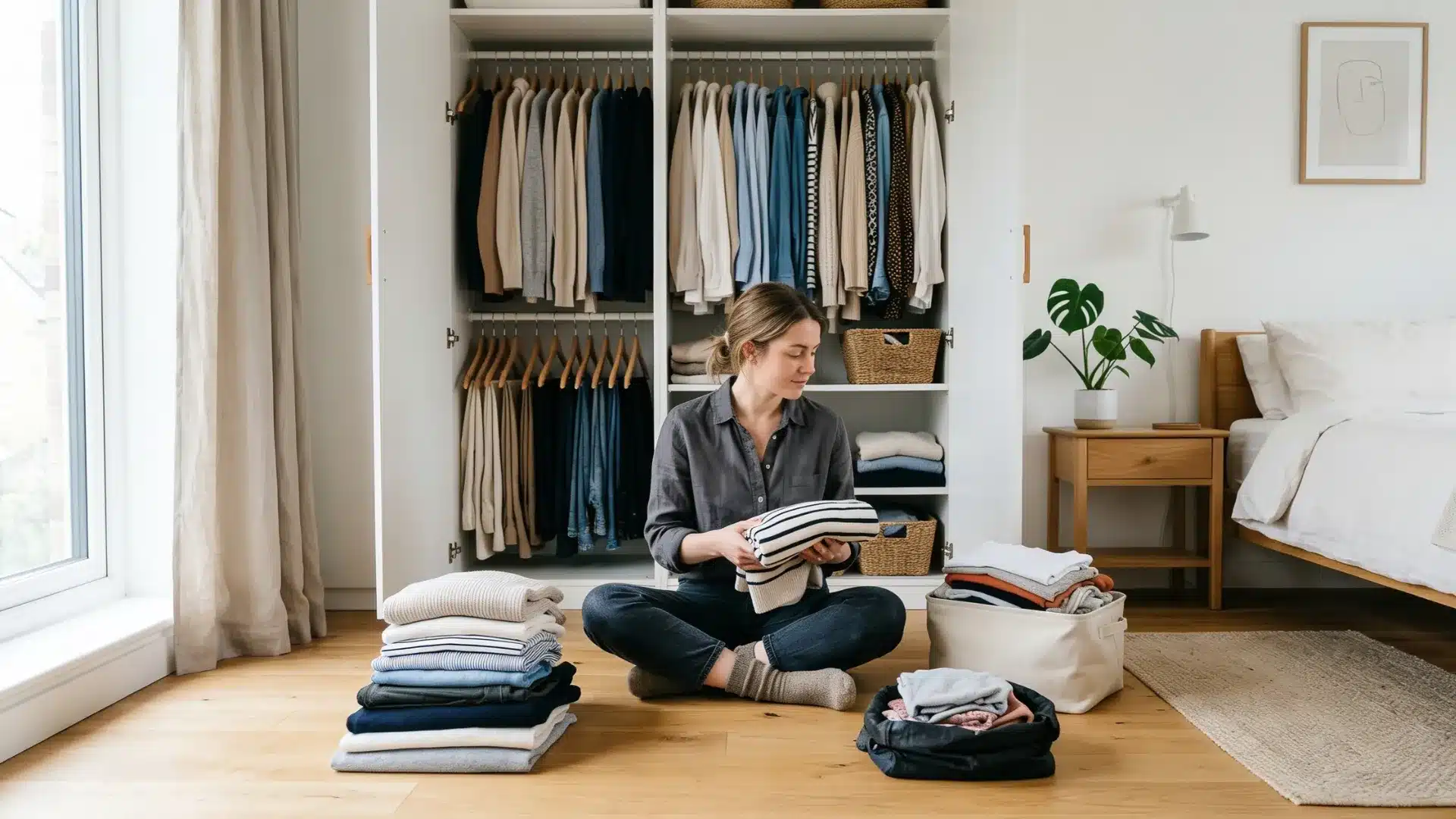
Take every piece of clothing out of your closet, drawers, shelves, storage boxes, and those corners you usually ignore. Put everything in one place so you can see the full picture.
This step matters because hidden clothes can make your wardrobe feel smaller than it is, causing you to buy things you may already own.
Once everything is laid out, your habits become clearer. You will notice repeats, forgotten items, and pieces you never chose. A proper audit gives you an honest starting point before you decide what stays or goes.
2. Pull Out the Clothes You Wear Every Week
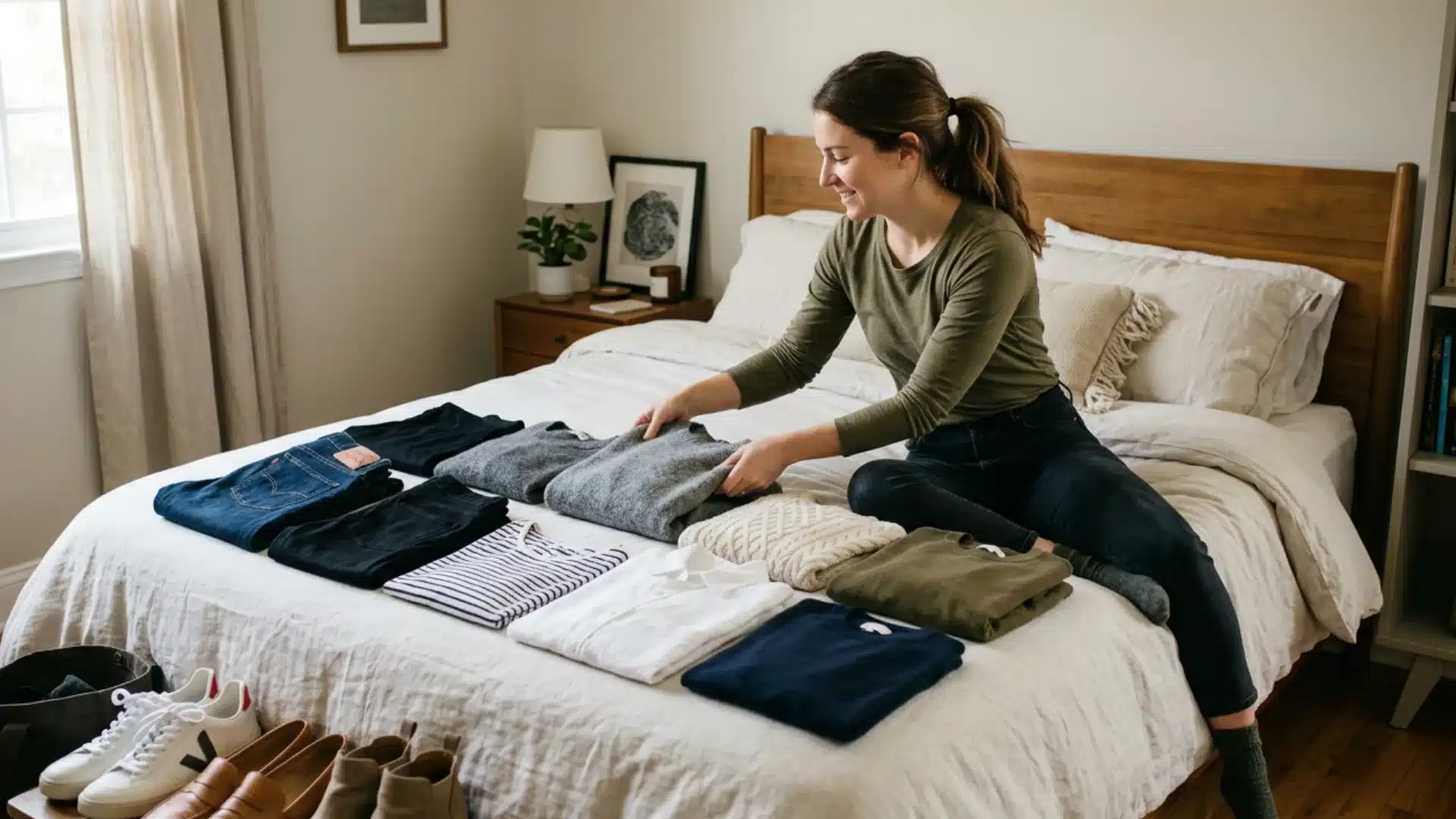
Start by choosing the clothes you already wear often. These are the jeans, shirts, dresses, jackets, shoes, and basics you reach for without overthinking.
They fit your body, suit your daily routine, and make you feel comfortable without needing extra effort. These are the clothes you reach for often because they feel easy and natural.
Set them aside first because they show what your real style looks like. A minimalist wardrobe should not begin with someone else’s checklist. It should begin with the pieces that already work for your daily life, your comfort, and your confidence
3. Notice What You Never Reach for
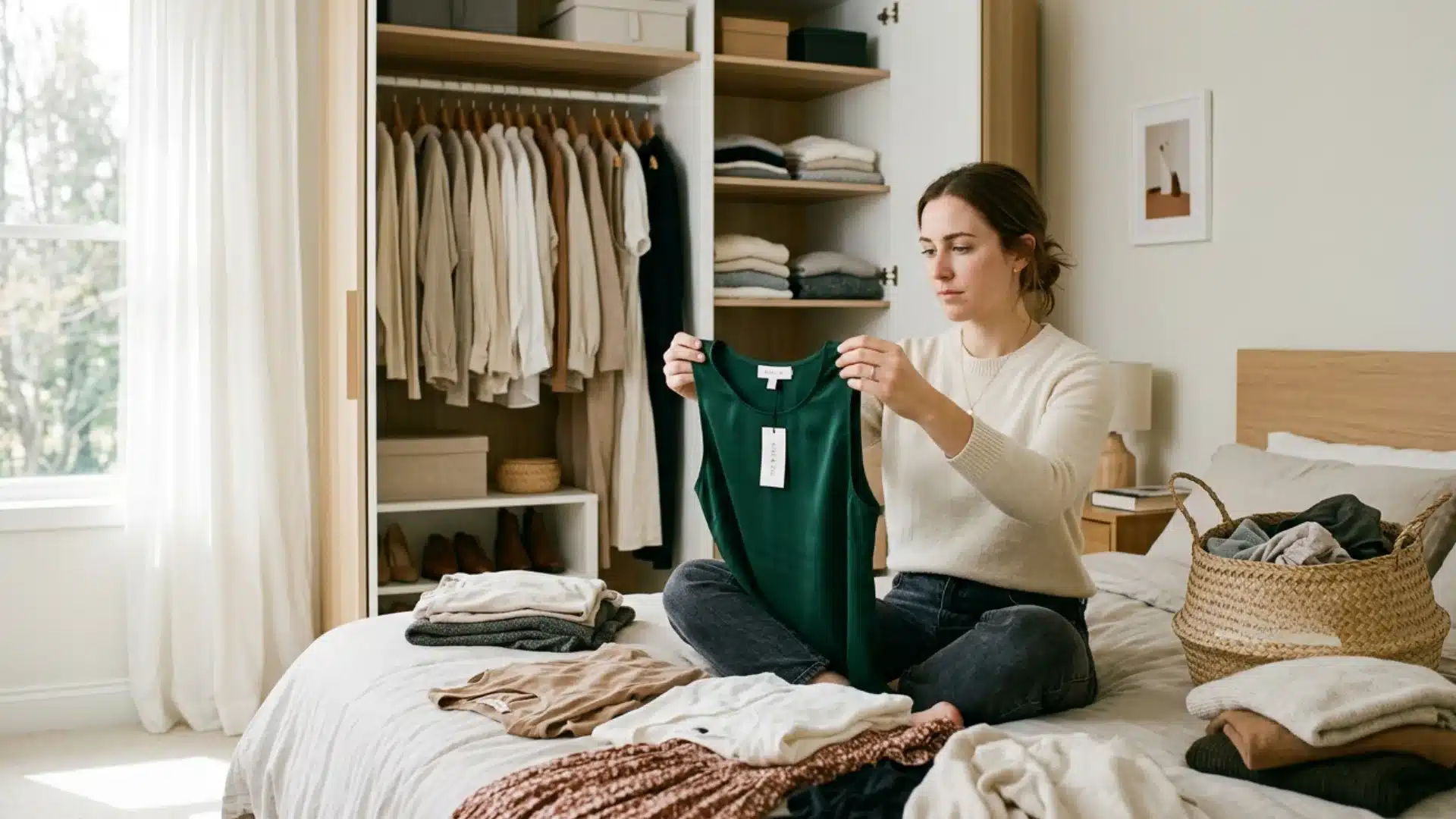
Now look at the clothes still sitting in the pile. These are the pieces you keep moving around but rarely wear.
Maybe they are damaged, uncomfortable, hard to style, or simply no longer your taste. Some may remind you of money spent, so you keep them out of guilt.
Pay attention to the pattern. Do you buy for trends, discounts, or imagined events? Understanding why these clothes stayed unused helps you shop with more intention next time.
4. Stop Keeping Clothes for Your Fantasy Lifestyle
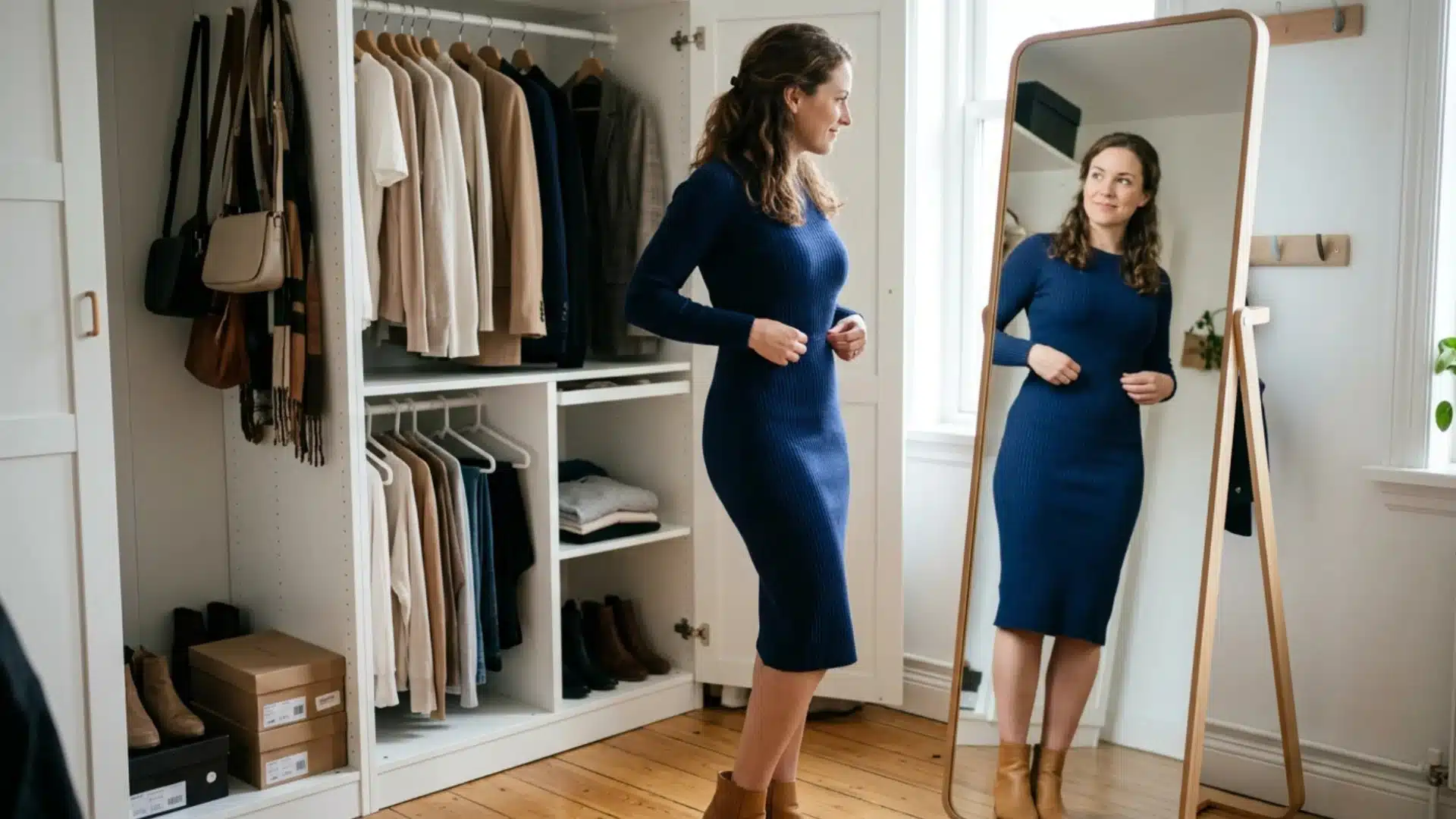
Be honest about the life you actually live. Many closets are filled with clothes for a version of ourselves that does not exist right now.
Maybe it is formal workwear, party outfits, gym sets, or vacation pieces that never leave the hanger. Keeping them can make your wardrobe feel unfinished, even when you own enough.
A useful closet supports your real schedule, climate, body, and comfort. When your clothes match your life, getting dressed feels easier.
5. Define Your Personal Style Rules
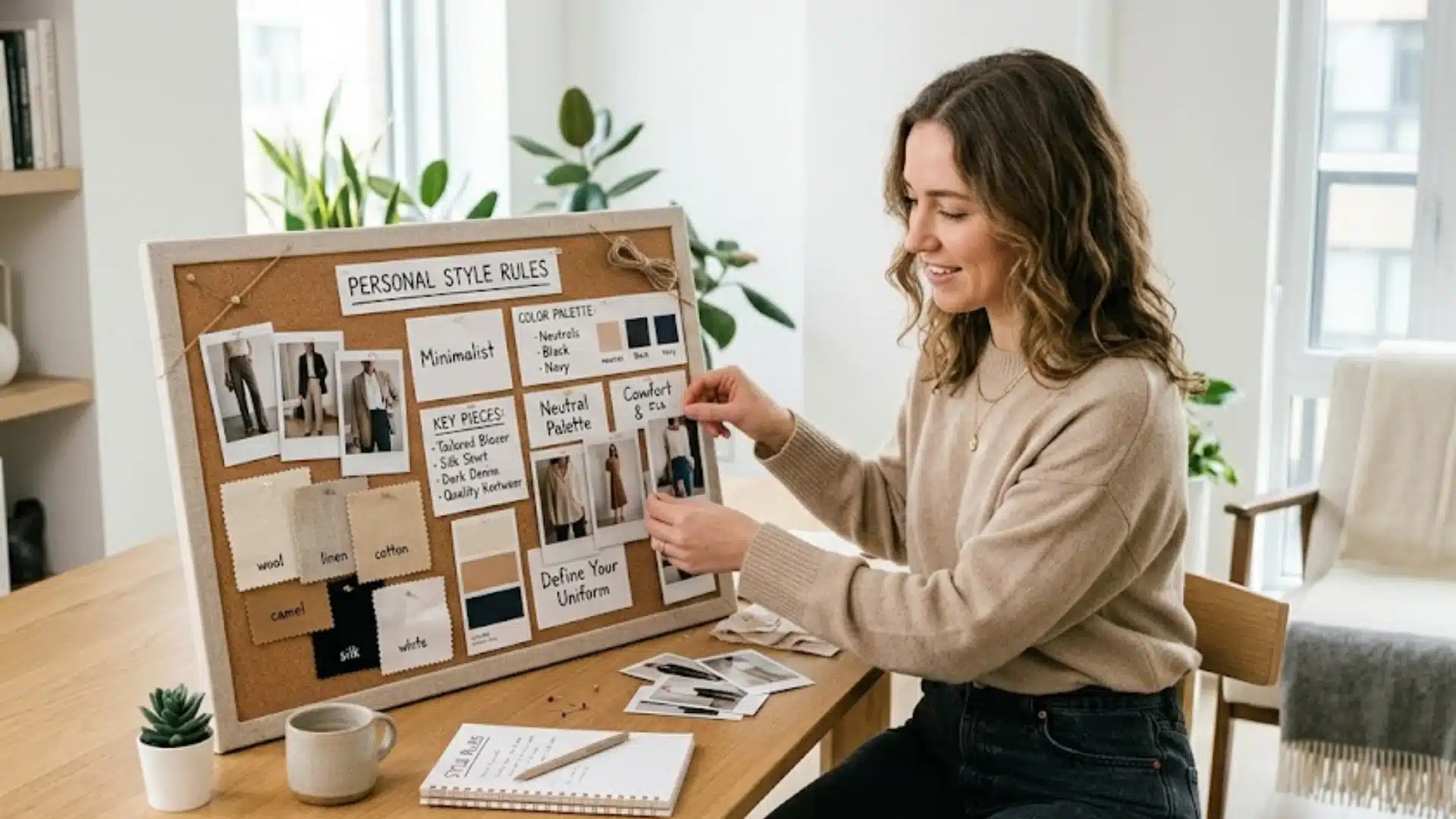
Before you rebuild, spend time with what you kept and notice what it has in common. Are you drawn to relaxed silhouettes or structured ones?
Do you reach for color or prefer a muted palette? Do you feel most yourself in something minimal, or do you need a bit of texture or pattern?
Once you have them, every future purchase becomes easier to evaluate. Identifying your style essence is a good place to work this out if you are still unsure.
6. Choose Outfit Formulas You Can Repeat
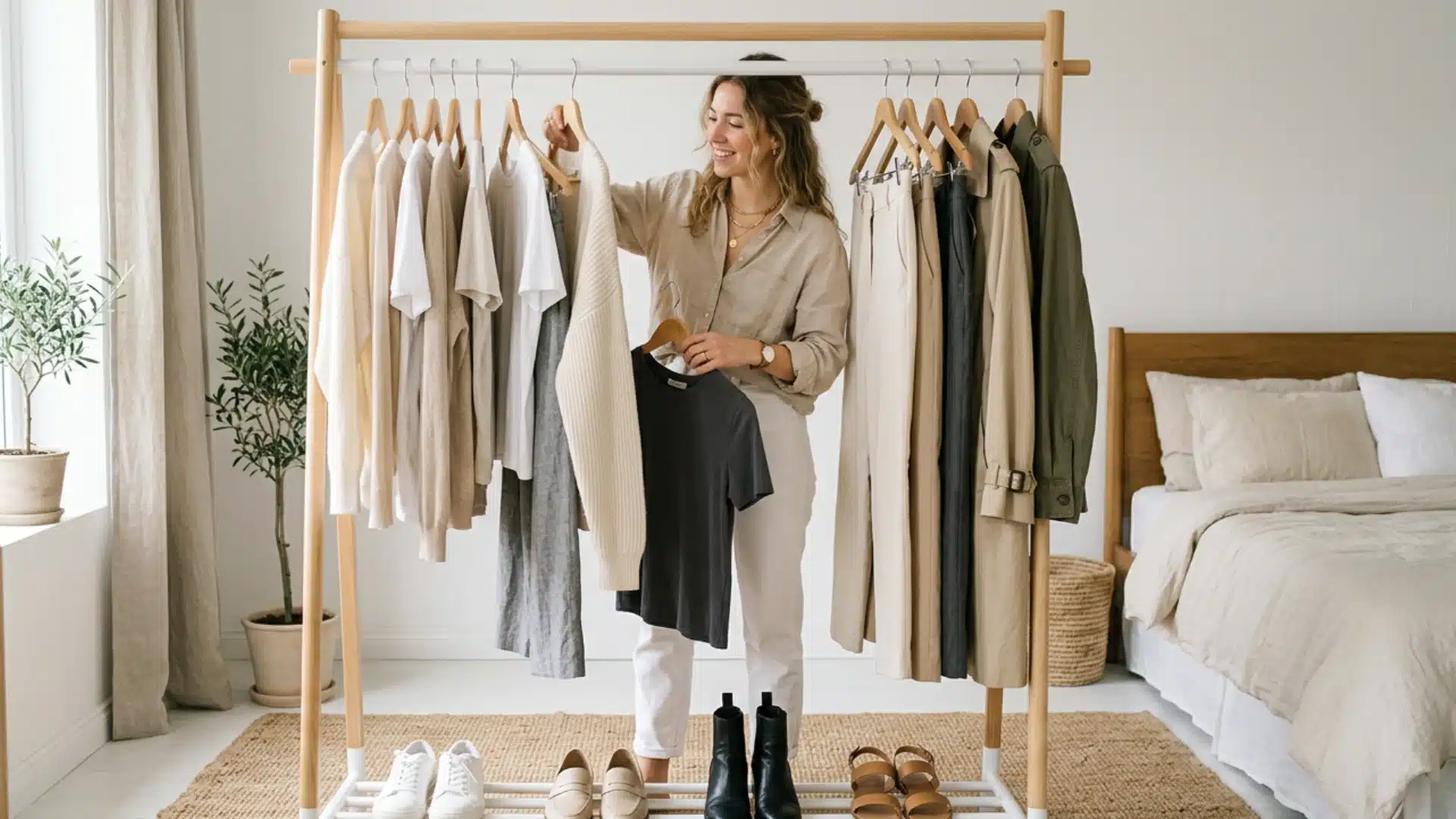
An outfit formula is a reliable combination you know works. Most women have two or three without realizing it. A good minimalist wardrobe makes them deliberate.
Write yours down. Something like: fitted top, wide-leg trousers, and loafers. Or a white tee, dark jeans, a coat, and ankle boots.
When you have five or six formulas, getting dressed becomes a matter of choosing a formula and filling it in, not starting from scratch every morning. I keep mine on a notes app. It sounds overly simple, but it removes the daily puzzle entirely.
7. Pick Fabrics You Actually Enjoy Wearing
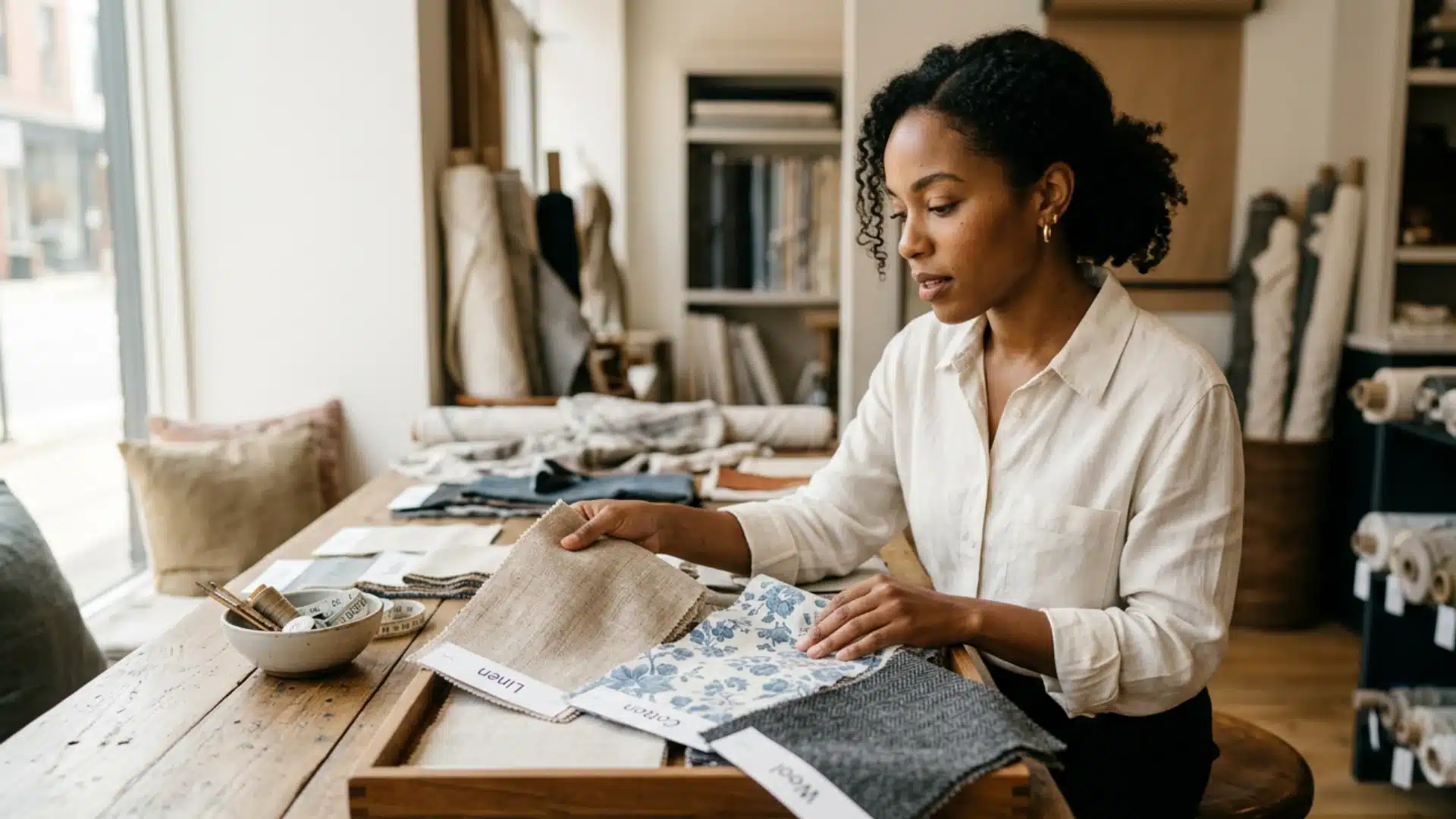
Fabric is the part of clothing that most directly affects comfort, and comfort determines whether something gets worn.
Natural fibers like cotton, linen, and merino wool tend to breathe better, hold their shape longer, and feel better against the skin throughout the day than most synthetics.
Before adding anything to your wardrobe, check how it feels to wear, not just how it looks on the hanger. A piece that feels slightly uncomfortable in the changing room will feel worse by hour three.
8. Know Your Best Fits and Shapes
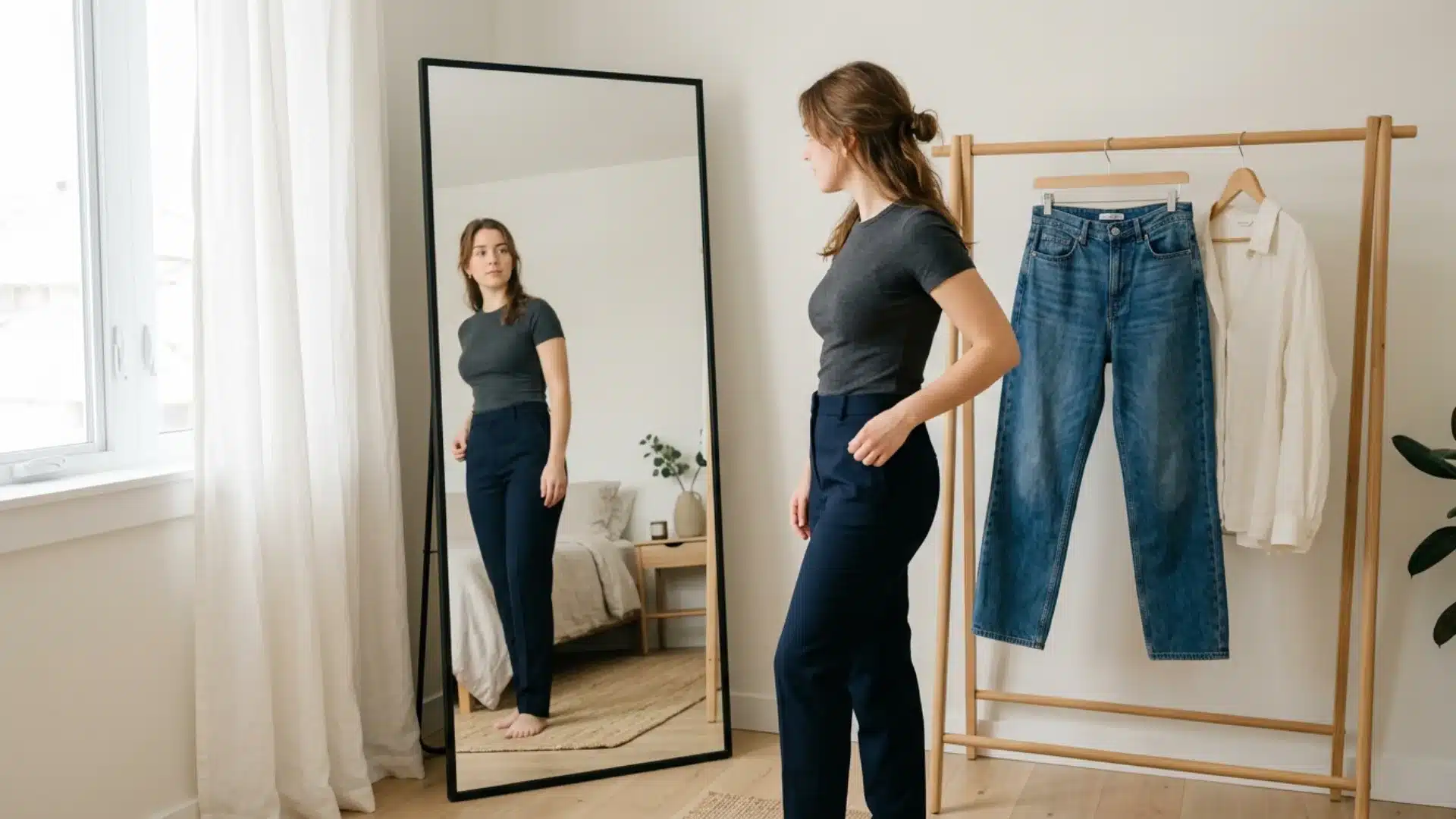
Fit is the single biggest factor in whether a piece earns regular wear. A well-fitting basic will be worn far more than an expensive item that does not fit well.
This is not about body type rules. It is about knowing which cuts you naturally reach for and building around them.
Learning to dress for your body shape helps you narrow down silhouettes quickly, so you stop buying things that look different on you than they did on the model.
9. Build Around Your Real Daily Routine
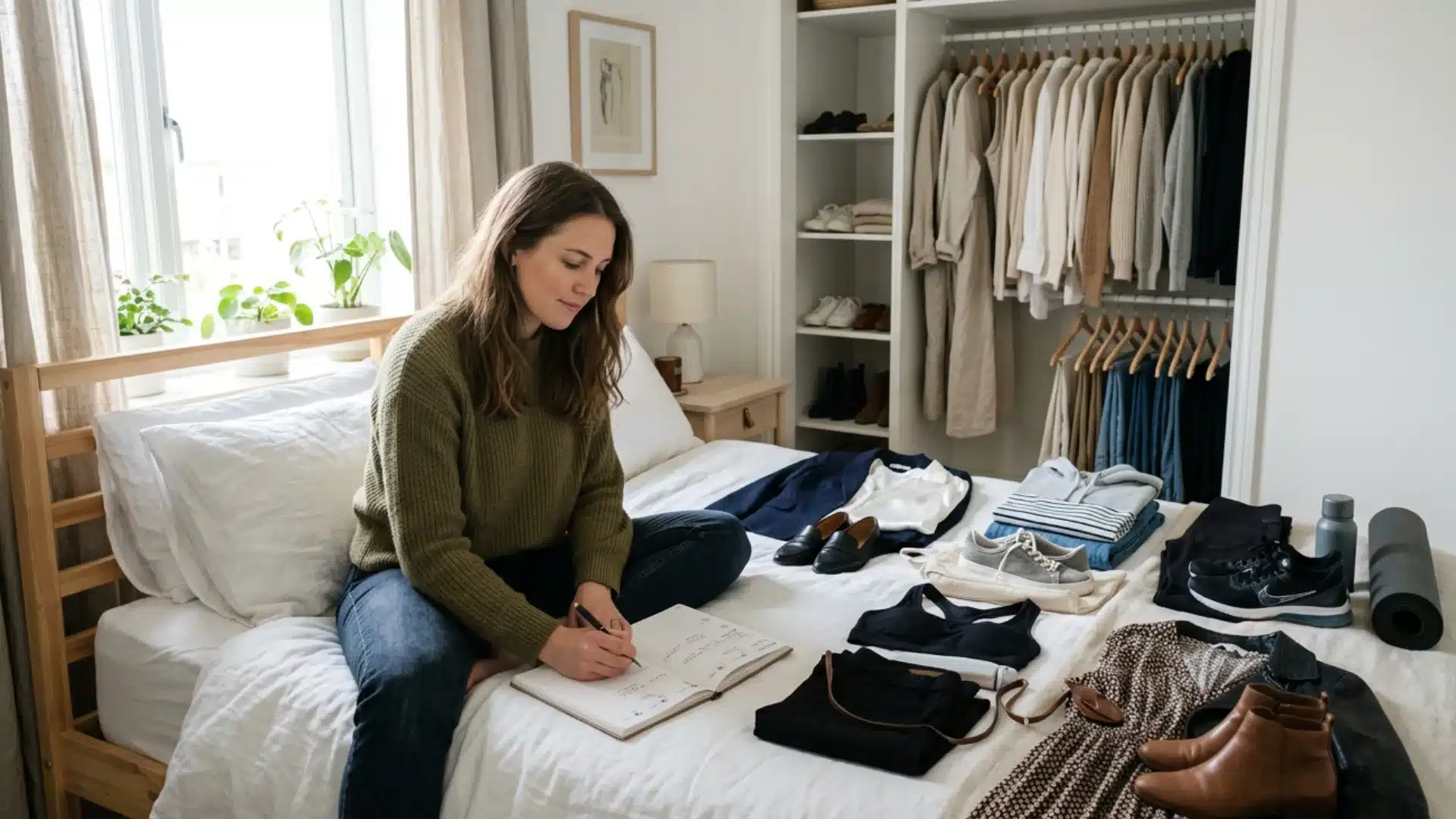
Write down what a typical week actually looks like: how many days at a desk, how many out of the house, what your evenings usually involve, whether you exercise, and where.
Your wardrobe should reflect how you actually spend your time, not an idealized version of your lifestyle. This helps every piece earn its place. A teacher has different needs from a freelancer working from home.
A woman with an active social life needs more occasion-ready pieces than one who mostly socializes casually. There is no standard list that works for everyone.
10. Create a Simple Color Palette
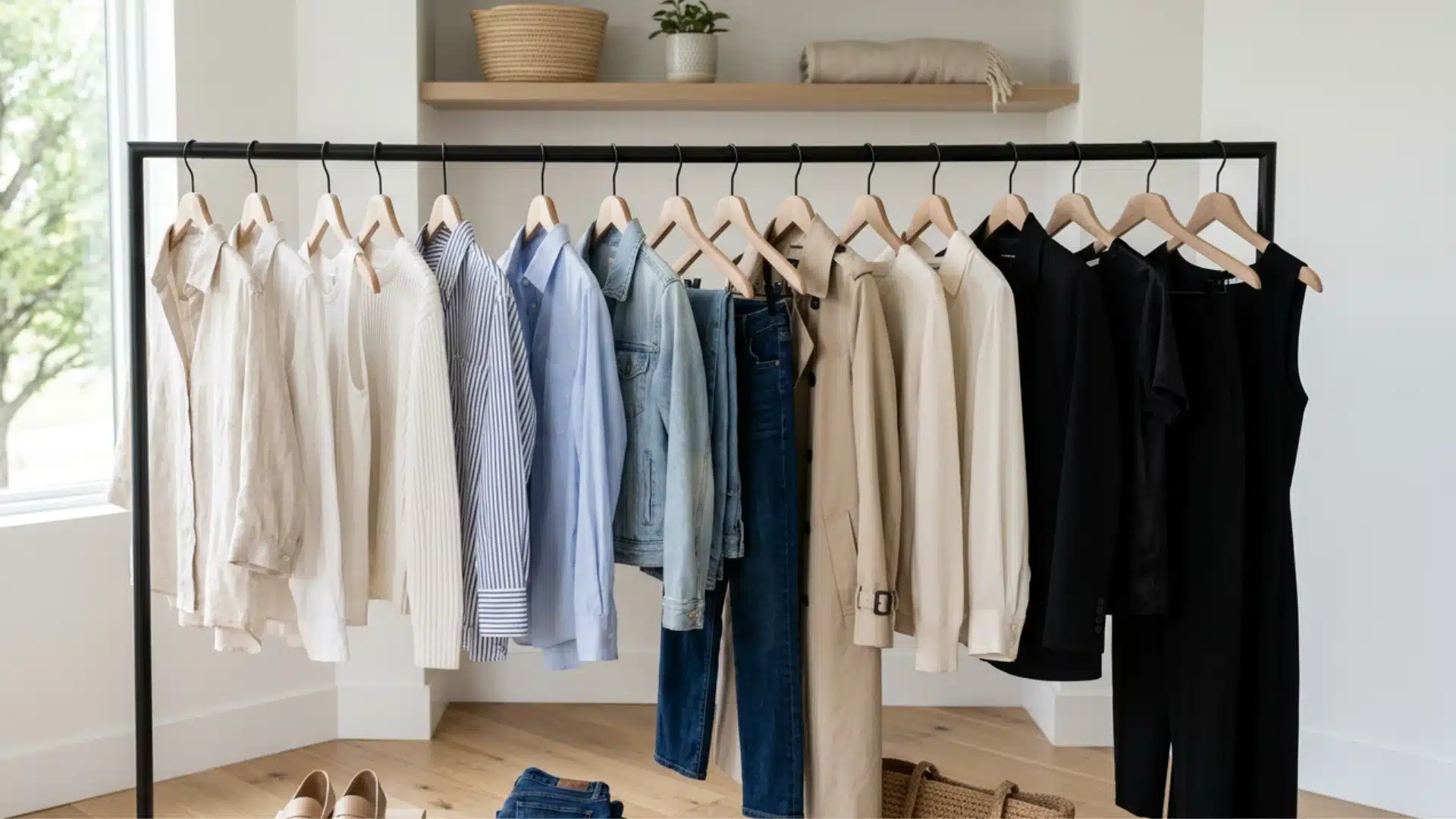
A cohesive color palette is what makes a small wardrobe generate many outfits. When pieces share a color language, any combination tends to work.
Choose two or three neutral base colors and one or two accents. Common neutral bases include black, white, navy, camel, stone, and grey.
Your accents can be anything you genuinely reach for. The key is that everything in your palette should work with everything else.
Neutral color combinations can help you see how warm base tones work together if you need a simple starting point.
11. Keep the Color if It Suits Your Style
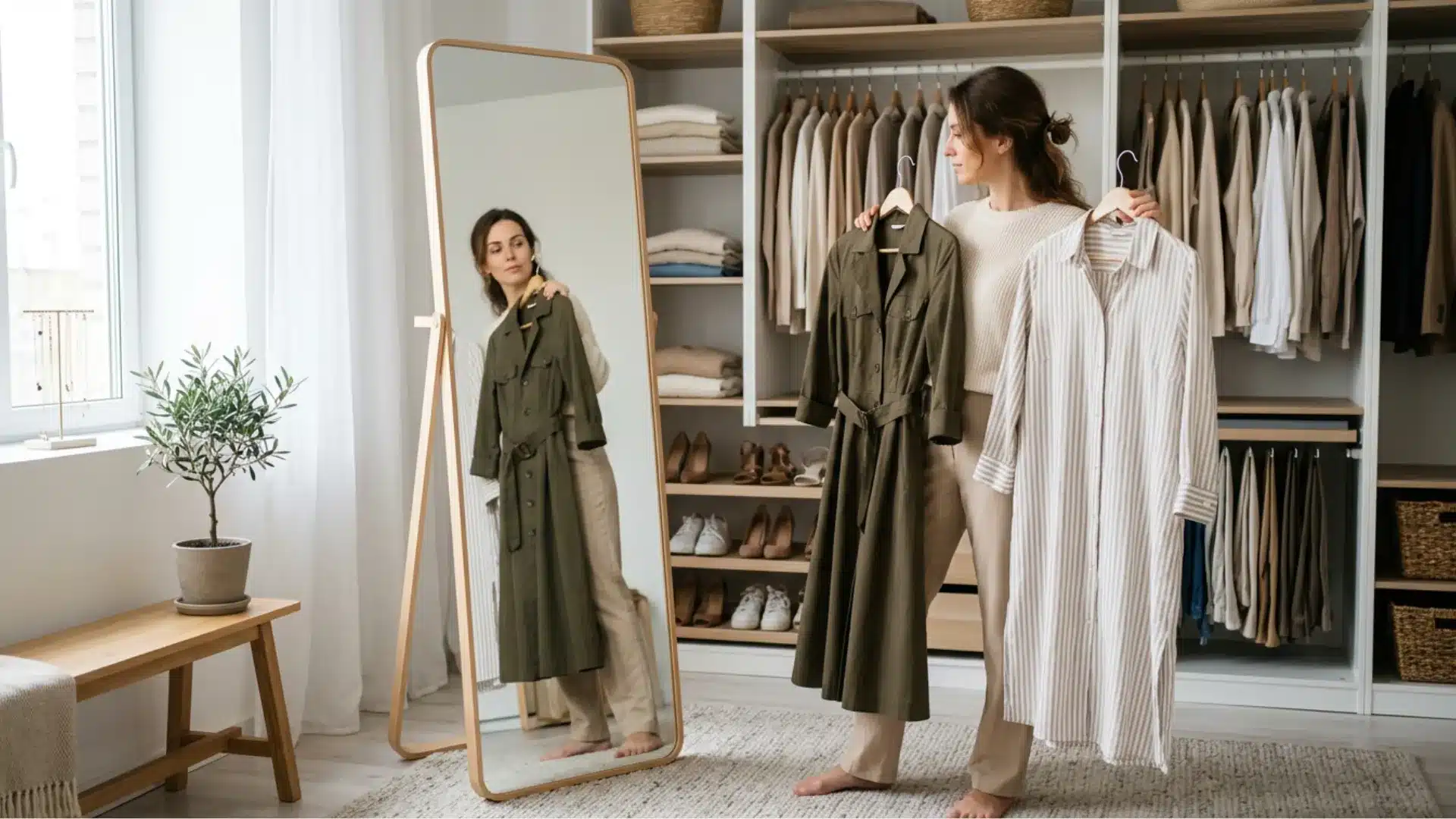
Minimalism does not require a neutral wardrobe. The idea that minimalist dressing means beige and grey is a trend, not a rule.
If color is part of how you express yourself, remove it, and the wardrobe will feel wrong and get abandoned.
The difference between intentional color and clutter is whether the colors in your wardrobe relate to each other. A terracotta blouse, a rust midi skirt, and a warm camel coat belong together.
The same terracotta blouse alongside a cobalt skirt and a forest green jacket may not, unless you have built the palette that holds them together.
12. Choose Pieces that Mix Well Together
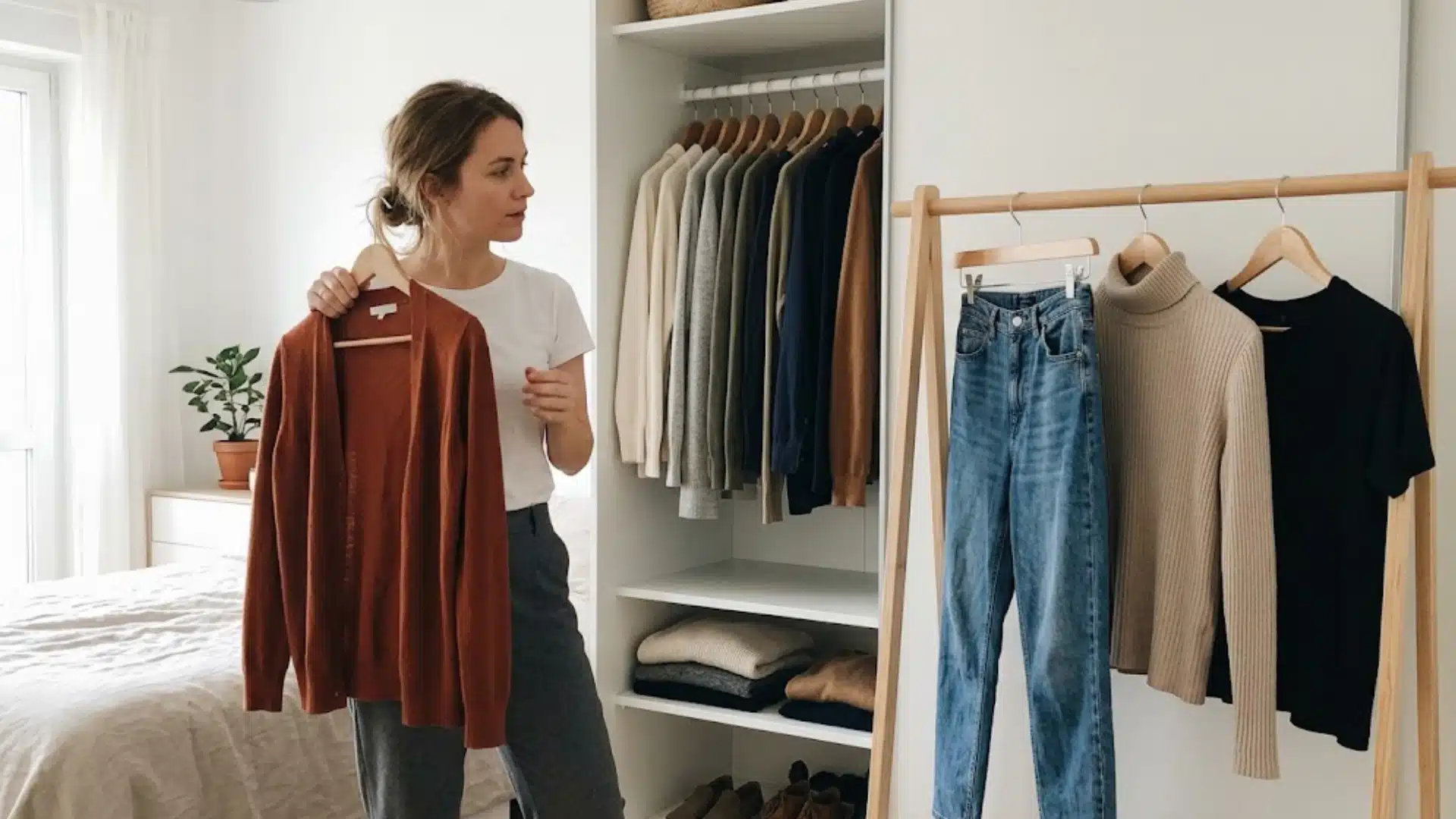
Every item you add should work with at least three things already in your wardrobe.
If a piece can only be worn one way or requires something specific to pair with, it adds less value than something that works in multiple combinations.
Test this before buying. Hold the new piece against what you already own and check whether outfits actually form.
If you can only imagine wearing it with one outfit, it may not be a strong addition to a minimal wardrobe. The most useful pieces work with several items you already own, creating multiple outfit combinations.
13. Avoid Clothes that Need Special Underlayers

Some pieces look good on the hanger but feel difficult in real life, making simple outfits take more effort than they should.
A top that only works with a strapless bra, a dress that requires a specific bodysuit, or trousers that require specific underwear all create minor problems before you even leave the house.
In a minimal wardrobe, those extra conditions matter. They slow you down and make simple outfits feel complicated.
Keep the clothes that are easy to wear, easy to layer, and ready without special planning. The best pieces should support your routine, not make it harder.
14. Keep a Few Statement Pieces
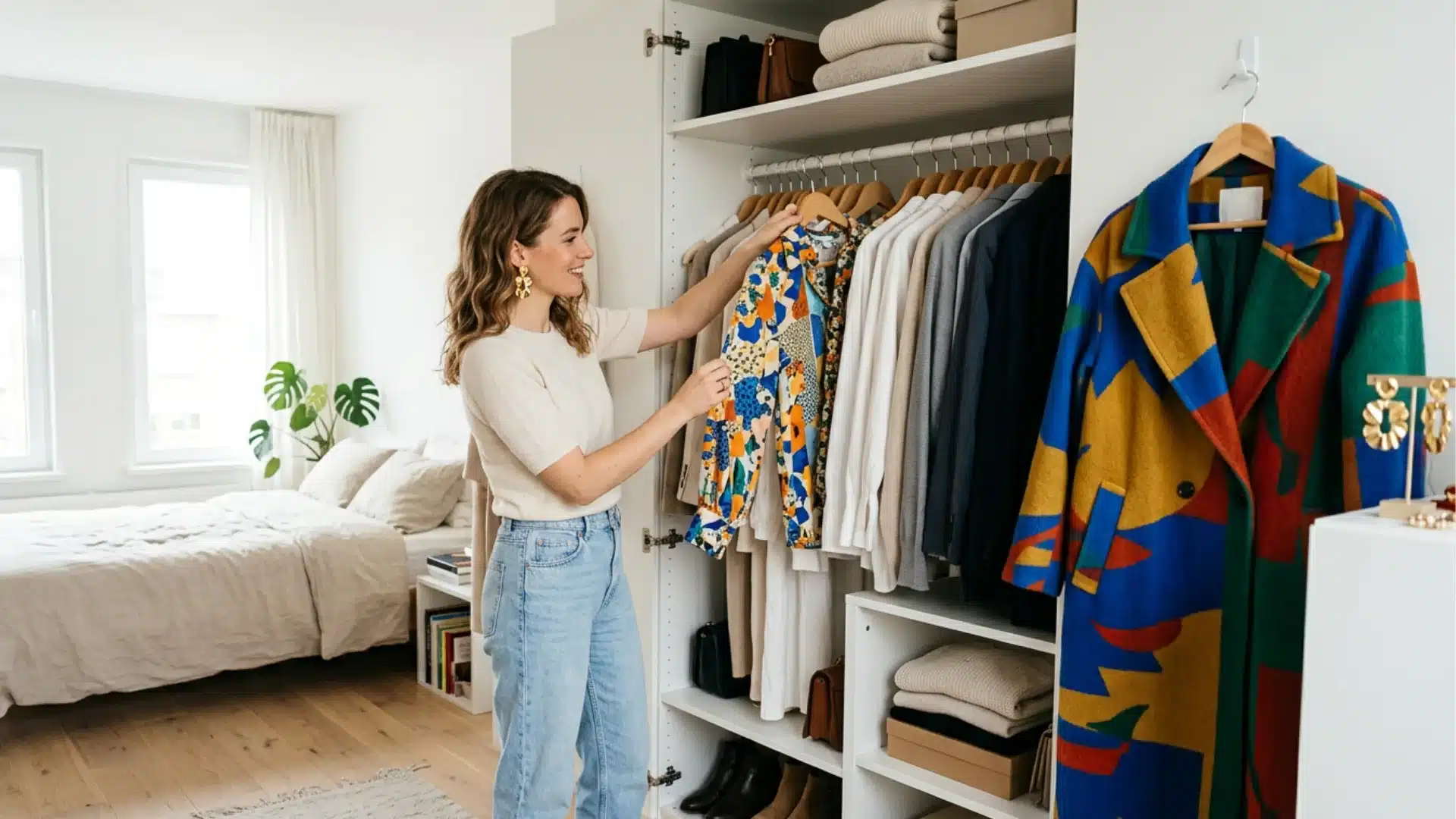
A minimal wardrobe reads as considered, not plain, when a small number of pieces carry character. These do not have to be loud.
A printed blouse worn with plain trousers, a coat in an unexpected color, a pair of earrings that shift the tone of an outfit entirely.
One or two pieces per category are enough to give you options without crowding your wardrobe or making everyday outfit choices feel overwhelming.
The rule is the same as for everything else: it has to be something you actually wear. A statement piece you are waiting for the right occasion for is just clutter with good intentions.
15. Try Borrowing or Renting One-Time Outfits
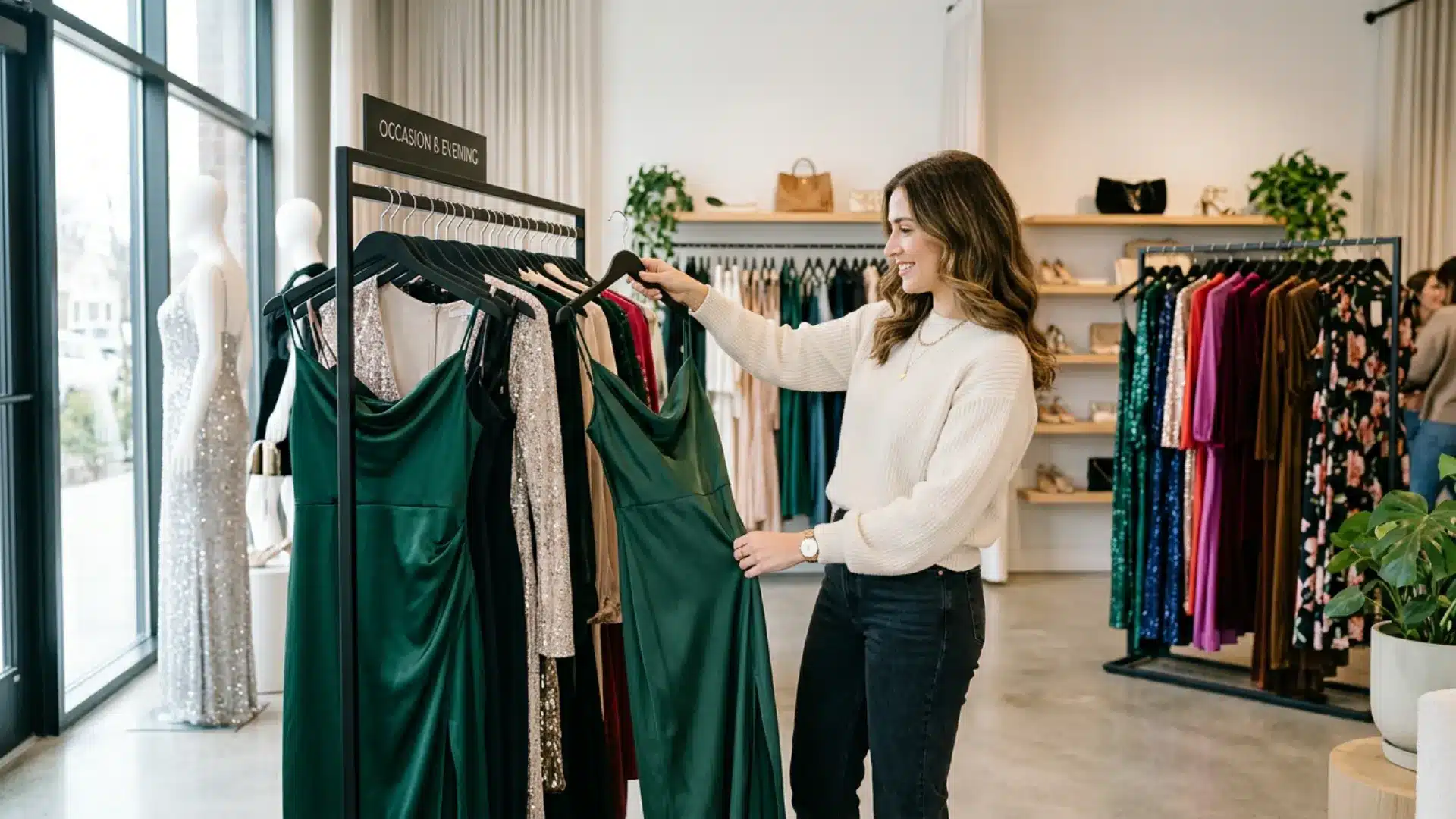
Weddings, formal events, themed parties, and one-off occasions rarely need a permanent wardrobe spot.
Renting or borrowing for these events keeps your closet honest and prevents the slow accumulation of pieces that only get worn once.
Clothing rental platforms have expanded significantly, and borrowing from friends before buying for a specific occasion is still the most direct solution.
If you find yourself reaching for a rented piece repeatedly, that is usually a signal it belongs in your permanent wardrobe.
16. Stop Chasing the Perfect Basic

A top that only works with a strapless bra, a dress that requires a specific bodysuit, or trousers that require specific underwear all create minor problems before you even leave the house.
In a minimal wardrobe, those extra conditions matter because they make simple outfits feel harder, slower, and less practical for everyday use.
Pick the best version you currently own, wear it until you know exactly what you would want to change, and then buy one replacement. That is a more useful process than collecting iterations.
17. Shop with a Clear List

Once you know your gaps after the audit, shop specifically for those. Write the list before you go. Stick to it. Browsing without a purpose is how impulse pieces enter a wardrobe that does not need them.
Before any purchase, ask: Do I already own something that does the same job? Will this work with at least three other things I own? Am I going to wear this at least 30 times?
The 30-wear benchmark, widely used in sustainable fashion research, is a useful gut check. If you cannot picture wearing something 30 times, it is probably not the right buy.
18. Wait Before Buying Something New

When you see something you want, wait a week before buying it. Most impulse desires pass within a few days. The ones that do not are usually genuine gaps in your wardrobe rather than reactions to a trend or a good display.
This delay also gives you time to check whether you already own something similar. It is surprisingly common to buy a version of something you already have because it was presented differently in a shop.
This pause helps you buy from need rather than mood, and keeps your wardrobe focused on pieces that genuinely add value.
19. Use the One-in, One-Out Rule

Once your wardrobe is built, keep it stable by requiring that something leaves before something new arrives. Before you buy, decide what it replaces.
That single moment of decision eliminates a large share of impulse buying. This also keeps the wardrobe from creeping back toward excess over time.
Without the one-in-one-out discipline, most edited wardrobes quietly expand back to their original size within a year.
Every new purchase should justify the space it takes up in your wardrobe. Thinking this way encourages smarter buying habits and helps keep unnecessary items from piling up.
20. Take Better Care of Your Favorite Clothes
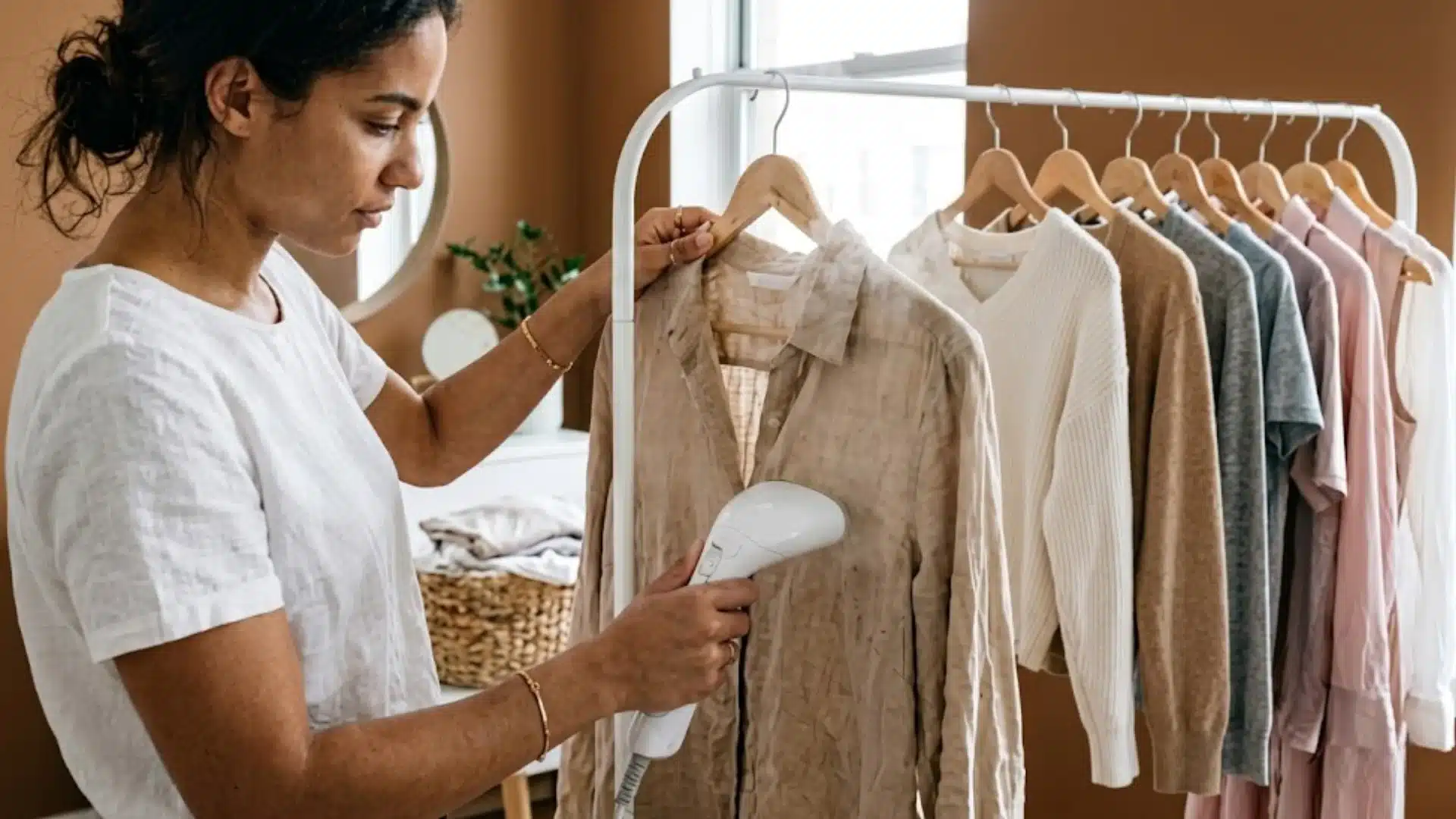
In a minimal wardrobe, each piece gets worn more often. Proper care is what keeps them looking good long enough to justify owning fewer things overall.
Wash less frequently, air pieces out between wears, and follow care instructions on the label.
Natural fibers, in particular, respond well to gentler handling: cold water, air-drying, and avoiding the dryer for anything that does not need it.
A missing button, a small loose seam, or a scuffed shoe sole are all fixable. Fix before you replace.
21. Organize Your Closet so Everything is Visible
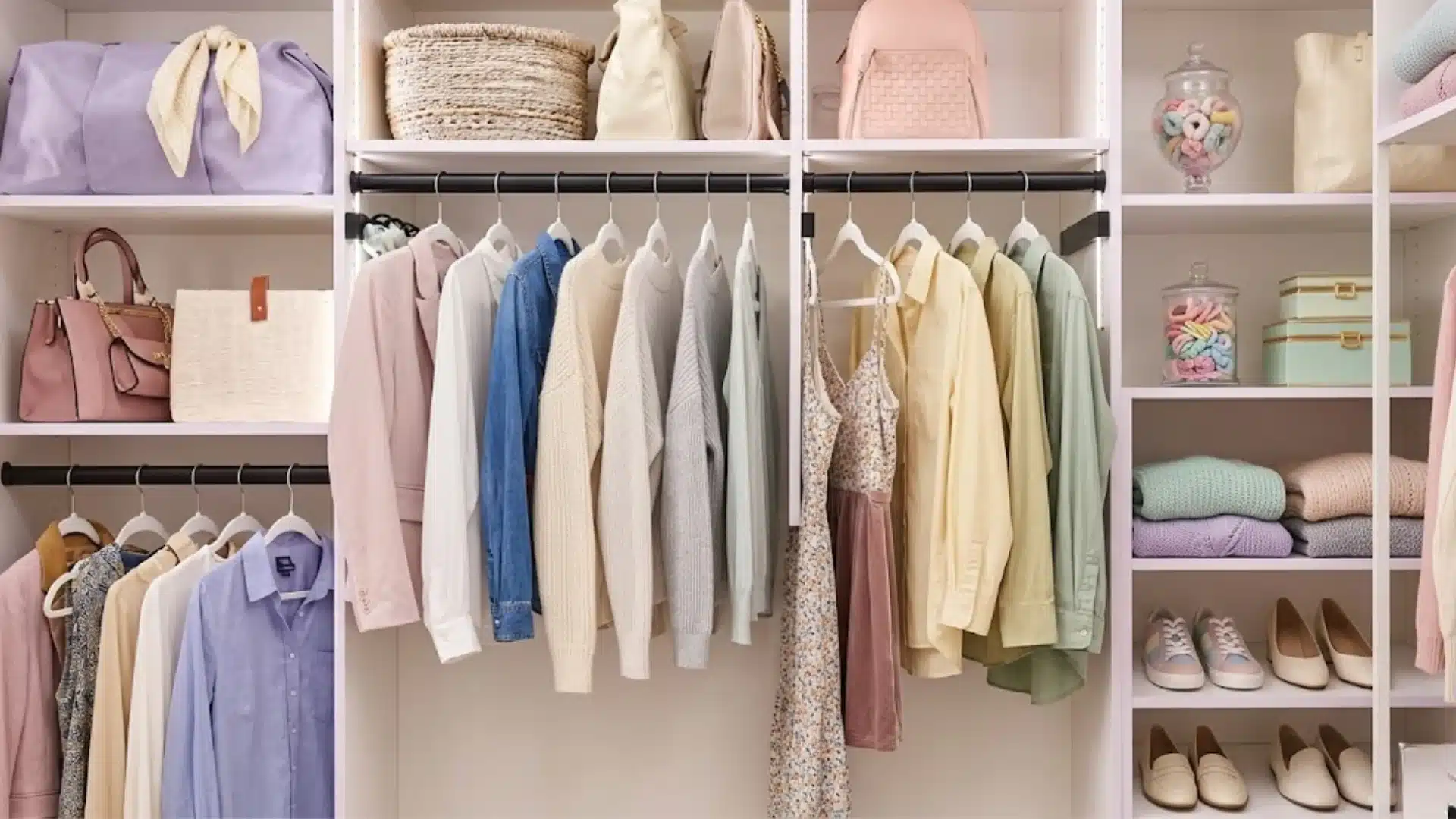
You wear what you can see. Pieces buried at the back of a rail or folded at the bottom of a drawer rarely make it into rotation, regardless of how useful they are.
Arrange by category, then by color within each category, moving from light to dark. Use matching slim hangers throughout.
Fold knits and casual tees; hang structured pieces. Leave visible space between items on the rail. A crowded closet is usually a sign that the edit is not finished.
Minimalist Wardrobe Essentials for Women
Once the audit is done and your style rules are clear, most women find they need the same core group of pieces as a foundation.
This is not a shopping list to buy everything at once. It’s a reference for what tends to earn its place in a minimal closet.
| Category | Minimalist Wardrobe Essentials |
|---|---|
| Tops and layers | Neutral T-shirts, button-downs, knit, blazer, coat |
| Bottoms | Jeans, tailored trousers, midi or knee-length skirt |
| Dresses | Casual day dress, structured occasion dress |
| Shoes | Everyday sneakers or flats, boots or loafers, dress shoes |
Common Minimalist Wardrobe Mistakes to Avoid
Building a minimalist wardrobe should make daily dressing easier, but a few common mistakes can leave you with less flexibility and more frustration.
- Following strict wardrobe rules: Copying capsule wardrobe templates without considering your lifestyle often leads to missing essentials you genuinely need.
- Getting rid of too much too quickly: Decluttering aggressively may feel productive, but replacing necessary items later can be expensive and inconvenient.
- Keeping clothes that do not fit: Holding on to pieces that are too small, too large, or uncomfortable creates clutter rather than useful outfit options.
- Buying cheap replacements immediately: Removing items only to fill the gap with low-quality purchases usually creates the same problem all over again.
- Ignoring your personal style: A minimalist wardrobe should reflect your preferences and routine, not a trend or aesthetic that looks good online.
Conclusion
A minimalist wardrobe does not come together overnight. It builds gradually as you get clearer about what you wear, what you need, and what no longer deserves space.
Most of what you need is probably already in your closet once the excess is cleared away and the right pieces are easier to see.
Start with the audit. Pull out the clothes you already reach for every week, then notice what they have in common. Build from there slowly and intentionally, rather than rushing to replace everything at once.
A simpler wardrobe should make daily dressing feel calmer, lighter, and more practical. If you are working through this, drop a comment below and share which tip you started with.
Frequently Asked Questions
How Many Items Should a Minimalist Wardrobe Have?
Most minimalist wardrobes have 30 to 50 items, including clothes, shoes, and accessories. The best number depends on what you actually wear regularly
Can a Minimalist Wardrobe Include Color and Pattern?
Yes. Minimalism allows color and pattern. The key is choosing pieces you love, wear often, and can style easily with other wardrobe items.
What Do I Do with Clothes I Am Decluttering?
Donate, sell, recycle, or give clothes to friends. Wearable items can go to shelters or charity shops, while damaged textiles should be recycled.