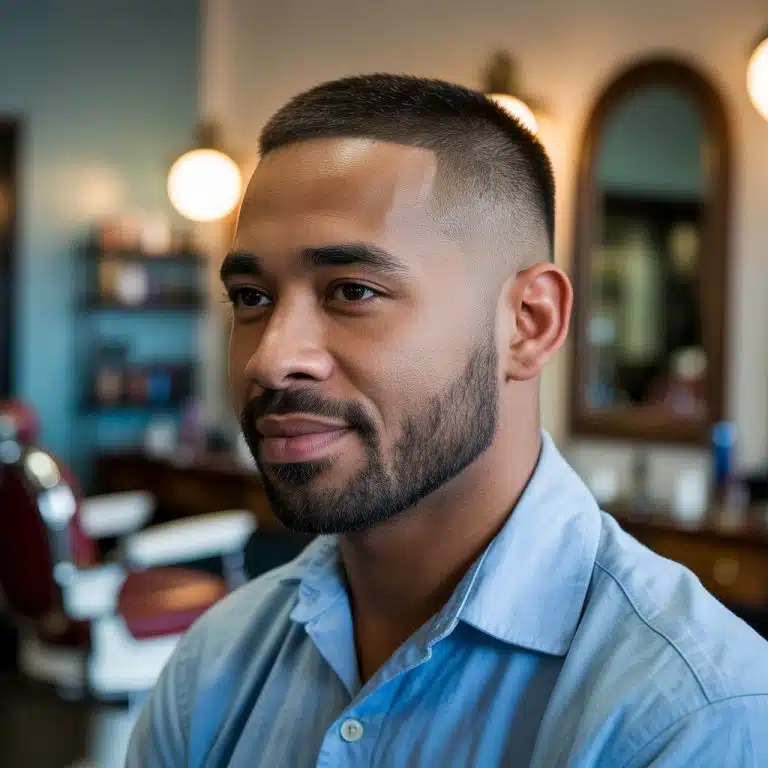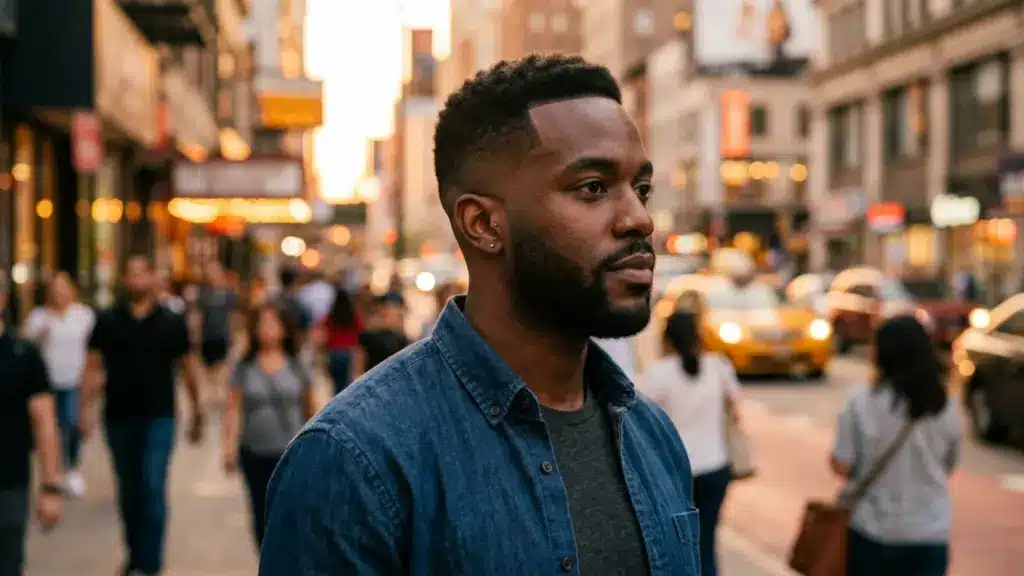
A mid fade Black men’s haircut tapers from the temples down toward the skin, with more length left on top for styling.
It sits between a low fade and a high fade, creating a clean contrast that works with curls, coils, waves, and protective styles.
The high taper fade starts at a similar height but tapers shorter without fully going to the skin. The drop fade curves behind the ear, carving a distinct arc that standard fades do not give.
Many men ask for “a fade” without knowing which one they want, and the result is usually okay but not sharp. Knowing the names and differences helps you get exactly what you want from the barber.
Which Mid Fade Style is Right for You?
Every style on this list works. The one that fits best comes down to three things: your face shape, your hair texture, and how often you’re willing to sit in the chair.
Round faces benefit from height at the crown. The high top, frohawk, or high taper fade all add length that balances the width.
Square faces do better with softer texture on top, like curls or twists, which ease the angle of the jaw without losing sharpness.
Oval faces carry almost anything on the list.
Hair texture matters too. Waves and 360 styles need consistent brushing between cuts. Twists and locs require lower daily effort once set. Buzz cuts and close crops are the lowest maintenance of all.
Mid Fade vs. High Taper Fade vs. Drop Fade: Quick Comparison
The three fade styles in this guide differ in where the blend starts, how far it drops, and whether it clears to bare skin. Use this table as a quick reference before you sit down, then check the face-shape guidance in the next section.
| Fade Type | Where It Starts | Goes to Skin? | Best For |
|---|---|---|---|
| Mid Fade | Above the ears, roughly mid-head | Yes, near the ears | Oval, square, and round faces; most textures |
| High Taper Fade | Above the temples | No, tapers are short instead | Round faces needing crown height; coils and locs |
| Drop Fade | Similar to mid, but curves down | Yes, at the base of the arc | Oval and oblong faces; styles pulled back or up |
Mid Fade Styles for Black Men
A mid fade for black men blends clean sides with natural texture, making it one of the most versatile fade styles for different hair types and looks.
It’s one of the more forgiving fades on the fade haircut spectrum, since it splits the difference between a low fade’s subtlety and a high fade’s contrast.
1. Classic Mid Fade with 360 Waves
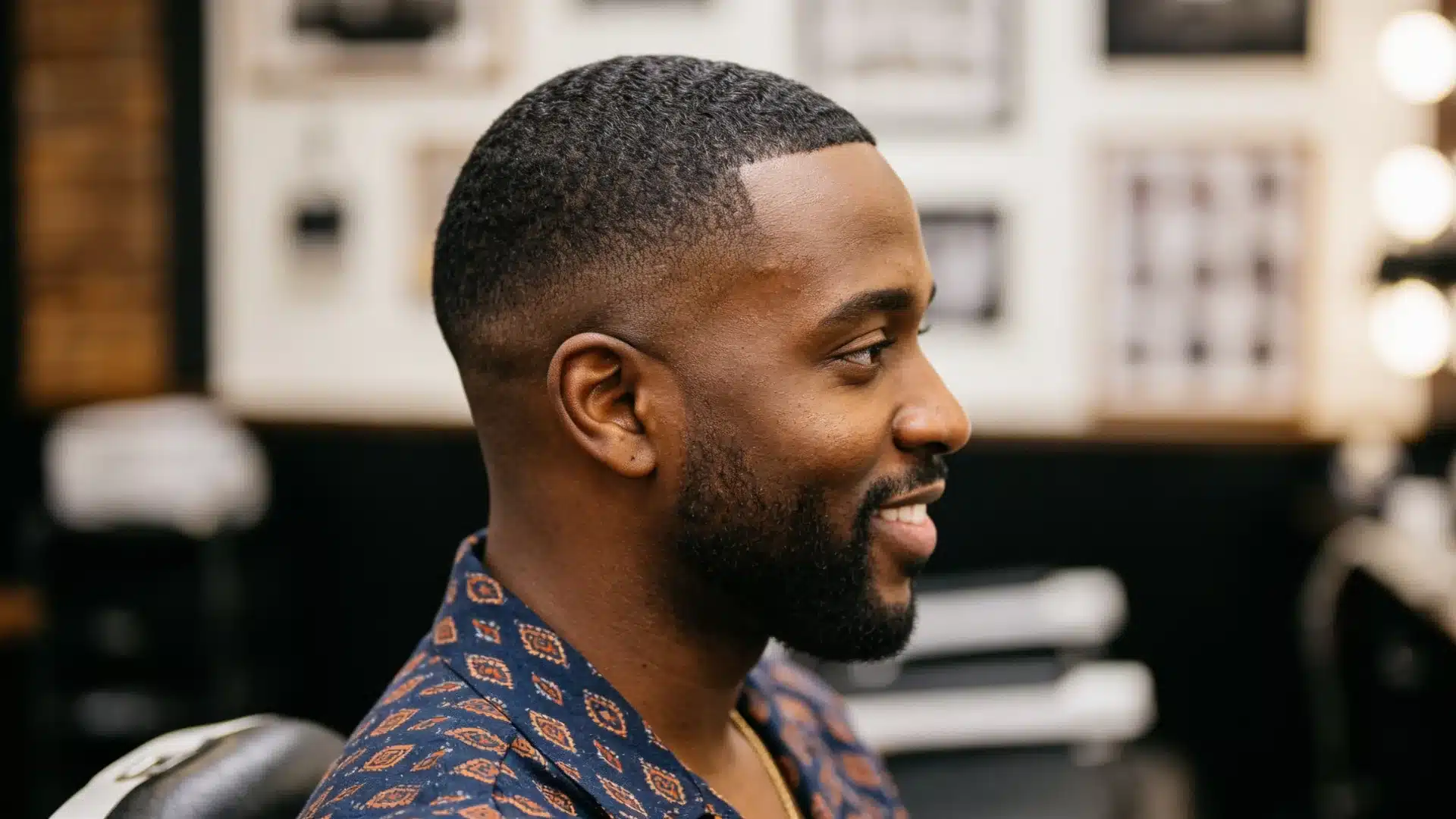
A classic mid fade begins at the temples and blends smoothly to bare skin near the ears, giving the face a crisp frame that a low fade can’t quite match.
The tight sides reduce bulk and draw attention upward. Brushed 360 waves on top look deeper, cleaner, and more defined, making the wave pattern the main feature of the cut.
Ask your barber: “Mid fade, skin at the bottom, straight shape-up, leave about two inches on top for waves.”
2. Mid Fade with a Curly Afro Top
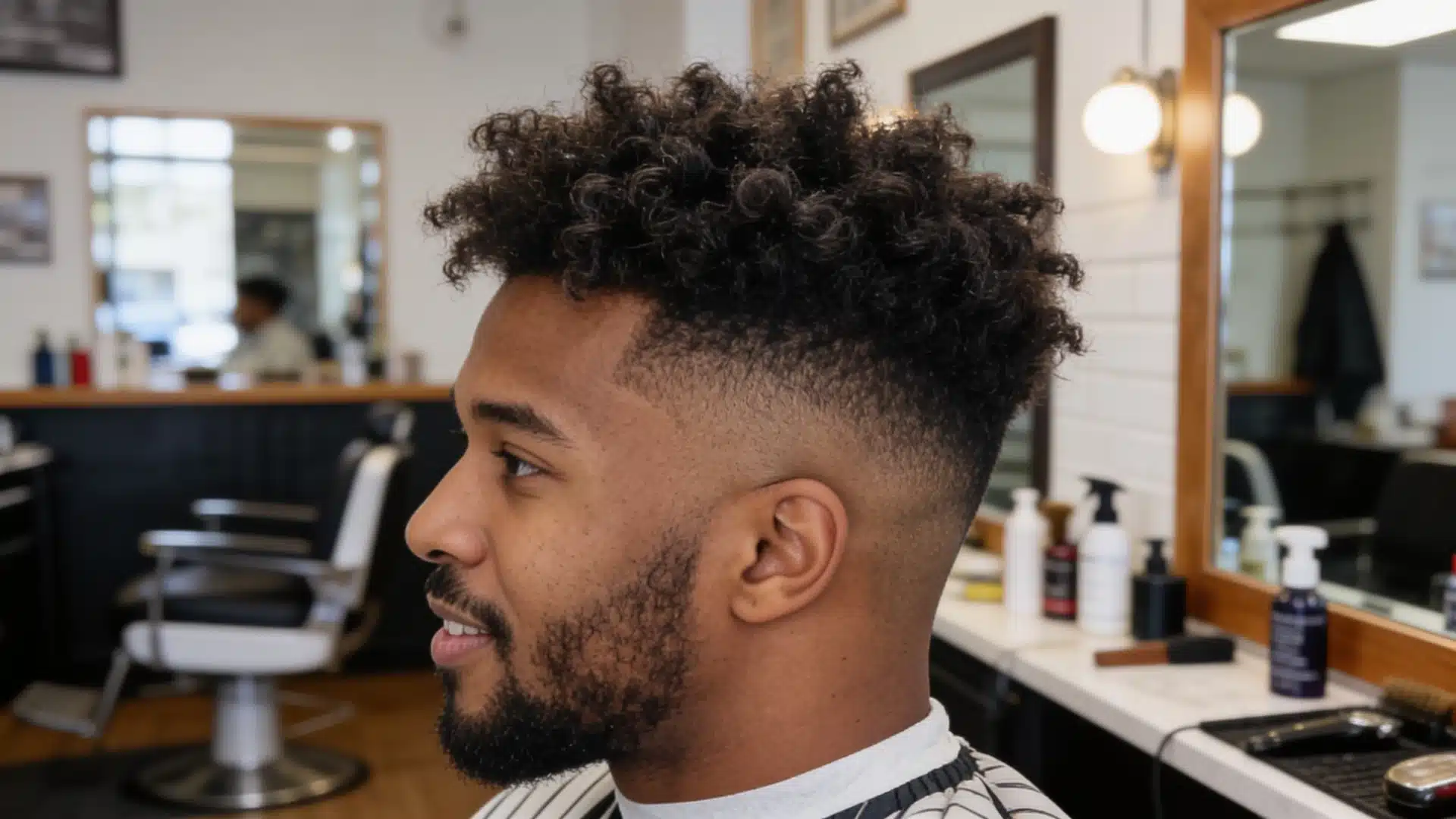
Natural coils hold their shape best when the sides stay tight, which is what lets height and texture build cleanly on top.
This pairing is popular among curly haircuts for men because it suits many face shapes and grows out without losing its line. The mid fade gives the afro a crisp outline, keeping the style sharp instead of bulky as it grows between visits.
Ask your barber: “Mid fade to skin, leave 2.5 to 3 inches on top, no product, natural curls.”
3. Mid Fade with Two-Strand Twists
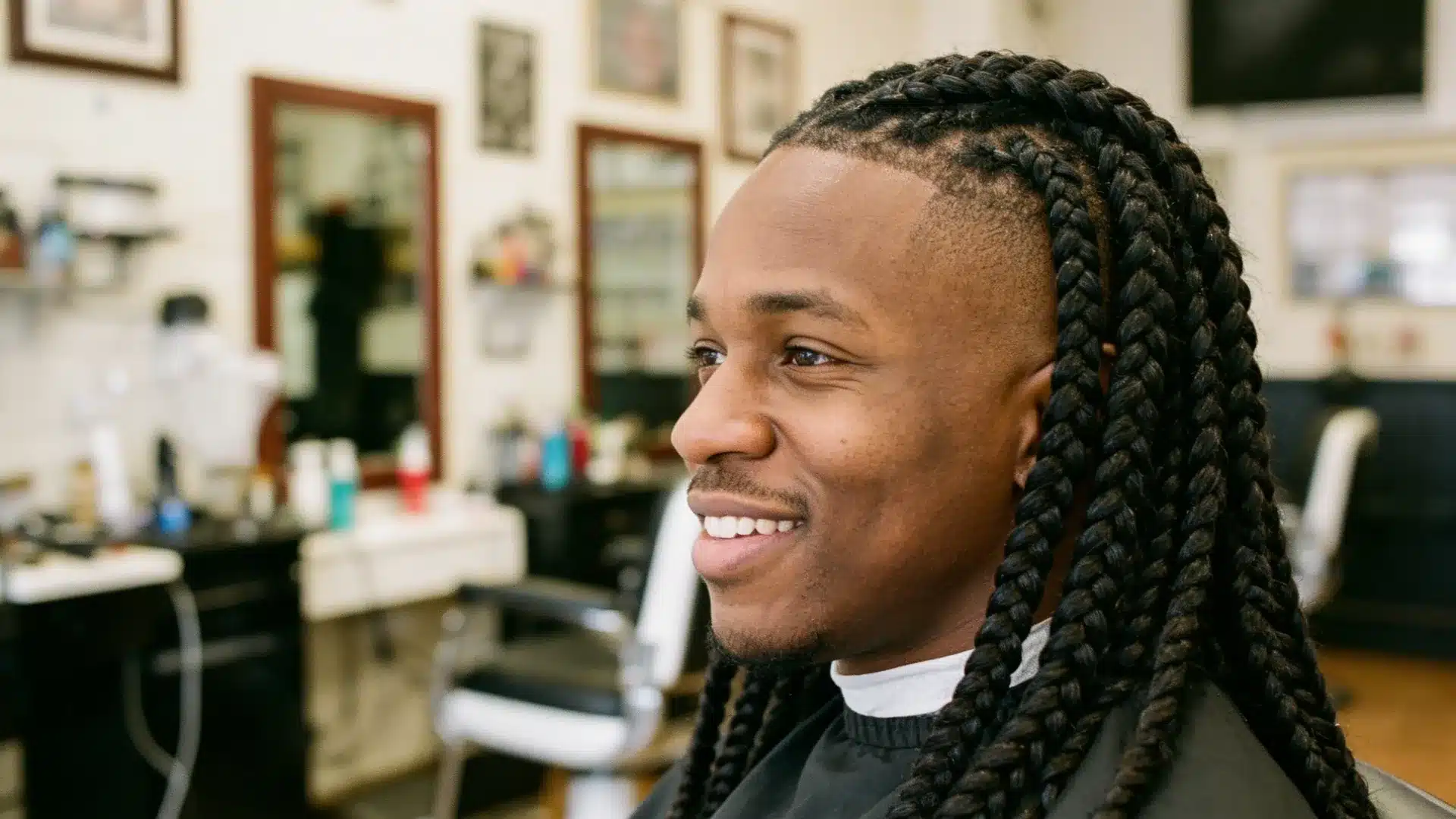
Twists on top with a tight mid fade give the haircut a clean, polished finish instead of an overgrown look, even as the twists mature over a few weeks.
The mix of defined two-strand texture and neat sides suits work, weekends, and everyday routines equally well. Once the twists are set, daily styling stays simple: moisture, care, and light upkeep.
Ask your barber: “Mid skin fade, clean line-up, leave enough length on top for two-strand twists.”
4. Mid Fade with a Flat Top / High Top
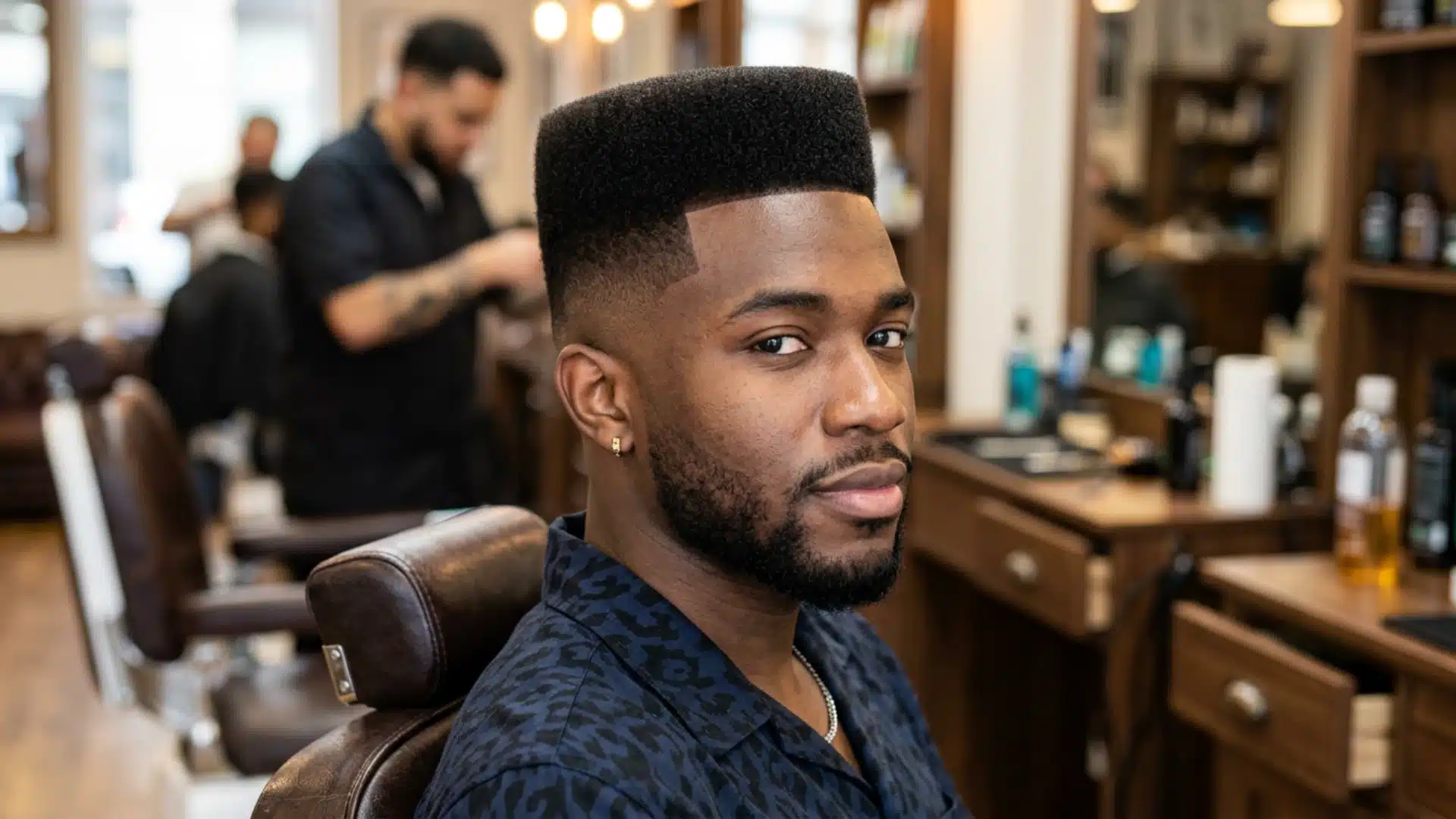
This style comes straight from classic African American barbering, and it still reads as bold decades later. The flat top sits level across the crown, giving height and structure, while the mid fade keeps the sides neat and defined underneath it.
Together, they create a sharp geometric shape that works especially well for oval, square, and oblong faces.
Ask your barber: “Mid fade, flat top with a level crown, leave 2 to 3 inches depending on how much height you want.”
5. Mid Fade with a Shaved Part Design
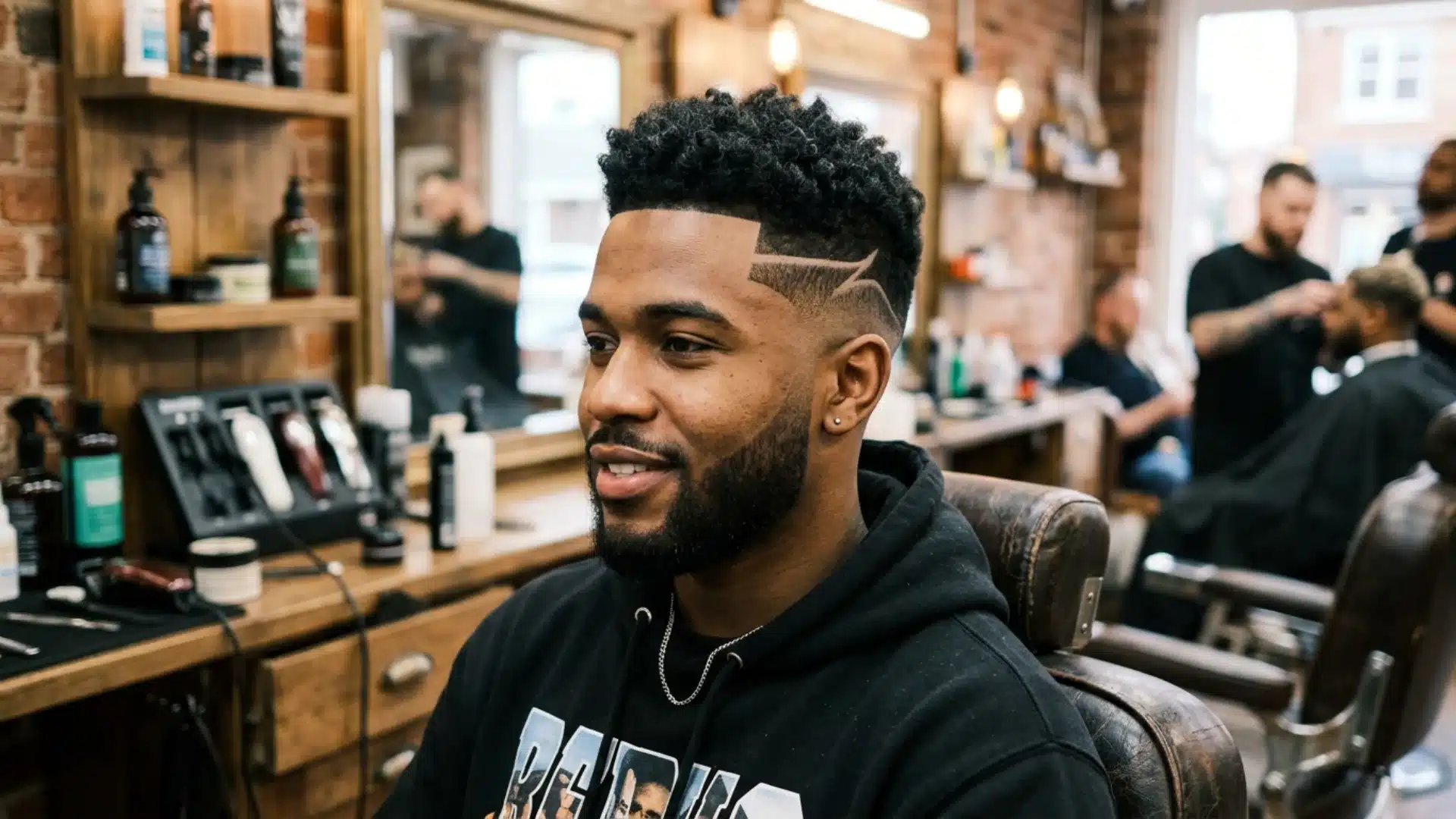
A clean hard part shaved into the fade line adds definition and character without changing the underlying cut or its grow-out timeline.
Some barbers extend the part into a geometric line or a subtle curve for a more custom look. It’s a small detail, but it’s the kind of detail that makes an otherwise standard mid fade feel personal.
Ask your barber: “Mid fade, add a hard part on the left side, skin line, straight shape-up.”
6. Mid Fade with a Comb-over
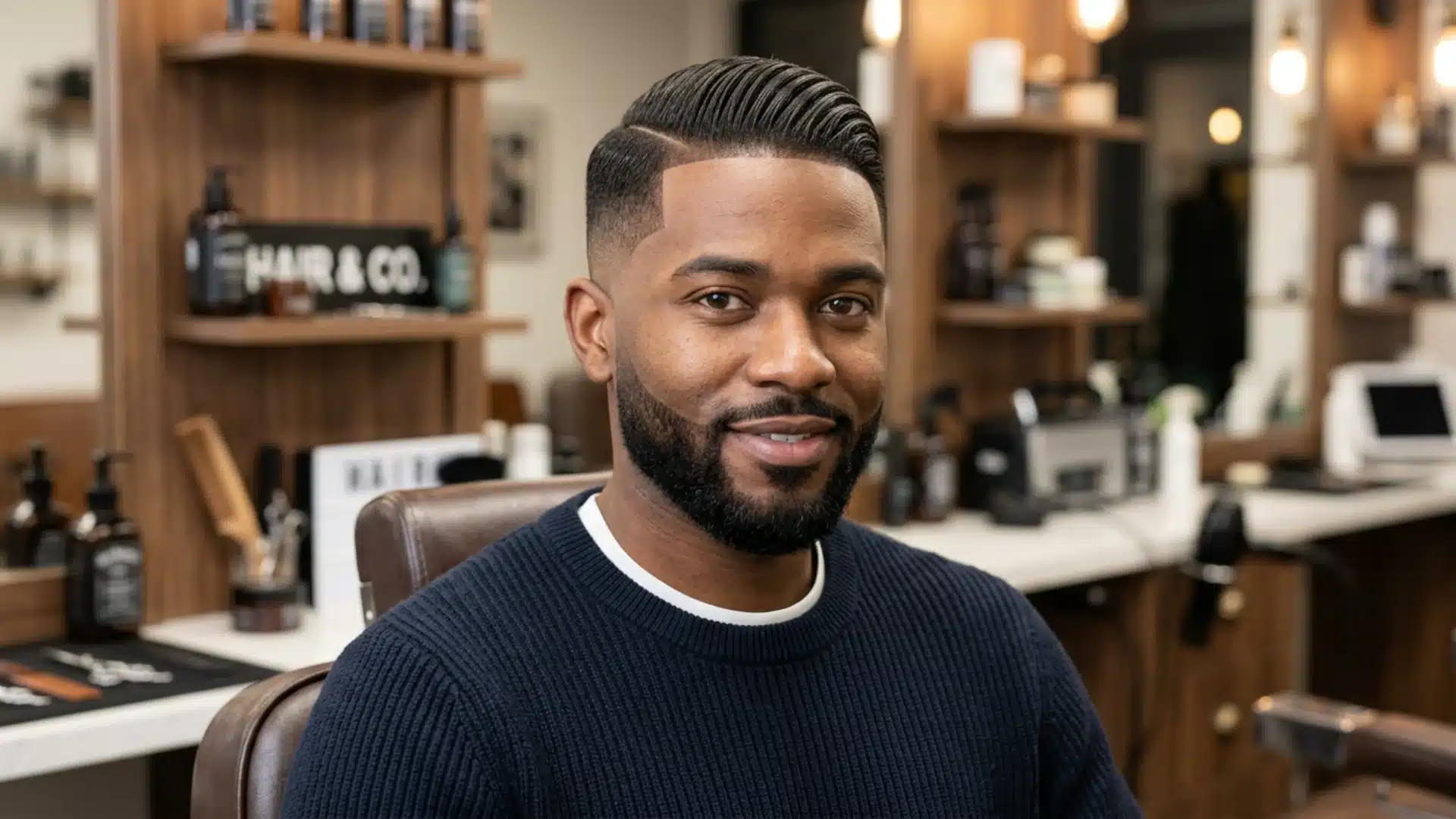
For Type 3 curl patterns that hold a comb-through, a defined side part and a combed top over a mid fade make for a sharp, office-ready style that still looks intentional on weekends.
It keeps the natural texture visible while giving enough structure for formal settings. The tight sides underneath do most of the work, keeping the whole cut looking clean.
Ask your barber:““Mid fade, side part on the left, leave enough length on top to comb over, natural finish.”
High Taper Fade Black Male Styles
A high taper fade for black men creates a sharp, clean look while keeping a gradual transition that works naturally with curls and coils.
7. High Taper Fade with Short Coiled Curls
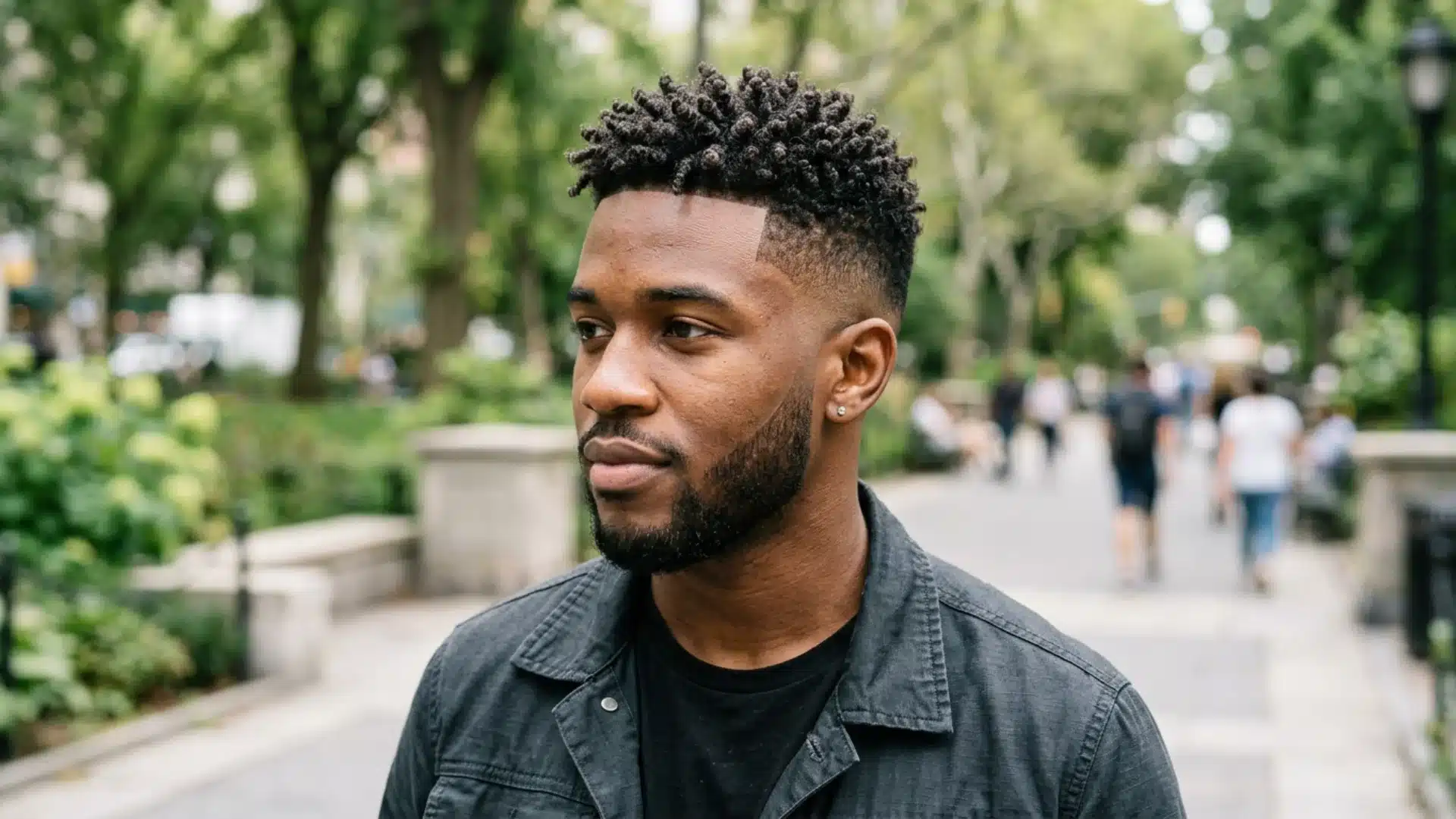
Tight coils on top with a high taper fade is one of the cleanest combinations available, and it holds its shape well between cuts.
The taper keeps the contrast high while leaving a soft edge at the baseline instead of a hard skin line. A shape-up at the forehead and temples finishes the look.
Ask your barber: “High taper fade, 0.5 guard at the bottom, keep the crown full and round, straight shape-up.”
8. High Taper Fade with Cornrows or Box Braids
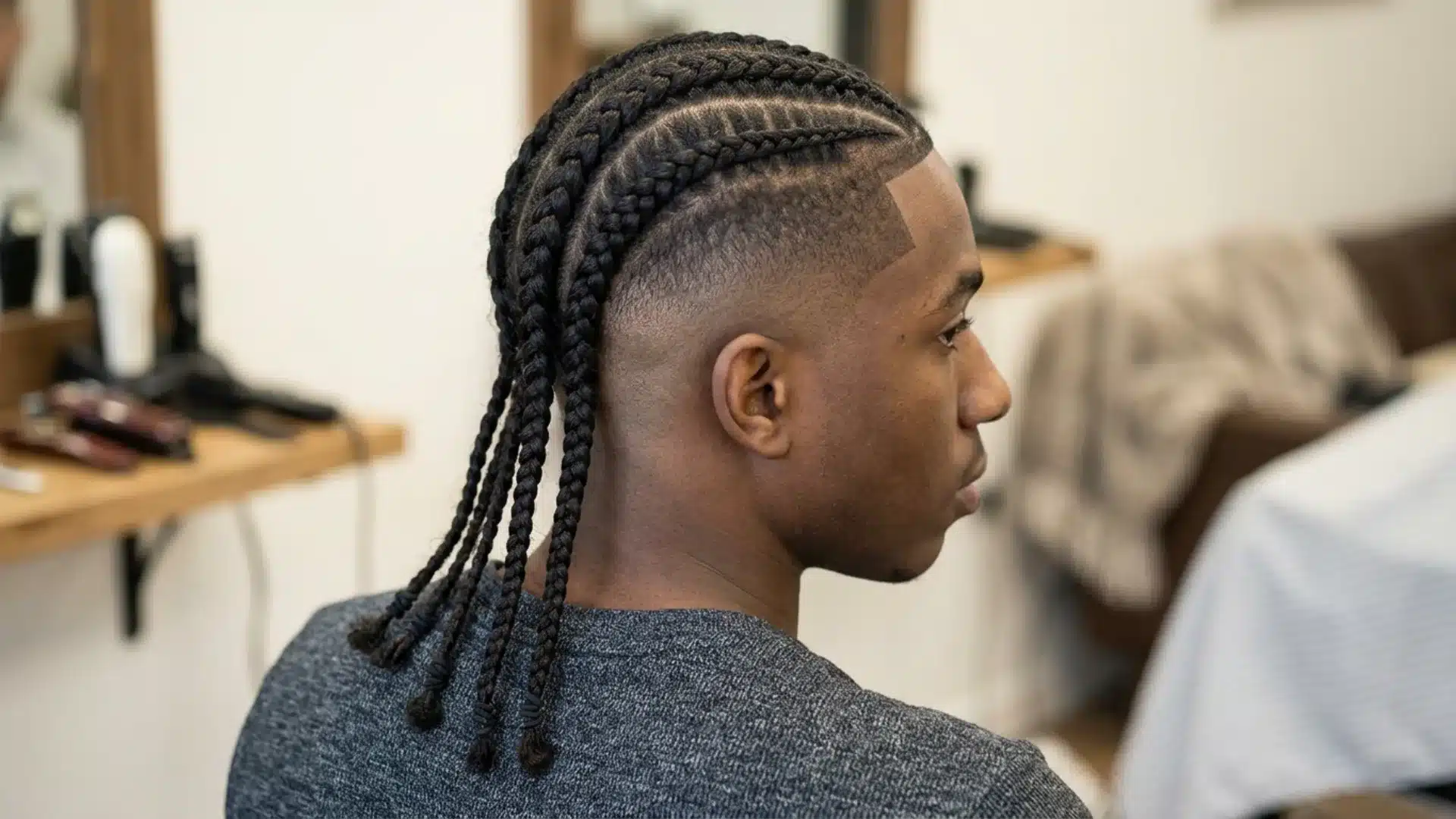
Braids with a high taper fade create a clear contrast between the protective style on top and the tapered sides below, which reads well whether the braids are short or long.
The taper follows the neckline naturally, so the profile stays polished from every angle. It works with box braids pulled back just as well as tight cornrows.
Ask your barber: “High taper fade, follow the neckline, clean up the temples, leave enough length at the top for braids.”
9. High Taper Fade with Locs
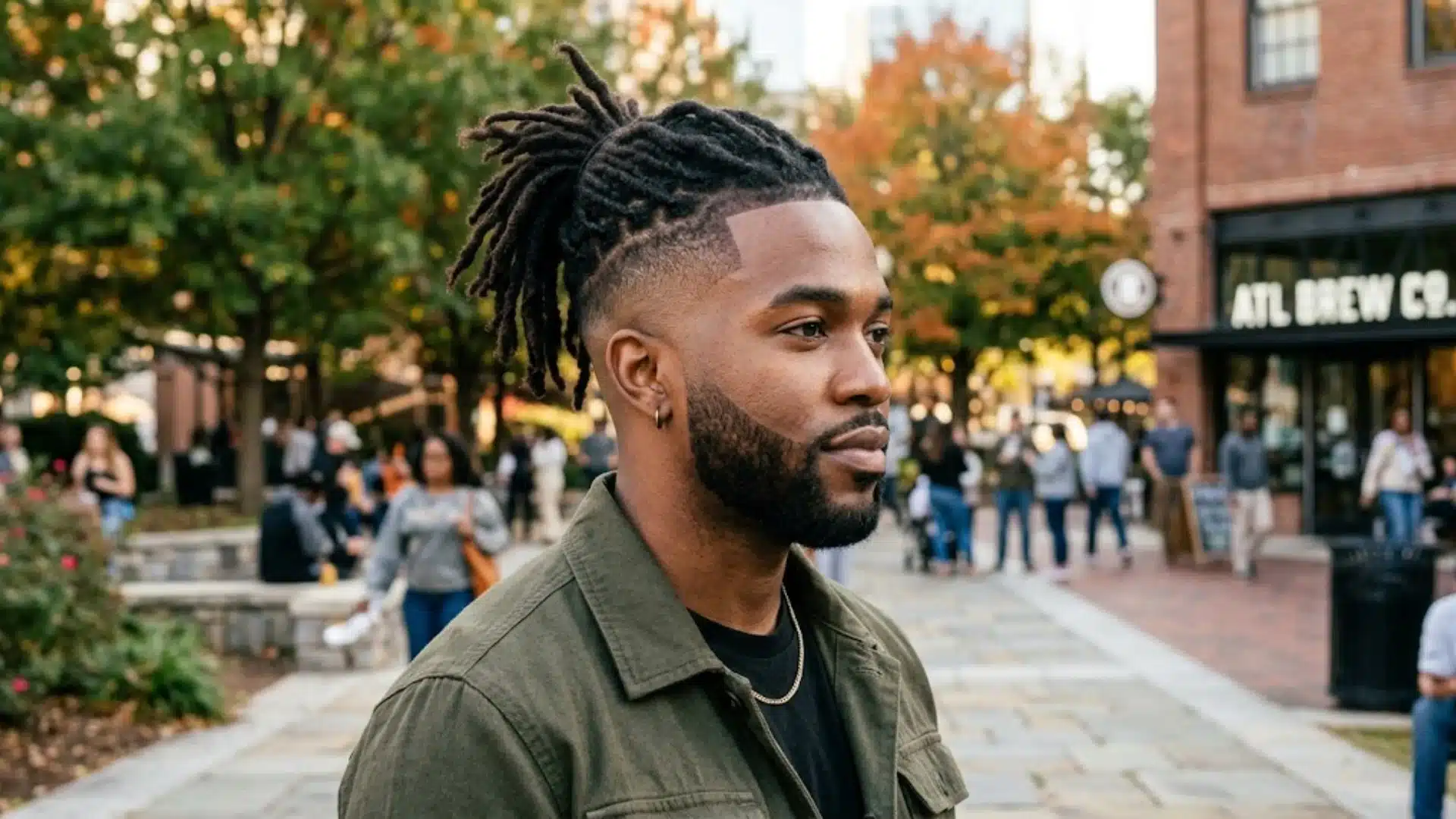
Locs paired with a high taper fade frame the face cleanly without making the overall style feel heavy, even as the locs mature and thicken over time. Pulling the locs back or up shows the fade clearly.
The taper preserves the sides’ definition that a hard skin fade might make too severe against longer, established locs.
Ask your barber: “High taper fade, 0.5 to 1 guard at the bottom, clean neckline, no skin, keep it textured.”
10. High Taper Fade with a Disconnected Pompadour
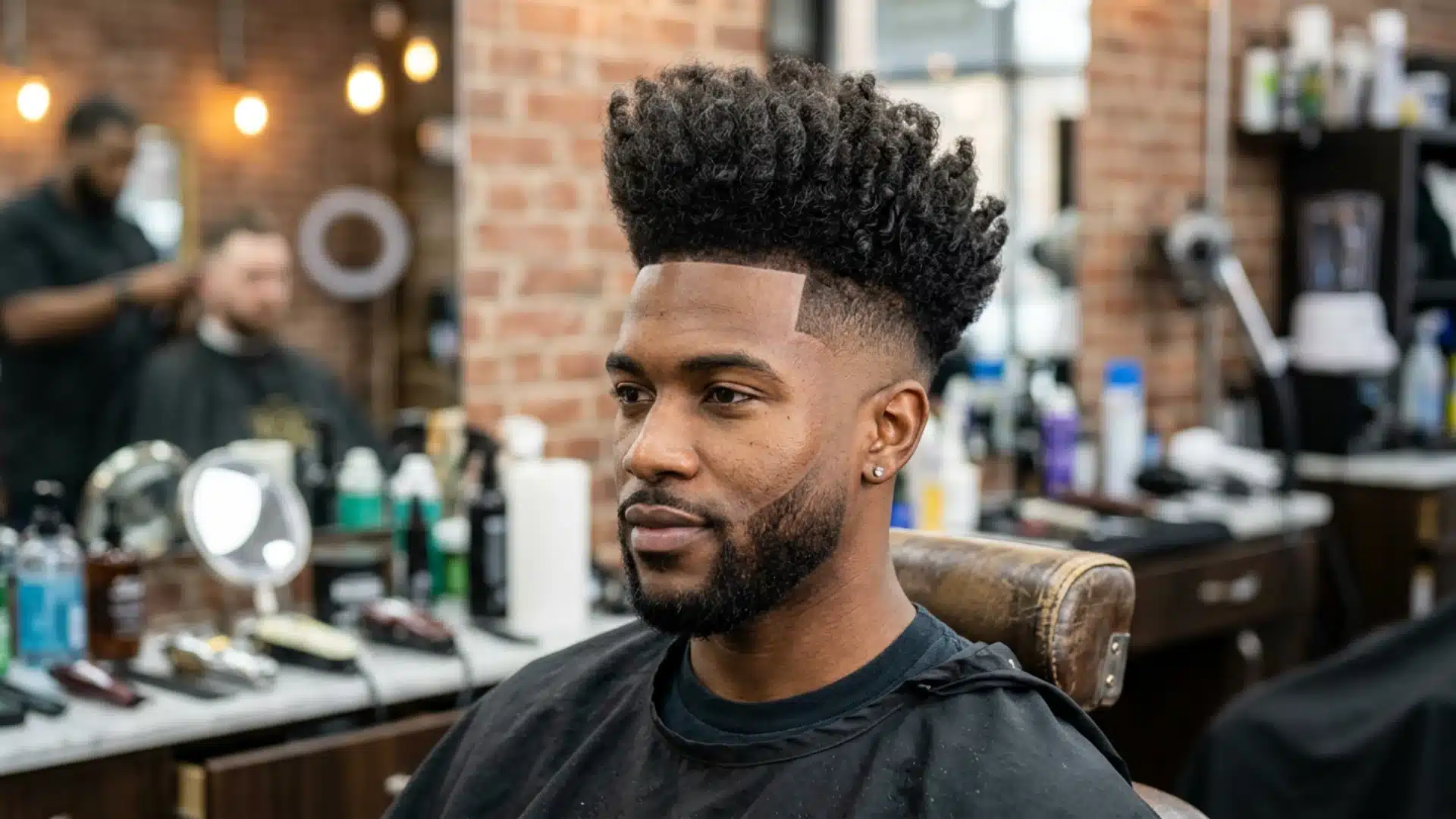
A disconnected pompadour paired with a high taper fade gives you volume at the front, combed or pushed back, without the top blending into the tapered sides at all.
The intentional disconnection gives the cut a fashion-forward edge that a blended fade doesn’t offer. It suits oval and square face shapes best.
Ask your barber: “High taper fade, leave 3 to 4 inches on top for a pompadour, disconnected, no blend between top and sides.”
Drop Fade Black Men’s Styles
A drop fade for black men curves behind the ear toward the neck, creating a distinctive shape that stands out from other fade styles.
11. Drop Fade with 360 Waves
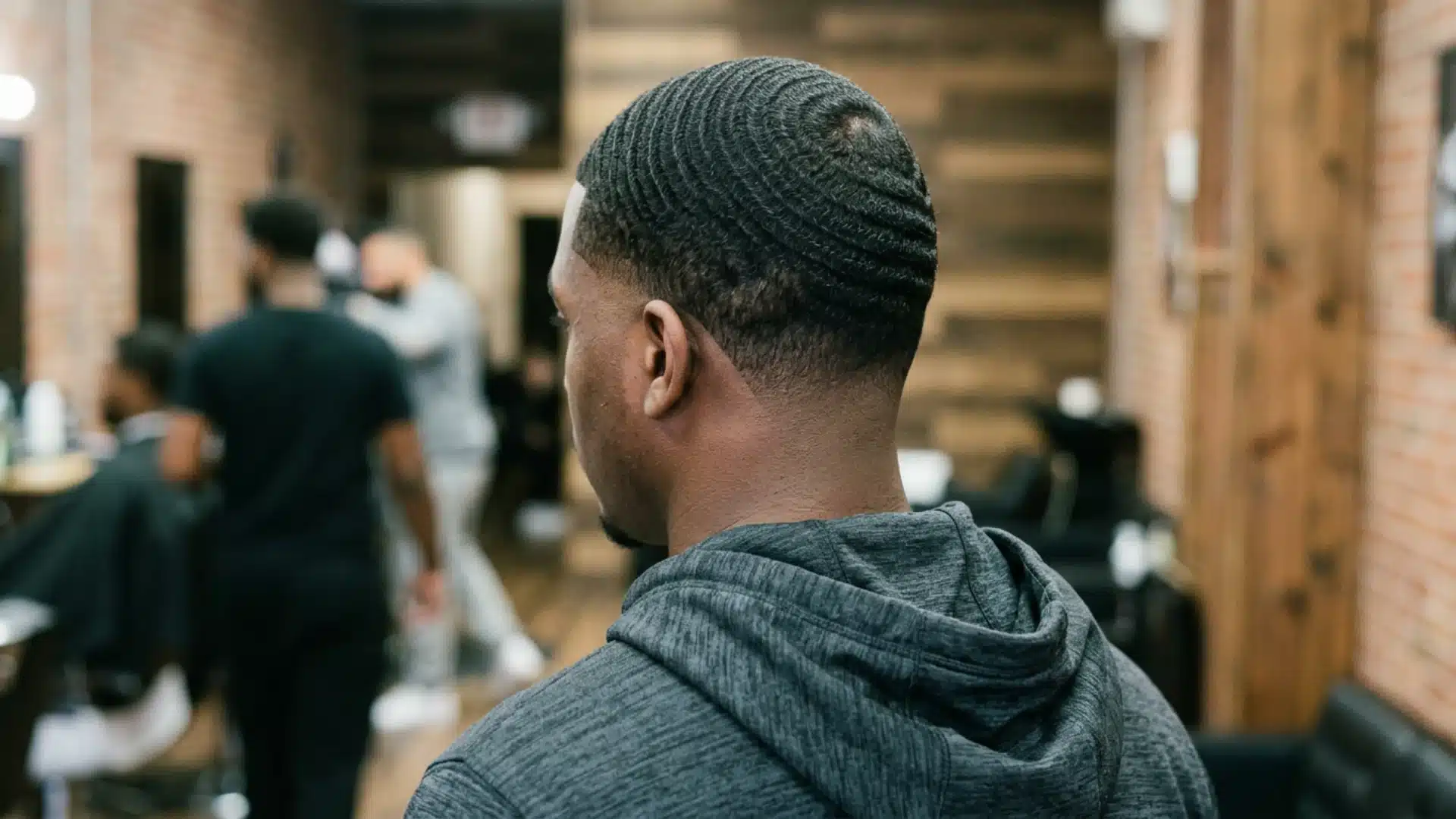
The curved line of a drop fade adds side-profile interest without ever touching the top wave pattern, so the two elements never compete for attention.
When the waves are brushed flat and the drop arc is clean, both parts of the cut complement each other. It’s one of the sharper wave pairings available.
Ask your barber: “Mid drop fade, arc behind the ear, skin at the bottom, straight shape-up, leave 2 inches for waves.”
12. Drop Fade with a Frohawk
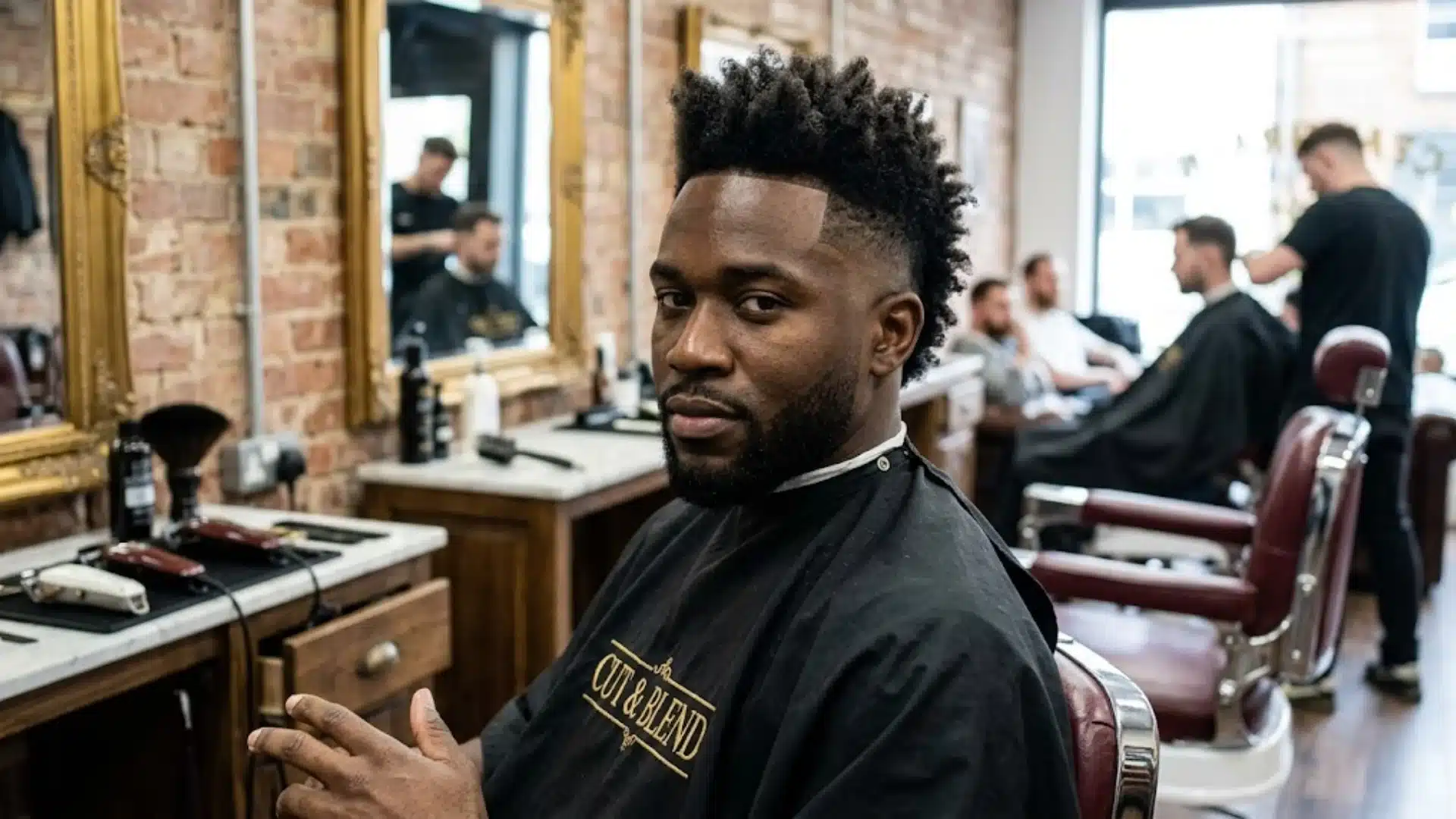
A frohawk runs a strip of natural afro texture down the center of the head, with the sides faded, and a drop fade is a strong pairing here because the lower arc adds a second design element without looking busy.
The height at the center contrasts cleanly with the curved sides; it’s a bold look that still reads as controlled.
Ask your barber: “Drop fade, skin at the bottom, arc drops to just below the ear, leave a strip on top for a frohawk.”
13. Drop Fade with Pulled-Back Locs or Twists
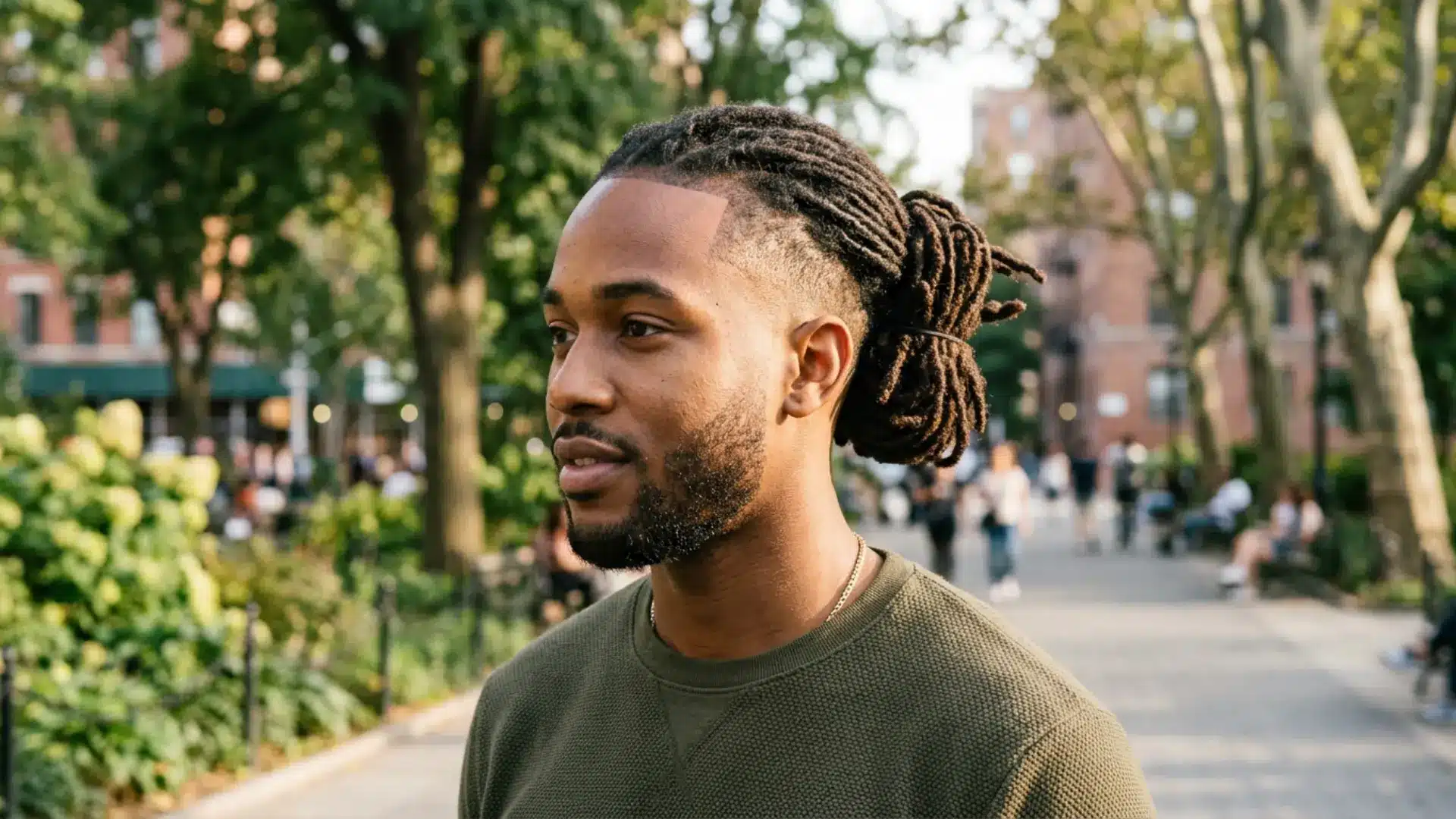
When locs or twists are pulled back, the back of the head is fully on display, and a drop fade turns what’s usually just a utility move into an actual style statement.
The arc of the fade reads clearly once the top is pulled upward. It’s an easy upgrade for anyone already wearing their locs up.
Ask your barber: “Drop fade, mid height, arc curves down behind the ear, clean neckline, skin at the base.”
14. Drop Fade with a Buzz Cut
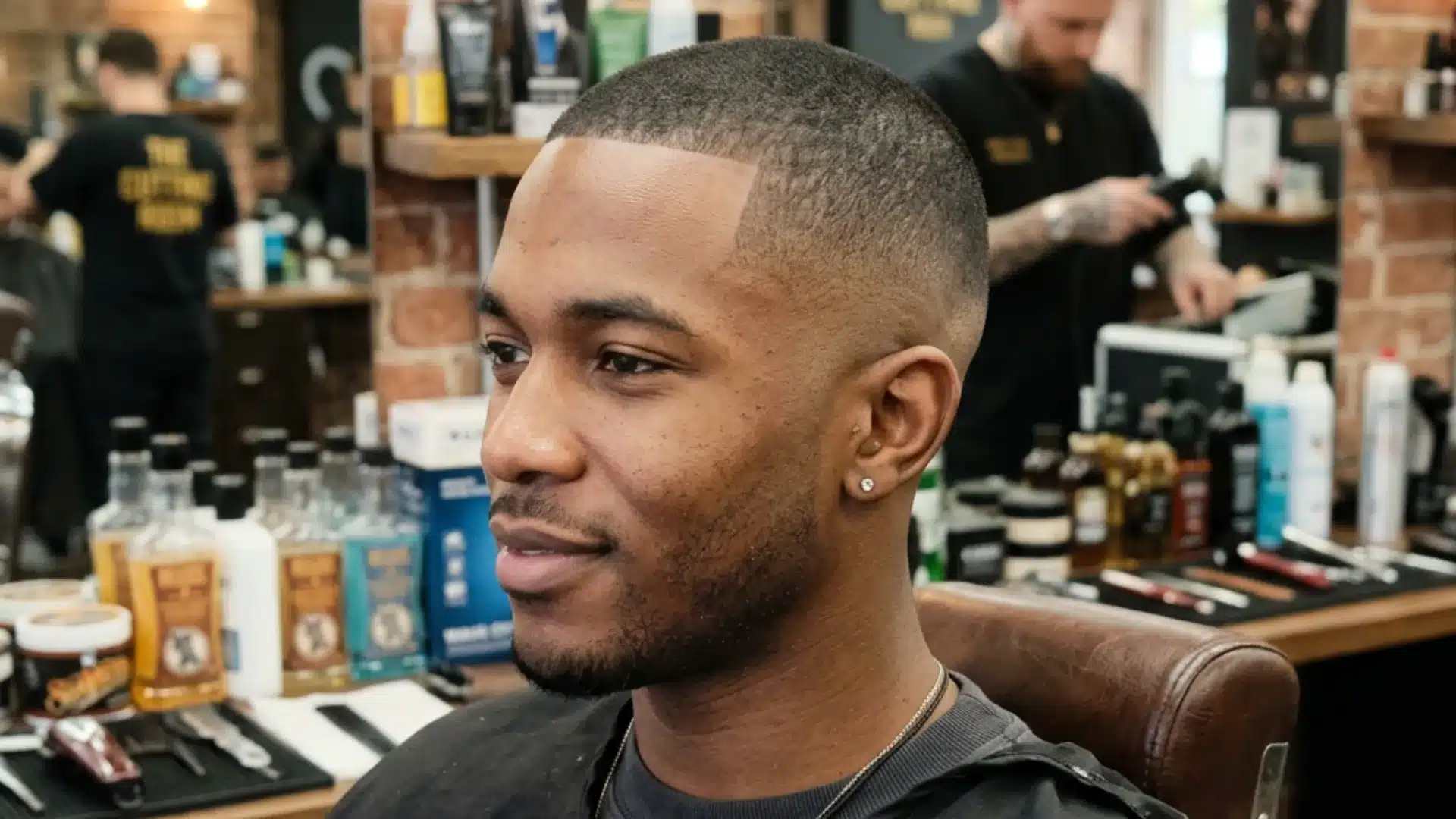
A close-cropped buzz cut paired with a drop fade is clean, low-effort, and still sharp, which solves the one real risk of an all-over short cut: it looks too short.
The arc at the back keeps the cut from reading flat, since a plain buzz on its own can look one-dimensional from behind. It’s one of the better options for minimum styling time with maximum grooming payoff.
Ask your barber: “Drop fade with a 1 or 1.5 guard buzz on top, arc drops behind the ear, skin at the bottom.”
15. Mid Drop Fade with Shaved Line Design
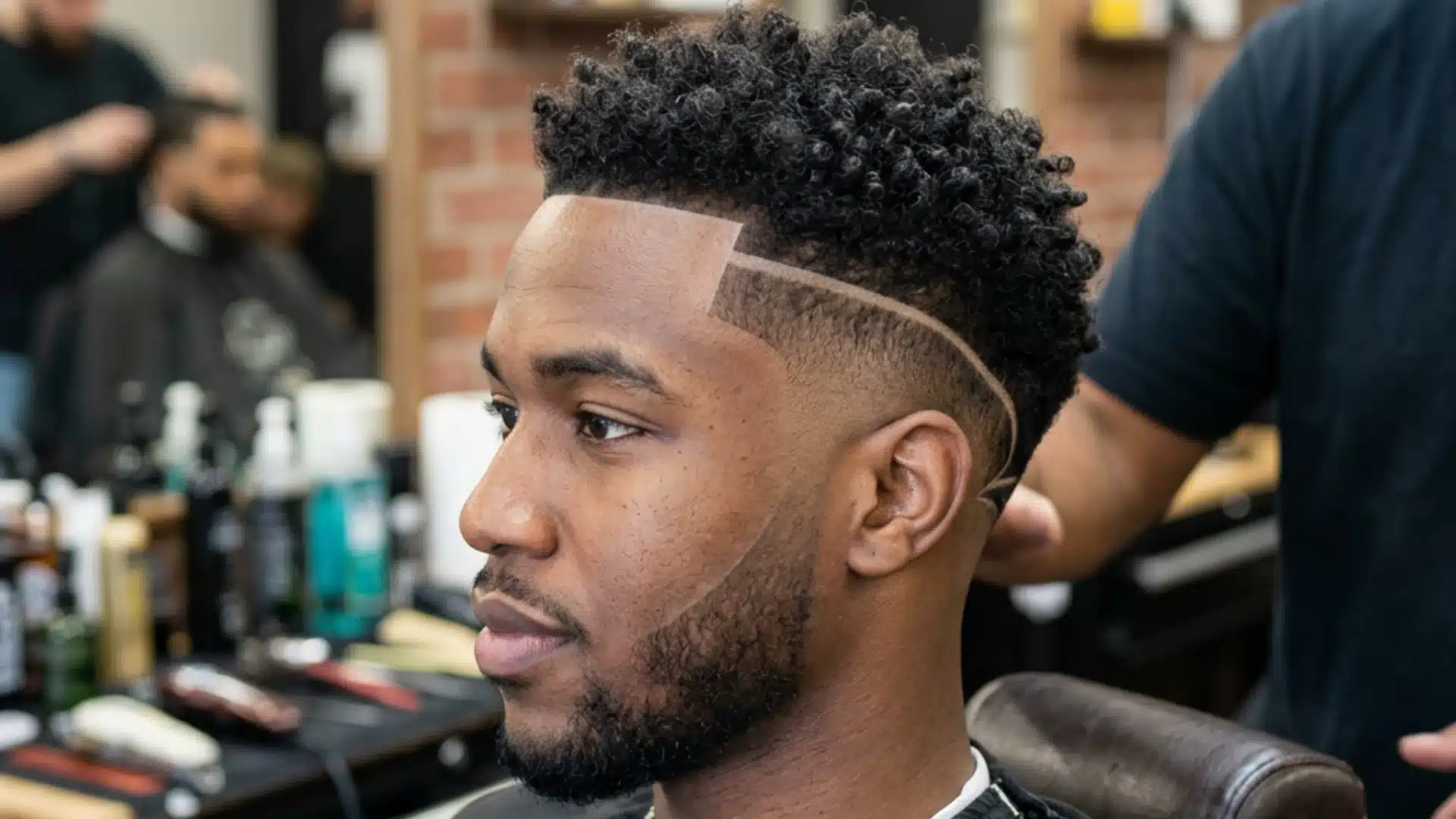
A drop fade combined with a carved line or geometric design in the fade area turns the cut into something fully custom, and it’s the most skill-dependent option on this entire list.
The line can follow the arc of the drop or intersect it for a bolder effect. Bring a clear reference photo every time, since freehand interpretation rarely matches what’s in your head.
Ask your barber: “Mid drop fade, add a shaved design in the fade area, bring a reference photo.”
How to Maintain Your Fade
Plan a touch-up every 3 to 4 weeks for most mid fade styles, since the cut looks sharpest in the first week and the definition softens steadily after that. For 360 waves or any style dependent on tight lines, book every 2 to 3 weeks instead to keep the blend from growing out unevenly.
| Face Shape | Fade That Fits | Why |
|---|---|---|
| Oval | Mid Fade | Balanced contrast without adding or reducing width |
| Round | High Taper Height on Top | Crown height elongates the face |
| Square | Mid Fade with Soft Textured Top | Softens the jawline without losing sharpness |
| Diamond | Low-to-Mid Fade | Avoids adding width where the face is already widest |
Between barber visits, these four products cover most of the upkeep:
- Edge control: Apply along the hairline and temples with a small brush to smooth edges between cuts.
- Curl cream: Work through a damp, textured top to keep coils defined and prevent dry, brittle breakage.
- Wave pomade: Use a medium-hold pomade before brushing to deepen the wave pattern without weighing hair down.
- Light oil: Apply jojoba or argan oil along faded sides to prevent dry, ashy skin from ruining a fresh blend.
Conclusion
Every style on this list works. Choosing the right one depends on your face shape, hair texture, and maintenance schedule.
Round faces benefit from crown height like a high top or frohawk, while textured curls or twists soften square faces. Fortunately, oval faces can carry almost any look.
The different types of fade haircuts come down to where the blend starts, how far it drops, and how much skin it shows.
Once you know those details, talking to your barber is straightforward. Just pick a style, bring a photo, name the fade, and state the depth.
Which of these 15 mid fade styles are you taking to your next appointment? Drop your favorite in the comments below!
Frequently Asked Questions
What is the Difference Between a Mid Fade and a Taper Fade for Black Men?
A mid fade blends down to bare skin around the temples for sharper contrast. A taper fade only shortens the hair near the neckline and edges, leaving a softer, cleaner finish.
Can Mid Fade Styles Work with Short Natural Hair?
Yes. A mid fade works with any top length. Even short natural hair looks sharp with clean edges and a crisp shape-up. As the hair grows, more styling options open up.
Does a Drop Fade Work for All Face Shapes?
A drop fade suits most face shapes. It looks especially good on oval and oblong faces because the curved fade adds shape. Round faces pair better with extra height on top.
How Do I Find a Barber for a Clean Drop Fade or Design Fade?
Check the barber’s recent work before booking. Look for real photos of drop fades or design fades, not just basic fades. Bring a clear reference photo to avoid confusion.