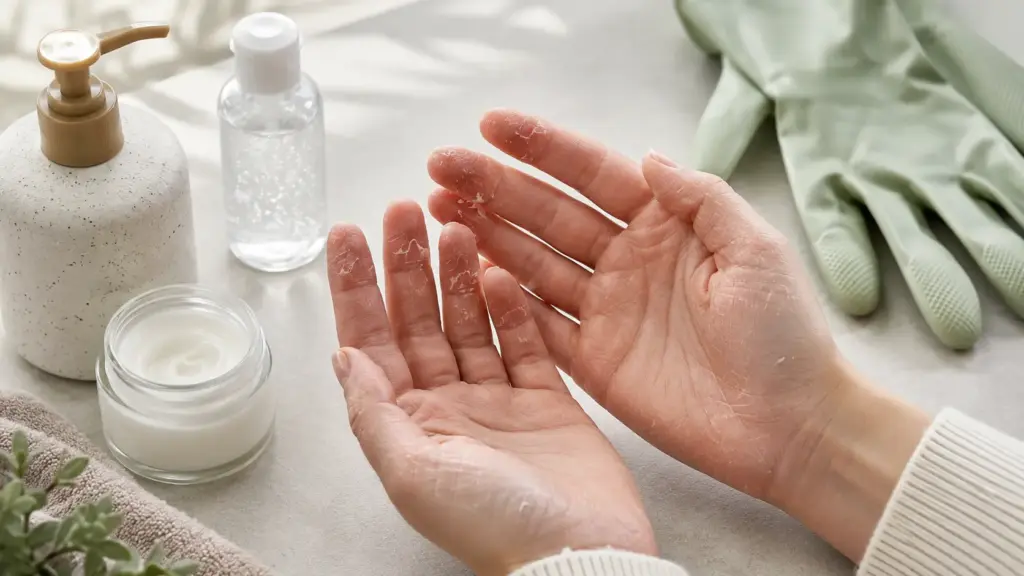
Noticing your skin flaking off your hands can be really confusing, especially when you have no idea what’s causing it, and you’re left wondering, “Why are my hands peeling?”
Sometimes the reason is very simple, like your skin is too dry or you wash your hands too much, or it can be a sign of irritation, an allergic reaction, or a skin condition you weren’t aware of.
Many people who deal with peeling hands mention that soaps, sanitizers, cleaning products, and skincare items are triggers.
Paying attention to how your skin peels, whether it itches, hurts, forms blisters, or feels dry and tight, can help you figure out what is going on and what to do about it.
Why are My Hands Peeling?
Peeling happens when the outer layer of your skin becomes damaged or loses moisture, causing dead skin cells to shed faster than usual.
Your hands are exposed to more day-to-day stress than most other parts of your body: water, soap, chemicals, temperature swings, and constant friction from everything you touch.
Your skin has a protective barrier that locks moisture in, and when that barrier is weakened, water escapes more easily, causing the skin to dry out and peel.
Symptoms also vary from person to person, since skin sensitivity, existing conditions, and even genetics all play a role in how someone’s hands react to the same triggers.
Common Reasons Your Hands May Be Peeling
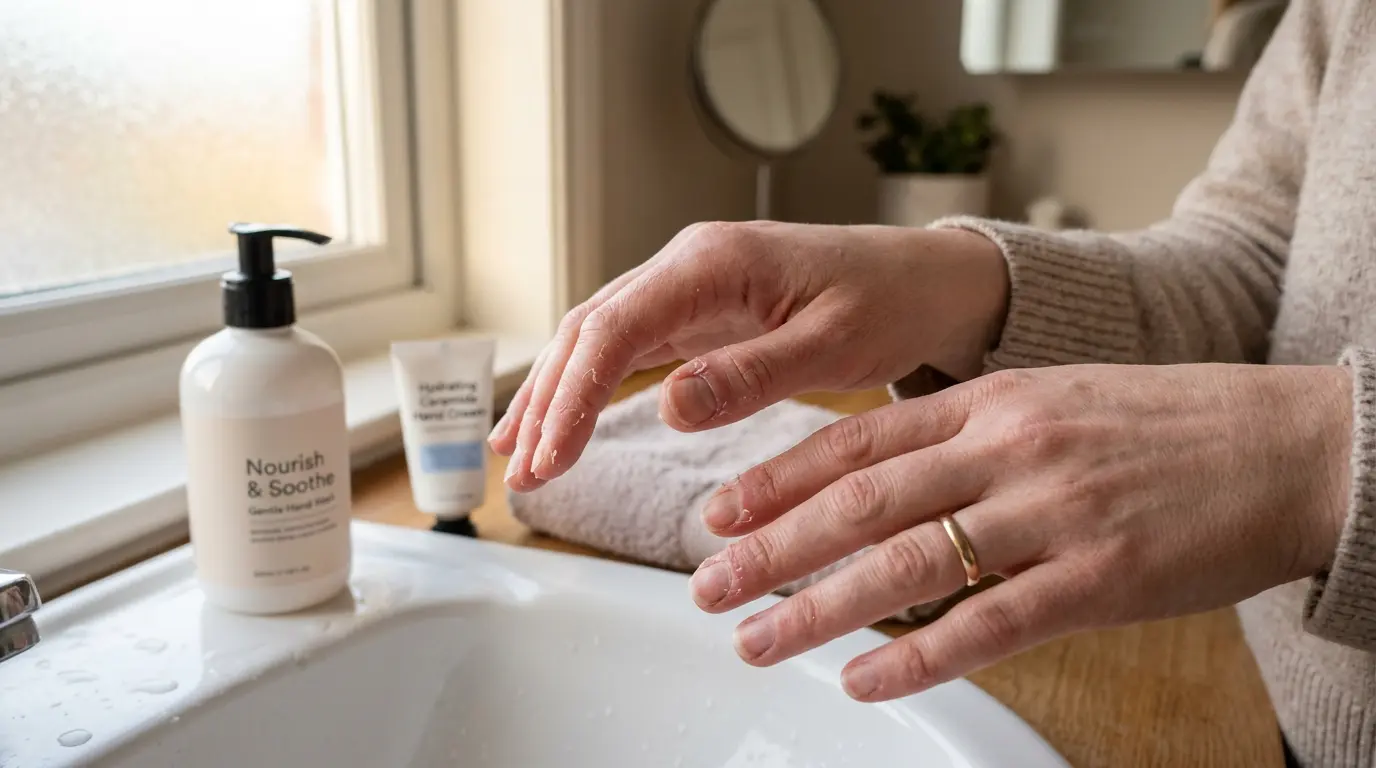
Peeling hands can happen for many reasons. Some causes are tied to everyday habits, while others involve skin reactions or medical conditions that need closer attention.
1. Dry Skin and Weather Changes
Weather is one of the most common causes behind peeling hands:
- Cold weather reduces the moisture your skin can hold onto.
- Low indoor humidity can cause cracking and flaking.
- Hot weather and sun exposure can also dry out and damage the skin.
2. Frequent Hand Washing and Sanitizer Use
Washing hands often is good hygiene, but it can strip away the natural oils that keep skin protected.
- Repeated washing removes the oils that normally hold moisture in.
- Alcohol-based sanitizers are especially drying, since alcohol pulls moisture out of the skin.
- Many people who increased their sanitizer use noticed more flaking and peeling as a result.
Tip: Switch to a gentle, fragrance-free cleanser, and apply moisturizer right after washing while your skin is still slightly damp, using lukewarm rather than very hot water, since hot water strips away natural oils faster.
3. Reaction to Soaps, Chemicals, or Skincare Products
Contact dermatitis happens when your skin reacts to something it touches. This is one of the most frequently mentioned causes among people describing their own peeling hands.
Common triggers include:
- Dishwashing liquids
- Fragranced lotions
- Household cleaning products
- Nail products, including gel or UV-cured polishes
These everyday triggers are the most common explanation for peeling hands, and in most cases, adjusting your routine and protecting your skin barrier is enough to see improvement.
When Peeling Hands Point to a Skin Condition
Sometimes peeling hands aren’t just about dry weather or one too many hand washes; they’re your skin’s way of waving a flag. Conditions like eczema, psoriasis, or contact dermatitis often show up first as peeling skin before anyone realizes that’s what it actually is.
1. Hand Eczema
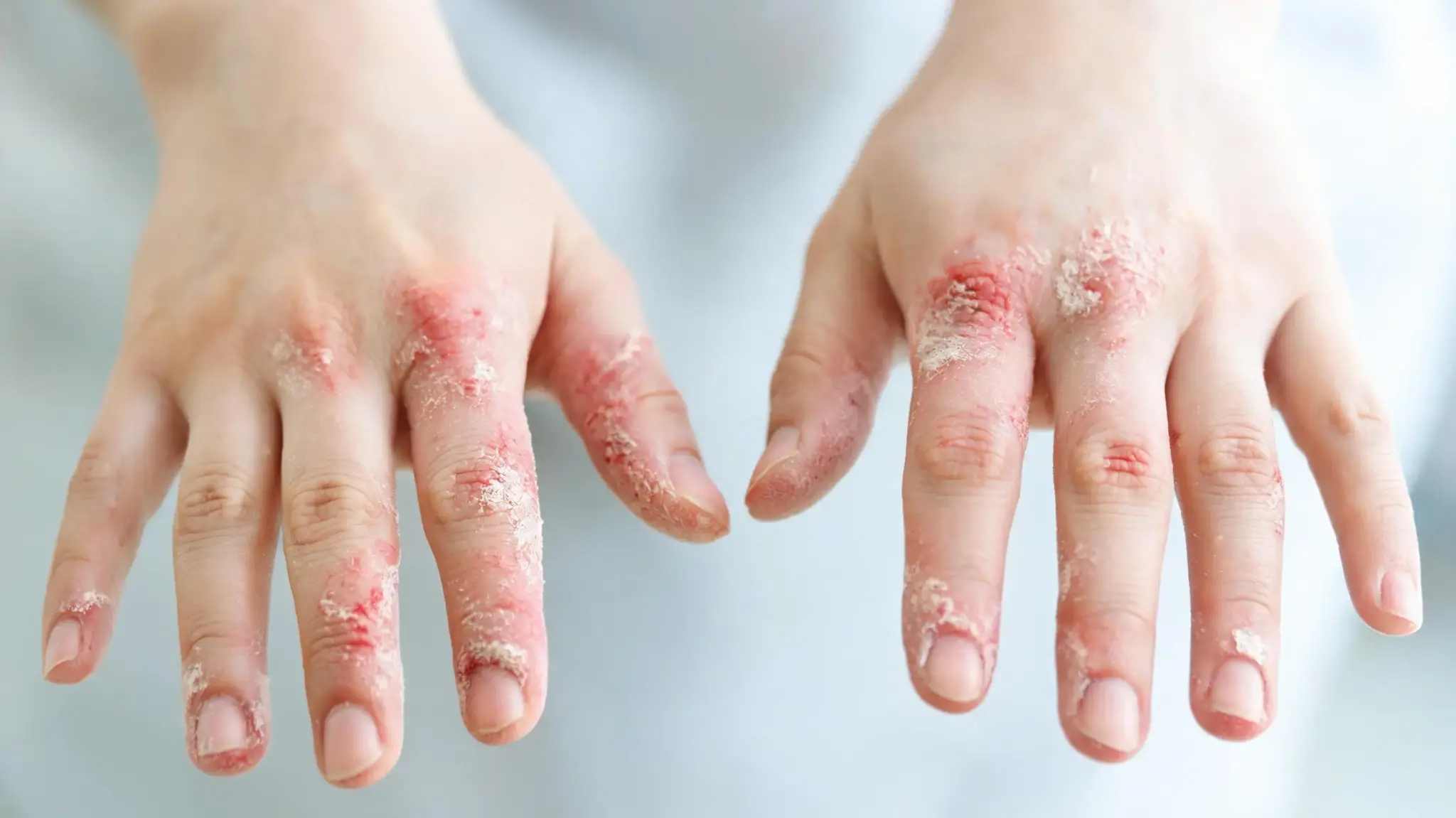
Hand eczema is a skin condition that causes inflammation, and it can look different from simple dryness. If your peeling keeps returning along with itching or cracking, it may be worth talking to a doctor.
Signs that may point to hand eczema:
- It often appears as red, itchy patches on the hands.
- The skin may crack or develop small blisters.
- Unlike dryness from weather or washing, eczema flare-ups tend to repeat.
2. Fungal Infection
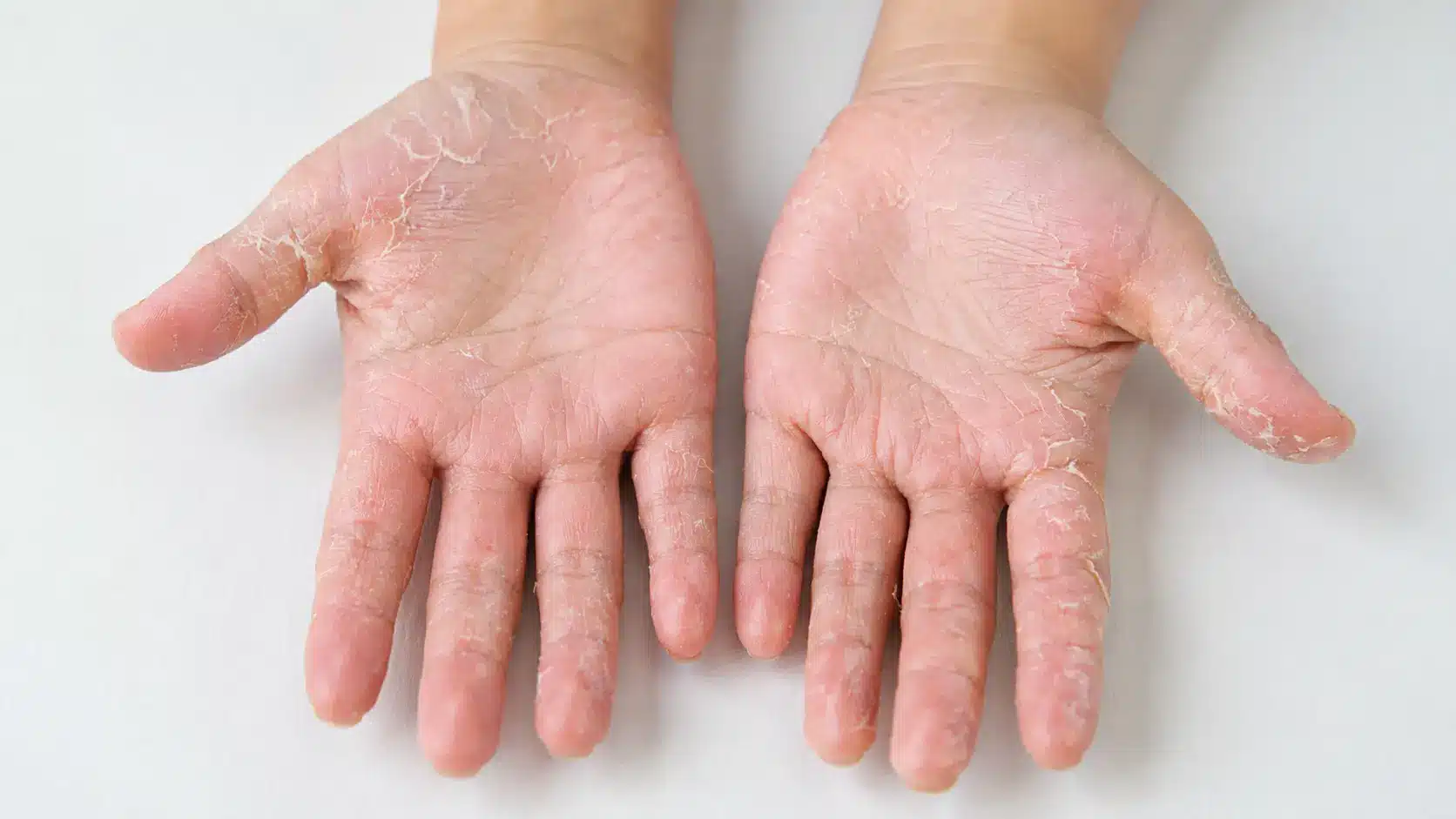
A fungal infection on the hands is less common than on the feet, but it does happen, sometimes spreading from an existing case of athlete’s foot.
Signs that may point to a fungal cause:
- Peeling combined with itching
- Scaling that shows up mostly around the fingers
- One hand being noticeably more affected than the other
3. Psoriasis and Other Skin Conditions
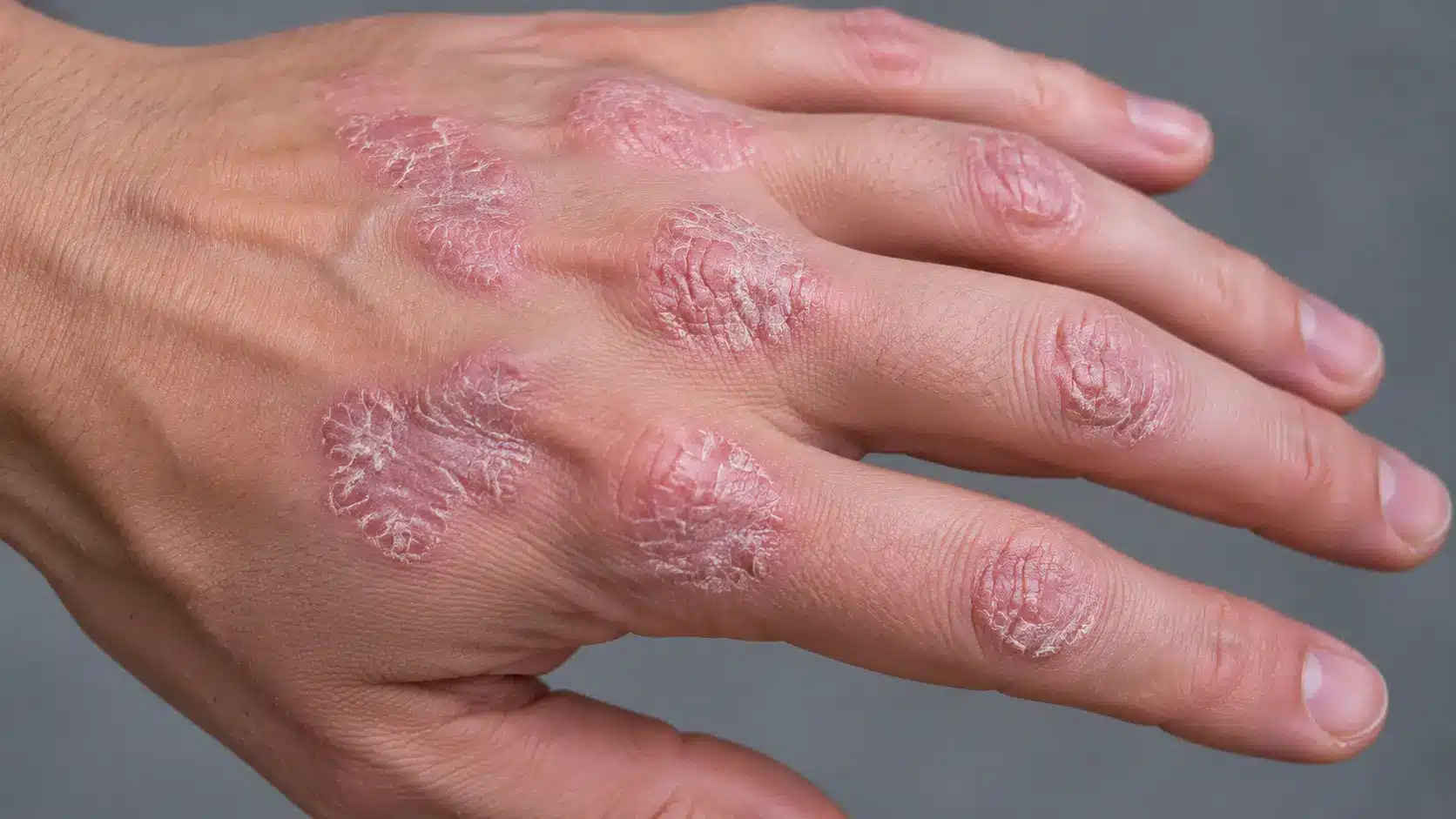
Psoriasis can cause thick, peeling patches on the hands, often with a different texture than simple dry skin.
Signs that may point to psoriasis:
- Patches may appear silvery or scaly and can be raised.
- Other skin conditions can also cause peeling.
- Peeling that’s recurring, severe, or doesn’t respond to moisturizing is worth having checked by a healthcare professional.
4. Vitamin Deficiencies and Other Health Factors

Nutrition plays a role in skin health, though it’s rarely the first or only cause of peeling hands.
- Certain vitamin deficiencies have been linked to dry or fragile skin.
- Skin renewal depends partly on nutrients your body needs to function properly.
- Don’t start supplements on your own without understanding the actual cause behind your symptoms; a doctor can help confirm whether a deficiency is actually involved.
Don’t start supplements on your own without understanding the actual cause behind your symptoms; taking the wrong ones, or too much of the right one, can cause its own set of problems.
What People Say Causes their Peeling Hands?

Reddit users in the SkincareAddiction community shared their experiences with hands that kept peeling and flaking, discussing possible triggers, daily habits, and products that helped improve their skin.
Many people described dealing with dry, rough patches, peeling fingertips, and recurring skin shedding despite using regular moisturizers.
The discussion included suggestions such as applying thicker creams, protecting hands from harsh soaps, avoiding irritants, and paying attention to product reactions.
Some users also mentioned that persistent peeling may be linked to conditions like eczema or other skin concerns and suggested seeking professional advice when symptoms continued.
The conversation highlights how common peeling hands can be and how different causes may require different care approaches.
How to Stop Your Hands from Peeling?
The right approach depends on what’s actually causing your peeling, but protecting your skin barrier helps in nearly every case.
- Keep Hands Moisturized: Use thick creams or ointments rather than thin, watery lotions. Apply moisturizer right after washing your hands.
- Protect Hands from Irritants: Wear gloves while cleaning or washing dishes and avoid harsh, heavily fragranced soaps.
- Avoid Picking Peeling Skin: Pulling at loose skin can create small wounds and increase irritation. Picking can also delay healing and raise the risk of infection.
Sticking with a gentle routine, protecting your hands from irritants, and giving your skin time to heal usually makes a noticeable difference within a couple of weeks.
Ingredients that Actually Help Peeling Hands
Not all moisturizers work the same way, and picking one with the right ingredients can make a real difference in how fast your hands recover. Here’s a quick look at what to check the label for.
| Ingredient | What It Does | Look For In |
| Ceramides | Rebuilds the skin’s natural barrier | Barrier-repair creams, night creams |
| Petrolatum | Seals in moisture and prevents water loss | Thick ointments, healing balms |
| Glycerin | Draws moisture into the skin | Everyday hand lotions |
| Shea butter | Softens and soothes dry, cracked skin | Rich hand creams, balms |
| Colloidal oatmeal | Calms irritation and itching | Sensitive-skin or eczema-friendly creams |
When Should You See a Doctor About Peeling Hands?
Most peeling clears up with basic care, but some signs suggest it’s time to get a professional opinion:
- Deep cracks or bleeding
- Painful peeling
- Signs of infection, such as pus, warmth, or spreading redness
- Peeling that persists for weeks without improvement
- Peeling that shows up alongside other symptoms elsewhere on the body
If you’re noticing any of these signs, it’s better to get checked sooner rather than waiting it out.
A doctor or dermatologist can quickly determine whether you’re dealing with simple dryness, an allergic reaction, or something like eczema or a fungal infection, and point you toward treatment.
Common Mistakes that Make Peeling Hands Worse
Small daily habits can slow skin recovery and increase irritation when your hands are already peeling. Avoiding these common mistakes can help protect the skin barrier.
| Mistake | Why It Can Make It Worse |
|---|---|
| Using harsh soaps | Removes natural protective oils and increases dryness |
| Peeling skin manually | Creates more irritation and may cause small skin tears |
| Skipping moisturizer | Slows skin barrier repair and increases flaking |
| Using too much sanitizer | Frequent use can worsen dryness and irritation |
| Ignoring recurring symptoms | Delays identifying possible skin conditions or triggers |
Making small changes to your hand care routine can support healing. If peeling continues despite proper care, it may be worth looking into possible underlying causes.
Final Thoughts
Paying attention to patterns, such as whether the peeling itches or hurts, can help you figure out the question “why are my hands peeling?”
If you have been trying to fix your hands for a while and nothing is changing or it is actually getting worse, do not just keep trying the same thing.
That is when you should go see a doctor or dermatologist and get an answer. Do not just guess what is going on with your hands.
If you do not know where to start, try one thing. Maybe use a hand soap that does not have any fragrance or start using a thick moisturizer before you go to bed.
Frequently Asked Questions
Is Peeling Skin on the Hands Contagious?
No, peeling itself isn’t contagious. If the cause is a fungal infection, the fungus responsible can potentially spread to other people through direct contact or shared items like towels.
How Long Does it Take for Peeling Skin on the Hands to Heal?
Mild peeling from dryness or irritation often improves within a week or two with moisturizing. Peeling linked to eczema, fungal infections, or other skin conditions can take longer to clear. It may return if the underlying trigger isn’t addressed.
Can Peeling Hands Be a Sign of a Serious Illness?
Sometimes peeling hands can point to a skin condition or other health issue that needs attention. If you’re concerned about your peeling hands, it’s always a good idea to talk to a doctor or dermatologist.