A smart outfit can still feel confusing when the occasion does not clearly define what to wear. The smart casual dress code helps create a polished appearance while leaving room for comfort and personal style.
Many people find it difficult to decide which clothes fit this style, especially for workplaces, dinners, and social gatherings with unclear expectations.
I have noticed that small details like fit, fabric, and styling choices often change how an outfit looks.
You will learn how to recognize smart casual pieces, choose suitable combinations, and avoid common mistakes that can make an outfit feel too casual or too formal.
What Does Smart Casual Actually Mean?
Smart casual is about creating an outfit that feels polished while still allowing comfort and personal style to show through.
I see it as a balance between looking intentional and avoiding anything that feels overly formal or restrictive. Understanding professional dress expectations can also help when choosing outfits for workplace events or business settings.
Even federal workplace dress standards draw a similar line, treating jeans and sneakers as too casual for a business-casual baseline.
The key is choosing pieces that look refined but still feel natural to wear. A structured blazer with a relaxed shirt, tailored pants with a simple top, or clean sneakers paired with elevated basics can all fit the smart casual style. The dress code works because it gives you room to adapt your outfit based on the setting.
Smart Casual Dress Code Rules to Follow
If you have ever stood in front of your closet wondering what smart casual means, you are not alone. These basic rules make choosing a balanced outfit much easier.
Municipal business casual dress guidelines work off much the same logic, spelling out acceptable pieces like blazers and dress shoes while ruling out anything too worn-in.
- Choose well-fitted clothing: Avoid anything too tight, baggy, wrinkled, or worn.
- Mix casual and smarter pieces: Pair dark jeans with a blazer, chinos with a crisp shirt, or a relaxed dress with a structured jacket.
- Wear clean, suitable shoes: Loafers, boots, flats, and clean sneakers usually work well.
- Keep accessories simple: A watch, belt, small bag, or subtle jewelry is often enough.
Use these rules as a starting point, then adjust your outfit for the venue and occasion. The result should feel comfortable, neat, and natural to wear.
Smart Casual Dress Code for Different Settings
Smart casual changes slightly depending on where you are going. The right balance of polished and relaxed clothing helps you look appropriate without appearing overdressed.
1. Smart Casual at Work

In the office, a smart casual dress code usually means chinos or tailored pants, a button-down or blouse, and a blazer if you want to dress it up a notch, so it helps to get your blazer buttoning etiquette right.
Arizona’s career resource centerdescribes it as business casual with a stylish twist: a few trend-forward pieces layered onto professional basics, which works well for informal offices and even for interviews at companies with a relaxed culture.
- For Women: Blouses, tailored pants, midi dresses, or skirts create a polished smart casual work outfit.
- For Men: Button-down shirts, polos, chinos, or tailored trousers create a clean office-ready look.
2. Smart Casual for Events and Weddings

Wedding invites that say “smart casual” usually mean you should look elevated but not stiff. Dresses (midi or knee-length), jumpsuits, or a nice blouse-and-skirt combo work well for women.
For men, dress pants with a button-down and loafers usually strike the right note; no tuxedos, but also no jeans and sneakers, since classic menswear staples tend to translate well here.
- Women: Midi dresses, jumpsuits, or skirts with blouses create a polished event look.
- Men: Chinos, dress pants, and button-down shirts work well for smart casual events.
3. Smart Casual for Everyday Social Outings

For dinners, date nights, or after-work drinks, the smart casual dress code loosens up a little, leaving room to build a date-night outfit that still feels considered.
Dark, well-fitted jeans become fair game, especially when paired with a structured jacket or a nice top. The goal is still “put together,” just without the office formality.
- Women: Dark jeans, casual tops, or relaxed dresses create an easy everyday smart casual look.
- Men: Dark jeans, chinos, polos, or casual shirts work well for social outings.
4. Smart Casual for Travel or Semi-Formal Daytime Events

Think brunches, daytime showers, or upscale casual restaurants. A sundress with sandals or trousers with a fitted top hits the mark: comfortable enough for movement, polished enough not to look like loungewear.
- Women: Sundresses, tailored trousers, or fitted tops create a comfortable yet polished travel look.
- Men: Chinos, casual shirts, or lightweight blazers work well for travel and daytime events.
5. Smart Casual for Interviews and Networking Events

For interviews or networking events, smart casual should lean slightly more polished. Choose structured, well-fitted clothing in neutral colors while avoiding distracting prints, distressed denim, and overly casual footwear.
This lines up with advice federal agencies give new hires: default to business or business-casual dress whenever expectations aren’t spelled out.
- Women: Blouses, tailored trousers, midi skirts, or simple dresses create a confident professional look.
- Men: Button-down shirts, chinos, tailored trousers, or an unstructured blazer work well.
Smart Casual vs Business Casual: What Is the Difference?
Smart casual and business casual both create a polished look, but the level of formality is different. Smart casual offers more flexibility, while business casual follows more traditional workplace expectations.
| Feature | Smart Casual | Business Casual |
|---|---|---|
| Overall Style | Relaxed with polished touches | Professional with a structured look |
| Clothing Choices | Polos, shirts, blouses, sweaters, chinos, and dark jeans | Dress shirts, blouses, sweaters, chinos, and tailored pants |
| Jeans | Dark, clean jeans may be acceptable | Usually avoided or limited |
| Shoes | Clean sneakers, loafers, boots, or casual dress shoes | Loafers, oxfords, flats, or formal-style shoes |
| Workplace Use | Common in creative offices, dinners, and casual settings | More common in corporate workplaces and professional meetings |
Smart casual gives more room for comfort and personal style, while business casual focuses on a more consistent professional appearance. Choose based on the setting, company culture, and expected level of formality.
What Real Users Think About Smart Casual Attire
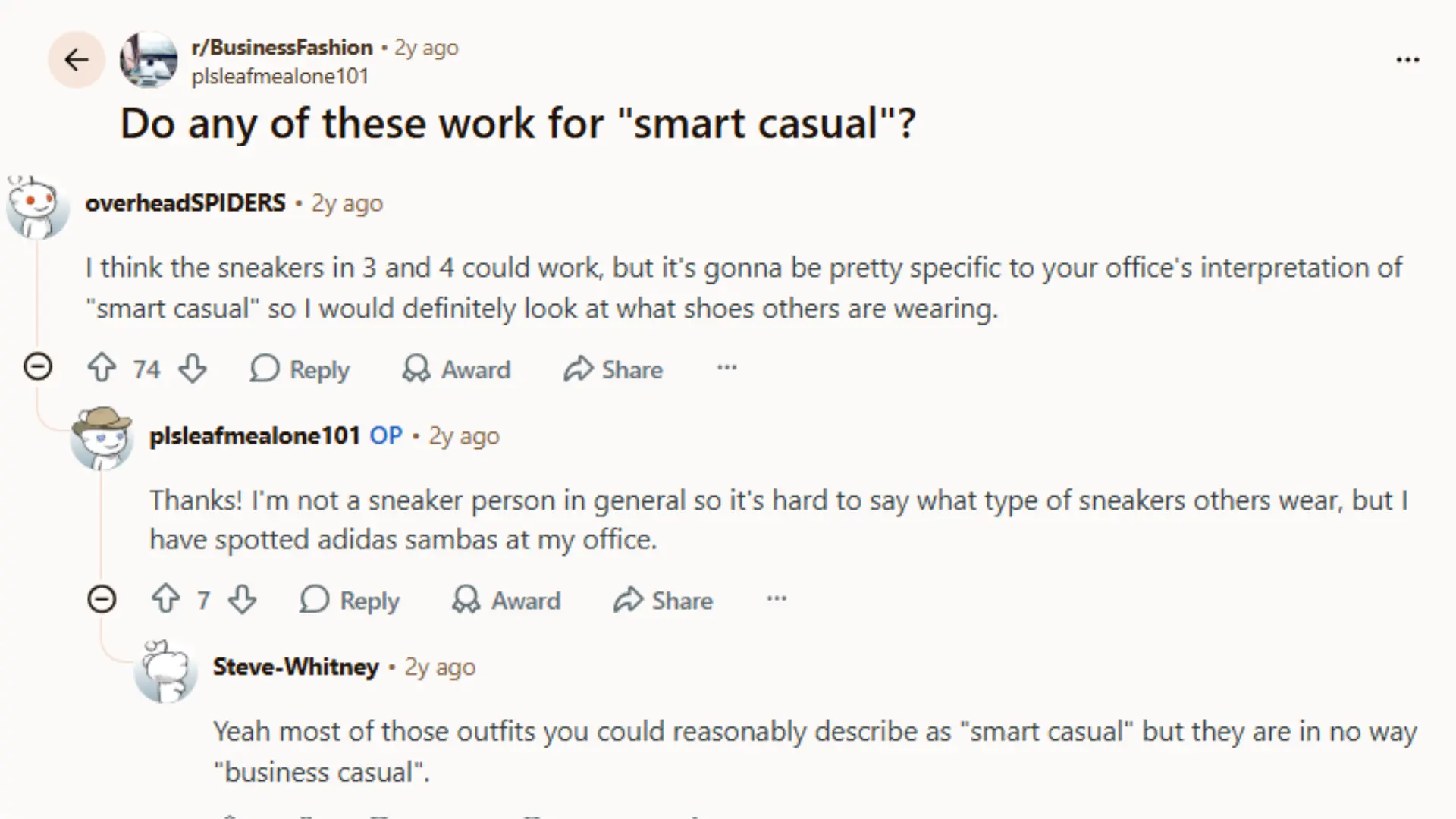
Reddit users in the r/BusinessFashion community discuss whether different outfit choices fit within a smart casual dress code. The discussion focuses on evaluating clothing combinations, including how items like shirts, trousers, jackets, and shoes affect the overall appearance.
Members share opinions on whether the outfits look too casual, appropriate for an office setting, or suitable for a smarter everyday style.
The conversation also highlights how smart casual expectations can vary depending on workplace culture, location, and personal preference.
It provides real-world examples of how people interpret the balance between looking polished and staying comfortable when choosing smart casual outfits.
Smart Casual Styling Tips that Make a Difference
Smart casual is not only about the clothing pieces you choose but also how you style them. These small adjustments can make an outfit look more polished and balanced.
- Add simple layers: Jackets, cardigans, or blazers can give a casual outfit a sharper appearance.
- Choose better fabrics: Textured materials like linen, cotton, and wool blends often look more refined.
- Mix colors and textures: Combining different shades and fabrics creates a more natural outfit.
- Upgrade casual pieces: Dark denim, clean sneakers, and structured basics work better than overly relaxed items.
- Adjust for seasons: Change fabrics, layers, and footwear based on weather while keeping the style consistent.
Smart casual style comes down to thoughtful choices rather than strict rules. Small adjustments in layering, texture, and styling can make a simple outfit feel more refined.
Common Smart Casual Mistakes to Avoid
Small styling choices can change the entire look of a smart casual outfit. Avoiding these common mistakes helps create a balanced appearance that feels polished without looking too formal or too relaxed.
| Mistake | Why It Does Not Work | Better Approach |
|---|---|---|
| Poor fit | Clothes that are too loose or tight can look untidy | Choose well-fitted clothing |
| Too many casual pieces | Mixing overly relaxed items can make the outfit look informal | Pair casual items with polished pieces |
| Worn-out shoes | Damaged or dirty footwear affects the overall appearance | Choose clean, well-maintained shoes |
| Too many accessories | Extra details can make the outfit look distracting | Keep accessories simple and balanced |
| Wrong outfit for the occasion | Dressing too casually or formally may not match the setting | Consider the event or workplace expectations |
The best smart casual outfits feel balanced, comfortable, and appropriate for the occasion. Check the fit, footwear, and venue before leaving to avoid an awkward mismatch.
Conclusion
Getting smart casual right comes down to creating a look that feels comfortable, polished, and suitable for the moment. I find that the best outfits are usually built with simple choices, such as the right fit, balanced combinations, and attention to small details.
You can make the smart casual dress code work for offices, events, and everyday settings by understanding what pieces match the occasion.
The right shoes, fabrics, layers, and accessories can change how an outfit feels without making it complicated. These choices can help you feel more confident with your daily style.
Try these tips the next time you dress smart casual, and share your favorite outfit ideas or styling questions in the comments.
Frequently Asked Questions
Is Smart Casual the Same as Business Casual?
Not exactly. Smart casual tends to allow a bit more personality and trend-driven pieces, while business casual leans more conservative and workplace-focused.
Can I Wear Jeans for a Smart Casual Dress Code?
Usually yes, as long as they’re dark-wash, well-fitted, and free of rips or heavy distressing. Pair them with a blazer or structured top to keep the look elevated.
What Should I Avoid Wearing Under a Smart Casual Dress Code?
Skip gym wear, flip-flops, overly casual graphic tees, and anything too worn-in. On the flip side, avoid full formalwear like tuxedos or floor-length gowns, since that can overshoot the dress code.
Can Smart Casual Include Patterns And Prints?
Yes, patterns and prints can fit smart casual when they are balanced. Subtle checks, stripes, or small prints usually work better than bold designs that overpower the outfit.