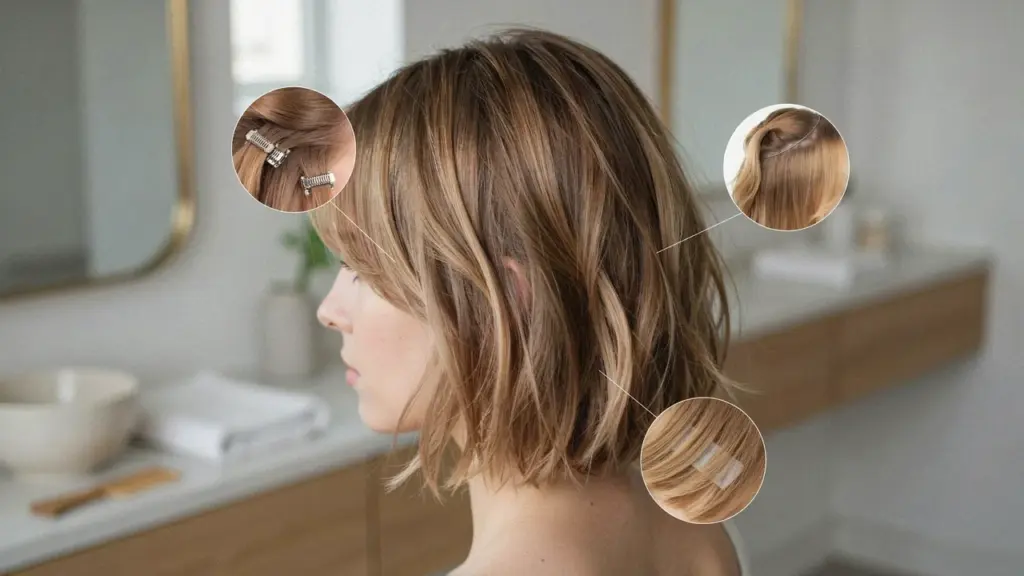
Not every short haircut is too short for extensions, and that’s where most of the confusion begins. If you’re considering hair extensions for short hair, the key is having enough natural length to cover attachment points and create a smooth finish.
I get why the minimum-length question matters, especially when a bob, crop, or layered cut leaves little room to hide bulky wefts. The right choice depends on more than inches alone.
Hair density, layer placement, extension type, and the shape around the nape all affect how natural the result looks.
Ahead, the practical length ranges, suitable extension methods, blending checks, and common mistakes will help narrow down what can realistically work without making the style look obvious or uneven.
How Extensions Work with Short Hair
Short hairstyles can still work well with extensions when the base length allows proper coverage of attachment areas.
Chin-length and bob cuts usually provide enough structure, while very short styles may require more precise placement.
Hair Extensions for Short Hair look most natural when they align with the existing cut’s density and shape rather than simply adding length.
Choosing lighter pieces helps maintain comfort and makes daily styling easier. It is also important to assess how the hair falls around the crown, sides, and neckline, as these zones determine how seamless the final result appears.
Proper sectioning ensures the added strands move naturally with your own hair for a balanced finish.
Minimum Length You Actually Need
There’s no single number that works for everyone, since density and cut shape both affect how much coverage you actually get. That said, a few general benchmarks hold up across most short styles.
| Your Length | What It Supports |
|---|---|
| 3–4 inches | Light volume pieces only; limited styling flexibility |
| 4–5 inches | Secure blending for most clip-in and halo options |
| 5–6 inches | More flexible styling, easier to hide attachment points |
| 6+ inches | Widest extension variety, including tape-ins |
Whatever your length, check your shortest layers, usually around the nape and ears, before buying, since those areas expose attachment points first.
Best Extensions for Short Hair
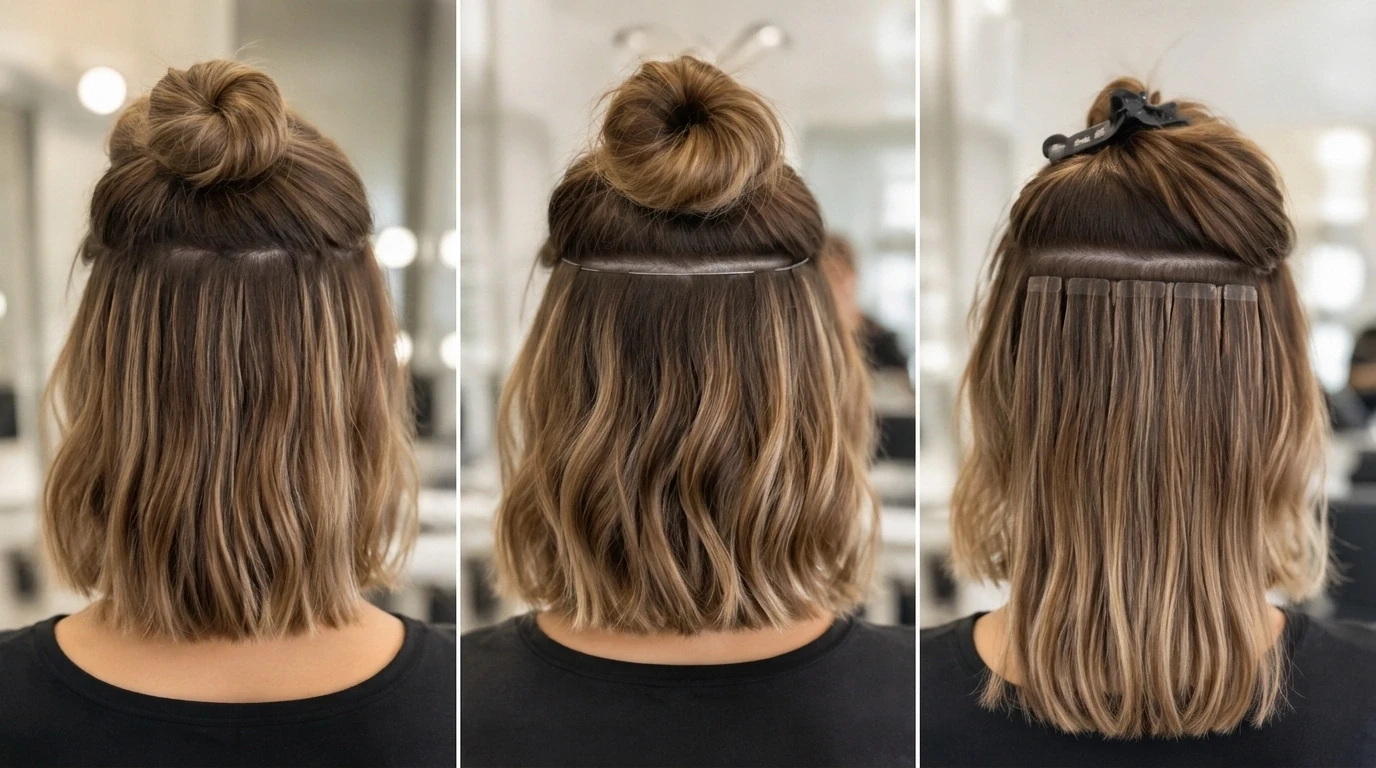
Short hairstyles need extensions that sit close to the scalp and blend with natural layers, avoiding bulky sections that disrupt the cut. Lighter options move more naturally with short strands.
1. Clip-In Extensions
A quick, no-commitment way to add volume or length exactly where a short cut needs it.
- Flexible placement means you add volume only where it’s needed, not across the whole head.
- Small wefts blend better than large ones when tucked under top sections of hair.
- Lightweight versions feel more comfortable for daily wear and reduce strain on short strands.
- Easy to apply and remove yourself, with no professional help required.
- Estimated cost: $80–$250, depending on hair quality and length.
Best for: beginners, occasional wear, events, and anyone not ready to commit to something semi-permanent.
2. Halo Extensions
A single wire-based piece that swaps multiple clips for one point of contact.
- Sits under the top layer of natural hair, with a thin wire doing the work instead of clips.
- Fewer attachment points to hide, which suits shorter styles with less coverage to spare.
- Adds fullness and modest length without sectioning hair into multiple wefts.
- Very short top layers may need extra styling to fully cover the wire.
- Estimated cost: $100–$300, depending on hair quality and length.
Best for: quick changes, first-time wearers, and anyone wanting one simple piece instead of several.
3. Tape-In Extensions
A flatter, closer-to-root option for short hair that can handle a few weeks of committed wear.
- Sits flat against the head, reducing bulk compared to clip-based methods.
- Works best with careful, thin sectioning, since short hair shows visible edges more easily than long hair.
- Suits people wanting length for several weeks rather than occasional styling.
- Requires move-up appointments as natural hair grows out from under the tape.
- Estimated cost: $200–$500, depending on length and salon.
Best for: anyone wanting a longer-term result who’s comfortable with regular maintenance visits.
Matching Length and Blend to Your Cut
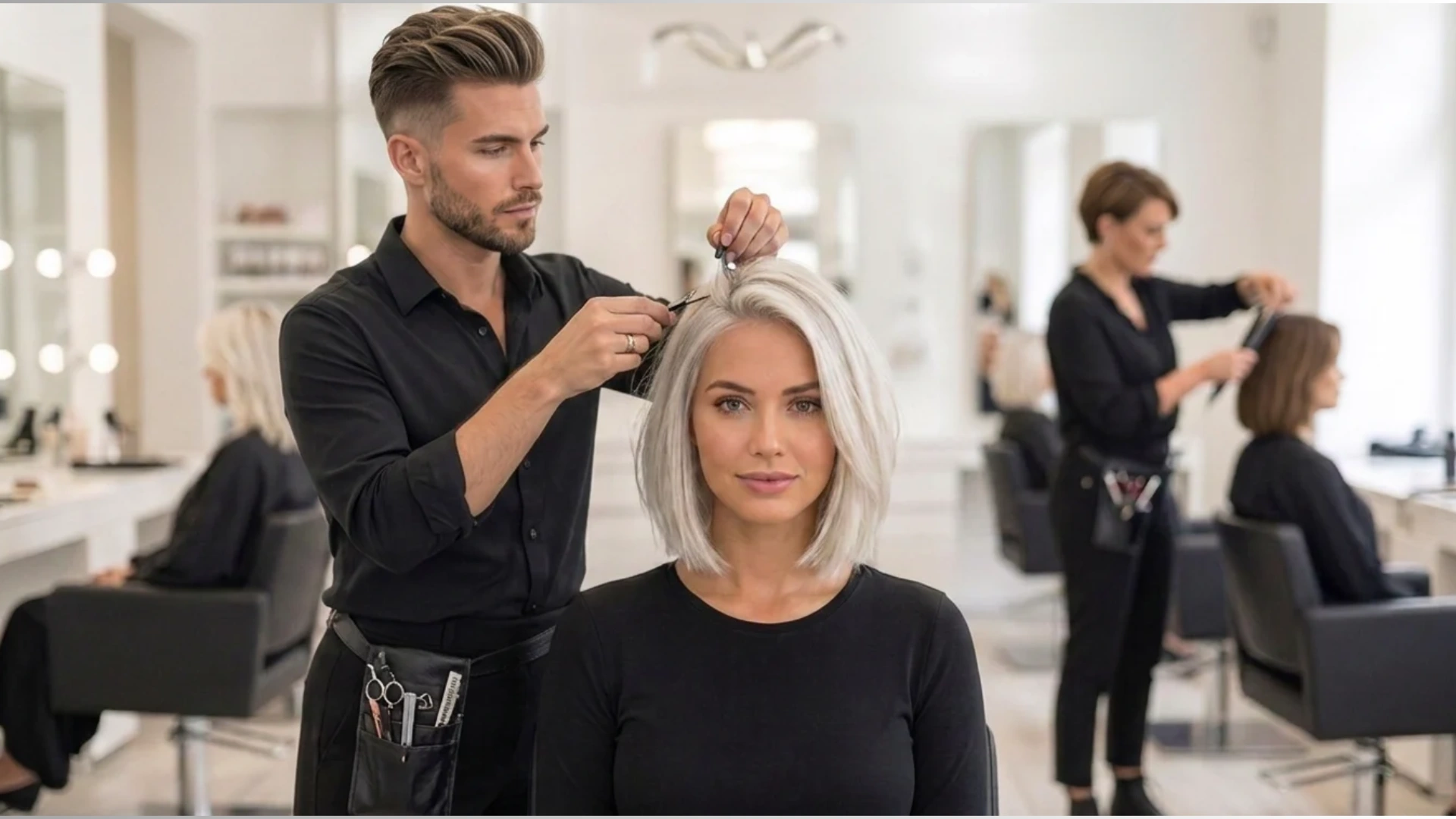
Picking a length based on the longest pieces you can find is how most short-hair extensions end up looking obviously fake. The real question isn’t just length; it’s whether that length will actually blend with the layers and shorter sections you already have.
Length Check By Cut Type
Your current cut decides the right approach: pixies do best with added volume, bobs handle a moderate length increase, and layered cuts should match new pieces to existing layers.
Layer Check For Blending
Compare your shortest layers to the extension length before buying. If layers already vary a lot, a uniform length will stand out instead of blending in naturally.
Nape And Ear Check
These areas are usually your shortest hair, so they’re the first place a mismatch shows. Confirm your planned placement actually covers both before committing to anything.
Fixing Common Blending Problems
Most short-hair extension issues come down to length mismatches, placement, or using too much hair at once, not the type of extension itself.
- A visible line between natural hair and extensions: adjust layers to match the extension length more closely.
- Extensions feel heavy or bulky: remove a few pieces rather than keeping the full set in.
- Color looks mismatched: compare shades in natural daylight before buying, not under indoor lighting.
- Clips or wefts are visible: move placement lower or use smaller sections.
Most of these are quick fixes, not reasons to replace the whole set.
Short Hair Extension Care Tips
Once you’re wearing extensions, a few care habits keep short hair looking healthy underneath them:
Wash extensions and natural hair separately when possible, since short hair dries faster and can get overconditioned if treated the same as the pieces.
Avoid tight clips directly on the same spot every day; rotate placement slightly to reduce tension on short strands.
Detangle gently before removing clip-ins or halo pieces at night, since short hair tangles with wefts more easily than longer hair does.
Give your scalp a break between wears if you’re using extensions daily, especially around the crown and temples.
Final Thoughts
By now you know hair extensions for short hair aren’t off the table just because your cut is short; the real factors are your minimum length, the type you pick, and how closely it matches your existing layers.
That’s the real answer to whether your hair is “too short”: it usually isn’t, as long as those three things line up before you buy.
If you want to keep building on this, check out our other hair extension guides for more on types, care routines, and choosing what actually fits your specific hair.
Frequently Asked Questions
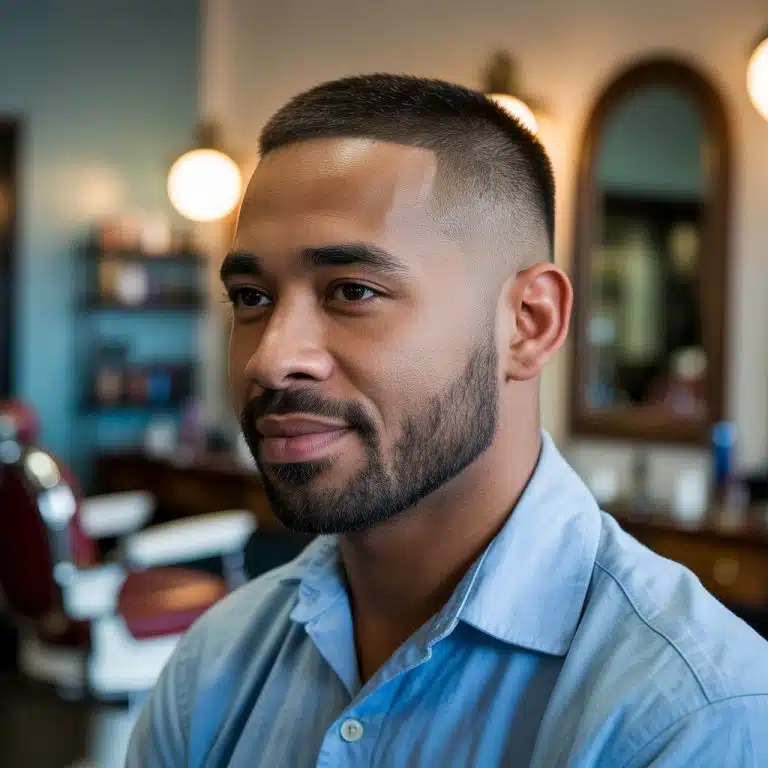
Do Men Use Hair Extensions for Short Hair Too?
Yes, men’s extensions typically focus on adding volume or thickness rather than length, using similar clip-in or tape-in methods suited to shorter cuts.
What Is the 3-Inch Rule for Hair Extensions?
It’s a general guideline stating hair needs at least 3 inches of length before most extension methods can anchor securely and stay hidden.
Can Curly or Textured Short Hair Use the Same Extension Types?
Yes, but the curl pattern needs to match closely, since straight extensions on curly short hair create an obvious, mismatched texture line.
Are Permanent Extensions Available for Short Hair, or Only Temporary Options?
Permanent methods like fusion bonds exist for short hair, though they’re less common than clip-ins or tape-ins due to placement difficulty on shorter lengths.