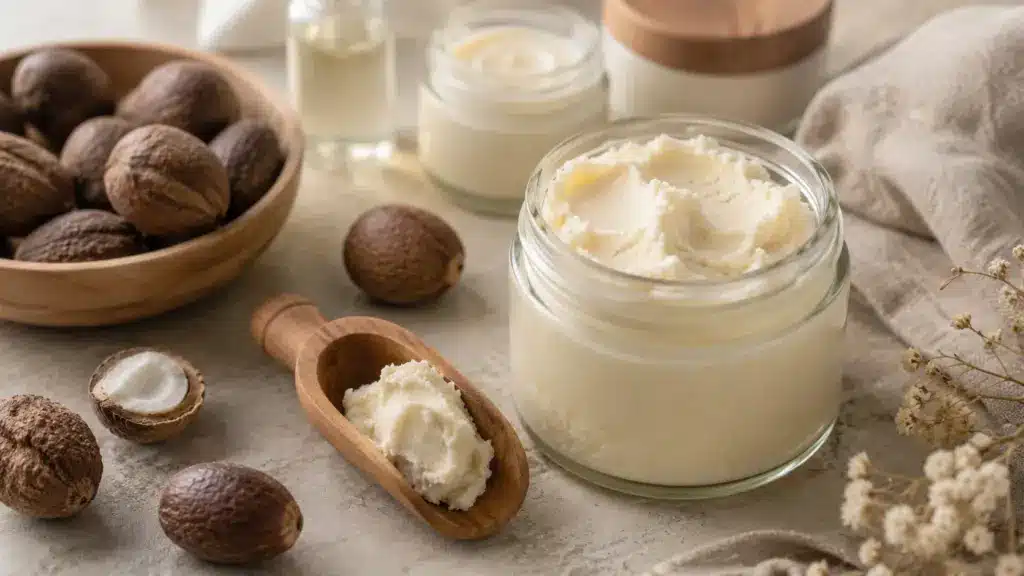
Dry, tight, or irritated skin can make a simple routine feel harder than it needs to be. That is why shea butter benefits for skin often catch attention: the ingredient is known for its rich texture and moisturizing feel.
You may have seen it in body creams, lip balms, and face products, but its value depends on how you use it and what your skin needs.
I find the most useful way to look at shea butter is to separate practical benefits from claims that sound better than the evidence.
The sections ahead cover hydration, barrier support, scars, dark marks, facial use, skin-type suitability, and application tips to help you understand where shea butter fits into a daily skincare routine.
What is Shea Butter and Why is It Used in Skin Care?
Shea butter is a plant fat made from the kernels of the shea tree, Vitellaria paradoxa, which grows across parts of sub-Saharan Africa.
At room temperature, it is usually solid or semi-solid, then softens with body heat. Its texture makes it useful in creams, balms, body butters, lip products, and other moisturizers, much like other comparable body butters in the same product lines.
Its skin feel comes largely from fatty acids, including oleic, stearic, linoleic, and palmitic acids. These lipids act mainly as emollients, filling small gaps between dry surface cells and helping skin feel softer and less rough.
Shea butter also contains naturally occurring antioxidant compounds, although their presence does not make it equivalent to a retinoid or medical treatment.
For most users, the practical value is simple: it is a rich moisturizing ingredient that works best when dryness and rough texture are the main concerns in everyday body care
What are the Main Shea Butter Benefits for Skin?
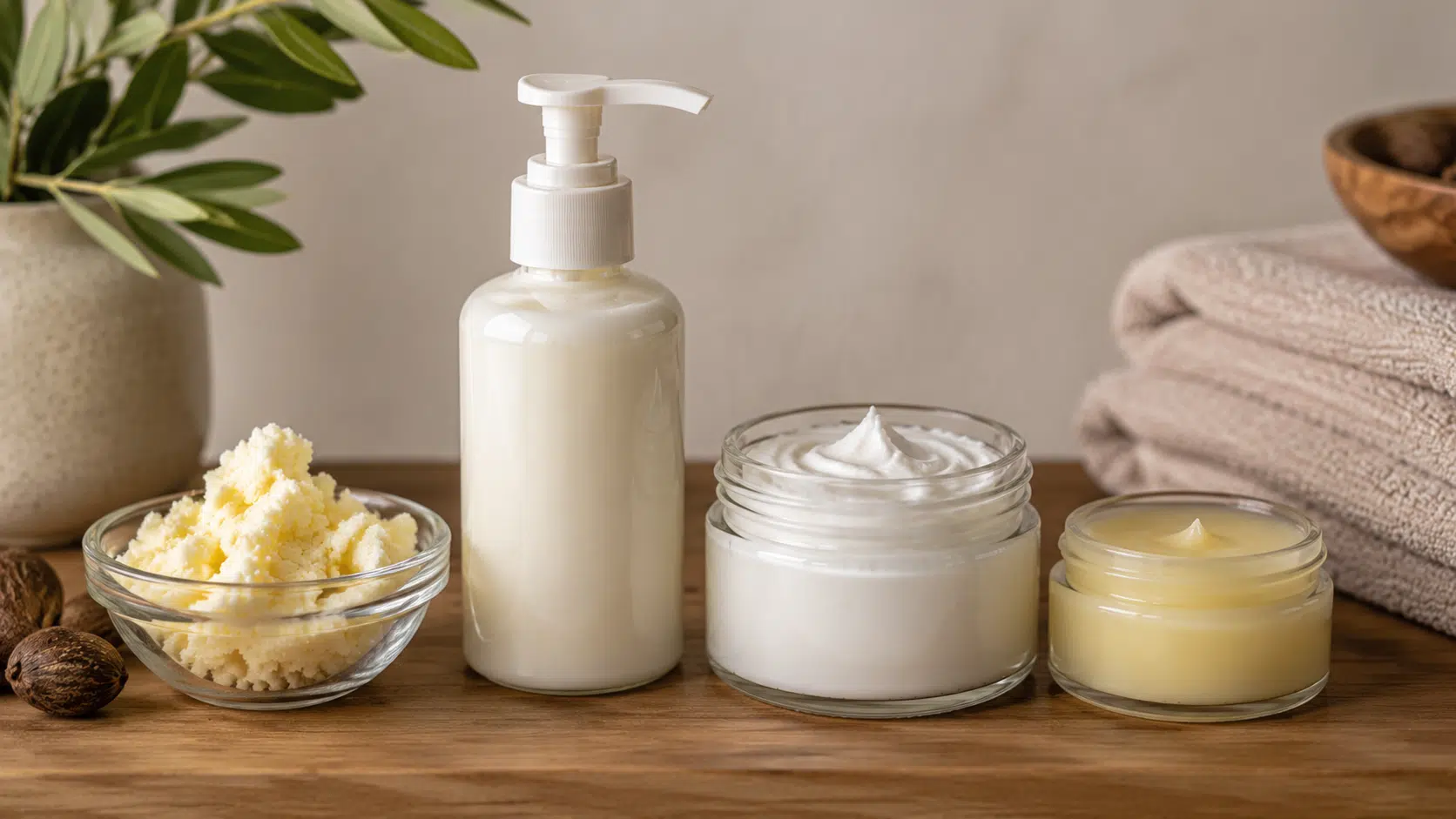
Shea butter is best known for hydrating dry skin, supporting the skin’s natural barrier, and soothing irritation, thanks to its fatty acid content and antioxidant compounds. Other effects are possible, but the level of evidence varies by claim.
1. Helps Relieve Dry Skin
Shea butter works as an emollient, coating and softening the outer skin while helping reduce moisture loss. That makes it useful on dry hands, elbows, knees, heels, and other rough areas.
Dermatology sources consistently list dryness relief as one of its clearest benefits, especially when the skin lacks enough surface lipids to stay comfortable.
The NIH notes that this kind of dryness, medically called xeroderma, tends to respond well to consistent moisturizing paired with gentler cleansing habits.
2. Supports the Skin Barrier
The outer skin barrier depends partly on lipids that help limit water loss and reduce contact with irritants. Shea butter can support that surface by adding an emollient layer.
It should not be treated as a complete barrier-repair therapy, because dedicated moisturizers may also contain ceramides, humectants, or occlusives that address different needs.
3. Softens Rough and Flaky Areas
Very dry skin can feel thick, scaly, or uneven because surface cells don’t hold moisture well. A rich emollient such as shea butter can make those areas feel smoother by lubricating the outer layer.
This is particularly useful on body areas exposed to friction, frequent washing, or dry indoor air during colder months. Since rough, uneven texture is sometimes confused with early stretch marks, it helps to understand cocoa butter’s effects on stretch marks before expecting the same results here.
4. May Soothe Dryness-Related Irritation
Shea butter contains compounds associated with anti-inflammatory activity, and rich moisturization can reduce the tight, uncomfortable feeling that often accompanies dryness.
The key distinction is cause: mild dryness-related irritation may improve with better moisturization, while persistent redness, swelling, burning, or a spreading rash deserves medical assessment rather than repeated cosmetic treatment alone.
5. Can Support Eczema-Prone Skin
Moisturizers are a core part of atopic dermatitis care because they help maintain hydration and support the impaired skin barrier.
Studies of multi-ingredient moisturizers containing shea butter have reported improvements in hydration or symptoms, but those results cannot be credited to shea butter alone.
For anyone weighing options by skin type, comparing cocoa butter’s varied uses can offer a useful second reference point. Eczema treatment may still require prescribed medication during active flares.
How to Use Shea Butter on Your Skin
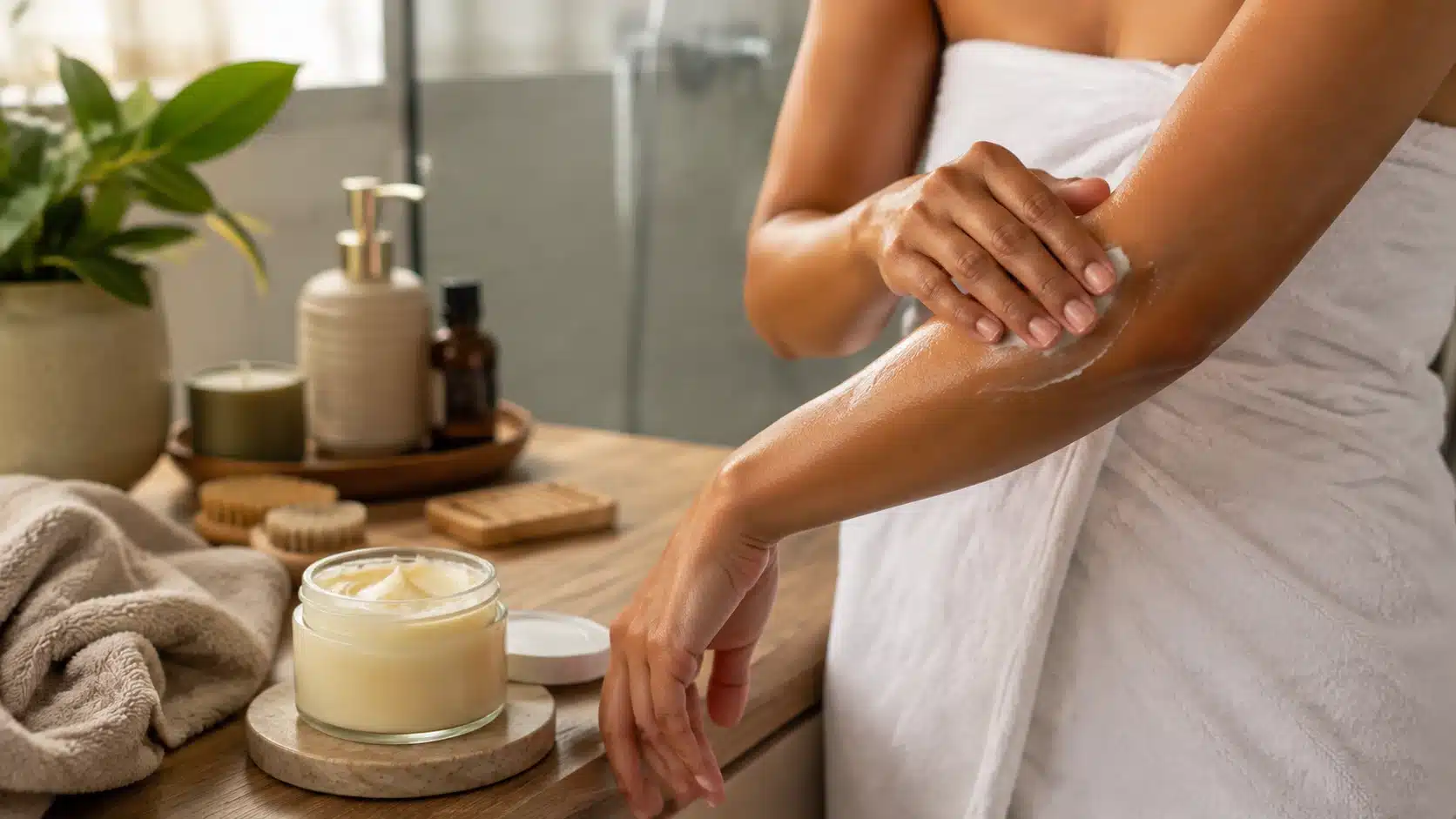
Shea butter works best when applied in a simple, controlled way. Using the right amount on slightly damp skin can improve comfort without leaving a heavy, greasy layer
Step 1: Clean The Skin: Apply shea butter after gentle cleansing or bathing. Use lukewarm water instead of very hot water, which can leave dry skin feeling tighter.
Step 2: Leave Skin Slightly Damp: Pat the skin gently instead of drying it completely. Applying moisturizer to slightly damp skin can help retain moisture more effectively.
Step 3: Start With A Small Amount: Warm a small amount between the palms or fingertips. This softens the butter and makes it easier to spread evenly.
Step 4: Apply to Dry Areas: Gently massage it into areas such as the hands, elbows, knees, heels, or dry facial patches. Use less product on the face, since cocoa butter’s facial suitability differs enough from body use that a lighter hand tends to work better there too.
Step 5: Adjust How Often You Use It: Use it daily for persistent dryness or only when needed. Reduce use if the skin feels greasy, irritated, or develops new bumps.
A little shea butter can go a long way. Adjust the amount and frequency to match skin needs, and stop using it if irritation or congestion appears.
Does Shea Butter Help Scars or Dark Marks?
Shea butter can make scarred or discolored skin feel softer and more moisturized, but that does not mean it can reliably fade scars or dark marks.
For scars, its main benefit is improving dryness and comfort around the affected area rather than changing scar tissue itself. Evidence is still limited on its ability to flatten, remove, or significantly reduce visible scars.
The same applies to dark marks caused by acne, sun exposure, or irritation. Shea butter may improve overall skin texture and hydration, which can make the area look healthier, but it is not considered a proven treatment for excess pigmentation.
If fading scars or dark spots is the main goal, ingredients specifically studied for pigmentation or scar care, along with daily sun protection, may be more suitable.
Raw or Refined Shea Butter: Which One Suits Skin Better?
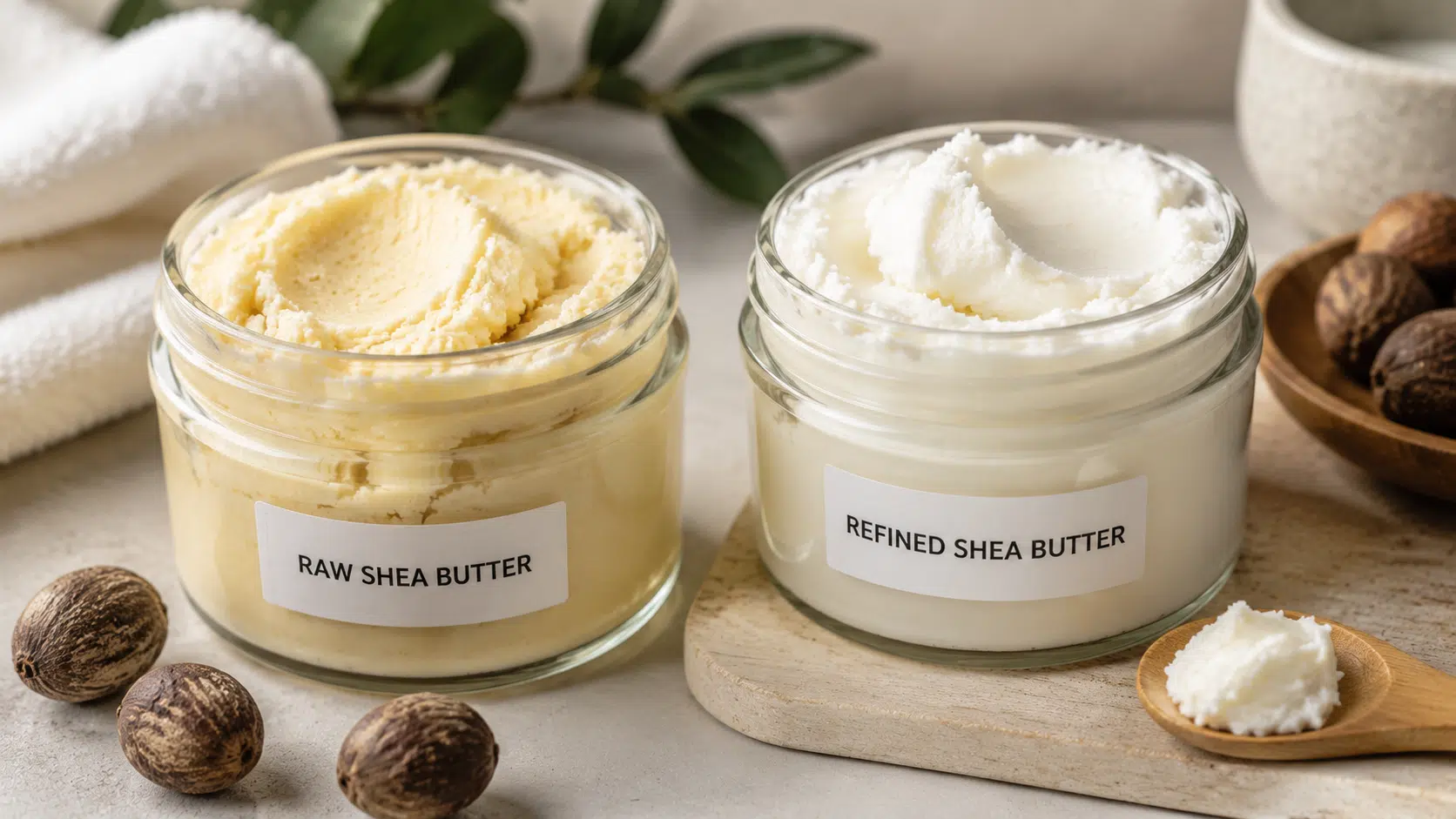
Raw and refined shea butter differ mainly in processing, scent, texture, and retained natural compounds. Knowing those differences can make choosing the right option much easier.
| Feature | Raw Shea Butter | Refined Shea Butter |
|---|---|---|
| Processing | Minimally processed | Goes through additional processing |
| Color | Usually ivory, beige, or yellowish | Typically whiter and more uniform |
| Scent | Has a natural, slightly nutty scent | Usually mild or nearly scent-free |
| Texture | Can feel firmer or slightly coarse | Often smoother and more consistent |
| Natural compounds | Retains more naturally occurring components | Processing may reduce some compounds |
| May suit | Those who prefer minimally processed ingredients | Those who prefer neutral scent and smoother texture |
Neither version is automatically better for every skin type. Raw suits minimal processing preferences, while refined options may feel more practical when scent and texture matter.
Who Should Be Careful with Shea Butter?
Shea butter works beautifully for a lot of people, but “good for dry skin” doesn’t automatically mean “good for every skin.” Before you commit a whole routine to it, it helps to know where you likely fall and where a little extra caution is worth it.
- Very dry skin: likely a good fit
- Dry body skin: likely a good fit
- Eczema-prone skin: consider fragrance-free formulas
- Oily or acne-prone face: use cautiously and watch for breakouts
- Active rash or infection: seek condition-specific advice instead
- Suspected fungal infection: don’t rely on shea butter as treatment, since some yeast associated with conditions like seborrheic dermatitis can grow in shea butter
If you fall into one of the more cautious categories, that doesn’t mean shea butter is completely off-limits; it just means a little extra attention and a conversation with a dermatologist can go a long way. National eczema treatment research continues to look at how moisturizer choices fit alongside prescription care for flare-prone skin.
Tips for Getting Better Results with Shea Butter
A few small everyday choices can make shea butter easier to use without turning a simple moisturizer into a complicated routine. Focus on fit, texture, and skin response.
- Match the texture to the area. Use richer butter on dry body areas and lighter creams on the face.
- Check the ingredient list. Fragrance and added oils may irritate sensitive skin.
- Apply after washing. Slightly damp skin can help hold moisture better.
- Add one new product at a time. This makes reactions easier to identify.
- Use sunscreen separately. Shea butter is not a substitute for broad-spectrum SPF protection.
Good results depend on using a suitable formula and watching how the skin responds. Applying more product does not necessarily make shea butter work better.
Final Thoughts
At the end of the day, the real shea butter benefits worth getting excited about are simple: it’s an excellent moisturizer, a genuine ally for your skin barrier, and a gentle way to calm dry, irritated skin.
The more dramatic claims- scar fading, major anti-aging effects just aren’t backed by strong human evidence yet, so it’s worth enjoying shea butter for what it does best rather than what marketing sometimes promises.
Ready to see the difference for yourself? Pick up a jar of pure or refined shea butter today and give your driest spots a week of consistent care, then come back and tell us how your skin responded. Drop it in the comments;we’dd love to hear from you.
Frequently Asked Questions
Can You Put Shea Butter on Your Face Every Day?
Yes, for many skin types, use a small amount. If your face is oily or acne-prone, ease in gradually and monitor how your skin reacts.
Is Raw or Refined Shea Butter Better for Sensitive Skin?
Refined shea butter is often gentler for sensitive or fragrance-reactive skin, since processing removes some of the natural scent and compounds.
How Long Does Shea Butter Take to Soften Dry Skin?
Many people notice softer skin within a day or two of consistent use, though very dry or cracked areas may take a bit longer.